
- Education
- Engagement Rings & Settings
- Side Stone Engagement Rings: How They Are Built, Wear and Fit
Engagement Rings & Settings
Side Stone Engagement Rings: How They Are Built, Wear and Fit
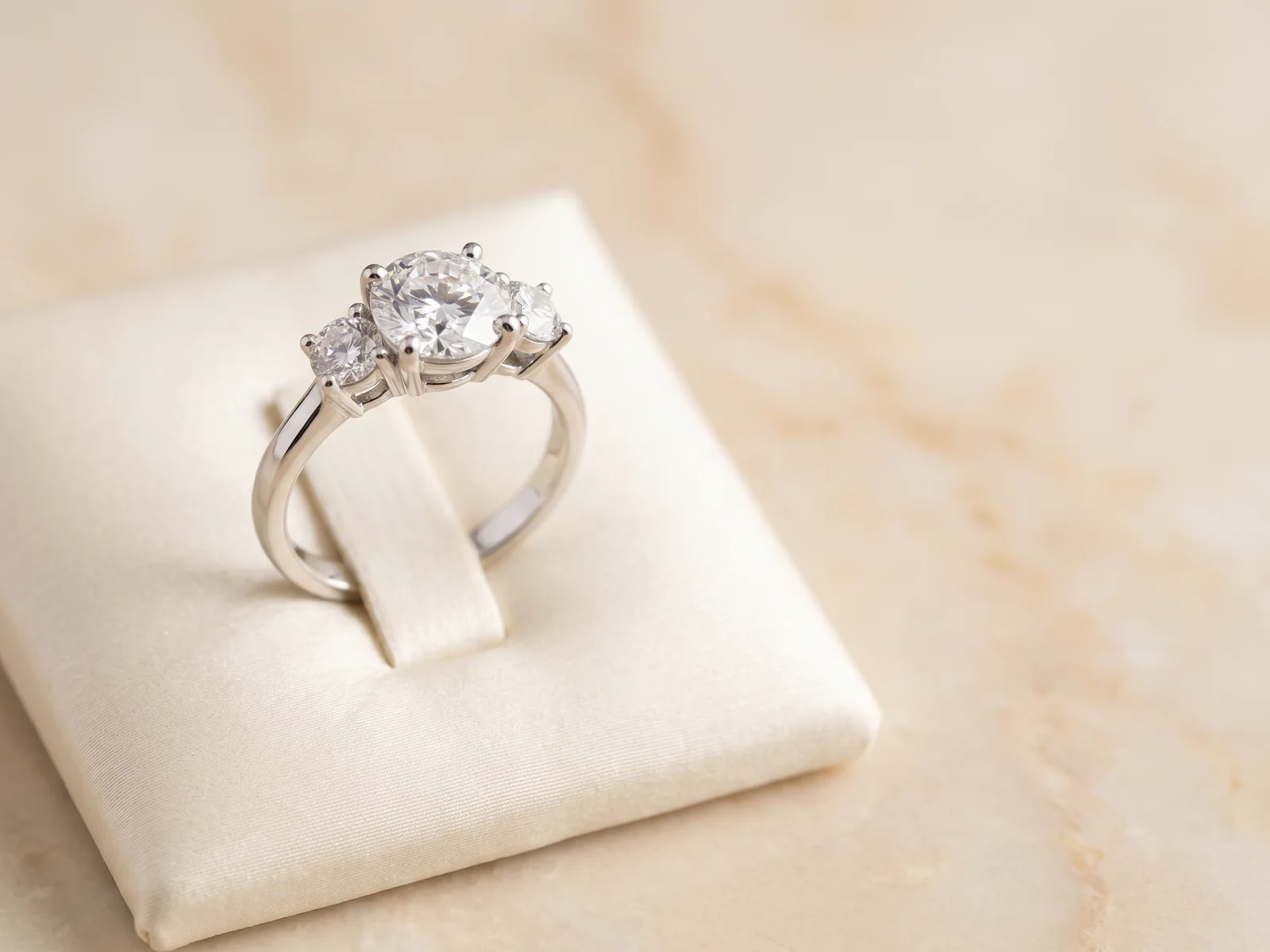
Side stone engagement rings are one of the most popular ways to add sparkle beyond a solitaire, and the setting method decides how the ring looks in year ten, not just on day one. Here is how they are built, which stones suit them and what to check before you choose.
 Reviewed by Raj Sood, Graduate Gemologist (GIA), AJP (GIA)Master jeweller and Graduate Gemologist (GIA) · reviewed 4 November 2026
Quick answer
Side stone engagement rings have a centre stone with smaller diamonds or gemstones set along the shoulders, held by claws, pavé beads, a channel or a bezel. They add sparkle and draw the eye to the centre. Choose side stones matching the centre's colour, keep the shank at least 2 mm wide, and check claws every 6–12 months.
What are side stone engagement rings?
Side stone engagement rings have a centre stone plus smaller stones set into the shoulders, the part of the band either side of the centre. The side stones can be tiny diamonds running along the band, a single pair of larger shaped stones beside the centre, or a row of baguettes set in a groove. What they share is that the band itself carries stones, so the ring sparkles from the side as well as from above.
They sit between the plain solitaire and the fully decorated halo or eternity style in our overview of engagement ring setting styles. Most fall into three families:
- Accent or pavé side stones: many small diamonds, usually 1.0–2.0 mm across, set close together along the shoulders. Pavé (French for 'paved') means the metal surface looks paved with stones.
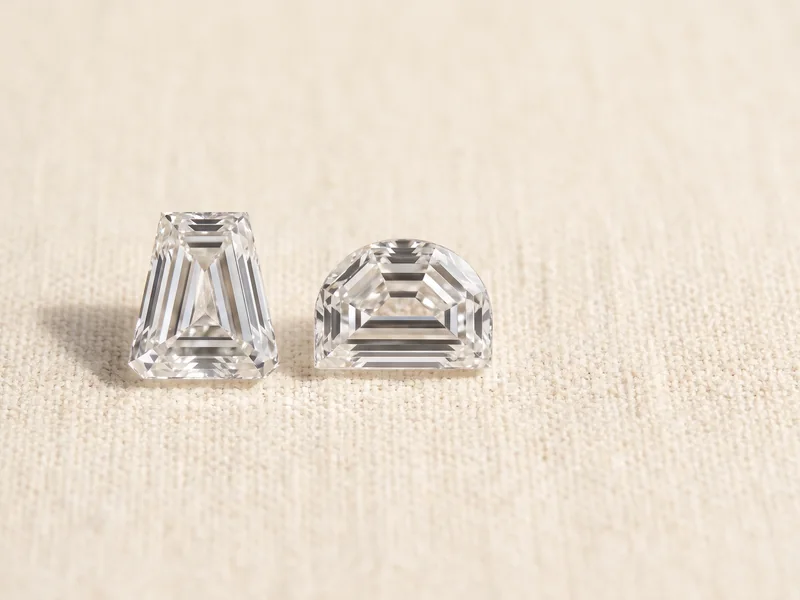
- Shaped side stones: one pair of larger stones, such as tapered baguettes, trapezoids, pears or half moons, set right against the centre.
- Channel-set rows: small rounds or baguettes held edge to edge between two metal walls, giving a smooth, clean line.
The small diamonds used for pavé and accents are called melee (said 'mel-ay'), a trade term for diamonds under roughly 0.18–0.20 carat. Melee is usually sold in parcels matched to a colour and clarity range rather than with individual grading reports. If you meet an unfamiliar word, our plain-English jewellery glossary defines it, and the wider engagement ring education hub covers everything from centre stone to wedding band. The same side stone designs also work for dress rings worn on the other hand; see how right-hand rings differ from engagement rings.
How are side stones set: claw, pavé, channel or bezel?
The method that holds the side stones decides almost everything else: how much sparkle you see, how much metal shows, how the ring wears over the years and whether it can be resized later. Here are the main options side by side.
| Method | How the stones are held | Look | Security | Upkeep and resizing |
|---|---|---|---|---|
| Shared claw (U-cut or French pavé) | One claw between each pair of stones; metal cut away beneath | Most sparkle, least metal | Good if claws are thick enough | Claws wear; resizing limited to about 1 size |
| Bead-set pavé and micro-pavé | Tiny beads raised from the band and pushed over each stone | Continuous glitter | Fair to good; beads are very small | Beads wear and stones can drop; resizing difficult |
| Channel | Stones sit edge to edge in a groove under a lip on each wall | Smooth, clean line | Very good; nothing to snag | Walls can spread after a hard knock; resizing difficult |
| Bezel or half-bezel | A thin metal rim around each stone | Modern, a little less sparkle | Very good | Low upkeep; moderate resizing |
| Individual claws (larger sides) | Each stone has its own three or four claws | Stones stand out clearly | Good | Claws need checking; easier to resize |
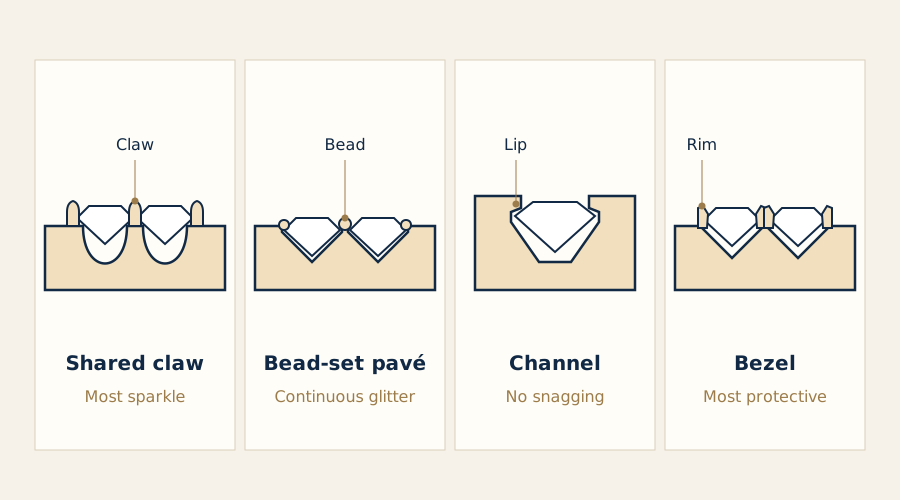
Shared-claw settings use one claw between each pair of stones, so less metal shows and more light enters from the side. Bead setting is the traditional pavé method: the setter raises tiny beads of metal from the band with a hand tool called a graver and pushes them over the edge of each stone. Micro-pavé is the same idea with stones of about 1.0–1.3 mm, set under a microscope. Smaller stones mean smaller beads, often well under half a millimetre, and that is the trade-off: very fine metal wears through sooner.
Channel setting holds stones in a groove, gripped by a lip along each wall. Nothing sticks up to catch on knits or hair, which suits people who work with their hands. Bezel-set side stones, each wrapped in a thin metal rim, are the most protective of all; our bezel set engagement ring guide covers that look in detail. For stone sizes and how many fit along a band, the pointer chart for small stone sizes has the full table.
Which side stone cuts suit which centre shape?
The general rule is to pair like with like. Brilliant cuts (many triangular and kite-shaped facets, lots of sparkle) sit well beside a brilliant centre. Step cuts (long parallel facets that give a 'hall of mirrors' look) sit well beside a step-cut centre such as an emerald or Asscher. Mixing the two works too, but it should look deliberate rather than accidental.
| Centre shape | Side stones that suit | Why it works |
|---|---|---|
| Round | Round pavé, tapered baguettes, pears, trapezoids | Rounds accept almost any side stone; tapers point the eye inwards |
| Oval | Pears, tapered baguettes, round pavé | Pears echo the oval's curve and add length |
| Emerald or Asscher | Straight or tapered baguettes, trapezoids, bullets | Step cuts match the centre's flat, mirror-like facets |
| Princess or radiant | Trilliants, trapezoids, small princess cuts | Straight edges sit flush against square corners |
| Cushion | Half moons, trapezoids, pears | Half moons follow the cushion's softly curved sides |
| Pear or marquise | Tapered baguettes, round pavé, small rounds | Keeps attention on the centre's point and outline |
Shapes also lead the eye. Tapered baguettes and pears point in towards the centre and make it the focus; trapezoids and half moons widen the look across the finger. Our guide to trapezoid, half moon, bullet, baguette and trilliant side stones explains each cut, and trilliant or pear sides compared tackles the most common decision for round and oval centres.
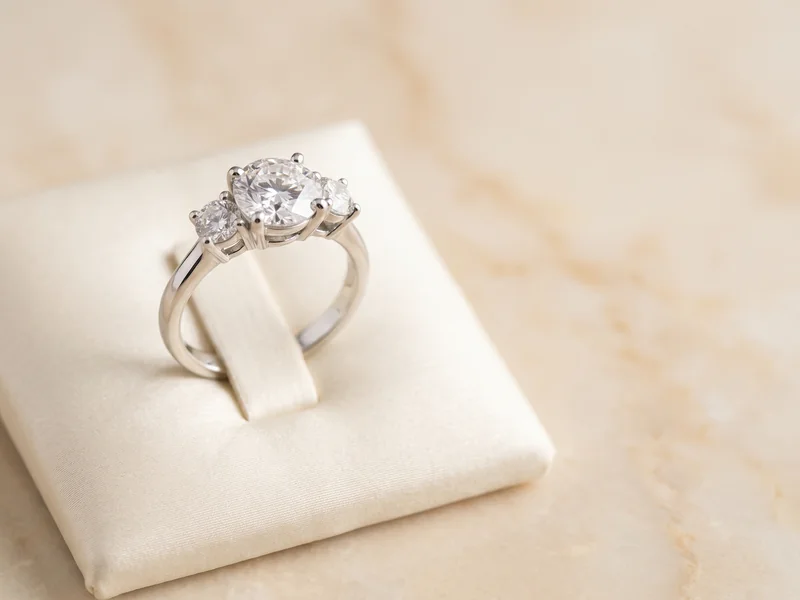
Once each side stone is roughly a third of the centre's width or more, the ring is usually called a three-stone ring rather than a side stone ring. The design rules shift, because all three stones now need matching in colour, cut and proportion. Our three-stone ring guide covers those proportions.
Related guideThree-Stone Engagement RingsHow big should side stones be, and how do you match them?
Side stone size is usually described in points: one point is 0.01 carat, so a '2 pointer' weighs 0.02 ct. Approximate weights for well-cut round melee:
| Diameter | Approximate weight | Typical use |
|---|---|---|
| 1.0 mm | about 0.005 ct | Micro-pavé on fine bands |
| 1.3 mm | about 0.01 ct | Micro-pavé, hidden halos |
| 1.5 mm | about 0.015 ct | Pavé shoulders |
| 1.8 mm | about 0.02–0.025 ct | Pavé or shared claw |
| 2.0 mm | about 0.03 ct | Shared-claw shoulders |
| 2.5 mm | about 0.06 ct | Graduated shoulders |
| 3.0 mm | about 0.10 ct | Accent stones beside the centre |
| 3.8–4.0 mm | about 0.20–0.25 ct | Small shaped or round sides |
Many pavé shoulders start with stones of about 2.0 mm nearest the centre and graduate down to 1.3–1.5 mm along the band, which looks natural and keeps the shank slim. Beside a 1 carat centre, a pair of shaped side stones is commonly about 0.10–0.30 ct each. Total side stone weight on a typical ring runs from about 0.10 ct for a fine pavé band to 0.50 ct or more for larger sides.
Colour matching matters more than clarity. Side stones should match the centre closely or be slightly whiter. A G-colour centre with F–G melee looks seamless; with I–J melee the shoulders can look warmer than the centre, especially in white gold or platinum. Clarity is less critical because inclusions (internal features) are hard to see at 1.5 mm, but cloudy melee looks grey and dull beside a bright centre. Looking at the stones together under the same light, as in our method for comparing diamonds side by side, works just as well for side stones.
Natural and lab-grown diamonds look the same to the eye and have the same hardness (10 on the Mohs scale) and refractive index (about 2.42). If a ring mixes a natural centre with lab-grown side stones, or the other way around, that must be disclosed clearly in writing. Coloured side stones work well too: sapphires and rubies, both corundum at 9 on the Mohs scale, are tough enough for pavé and channels. Emeralds (7.5–8) often contain fractures and can crack under the pressure of channel walls, so they are better claw- or bezel-set. Balancing two different stones is a skill of its own; our guide on balancing two stones in a toi et moi ring uses the same visual rules.
Not sure which one is right?
Send us the stones you are looking at and our gemologist will tell you which to choose and why.
Are side stone engagement rings secure for everyday wear?
Yes, if they are built well and checked regularly. A side stone ring has far more points of contact than a solitaire: a pavé shoulder with 20 stones can rely on 40 or more tiny claws or beads. Each one is small, and the shoulders take knocks the centre often avoids, from door handles, steering wheels and gym equipment.
From the repair bench, the same patterns show up again and again:
- Palm-side pavé wears first. Stones on the underside of the band rub against everything you grip. That is why many designs stop the pavé halfway or three-quarters of the way round.
- Stones nearest the centre get knocked most. They sit highest and widest, so check those first.
- Thin shanks bend. A stone-set band under about 1.8 mm wide can slowly go oval with daily wear, and once it flexes the stone seats loosen. Around 2.0–2.5 mm is a sensible minimum for pavé.
- Channel walls can open. A hard knock can spread a wall and free several stones at once.
- Resizing stresses the stones. Stretching or cutting a stone-set band can loosen seats; more than about one size up or down often means resetting some stones.
Platinum is dense and holds small claws and beads well; it wears mostly by moving metal around rather than losing it. 18ct white gold is harder at first but loses metal slowly, and it usually carries rhodium plating that needs renewing. Either metal works. What matters most is claw thickness and regular checks. If a stone does move, our guide to tightening loose stones before they fall out explains what a jeweller does at the bench.
Will a wedding band sit flush with a side stone ring?
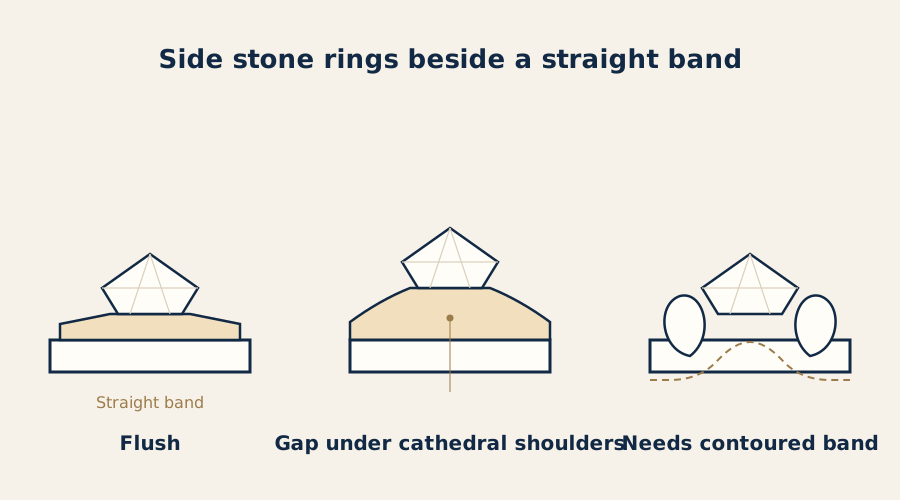
It depends on the side profile, meaning how the ring looks from the side: how high the centre sits and whether the shoulders rise to meet it. Our engagement ring side profile guide shows the main shapes, but the rules for side stones are simple:
- Low shoulders, centre sitting above the band: a straight wedding band usually sits flush underneath.
- Cathedral shoulders: the shoulders arch up to meet the centre, which often leaves a gap at the top beside a straight band; see how cathedral shoulders change the profile.
- Large shaped side stones: pears, trilliants and half moons often overhang the band's edge, so a contoured or notched band is needed.
- Hidden halo: a row of pavé under the centre adds width at the gallery (the area under the stone); check it clears the band. Our hidden halo ring guide covers these combinations.
Two stone-set bands rubbing together also wear each other. Pavé against pavé is the classic case: the beads on one ring grind the beads on the other, and stones loosen sooner. A plain band, or one with polished edges, beside a pavé engagement ring avoids most of it. Match the wedding band's width to the shoulders, usually within about 0.5 mm, so the two read as a set.
A CAD (computer-aided design) render lets you check side stone sizes, claw thickness and the gap to a wedding band before any metal is cast. Ask to see finished photos of the same setting as well, because a render can make claws look finer than they will be in metal.
How do you clean and care for a side stone ring?
Side stones trap more grime than a solitaire because there are more edges and openings underneath. Hand cream and soap film dull melee quickly, and dull shoulders make even a bright centre look tired.
- Soak in warm water with a drop of mild dishwashing liquid for 10–15 minutes, then brush gently with a soft toothbrush, especially under the stones.
- Rinse over a bowl or a plugged sink, never an open drain.
- Home ultrasonic cleaners suit diamonds, sapphires and rubies in sound settings, but vibration can shake out a stone that is already loose. Skip them for emeralds, opals, pearls and fracture-filled stones.
- Take the ring off for the gym, gardening, heavy lifting and chlorinated pools.
- Have white gold re-plated with rhodium about every 12–24 months, depending on wear.
- Book a claw and setting check every 6–12 months; it only takes a few minutes.
Every gem has its own limits with heat, chemicals and knocks. If your side stones are coloured, read our stone-by-stone gemstone care guide before using anything stronger than soapy water.
How much do side stone engagement rings cost in Australia?
The setting price depends on the metal, the number and size of stones, whether they are natural or lab-grown, and labour. Setting 30 micro-pavé stones takes far longer than setting four claws. As a rough guide, for an 18ct gold or platinum setting without the centre stone:
| Setting (without centre stone) | Approximate price range (AUD) |
|---|---|
| Plain solitaire setting, 18ct (for reference) | about $1,000–$2,500 |
| Pavé or shared-claw shoulders, natural melee (about 0.15–0.40 ct total) | about $2,000–$4,500 |
| Pavé or shared-claw shoulders, lab-grown melee | about $1,600–$3,500 |
| Channel-set rounds or tapered baguettes | about $2,500–$6,000 |
| Pair of shaped natural side stones, about 0.20–0.30 ct each | about $3,000–$7,000 |
Platinum usually sits at the upper end of each range. Lab-grown diamonds are real diamond grown in a laboratory rather than mined, and they cost much less than natural. Because melee is a small part of a ring's total price, the difference is smaller on side stones than on a centre stone. Whichever you choose, the ring's paperwork should state clearly which stones are natural and which are lab-grown.
Create your ring: choose a side stone setting
How to choose a side stone engagement ring, step by step
- Choose the centre stone first. Its shape, size and colour decide which side stones will suit it.
- Match the cut style. Brilliant sides with a brilliant centre, step-cut sides with a step-cut centre, unless the contrast is deliberate.
- Decide how far the stones run. Shoulders only, halfway or three-quarters round; avoid palm-side pavé if you work with your hands.
- Pick the setting method for your lifestyle. Shared claw or pavé for sparkle, channel or bezel for a snag-free, protective finish.
- Check colour and disclosure. Side stones should match or be slightly whiter than the centre, with natural or lab-grown stated in writing.
- Check the build on the CAD render. Look for a shank of at least 2 mm and claws that are not paper-thin.
- Test the wedding band. Confirm it sits flush or plan a contoured band before the ring is made; compare the other setting families if it will not.
- Book regular checks. Every 6–12 months, and straight away after a hard knock.
Free consultation
Talk to a gemologist
Compare stones in person or online with Raj Sood, Graduate Gemologist (GIA), AJP (GIA).
Book a consultationShop this shape
FAQ
Common questions
Do side stones make the centre diamond look bigger?
They can make it look more important. Bright shoulders and pointed shapes like tapered baguettes draw the eye to the centre and add width across the finger, although the centre itself measures the same.
Are side stone engagement rings harder to resize?
Often, yes. When pavé runs down the shank, resizing is usually limited to about one size either way before stones need resetting, so it pays to get the size right at the start.
Do side stones fall out?
Occasionally, usually after a knock or years of wear on the claws or beads. A check every 6–12 months catches worn claws before a stone is lost.
Can I have lab-grown side stones with a natural centre diamond?
Yes, it is common and looks the same to the eye. The mix must be disclosed clearly in writing, and the side stones should be colour-matched to the centre.
What is the difference between pavé and channel set side stones?
Pavé holds each stone with tiny beads or claws for maximum sparkle. Channel set stones sit in a groove between two metal walls, giving a smoother finish that does not snag.
Will a plain wedding band sit next to a side stone engagement ring?
Usually, if the centre sits above the band and the side stones do not overhang it. Cathedral shoulders or large shaped side stones often need a contoured band.

Ask a gemologist
Not sure which diamond to choose?
Raj Sood is a Graduate Gemologist (GIA) and master jeweller. Bring the stones you are considering, or send the reports, and he will tell you honestly which one is better and why.
Keep learning
Related guides
 Diamond ShapesSide Stone Diamond Cuts: Trapezoid, Half Moon, Bullet, Baguette, Trilliant
 Engagement Rings & SettingsThree-Stone Engagement Rings
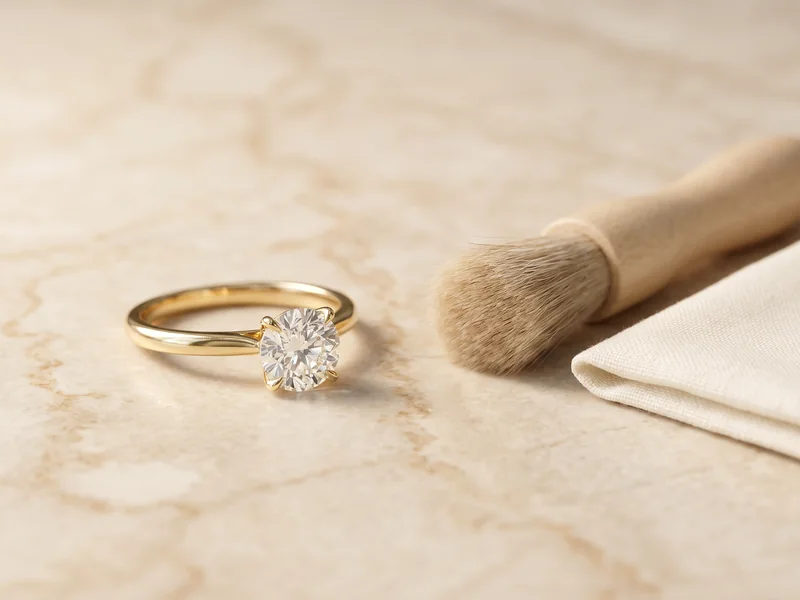 Care, Repairs & RemodellingLoose Stones and Stone Tightening
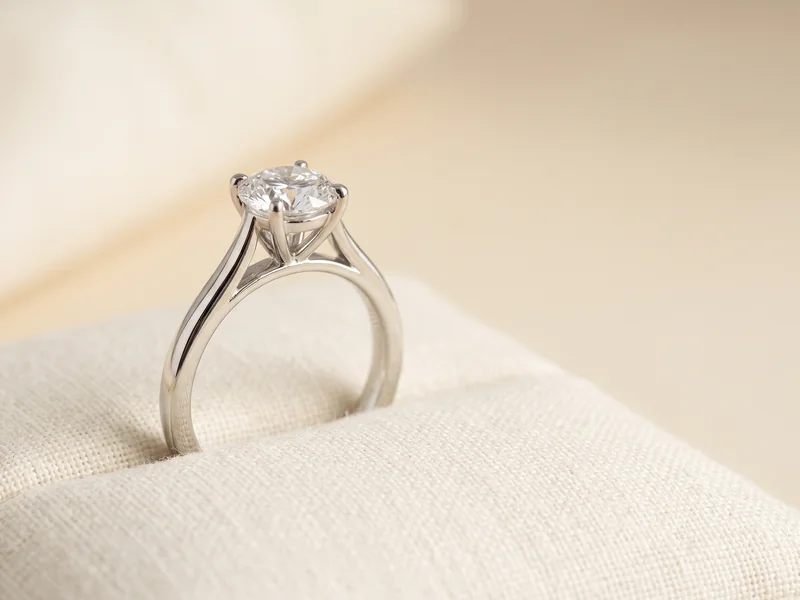 Engagement Rings & SettingsEngagement Ring Side Profile Guide
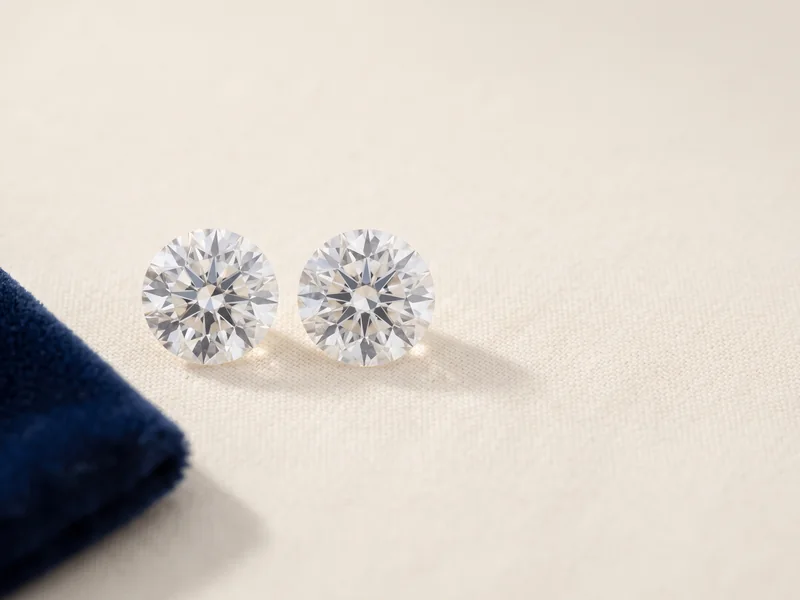 Buying Knowledge & Custom ProcessHow to Compare Two Diamonds Side by SideDiamond ShapesTrilliant vs Pear Side Stones
 GemstonesGemstone Care by Stone
Explore more
More guides on this topic
Education