
- Education
- Engagement Rings & Settings
- Low Profile vs High Profile Engagement Rings: Which Height Suits You?
Engagement Rings & Settings
Low Profile vs High Profile Engagement Rings: Which Height Suits You?
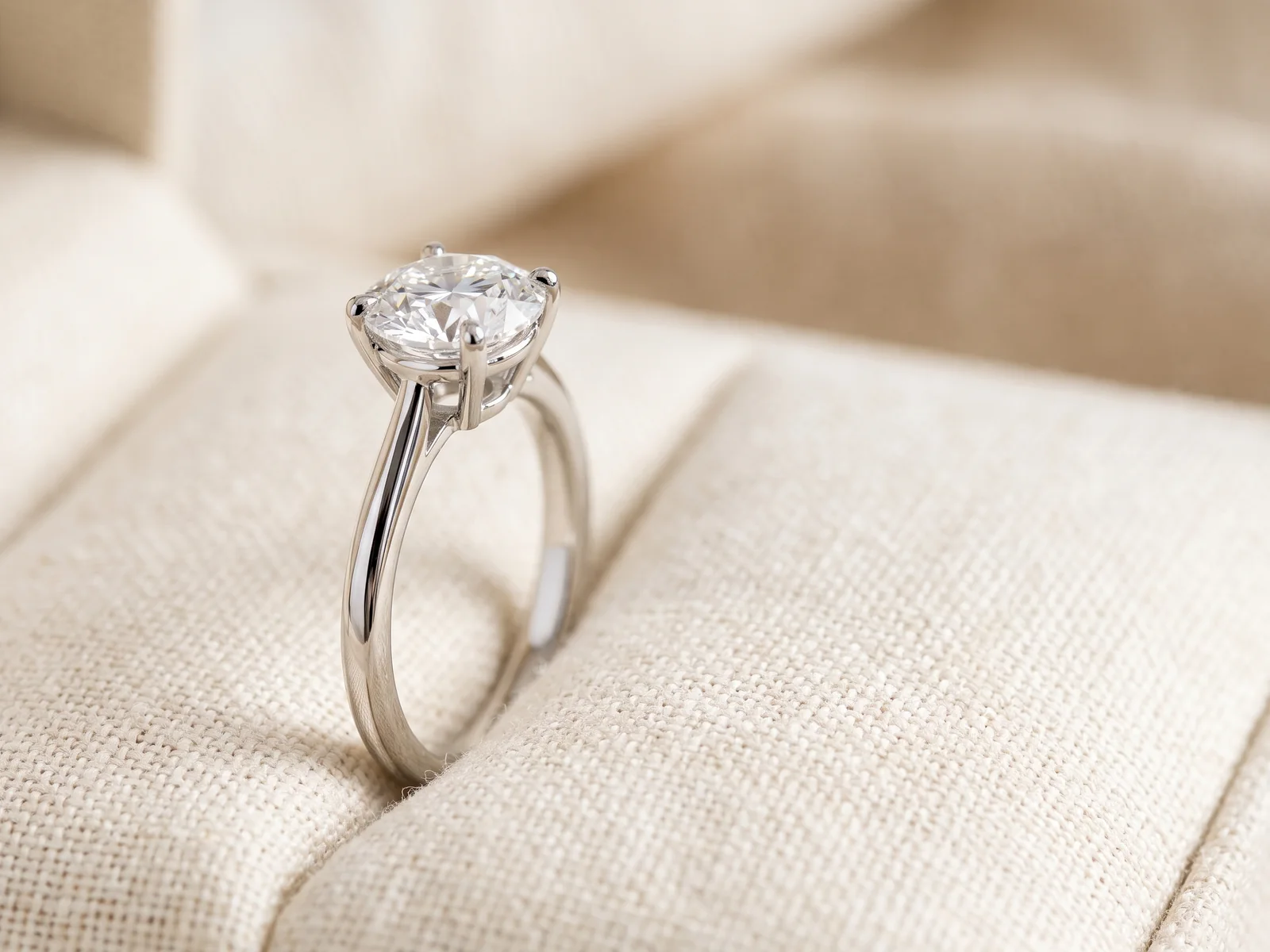
Choosing between low profile vs high profile engagement rings decides how your ring looks from the side, how often it catches, and whether a wedding band will sit flush beside it. Here is what each height means in millimetres, and how each one wears over the years.
 Reviewed by Raj Sood, Graduate Gemologist (GIA), AJP (GIA)Master jeweller and Graduate Gemologist (GIA) · reviewed 4 November 2026
Quick answer
A low profile engagement ring sets the centre stone close to the finger, usually about 4–6 mm above it, so it snags less and suits active hands. A high profile ring lifts the stone about 7.5–10 mm, showing more of the stone and gallery from the side, but it catches more often and needs claw checks sooner.
What is the difference between low profile and high profile engagement rings?
Setting height is the distance from the top of your finger to the top of the centre stone (its table, the large flat facet on top). A low profile engagement ring holds the stone close to the finger, usually about 4–6 mm high. A high profile ring lifts it on a taller head, usually about 7.5–10 mm high. Anything in between is often called medium or standard height, and that is where a lot of solitaires land.
The height comes from the parts under the stone. The head or basket is the frame of claws that holds the diamond. Below it, the gallery is the metal you see from the side, often an open rail or decorative wire. The shank is the band itself. A high setting adds a taller basket and gallery; a low setting trims them back, sometimes until the bottom point of the stone (the culet) dips into a cut-out in the shank. Our guide to engagement ring setting styles shows how claws, bezels and halos each handle this, and any term you have not met is in our jewellery glossary.
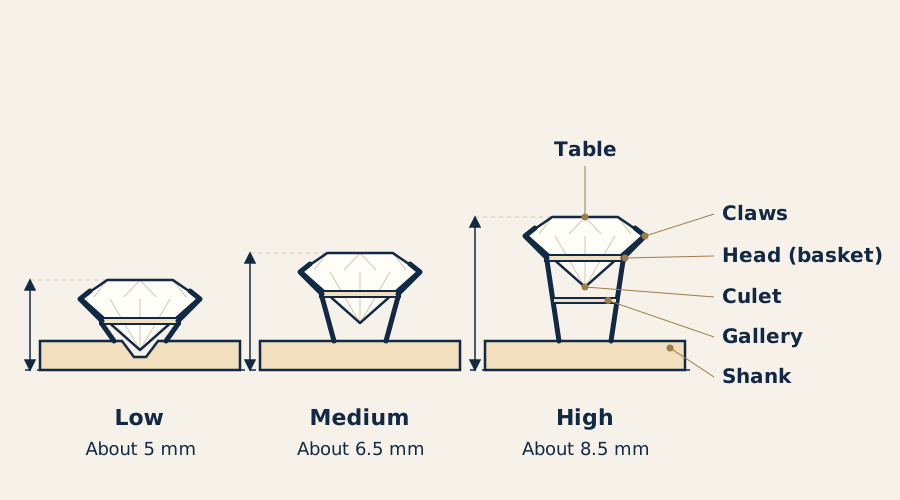
Height is partly fixed by the stone. A well-cut 1 carat round brilliant is about 6.4 mm across and about 3.9 mm deep from table to culet, so no claw setting can sit it much lower than about 5 mm once there is metal underneath. Bigger stones are deeper, so a low 2 carat ring still stands taller than a low half carat. The same applies to natural and lab-grown diamonds: the cut proportions, not the origin, decide the depth.
How high is a high profile engagement ring setting, in mm?
Jewellers do not use a single official scale, so treat these as working ranges rather than standards. Measure from the top of the band, where it sits against the finger, to the table of the stone.
| Profile | Approximate height above finger | What it looks like |
|---|---|---|
| Low | about 4–6 mm | Stone sits close; culet level with or inside the band |
| Medium (standard) | about 6–7.5 mm | Culet just clears the band; the classic solitaire look |
| High | about 7.5–10 mm | Stone lifted on a tall basket; gallery clearly visible |
| Very high or cathedral | 10 mm and above | Dramatic side view; mostly larger stones or fashion rings |
Height also depends on carat weight, because deeper stones need more room underneath. Typical figures for a round brilliant cut to standard proportions:
| Round diamond | Diameter | Stone depth | Lowest practical height | Typical high setting |
|---|---|---|---|---|
| 0.50 ct | about 5.1 mm | about 3.1 mm | about 4–4.5 mm | about 6.5–7.5 mm |
| 1.00 ct | about 6.4 mm | about 3.9 mm | about 5–5.5 mm | about 7–8.5 mm |
| 1.50 ct | about 7.4 mm | about 4.5 mm | about 5.5–6 mm | about 8–9 mm |
| 2.00 ct | about 8.1 mm | about 4.9 mm | about 6–6.5 mm | about 8.5–10 mm |
Fancy shapes vary. Oval diamonds, pear cut diamonds and marquise cut stones are often a little shallower for their face-up size than a round, so they can sit slightly lower; emerald and Asscher cuts with deep pavilions (the lower half of the stone) sometimes need more room. Before you commit, ask for the side view: our engagement ring side profile guide explains how to read height, gallery and shoulder shape from a single photo or CAD render.
Low profile vs high profile engagement rings: which is more practical?
| Low profile | High profile | |
|---|---|---|
| Height above finger | about 4–6 mm | about 7.5–10 mm |
| Snagging on hair, knits, gloves | Rarely | More often |
| Knock risk to stone and claws | Lower | Higher |
| Side light into the stone | Slightly less, especially with a bezel | More, through an open gallery |
| Look on the hand | Sleek, modern, understated | Prominent, classic, stone stands out in side view |
| Straight wedding band | Usually leaves a gap or needs a contoured band | Can often slide flush under the stone |
| Cleaning underneath | Harder; grime collects | Easier to reach with a brush |
| Claw wear over years | Slower | Faster |
| Often suits | Active hands, gloves at work, softer gems | Occasional wear, larger display, stacking bands |
The pattern is simple: height buys presence and a little extra light, and costs you some practicality. Neither choice is wrong. People who work with their hands, wear gloves at work (nurses, chefs, vets, tradies) or have young children often lean low. People who want the stone seen from every angle, or who plan to stack a straight band under it, often lean high.
Face-up size does not change with height. A 1 carat stone looks the same width from above whether it sits at 5 mm or 9 mm; if looking bigger is the goal, the shape matters far more, as our comparison of which shapes look largest face-up for their weight shows. What height changes is the side-view proportions of a ring, how much metalwork shows, and how the ring behaves when your hand goes into a bag or a pocket.
Does a high setting make a diamond sparkle more?
A little, but less than most people expect. Diamond's sparkle comes from light entering through the top, bending sharply (diamond's refractive index is about 2.42), bouncing off the pavilion facets and coming back out through the top. Almost all of that light enters through the crown and table, not the sides. A well-cut diamond set low still returns most of its light.
Where height helps is with an open setting. A high basket with slim claws and an open gallery lets some side light reach the pavilion, and it keeps the shank away from the stone's underside, where metal can reflect into the diamond as a faint grey or yellow tint. A full bezel (a rim of metal around the whole edge) at low height blocks the most side light, which is why some people find a low bezel slightly less lively than a claw setting. For coloured gemstones a closed back can deepen colour, and some antique rings used foil backing for exactly that reason.
Keeping the stone clean matters more than height. A film of hand cream or soap on the pavilion dulls sparkle more than the difference between 5 mm and 9 mm. That is one practical point for high settings: you can reach under them with a soft brush. Openwork galleries, like those on filigree engagement rings, look lovely from the side but trap dirt in their gaps at any height.
Not sure which one is right?
Send us the stones you are looking at and our gemologist will tell you which to choose and why.
How do low profile vs high profile engagement rings wear over the years?
This is where the repair bench gives a clear view. The rings that come back with bent or worn claws, loose stones and chipped girdles (the thin outer edge of the stone) are mostly the tall ones. A high basket acts like a lever: a knock on a door frame at the top of the stone twists the claws at their base, and over time that loosens the seat the stone sits in.
- Claw tips wear thin. Claws are the first metal to meet the world. On a high setting they rub on fabric and benches every day, and many need re-tipping (rebuilding the tip with new metal) after roughly 5–10 years of daily wear, sooner if the ring goes to the gym or the garden.
- Stones work loose. A tall basket flexes more under impact. A stone that rattles or turns is a warning: stop wearing the ring until it is checked.
- Edges chip. Exposed girdles take knocks. Diamond is 10 on the Mohs hardness scale but can still chip at the girdle or a point; sapphire (9) is tough, while emerald (7.5–8) and opal (5.5–6.5) are far more vulnerable when set high.
- Low settings wear too. Bezel rims thin over time, the shank under the stone can wear where it rubs a wedding band, and grime packs into tight spaces. These are slower, gentler problems.
- Metal matters. Platinum claws tend to bend rather than snap and lose little metal when polished. 18 carat white gold is harder at first but wears away, and it usually needs rhodium plating every year or two to stay bright white.
Polishing over the years also removes a little metal each time. A high polish finish shows every scratch and tends to be buffed often, so a fine claw on a tall setting can thin faster than you might think. If any repair words here are new, see our definitions of re-tipping, girdle and other repair terms.
Will a wedding band sit flush with a low or high profile ring?
This is the question people forget to ask, and it often decides the height. A high profile ring usually leaves room under the stone, so a plain straight band can slide right up against the engagement ring's shank with no gap. A low profile ring puts the stone, its claws or its culet at or below the top of the band, so a straight band either sits with a visible gap or the two rings knock against each other.
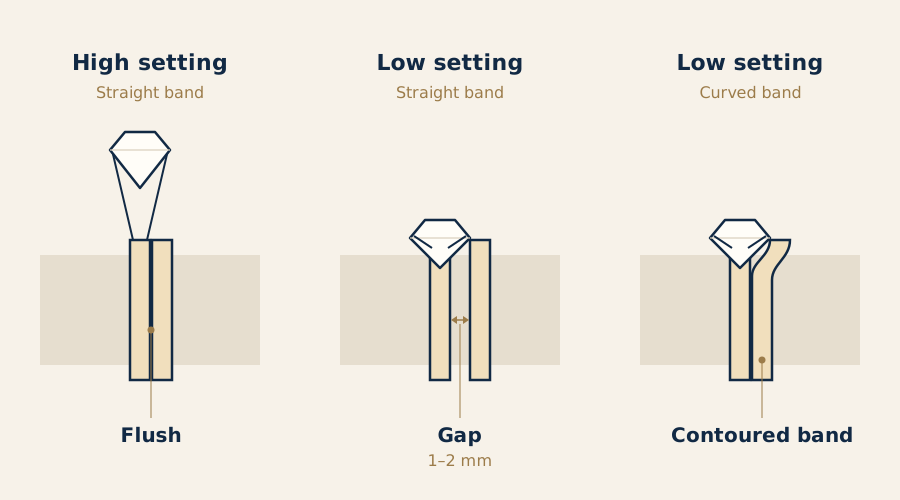
There are three common fixes for a low setting: a contoured band that curves around the stone, a notched band with a small cut-out, or a design where the engagement ring's shank is shaped so a straight band can butt against it. Our page on wedding bands that sit neatly with low-set rings shows each option, and band profiles such as flat, court and D-shape affect how two rings meet as much as the setting height does.
If you are choosing both rings at once, decide on the band before you lock in the height. A 1–2 mm gap between rings is fine to some people and annoying to others: it collects lotion and lets the rings rub. Planning a flush pairing for a sleek, close-set ring at the design stage is easier than altering a finished ring later.
Related guideEngagement Ring Side Profile GuideWhich setting styles sit low and which sit high?
- Bezel and half-bezel: naturally low; a rim of metal wraps the edge and protects it.
- Flush (gypsy) setting: the stone sits inside the band itself, the lowest option of all; common for small stones and men's rings.
- Four or six claw solitaire: can be built at any height; the classic six claw is usually medium to high.
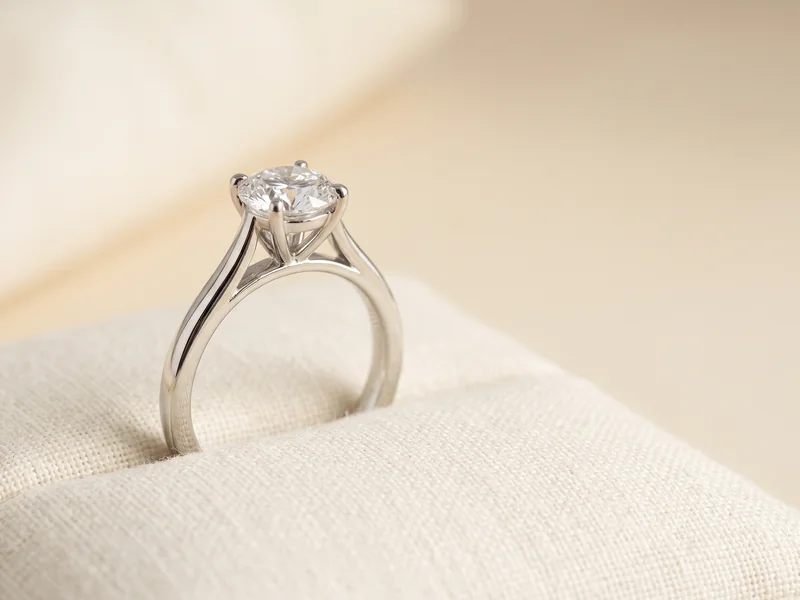
- Cathedral: the shoulders sweep up to meet the head, adding height and strength; usually high.
- Halo: a ring of small diamonds around the centre adds roughly 2–3 mm to the overall head width, can be set low or high, and shields the centre stone's edge.
- Hidden halo: small diamonds around the gallery under the stone, seen only from the side; it needs medium to high height to show.
- East-west and toi et moi: stones set sideways or in pairs usually sit lower, which suits asymmetrical engagement rings where balance matters more than height.
Period designs are a useful reference. Many Edwardian and Victorian rings set stones in closed collets or lace-like platinum mounts at modest heights, and Art Deco engagement rings from the 1920s and 30s often keep stones low inside geometric platinum frames edged with milgrain (tiny beaded borders). For a side-by-side look at claw, bezel, halo and cathedral settings, start with the styles overview.
Because height is set in the design, settle it before the ring is cast. We draw rings in CAD (computer-aided design), so you can see a side render with the height marked in millimetres and compare it with finished photos of similar settings before any metal is poured.
Which profile suits your lifestyle, hands and gemstone?
Think about an ordinary week, not the proposal. These are the factors that most often settle it:
- Gloves at work: healthcare, food, labs and trades. A high setting tears gloves and catches; go low, or plan to take the ring off at work.
- Hair, knits and small children: high claws catch fine hair and wool. Low settings, bezels or claws with rounded tips catch less.
- Short or slim fingers: a very tall setting can look top-heavy and tip sideways; medium height often balances better. Long fingers carry height easily.
- Softer gemstones: emerald and morganite (7.5–8), tanzanite (6–7) and opal (5.5–6.5) are safer set low and protected. Sapphire and ruby (9) and diamond (10) handle either height.
- Larger stones: a 2 carat round is already about 5 mm deep, so a high setting makes the ring around 9–10 mm tall. Many people with bigger stones choose medium or low to keep it wearable.
The metal finish changes the feel as well. A low bezel in bright, mirror-polished metal reads sleek and modern; the same stone lifted high on fine claws reads classic. If you are unsure, medium height (about 6–7.5 mm for a 1 carat) is a sensible middle ground that still lets many straight bands sit close.
How do you choose the right height for your engagement ring? Step by step
- Start with the stone. Note its depth in millimetres from the grading report; that sets the lowest practical height.
- List your daily activities. Gloves, sport, gardening, small children and hair-heavy work point towards low or medium.
- Decide on the wedding band. A straight band under the stone needs medium to high height; a contoured or notched band suits low.
- Look at the side view. Ask for a side photo or CAD render with the height marked, and try on rings of similar height.
- Choose claws to suit. Six claws, thicker claws or a bezel for hard wear; four fine claws show more of the stone.
- Plan maintenance. Book a claw check every 6–12 months, and keep to it for high settings worn every day.
Design your ring: browse settings and create your ring
Free consultation
Talk to a gemologist
Compare stones in person or online with Raj Sood, Graduate Gemologist (GIA), AJP (GIA).
Book a consultationShop this shape
FAQ
Common questions
Are low profile engagement rings less sparkly?
Only slightly. Most of a diamond's sparkle comes from light entering through the top, so a well-cut stone set low still sparkles well; a low full bezel blocks a little more side light than claws.
What is the standard height for an engagement ring setting?
There is no official standard, but many solitaires sit at a medium height of about 6–7.5 mm above the finger for a 1 carat stone. Low profile is roughly 4–6 mm and high profile roughly 7.5–10 mm.
Do high profile engagement rings snag more?
Yes. Taller claws catch on hair, knits and gloves more often, and the extra height means more knocks. Rounded claw tips and a protective halo or cathedral shoulders reduce snagging.
Can a high profile ring be made lower?
Often, yes. A jeweller can replace the head with a lower one, but the shank may need reshaping and a deep stone limits how low it can go, so it is easier to plan at the design stage.
Will a straight wedding band fit a low profile engagement ring?
Usually not flush. The stone or culet sits at band level, so you will either have a small gap or need a contoured or notched band.
Which height is better for an active lifestyle?
Low or medium. A low setting, bezel or flush setting has less leverage on the claws and catches less, which suits gloves at work, sport and young children.
Terms in this guide

Ask a gemologist
Not sure which diamond to choose?
Raj Sood is a Graduate Gemologist (GIA) and master jeweller. Bring the stones you are considering, or send the reports, and he will tell you honestly which one is better and why.
Keep learning
Related guides
 Engagement Rings & SettingsEngagement Ring Side Profile Guide
 Wedding Bands & EternityWedding Bands for Low-Profile Engagement RingsEngagement Rings & SettingsEngagement Ring Setting Styles Guide
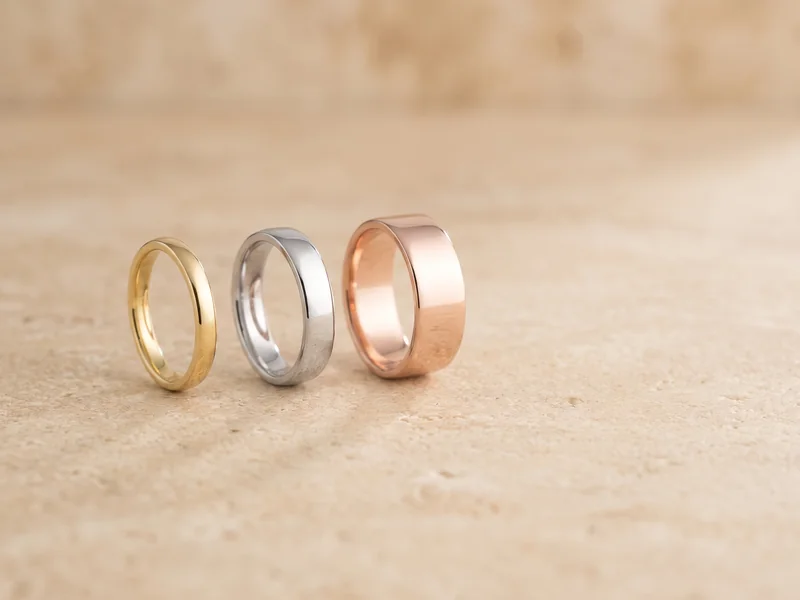 Wedding Bands & EternityWedding Band Profiles Explained
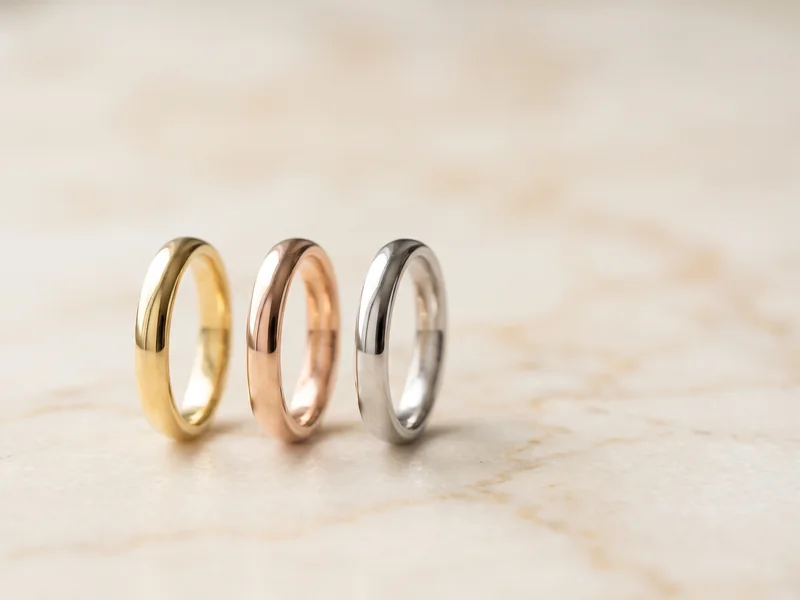 Wedding Bands & EternityHigh Polish Ring Finish
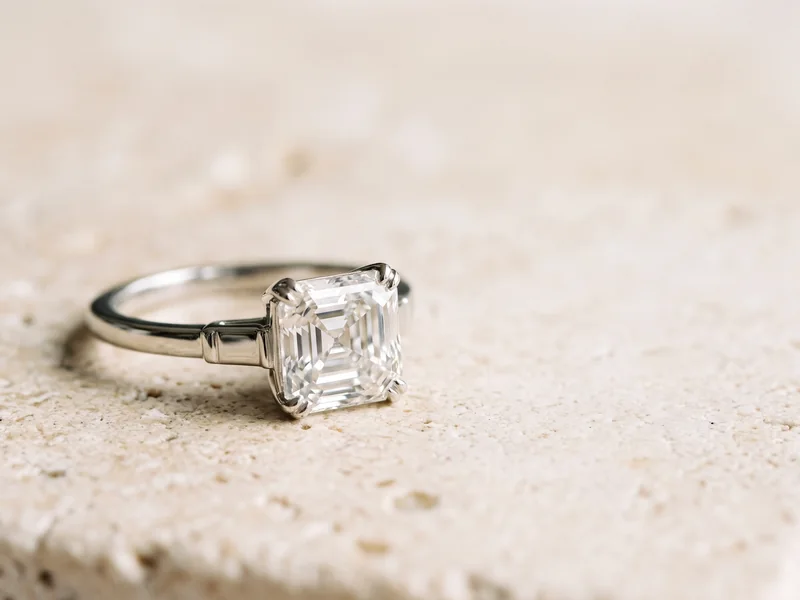 Engagement Rings & SettingsArt Deco Engagement Rings
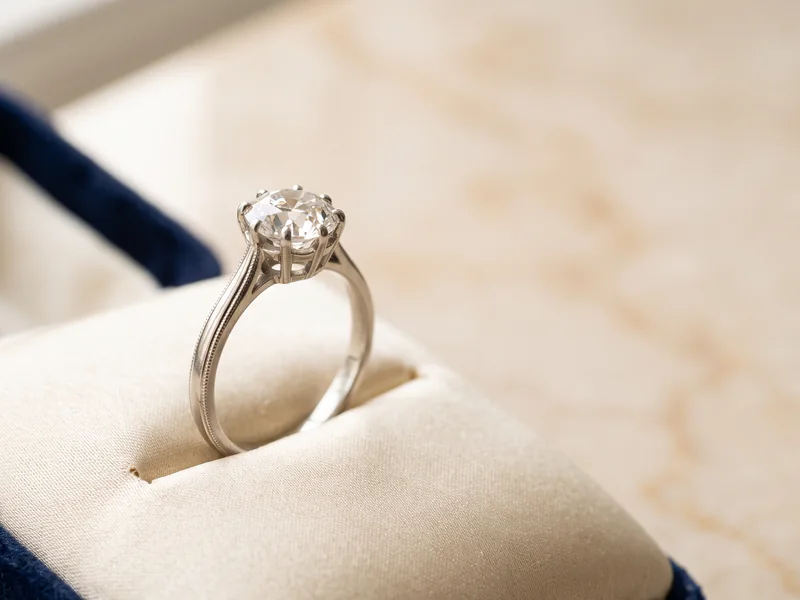 Engagement Rings & SettingsEdwardian and Victorian Engagement RingsEngagement Rings & SettingsFiligree Engagement Rings
Explore more
More guides on this topic
Education