
- Education
- Engagement Rings & Settings
- Engagement Ring for an Active Lifestyle: How Your Work and Hobbies Should Shape the Design
Engagement Rings & Settings
Engagement Ring for an Active Lifestyle: How Your Work and Hobbies Should Shape the Design
An engagement ring is worn every day for decades, so the right design depends on how you use your hands. Here is how to plan an engagement ring for an active lifestyle, or a quieter one, so it still looks right years from now.
 Reviewed by Raj Sood, Graduate Gemologist (GIA), AJP (GIA)Master jeweller and Graduate Gemologist (GIA) · reviewed 4 November 2026
Quick answer
An engagement ring for an active lifestyle should sit low, protect the stone's edge and use durable materials. Choose a bezel or a low six-claw setting, a band at least 2 mm wide and about 1.6 mm thick, platinum or 18ct gold, and a tough stone such as diamond or sapphire. Remove it for the gym.
Why should lifestyle influence engagement ring design?
An engagement ring is usually the one piece of jewellery worn every single day. It goes to work, to the supermarket, into the garden and under the kitchen tap. The design choices that decide how well it survives, such as how high the stone sits, how it is held, how thick the band is and which metal it is made from, are barely visible in a photo. After five years on the hand they are obvious.
From the workshop bench, the pattern is clear. Rings that come back with bent claws, loose stones or a band worn thin are rarely the victims of one dramatic accident. They are usually a delicate design paired with a busy pair of hands. The same ring that lasts twenty trouble-free years on an accountant can need claw repairs every couple of years on a physiotherapist or a builder.
Before choosing a look, it helps to understand every main engagement ring setting style and how each one is built. We explain technical words as we go, and you can look up any others in our glossary of jewellery terms. Lifestyle comes down to four design levers:
- Profile: how high the centre stone sits above your finger.
- Protection: how much metal surrounds the stone's edge (the girdle, the thin outer rim of a gemstone).
- Proportions: the width and thickness of the band, also called the shank.
- Materials: the metal alloy and the hardness and toughness of the gemstone.
How do you assess your lifestyle before designing a ring?
Think about an honest, ordinary week rather than a special occasion. What does the wearer do with their hands at work, at home and on weekends? Do they wear gloves? Are their hands often wet, cold or in contact with chemicals? Do they already take rings off without thinking, or do they never remove jewellery at all? The table below matches common routines with the main risk and the design features that usually suit them.
| Lifestyle | Main risk to the ring | Design features that suit |
|---|---|---|
| Office or desk work | Light knocks on desks and keyboards | Most settings work; claws checked yearly |
| Nursing and healthcare | Tearing gloves, hand hygiene rules, constant washing | Low bezel or flush setting, smooth band, or a plain band worn at work |
| Trades and hands-on work | Heavy impacts, crushing, abrasion | Low bezel, thick band of 2.5 mm or more; ring off on site |
| Chefs and hospitality | Food trapped under the stone, heat, wet hands | Open, easy-clean gallery, low profile, bezel or six claws |
| Gym and weights | Bars squeezing the band out of round, claws bent | Thicker shank, low profile; ring off for lifting |
| Swimming and surfing | Cold water shrinking fingers, chlorine, loss | Snug fit, sizing beads, closed setting |
| Parents of young children | Snagging hair, clothes and car seats | Low profile, smooth claws or bezel, no pointed corners |
| Gardening and outdoors | Soil and grit wearing metal, impacts | Platinum or yellow gold, bezel; wear gloves |
If the ring is a surprise, look at the jewellery your partner already wears. Someone who wears chunky, smooth rings and never takes them off will treat an engagement ring the same way. Write these observations down: they belong at the top of a clear design brief for your jeweller, above any notes about style.
Which setting is safest for an engagement ring for an active lifestyle?
The setting is the metal structure that holds the stone. In a claw setting (also called prongs), slim metal posts grip the stone at a few points. In a bezel setting, a continuous rim of metal wraps the whole girdle. The more of the edge that is covered, the better protected the stone is from chips and the less there is to snag, though you see a little less of the stone's outline. This is the heart of the bezel vs claw setting question.
| Setting | Edge protection | Snag risk | Long-term upkeep | Suits |
|---|---|---|---|---|
| Four claws | Low | Moderate | Claw tips wear; check yearly | Quieter lifestyles, maximum light |
| Six claws | Moderate | Moderate | More secure if one claw is damaged | Most everyday wearers |
| Bezel (full) | High | Very low | Rim can be re-tightened or rebuilt | Active, hands-on and healthcare work |
| Half-bezel | Moderate to high | Low | Protects the two sides most likely to hit | Active wearers who want more sparkle |
| Flush (gypsy) | Very high | None | Stone sits inside the band; very little wear | Trades, gym, smaller stones |
| Halo | Moderate (small stones exposed) | Moderate | Tiny halo stones can loosen with knocks | Moderate lifestyles |
| Pavé band | Low for the small stones | Low | Small stones can drop out if the band is knocked or bent | Quieter lifestyles |
| Tension | Moderate | Low | Difficult or impossible to resize | Specialist designs only |
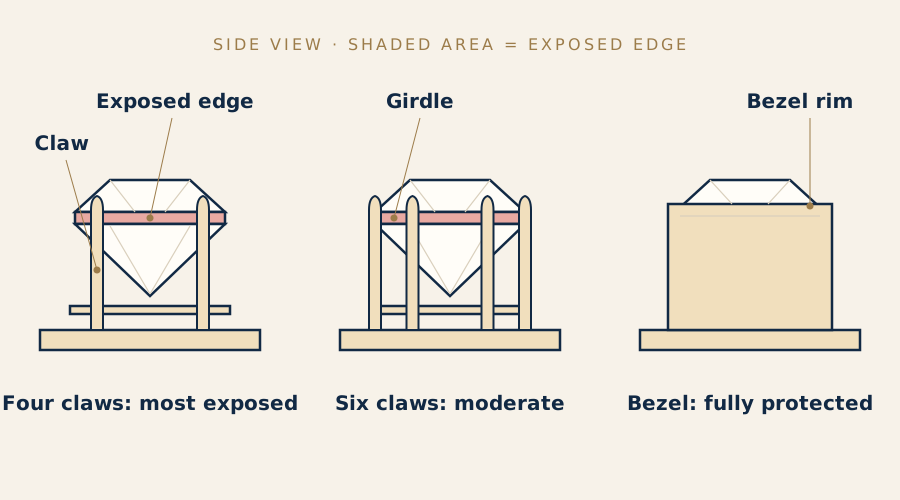
For most people looking for the most durable engagement ring setting, the honest answer is a full or half-bezel, followed closely by a low six-claw setting with thick, rounded claws. You can see how these sit alongside other styles in our comparison of claw, bezel, halo and tension settings.
Stone shape matters too. Pear, marquise, princess and heart shapes have points or corners, the thinnest and most chip-prone parts of the stone. If you love a pointed shape and lead an active life, ask for V-claws (claws folded around each point) or a bezel. Round, oval and cushion shapes have no exposed corners and are more forgiving. Our overview of every diamond shape shows which outlines have exposed corners, and the pear cut diamond guide explains how a single point is usually protected. Coloured stones, especially softer ones, need even more care; see our guide to protective settings for sapphires, emeralds and morganite.
How high should the centre stone sit on a low profile engagement ring?
The profile is the height from your finger to the top of the stone. A high cathedral setting, where curved shoulders lift the stone up, often places the top of a 1 carat round roughly 7–9 mm above the finger. A low profile engagement ring brings that down to roughly 4–6 mm. Every millimetre lower means less leverage on the claws when the stone hits a door frame, and less chance of catching on knitwear, hair or gloves.
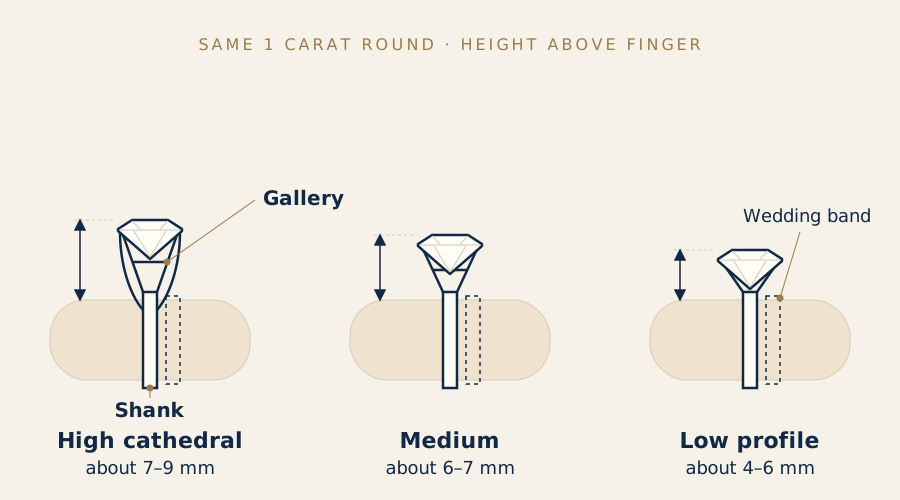
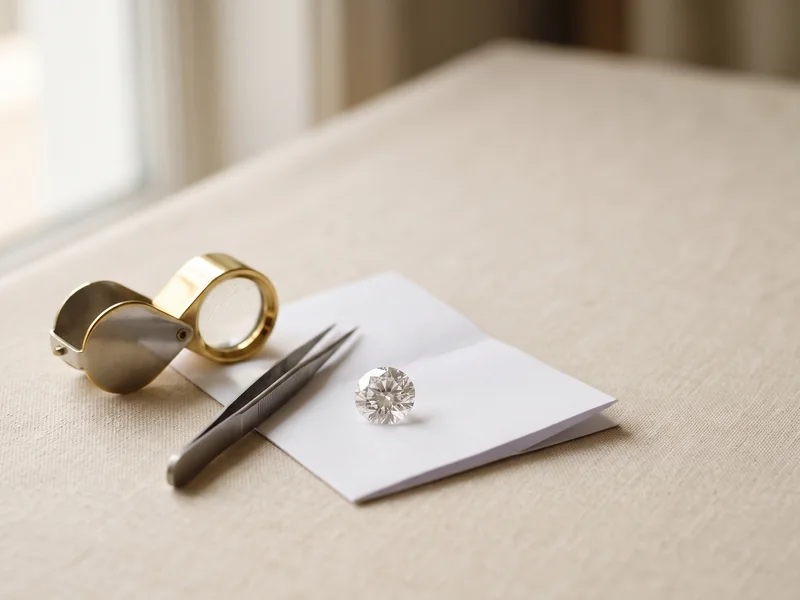
The trade-off is light and band fit. A very low setting can leave less room under the stone for light and cleaning, and the gallery (the open metalwork beneath the stone) may sit where a wedding band wants to go. A good design solves this with a slightly tapered shank or a gallery shaped to clear a straight band. Seeing the side view before anything is made is the most useful check here, which is how CAD lets you check the setting height before casting.
Deeper stones such as some lab-grown and natural ovals, cushions and coloured gems sit higher whatever the setting, because their pavilion (the lower, pointed half) is longer. Ask for the stone's depth in millimetres, not just its carat weight, when you plan a low design.
Not sure which one is right?
Send us the stones you are looking at and our gemologist will tell you which to choose and why.
Platinum vs white gold engagement ring: which metal wears best?
Metals do not just differ in colour; they wear differently. Platinum is dense and, when scratched, mostly pushes metal aside rather than losing it, so it develops a soft satin look called a patina but keeps its weight well. Gold is mixed with other metals to make it hard enough to wear; 18ct gold is 75% pure gold, and a scratch removes a tiny amount of metal over time. Neither is wrong, but they suit different habits.
| Metal | Composition | How it wears | Usual upkeep |
|---|---|---|---|
| Platinum 950 | 95% platinum | Develops patina, keeps its mass; claws hold up well | Polish when you like; claws checked yearly |
| 18ct white gold | 75% gold, white alloy, usually rhodium plated | Plating wears to a faint warm tone; gold slowly thins | Rhodium replating roughly every 1–2 years for daily wear |
| 18ct yellow gold | 75% gold with silver and copper | Scratches show less; slow, even wear | Polish and claw check |
| 18ct rose gold | 75% gold with more copper | Similar to yellow; warm colour hides scuffs | Polish and claw check |
| 9ct gold | 37.5% gold | Hard but less pure; can tarnish slightly over time | Polish; more prone to some chemical attack |
A common workshop answer for active wearers is a mixed build: an 18ct gold band for colour with platinum claws or a platinum bezel, which keeps the stone held tightly for longer. If anyone in the family has a nickel sensitivity, mention it early, because some white gold alloys contain nickel and alternatives exist.
What is the most durable stone for an engagement ring?
Two properties matter. Hardness, measured on the Mohs scale from 1 to 10, is resistance to scratching. Toughness is resistance to chipping and breaking. A stone can be hard but brittle, so both count when you choose an engagement ring for an active lifestyle.
| Gemstone | Mohs hardness | Toughness | Everyday-wear verdict |
|---|---|---|---|
| Diamond (natural or lab-grown) | 10 | Good, but can chip along cleavage planes | Excellent; protect points and edges |
| Moissanite | about 9.25 | Good | Excellent |
| Sapphire and ruby (natural or lab-created) | 9 | Excellent, no cleavage | Excellent; very forgiving |
| Spinel | 8 | Good | Very good |
| Aquamarine and morganite | 7.5–8 | Fair to good | Good in a protective setting |
| Emerald | 7.5–8 | Poor; often has filled fractures | Needs a bezel and gentle wear |
| Tanzanite | 6–6.5 | Fair | Occasional or careful wear |
| Opal | 5.5–6.5 | Poor | Careful wear only |
| Pearl | 2.5–4.5 | Fair, but easily scratched | Not suited to daily hands-on wear |
Natural and lab-grown diamonds have identical hardness and toughness, because both are real diamond. Choosing laboratory-grown diamond does not change how the stone wears, but its lower cost can leave room in the budget for a heavier platinum setting. The same is true of lab-created sapphire, which is chemically the same as natural sapphire.
If your heart is set on a softer stone such as emerald, opal or morganite, design around it: a full bezel, a lower profile and an agreement to take the ring off for physical jobs. Our guide to securing a softer coloured gemstone covers the specific techniques.
What engagement ring band thickness and width suits your hands?
Band width is how wide the band looks from above; thickness is how deep the metal is from the outside to the inside surface. Thickness is the number that decides durability. A very fine band around 1.5 mm wide and 1.2 mm thick can be squeezed out of round by a gym bar or a tight grip on tools, and it wears thin faster behind the stone. For daily wear, many jewellers suggest at least about 1.6 mm thickness; for hands-on work, 1.8–2.0 mm is more robust.
Width is partly comfort and finger shape. Narrow bands of about 1.8–2.2 mm make a centre stone look larger; bands of 2.5–3 mm feel more solid and suit larger hands and busy ones. Our guide to choosing a band width for your finger goes through the options in detail. A comfort fit, where the inside of the band is gently rounded, slides over the knuckle more easily and feels better when hands swell in a Melbourne summer.
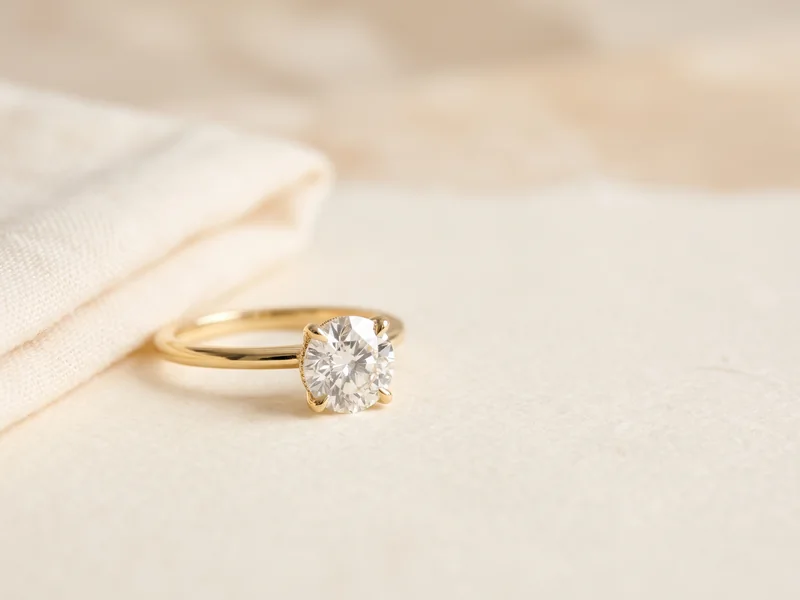
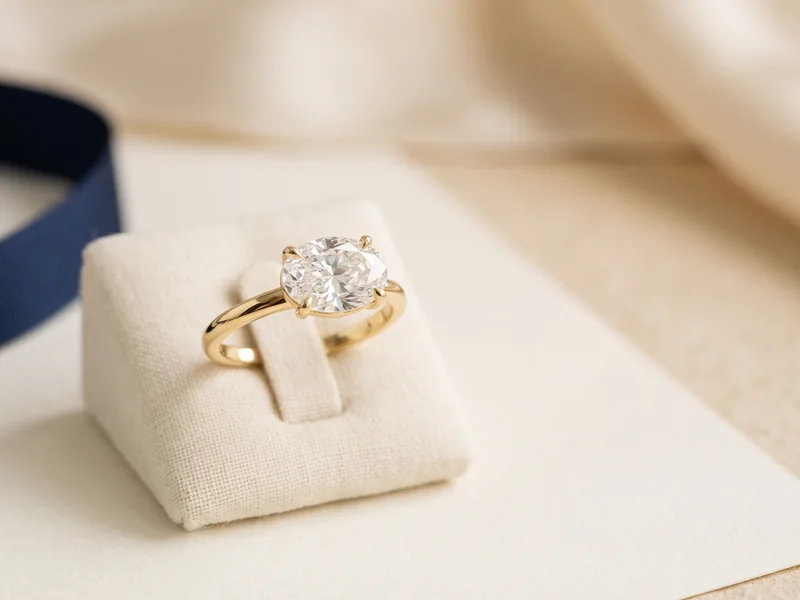
Lifestyle also changes your ring size over time: pregnancy, training, weight changes and age all affect fingers. Avoid designs with stones set all the way around the band if you think you will need adjustments, and read about designing the shank for future resizing before you commit. Finally, plan the wedding band now, because a low or flush setting changes what will sit beside it; there is a strong case for designing the engagement ring and wedding band as a pair.
Related guideShould You Design the Engagement Ring and Wedding Band Together?What engagement ring design works for an active lifestyle at work?
Some jobs need specific design answers. These are the conversations we have most often across the counter:
- Engagement ring for nurses and healthcare staff: many hospitals ask clinical staff to wear no rings with stones, or only a plain band, during patient care. A low bezel ring for days off plus a smooth wedding band for shifts is a common, practical pairing.
- Engagement ring for tradies: no setting survives a hammer blow or a crushed finger, and a ring can cause serious injury if it catches on machinery. Wear it off site and choose a thick, low bezel or flush-set design for everything else.
- Chefs and hospitality: food and soap collect under open galleries. Pick a design that is easy to clean and check for hygiene rules at work.
- Gym and sport: remove the ring for weights, climbing and ball sports. Knurled bars scratch metal and squeeze thin bands out of shape.
- Swimmers and surfers: cold water shrinks fingers and rings slip off unnoticed. Chlorine can attack some gold alloys over time. Sizing beads (two small metal bumps inside the band) help hold a ring in place.
- Musicians, hairdressers and beauty therapists: high claws catch strings, hair and fabric. A low, smooth profile is kinder to both the ring and the client.
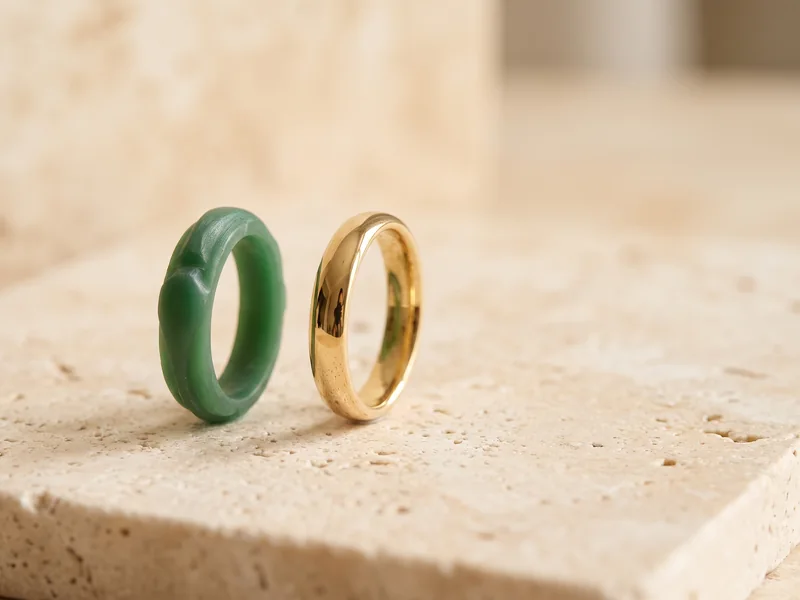
Some couples choose to wear a simple band at work and keep the engagement ring for evenings and weekends. Your bands do not need to be identical either; our guide to whether couples' wedding bands need to match covers mixed metals and widths. If the band is the ring you will wear most, give extra weight to how band width affects strength and comfort.
How does each setting wear over the years?
This is the view from the repair bench. Claw tips slowly flatten and thin with contact, so a claw that started round and plump can be noticeably worn after five to ten years of daily wear on an active hand. A bezel wears more evenly and can be re-tightened or rebuilt. Pavé and halo stones are held by tiny beads of metal and are usually the first stones to go missing after a knock. White gold plating wears first on the underside of the band, where it rubs against surfaces and neighbouring rings.
| Maintenance job | Typical interval for daily wear | Approximate cost (AUD) |
|---|---|---|
| Professional clean and claw check | Every 6–12 months | often free to about $50 |
| Claw retipping (per claw) | When tips are worn, often after several years | about $50–$150 |
| Rebuilding a full claw head | After heavy wear | about $250–$600 |
| Rhodium replating (white gold) | Roughly every 1–2 years | about $60–$150 |
| Replacing a small pavé or halo stone | As needed | about $50–$150 per stone |
These are broad ranges only; the actual cost depends on the metal, the size of the stone and the design. Lower, thicker designs simply need these jobs less often. Wherever you buy, ask how a setting can be repaired before you choose it: a design that can be retipped, rebuilt or resized will serve you far longer than one that cannot.
How do you design an engagement ring around your lifestyle? Step by step
- Audit the week. List work, sport, hobbies and habits, and note when the ring would be removed. Include gloves, water, chemicals and hygiene rules.
- Pick the protection level. Quieter hands can enjoy four or six claws; active hands are usually better served by a low six-claw, half-bezel or full bezel.
- Set the profile. Ask for the stone height in millimetres and aim low if the ring will be worn for physical work.
- Choose the stone. Favour Mohs 9 or above for daily wear, and avoid exposed points unless they are protected.
- Choose metal and band. Decide on platinum, gold or a mix, then set a band thickness of at least about 1.6 mm and plan for future resizing.
- Write and refine the brief. Use our notes on putting your daily routine into the design brief, and set a realistic engagement ring budget that leaves room for a sturdy setting.
- Check the design in 3D. Review 3D CAD renders of your design, especially the side view and the space for a wedding band.
- Allow time. Custom rings take several weeks, so read how far ahead to order a custom ring before you set a proposal date.
Explore ring settings and create your own ring
Free consultation
Talk to a gemologist
Compare stones in person or online with Raj Sood, Graduate Gemologist (GIA), AJP (GIA).
Book a consultationShop this shape
FAQ
Common questions
What is the most durable engagement ring setting?
A full bezel is generally the most protective, because metal surrounds the whole edge of the stone and nothing sticks out to snag. A half-bezel or a low six-claw setting with thick claws is a close second.
Is platinum or white gold better for an active lifestyle?
Platinum keeps its mass well and holds claws securely for longer, so many active wearers prefer it, especially for the setting. White gold is lighter on the budget but needs rhodium replating roughly every one to two years to stay bright white.
Should I take my engagement ring off at the gym?
Yes. Weights and bars can bend the band out of round, scratch the metal and loosen claws, and a ring can injure your finger if it catches. A silicone band is a common stand-in for training.
Can nurses wear engagement rings at work?
Many Australian hospitals ask clinical staff to remove rings with stones during patient care, and some allow only a plain band. Check your workplace policy; a smooth wedding band for shifts and the engagement ring for days off is a common solution.
Is a lab-grown diamond less durable than a natural diamond?
No. Lab-grown diamonds are real diamond, with the same hardness of 10 on the Mohs scale and the same toughness. The difference is origin and price, not how they wear.
How often should an engagement ring be checked?
Every 6 to 12 months for daily wear, and straight away if a claw catches on clothing or the stone looks tilted. Active wearers should lean towards the six-month end.

Ask a gemologist
Not sure which diamond to choose?
Raj Sood is a Graduate Gemologist (GIA) and master jeweller. Bring the stones you are considering, or send the reports, and he will tell you honestly which one is better and why.
Keep learning
Related guides
 Engagement Rings & SettingsWhat Engagement Ring Band Width Should You Choose?
 GemstonesHow to Design a Secure Setting for a Coloured Gemstone
 Care, Repairs & RemodellingShould Your Engagement Ring Be Designed for Future Resizing?
 Wedding Bands & EternityShould You Design the Engagement Ring and Wedding Band Together?
 Buying Knowledge & Custom ProcessHow CAD Is Used in Custom Engagement Ring DesignBuying Knowledge & Custom ProcessHow to Write a Clear Engagement Ring Design Brief
 Buying Knowledge & Custom ProcessHow Much Should You Spend on an Engagement Ring?
Explore more
More guides on this topic
Education