
Gemstones
Morganite Engagement Ring Guide: Pros, Cons, Durability and Care
Morganite's soft pink colour has made it a popular alternative centre stone. Here is an honest look at how a morganite engagement ring holds up to daily wear, what to check before you choose one, and how to keep it looking bright.
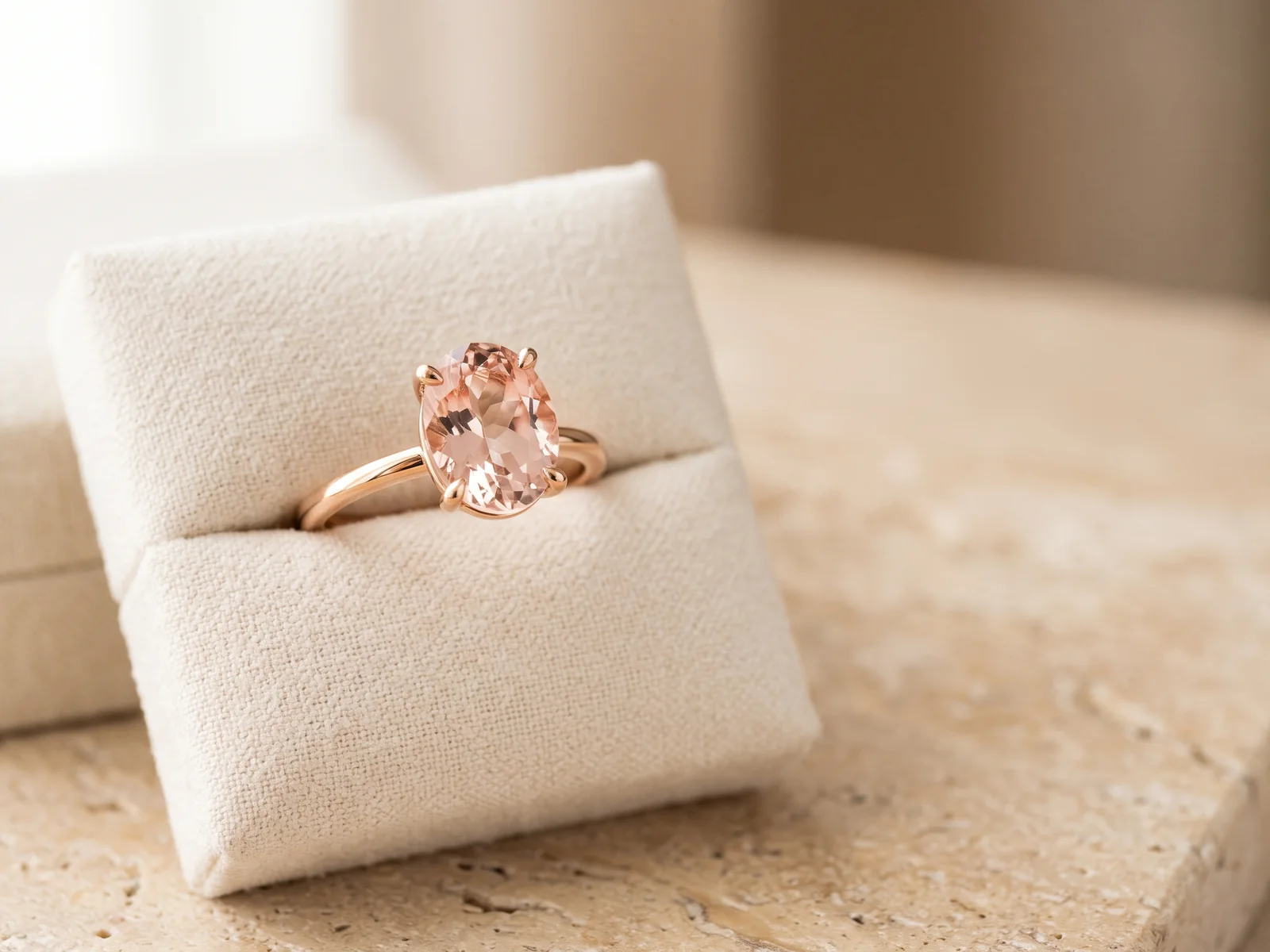
 Reviewed by Raj Sood, Graduate Gemologist (GIA), AJP (GIA)Master jeweller and Graduate Gemologist (GIA) · reviewed 4 November 2026
Quick answer
A morganite engagement ring can work well for everyday wear if you accept its limits. Morganite is pink to peach beryl, 7.5–8 on the Mohs scale, usually eye-clean and affordable in large sizes. It scratches and chips more easily than sapphire or diamond, so choose a protective setting, clean it often and check claws yearly.
What is morganite?
Morganite is the pink to peach variety of beryl, the same mineral species as emerald and aquamarine. Pure beryl is colourless; traces of manganese in the crystal give morganite its blush pink, salmon or peach tones. The chemical formula is Be3Al2Si6O18, and it grows in pegmatites, which are coarse-grained granite bodies that let crystals grow large and clean.
The gem was named in the early 1910s by the gemmologist George F. Kunz, after the banker and gem collector J.P. Morgan, following finds in Madagascar. Today most morganite on the market comes from Brazil, Madagascar, Mozambique and Afghanistan. Australia produces beryl too, mainly aquamarine, from pegmatites in the Northern Territory's Harts Range and parts of Western Australia and New South Wales, but gem-quality pink beryl from Australian fields is uncommon. For the mineral detail, see our full morganite gemstone profile.
Key numbers to know: hardness 7.5–8 on the Mohs scale (a scratch-resistance scale from 1 for talc to 10 for diamond), a refractive index of about 1.57–1.60 (how strongly the stone bends light; diamond is 2.42), and a specific gravity of about 2.80–2.90 (how heavy it is for its size). Morganite is one of many coloured gemstones we cover, and any unfamiliar word on this page is explained in our plain-English jewellery glossary.
Is a morganite engagement ring a good idea? The pros and cons
Morganite is a reasonable choice for an engagement ring, but it is not as forgiving as diamond or sapphire. Here is the balance as a gemmologist sees it.
- Pro: soft, warm colour. Few gems give such a gentle pink at an approachable price. It pairs naturally with rose and yellow gold.
- Pro: usually eye-clean. Morganite typically grows with few inclusions, so clean stones are easy to find.
- Pro: large sizes are affordable. A 2–3 carat morganite costs a fraction of a diamond or pink sapphire of the same size.
- Pro: hard enough for careful daily wear. At 7.5–8 it resists scratching by household dust, which is mostly quartz at 7.
- Con: shows wear over years. Facet edges can abrade and the surface can lose its sharp polish, especially on the table (the large top facet).
- Con: can chip. Toughness (resistance to breaking) is only fair to good, so a hard knock on a corner or edge can chip it.
- Con: pale colour. Small stones can look almost colourless; morganite needs size to show its pink.
- Con: looks dull when dirty. Hand cream and skin oils on the back of a pale stone quickly mute its brightness.
If the wearer works with their hands, plays sport or does a lot of gardening, the extra durability in our morganite versus pink sapphire comparison is worth reading before deciding. It is also worth weighing up other coloured stones with higher hardness, which the durability table below sets out.
How durable is morganite compared with other ring stones?
Two different properties matter in a ring. Hardness is resistance to scratching. Toughness is resistance to chipping and breaking. A stone can be hard and still brittle. Cleavage, a tendency to split along flat planes in the crystal, also matters; morganite's cleavage is poor (indistinct), which helps it.
| Gem | Mohs hardness | Toughness | Cleavage | Engagement ring verdict |
|---|---|---|---|---|
| Diamond (natural or lab-grown) | 10 | Good | Perfect in four directions | Excellent for daily wear |
| Sapphire (incl. pink) | 9 | Excellent | None | Excellent for daily wear |
| Spinel | 8 | Good | None | Very good |
| Morganite | 7.5–8 | Fair to good | Poor (indistinct) | Good with a protective setting and care |
| Aquamarine (also beryl) | 7.5–8 | Fair to good | Poor (indistinct) | Good with care |
| Topaz | 8 | Poor | Perfect in one direction | Risky; can split from a knock |
| Smoky quartz | 7 | Good | None | Fair; facets wear over time |
| Rose quartz | 7 | Fair to good | None | Fair; often cloudy |
| Amber | 2–2.5 | Poor | None | Not suitable for daily rings |
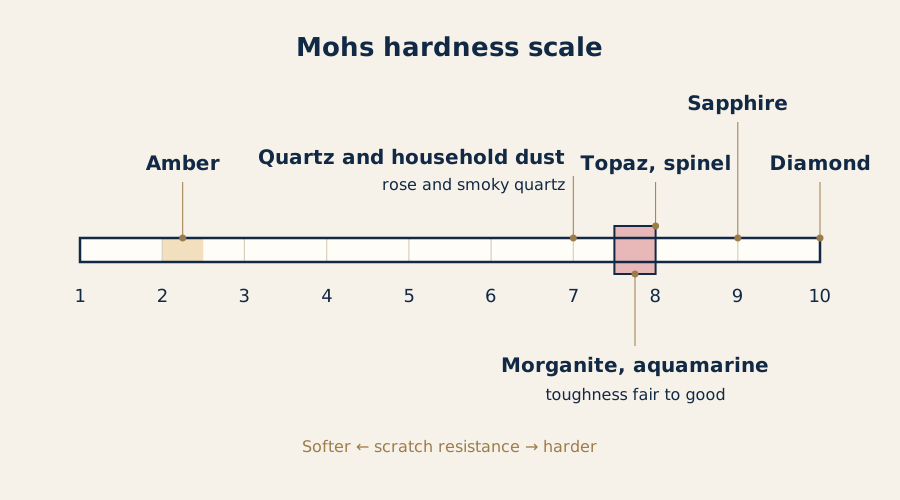
For context, smoky quartz, another popular brown-toned gem, sits at 7 and shows wear faster than morganite. Pale rose quartz at 7 on the Mohs scale is also cheaper but softer and usually milky. At the far end, amber, a soft organic gem, is better kept for pendants and earrings. Morganite sits in the middle: fine for a ring worn with some care, not a stone to forget about.
What colour morganite is best: pink or peach?
Morganite ranges from pale peach and salmon to a cool, slightly lilac pink. Neither is more correct; it is personal taste. The market today generally pays more for a purer, stronger pink, while peach stones suit those who like a warmer, vintage look.
Most pink morganite is heat treated. Rough often comes out of the ground with yellow or orange tones, and gentle heating, typically a few hundred degrees Celsius, removes the yellow and leaves a cleaner pink. The result is stable, does not fade with normal wear and is very hard to detect, so it should be assumed and disclosed. Peach stones are more often left unheated.
Morganite is also pleochroic: it shows two slightly different colours, typically a pale pink and a stronger bluish pink, depending on which direction you look through the crystal. A good cutter orients the stone so the stronger colour faces up.
For clarity, GIA places morganite among Type I gems, those that usually grow nearly inclusion-free. That means you should expect an eye-clean stone and pass on any that show obvious inclusions. Our explainer on how gem clarity Types I, II and III work shows why the standard differs from, say, emerald.
Not sure which one is right?
Send us the stones you are looking at and our gemologist will tell you which to choose and why.
What size and cut suit a morganite engagement ring?
Because morganite's colour is light, depth of colour increases with size: light travels further through a bigger stone, so the pink looks stronger. Below about 7 × 5 mm, many stones read as near-white. Most people choose 8 × 6 mm or larger for a centre stone.
Morganite is lighter than diamond (specific gravity about 2.8 against 3.52), so a morganite of a given carat weight looks larger than a diamond of the same weight. That is why coloured gems are usually sold by millimetre size rather than carat.
| Shape and size | Approximate morganite weight | Notes |
|---|---|---|
| Round 7 mm | about 1.1–1.3 ct | Similar face-up size to a 1.25 ct diamond |
| Oval 8 × 6 mm | about 1.1–1.4 ct | Smallest size most people use as a centre stone |
| Oval 9 × 7 mm | about 1.6–2.0 ct | A common engagement ring size |
| Oval 10 × 8 mm | about 2.3–2.8 ct | Colour noticeably richer |
| Cushion 8 mm | about 2.0–2.5 ct | Deep cushions show colour well |
| Pear 10 × 7 mm | about 1.7–2.1 ct | Protect the point |
Ovals, cushions and pears are the most common morganite shapes because they keep more of the rough and show colour well. The shape names are borrowed from diamond cutting, so our overview of the main ring stone shapes is a handy reference, and the oval diamond guide explains why elongated outlines look larger on the hand. Rounds, emerald cuts and elongated cushions are also available. Step cuts like the emerald cut show clarity and colour evenly but make small chips at the corners more visible, so cut corners are worth asking for. Morganite is occasionally cut as a cabochon (a smooth domed stone), but for engagement rings faceted is the norm; see faceted, cabochon and carved gem cuts for the differences.
What is the best setting for a morganite ring?
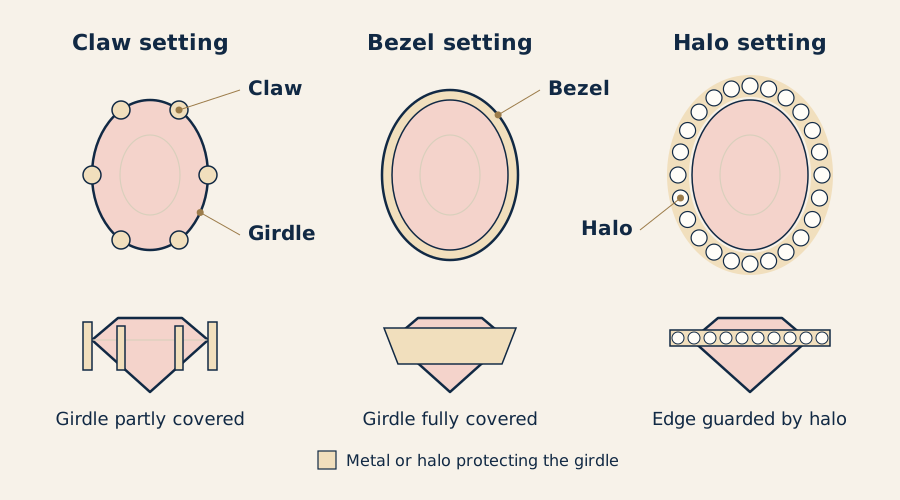
The setting's job with morganite is to shield the edges and girdle (the outer rim of the stone) from knocks. Common options:
- Four or six claws: classic and lets in plenty of light. Six claws spread the load and protect more of the girdle. Use slightly heavier claws than you would for a diamond.
- Bezel or half-bezel: a rim of metal around the stone. The most protective choice for active wearers.
- Diamond halo: a ring of small diamonds around the centre that frames the pink and guards the edge. The halo diamonds may be natural or lab-grown, and this should be stated.
- Low profile: a lower setting height means fewer knocks on door frames and benches.
- Claw tips over points: on a pear or marquise, a V-claw covers the fragile tip, the same approach used for pear cut diamonds and their pointed tips.
Rose gold is the most popular metal with morganite because it echoes the stone's warmth. Yellow gold makes peach tones look richer; white gold and platinum give a cooler, crisper contrast. For the wedding band, a flush or channel style avoids metal-on-stone contact; our guide to how channel-set bands are made and repaired explains the trade-offs.
How does morganite compare with pink sapphire and other pink stones?
| Morganite | Pink sapphire | Pink spinel | Rose quartz | Diamond | |
|---|---|---|---|---|---|
| Mohs hardness | 7.5–8 | 9 | 8 | 7 | 10 |
| Toughness | Fair to good | Excellent | Good | Fair to good | Good |
| Refractive index | about 1.57–1.60 | about 1.76–1.77 | about 1.72 | about 1.54–1.55 | about 2.42 |
| Typical colour | Pale pink to peach | Light to vivid pink | Soft to hot pink | Milky pale pink | Colourless; pinks rare |
| Common treatment | Heating | Heating | Usually none | Usually none | Lab-grown pinks often treated |
| Daily ring wear | Good with care | Excellent | Very good | Fair | Excellent |
| Relative price for size | Low | Medium to high | Medium to high | Very low | High (natural) / lower (lab-grown) |
The closest rival is pink sapphire: harder, tougher and more saturated, but more expensive for the same size. Our side-by-side test of morganite and pink sapphire covers colour, price and wear in detail. Pale pink rose quartz is the budget option, though its cloudiness and softness suit pendants better than rings.
Related guideMorganite vs Pink SapphireHow does a gemmologist identify morganite?
Several pink stones can be mistaken for morganite, so it is worth knowing what a gemmologist checks. With a refractometer, morganite gives readings of about 1.57–1.60 with low birefringence (the gap between its two readings, about 0.005–0.009). A dichroscope shows its two colours. Its specific gravity is higher than most other beryls because of caesium and other trace elements.
- Pink topaz: RI about 1.61–1.64, heavier, and has perfect cleavage. Often treated.
- Kunzite: RI about 1.66–1.68 and strong pleochroism; it can fade in sunlight.
- Pink sapphire: RI about 1.76–1.77, clearly heavier.
- Rose quartz: RI about 1.54–1.55, usually hazy rather than clear.
- Glass imitations: a single RI reading, often with round gas bubbles and moulded or rounded facet edges.
Lab-created (synthetic) beryl can be grown by the hydrothermal method, which mimics the hot water conditions in nature, and synthetic pink beryl does exist, though it is not common in the market. It has the same chemistry and hardness as natural morganite and must be sold as lab-created or synthetic. Telling the two apart can need magnification to look for growth features or laboratory testing, so ask for documentation on any larger or more expensive stone.
How much does a morganite engagement ring cost in Australia?
Morganite is one of the more affordable pink gems. Price depends mainly on colour strength, size, cut quality and clarity. A stronger, purer pink costs more than a pale peach of the same size, and stones above about 5 carats with good colour are priced higher per carat.
| Item | Approximate price range (AUD) |
|---|---|
| Loose natural morganite, 1–3 ct, good colour | about $150–$800 per carat |
| Morganite solitaire, 9 × 7 mm oval, 9 ct or 18 ct gold | about $1,500–$3,500 |
| Morganite with a diamond halo, 18 ct gold | about $2,500–$5,500 |
These are broad ranges only. The metal, the number and grade of any diamonds, and whether those diamonds are natural or lab-grown move the total more than the morganite itself. For other options in a similar budget, browse our natural gemstone options for rings, and for origin and grading detail see morganite's origins and properties.
Browse natural gemstones
How do you choose and care for a morganite engagement ring?
- Pick the colour in two lights. Compare stones in daylight and warm indoor light, and decide between pink and peach.
- Choose size by millimetres. Aim for 8 × 6 mm or larger so the colour reads clearly.
- Expect eye-clean. As a Type I gem, morganite should show no obvious inclusions; avoid any with surface-reaching cracks.
- Ask about treatment. Assume heat treatment and confirm in writing whether the stone is natural or lab-created.
- Choose a protective setting. Six claws, a bezel or a halo, set at a sensible height.
- Clean it often. Soak in warm water with mild dishwashing liquid and brush gently behind the stone with a soft toothbrush; this removes the oily film that dulls it.
- Avoid harsh conditions. Take it off for gym, gardening and cleaning; avoid ultrasonic or steam cleaners if the stone has any fractures.
- Book a yearly check. Have the claws checked and, after some years, ask a jeweller whether a light re-polish would restore worn facets.
A re-polish takes a very small amount of material off the surface and can bring back sharp facet edges, which is one of the practical advantages of a stone like morganite: it can be refreshed. If you are unsure whether a stone is clean enough, our note on what eye-clean means for a Type I gem helps. Keep its wedding band from rubbing against it by choosing a flush or contoured band. For definitions of words like pleochroism and girdle, see the glossary of gem and setting terms.
Free consultation
Talk to a gemologist
Compare stones in person or online with Raj Sood, Graduate Gemologist (GIA), AJP (GIA).
Book a consultationShop this shape
FAQ
Common questions
Is morganite durable enough for an engagement ring?
Yes, with care. At 7.5–8 on the Mohs scale it resists everyday scratches, but its toughness is only fair to good, so a protective setting and removing it for hard work make a real difference.
Does morganite get cloudy?
The stone itself does not go cloudy, but skin oils, soap and hand cream build up on its back and make a pale stone look dull. A regular soak in warm soapy water and a soft brush restores its brightness.
Does morganite fade?
Heat-treated and untreated morganite are considered colour-stable in normal wear and light. Very high heat, such as from a jeweller's torch during repairs, can affect it, so tell any jeweller the ring has a morganite.
Is morganite cheaper than pink sapphire?
Usually, yes. Morganite typically costs much less per carat than a pink sapphire of similar size, though pink sapphire is harder, tougher and often more saturated in colour.
What metal goes best with morganite?
Rose gold is the most popular choice because it matches morganite's warmth. Yellow gold suits peach stones, while white gold and platinum give a cooler contrast.
Is morganite a natural stone?
Most morganite sold is natural beryl, usually heat treated to improve its pink. Lab-created pink beryl exists but is uncommon, and it must be sold as lab-created or synthetic.

Ask a gemologist
Not sure which diamond to choose?
Raj Sood is a Graduate Gemologist (GIA) and master jeweller. Bring the stones you are considering, or send the reports, and he will tell you honestly which one is better and why.
Keep learning
Related guides
 GemstonesMorganite
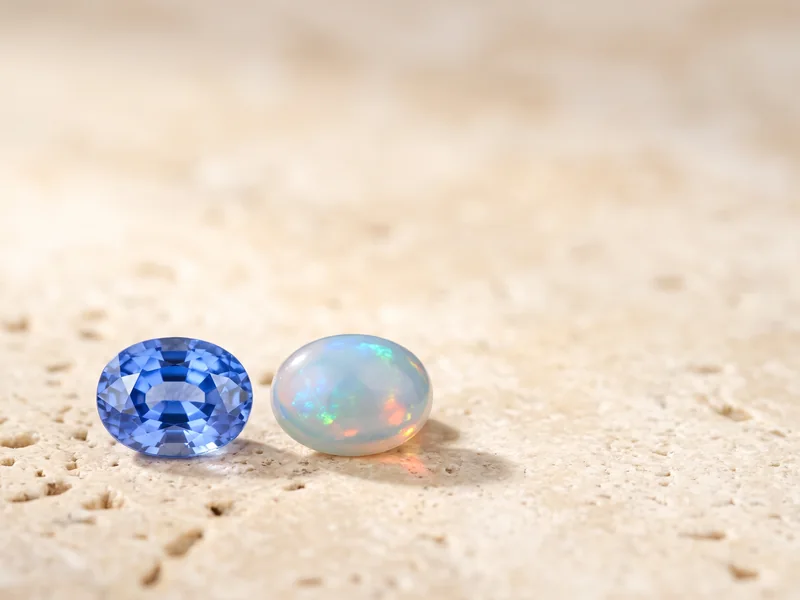 GemstonesMorganite vs Pink Sapphire
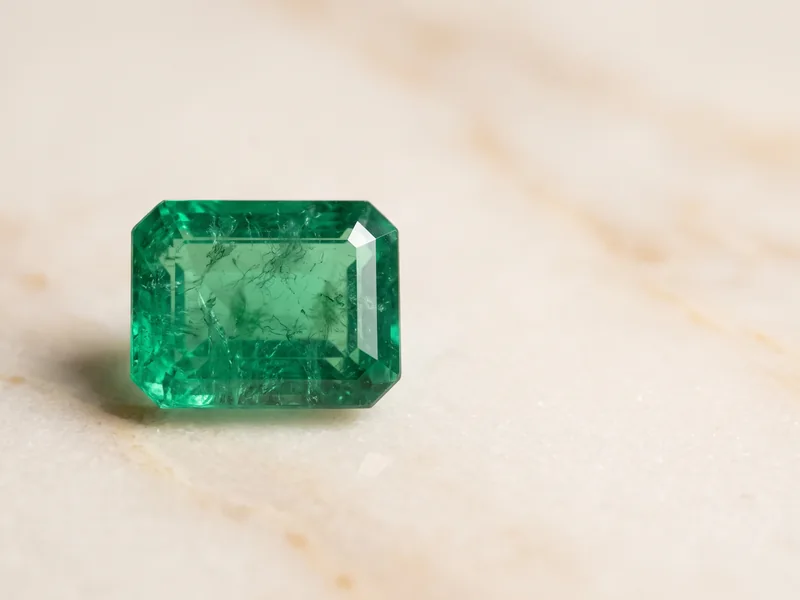 GemstonesGemstone Clarity Types I, II and IIIGemstonesGemstones | Coloured Gemstones, Birthstones and Custom Jewellery
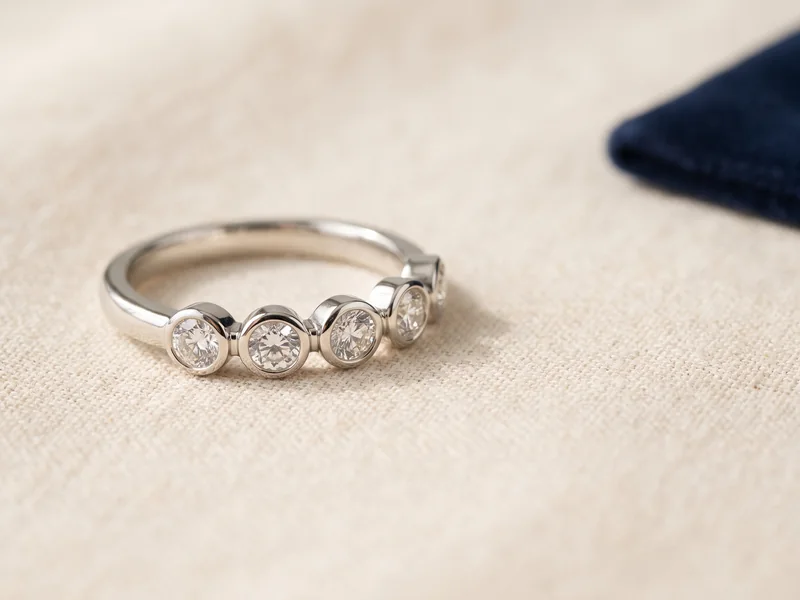 Engagement Rings & SettingsChannel-Set Diamonds: Pros, Cons and RepairsGemstonesGemstone Cuts: Cabochon, Faceted and Carved
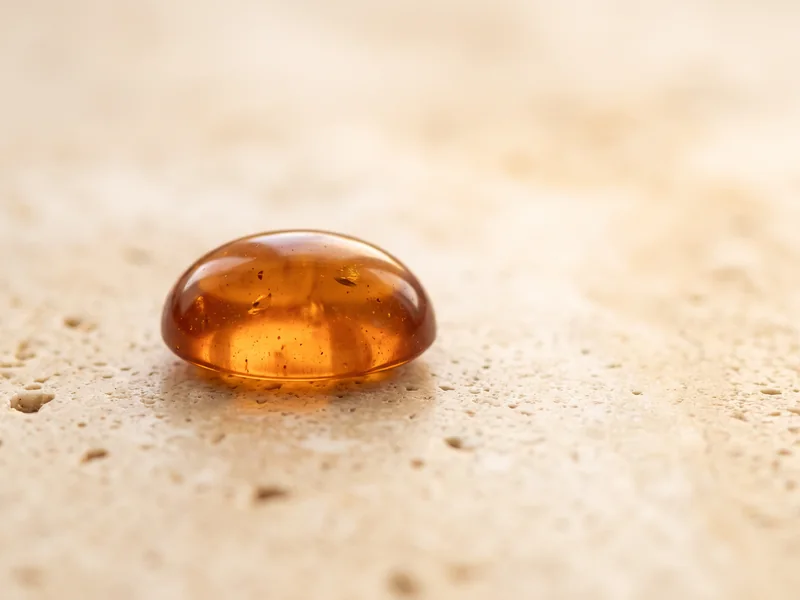 GemstonesAmber
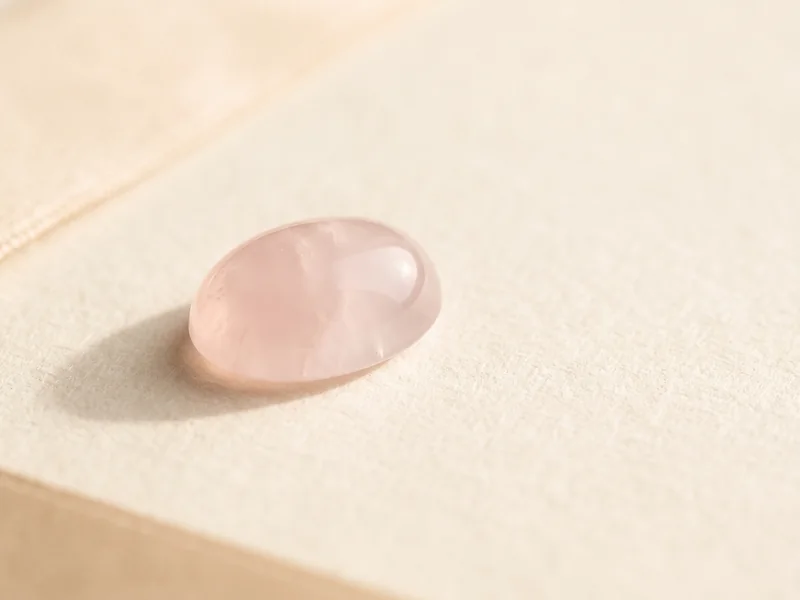 GemstonesRose Quartz
Explore more
More guides on this topic
Education