
Gemstones
Rose Quartz Guide: Colour, Hardness, Value and Care
Rose quartz is one of the most familiar pink gemstones, and one of the most misunderstood. Here is what a gemmologist checks: where the colour comes from, how tough it is, how to spot dyed quartz and glass, and what it should cost.
 Reviewed by Raj Sood, Graduate Gemologist (GIA), AJP (GIA)Master jeweller and Graduate Gemologist (GIA) · reviewed 4 November 2026
Quick answer
Rose quartz is the pink variety of quartz (silicon dioxide), rated 7 on the Mohs scale with a refractive index of about 1.54–1.55. Most is translucent and slightly cloudy, coloured by microscopic mineral fibres. It is affordable, suits pendants and earrings well, needs a protective setting in rings, and can fade with long exposure to strong sunlight or heat.
What is rose quartz?
Rose quartz is the pale to medium pink variety of quartz, the mineral silicon dioxide (SiO2). Quartz is one of the most common minerals on Earth, and it comes in many colours: purple amethyst, yellow citrine, and smoky quartz, its brown-grey cousin, are all the same mineral with different traces and structural defects. Rose quartz sits alongside them in our wider guide to coloured gemstones.
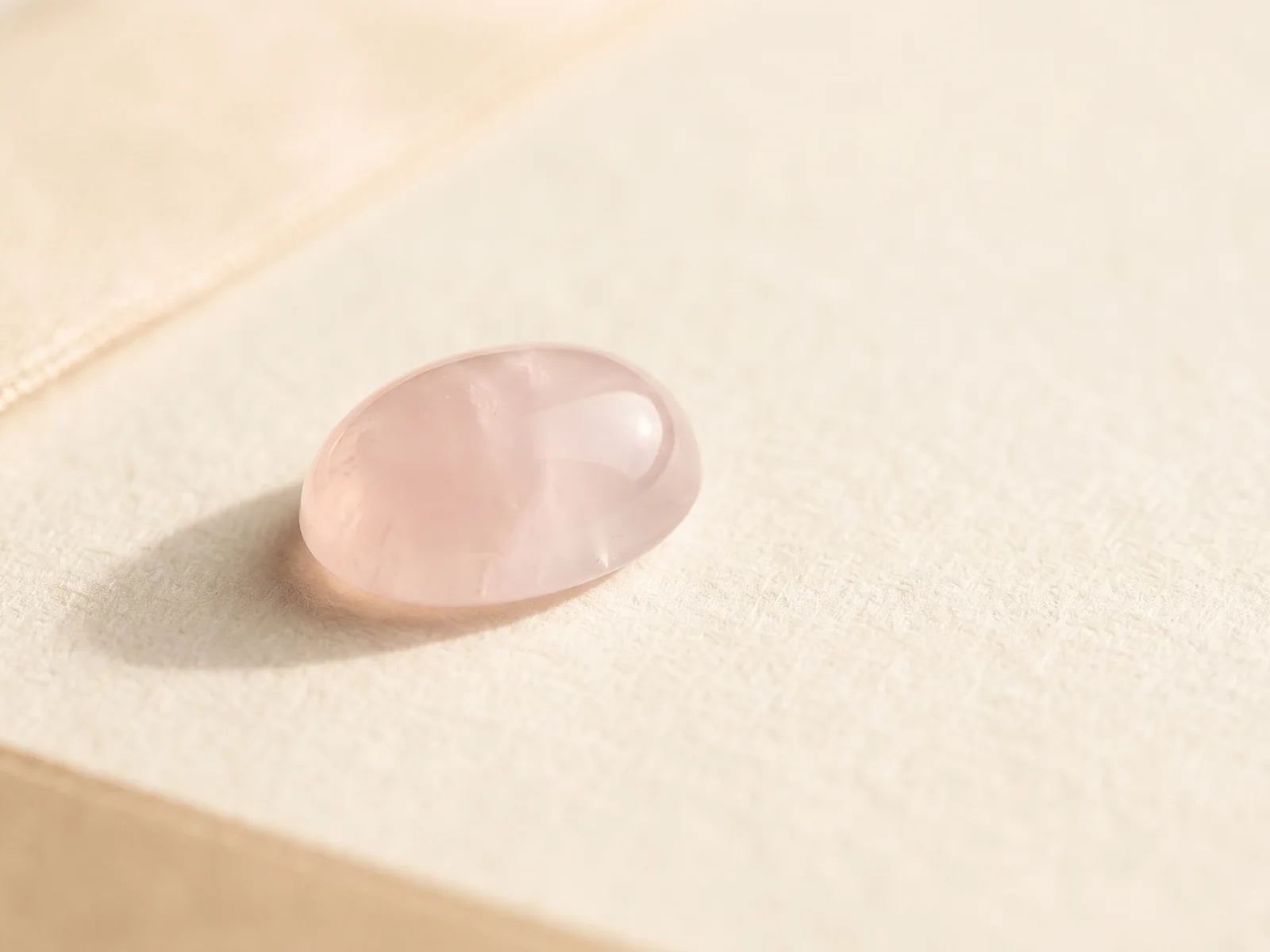
What sets rose quartz apart is its look. Most of it forms as massive quartz, meaning large solid lumps rather than neat six-sided crystals, usually in pegmatites (coarse-grained granite-like rocks). That material is translucent: light passes through, but you cannot see clearly through it. The soft, slightly milky glow people love is the same haze that makes clean, transparent rose quartz rare.
A few gemmology terms come up throughout this page. Refractive index (RI) measures how much a gem bends light; quartz sits at about 1.544–1.553, far below diamond at about 2.42, which is why rose quartz glows rather than sparkles. Specific gravity (SG) compares a gem's weight with the same volume of water; quartz is about 2.65. Any other word you meet here is explained in our plain-English jewellery glossary.
Rose quartz is natural in almost every piece you will see. Laboratory-grown (hydrothermal) pink quartz has been produced, but it is uncommon in the jewellery trade, and if a stone is lab-created it should be sold as lab-created or synthetic rose quartz, never simply as rose quartz.
What gives rose quartz its pink colour?
For decades, textbooks said titanium, iron or manganese coloured rose quartz. More recent mineralogical research found something different in the common, cloudy material: microscopic fibres of a pink mineral related to dumortierite, a boron-bearing aluminium silicate, scattered through the quartz. Those fibres both colour the stone and create its haze. Remove them in the lab and the quartz is colourless.
There is also a much rarer type, sometimes called crystalline pink quartz, which forms as small transparent crystals. Its colour comes from defects in the crystal structure involving aluminium and phosphorus, activated by natural radiation in the rock. This colour is less stable and can fade noticeably in sunlight, so collectors store these crystals in the dark.
- Massive rose quartz: translucent, milky pink, colour from microscopic fibres, generally stable in normal wear.
- Crystalline pink quartz: transparent small crystals, colour from structural defects, light-sensitive.
- Colour depth: rose quartz is pale, so colour builds with thickness. A 3 mm bead can look almost white while a 20 mm cabochon looks clearly pink.
It is worth separating this from metals with the same name. Rose gold gets its pink from copper in the alloy, nothing to do with the stone; our page on how copper turns gold pink explains the mix. Rose quartz is also rarely heat-treated, because heat tends to bleach it rather than improve it. That is the opposite of sapphire, where heat treatment often deepens colour.
How hard is rose quartz, and is it durable enough for a ring?
Hardness is resistance to scratching. At 7 on the Mohs scale, rose quartz resists steel, glass and most daily wear. The catch is household dust, which contains tiny quartz grains, also 7. Over years, a rose quartz ring stone slowly picks up fine scratches and loses its polish, especially on the top of a cabochon.
Toughness, resistance to chipping and breaking, is fair. Quartz has no cleavage (no flat plane it splits along), and breaks with a shell-like conchoidal fracture. Massive rose quartz, though, often contains healed fractures, and a hard knock on a tiled floor or benchtop can crack it.
| Property | Rose quartz | What it means for wear |
|---|---|---|
| Mohs hardness | 7 | Scratch-resistant, but dust can dull it over years |
| Toughness | Fair; often internally fractured | Can crack from a sharp knock |
| Cleavage | None; conchoidal fracture | No easy splitting plane |
| Refractive index | 1.544–1.553 | Soft glow rather than strong sparkle |
| Birefringence | 0.009 | Low double refraction; not visible to the eye |
| Specific gravity | about 2.65 | Feels lighter than pink sapphire or spinel of the same size |
| Light and heat | Some material can fade | Avoid long sun exposure and heat |
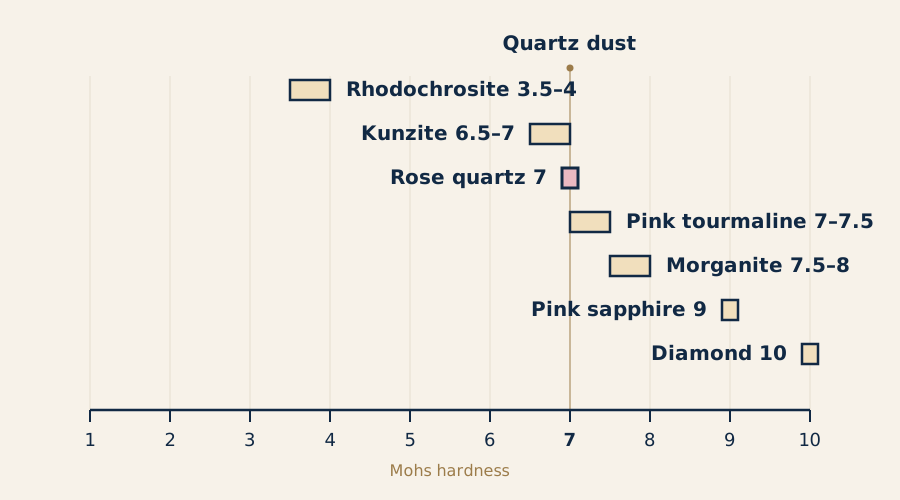
Pendants, earrings and brooches suit rose quartz perfectly, because they are rarely knocked. A rose quartz ring works for occasional wear or with a bezel (a metal rim around the stone) and a slightly lower profile. If you want a coloured centre stone for daily wear over decades, harder gems are a better match: sapphire and ruby are 9, as our guide to ruby engagement rings explains, and alexandrite is 8.5, covered in our page on alexandrite engagement ring designs.
Rose quartz vs morganite, kunzite and pink sapphire: how do you tell them apart?
Several pink gems overlap in colour with rose quartz. A gemmologist separates them with a refractometer (which measures RI), a loupe and an eye for transparency. Here is how they line up:
| Gem | Mineral | Mohs | Refractive index | Usual look | Relative price |
|---|---|---|---|---|---|
| Rose quartz | Quartz | 7 | 1.544–1.553 | Translucent, soft milky pink | Low |
| Morganite | Beryl | 7.5–8 | about 1.57–1.60 | Transparent, peach to pink | Moderate |
| Kunzite | Spodumene | 6.5–7 | about 1.66–1.68 | Transparent, pink to violet, can fade | Moderate |
| Pink tourmaline | Tourmaline | 7–7.5 | about 1.62–1.64 | Transparent, pink to red | Moderate to high |
| Pink sapphire | Corundum | 9 | about 1.76–1.77 | Transparent, vivid pink | High |
| Rhodochrosite | Rhodochrosite (manganese carbonate) | 3.5–4 | about 1.60–1.82 | Banded pink, very soft | Moderate |
| Pink glass | Glass | about 5–6 | varies, often 1.50–1.70 | Too even, may show bubbles | Very low |
The quickest clue is transparency. Rose quartz is almost always hazy; morganite, kunzite and pink sapphire are usually clear. Rose quartz vs morganite is the most common mix-up: morganite is tougher and harder, shows more sparkle when faceted, and costs more. Kunzite has strong cleavage, which makes it riskier to set than rose quartz despite similar hardness.
The same reasoning applies when you compare any coloured gem with diamond. Our ruby versus diamond comparison and the page on how emerald stacks up against diamond use the same three tests: hardness, toughness and how the stone handles light.
Not sure which one is right?
Send us the stones you are looking at and our gemologist will tell you which to choose and why.
How is rose quartz cut: cabochon, faceted or star?
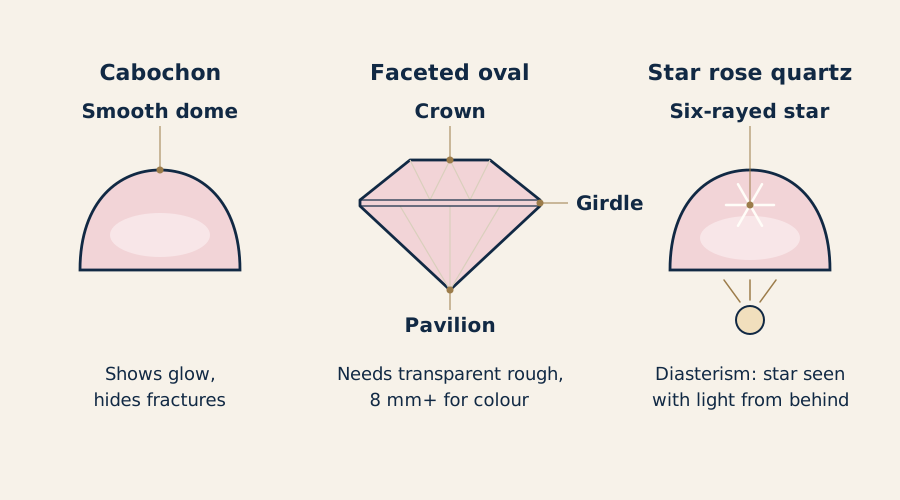
Because most rose quartz is translucent, the usual cut is the cabochon: a smooth, domed stone with no facets, which shows off the glow and hides small fractures. Beads, carved hearts, spheres and cameos are also common, and rose quartz has been carved into decorative objects for centuries.
Faceted rose quartz needs unusually transparent rough. Even then, facets bring out the haze, so faceted stones are usually cut larger, often 8 mm and up, to build enough colour. A shallow faceted pink stone under about 6 mm can look nearly colourless.
Star rose quartz shows asterism: a six-rayed star caused by fine aligned fibres inside the stone. In rose quartz the star is usually weak in reflected light and much clearer when a light shines through from behind (called diasterism), which is why star rose quartz cabochons and spheres are often photographed back-lit.
Do not confuse rose quartz with the rose cut. The rose cut is a faceting style with a flat base and a domed top of triangular facets, used mostly for diamonds; see the antique rose cut and our comparison of rose cut vs brilliant cut sparkle. Rose quartz can be rose cut, but the name of the stone has nothing to do with the cut.
Is my rose quartz real, or dyed, coated or glass?
Natural rose quartz is inexpensive, so most fakes are cheap material made to look like it, rather than treatments that add value. The ones a gemmologist sees most often:
- Dyed rose quartz: colourless or pale quartz, often heated and quenched in cold water to crackle it, then soaked in pink dye. The colour collects in the cracks.
- Dyed quartzite or chalcedony: grainy or waxy-looking material dyed pink, usually as beads.
- Coatings: a thin pink film on pale quartz. It can wear off at edges and drill holes.
- Resin or wax impregnation: used to stabilise and brighten bead strands.
- Pink glass: sold as 'rose quartz' at markets, often too even in colour and with round gas bubbles.
- Lab-created pink quartz: rare in jewellery, and must be disclosed as lab-created or synthetic.
Filling and coating show up across many gems, not only quartz; our page on glass filling and fracture filling covers how it is done and how to spot it. Heat matters too: unlike heated and unheated sapphires compared, heating rose quartz usually pales it, so a very strong, uniform pink in inexpensive quartz deserves a closer look.
Is rose quartz found in Australia?
Quartz is everywhere in Australia, and pink massive quartz has been reported from pegmatites in several states. But Australia is not a commercial source of gem rose quartz. Most rose quartz sold here comes from Brazil (especially Minas Gerais), Madagascar, South Africa, Mozambique, Namibia and India, with classic specimens from the Black Hills of South Dakota in the USA.
If you fossick for quartz, rules and licences differ by state, so check with your state's resources department before you dig. Australia's real gem story lies elsewhere: sapphire from the basalt country of New South Wales and central Queensland, covered in our guide to Inverell, Anakie and the lava plains, and opal, our national gemstone, explained in Lightning Ridge, Coober Pedy and Queensland boulder opal.
Related guideAustralian Sapphire Fields: Inverell, Anakie and the Lava PlainsA pink sapphire is a natural alternative if you want a pink stone that handles daily wear (Australian fields produce mainly blue, green and yellow sapphire, so local pink stones are rare): at Mohs 9, with excellent toughness, it wears far better than rose quartz, though it costs considerably more.
Which metal and setting suit rose quartz jewellery?
Pale pink is easily washed out or lifted by the metal beside it. As a rough guide:
- Rose gold: warms the pink and makes it look richer; the most popular pairing.
- Yellow gold: gives a softer, vintage feel, and can make very pale stones look peachy.
- White gold, platinum or silver: keeps the pink cool and clean; good for paler stones.
- Bezel settings: protect the edge of a cabochon in rings and bracelets.
- Claw settings: suit pendants and earrings, letting more light into the stone.
Rose quartz sits comfortably with small diamonds in a halo or as side stones, because the contrast between soft glow and diamond sparkle reads well. For more combinations, see pairing gemstones with rose gold rings, and if you are matching a rose quartz piece to existing jewellery, our guide to mixing white, yellow and rose gold covers how the tones work together.
How much does rose quartz cost in Australia?
Rose quartz is one of the more affordable gems. In most finished pieces the metal, labour and any diamonds cost far more than the stone. Transparency, depth of colour, size and whether a star is present move the stone's price; a clean, transparent faceted rose quartz with good colour costs much more per carat than cloudy cabochon material.
| Item | Approximate price range (AUD) |
|---|---|
| Rose quartz cabochon, 10–20 ct, translucent | about $10–$80 |
| Faceted rose quartz, eye-clean, good colour | about $5–$30 per carat |
| Star rose quartz cabochon with a clear back-lit star | about $50–$300 |
| Sterling silver pendant or earrings | about $60–$300 |
| 9ct gold pendant or ring | about $300–$1,200 |
| 18ct custom ring with diamond accents | about $1,500–$4,000 |
These are broad ranges only and move with gold prices and design. Rose quartz is not a rare stone, so buy it because you like it; resale value is low. If you want to compare it with other colours and price points, you can browse the wider gemstone range by colour.
Browse natural gemstones
How do you choose and care for rose quartz jewellery?
- Look at the colour in daylight. Natural rose quartz is soft and even; very bright or patchy pink suggests dye or coating.
- Check with a loupe. Look for dye in cracks, wear on edges or drill holes, and round bubbles that point to glass.
- Judge size against colour. Choose larger stones if you want a clear pink; small beads and thin stones look pale.
- Match the setting to the wear. Claws for pendants and earrings, a bezel for rings and bracelets.
- Clean gently. Use warm water, mild dish soap and a soft brush, then dry with a lint-free cloth. Avoid ultrasonic and steam cleaners, which can crack fractured stones.
- Store it out of the sun. Keep it in a soft pouch away from harder gems, and do not leave it on a sunny windowsill or near heat.
- Have rings checked yearly. A jeweller can tighten claws, check the bezel and repolish a scratched cabochon if needed.
Free consultation
Talk to a gemologist
Compare stones in person or online with Raj Sood, Graduate Gemologist (GIA), AJP (GIA).
Book a consultationShop this shape
FAQ
Common questions
Is rose quartz hard enough for an engagement ring?
It can be worn as a rose quartz ring, but at Mohs 7 with fair toughness it will scratch and can crack with daily wear. A bezel setting helps; for a pink stone you wear every day, pink sapphire at Mohs 9 is more durable.
How can I tell if my rose quartz is real?
Natural rose quartz is translucent and softly, evenly pink. Dye shows as darker lines in cracks, coatings wear at the edges, and glass often has round bubbles under a loupe; a gemmologist can confirm with a refractometer reading of about 1.54–1.55.
Does rose quartz fade in the sun?
Some can. Common massive rose quartz is fairly stable in normal wear, but long exposure to strong sunlight or heat can pale it, and the rare transparent crystalline pink quartz fades much more easily.
What is the difference between rose quartz and morganite?
Rose quartz is quartz, usually translucent and milky, at Mohs 7. Morganite is pink beryl, usually transparent, at Mohs 7.5–8, with more sparkle when faceted and a higher price.
How do you clean rose quartz?
Use warm water, a little mild soap and a soft brush, then dry it with a soft cloth. Avoid ultrasonic cleaners, steam and harsh chemicals, especially on dyed, coated or fractured stones.
Is rose quartz expensive?
No. Rose quartz is one of the more affordable gems, and in most jewellery the metal and craftsmanship cost more than the stone. Transparent faceted stones and star rose quartz cost more than ordinary cabochons.

Ask a gemologist
Not sure which diamond to choose?
Raj Sood is a Graduate Gemologist (GIA) and master jeweller. Bring the stones you are considering, or send the reports, and he will tell you honestly which one is better and why.
Keep learning
Related guides
 GemstonesSmoky QuartzGemstonesGemstones | Coloured Gemstones, Birthstones and Custom Jewellery
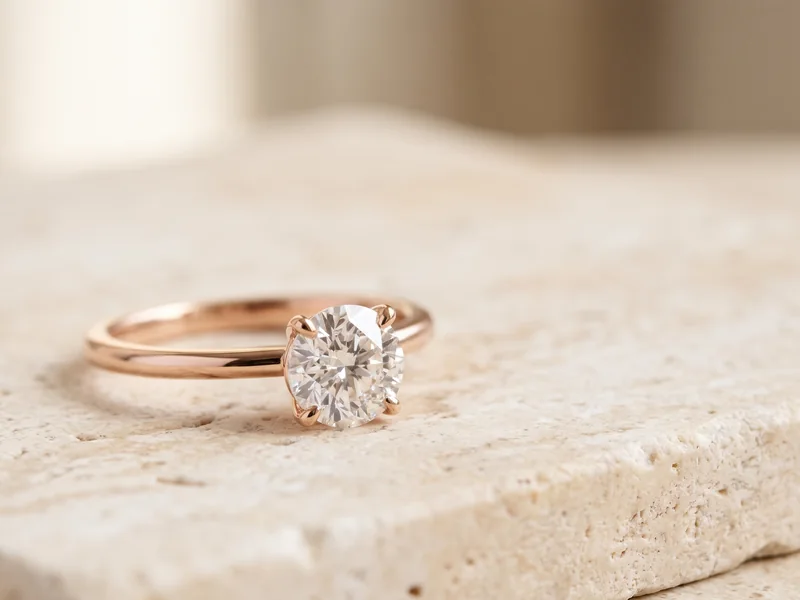 GemstonesRose Gold Engagement Rings: Diamond and Gemstone Pairing
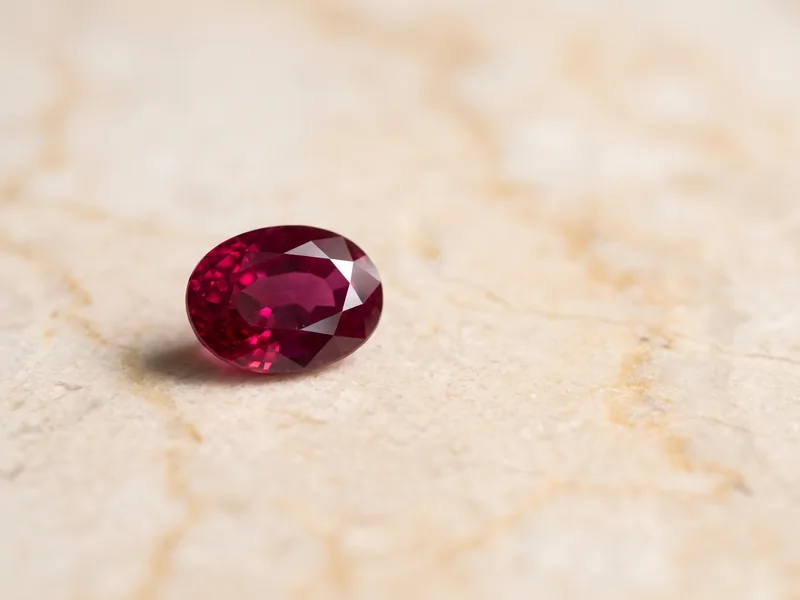 GemstonesGlass Filling and Fracture Filling Explained
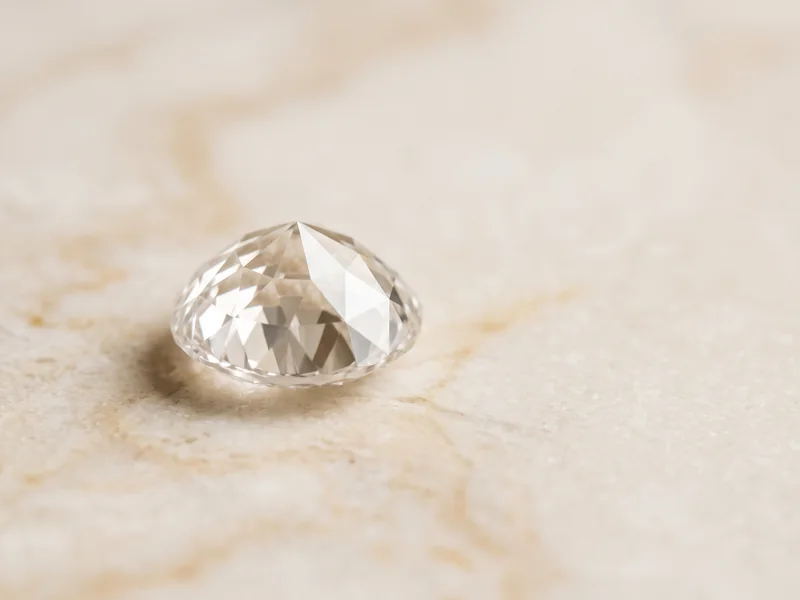 Diamond ShapesRose Cut Diamonds
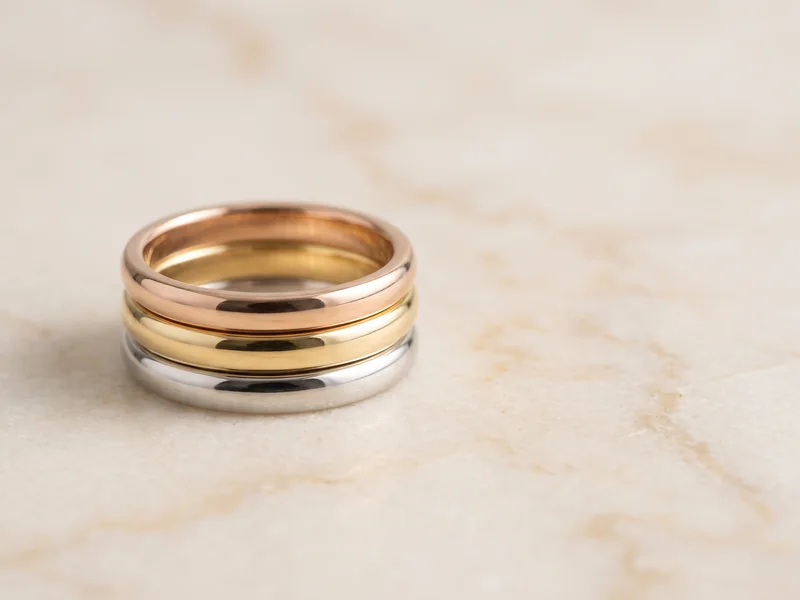 MetalsWhat Gives Rose Gold Its Colour?
 Diamond ShapesRose Cut vs Brilliant Cut DiamondsMetalsMixing White, Yellow and Rose Gold in a Bridal Set
Explore more
More guides on this topic
Education