
Gemstones
Tourmaline Engagement Ring Guide: Colour, Durability and Care
Tourmaline comes in more colours than almost any other gem, which makes it a tempting centre stone. Here is how a tourmaline engagement ring holds up to daily wear, which colours to look for and how to set it so it lasts.
 Reviewed by Raj Sood, Graduate Gemologist (GIA), AJP (GIA)Master jeweller and Graduate Gemologist (GIA) · reviewed 4 November 2026
Quick answer
A tourmaline engagement ring can be worn every day with care. Tourmaline is 7–7.5 on the Mohs scale with fair to good toughness and no easy cleavage, so it scratches and chips more readily than sapphire or diamond. Choose a bezel or halo setting, a clean green, blue or pink stone, and take it off for heavy work.
What is a tourmaline engagement ring?
A tourmaline engagement ring is simply an engagement ring with a tourmaline as the centre stone. Tourmaline is not one mineral but a group of closely related boron silicate minerals. Most gem tourmaline is elbaite, with smaller amounts of dravite, uvite and liddicoatite. Small changes in chemistry, such as a trace of iron, manganese, chromium or copper, produce an enormous range of colours. Our full tourmaline gem profile covers the mineralogy in more depth.
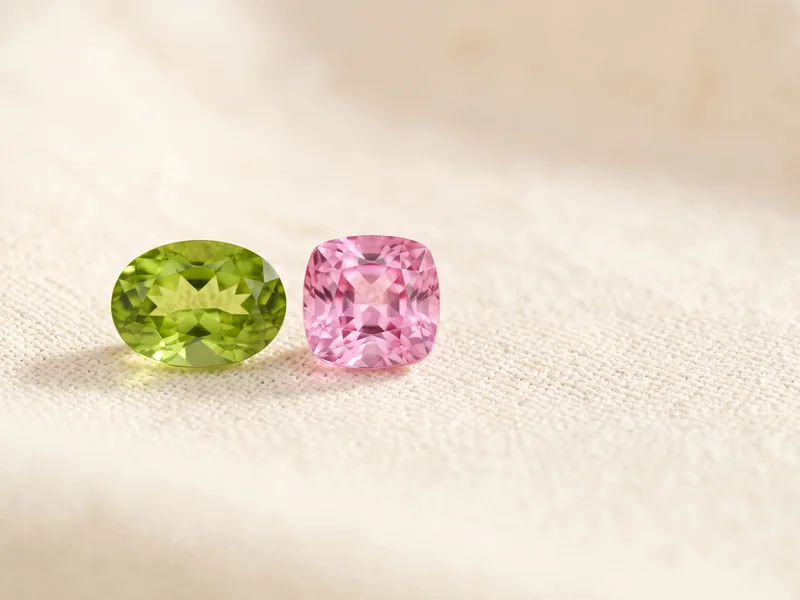
That colour range is the main reason people choose it. You can find tourmaline in almost every hue, from pale mint to forest green, baby pink to raspberry red, teal, navy and the electric neon blue of copper-bearing stones. It is also one of October's two birthstones, alongside opal, so it is a popular choice for October birthdays and anniversaries.
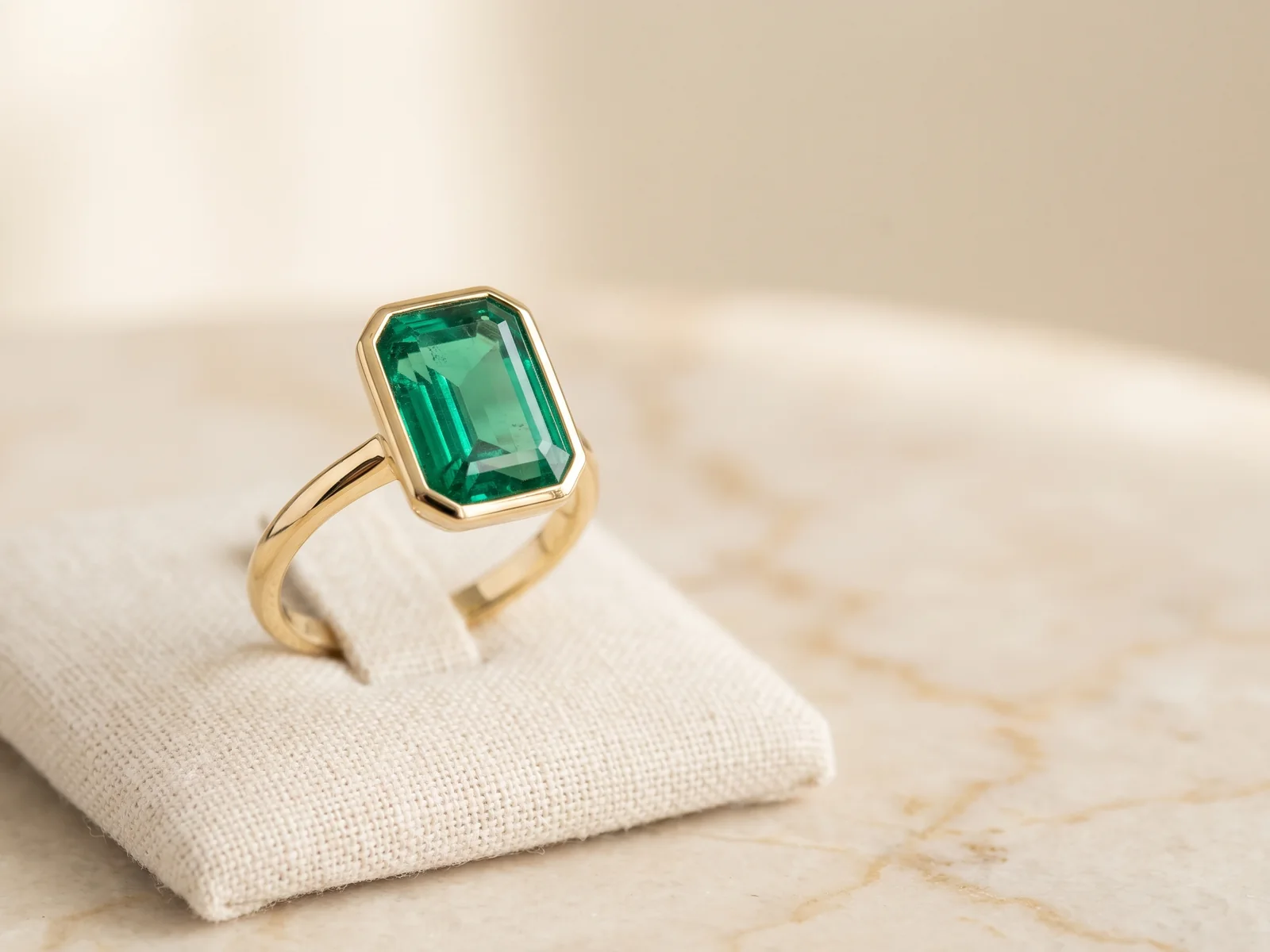
Tourmaline crystals grow as long, ridged prisms, so many stones are cut in elongated shapes: emerald cuts (rectangular step cuts with clipped corners), ovals, cushions and long rectangles. This keeps more of the rough crystal and suits a north-south or east-west solitaire. If you are weighing tourmaline against other coloured stones, our guide to coloured gemstones and birthstones sets out the main options, and any unfamiliar word on this page is explained in the plain-English jewellery glossary.
Is tourmaline durable enough for an engagement ring?
Yes, with sensible choices. Gem durability has three parts. Hardness is resistance to scratching, measured on the Mohs scale of 1 to 10. Toughness is resistance to chipping and breaking. Stability is how well a gem copes with heat, light and chemicals. Tourmaline hardness is 7 to 7.5, its toughness is fair to good, and it is stable in normal wear, though it does not like sudden heat.
The number that matters most is 7. Everyday dust contains quartz, which is also 7 on the Mohs scale, so over years of wear a tourmaline's facet edges slowly soften and pick up fine scratches. A sapphire at 9 or a diamond at 10 shrugs this off. Tourmaline has no easy cleavage (a flat plane along which a crystal splits cleanly), which is a real advantage over topaz or tanzanite. Its fracture is conchoidal (shell-shaped), though, and a hard knock on an exposed corner can chip it.
| Gem | Mohs hardness | Toughness | Cleavage | Everyday ring? |
|---|---|---|---|---|
| Diamond | 10 | Good | Perfect in four directions | Yes |
| Sapphire | 9 | Excellent | None | Yes |
| Spinel | 8 | Good | None to poor | Yes |
| Aquamarine | 7.5–8 | Good | Indistinct | Yes, with care |
| Emerald | 7.5–8 | Poor to fair (inclusions) | Indistinct | With care and a protective setting |
| Tourmaline | 7–7.5 | Fair to good | Indistinct | Yes, with care and a protective setting |
| Tanzanite | 6–6.5 | Fair | Perfect in one direction | Occasional wear or very protective setting |
| Opal | 5.5–6.5 | Poor to fair | None | Occasional wear |
In short, tourmaline sits in the middle: more robust in practice than tanzanite or opal, less forgiving than sapphire, spinel or diamond. If you are also considering tanzanite, our piece on how tanzanite holds up as an everyday ring uses the same yardstick. A tourmaline engagement ring worn daily will usually need the stone re-polished every few years and a protective setting from the start.
What colours of tourmaline suit an engagement ring?
Each colour has its own trade name, availability and price. These are the varieties you are most likely to see in rings:
| Variety | Colour | Main colour cause | Notes for rings |
|---|---|---|---|
| Green (verdelite) | Mint to deep forest green | Iron, sometimes titanium | Widely available; dark stones can look olive or blackish |
| Chrome tourmaline | Vivid emerald-like green | Chromium and vanadium | Mostly East Africa; usually small, often under 2 ct |
| Pink | Pale pink to hot pink | Manganese | A popular pink tourmaline engagement ring choice; often irradiated |
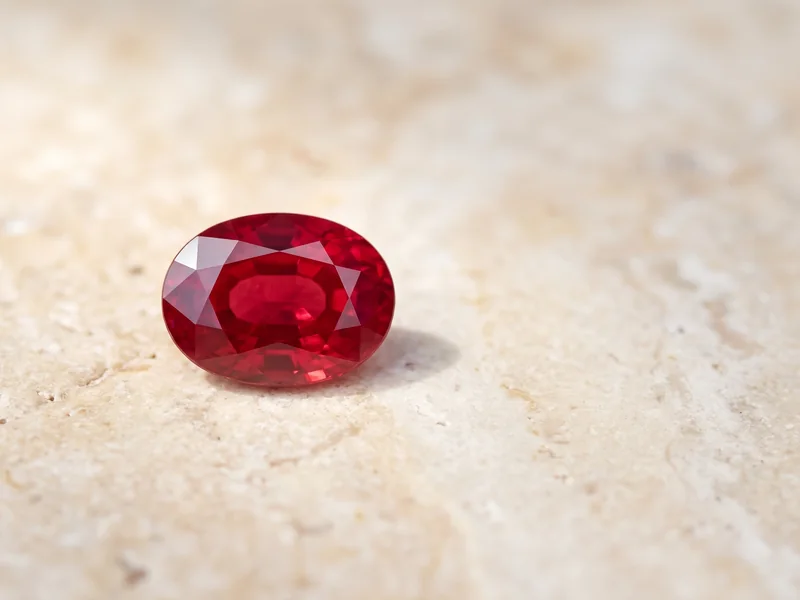
| Rubellite | Red to deep pinkish red | Manganese | Should stay red in both daylight and warm light |
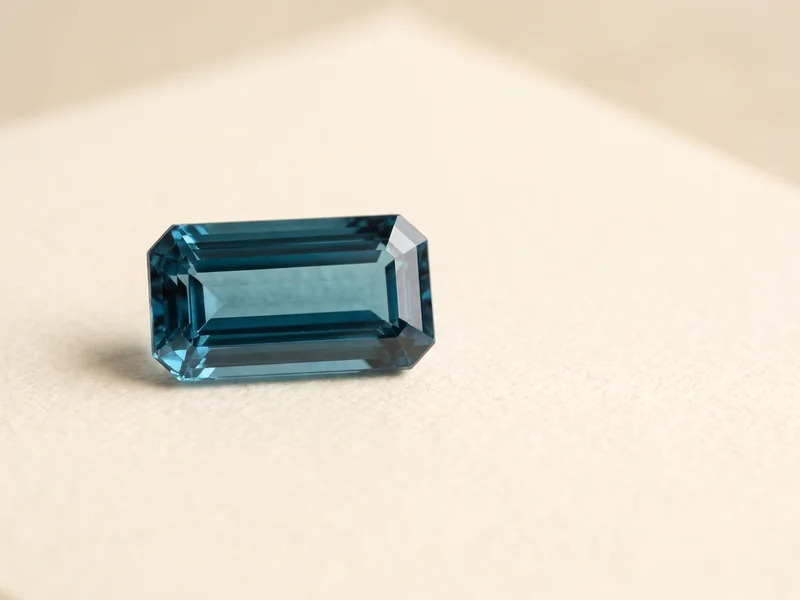
| Indicolite | Blue to greenish blue | Iron | Rarer; pure blue without grey or green costs more |
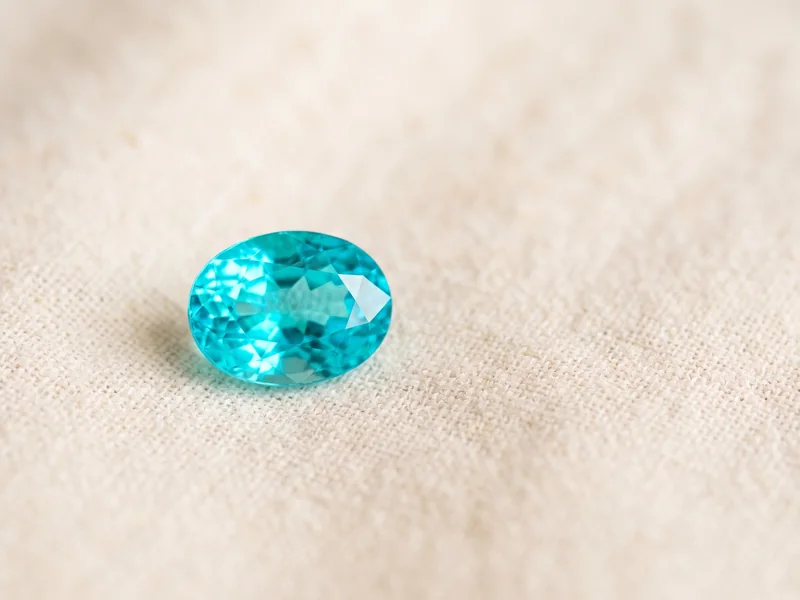
| Paraíba | Neon blue, turquoise, green | Copper and manganese | Rarest and most expensive; often included |
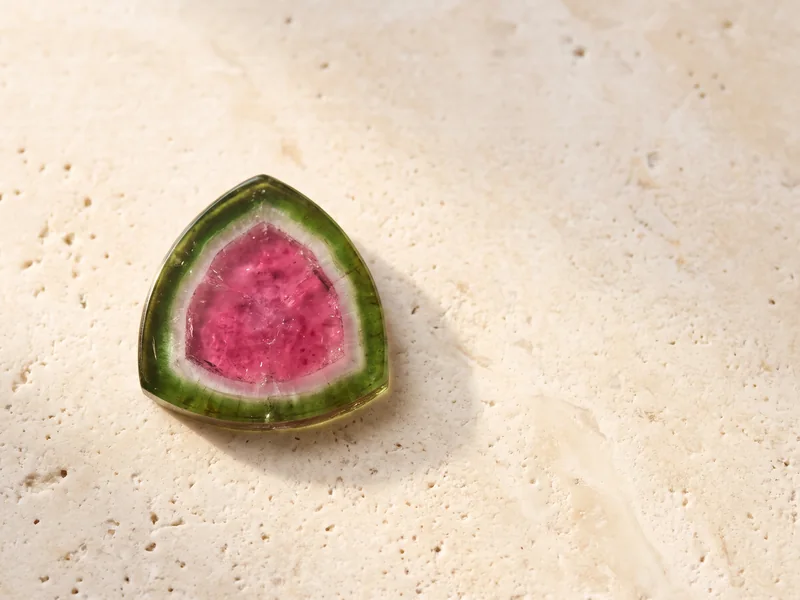
| Watermelon | Pink core, green rim | Colour zoning | Usually cut as slices or bi-coloured bars |
For a green tourmaline ring, a medium, slightly bluish green tends to look brightest. For red, look closely at stones sold as rubellite, the red to deep pink variety: the name should mean the colour holds in every light, not just at the window. Blue stones are scarcer, and fine indicolite, tourmaline's blue variety without a grey or inky look commands a premium.
At the top of the range sits copper-bearing Paraíba tourmaline, first found in Brazil's Paraíba state in the late 1980s and later in Nigeria and Mozambique. Its glow comes from copper, and a Paraíba tourmaline engagement ring is a serious purchase. For something playful, bi-coloured watermelon tourmaline shows pink and green in one crystal, a reminder of how much tourmaline's chemistry can change as it grows.
Related guideParaíba TourmalineHow do you judge tourmaline colour and clarity?
Colour drives most of tourmaline's value. Gemmologists describe it in three parts: hue (the basic colour), tone (how light or dark) and saturation (how strong or pure). Our explainer on how hue, tone and saturation are graded shows the scales. In tourmaline, the most sought-after stones usually have a medium to medium-dark tone with strong saturation and little grey or brown.
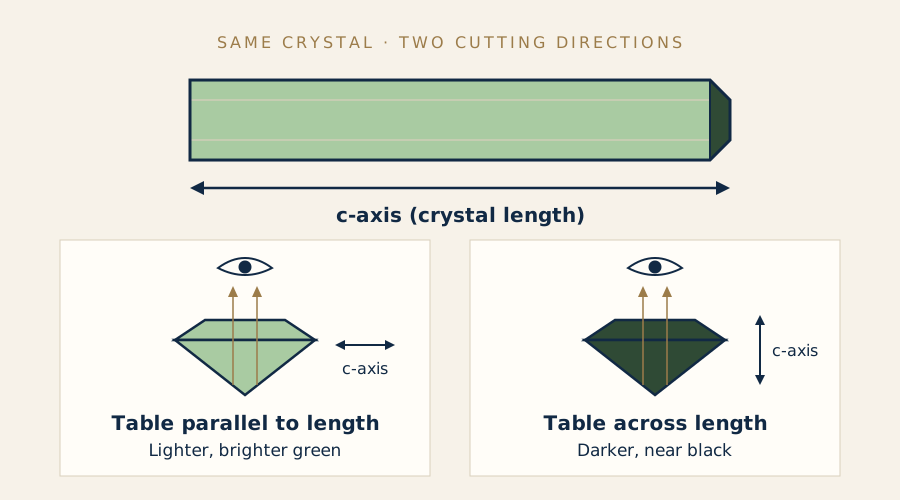
Tourmaline is strongly pleochroic: it shows different colours or depths of colour when viewed in different directions through the crystal. Light travelling along the length of the crystal (the c-axis) is often far darker than light travelling across it. Green and blue stones can look nearly black down the c-axis, so cutters usually lay the table (the large top facet) parallel to the crystal's length to show a lighter, livelier colour. Pale pinks are sometimes cut the other way to deepen them.
A small number of tourmalines change colour between daylight and warm indoor light. The effect is usually weaker than the colour-change effect in alexandrite or a colour-change sapphire, but it shows how sensitive tourmaline colour is to lighting. Rubellite is defined partly by the opposite: a true rubellite keeps its red, while some pinkish reds turn brownish under warm bulbs.
Clarity expectations depend on colour. Gem labs group coloured stones into clarity types. Green and blue tourmaline is usually Type I, often eye-clean (no inclusions visible without magnification). Pinks are typically Type II, with some inclusions normal. Rubellite, watermelon and Paraíba are Type III, where eye-visible inclusions are expected.
- Green or blue: aim for eye-clean; visible inclusions are a reason to keep looking.
- Pink: eye-clean is achievable; tolerate tiny inclusions away from the table.
- Rubellite, Paraíba, watermelon: accept some inclusions, but avoid fractures that reach the surface near a corner or the girdle (the outer edge).
Not sure which one is right?
Send us the stones you are looking at and our gemologist will tell you which to choose and why.
Is tourmaline treated, and how is it identified?
Many tourmalines are treated, and that is accepted in the trade as long as it is disclosed. Heating lightens dark greens and blues and can improve Paraíba colour. Irradiation deepens pinks and reds and usually cannot be detected. Included stones, especially Paraíba and rubellite, may have clarity enhancement, where fractures are filled with oil or resin to make them less visible. Fillings can be affected by heat and solvents, so ask whether a stone has been filled.
Synthetic tourmaline has been grown experimentally, but lab-created tourmaline is not sold on the gem market in any meaningful quantity. Imitations are more of a concern: coloured glass, lab-created spinel and look-alike natural stones such as green garnet or apatite (only Mohs 5) can be offered as tourmaline.
On the bench, a gemmologist separates tourmaline quickly. It is doubly refractive, with a refractive index of about 1.62–1.64 and birefringence (the gap between the two readings) of about 0.018–0.020. A refractometer shows two readings, and through a loupe you can often see doubled facet edges in a larger stone. A dichroscope reveals the strong pleochroism, and specific gravity is about 3.06. Glass and spinel are singly refractive, so they give one reading and no pleochroism. Paraíba-type stones need a lab report, because proving copper takes chemical analysis.
Where does tourmaline come from, and is there Australian tourmaline?
Gem tourmaline forms mainly in pegmatites, coarse granite-like rocks that concentrate rare elements such as boron and lithium. Brazil is the largest source of coloured tourmaline. Afghanistan, Pakistan, Nigeria, Mozambique, Madagascar, Namibia, Tanzania, Sri Lanka and the United States (Maine and California) also produce significant material.
Tourmaline is common in Australian rocks, especially black schorl, which has little use as a gem. Coloured, gem-quality elbaite has been found in pegmatites in Western Australia and other states, but there is no significant commercial production, so almost every tourmaline sold in Australia is imported. Origin rarely changes the price of ordinary tourmaline. The main exception is Paraíba, where Brazilian stones usually sell for more than African copper-bearing stones of similar appearance.
For the full list of tourmaline species, localities and properties, see our main gem profile.
What is the best setting for a tourmaline engagement ring?
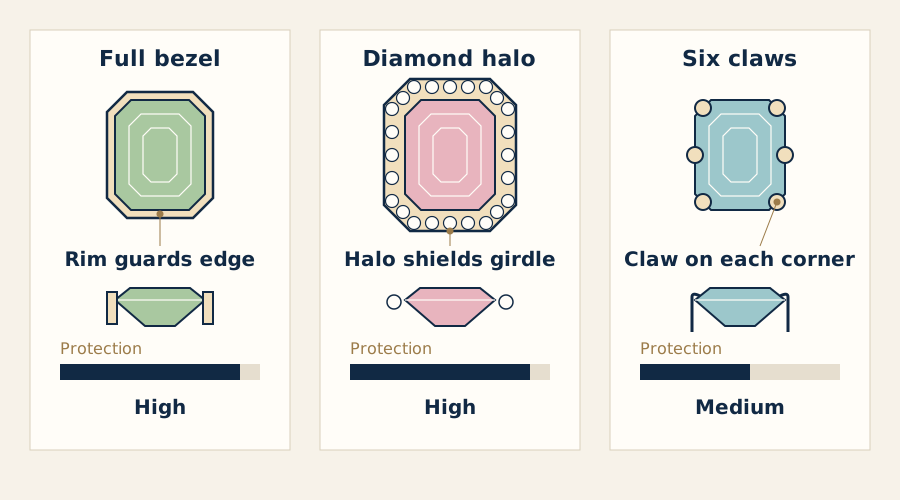
The best setting for a tourmaline ring protects its corners and edges from knocks, because chipping, not scratching, is what ends a stone's life early. The common options:
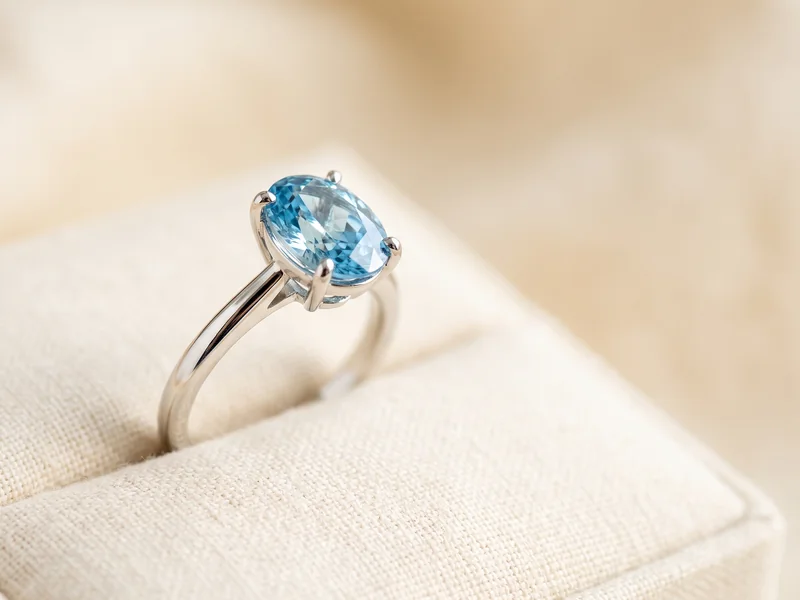
- Bezel or half-bezel: a thin rim of metal around the edge. The most protective choice for daily wear, and it suits emerald cuts and ovals.
- Halo: a frame of small diamonds that shields the girdle and makes a lighter tourmaline look larger.
- Six claws or double claws: for a claw setting, use more claws rather than fewer, and cover each corner of an emerald or cushion cut with a claw.
- Low profile: a stone set closer to the finger catches less on doors, benches and bags.
- Diamond or sapphire side stones: harder accents take the wear on the shoulders rather than the centre stone.
Metal colour changes how tourmaline looks. Yellow gold warms greens and can make a cool green look olive; rose gold flatters pinks and rubellite; platinum and white gold keep blues and Paraíba stones crisp. A watermelon tourmaline slice in a bezel is a natural fit, because the thin slice needs a full rim of metal for support.
Tourmaline is sensitive to sudden heat. If a tourmaline ring needs resizing or a claw re-tip, ask the jeweller to remove the stone before any soldering. A filled stone can also be damaged by the pickling and cleaning solutions used at the bench.
How much does a tourmaline engagement ring cost in Australia?
Most tourmaline is far more affordable per carat than sapphire or diamond, which is why larger centre stones of 1.5 to 3 carats are realistic. Paraíba is the exception. These approximate loose-stone prices per carat give a sense of the spread:
| Tourmaline type (eye-clean or typical clarity) | Approximate price per carat (AUD) |
|---|---|
| Green, commercial quality | about $80–$400 |
| Pink, fine colour | about $200–$800 |
| Rubellite, fine colour | about $300–$1,500 |
| Indicolite, fine blue | about $400–$1,500 |
| Chrome tourmaline | about $400–$1,500 |
| Paraíba-type, African | about $2,000–$15,000+ |
| Paraíba, Brazilian | about $10,000–$50,000+ |
These are broad ranges only; prices move with the market and with the exact stone. Colour is the biggest factor, then size, clarity and cut. Price per carat rises with size, because fine colour in larger crystals is scarcer. Our page on why Paraíba prices climb so steeply explains the copper premium, and what makes a rubellite worth more covers red stones. For a tourmaline ring price in Australia, add the setting, metal and any side stones to the stone price.
Shop natural gemstones, including tourmaline
How do you clean and care for a tourmaline ring?
How to clean tourmaline is simple: warm water, a drop of mild dishwashing liquid and a soft toothbrush, then rinse and dry with a lint-free cloth. Tourmaline is pyroelectric, meaning it builds a small electrical charge when it warms or cools, so it can attract dust and need cleaning a little more often than other gems.
- Avoid ultrasonic and steam cleaners: vibration and heat can worsen fractures and damage fillings.
- Take it off for the gym, gardening, the beach and cleaning; sand and grit are quartz, as hard as the stone.
- Keep chemicals away: chlorine, bleach and solvents can harm fillings and the metal.
- Store it separately so diamonds and sapphires do not scratch it.
- Have the claws checked every 6–12 months, and ask about re-polishing worn facets every few years.
If you would rather have a coloured stone that needs less attention, compare tourmaline with harder coloured stones such as sapphire and spinel before you decide.
How do you choose a tourmaline engagement ring? Step by step
- Pick your colour first. Look at greens, pinks, blues and reds side by side, in daylight and warm light.
- Check the tone. Avoid stones that look blackish face-up, a common pleochroism problem in greens and blues.
- Ask about treatment and identification. Confirm heating, irradiation or filling, and get a lab report for Paraíba or any high-value stone.
- Judge clarity for the colour. Eye-clean for green, blue and pink; some inclusions are normal in rubellite and Paraíba, but avoid surface-reaching fractures near corners.
- Choose a protective setting. A bezel, halo or six-claw design with a low profile protects the edges.
- Match the metal to the colour. Rose gold for pinks, white metals for blues, and try greens in both.
- Plan the upkeep. Budget for claw checks and an occasional re-polish, and agree that the stone comes out before any resizing.
Free consultation
Talk to a gemologist
Compare stones in person or online with Raj Sood, Graduate Gemologist (GIA), AJP (GIA).
Book a consultationShop this shape
FAQ
Common questions
Is tourmaline good for an engagement ring?
Yes, if you choose a protective setting and accept some upkeep. At 7–7.5 on the Mohs scale with fair to good toughness, it wears better than tanzanite or opal but will show wear sooner than sapphire or diamond.
Will a tourmaline scratch easily?
It resists most everyday scratches, but quartz dust is about as hard as tourmaline, so facet edges slowly wear over years of daily wear. A jeweller can re-polish the stone when it looks dull.
What colour tourmaline is most expensive?
Copper-bearing Paraíba tourmaline in neon blue or green is by far the most expensive, followed by fine rubellite, indicolite and chrome tourmaline. Commercial greens and pinks are the most affordable.
Is pink tourmaline treated?
Many pink and red tourmalines are irradiated to deepen their colour, a stable treatment that usually cannot be detected. A reputable seller should tell you if a stone is known or likely to be treated.
Can you get lab-grown tourmaline?
Synthetic tourmaline has been grown experimentally, but lab-created tourmaline is not commercially available as a gem. Glass and other imitations exist, so a gemmologist's identification is worthwhile for valuable stones.
How do I clean a tourmaline ring?
Use warm soapy water and a soft brush, then rinse and dry. Avoid ultrasonic and steam cleaners, especially for included or filled stones.

Ask a gemologist
Not sure which diamond to choose?
Raj Sood is a Graduate Gemologist (GIA) and master jeweller. Bring the stones you are considering, or send the reports, and he will tell you honestly which one is better and why.
Keep learning
Related guides
 GemstonesRubellite Tourmaline
 GemstonesParaíba Tourmaline
 GemstonesTanzanite Rings: Beauty vs Everyday Durability
 GemstonesTourmalineGemstonesGemstones | Coloured Gemstones, Birthstones and Custom Jewellery
 GemstonesWatermelon TourmalineGemstonesIndicolite Tourmaline
 GemstonesOctober Birthstone: Opal and Tourmaline
Explore more
More guides on this topic
Education