
Gemstones
Birthstone Engagement Rings: Choosing a Stone That Lasts
An engagement ring is worn every day for decades, and many birthstones were never meant for that. This guide ranks birthstone engagement rings by hardness and toughness, month by month, so you can choose a stone that still looks right in 20 years.
 Reviewed by Raj Sood, Graduate Gemologist (GIA), AJP (GIA)Master jeweller and Graduate Gemologist (GIA) · reviewed 4 November 2026
Quick answer
The most durable birthstone engagement rings use diamond (April, Mohs 10), ruby (July) or sapphire (September), both Mohs 9, plus alexandrite and spinel. Aquamarine, garnet, amethyst and emerald work with care and a protective setting. Opal, pearl, moonstone, tanzanite and turquoise are too soft or brittle for daily wear unless set in a bezel and worn gently.
What makes birthstone engagement rings durable?
A birthstone is a lovely reason to choose a gem, but an engagement ring asks more of a stone than almost any other piece of jewellery. It is knocked on benches, car doors and gym equipment, washed with soap and sanitiser, and worn every day for decades. Whether a birthstone survives that comes down to three separate properties, and gemmologists treat them separately because a stone can be strong in one and weak in another.
- Hardness: resistance to scratching, measured on the Mohs scale from 1 (talc) to 10 (diamond). The scale is relative, not even: diamond at 10 is several times harder than sapphire at 9.
- Toughness: resistance to chipping and breaking when the stone takes a knock. Gems with cleavage (a tendency to split cleanly along flat planes inside the crystal) or many inclusions are less tough.
- Stability: resistance to heat, light, chemicals and sudden temperature changes. Opal, pearl and treated emerald are the weak points here.
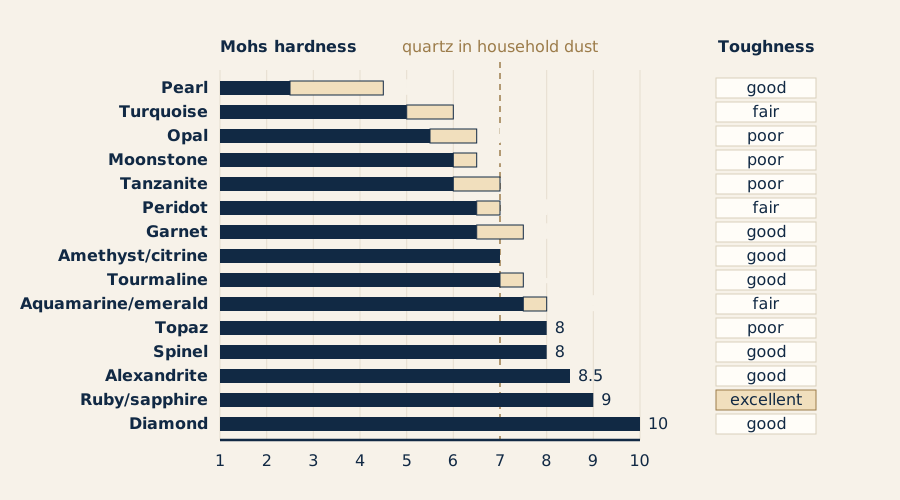
The single most useful number is 7. Ordinary household dust contains fine grains of quartz, which is 7 on the Mohs scale. Any gem softer than 7 is slowly scratched by everyday dust and loses its polish, so its facet edges go rounded and the surface looks cloudy over the years. A stone of 7 holds up better, and a stone of 8 or more stays crisp with normal care.
Toughness explains the surprises. Diamond is the hardest natural material but has cleavage in four directions, so its toughness is graded only good, and a hard knock on a thin edge can chip it. Ruby and sapphire have no true cleavage and are rated excellent for toughness, which is why many gemmologists rank them alongside diamond for daily wear. If you want a broader introduction to how coloured stones behave, start with our guide to coloured gemstones, and any unfamiliar term is defined in our plain-English jewellery glossary.
How hard is each birthstone on the Mohs scale?
The table below uses the modern birthstone list most Australian jewellers follow, including the months that have more than one stone. Toughness uses the standard gemmological scale (poor, fair, good, excellent). The last column is our gemmologist's practical view for a ring worn every day.
| Month | Birthstone | Mohs hardness | Toughness | As an everyday engagement ring |
|---|---|---|---|---|
| January | Garnet | 6.5–7.5 (varies by type) | Fair to good | Good with care; pyrope and almandine are the harder types |
| February | Amethyst | 7 | Good | Good with care; expect re-polishing over the years |
| March | Aquamarine | 7.5–8 | Good | Good; protect corners and points |
| April | Diamond | 10 | Good (has cleavage) | Excellent |
| May | Emerald | 7.5–8 | Poor to fair (inclusions) | With care; protective setting essential |
| June | Pearl | 2.5–4.5 | Fair to good | Not suited to daily wear |
| June | Moonstone | 6–6.5 | Poor (cleavage) | Occasional wear |
| June | Alexandrite | 8.5 | Excellent | Excellent |
| July | Ruby | 9 | Excellent | Excellent |
| August | Peridot | 6.5–7 | Fair | With care |
| August | Spinel | 8 | Good | Very good |
| September | Sapphire | 9 | Excellent | Excellent |
| October | Opal | 5.5–6.5 | Poor to fair | Occasional wear, or bezel and gentle wear |
| October | Tourmaline | 7–7.5 | Fair | Good with care |
| November | Topaz | 8 | Poor (perfect cleavage) | With care; avoid hard knocks |
| November | Citrine | 7 | Good | Good with care |
| December | Tanzanite | 6–7 | Poor to fair (cleavage) | Occasional wear |
| December | Zircon | 6–7.5 | Poor to fair (brittle edges) | Occasional wear |
| December | Turquoise | 5–6 | Fair to good (porous) | Occasional wear |
If your month has more than one stone, you have a choice. June is the clearest example: pearl and moonstone are delicate, but alexandrite is one of the toughest gems on the list. August's spinel is far more practical than peridot, and October's tourmaline is a sturdier option than opal. Our page on birthstone jewellery for every month shows each month's stones side by side.
Which birthstone engagement rings suit everyday wear?
Putting hardness, toughness and stability together gives three practical groups. These are not rules, and plenty of people happily wear a softer stone, but they set realistic expectations before you commit.
- Wear every day without worry (Mohs 8–10, good to excellent toughness): diamond, ruby, sapphire, alexandrite and spinel. These keep their polish and handle normal knocks in a sensible setting.
- Wear every day with care (Mohs 7–8): aquamarine, garnet, amethyst, citrine, tourmaline, emerald and topaz. Choose a protective setting, take the ring off for heavy work and plan a check every year or so.
- Best for occasional wear (below 7, or fragile): opal, pearl, moonstone, tanzanite, peridot, zircon and turquoise. They can be worn as an engagement ring, but they will show wear, and some need re-polishing or eventual replacement.
The top group is short, and three of the five have their own guides. Diamond, the April birthstone is the traditional choice and the hardest. Sapphire for September comes in blue, pink, yellow, green and white, which means almost anyone can find a colour that suits them. July's ruby is simply red sapphire: the same mineral, corundum, coloured by chromium.
Related guideSeptember Birthstone: SapphireWhat should you know about each month's birthstone?
These notes add what a gemmologist checks beyond the hardness number, including the refractive index (RI, how strongly a stone bends light, one of the main ways gems are identified) and the treatments you should ask about.
- January, garnet: a family of related minerals, not one gem. Red almandine and pyrope (Mohs about 7–7.5, RI about 1.72–1.81) are the practical ring choices; green demantoid is softer at about 6.5. Garnet has no cleavage but is only fair to good in toughness. See our January garnet guide.
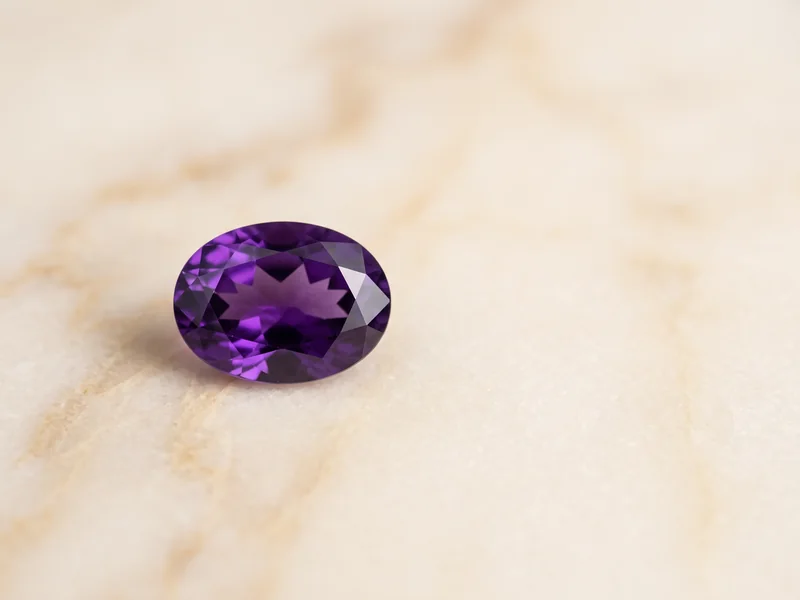
- February, amethyst: purple quartz, Mohs 7, RI about 1.54–1.55. Durable enough with care, though facet edges soften over many years and some amethyst can fade with long exposure to strong sun or heat. More in our page on amethyst for February birthdays.
- March, aquamarine: blue beryl, Mohs 7.5–8, RI about 1.57–1.58. Usually very clean, so it is tougher than its sister emerald. Most blue aquamarine is heated to remove green. Read about March aquamarine colours and cuts.
- April, diamond: Mohs 10, RI about 2.42. Hardest of all, but cleavage means a sharp knock on a girdle or point can chip it.
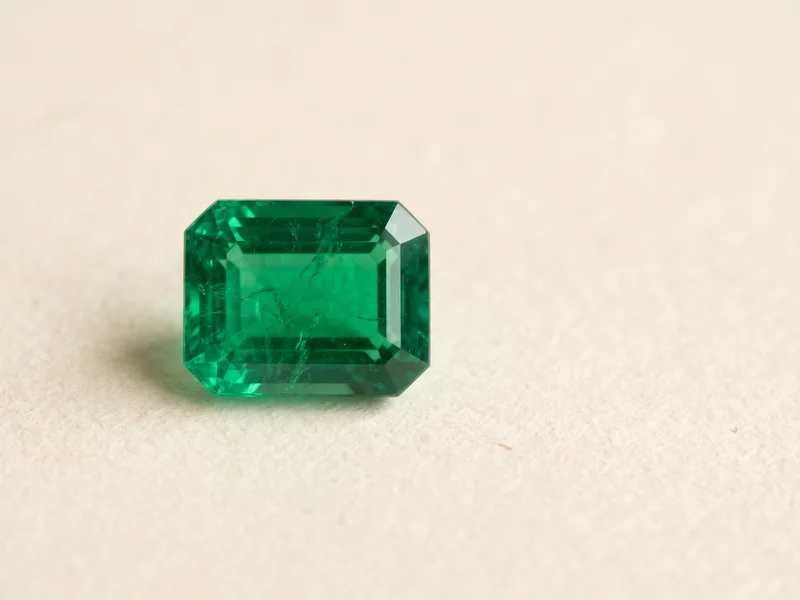
- May, emerald: green beryl, Mohs 7.5–8, but nearly always heavily included. Most emeralds are clarity-enhanced with oil or resin to hide fractures, which makes ultrasonic and steam cleaning risky. Our guide to emerald, May's birthstone covers grading and treatments.
- June, pearl, moonstone and alexandrite: pearl is organic, Mohs 2.5–4.5, and damaged by perfume, sweat and cosmetics. Moonstone is a feldspar with two cleavage directions. Alexandrite is a colour-change chrysoberyl, Mohs 8.5 and excellent toughness, though natural stones are rare and costly.
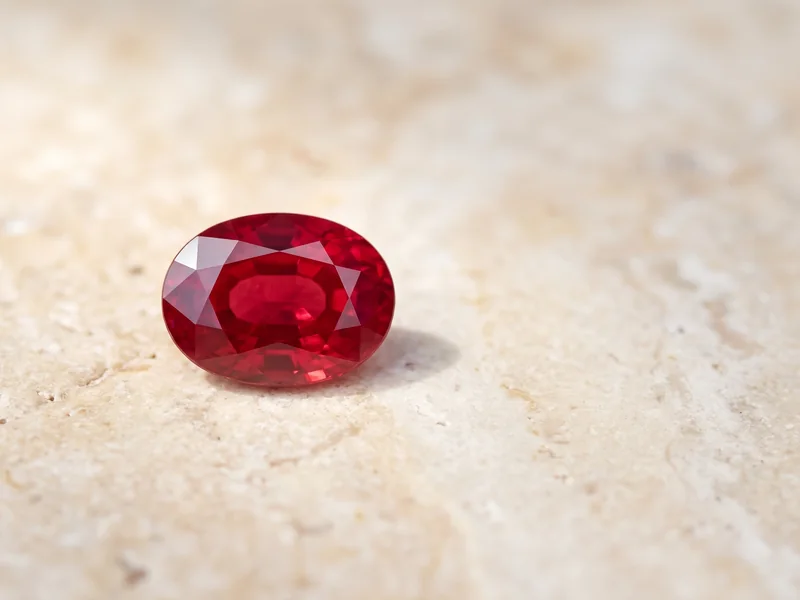
- July, ruby: Mohs 9. Most rubies are heated. Avoid lead-glass-filled (composite) rubies for a ring: the glass is soft and can be damaged by heat and household chemicals.
- August, peridot and spinel: peridot (Mohs 6.5–7, RI about 1.65–1.69) is sensitive to acids and temperature shock. Spinel (Mohs 8, RI about 1.72) is the under-rated choice, often untreated.
- September, sapphire: Mohs 9, RI about 1.76–1.77, excellent toughness. Heat treatment is common and accepted, but should be disclosed.
- October, opal and tourmaline: opal contains water, is Mohs 5.5–6.5 and can crack with heat or dryness. Doublets and triplets (thin opal glued to a backing) must not be soaked. Tourmaline is harder at 7–7.5.
- November, topaz and citrine: topaz is Mohs 8 but has perfect cleavage, so one hard knock can split it. Citrine is quartz, Mohs 7.
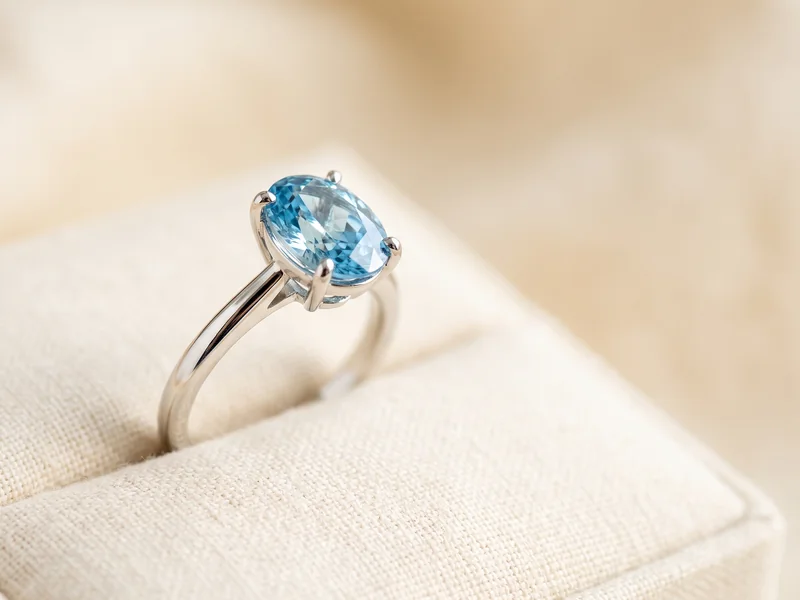
- December, tanzanite, zircon and turquoise: tanzanite (Mohs 6–7) has strong cleavage and dislikes heat. Zircon chips along facet edges. Turquoise is porous and absorbs oils. We look at the first in depth in whether tanzanite holds up in a ring.
Not sure which one is right?
Send us the stones you are looking at and our gemologist will tell you which to choose and why.
Which birthstones come from Australia?
Several birthstones have strong Australian origins, which is part of their appeal for many couples here.
- Sapphire: mined in central Queensland (the Anakie gemfields around Rubyvale and Sapphire) and the New England region of northern New South Wales. Australian blues tend to be deep, sometimes inky, and Australian parti sapphires show blue, green and yellow zones in one stone. Our page on Australian sapphire from the Queensland and New England fields covers origin and colour.
- Opal: Australia's national gemstone, with black opal from Lightning Ridge, white and crystal opal from Coober Pedy and boulder opal from western Queensland. Boulder opal, with its natural ironstone backing, is generally sturdier than thin solid opal.
- Diamond: the Argyle mine in Western Australia produced most of the world's pink diamonds before it closed in 2020.
- Garnet and zircon: both occur in the Harts Range in the Northern Territory, though in smaller commercial quantities.
Origin does not change a stone's hardness: an Australian sapphire and a sapphire from Sri Lanka are both Mohs 9. What origin can change is colour, the treatments commonly used and price.
What is the best setting for a soft birthstone engagement ring?
The setting does as much for durability as the gem itself. For anything below Mohs 8, or any stone with cleavage, these choices make the biggest difference:
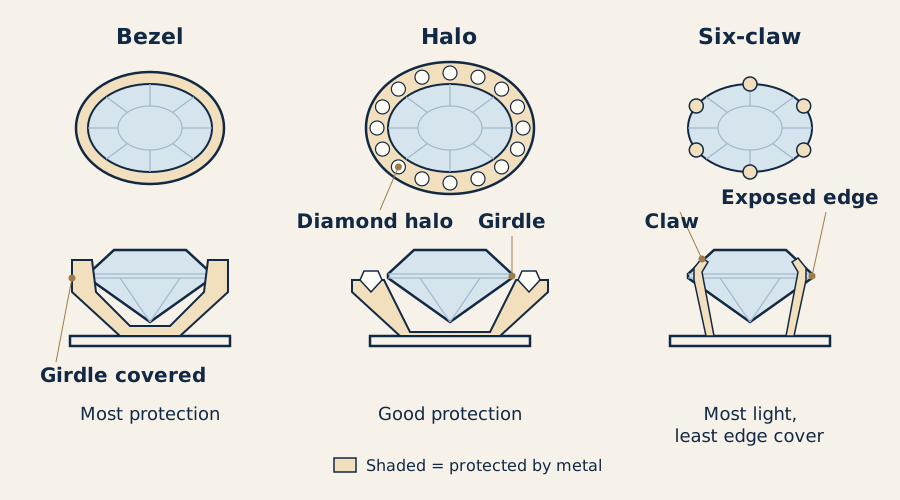
- Bezel or half-bezel: a rim of metal around the edge. It shields the girdle (the thin outer edge) from knocks and is the most protective option for opal, tanzanite and emerald.
- Halo: a ring of small diamonds around the centre stone takes the knocks first and makes the centre look larger.
- Low profile: a stone that sits close to the finger is hit less often than one set high.
- Rounded shapes: ovals, rounds and cushions have no sharp points; our guide to the oval outline explains why it is such a forgiving shape. If you love a pear, a pointed marquise outline or an emerald cut, protect the corners and points with V-claws or a bezel.
- More claws: six claws instead of four spread the grip and keep the stone in place if one claw wears.
- Harder metal: platinum and 18 carat gold alloys hold claws well; worn claws are the usual cause of lost stones.
Care matters too. Take the ring off for gardening, gym work and cleaning with bleach or other harsh chemicals. Clean softer and treated stones in warm water with mild soap and a soft brush, never in an ultrasonic or steam cleaner. For an emerald in particular, read how to protect an emerald's corners before choosing the cut.
What if your birthstone is too soft for an engagement ring?
You do not have to give up your birthstone. Many people choose a harder centre stone in a similar colour and keep their birthstone as accent stones, a hidden stone under the setting or a matching pendant. Here is how the common swaps compare:
| If your birthstone is… | Main concern | More durable option with a similar look | Mohs of the option |
|---|---|---|---|
| Tanzanite (December) | Cleavage, Mohs 6–7 | Violet-blue sapphire or lab-created sapphire | 9 |
| Opal (October) | Water content, Mohs 5.5–6.5 | Australian parti sapphire, or opal as side stones in a bezel | 9 |
| Pearl (June) | Soft and organic | Alexandrite (June) or a diamond centre with pearl accents | 8.5–10 |
| Peridot (August) | Fair toughness, Mohs 6.5–7 | Spinel (August) or green sapphire | 8–9 |
| Emerald (May) | Inclusions, clarity-enhanced | Lab-created emerald or green sapphire | 7.5–9 |
| Blue topaz (November) | Perfect cleavage | Aquamarine or light blue sapphire | 7.5–9 |
| Zircon (December) | Brittle facet edges | Blue spinel or blue sapphire | 8–9 |
Tanzanite is the stone we are asked about most often, because its violet-blue is hard to match. Our page on tanzanite's beauty-versus-durability trade-off covers settings that make it workable. For red, there is no harder swap needed: ruby is already Mohs 9, but read about ruby treatments and what they mean so you avoid glass-filled stones.
Are lab-created birthstones as durable as natural ones?
Yes, when the stone is truly lab-created. A lab-created (also called synthetic) gem has the same chemistry, crystal structure, hardness and refractive index as the natural gem; it is simply grown in a laboratory instead of mined. Lab-created ruby and sapphire are Mohs 9, lab-created alexandrite is 8.5 and lab-created spinel is 8. Lab-created emerald is often a little tougher in practice than natural, because it usually has fewer inclusions and no oil filling.
Lab-created is not the same as an imitation or simulant, which only looks like the gem. Glass, for example, is only about Mohs 5.5 and wears quickly in a ring. Any reputable report or invoice should say whether a stone is natural, lab-created or an imitation, and whether it has been treated. The same applies to diamonds: lab-grown diamond is real diamond, Mohs 10, and our page on natural and lab-grown diamond compared sets out the differences.
Natural stones are rarer and each carries its own geological history, which many people value; lab-created stones cost much less and offer cleaner material and sizes that would be expensive in natural. Both are legitimate choices, as long as the stone is described accurately.
Browse natural gemstones
How much do birthstone engagement rings cost in Australia?
Price depends far more on the gem species, colour, size and treatment than on the month. The ranges below are rough guides for a centre stone of about 1 carat of good commercial quality; the setting is extra and depends on the metal and design.
| Centre stone (about 1 ct) | Approximate stone price (AUD) |
|---|---|
| Amethyst or citrine | about $30–$150 |
| Garnet (red) | about $50–$400 |
| Aquamarine | about $150–$900 |
| Lab-created sapphire or ruby | about $50–$400 |
| Spinel (natural) | about $500–$3,000 |
| Blue sapphire (natural) | about $1,500–$6,000 |
| Emerald (natural) | about $1,500–$8,000 |
| Ruby (natural) | about $2,000–$10,000 |
| Lab-grown diamond (G–H, VS) | about $800–$3,000 |
| Natural diamond (G–H, VS) | about $6,000–$15,000 |
Top-colour stones, unheated rubies and sapphires, and fine natural alexandrite sit well above these ranges. A well-made setting in 18 carat gold or platinum often costs about $1,500–$4,000 on its own. Seeing a stone in a finished piece also helps you judge how its colour sits against the metal you prefer.
How to choose birthstone engagement rings: step by step
- List every stone for your month. Several months have two or three birthstones, and one is often much tougher.
- Check hardness and toughness. Aim for Mohs 8 or more for carefree daily wear, and at least 7 with a protective setting.
- Ask about treatments. Confirm whether the stone is natural or lab-created and whether it is heated, oiled or filled. Avoid glass-filled ruby and dyed stones for a ring.
- Choose a forgiving shape. Rounded outlines such as oval, round and cushion have no exposed points.
- Pick a protective setting. Bezel, halo or six claws, set low, for anything below Mohs 8 or with cleavage.
- Plan the care. Know which cleaning methods are safe and book a claw and stone check every 12 months.
- Learn the language. Brush up on terms such as toughness and cleavage so you can compare quotes and reports with confidence.
Free consultation
Talk to a gemologist
Compare stones in person or online with Raj Sood, Graduate Gemologist (GIA), AJP (GIA).
Book a consultationShop this shape
FAQ
Common questions
Can you use a birthstone as an engagement ring?
Yes. Diamond, ruby, sapphire, alexandrite and spinel are durable enough for everyday wear, and stones such as aquamarine and garnet work well with care. Softer stones like opal and pearl can be used but will show wear sooner.
What are the most durable birthstones?
Diamond (Mohs 10), ruby and sapphire (Mohs 9) and alexandrite (Mohs 8.5) are the most durable. Ruby, sapphire and alexandrite also have excellent toughness, so they resist chipping very well.
Is an emerald engagement ring good for everyday wear?
It can be, but emerald is usually included and clarity-enhanced, so it chips more easily than its hardness suggests. A bezel or halo setting, gentle cleaning and taking it off for heavy work make a big difference.
How durable is an opal engagement ring?
Opal is Mohs 5.5–6.5 and contains water, so it scratches and can crack with heat or knocks. In a bezel and worn with care it can last, but expect re-polishing and avoid doublets or triplets for daily wear.
Are lab-created birthstones real gemstones?
Yes. Lab-created ruby, sapphire, emerald, spinel and alexandrite have the same chemistry and hardness as the natural gems. They should always be described as lab-created or synthetic so you know what you are buying.
What is the best setting for a soft gemstone?
A bezel is the most protective, because metal surrounds the edge. A halo, a low profile and six claws instead of four also reduce the risk of chips and lost stones.

Ask a gemologist
Not sure which diamond to choose?
Raj Sood is a Graduate Gemologist (GIA) and master jeweller. Bring the stones you are considering, or send the reports, and he will tell you honestly which one is better and why.
Keep learning
Related guides
 GemstonesSeptember Birthstone: Sapphire
 GemstonesJuly Birthstone: Ruby
 GemstonesMay Birthstone: Emerald
 GemstonesTanzanite Rings: Beauty vs Everyday DurabilityGemstonesGemstones | Coloured Gemstones, Birthstones and Custom Jewellery
 GemstonesBirthstone Jewellery Melbourne
 GemstonesApril Birthstone: Diamond
 GemstonesFebruary Birthstone: Amethyst
Explore more
More guides on this topic
Education