
- Education
- Diamond Anatomy & Light
- Ideal Oval Diamond Proportions Chart: Depth, Table, Ratio and Light
Diamond Anatomy & Light
Ideal Oval Diamond Proportions Chart: Depth, Table, Ratio and Light
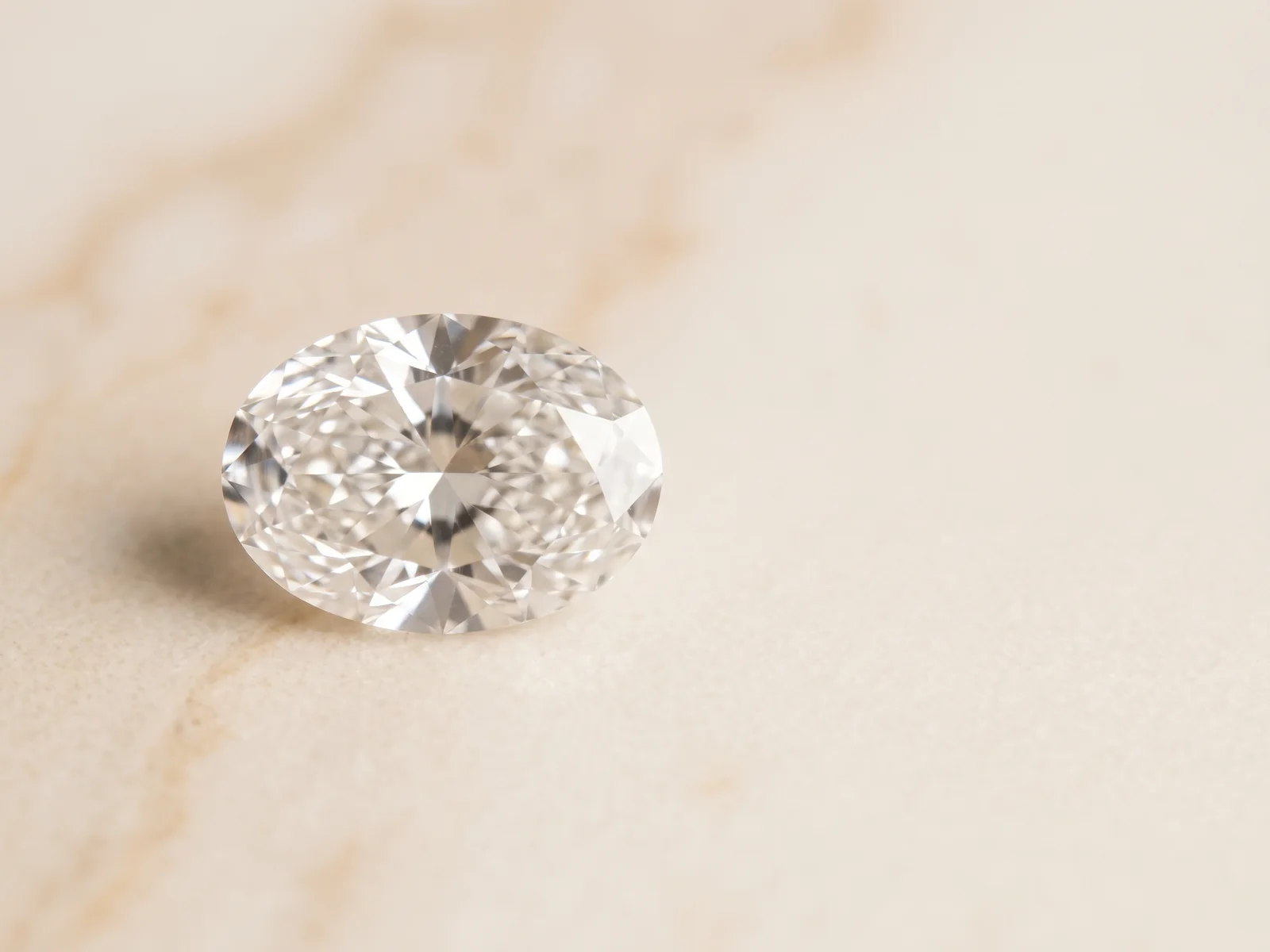
Oval diamond proportions decide whether an oval looks bright and lively or shows a dark bow-tie, a black centre or a grey ring. Because GIA and most other labs give ovals no cut grade, the numbers and the light images are yours to read.
 Reviewed by Raj Sood, Graduate Gemologist (GIA), AJP (GIA)Master jeweller and Graduate Gemologist (GIA) · reviewed 4 November 2026
Quick answer
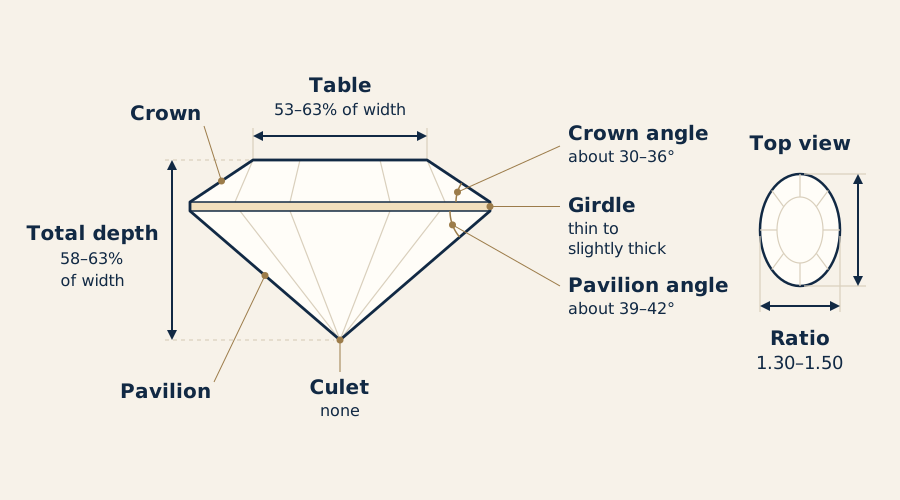
Ideal oval diamond proportions are a total depth of about 58–63%, a table of about 53–63% of the width, a thin to slightly thick girdle, no culet, Excellent or Very Good polish and symmetry, and a length-to-width ratio of 1.30–1.50. Then check a video or ASET image for a mild bow-tie and no dark centre.
What are ideal oval diamond proportions?
Proportions are the measurements that describe a diamond's three-dimensional shape: how deep it is, how big the top facet is, how thick the edge is and how steeply the facets are angled. In an oval, those numbers control how much light comes back up to your eye and how big the stone looks for its weight. If the parts of a diamond are new to you, our guide to the table, crown, girdle, pavilion and culet explains each one with a diagram.
For a round brilliant, the lab does this work for you: GIA gives every round an overall cut grade from Excellent to Poor. For ovals, GIA grades polish and symmetry but gives no overall cut grade. Two ovals with identical colour, clarity and carat on paper can look completely different, one bright from edge to edge, the other with a dark band across the middle. Reading the proportions is how you tell them apart before you see the stone.
Diamond has a refractive index of about 2.42, which means it bends light strongly, and a critical angle of about 24.4°. Light that strikes a pavilion facet (the lower facets) at more than that angle from the perpendicular reflects back inside the stone; light that strikes closer to perpendicular escapes out the bottom. Good proportions keep most light reflecting inside until it exits through the top. Poor proportions let it leak out, and the leaking areas look dark or glassy. For the shape itself, from history to settings, start with our complete oval diamond guide, and look up any unfamiliar word in the GemTrove jewellery glossary.
What does an oval diamond proportions chart include?
The chart below sets out the ranges a gemmologist would look for on a grading report. Treat them as a first filter rather than a promise: a stone inside every range can still have a heavy bow-tie, and one slightly outside can look lovely. That is the central lesson of our explainer on why fancy shapes have no single perfect proportion chart.
| Measurement | Ideal range | Acceptable | Usually avoid |
|---|---|---|---|
| Total depth | 58–63% | 56–58% or 63–65% | Below 56% or above 65% |
| Table | 53–63% | 50–53% or 63–66% | Above 66% |
| Length-to-width ratio | 1.30–1.50 | 1.25–1.30 or 1.50–1.60 | Below 1.25 or above 1.60 (personal taste) |
| Girdle | Thin to slightly thick | Medium to thick | Extremely thin or very thick |
| Culet | None | Very small | Medium or larger |
| Polish and symmetry | Excellent | Very Good | Good or below |
| Fluorescence | None to faint | Medium (check for haziness) | Strong if the stone looks milky |
Total depth is the height of the stone from table to culet, divided by its width (not its length). Table is the width of the large flat top facet as a percentage of the stone's width. The girdle is the thin band around the edge, and the culet is a tiny facet at the bottom point; on a modern oval it should be absent, shown as "None" on the report.
GIA reports on ovals do not list crown and pavilion angles, because the angles change all the way around the outline. Some cutters and labs publish them; where you can see them, a crown angle of roughly 30–36° and a pavilion angle of roughly 39–42° across the width tend to give good light return. Without them, depth and table, plus the light images covered further down, are your most useful guide.
How do depth and table change how an oval looks?
The ideal depth for an oval diamond is a balance. Go too shallow and light falls straight through the pavilion; go too deep and the stone carries weight underneath where you cannot see it. Depth has the bigger effect of the two, because it reflects the pavilion angle, which does most of the work of returning light.
Here is what depth does to a 1 carat oval about 5.7 mm wide. At 60% depth, the stone is about 3.4 mm tall. At 66% the same width would be about 3.8 mm tall, and that extra 0.4 mm is weight that adds nothing face-up. So a 1 carat oval cut to 66% depth measures noticeably smaller across, often closer to the face-up size of a 0.85–0.90 ct oval. Our guide to how deep pavilions and thick girdles hide carat weight shows how to spot this from the measurements alone.
| Carat weight | Typical size at about 1.35 ratio, 60–62% depth |
|---|---|
| 0.50 ct | about 6.2 × 4.6 mm |
| 0.75 ct | about 7.0 × 5.0 mm |
| 1.00 ct | about 7.7 × 5.7 mm |
| 1.50 ct | about 8.8 × 6.5 mm |
| 2.00 ct | about 9.7 × 7.1 mm |
The table affects the character of the sparkle. A smaller table (around 53–58%) leaves a taller crown with more room for the crown facets to split light into flashes of colour, called fire. A larger table (58–63%) gives broader, brighter flashes of white light, called brilliance, and can look slightly bigger face-up. Both are attractive. Past about 65%, the crown becomes so flat that fire drops away and the stone can look glassy.
Oval diamond girdle thickness matters too. A girdle that is very thick adds hidden weight and a grey outline; one that is extremely thin can chip at the ends. Thin to slightly thick is the comfortable middle, and most ovals vary a little along their length, which is why reports give a range such as "thin to medium".
What causes the bow-tie in an oval diamond?
The bow-tie is a dark band, shaped like a bow-tie, that runs across the width of many ovals, pears and marquises. It forms because an oval's pavilion facets cannot all sit at the same angle. As the outline stretches, the facets towards the ends sit at different angles from those across the narrow middle. In the middle, some facets end up near the critical angle, so they either leak light or reflect your own head and shoulders back at you. Either way, that area looks dark.
Almost every oval has some bow-tie. A mild bow-tie, grey rather than black, that shifts and breaks up as the stone moves, adds contrast and helps the sparkle stand out. A heavy bow-tie, black and fixed in every position, makes the stone look as if it has a shadow painted across it. A round has no bow-tie at all, which is one reason people weigh up an oval against a round brilliant; newer hybrids such as the moval are cut partly to reduce it, as our oval vs moval comparison explains.
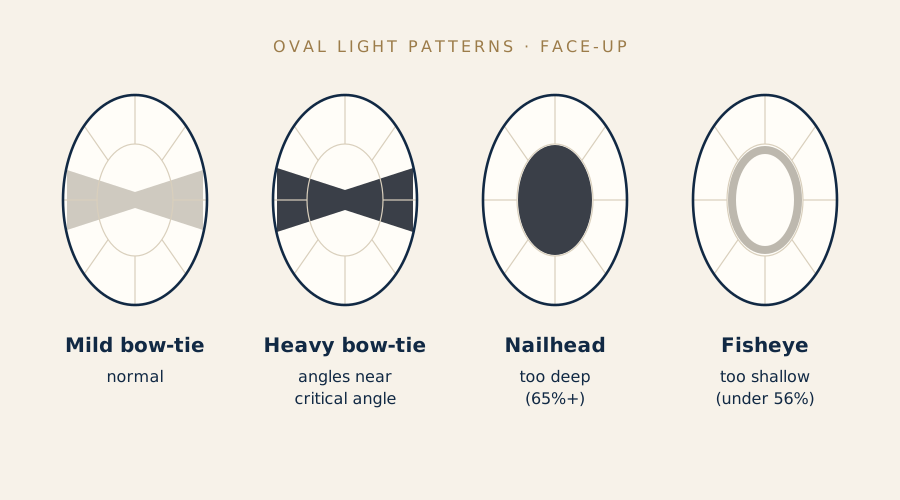
Ratio plays a part. Ovals at the long end, about 1.50 and above, often show stronger bow-ties because the angle differences between the ends and the middle are larger. Very short ovals below 1.30 usually show less. This does not mean you must pick a short oval; it means a long oval needs a more careful look.
Not sure which one is right?
Send us the stones you are looking at and our gemologist will tell you which to choose and why.
What are nailheads, fisheyes and windows in an oval diamond?
The bow-tie gets the attention, but three other light faults are just as important, and each points to a specific proportion problem. They are explained less often, yet they are often easier to see in a video than a bow-tie.
| Light fault | What you see | Main cause | Numbers that suggest it |
|---|---|---|---|
| Heavy bow-tie | Fixed black band across the width | Pavilion angles across the middle near the critical angle | Often at ratios above 1.50, or depth outside 58–63% |
| Nailhead | Dark, almost black centre under the table | Pavilion too steep; light leaks out the sides | Total depth above about 65% |
| Fisheye | Pale grey ring visible inside the table | Pavilion too shallow; the girdle reflects in the table | Total depth below about 56%, often with a large table |
| Window | Washed-out, see-through patch in the centre | Pavilion too shallow; light passes straight through | Total depth below about 57% |
| Extinction | Dark patches scattered at the ends or edges | Uneven facet angles, sometimes a thick or steep pavilion | Any depth; best judged on video or ASET |
An oval diamond nailhead is the opposite of a window. The steep pavilion sends light out the sides, and the centre goes dark like the head of a nail seen from above. It is common in ovals cut deep to save weight from the rough crystal.
An oval diamond fisheye shows as a whitish-grey ring just inside the edge of the table. It is the reflection of the girdle, seen because the pavilion is so shallow that the stone acts more like a mirror than a diamond. A window is related: you can see through the middle of the stone, and anything behind it, like your finger, shows through. Pears are prone to the same faults, as our oval vs pear guide notes, because they share the oval's rounded end.
Extinction is the general term for areas that go dark because they are not returning light. A bow-tie is one kind of extinction. Scattered dark patches at the ends of an oval are another, and usually mean the facet angles change unevenly around the outline.
How do ASET and Idealscope images show light return in an oval?
Numbers tell you where a stone is likely to perform; light images show you what it is actually doing. The two most useful tools are the ASET (Angular Spectrum Evaluation Tool, developed by the American Gem Society) and the Idealscope. Both are simple viewers that colour the light entering the diamond by the angle it comes from.
- ASET, red: the brightest light, coming from high above the stone. You want plenty of red, spread evenly.
- ASET, green: less intense light from lower angles. Some green is normal; large green areas suggest the stone is less bright.
- ASET, blue: contrast, from your own head and body blocking the light. A balanced amount gives the stone sparkle and pattern.
- ASET, white or black: leakage, where light is escaping. Large white areas in the centre point to a window; a blue or white band across the width is usually the bow-tie.
- Idealscope: shows light return as red and leakage as white or clear. It is simpler to read, but does not separate high-angle from low-angle light.
When you look at an oval diamond ASET image, check two things. First, is the red strong and spread across the ends as well as the middle? Second, is there a blue, white or pale band across the width? A thin, broken band means a mild bow-tie; a solid wide band means a heavy one. Compare several ovals' ASET images side by side and the differences jump out far more than they do on a report.
These tools are not a substitute for seeing the stone move. An ASET is a still image taken in one position, so treat it as a second opinion alongside a 360° video.
Does the oval diamond length to width ratio change the ideal proportions?
The oval diamond length to width ratio is the stone's length divided by its width. It mostly decides the look on the hand, but it also interacts with light. A 1.35 oval and a 1.50 oval can share the same depth and table and still show different bow-ties, because stretching the outline changes the facet angles at the ends.
Related guideBest Length-to-Width Ratio for an Oval Diamond?Most people choose between 1.30 and 1.50; around 1.35–1.40 is the classic look, and 1.45–1.50 is slimmer and more elongated on the finger. Our full guide to choosing a length-to-width ratio for your oval has side-by-side outlines at each step.
The outline's curves matter as much as the ratio. An oval with full, rounded shoulders (the curved sections either side of the ends) looks soft and even. One with flat, squared shoulders looks boxy, sometimes almost like a cushion. Flat shoulders often come from cutting to keep weight, and they can make the bow-tie stronger. See rounded versus boxy oval shoulders for examples of each, and check that the two halves of the stone mirror each other when it is pointed straight up.
How do oval proportions compare with other fancy shapes?
Every fancy shape has its own sweet spot, because each is faceted differently. Brilliant-cut shapes such as the oval and pear sit shallower; step cuts and crushed-ice cushions run deeper. The table below shows typical ideal ranges side by side.
| Shape | Typical ideal depth | Typical ideal table | Typical ratio | Main light fault to watch |
|---|---|---|---|---|
| Oval | 58–63% | 53–63% | 1.30–1.50 | Bow-tie |
| Pear | 58–64% | 53–63% | 1.45–1.75 | Bow-tie, fisheye at the rounded end |
| Cushion | 61–68% | 58–68% | 1.00–1.05 (square) | Dark centre or uneven pattern |
| Radiant | 61–67% | 61–69% | 1.00–1.05 or 1.20–1.35 | Dark centre if too deep |
| Emerald cut | 61–68% | 61–69% | 1.30–1.50 | Windowing; clarity shows easily |
| Round | 59–62.5% | 53–58% | 1.00 | Very little, graded by GIA |
For the detailed numbers on each of these, see our proportion charts for pear diamonds, cushion cut diamonds, radiant cut diamonds and emerald cut diamonds. If you are deciding between a long oval and an elongated cushion, our oval vs elongated cushion comparison covers how their light patterns differ.
Do lab-grown and natural oval diamonds follow the same proportions?
Yes. Laboratory-grown diamonds are real diamond, with the same hardness (10 on the Mohs scale), the same refractive index and the same way of handling light as natural diamonds. The ideal oval diamond proportions chart applies to both in exactly the same way.
Where they differ is in why a stone might be cut outside the ideal range. A natural rough crystal is rare and costly, so there is a strong pull to keep weight, and deep ovals with thick girdles are more common among natural stones. Lab-grown rough is far more plentiful and costs much less, so lab-grown ovals are more often cut to good proportions, though not always: some are still cut deep or with a very large table. Read the report either way, and check whether it says natural or laboratory-grown.
Once the stone is chosen, the setting matters. Ovals are usually held by four or six claws, a bezel or a halo, and the setting height should suit the stone's depth. Our guide to oval engagement ring styles and settings walks through the options.
Shop oval diamonds: natural and lab-grown
How do you check an oval diamond's proportions? Step by step
- Read the grading report. Confirm the shape, measurements, polish, symmetry and whether the diamond is natural or laboratory-grown.
- Check total depth and table. Look for depth of about 58–63% and a table of about 53–63%. Flag anything below 56% or above 65% depth.
- Work out the ratio. Divide length by width; most people prefer 1.30–1.50.
- Check the girdle and culet. Thin to slightly thick girdle, culet "None".
- Compare face-up size. Check the millimetre width against the size table; a stone narrower than expected for its weight may be hiding weight in its depth.
- Look at the ASET or Idealscope image. Strong, even red; no solid blue or white band across the width; no pale centre.
- Watch the 360° video. Pause it several times. A mild bow-tie that moves is fine; a fixed black band, a dark centre or a grey ring are reasons to keep looking.
Free consultation
Talk to a gemologist
Compare stones in person or online with Raj Sood, Graduate Gemologist (GIA), AJP (GIA).
Book a consultationFAQ
Common questions
What is the ideal depth for an oval diamond?
About 58–63% total depth suits most ovals. Below about 56% risks a window or fisheye, and above about 65% risks a dark nailhead centre and hidden weight.
What table percentage should an oval diamond have?
Roughly 53–63% of the stone's width. Smaller tables tend to show more fire, larger tables more broad white brilliance, so within that range it comes down to taste.
Can you avoid the bow-tie in an oval diamond completely?
Rarely. Almost every oval shows some bow-tie; the aim is a mild one that shifts as the stone moves rather than a fixed black band. Ratios around 1.30–1.45 and depth within 58–63% usually help.
Does GIA give oval diamonds a cut grade?
No. GIA grades polish and symmetry for ovals but gives no overall cut grade, so you need to judge the cut from the proportions, the light images and a video.
What does a fisheye look like in an oval diamond?
A pale grey or whitish ring just inside the edge of the table. It is the girdle reflecting in the table because the pavilion is too shallow, and it shows most in stones under about 56% depth.
Are lab-grown oval diamond proportions different from natural ones?
The ideal ranges are the same, because lab-grown diamond handles light exactly as natural diamond does. Lab-grown ovals are often cut closer to ideal because the rough costs much less, but each stone still needs checking.
Terms in this guide

Ask a gemologist
Not sure which diamond to choose?
Raj Sood is a Graduate Gemologist (GIA) and master jeweller. Bring the stones you are considering, or send the reports, and he will tell you honestly which one is better and why.
Keep learning
Related guides
 Diamond ShapesBest Length-to-Width Ratio for an Oval Diamond?
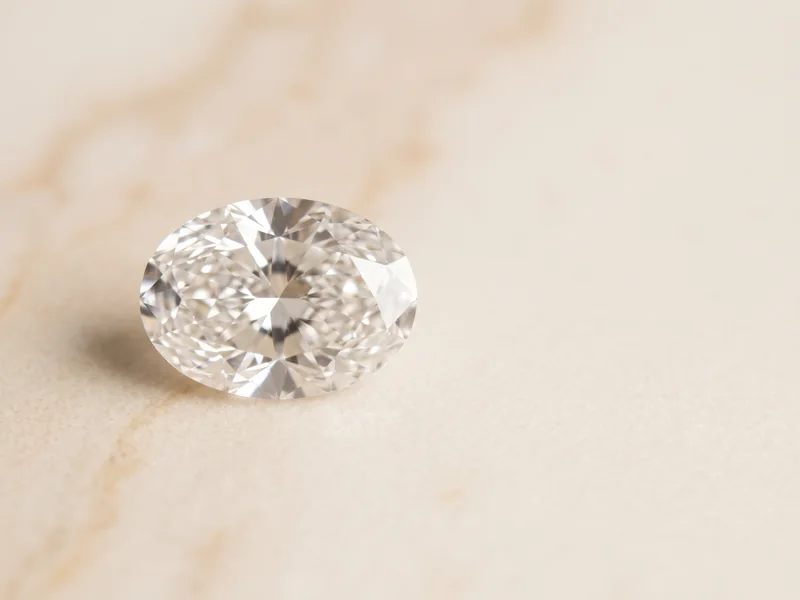 Diamond ShapesWhy Some Oval Diamonds Hide Weight
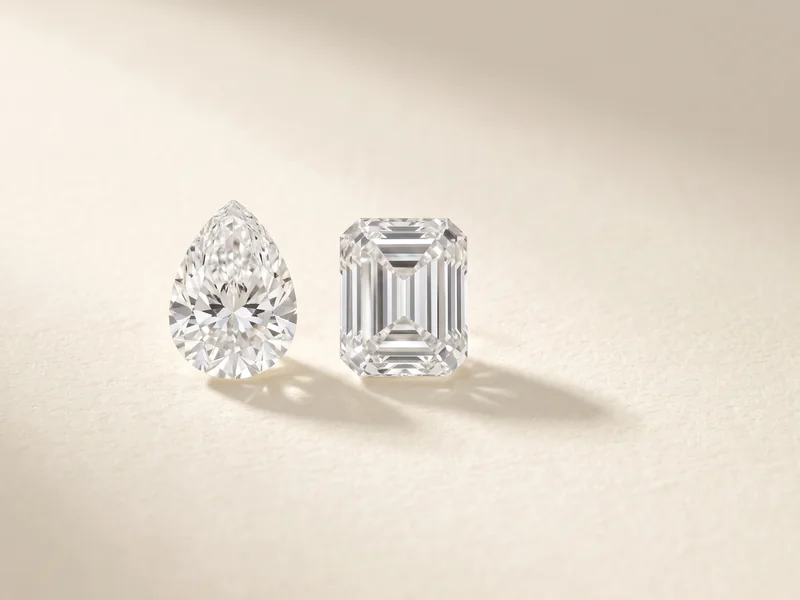 Diamond ShapesFancy-Shape Diamonds: Why There Is No Single Perfect Proportion Chart
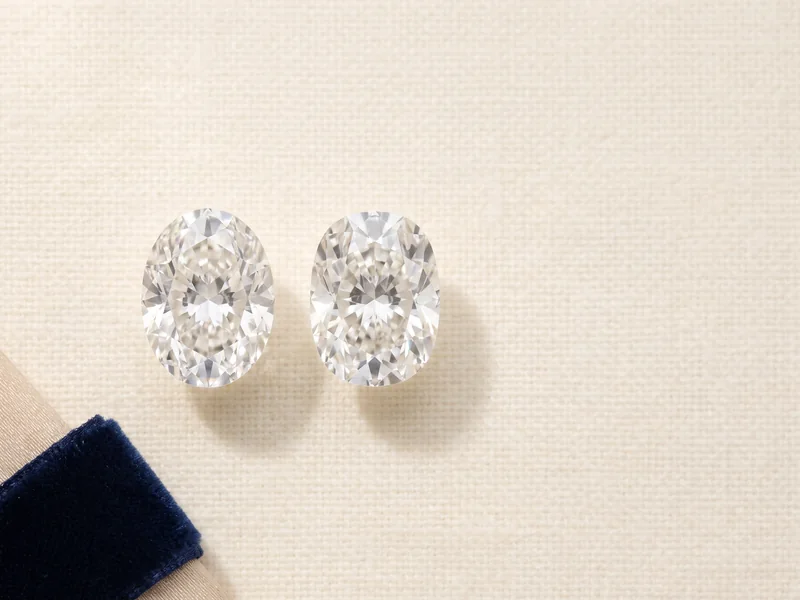 Diamond ShapesOval Diamond Shoulders: Rounded vs Boxy OutlinesDiamond Anatomy & LightAnatomy of a diamond: table, crown, girdle, pavilion and culet explainedDiamond ShapesOval Diamonds
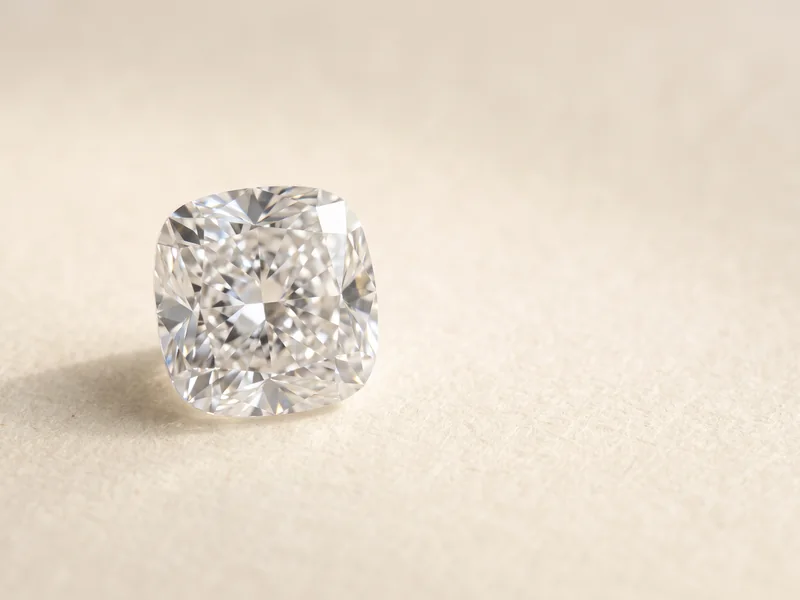 Diamond Anatomy & LightIdeal Proportions Chart: Cushion Diamonds
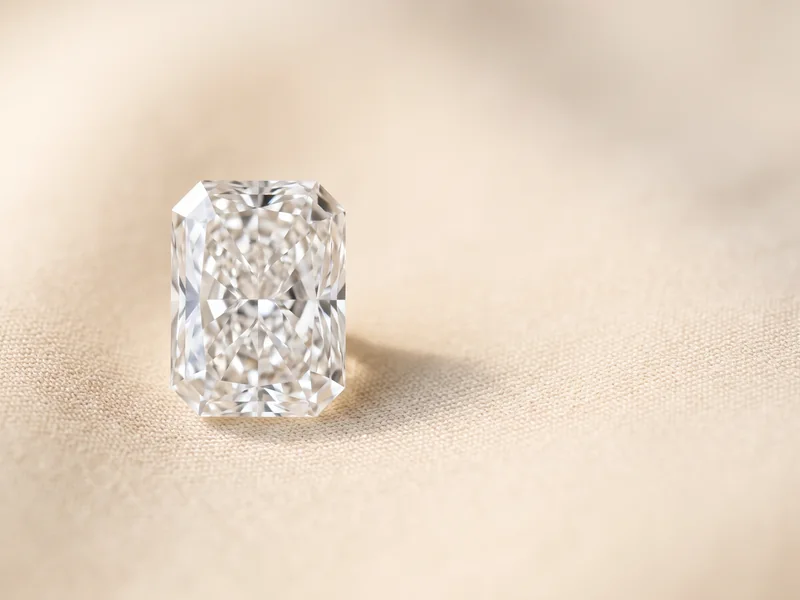 Diamond Anatomy & LightIdeal Proportions Chart: Radiant Diamonds
Explore more
More guides on this topic
Education