
- Education
- Diamond Shapes
- Oval Diamond Shoulders: Rounded vs Boxy Outlines, and How to Choose
Diamond shapes
Oval Diamond Shoulders: Rounded vs Boxy Outlines, and How to Choose
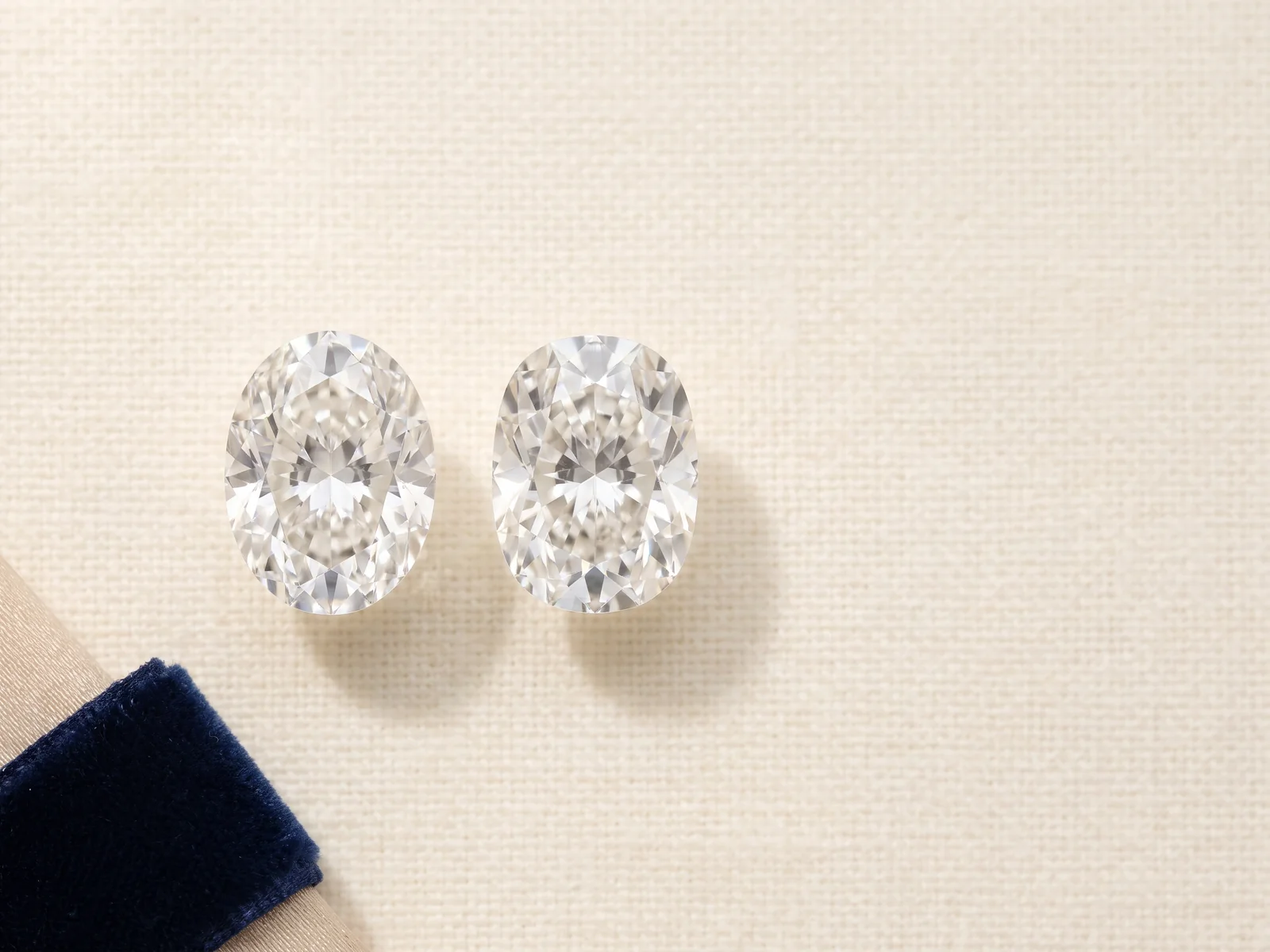
Two ovals with the same carat, ratio and grades can look like different stones, and the reason is usually the shoulders. Oval diamond shoulders are never graded on a report, so knowing how to judge them yourself is one of the most useful skills when choosing an oval.
 Reviewed by Raj Sood, Graduate Gemologist (GIA), AJP (GIA)Master jeweller and Graduate Gemologist (GIA) · reviewed 4 November 2026
Quick answer
Oval diamond shoulders are the curved areas of the outline between the long sides and the ends. Rounded shoulders give a soft, classic ellipse; boxy shoulders sit higher and flatter, edging towards an elongated cushion; narrow shoulders taper towards a moval look. None is graded on reports, so judge them by eye, alongside a 1.30–1.50 ratio.
What are oval diamond shoulders?
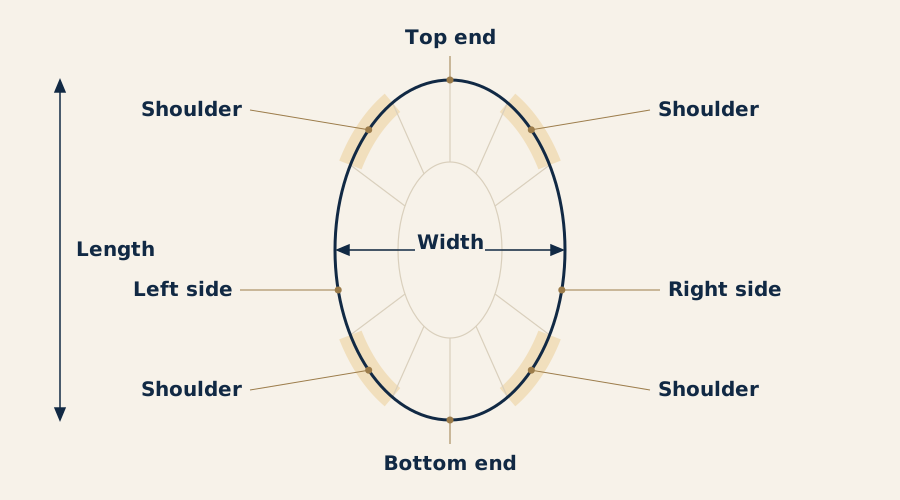
An oval diamond's outline has three zones. There are the two ends (the tight curves at the top and bottom), the two long sides (sometimes called the belly), and the four shoulders: the curves where each side turns into an end. When gemmologists talk about oval diamond shoulders, they mean how full or how tapered those four curves are.
The oval is a modified brilliant cut, which means it uses the same triangular and kite-shaped facets as a round brilliant, rearranged around an elongated outline. Most ovals have about 56–58 facets. Our complete oval diamond guide covers the shape as a whole; this page zooms in on the one feature that no grading lab measures but almost every buyer notices.
Why does it matter? Because the outline is what your eye reads first, from across a room or across a dinner table. The shoulders decide whether an oval looks like a soft egg, a near-rectangle with rounded corners, or a long, slim shape that is almost pointed. If you want to see how the oval relates to every other outline, start with how each diamond shape is built. Any unfamiliar term here is also explained in our plain-English jewellery glossary.
Rounded vs boxy oval diamond: what do the shoulder shapes look like?
Cutters do not follow one fixed template for an oval. The rough crystal, the cutter's style and the aim of saving weight all push the outline one way or another. In practice you will meet three broad shoulder types, plus every shade in between.
| Rounded shoulders | Boxy (high) shoulders | Narrow (low) shoulders | |
|---|---|---|---|
| Outline | Smooth, even ellipse | Flatter sides, fuller corners | Shoulders fall away towards the ends |
| Looks closest to | A classic oval | An elongated cushion | A moval or soft marquise |
| Fills its bounding rectangle | About 78.5% (a true ellipse) | More than an ellipse | Less than an ellipse |
| Face-up feel | Soft and balanced | Broad and solid | Long and slender |
| Common risk | Few; the reference shape | Can look blocky or dated | Ends can look pinched or pointed |
| Usually suits | Solitaires, halos, most hands | Bezels, halos, wider bands | Slim bands, longer fingers |
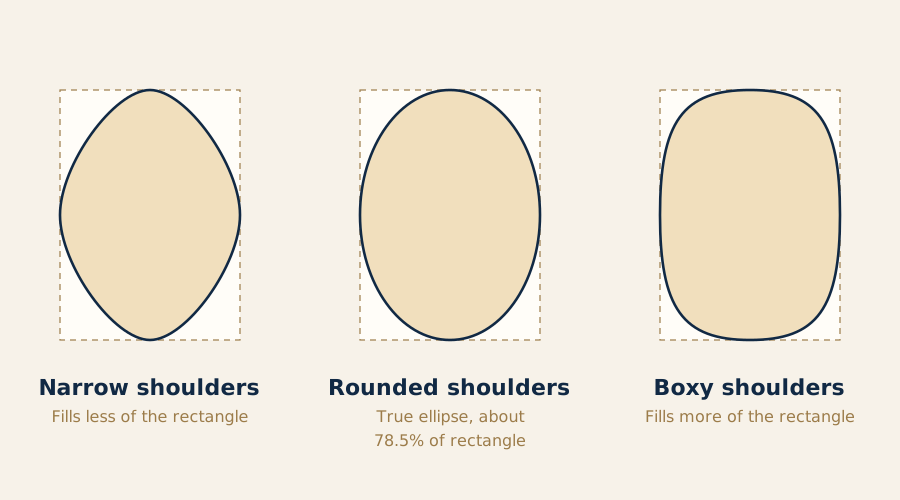
The 78.5% figure is simple geometry: a perfect ellipse covers π ÷ 4 of the rectangle drawn around it. Real ovals are rarely perfect ellipses, which is exactly why shoulders vary. Push the shoulders out far enough and the stone starts to read as a cushion; see where a boxy oval ends and an elongated cushion begins. Pull them in and you are heading towards the moval, a marquise-oval hybrid. If one end is broad and the other narrow, the stone is drifting towards a pear; our page on how an oval differs from a pear shows that line.
None of these is wrong. Rounded shoulders are the most widely liked, but a slightly boxy oval can look generous and modern, and a slimmer-shouldered oval can be elegant on a long finger. The problem only comes when the shoulders are extreme, or when they do not match each other.
How do shoulders interact with the length-to-width ratio?
The length-to-width ratio is the stone's length divided by its width, taken from the measurements on the grading report. Most people choose an oval between about 1.30 and 1.50; below that it looks close to round (our page on when a low-ratio oval starts to read as round shows the overlap), and above it the oval becomes long and narrow. Our page on choosing the right oval ratio goes through each range.
The catch is that the ratio only measures two straight lines, length and width. It says nothing about the curve between them. Two ovals can both be 1.40 and look quite different:
- 1.40 with boxy shoulders looks shorter and wider than the number suggests, because the outline carries its width almost all the way to the ends.
- 1.40 with narrow shoulders looks longer and slimmer than the number suggests, because the width is concentrated in the middle.
- 1.40 with rounded shoulders looks the way most people picture a 1.40 oval.
So use the ratio to shortlist, then use your eye on the shoulders to choose. If you love a slim look but a stone with narrow shoulders feels too pointed, a slightly lower ratio with rounded shoulders often gives the same impression with softer ends. If you find a 1.30 too round, a boxy-shouldered 1.30 can look even rounder, so you may want 1.35 or more.
How do oval diamond shoulders affect face-up size and weight?
Face-up size is how big the stone looks from above, which is what people actually see on the hand. For the same length and width, fuller shoulders cover more area, so a boxy oval shows more diamond face-up than a narrow-shouldered one. That extra area also means extra weight: at the same length, width and depth, a boxy oval weighs a little more.
A common trade rule of thumb estimates oval weight as length × width × depth (all in millimetres) × about 0.0062. A 7.7 × 5.7 mm oval at 60% depth (about 3.4 mm deep) comes out at roughly 0.9–1.0 carat. That factor shifts with the outline: boxier ovals sit above it, narrow-shouldered ovals below it, which is why the same millimetre footprint can be quoted at slightly different weights.
| Carat weight | Typical size (length × width) | What shoulders change |
|---|---|---|
| 0.50 ct | about 6.0 × 4.5 mm | Narrow shoulders make small ovals look pointed |
| 0.75 ct | about 7.0 × 5.0 mm | Rounded shoulders keep the outline clear under claws |
| 1.00 ct | about 7.7 × 5.7 mm | Boxy shoulders add visible area for the weight |
| 1.50 ct | about 8.8 × 6.4 mm | Shoulder differences become easy to see |
| 2.00 ct | about 9.8 × 7.0 mm | Uneven shoulders stand out at this size |
These figures assume a ratio near 1.35 and normal depth; real stones vary. The bigger variable is depth. An oval cut too deep carries weight underneath where you cannot see it, whatever its shoulders, and our guide to ovals that hide weight underneath explains the numbers to watch. For how the oval compares with other outlines of the same weight, see which diamond shapes look biggest for their weight.
Not sure which one is right?
Send us the stones you are looking at and our gemologist will tell you which to choose and why.
Do shoulders change the bow-tie and sparkle?
Many ovals show a bow-tie: a darker band across the centre where light leaks out of the back of the stone instead of returning to your eye. It is caused mainly by the pavilion angles (the lower half of the stone), not the shoulders, but the outline does play a part.
- Narrow shoulders often go with a long, slim belly, and the bow-tie can look more pronounced because the dark band runs across a narrower stone.
- Boxy shoulders give the cutter more room at the ends, which can spread brightness out, though a very square outline can also produce darker patches near the corners.
- Rounded shoulders tend to give the most even brightness from end to end, which is one reason they stay the most popular.
A faint bow-tie that flickers as the stone moves adds contrast and is normal. A dark band that stays put in every position is a sign of weak proportions. Photos hide this; a 360° video shows it. The bow-tie advice in the main oval guide has more on what to accept.
Fancy shapes also show body colour a little more than rounds, and in an oval the warmth gathers at the ends. Narrow-shouldered ovals concentrate the ends further, so if you are choosing near the warm end of the colour scale (I or J), rounded or slightly boxy shoulders help the stone face up whiter. Our overview of how elongated fancy shapes hold colour explains why.
How do you spot uneven or lopsided oval shoulders?
The symmetry grade on a report (Excellent, Very Good, Good and so on) mainly describes how precisely facets line up; the definitions of polish and symmetry grades spell out the difference. It does not describe the shoulder shape, and slight outline imbalance may barely affect it, so an oval can grade Excellent and still have one shoulder slightly higher than the other. Look for these faults:
- Egg shape: one end broader than the other, because the shoulders at one end are fuller.
- Twisted outline: diagonally opposite shoulders are fuller, so the stone looks slightly rotated.
- Flat side: one long side is straighter than the other, often from saving weight on the rough.
- Pinched ends: very low shoulders that make the ends look almost pointed.
Look at the stone face-up, straight on, with the long axis vertical. Then turn it horizontal. Uneven shoulders are often easier to see in the second position, because we judge side-to-side balance more sharply than top-to-bottom.
Related guideOval vs Elongated Cushion DiamondsWhich setting suits each oval diamond shoulder shape?
The setting can soften or exaggerate the shoulders, so match it to the stone you have chosen:
- Four claws: on a rounded oval, claws usually sit just off the ends at the shoulders. On a boxy oval they sit naturally at the fuller corners and push it towards a cushion-like look.
- Six claws: two extra claws on the long sides hold narrow-shouldered ovals securely and make the outline look fuller.
- Double claws at the ends: protect the ends of a narrow-shouldered oval, which are its thinnest parts.
- Bezel: a rim of metal that traces the outline. It shows the shoulder shape very clearly, so it suits well-balanced stones best.
- Halo: a ring of small diamonds that follows the outline. A halo makes boxy shoulders look boxier, and can round out a slightly narrow oval.
- East-west: setting the oval sideways across the finger shows off the width, which flatters boxy shoulders; see these east-west oval ring designs.
There is a second meaning of shoulders too. Jewellers call the part of the band either side of the head the ring shoulders, and shoulder engagement rings are rings where that part is detailed with pavé, a taper, a split or side stones. The two kinds of shoulder should work together: tapered ring shoulders lead the eye in towards a slim, narrow-shouldered oval, while wider straight ring shoulders balance a broad, boxy oval. Our gallery of oval engagement ring styles shows these pairings.
Do rounded or boxy ovals cost more, natural or lab-grown?
Shoulder shape is not a priced grade, so a boxy and a rounded oval with the same carat, colour, clarity and report usually sit in a similar price band. What does change is value for money: a boxy oval gives you more face-up area per millimetre, a narrow-shouldered oval less, and a deep stone of any outline gives you less than its weight suggests. Ovals in general cost less per carat than rounds of the same grades; see price differences between diamond shapes.
| 1 ct oval, G–H, VS | Approximate price range (AUD) |
|---|---|
| Lab-grown | about $1,000–$3,000 |
| Natural | about $7,000–$15,000 |
These are broad ranges only and move with the market and the exact grades. Lab-grown diamonds are real diamond, grown in a laboratory rather than mined, with the same hardness (10 on the Mohs scale) and refractive index (about 2.42) as natural diamond. They cost much less and make it easier to compare many outlines side by side. Natural diamonds are rarer and priced accordingly. Both should come with an independent report from a lab such as GIA or IGI, and in both cases the shoulders are something you judge yourself from photos and video.
Shop oval and round diamonds: natural and lab-grown
How do you choose an oval by its shoulders? Step by step
- Read the report. Confirm the shape, measurements, colour, clarity, polish, symmetry and whether the diamond is natural or lab-grown.
- Shortlist by ratio. Divide length by width and use the ratio ranges in our ratio guide, usually 1.30–1.50.
- Check the depth. Avoid stones with depth percentages that waste weight, whatever their outline.
- Judge the shoulders face-up. Decide whether you want rounded, slightly boxy or slimmer shoulders, and reject extremes such as the moval cut's slimmer ends unless that is the look you want.
- Test the symmetry. Mirror the stone lengthways and across; look for egg shapes, twists and flat sides.
- Watch a 360° video. Check the bow-tie and the brightness at the ends and shoulders.
- Match the setting. Choose claw positions and ring shoulders that suit the outline before you commit.
Free consultation
Talk to a gemologist
Compare stones in person or online with Raj Sood, Graduate Gemologist (GIA), AJP (GIA).
Book a consultationFAQ
Common questions
What are the shoulders on an oval diamond?
They are the four curves where the long sides of the oval turn into its ends. How full or tapered they are decides whether the stone looks classic, boxy or slim.
Is a boxy oval diamond bad?
No. Slightly boxy shoulders give more face-up area and suit many settings. Very boxy shoulders can make an oval look like an elongated cushion, so choose it only if you like that look.
Are oval diamond shoulders shown on the grading report?
No. Reports give measurements, a symmetry grade and a plotting diagram, but not the outline shape. You need photos or a 360° video to judge the shoulders.
Do narrow shoulders make an oval look bigger?
They make it look longer, not bigger. For the same length and width, a narrow-shouldered oval covers less area than a rounded or boxy one.
What are shoulder engagement rings?
The term usually refers to rings where the band's shoulders, either side of the centre stone, are decorated with pavé, side stones, a taper or a split. It is a different thing from the shoulders of the diamond, but the two should be chosen to suit each other.
Do lab-grown ovals have the same shoulder shapes as natural ones?
Yes. Lab-grown and natural ovals are cut the same way, so you will find rounded, boxy and narrow shoulders in both. Judge each stone individually.

Ask a gemologist
Not sure which diamond to choose?
Raj Sood is a Graduate Gemologist (GIA) and master jeweller. Bring the stones you are considering, or send the reports, and he will tell you honestly which one is better and why.
Keep learning
Related guides
 Diamond ShapesOval Diamonds
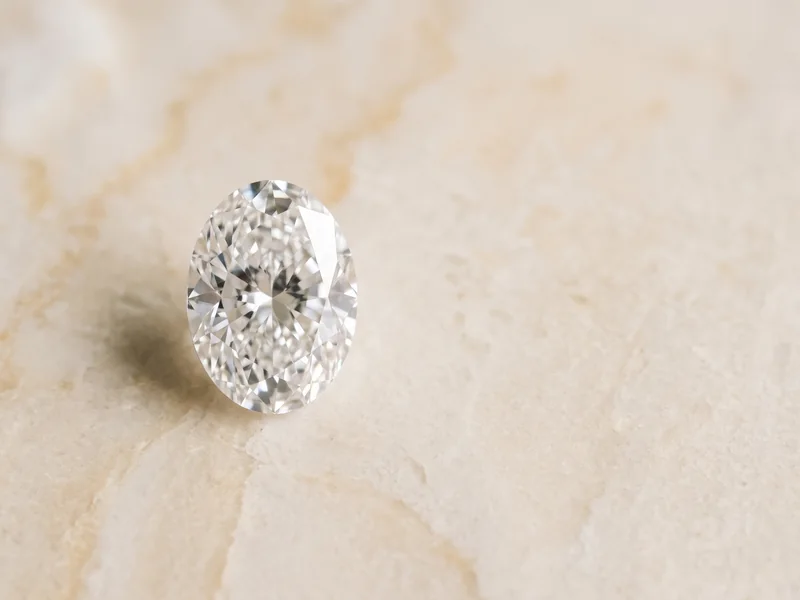 Diamond ShapesBest Length-to-Width Ratio for an Oval Diamond?
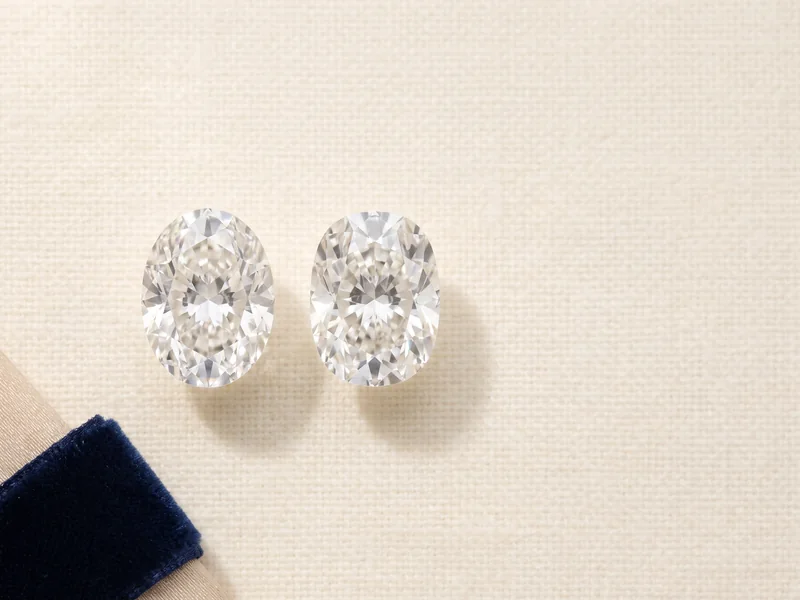 Diamond ShapesOval vs Elongated Cushion Diamonds
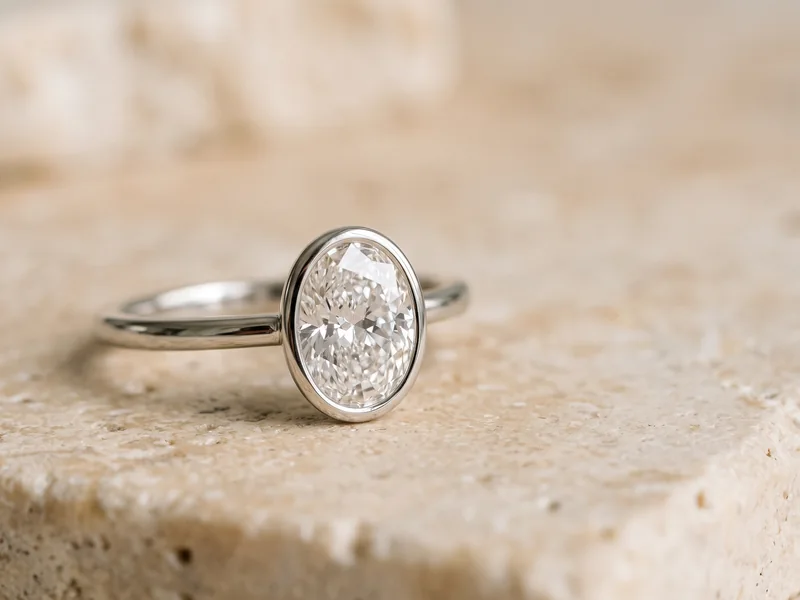 Engagement Rings & SettingsOval Engagement RingsDiamond ShapesUnderstanding Diamond ShapesDiamond ShapesOval vs Round Diamonds
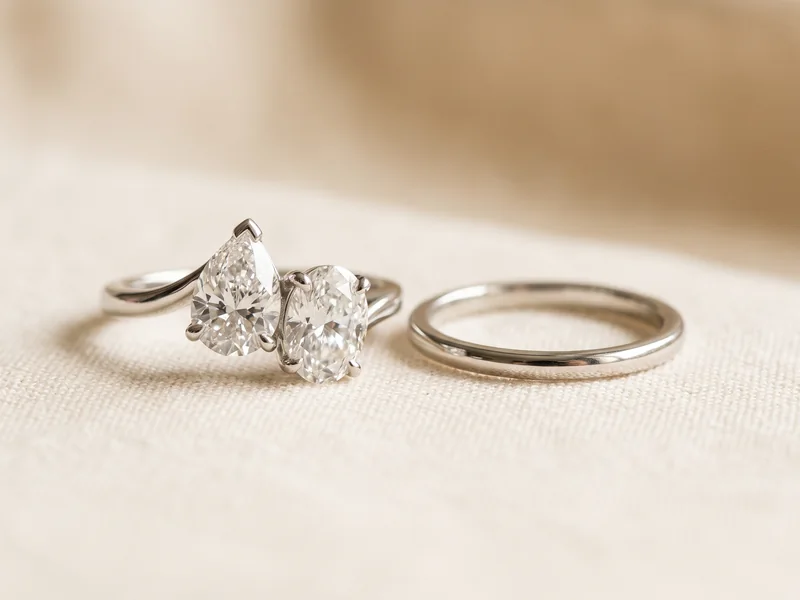 Diamond ShapesOval vs Pear Diamonds
 Diamond ShapesOval vs Moval Diamonds
Explore more
More guides on this topic
Education