
- Education
- Diamond Shapes
- Oval vs Moval Diamond: How They Compare on Size, Sparkle and Price
Diamond shapes
Oval vs Moval Diamond: How They Compare on Size, Sparkle and Price
Choosing an oval vs moval diamond comes down to a few millimetres of length and the shape of two ends. Here is how the classic oval and the newer moval differ on the hand, in sparkle, in durability and in price, so you can pick the one that fits.
 Reviewed by Raj Sood, Graduate Gemologist (GIA), AJP (GIA)Master jeweller and Graduate Gemologist (GIA) · reviewed 4 November 2026
Quick answer
An oval diamond has a smooth, egg-shaped outline with no points, usually at a 1.30–1.50 ratio. A moval blends oval and marquise: longer (about 1.60–1.90) with gently tapered ends. At the same carat a moval looks longer and slimmer; an oval is easier to find, has no points to protect and suits more wedding bands.
What is the difference between an oval and a moval diamond?
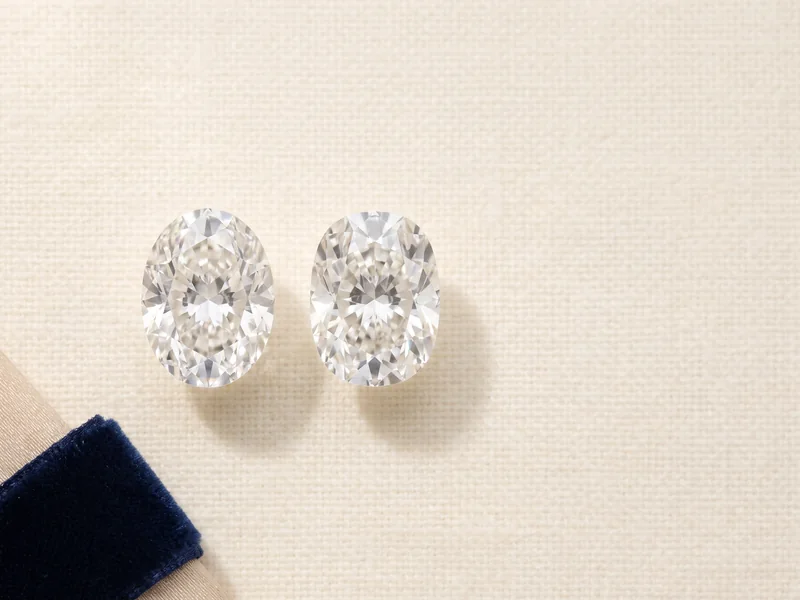
An oval diamond is a modified brilliant cut with a smooth, continuous elliptical outline. Modified brilliant means it uses the same triangular and kite-shaped facets as a round brilliant, rearranged to suit a different outline. Ovals have been cut in their modern form since the late 1950s and are now one of the most popular engagement ring shapes. Our full guide to oval diamonds covers the shape on its own.
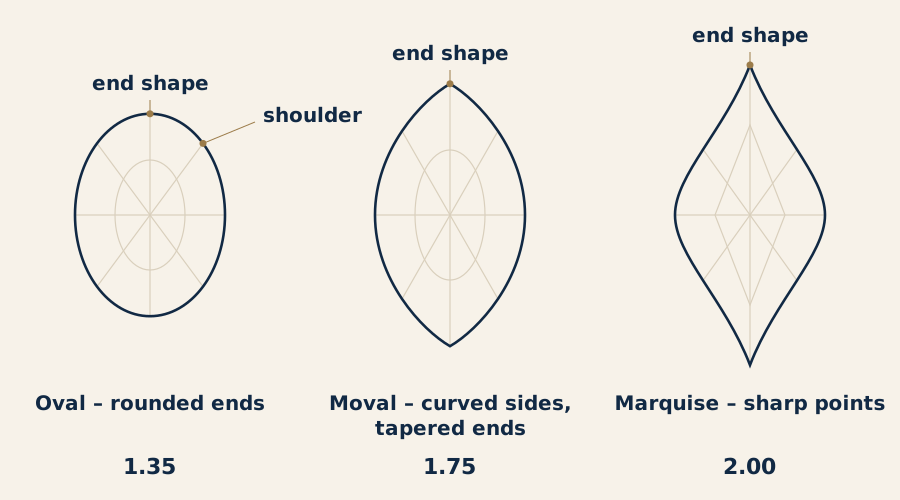
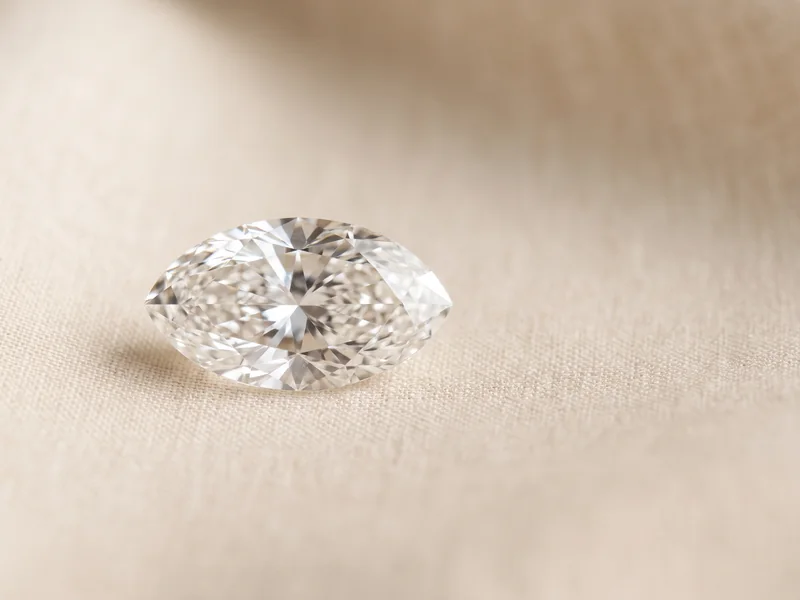
A moval is a much newer hybrid: the name is a blend of marquise and oval. It keeps the oval's curved sides but draws the two ends in towards a soft, tapered tip, like a marquise with the sharpness taken off. The result is longer and slimmer than a typical oval, with a more directional look. Our dedicated page on the moval cut and where it came from goes deeper into its history and faceting.
In short, the difference is in the ends. An oval's ends are rounded arcs. A moval's ends narrow to a gentle point. Everything else in this comparison, from face-up size to the setting, follows from that one change. Both belong to the family of elongated diamond cuts, alongside the pear, marquise and elongated cushion. If any term here is unfamiliar, the GemTrove jewellery glossary explains it.
How do oval vs moval diamond ratios compare?
The length-to-width ratio is the length of the stone divided by its width, taken from the measurements on the grading report. A ratio of 1.00 is as wide as it is long; higher numbers mean a longer, slimmer stone.
| Ratio | Oval | Moval |
|---|---|---|
| 1.20–1.30 | Short and full, close to a round | Not usually cut this short |
| 1.30–1.50 | The classic oval most people choose | Rare; would read as an oval |
| 1.50–1.60 | Long, slim oval | Short moval; ends look only slightly tapered |
| 1.60–1.90 | Very slim; uncommon | The typical moval range |
| Above 1.90 | Rare | Very slender, edging towards a marquise |
Most ovals sit between 1.30 and 1.50, and our guide to the ideal length-to-width ratio for an oval explains how each step changes the look. Movals are cut longer because the tapered ends need room; a moval at 1.40 would simply look like a slightly pointed oval. Around 1.60–1.90 is common, though cutters vary and there is no industry standard for the shape yet.
Depth and table matter as much as ratio. A well-cut oval usually has a total depth of about 58–63% and a table of about 53–63% of the width; the oval proportions chart sets out the full ranges. Movals have no agreed proportion chart, so judge them on how evenly they return light in a 360° video rather than on numbers alone.
One practical point: a grading report may not use the word moval. Depending on the lab, the shape may be described as a modified oval or marquise brilliant, or as a fancy or other shape. Check the measurements and the photo rather than the shape name.
Which looks bigger per carat: oval or moval?
Face-up size is how big a diamond looks from above, which is how everyone else sees it. Carat is weight, not size, so two diamonds of the same carat can look quite different. Elongated shapes generally look larger than a round of the same weight, as our oval vs round size and sparkle comparison shows.
| Carat | Oval at about 1.35 (length × width) | Moval at about 1.75 (length × width) |
|---|---|---|
| 0.50 ct | about 6.0 × 4.4 mm | about 7.4 × 4.2 mm |
| 0.75 ct | about 7.0 × 5.0 mm | about 8.4 × 4.8 mm |
| 1.00 ct | about 7.7 × 5.7 mm | about 9.2 × 5.3 mm |
| 1.50 ct | about 8.8 × 6.5 mm | about 10.5 × 6.0 mm |
| 2.00 ct | about 9.7 × 7.1 mm | about 11.6 × 6.6 mm |
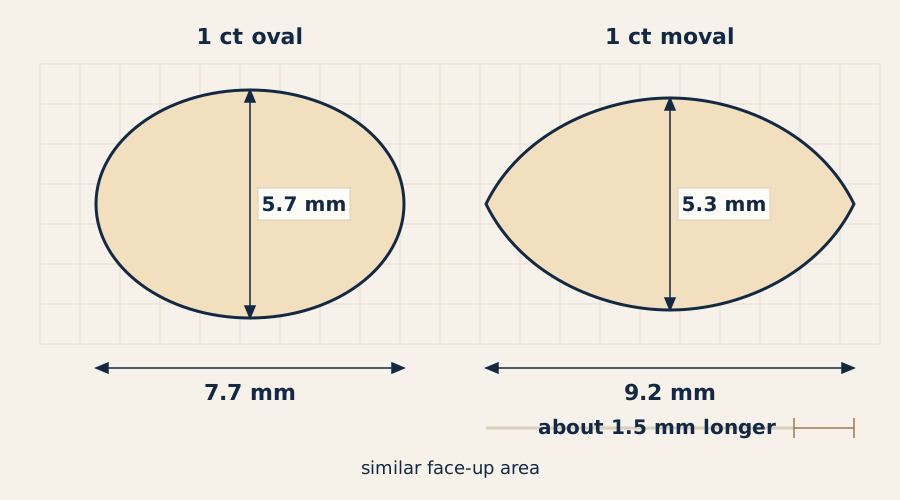
The moval is clearly longer, by roughly 1.5 mm at 1 carat, and that length is what makes people say it looks bigger. The total face-up area, though, is broadly similar, because the moval is narrower and its ends taper away. Think of it as the same amount of diamond stretched into a longer line, not more diamond.
Depth changes these numbers. A stone cut deep carries extra weight underneath where you cannot see it, so it faces up smaller than its carat suggests. Ovals are particularly prone to this, which is explained in why some oval diamonds hide weight in a deep belly. Always compare millimetre measurements, not carat alone.
How do an oval and a moval look on the hand?
On the finger, the shapes give quite different impressions even at the same weight:
- Oval: soft, balanced and familiar. At 1.30–1.40 it covers a good amount of the finger's width; at 1.45–1.50 it starts to look long and slimming.
- Moval: more linear and directional. The tapered ends draw the eye along the finger, so it reads as longer and more contemporary, but it covers less of the finger's width.
- Short or wide fingers: both lengthen the look, the moval more strongly. A moval above about 1.80 can look very slender on a broad hand.
- Long, slim fingers: an oval at 1.35–1.45 fills the finger nicely; a moval can look striking but may exaggerate length.
The curve at the ends of an oval is called its shoulders. Ovals with full, rounded shoulders look soft; ovals with flatter, boxier shoulders start to look like a cushion, as shown in our guide to rounded versus boxy oval shoulders. A moval is the opposite direction: shoulders that narrow away. If you like the oval's length but want straighter sides and corners, compare it with an elongated cushion beside an oval instead.
Not sure which one is right?
Send us the stones you are looking at and our gemologist will tell you which to choose and why.
Which sparkles more, and which has a worse bow-tie?
Both shapes are brilliant cuts, so both show lively white light (brilliance) and flashes of colour (fire). Diamond's refractive index of about 2.42 bends light strongly, and the brilliant facet pattern returns much of it to your eye. Most ovals have around 56–58 facets; moval facet patterns vary by cutter.
The main difference is the bow-tie: a dark band across the middle of an elongated stone, where light leaks out instead of coming back to you. Nearly every oval has some bow-tie; a faint one that shifts as the stone moves is normal and adds contrast. Because the moval is longer and its ends narrow like a marquise, its bow-tie can be more pronounced, especially at higher ratios or shallow depths. A good moval keeps that band soft and moving.
- Oval: even sparkle across the face; bow-tie common but usually manageable at 1.30–1.50.
- Moval: concentrated sparkle towards the ends, where facets are tighter; bow-tie can be stronger, so a video check matters more.
- Colour: both show body colour more than a round, collecting in the ends. The moval's thinner tips can show a warm tint a little more, so in white metal many people choose G–H for an oval and G or better for a moval.
Is a moval diamond as durable as an oval?
Diamond is 10 on the Mohs hardness scale, so neither shape will scratch in daily wear. Hardness is not toughness, though. A thin edge or point can chip if it takes a knock, because diamond can split along its cleavage planes.
An oval has no points at all, so its edge is evenly thick all the way around. That makes it one of the more forgiving fancy shapes for everyday wear. A moval's tapered ends are thinner than an oval's curve, but blunter than the sharp tips of a marquise, so the risk sits in between. If you are weighing those tips, our marquise vs moval comparison of points and protection looks at exactly how much softer a moval's ends are.
Related guideMarquise vs Moval DiamondsWhat setting suits an oval vs moval diamond ring?
An oval is easy to set: four or six claws, a bezel, a halo or a hidden halo all work, and nothing needs special protection. Our gallery of oval engagement ring styles shows the range. A moval needs a little more thought because of its tips:
- Claws at each end: a claw or V-claw (a V-shaped claw that wraps the tip) at both ends protects them. Two claws on each side hold the curve.
- Bezel or half-bezel: a thin rim of metal around the edge gives the most protection, at the cost of a little visible outline.
- East-west setting: setting either shape sideways across the finger. It suits the moval's length particularly well, though the tips then point towards the neighbouring fingers, so they still need claws or a bezel.
- Side stones: baguette or tapered baguette side stones continue the moval's lines; small rounds or pears suit an oval.
Wedding bands differ too. An oval sits comfortably beside a straight band in most low settings. A moval's narrow ends leave small gaps beside a straight band, which some people like and others fill with a contoured band. Our guide to wedding bands that sit well beside an oval covers the options, and most apply to a moval as well.
How much does an oval vs moval diamond cost in Australia?
Ovals are cut in large numbers from both natural and laboratory-grown diamond, so there is wide choice at every size and grade. Movals are a newer, niche shape; most available today are lab-grown, and natural movals are harder to find and are sometimes cut to order. Lab-grown diamonds are real diamond, grown in a laboratory rather than mined, and cost much less than natural.
| 1 ct, G–H colour, VS clarity | Approximate price range (AUD) |
|---|---|
| Lab-grown oval | about $1,000–$3,000 |
| Lab-grown moval | about $1,200–$3,500 |
| Natural oval | about $6,000–$14,000 |
| Natural moval | limited availability; often cut or sourced to order, price on request |
These are broad ranges only and move with the market. A moval can carry a small premium per carat because fewer are cut and the shape needs more skill to keep balanced, but that is not universal. What moves price most, for either shape, is carat, colour, clarity and the quality of the cut and outline. Both should come with an independent grading report from a lab such as GIA or IGI that states whether the stone is natural or lab-grown.
Browse oval diamonds: natural and lab-grown
Oval or moval: which one suits you?
| Oval | Moval | |
|---|---|---|
| Outline | Smooth ellipse, rounded ends | Curved sides, gently tapered ends |
| Typical ratio | 1.30–1.50 | 1.60–1.90 |
| 1 ct face-up | about 7.7 × 5.7 mm | about 9.2 × 5.3 mm |
| Look on the hand | Soft, balanced, classic | Long, linear, contemporary |
| Bow-tie | Common, usually mild | Common, can be stronger |
| Points to protect | None | Two softened tips |
| Availability | Very wide, natural and lab-grown | Narrower, mostly lab-grown |
| Wedding band fit | Sits well with most straight bands | Small gaps; contoured band optional |
An oval suits you if you want an elongated look that is easy to wear, easy to match with a band, easy to reset later and available in almost any grade. A moval suits you if you want something more distinctive and slender, you like the line of a marquise but not its sharp points, and you are happy to take a little more care choosing the cut and setting.
If neither feels right, the next shapes to look at are the pear, which keeps one rounded end and one point (see how an oval compares with a pear), or the full range in our overview of every diamond shape.
How to choose between an oval and a moval, step by step
- Decide on the look. Soft and balanced points to an oval; long and directional points to a moval.
- Check the ratio. Divide length by width on the report: about 1.30–1.50 for an oval, about 1.60–1.90 for a moval.
- Compare millimetres, not carats. Line up length and width at the same weight to see the real difference on the finger.
- Watch a 360° video. Look for a bow-tie that shifts and softens as the stone moves rather than staying dark in every position, and for even sparkle at both ends.
- Check the ends. On a moval, confirm the girdle is not too thin at the tips and that both ends match.
- Confirm natural or lab-grown. The report should state the origin and any treatment clearly.
- Plan the setting and band together. Make sure a moval's tips are covered and that your wedding band sits the way you want.
Free consultation
Talk to a gemologist
Compare stones in person or online with Raj Sood, Graduate Gemologist (GIA), AJP (GIA).
Book a consultationFAQ
Common questions
What is a moval diamond?
A moval is a hybrid diamond shape that blends a marquise and an oval. It has the curved sides of an oval but its ends taper to soft points, and it is usually cut at a length-to-width ratio of about 1.60–1.90.
Does a moval look bigger than an oval of the same carat?
It looks longer, by roughly 1.5 mm at 1 carat, but it is also narrower, so the total face-up area is broadly similar. Most people read the extra length as a bigger stone.
Is a moval diamond more fragile than an oval?
Slightly. An oval has no points, while a moval has two tapered tips that are thinner than the rest of the edge. Claws or a bezel covering the tips protect them well for everyday wear.
Are moval diamonds more expensive than ovals?
Sometimes a little per carat, because fewer are cut, but the difference is usually small next to the effect of carat, colour and clarity. Most movals available are lab-grown, which cost much less than natural diamonds.
Will a grading report say moval?
Not always. Depending on the lab, a moval may be described as a modified oval or marquise brilliant, or as an other or fancy shape, so check the measurements and photo on the report.
Can I get a natural moval diamond?
Yes, but they are uncommon and are often cut or sourced to order. Natural ovals are far easier to find in a wide range of sizes and grades.

Ask a gemologist
Not sure which diamond to choose?
Raj Sood is a Graduate Gemologist (GIA) and master jeweller. Bring the stones you are considering, or send the reports, and he will tell you honestly which one is better and why.
Keep learning
Related guides
 Diamond ShapesMoval Cut Diamonds
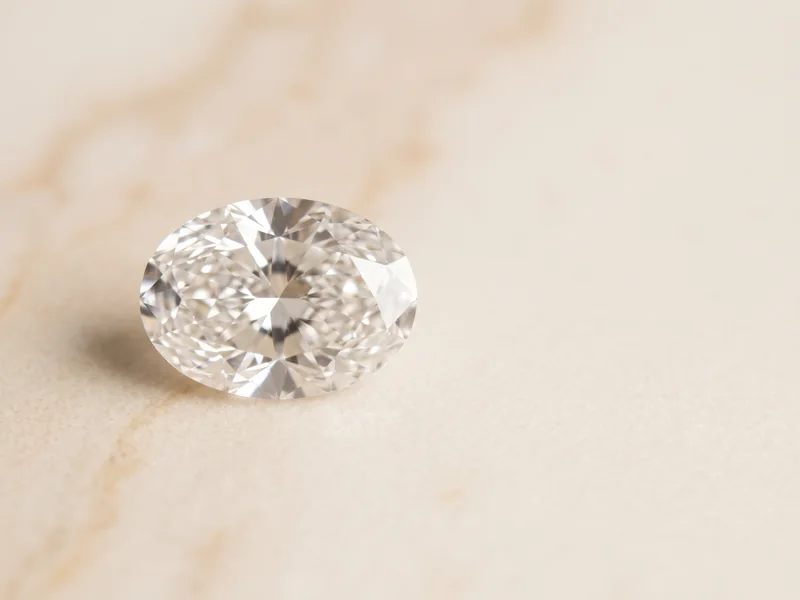 Diamond ShapesOval Diamonds
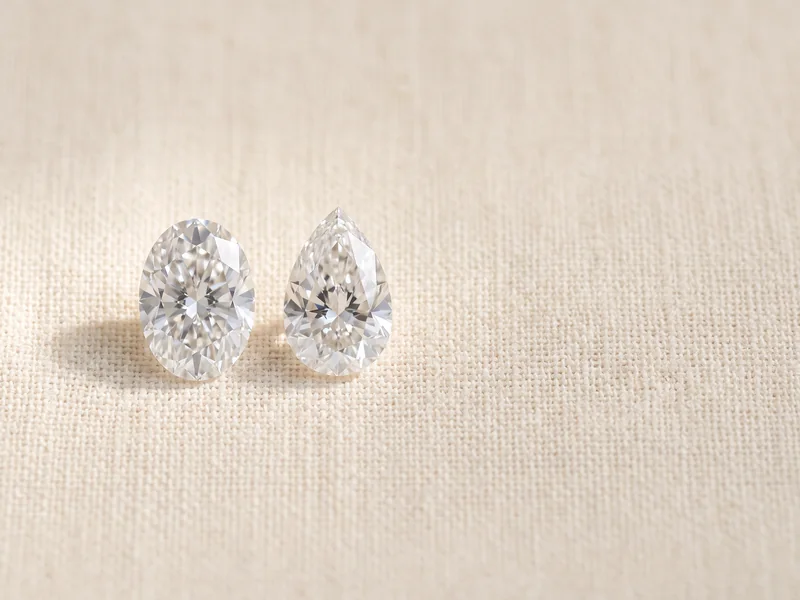 Diamond ShapesMarquise vs Moval Diamonds
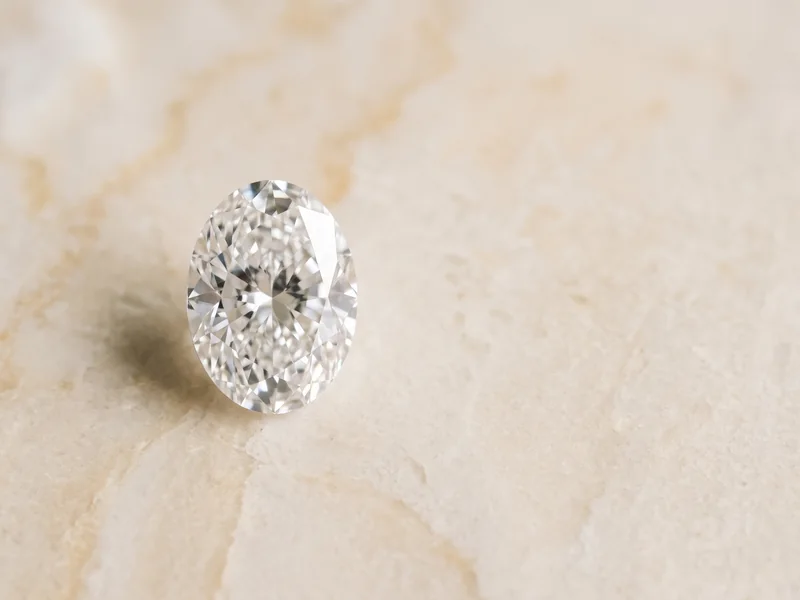 Diamond ShapesBest Length-to-Width Ratio for an Oval Diamond?Diamond ShapesUnderstanding Diamond Shapes
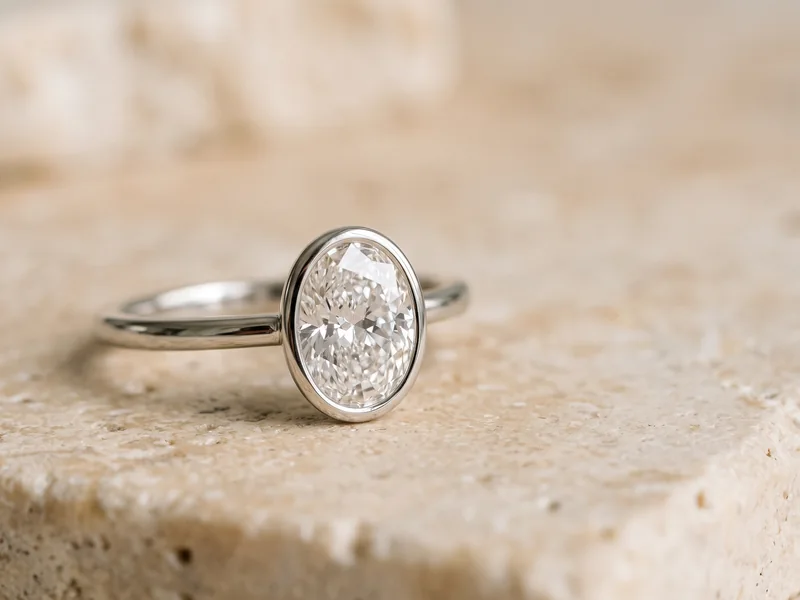 Engagement Rings & SettingsOval Engagement Rings
 Diamond ShapesOval vs Round DiamondsDiamond ShapesWhy Some Oval Diamonds Hide Weight
Explore more
More guides on this topic
Education