
- Education
- Diamond Shapes
- Best Oval Diamond Ratio: Length-to-Width Guide for Australia
Diamond shapes
Best Oval Diamond Ratio: Length-to-Width Guide for Australia
The oval diamond ratio decides whether your stone looks classic, slim or almost round, and it changes how large the diamond looks on your hand. Here is how to read it, which range suits which look, and what to check beyond the number.
 Reviewed by Raj Sood, Graduate Gemologist (GIA), AJP (GIA)Master jeweller and Graduate Gemologist (GIA) · reviewed 4 November 2026
Quick answer
The best oval diamond ratio for most engagement rings is about 1.35–1.50, meaning the stone is 1.35 to 1.50 times longer than it is wide. Around 1.40 gives the classic oval; 1.50–1.60 looks slimmer and more elongated. Calculate it by dividing length by width on the grading report, then check the outline and bow-tie by eye.
What is the length-to-width ratio of an oval diamond?
The length-to-width ratio (often written L/W) tells you how stretched a diamond's outline is. You divide the length of the stone by its width, both measured face-up in millimetres. A grading report lists measurements for an oval as length × width × depth, so a report reading 7.70 × 5.50 × 3.40 mm gives a ratio of 7.70 ÷ 5.50 = 1.40. The same idea applies to every fancy shape, and our guide to how length-to-width ratio works across every shape shows the ranges for each one.
An oval is a modified brilliant cut: it uses the triangular and kite-shaped facets of a round brilliant, usually around 56 to 58 of them, stretched over an elliptical outline. Diamond is 10 on the Mohs hardness scale and has a refractive index of about 2.42, which is why a well-cut oval returns so much light. Because an oval has no points or corners, it is one of the more durable fancy shapes for everyday wear. For the full picture beyond ratio, from colour to clarity, see our complete guide to oval diamonds, and any unfamiliar word on this page is explained in the GemTrove jewellery glossary.
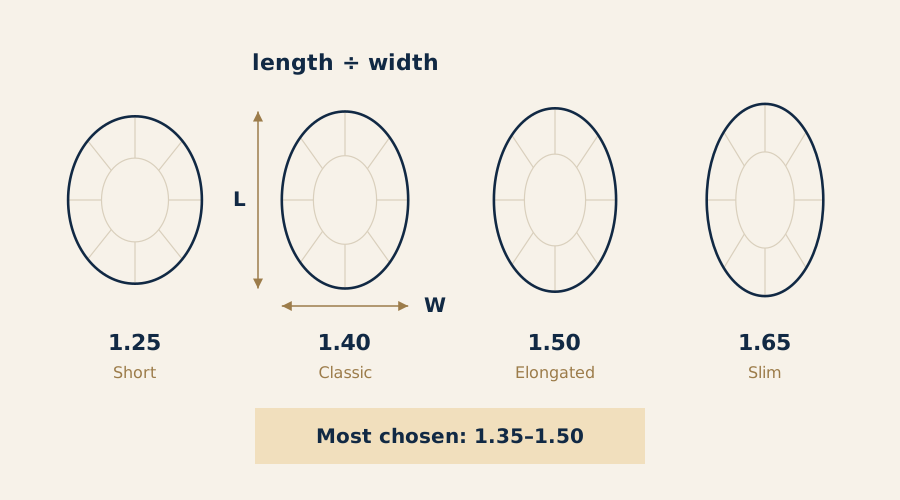
One quirk worth knowing: ratio describes only the overall length and width. Two ovals at exactly 1.42 can still look quite different if one has fuller, rounder shoulders and the other is flatter along the sides. The number is where you start, not where you finish.
What is the best ratio for an oval diamond?
There is no single correct number, but there is a clear range where most people land. This oval diamond ratio chart sets out how each band tends to look:
| Ratio | How it looks | Who tends to choose it |
|---|---|---|
| Below 1.30 | Short and wide, close to round | Rarely chosen; loses the point of an oval |
| 1.30–1.35 | Full and soft, gently oval | People who want something just off-round |
| 1.35–1.45 | The classic, balanced oval | Most engagement rings |
| 1.45–1.55 | Noticeably elongated and slimmer | A longer look on the finger |
| 1.55–1.70 | Very slim, almost a long ellipse | A strong personal preference |
| Above 1.70 | Narrow; can look like a stretched marquise without points | Uncommon; check it still reads as an oval |
GIA does not give ovals an overall cut grade the way it does for round brilliants. That means a report will grade polish and symmetry, but nobody has formally judged whether the proportions and outline are attractive. You have to do that yourself, and ratio is the easiest place to begin.
If you are drawn to ovals below about 1.30, it is worth asking whether a round might suit you better. At that point the stone looks only slightly elongated, yet still carries the bow-tie risk that rounds do not have. Our comparison of oval against round diamonds goes through sparkle, size and price for the two.
Oval diamond ratio 1.4 vs 1.5: how does it look on the hand?
The difference between 1.40 and 1.50 sounds tiny on paper. On a 1 carat stone it is roughly 0.3 mm longer and 0.2 mm narrower, and that is enough to change how the ring reads at arm's length. A 1.40 oval looks balanced and soft. A 1.50 oval looks more like an elongated oval diamond, drawing the eye along the finger.
Elongated shapes have a well-known visual effect: set north-south (lengthways along the finger), they make fingers look longer and slimmer. A few rules of thumb that come up again and again across the counter:
- Shorter or wider fingers: 1.45–1.55 tends to lengthen the look of the hand.
- Long, slim fingers: 1.35–1.45 keeps the stone in proportion; a very slim oval can look narrow on a narrow finger.
- Larger stones (2 ct and up): a slightly lower ratio, around 1.35–1.45, stops a big oval from looking overly long.
- East-west settings: if the oval sits across the finger, a higher ratio, 1.50 or more, makes the sideways orientation more obvious.
These are tendencies, not laws. The surest test is to see a 1.40 and a 1.50 side by side on your own hand. Browsing finished oval engagement ring designs is a quick way to see the oval engagement ring ratio in context, with claws and bands in place.
Does the ratio change an oval diamond's size in mm?
Yes. At the same carat weight, a higher ratio makes the stone longer and narrower, while the face-up area (how much diamond you see from above) stays roughly the same. Because people judge size mostly by length, a slimmer oval often looks a little larger. Here is an approximate oval diamond size chart in mm for a 1 carat stone of typical depth:
| 1 ct oval ratio | Approximate size (length × width) |
|---|---|
| 1.30 | about 7.6 × 5.8 mm |
| 1.40 | about 7.8 × 5.6 mm |
| 1.50 | about 8.1 × 5.4 mm |
| 1.60 | about 8.4 × 5.2 mm |
And by carat weight, at a ratio of about 1.40:
| Carat weight | Approximate size (length × width) |
|---|---|
| 0.50 ct | about 6.0 × 4.3 mm |
| 0.75 ct | about 7.0 × 5.0 mm |
| 1.00 ct | about 7.8 × 5.6 mm |
| 1.50 ct | about 8.8 × 6.3 mm |
| 2.00 ct | about 9.7 × 6.9 mm |
These are typical figures only. Depth changes everything: a stone cut deep carries extra weight in its pavilion (the lower half) and faces up smaller, while a very shallow stone spreads wide but can look glassy. Many well-cut ovals sit at a total depth of about 58–63% and a table (the large flat top facet) of about 53–63% of the width. Our guide on why some ovals hide their weight underneath shows how two 1 carat ovals can differ by half a millimetre or more in length. Always compare millimetres, not carats.
Not sure which one is right?
Send us the stones you are looking at and our gemologist will tell you which to choose and why.
Does the oval diamond ratio affect the bow-tie?
Most ovals show a bow-tie: a darker band across the middle of the stone, shaped like a bow tie, where light escapes through the pavilion instead of returning to your eye. It comes from stretching brilliant facets over a long outline, so almost every oval has one to some degree.
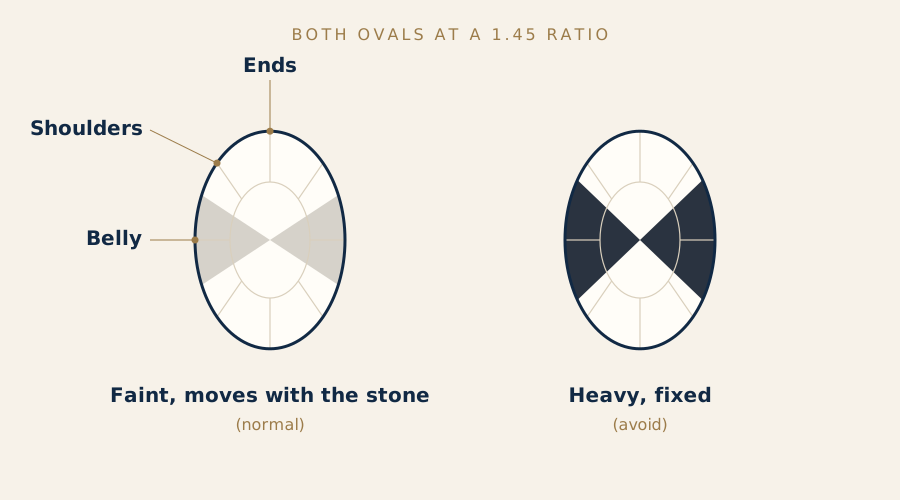
Ratio plays a part. Very short ovals (below about 1.30) and very long ones (above about 1.60) are more prone to a strong bow-tie, because the facets have to work harder at the ends or across a narrow belly. In the 1.35–1.50 range, a good cutter can usually keep the oval diamond bow tie faint. But proportions, especially pavilion angles and depth, matter far more than ratio alone. Two stones at 1.45 can look completely different.
- Acceptable: a soft, grey band that flickers and moves as you tilt the stone.
- Watch for: a black band that stays put in every position, even under good light.
- How to check: a 360° video or viewing in person; still photos rarely show it honestly.
What matters besides the ratio in an oval's outline?
Once the ratio is in range, look at the shoulders: the curves where the long sides turn into the ends. Rounded shoulders give a soft, egg-like oval. Flatter, squarer shoulders make the stone look boxy, closer to a cushion that has been stretched. Neither is wrong, but most people prefer even, smoothly curved shoulders. We compare the two in detail in rounded versus boxy oval shoulders.
- Symmetry: the two halves should mirror each other, lengthways and across. A lopsided oval looks like it leans.
- Ends: both ends equally rounded. One fuller end drifts towards a pear look.
- Sides: gently curved, not flat or bulging on one side.
- Girdle: the thin edge around the outline should not be extremely thick, which hides weight, or knife-thin, which can chip.
Which setting suits your oval engagement ring ratio?
Ovals have no fragile points, so the setting is more about looks and security than protection. Ratio does steer the choice, though:
- Four claws: the most common choice for 1.35–1.50. Claws placed at the shoulders keep the outline clean.
- Six claws: extra security for larger or slimmer ovals, with one claw at each end.
- Halo: a ring of small diamonds adds visible width, which can balance a very elongated oval above about 1.55.
- Bezel: a rim of metal round the edge suits active wearers and makes a short oval look neater.
- East-west: setting the oval across the finger works best at 1.50 or higher, so the sideways direction is clear.
A long oval also affects the band beside it. The wider the stone sits on the finger, the more a straight band may leave a gap. Our guide to wedding bands that sit neatly beside an oval covers straight, curved and notched options.
Related guideOval vs Moval DiamondsHow does an oval's ratio compare with other diamond shapes?
| Shape | Typical preferred ratio | Bow-tie | Points or corners |
|---|---|---|---|
| Round | 1.00 | No | None |
| Oval | 1.35–1.50 | Common | None |
| Pear | 1.45–1.75 | Common | One point |
| Moval | about 1.60–1.90 | Possible | None, but tapered ends |
| Marquise | 1.85–2.10 | Common | Two points |
| Radiant (rectangular) | 1.20–1.40 | Rare | Four cut corners |
| Emerald | 1.30–1.50 | No (step cut) | Four cut corners |
If you like an oval's softness but want one end to taper, read our oval versus pear, side by side. For something longer without sharp points, look at the moval, an oval pushed towards a marquise. If you are weighing an oval against a rectangular brilliant, the ratio ranges for radiant cuts page uses the same method. And to see every outline together, start with our overview of every diamond shape.
Does the ratio affect oval diamond price, natural or lab-grown?
Ratio is not a grade, so it does not move price the way colour or clarity does. Even so, demand plays a part: well-shaped ovals in the popular 1.38–1.50 band can sell for a little more than stubby or very narrow ovals of the same grades, and stones well outside the preferred range are sometimes priced lower. Carat, colour, clarity and cut quality remain the main drivers.
Ovals are cut from both natural and laboratory-grown diamond. A lab-grown diamond is real diamond, with the same hardness and refractive index, grown in a laboratory rather than mined; it costs much less than a natural stone of similar grades. Ratio works exactly the same way for both, so everything on this page applies to a lab-grown oval diamond ratio too. Both should come with an independent report from a lab such as GIA or IGI that states whether the stone is natural or lab-grown.
| 1 ct oval, G–H, VS, ratio 1.35–1.50 | Approximate price range (AUD) |
|---|---|
| Lab-grown | about $1,000–$3,000 |
| Natural | about $6,000–$14,000 |
These are broad ranges and change with the market. An oval usually costs less per carat than a round of the same weight and grades. For more on how the two diamond types compare in ovals specifically, our natural and lab-grown oval stones section sets them out.
Browse oval diamonds: natural and lab-grown
How do you choose the right oval diamond ratio? Step by step
- Read the report. Confirm the shape, measurements, colour, clarity, polish, symmetry and whether the stone is natural or lab-grown.
- Work out the ratio. Divide length by width; start your search at about 1.35–1.50.
- Compare millimetres. Check length and width against stones of the same carat weight to spot ovals that hide weight in their depth.
- Check the outline by eye. Even shoulders, matching ends and mirrored halves.
- Watch a 360° video. Look for a bow-tie that stays dark as the stone turns.
- Try it on your hand. Compare a classic 1.40 with a slimmer 1.50 in the setting you plan to use.
- Plan the band. Check how a wedding band will sit beside the oval before you commit.
Once you have a shortlist, our ratio chart for every fancy shape is handy if you are still deciding between an oval and another elongated cut, and finished oval ring styles show how each ratio looks once it is set.
Free consultation
Talk to a gemologist
Compare stones in person or online with Raj Sood, Graduate Gemologist (GIA), AJP (GIA).
Book a consultationFAQ
Common questions
What is the best ratio for an oval diamond?
Most people choose between 1.35 and 1.50, with about 1.40 giving the classic balanced oval. Higher ratios look slimmer; below about 1.30 the stone looks close to round.
Is a 1.5 ratio oval too long?
No, 1.50 is a popular elongated choice that suits many hands and makes fingers look longer. It starts to look very slim above about 1.60.
How do I calculate an oval diamond's ratio?
Divide the length by the width from the grading report's measurements. For example, 8.10 mm ÷ 5.40 mm gives a ratio of 1.50.
Does a higher ratio make an oval look bigger?
A higher ratio makes the stone longer and narrower at the same carat weight, and because people judge size by length it often looks slightly larger. Depth also matters, so always compare the millimetre measurements.
Can you avoid the bow-tie in an oval diamond?
Almost every oval has some bow-tie, but a well-cut stone in the 1.35–1.50 range usually keeps it faint and moving. Check a 360° video and avoid stones where the dark band stays fixed.
Is the ratio the same for lab-grown oval diamonds?
Yes. Lab-grown ovals are real diamond and are measured and judged on ratio exactly the same way as natural ovals; only the origin and price differ.

Ask a gemologist
Not sure which diamond to choose?
Raj Sood is a Graduate Gemologist (GIA) and master jeweller. Bring the stones you are considering, or send the reports, and he will tell you honestly which one is better and why.
Keep learning
Related guides
 Diamond ShapesOval DiamondsDiamond Anatomy & LightDiamond Length to Width Ratio Guide
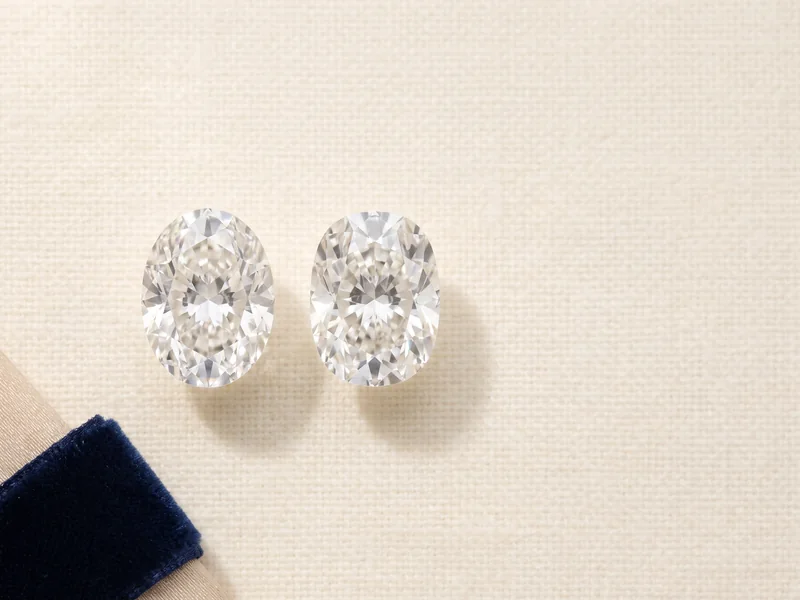 Diamond ShapesOval Diamond Shoulders: Rounded vs Boxy OutlinesDiamond ShapesWhy Some Oval Diamonds Hide WeightDiamond ShapesUnderstanding Diamond Shapes
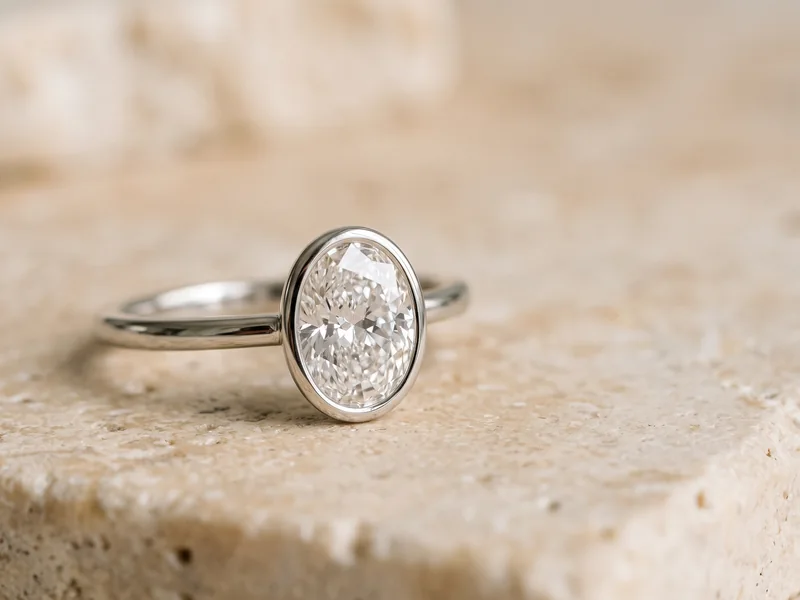 Engagement Rings & SettingsOval Engagement RingsDiamond ShapesOval vs Round Diamonds
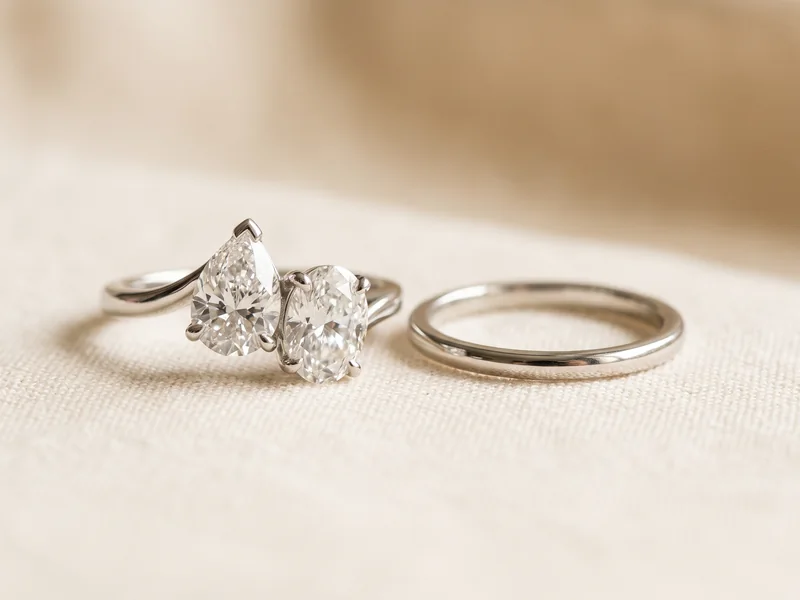 Diamond ShapesOval vs Pear Diamonds
Explore more
More guides on this topic
Education