
- Education
- Diamond Anatomy & Light
- 60/60 Round Diamond vs Classic Proportions: Light, Angles and ASET
Diamond Anatomy & Light
60/60 Round Diamond vs Classic Proportions: Light, Angles and ASET
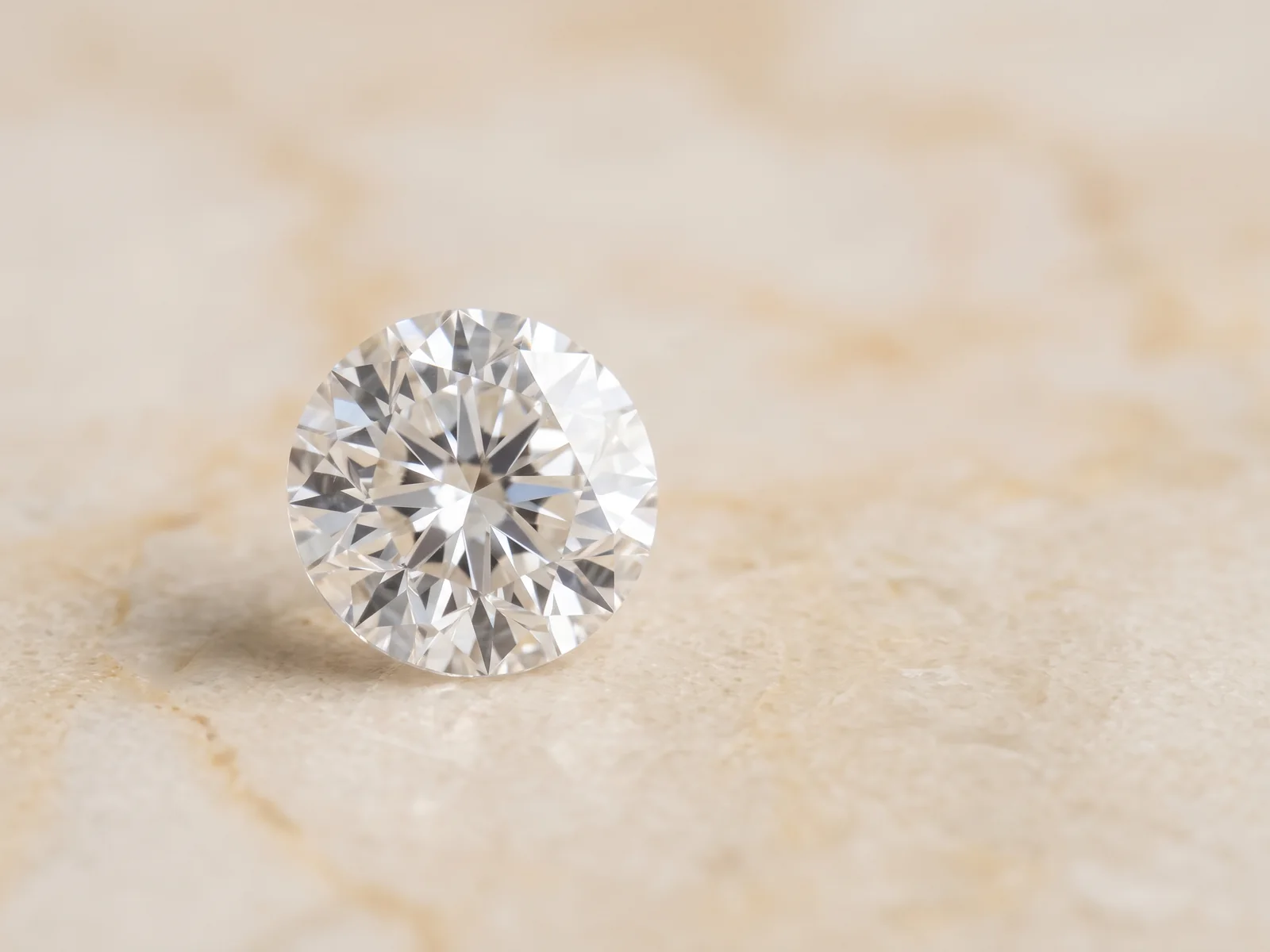
A 60/60 round diamond sounds like a neat formula for a well-cut stone, but two percentages cannot tell you how a diamond handles light. Here is how 60/60 compares with classic proportions, and how to spot nailheads, fisheyes and dark extinction before you choose.
 Reviewed by Raj Sood, Graduate Gemologist (GIA), AJP (GIA)Master jeweller and Graduate Gemologist (GIA) · reviewed 4 November 2026
Quick answer
A 60/60 round diamond has a table and a total depth both close to 60% of its width. Compared with classic proportions (table about 53–58%, crown angle about 34–35°), it usually shows more white brightness and a little less fire. Judge it on crown and pavilion angles and an ASET image, not the two numbers alone.
What is a 60/60 round diamond?
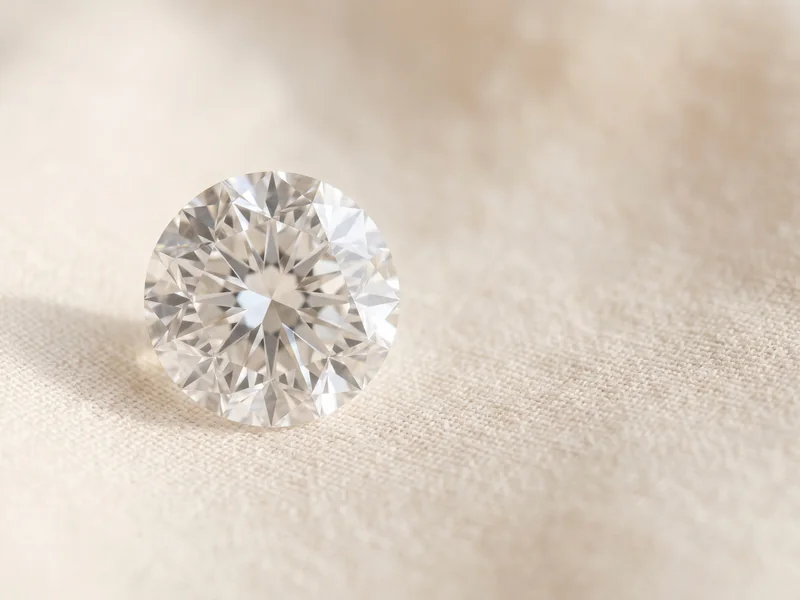
A 60/60 round diamond is a round brilliant whose table (the large flat facet on top) measures about 60% of the stone's width, and whose total depth (from the table down to the tip of the pavilion) is also about 60% of the width. The name is trade shorthand. It describes a stone with a fairly large table and a moderate depth, cut to favour bright, white light over strong flashes of colour.
To follow the rest of this guide you need the five main parts of a round. The crown is the top section above the girdle; the girdle is the thin outer edge; the pavilion is the cone underneath; the culet is the point (or tiny facet) at the very bottom. Our guide to the parts of a diamond, from table to culet shows each one with diagrams, and the GemTrove jewellery glossary explains any term you have not met before.
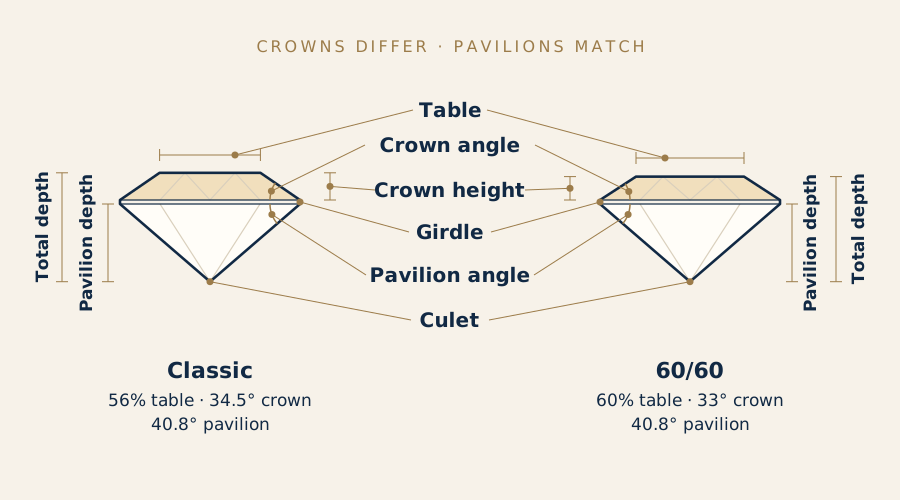
The 60/60 idea matters because it shows up on dealer lists and online filters, and many people assume it is a quality grade. It is not. Two diamonds can both measure 60% table and 60% depth and still look very different, because the numbers that actually steer light are the crown angle and the pavilion angle. Our complete round brilliant diamond guide covers the shape more broadly; this page focuses on what proportions do to light.
What are classic round diamond proportions?
When jewellers talk about classic proportions, they usually mean the model published by Marcel Tolkowsky in 1919. He calculated angles that balance brilliance (white light returned to your eye) against fire (flashes of spectral colour caused by dispersion, which in diamond is about 0.044). His figures were a table of 53%, a crown angle of 34.5° and a pavilion angle of 40.75°, with a pointed culet and a knife-edge girdle. His work sits at the turning point described in our story of how the modern round grew out of the Old European cut.
Modern cutting moved on. Real diamonds need a girdle thick enough to set safely, and cutters found that slightly larger tables still perform well. Today's tightly cut stones, often sold as ideal or super ideal, sit in a narrow band. The round has relatives with different facet patterns, such as the star and Portuguese cuts, explained in our page on round, star and Portuguese cuts in the brilliant family.
| Measurement | Tolkowsky (1919) | Modern classic / ideal | Typical 60/60 |
|---|---|---|---|
| Table | 53% | 54–58% | 59–61% |
| Total depth | about 59% (no girdle) | about 60.5–62.5% | 59.5–60.5% |
| Crown angle | 34.5° | 34–35° | 32–34° |
| Crown height | about 16% | about 14.5–16% | about 12.5–13.5% |
| Pavilion angle | 40.75° | 40.6–41.0° | 40.6–41.0° |
| Pavilion depth | about 43% | about 43% | about 43% |
| Girdle | Knife edge | Thin to medium | Thin to medium |
Notice that the pavilion angle barely changes across the three columns. The pavilion is the engine of a round diamond: it reflects light back up through the top. The real difference between a 60/60 and a classic stone is on top, in the larger table and the flatter crown. For why identical cut grades can still hide different angles, read reading proportions beyond the cut grade.
60/60 round diamond vs classic proportions: how do they compare?
Put a well-cut 60/60 beside a well-cut classic stone of the same weight and most people see two attractive diamonds. The difference is character, not quality. Here is how they usually differ when both have a good pavilion angle.
| 60/60 round | Classic / ideal round | |
|---|---|---|
| Look in daylight | Bright, white, glassy | Bright with more coloured flashes |
| Fire | Moderate | Stronger |
| Brilliance | High | High |
| Scintillation | Larger, broader flashes | Crisper, more pinpoint flashes |
| Face-up size (1 ct) | about 6.4–6.5 mm | about 6.3–6.5 mm |
| Contrast pattern | Can look a little flat if crown is too low | Even, defined contrast |
| Main risk | Crown under about 32°: weak fire, can look washed out | Crown over about 36° with steep pavilion: steep-deep leakage |
The crown works like a prism. A steeper crown bends light more as it leaves the stone, which spreads it into colour: more fire. A flatter crown lets more light out straight, which reads as white brightness. A 60/60, with its bigger table and lower crown, trades a little fire for a broad, bright face. Some people love that look under office lighting; others prefer the colour play of a classic cut under candlelight or a restaurant's spotlights.
Because a 60/60 is not deep, it also faces up at a healthy diameter for its weight. Our comparison of which shapes face up largest for their carat weight puts the round in context. Go shallower again, though, and you start trading light for size, as our guide to shallow rounds that spread wider for their weight explains.
How do proportions change brilliance, fire and scintillation?
Diamond has a refractive index of about 2.42, which gives it a critical angle of about 24.4°. Light hitting an inner surface at more than that angle from straight-on is reflected rather than escaping. A well-angled pavilion makes light bounce off one side, then the other, and exit through the crown. Angles that are too steep or too shallow let light slip out through the pavilion instead, and that part of the stone goes dark or glassy.
- Brilliance: mostly set by the pavilion angle. About 40.6–41.0° returns the most light in a round.
- Fire: mostly set by crown angle and table size. Steeper crowns and smaller tables give more colour.
- Scintillation: the sparkle pattern as the stone or you move. Set by facet sizes, including the lower girdle facets (usually about 75–80% of the way to the girdle) and star facets (about 45–55%).
- Contrast: dark areas that make the bright areas stand out. Some contrast is essential; too much is dull.
Smaller details change the pattern too. Cutters can make the upper girdle facets slightly deeper or shallower near the girdle to save weight, which alters how bright the edge of the stone looks. Our page on painting and digging out of the upper girdle facets explains how to spot it on a report and in photos.
Natural and lab-grown diamonds follow exactly the same optics, because they are the same material. A lab-grown round cut to 60/60 proportions will show the same balance of brightness and fire as a natural one with the same angles.
Not sure which one is right?
Send us the stones you are looking at and our gemologist will tell you which to choose and why.
What are nailhead and fisheye diamonds?
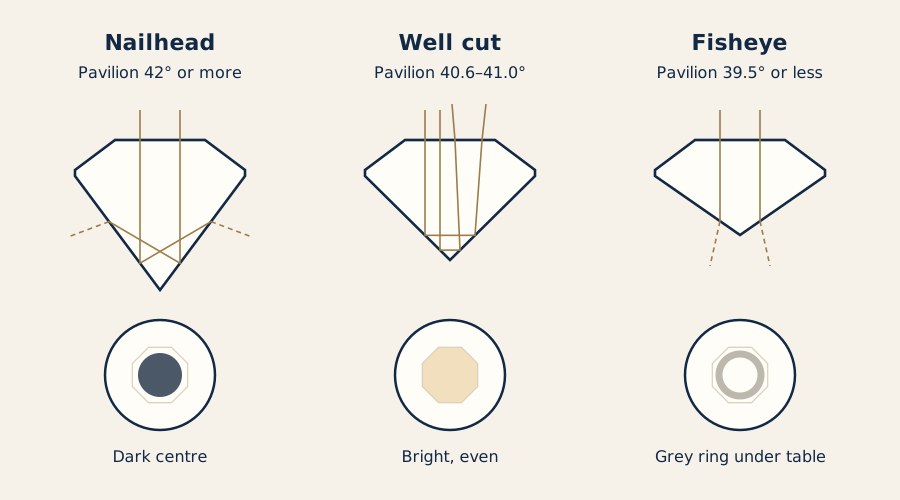
These are the two classic failures of the pavilion, and they matter whether the stone is called 60/60, ideal or anything else. Both are easy to see once you know what to look for.
| Problem | Cause | What you see | Usual numbers |
|---|---|---|---|
| Nailhead | Pavilion too steep, light leaks out the sides | Dark centre under the table, like the head of a nail | Pavilion about 42° or more, total depth often above 64% |
| Fisheye | Pavilion too shallow, light leaks out the bottom | A grey or white ring under the table: the girdle reflected | Pavilion about 39.5° or less, total depth often below 57.5% |
| Steep-deep | Steep crown with a steep pavilion | Dark patches near the table edge, weak brightness | Crown above about 36° with pavilion above about 41.4° |
| Well cut | Balanced crown and pavilion | Even brightness, crisp contrast | Pavilion about 40.6–41.0° |
A 60/60 is unlikely to be a nailhead, because its moderate depth leaves little room for a steep pavilion. Its main risk is the opposite one: if the depth is only 60% because the pavilion is shallow rather than because the crown is low, it can drift towards a fisheye. The pavilion angle and crown height on the report tell you which. The other trap, a steep crown paired with a steep pavilion, is covered in why steep-deep combinations leak light. Very shallow spready stones carry the fisheye risk that comes with very shallow cutting.
Related guideSteep-Deep Round Diamonds ExplainedHow do ASET and Idealscope images show light performance?
Numbers predict light behaviour; reflector scopes show it. The ASET (Angular Spectrum Evaluation Tool), developed by the American Gem Society, uses coloured reflectors to show which direction each part of the diamond is drawing its light from. An Idealscope is a simpler version that shows only where light returns and where it leaks.
| ASET colour | What it means | What you want |
|---|---|---|
| Red | Light from high angles above the stone, the brightest | Most of the image |
| Green | Light from lower angles, less bright | Some, evenly spread |
| Blue | Contrast: the viewer's head blocking light | A crisp, even pattern |
| White or black | Leakage: light passing straight through | Very little, ideally none under the table |
In an Idealscope image, red or pink areas return light, black areas are contrast and white or see-through areas are leakage. A good 60/60 usually shows a strong red table with even arrows; a weak one shows a pale or white ring under the table, which is the early sign of fisheye.
Extinction is the word for parts of a diamond that stay dark. Some is good: it is the blue contrast that defines the arrow pattern. Unwanted extinction comes from leakage, or from the stone being too deep so that your own reflection blocks too much light. If you see broad dark zones that stay put as the stone tilts, that is poor extinction, often from a steep pavilion, as our guide on why steep pavilions turn the edges dark shows. Reflector images do not replace watching a stone move, but they reveal leakage that a white-background photo hides.
Is a 60/60 diamond still GIA Excellent, and is it good value?
Yes, many are. GIA's Excellent cut grade for rounds covers a fairly wide band: roughly a table of 52–62%, a total depth of about 57.5–63%, a crown angle of about 31.5–36.5° and a pavilion angle of about 40.6–41.8°, depending on how the numbers combine. A 60/60 with a 33–34° crown and a 40.8° pavilion can sit comfortably inside that. Stricter cutting standards, such as the AGS Ideal grade, may still grade it Ideal if the light performance measures well. That width is exactly why two Excellent rounds can still look different.
A 60/60 is not a price category. A round is priced on carat, colour, clarity and cut grade, so a 60/60 Excellent and a classic-proportion Excellent of the same grades sit in the same range. Stones cut to very tight angles with optical symmetry (the hearts and arrows pattern) sometimes carry a premium because they take longer to polish and lose more rough. Our page on how prices differ across diamond shapes shows where the round sits against other cuts.
| 1 ct round, G colour, VS2, Excellent cut | Approximate price range (AUD) |
|---|---|
| Lab-grown | about $800–$2,500 |
| Natural | about $9,000–$16,000 |
Lab-grown diamonds are real diamond grown in a laboratory; natural diamonds formed deep in the earth, most of them more than a billion years ago, and are rarer. Both are graded the same way, and the proportions advice here applies equally. If you are still choosing a shape, compare how a round compares with an oval or the softer look of round versus cushion cut diamonds, or start with our overview of every diamond shape. Our round diamonds in natural and lab-grown guide covers grades in more detail.
Browse round diamonds: natural and lab-grown
Does the setting change how a 60/60 diamond looks?
A setting cannot fix a leaky pavilion, but it does affect what you see. A 60/60's large table and flatter crown leave less crown height to grip, so claws need to sit neatly over the girdle without covering too much of the crown facets. A full bezel wraps the edge and suits the bright, clean look of a 60/60, though it can darken the girdle area slightly in a stone that is already on the shallow side.
- Four or six claws: let the most light in from the sides; six claws give extra security for a thinner girdle.
- Bezel or half-bezel: very secure; check the stone's ASET first so you are not hiding a bright edge.
- Open galleries: under-settings that let light in below the girdle help any round show its full brightness.
How do you check a round diamond's proportions? Step by step
- Read the report. Note table %, total depth %, crown angle, pavilion angle, girdle thickness and cut grade, and confirm whether the diamond is natural or lab-grown.
- Check the pavilion first. Aim for about 40.6–41.0°. Above about 41.8° risks nailhead or steep-deep; below about 40.2° risks fisheye.
- Then the crown. About 34–35° gives classic fire; 32–34° with a 59–61% table gives the brighter 60/60 look. Under about 32° can look flat.
- Confirm the balance. A steeper pavilion should pair with a flatter crown, and the reverse; extreme numbers on both is a warning sign.
- Ask for an ASET or Idealscope image. Look for strong red, crisp blue arrows and no pale ring or dark centre under the table.
- Watch the stone move. In a video or in person, check that dark zones come and go rather than staying put, and compare diameter in millimetres, not just carat weight.
Free consultation
Talk to a gemologist
Compare stones in person or online with Raj Sood, Graduate Gemologist (GIA), AJP (GIA).
Book a consultationFAQ
Common questions
Is a 60/60 diamond good?
It can be very good if the pavilion angle is around 40.6–41.0° and the crown is about 32–34°. The 60/60 numbers alone do not tell you enough, so check the angles and an ASET image.
Does a 60/60 round diamond have less fire?
Usually a little. The larger table and flatter crown favour white brightness over coloured flashes, while classic proportions with a 34–35° crown show more fire.
What is the difference between a 60/60 and an ideal cut diamond?
An ideal or classic round usually has a smaller table (about 54–58%) and a steeper crown (about 34–35°). Both share a similar pavilion angle, so the difference is mostly in fire versus brightness.
How can I tell if a diamond is a fisheye?
Look for a grey or white ring just inside the table edge, which is the girdle reflecting through a shallow pavilion. It shows clearly as a pale ring in an Idealscope or ASET image.
What does extinction mean in a diamond?
Extinction is any area of the diamond that looks dark. Some is good contrast, but broad dark zones that stay put as the stone moves usually mean light is leaking or being blocked.
Do lab-grown diamonds follow the same proportion rules?
Yes. Lab-grown diamond has the same refractive index and dispersion as natural diamond, so the same angles produce the same light performance.

Ask a gemologist
Not sure which diamond to choose?
Raj Sood is a Graduate Gemologist (GIA) and master jeweller. Bring the stones you are considering, or send the reports, and he will tell you honestly which one is better and why.
Keep learning
Related guides
 Diamond Anatomy & LightRound Diamond Proportions Beyond the Cut Grade
 Diamond Anatomy & LightSteep-Deep Round Diamonds ExplainedDiamond Anatomy & LightShallow Round Diamonds: Bigger Spread, Better Value?
 Diamond Anatomy & LightPainting and Digging Out in Round DiamondsDiamond Anatomy & LightAnatomy of a diamond: table, crown, girdle, pavilion and culet explained
 Diamond ShapesRound Brilliant DiamondsDiamond ShapesOval vs Round Diamonds
 Diamond ShapesRound Brilliant Family: Round, Star and Portuguese Cuts
Explore more
More guides on this topic
Education