
- Education
- Diamond Shapes
- Diamond Shape Price Comparison: What Every Shape Costs per Carat
Diamond shapes
Diamond Shape Price Comparison: What Every Shape Costs per Carat
Shape changes what you pay for a diamond more than most people expect. This diamond shape price comparison shows why rounds cost the most, roughly what each fancy shape costs per carat and how big each one looks for its weight.
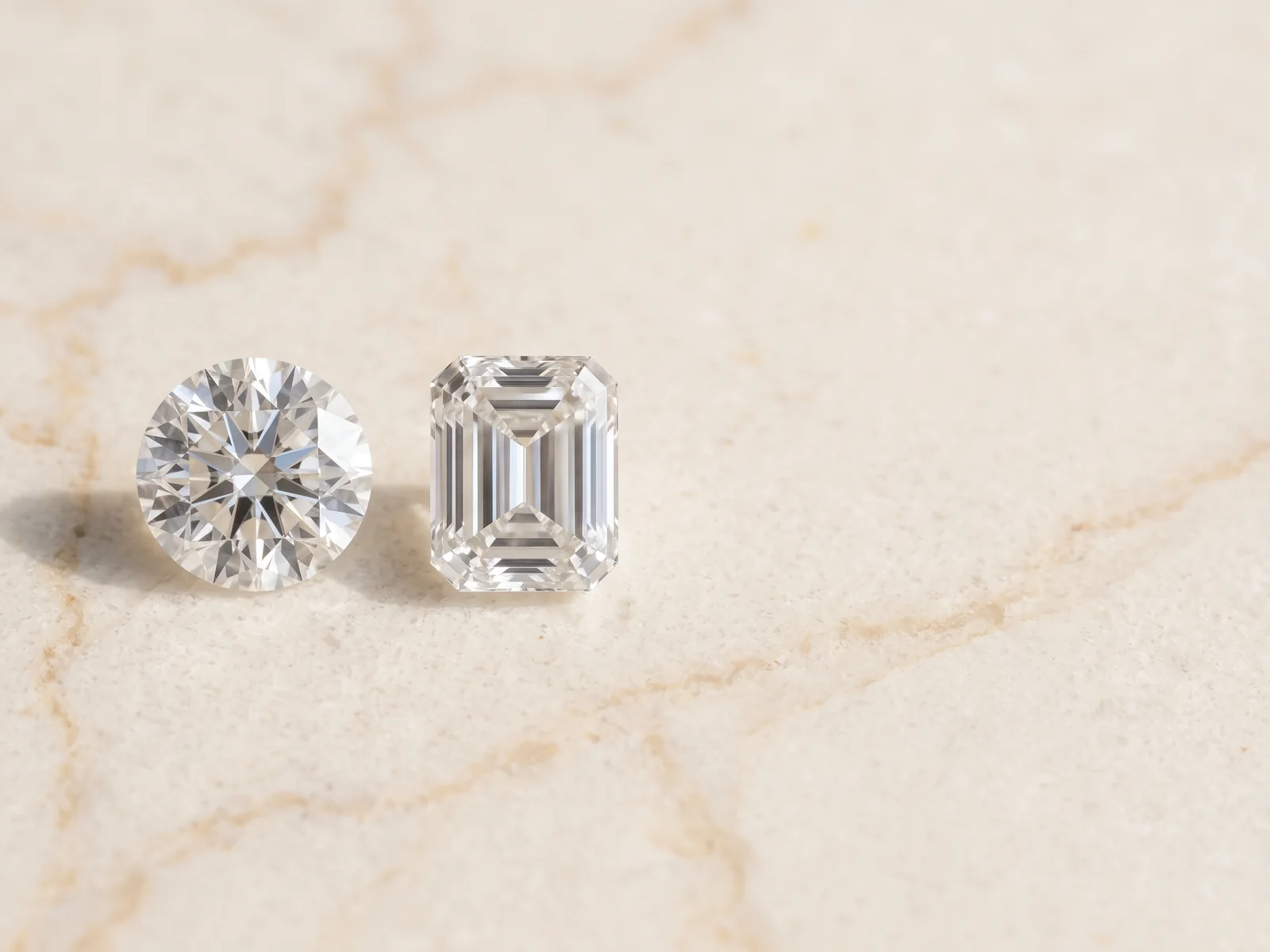
 Reviewed by Raj Sood, Graduate Gemologist (GIA), AJP (GIA)Master jeweller and Graduate Gemologist (GIA) · reviewed 4 November 2026
Quick answer
Round brilliants cost the most per carat because cutting them wastes more rough and demand is highest. Most fancy shapes, such as oval, pear, cushion, emerald, princess and radiant, typically cost about 60–90% of a comparable round's price per carat at the same colour and clarity. Elongated shapes like oval, pear and marquise also look larger for their weight.
What does a diamond shape price comparison show?
Shape is the outline of a diamond seen from above: round, oval, pear, emerald and so on. It is different from cut, which describes how well the facets (the flat polished surfaces) are proportioned and finished. A diamond shape price comparison asks one simple question: if two diamonds have the same carat weight, colour and clarity, how much does the shape alone change the price?
The answer is quite a lot. The round brilliant sits at the top of the price ladder, and every other shape, called a fancy shape in the trade, usually costs less per carat. The gap is not fixed. It moves with demand, with how much rough diamond each shape uses and with how carefully the stone was cut. If you are still deciding which outlines you like, our introduction to the main diamond shapes is a good starting point, and the full list is in our guide to every diamond cut, compared.
To compare fairly, always hold the other three Cs steady. A 1 carat oval in H colour and VS2 clarity should be compared with a 1 carat round in H and VS2, not with a round in F and VVS1. Any unfamiliar grading term below is explained in our plain-English jewellery glossary.
Why are round diamonds the most expensive shape?
Three things push the price of a round brilliant above every other shape.
- Rough yield. Most gem diamond crystals grow as octahedra, two four-sided pyramids joined at the base. Cutting a round from that shape means grinding away a lot of material, so a round typically keeps only about 40–50% of the crystal's weight. A princess cut from the same crystal can keep roughly 60–80%. The cutter has to recover the lost weight in the price.
- Demand. Rounds are the most popular shape for diamond engagement rings, so there is always a buyer. Steady demand keeps prices firm.
- Cut grade. GIA gives round brilliants a formal cut grade from Excellent to Poor. Cutters chase Excellent because it sells for more, which often means giving up extra weight to hit ideal proportions. Fancy shapes have no GIA cut grade, so there is less pressure to sacrifice weight.
None of this makes a round a better diamond. The round brilliant is simply the most efficient design for returning light: with diamond's refractive index of about 2.42 (a measure of how strongly it bends light), its 57 or 58 facets send the most light back to your eye of any shape. You pay for that, and for the wasted rough.
Diamond shape price comparison: what does each fancy shape cost per carat?
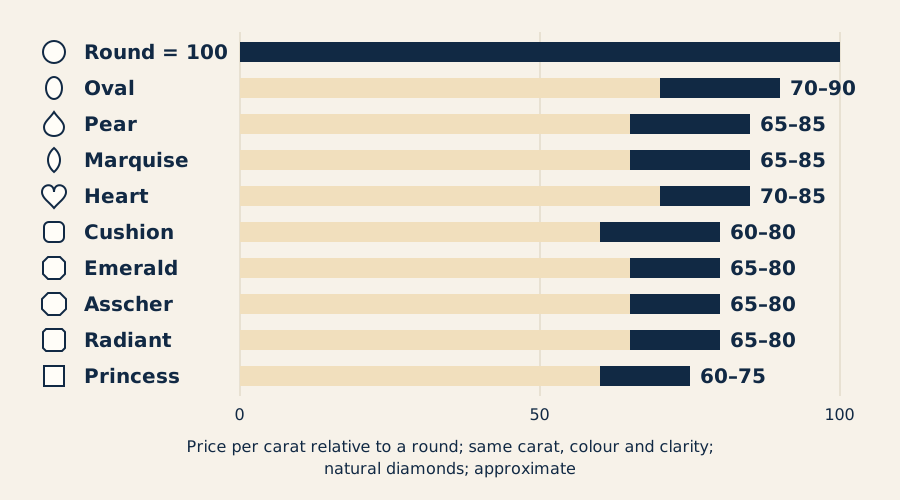
The table below shows typical per-carat prices for natural diamonds around 1 carat, expressed as a share of what a round of the same colour and clarity costs. These are broad market patterns, not fixed rules, and individual stones can sit well outside them.
| Shape | Price per carat as a share of a comparable round | Why |
|---|---|---|
| Round brilliant | Baseline (highest) | Low rough yield, highest demand, formal cut grade |
| Oval | about 70–90% | Popular, so the gap has narrowed in recent years |
| Pear | about 65–85% | Good yield; quality of the point and shoulders varies |
| Marquise | about 65–85% | Lower demand; two fragile points |
| Heart | about 70–85% | Lower demand; hard to cut well, so fine hearts cost more |
| Cushion | about 60–80% | Good yield; wide range of cutting styles and quality |
| Emerald | about 65–80% | Step cut shows clarity, so higher clarity is often needed |
| Asscher | about 65–80% | Square step cut; clarity matters as for emerald |
| Radiant | about 65–80% | Good yield; often cut deep, which hides weight |
| Princess | about 60–75% | Highest yield from octahedral rough |
Two diamonds of the same shape and the same grades can still be priced very differently, because of fluorescence, the grading lab, proportions and how well the shape is outlined. Our guide on why identical 4Cs can carry different price tags covers each of those factors.
Coloured diamonds follow different rules. In a fancy yellow or pink diamond, colour drives the price far more than shape, and radiants and cushions are often chosen because their faceting intensifies colour. See how coloured diamonds are priced for that side of the market.
Which diamond shape looks biggest for the price?
Price per carat is only half the picture. What you actually see on the hand is the face-up size: the length and width of the stone viewed from above. Shapes that are shallow and elongated spread their weight over a larger outline, so a 1 carat marquise looks noticeably larger than a 1 carat round. Square shapes and step cuts tend to carry more weight in depth and look a little smaller.
| Shape (about 1 ct) | Typical face-up size | Looks compared with a 1 ct round |
|---|---|---|
| Round | about 6.4 × 6.4 mm | Baseline |
| Oval | about 7.7 × 5.7 mm | Larger |
| Pear | about 8.5 × 5.5 mm | Larger |
| Marquise | about 10.0 × 5.0 mm | Noticeably larger |
| Heart | about 6.8 × 6.3 mm (width × length) | Slightly larger |
| Emerald | about 7.0 × 5.0 mm | Similar |
| Radiant | about 6.5 × 5.5 mm | Similar or slightly smaller |
| Cushion | about 5.9 × 5.9 mm | Slightly smaller |
| Princess | about 5.5 × 5.5 mm | Slightly smaller |
| Asscher | about 5.5 × 5.5 mm | Slightly smaller |
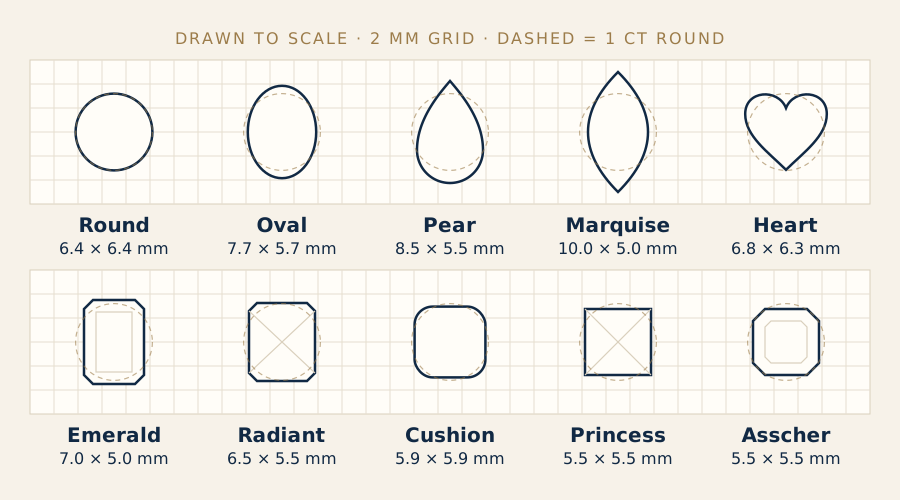
Put the two tables together and the value pattern becomes clear. An oval or pear costs less per carat than a round and also looks larger, so it gives the most visible size for the money of the popular shapes. A princess also costs less per carat, but faces up a little smaller. Our article on which shapes look biggest for their carat weight compares the face-up areas in more detail.
Related guideWhich Diamond Shape Looks Biggest per CaratSome shapes also need a minimum size before they read properly. A heart under about half a carat can look like a rounded triangle once claws cover the outline, which is covered in the size a heart needs to show its shape. Saving money on a small heart only makes sense if it still looks like a heart.
Not sure which one is right?
Send us the stones you are looking at and our gemologist will tell you which to choose and why.
Which diamond shapes let you save on colour and clarity?
Shape affects price in a second, less obvious way: some shapes let you drop a grade or two of colour and clarity without seeing a difference, and that saving can be larger than the shape difference itself.
- Brilliant-style shapes (round, oval, pear, marquise, heart, cushion, radiant, princess) break light into many small flashes, which helps hide small inclusions (internal features). An eye-clean SI1 is often achievable.
- Step-cut shapes (emerald, asscher) have long, flat, parallel facets like a hall of mirrors. Inclusions show more easily, so many people need VS2 or higher.
- Colour shows more in elongated shapes and at points, where light travels further through the stone. Rounds and princesses tend to hide body colour well; emeralds, cushions and radiants show it more.
Our page on shapes that mask colour and inclusions goes through each one. Watch for windowing too: a pale, see-through patch in the centre of a stone that is cut too shallow. Shallow fancy shapes look larger and cost less per carat, but a window drains the sparkle; see how windowing shows up in different shapes.
With radiants, the cut corners matter for value as well as looks. Clipped corners protect the stone and are part of the design, but very small or uneven corners change the outline and the price; why a radiant's clipped corners matter explains what to check.
Why do prices vary so much within one fancy shape?
For round diamonds, the GIA cut grade does much of the sorting for you. Fancy shapes have no overall cut grade, so two 1 carat ovals with the same colour and clarity can differ in price by a large margin depending on how they look. The things that move the price within a shape:
- Length-to-width ratio. The length divided by the width. Ovals around 1.30–1.50 and pears around 1.45–1.75 are in steady demand; very wide or very thin stones usually sell for less.
- Bow-tie effect. A dark band across the centre of ovals, pears and marquises. A faint, moving bow-tie is normal; a heavy, fixed one lowers the value.
- Depth. A deep stone hides weight underneath and faces up smaller, so you pay for carats you cannot see.
- Outline and symmetry. Even shoulders, centred points and matching halves are what separate a fine fancy shape from an average one.
Because each fancy shape has its own range of attractive proportions, there is no single chart that tells you a stone is well cut. Our guide to why fancy shapes have no one perfect proportion chart explains how to judge them by eye and by video instead.
Does shape affect lab-grown and natural diamond prices the same way?
Natural diamonds formed deep in the earth, mostly between about 1 and 3.5 billion years ago, and are mined. Lab-grown diamonds are real diamond, with the same hardness (10 on the Mohs scale) and the same refractive index, but they are grown in a laboratory over weeks. Both are graded on the same colour and clarity scales and both come in every shape.
The shape pattern is strongest in natural diamonds, where rough is scarce and wasted weight is expensive. In lab-grown diamonds, rough is easier to produce, so the gap between round and fancy shapes is usually smaller. Demand still plays a part, and popular shapes like oval can be priced close to rounds.
| 1 ct, G–H colour, VS clarity | Natural (approx. AUD) | Lab-grown (approx. AUD) |
|---|---|---|
| Round brilliant | about $8,000–$15,000 | about $1,000–$2,500 |
| Oval, pear, marquise | about $6,000–$12,000 | about $900–$2,200 |
| Cushion, princess, radiant | about $5,500–$11,000 | about $800–$2,000 |
| Emerald, asscher | about $6,000–$11,500 | about $800–$2,200 |
These are broad ranges only and change with the market; lab-grown prices in particular have fallen quickly in recent years. A lab-grown diamond costs much less than a natural one of the same shape and grades, so the choice between natural and lab-grown usually changes your budget far more than the choice of shape. For the full picture of what moves diamond prices here, see our Australian diamond price guide.
Browse natural and lab-grown diamonds in every shape
How do setting and hand shape change the total cost by shape?
The diamond is only part of the price of a ring. Shape changes the setting too, and that can add or remove a few hundred dollars.
- Pointed shapes (pear, marquise, heart, princess) need claws that protect each point, often a V-claw. That means extra metal and setting time. See where claws go on pointed diamonds.
- Halos make any centre stone look larger, but the small diamonds and extra labour add to the cost. A halo has to follow the outline, so some shapes are more complex to frame; how halos are shaped around each cut shows the options.
- Elongated shapes often suit east-west or bezel settings, which use more metal than a simple four-claw; see setting options for ovals, pears and marquises.
- Metal choice affects every shape equally. Gold and platinum prices move daily, and how the gold price flows through to ring prices explains why quotes change over time.
Finally, the shape that looks right on your hand might not be the one with the lowest price per carat. Elongated shapes lengthen the finger, while wide shapes can overwhelm a slim hand. Our guide to matching diamond shapes to finger length and hand size helps you weigh looks against cost.
How do you compare diamond prices across shapes? Step by step
- Set your grades first. Choose a colour and clarity range that suits your metal and the shape (brilliant shapes can go lower in clarity than step cuts).
- Shortlist two or three shapes. Include at least one elongated shape if face-up size matters to you.
- Compare price per carat. Divide each stone's price by its carat weight so different weights can be compared directly.
- Compare millimetres. Note the length and width from the grading report, and check how large each stone faces up at the same budget.
- Check the cut by eye. For fancy shapes, watch a 360° video for a heavy bow-tie, windowing and uneven outlines.
- Decide natural or lab-grown. Compare the same shape in both, and confirm the report clearly states which it is.
- Price the whole ring. Add the setting, claws or halo and metal before you compare final figures.
Free consultation
Talk to a gemologist
Compare stones in person or online with Raj Sood, Graduate Gemologist (GIA), AJP (GIA).
Book a consultationShop this shape
FAQ
Common questions
What is the most expensive diamond shape?
The round brilliant costs the most per carat. Cutting it wastes more of the rough crystal, demand is highest and cutters give up weight to achieve an Excellent cut grade.
What is the least expensive diamond shape per carat?
Princess and cushion cuts usually sit at the lower end, because they keep more of the rough crystal. Exact prices still depend on colour, clarity and how well the stone is cut.
Is an oval diamond cheaper than a round?
Usually yes. An oval often costs around 70–90% of the per-carat price of a round with the same grades, and it tends to look larger face-up than a round of the same weight.
Which diamond shape looks biggest for its carat weight?
Marquise, pear and oval look largest for their weight because they are elongated and spread the carat over a longer outline. Princess, asscher and cushion tend to look slightly smaller than a round.
Do lab-grown diamonds follow the same shape price pattern?
Broadly, but the gap between rounds and fancy shapes is usually smaller in lab-grown diamonds, because rough is easier to produce. The difference between natural and lab-grown is much larger than the difference between shapes.
Does a cheaper fancy shape mean lower quality?
No. Fancy shapes cost less mainly because of rough yield and demand, not because they are lesser diamonds. Within any shape, though, cut quality varies a lot, so judge each stone by eye.

Ask a gemologist
Not sure which diamond to choose?
Raj Sood is a Graduate Gemologist (GIA) and master jeweller. Bring the stones you are considering, or send the reports, and he will tell you honestly which one is better and why.
Keep learning
Related guides
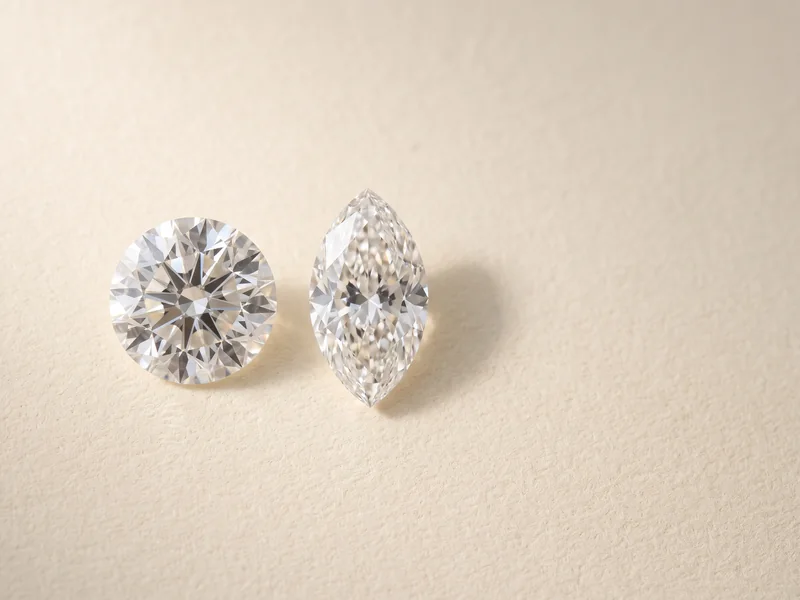 Diamond ShapesWhich Diamond Shape Looks Biggest per Carat
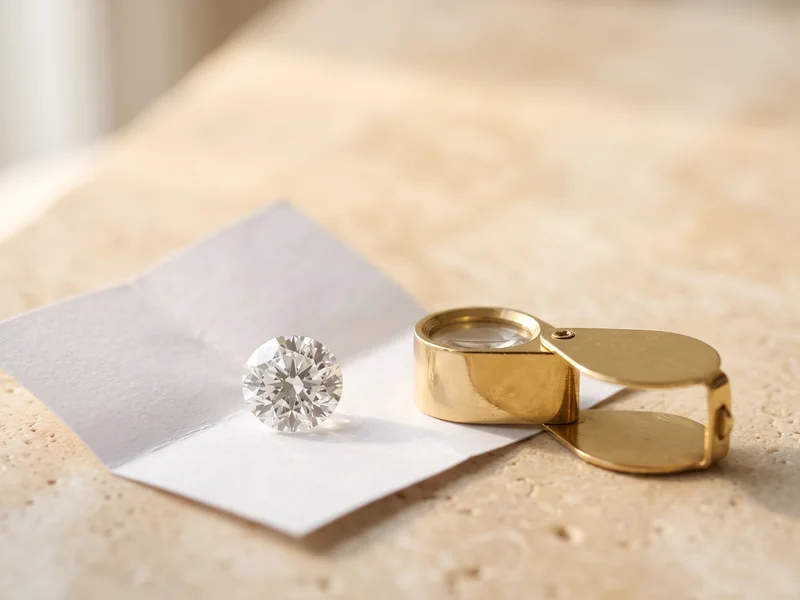 Buying Knowledge & Custom ProcessDiamond Price Guide AustraliaDiamond ShapesUnderstanding Diamond Shapes
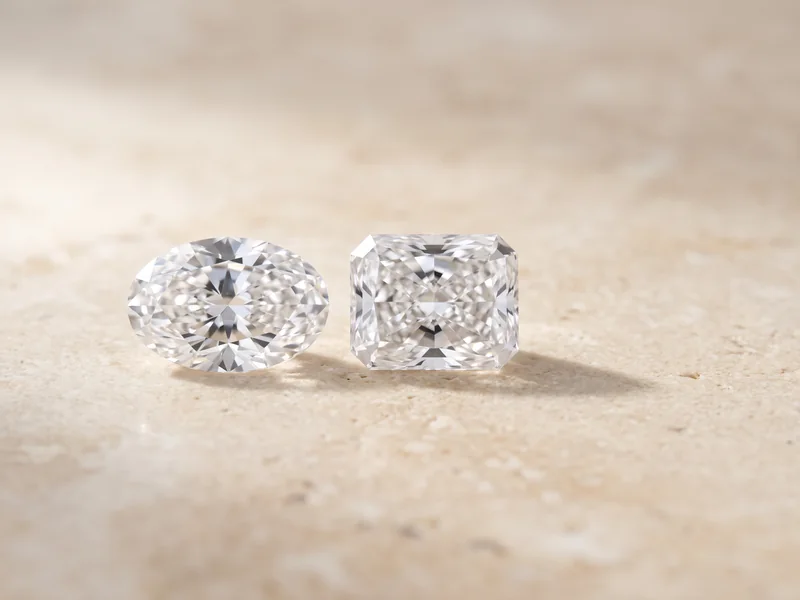 Diamond ShapesDiamond Shapes That Hide Colour and Inclusions
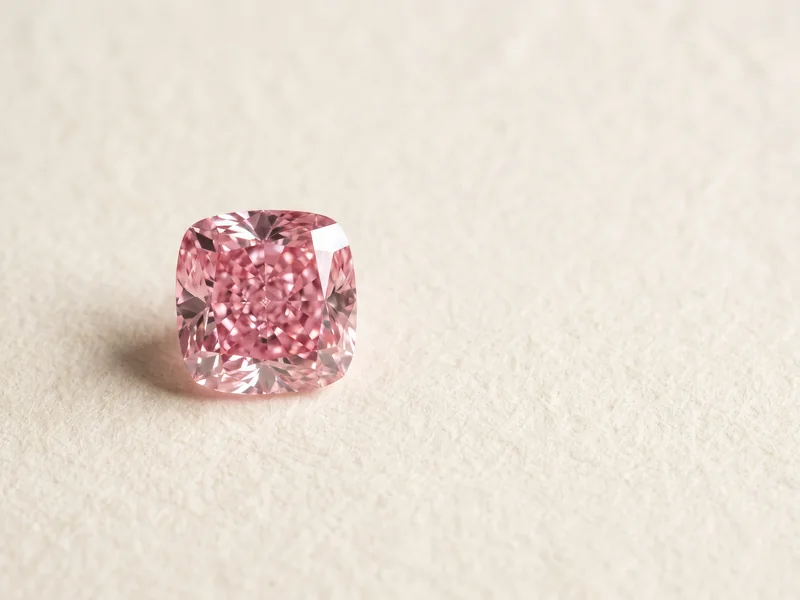 Fancy Colour DiamondsWhat Drives Fancy Colour Diamond Prices
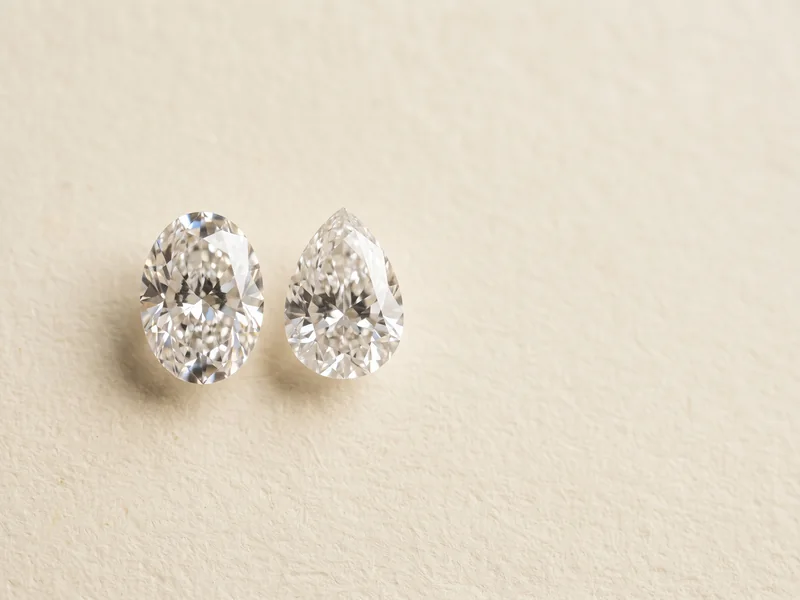 Diamond ShapesBest Diamond Shapes for Small Hands and Long Fingers
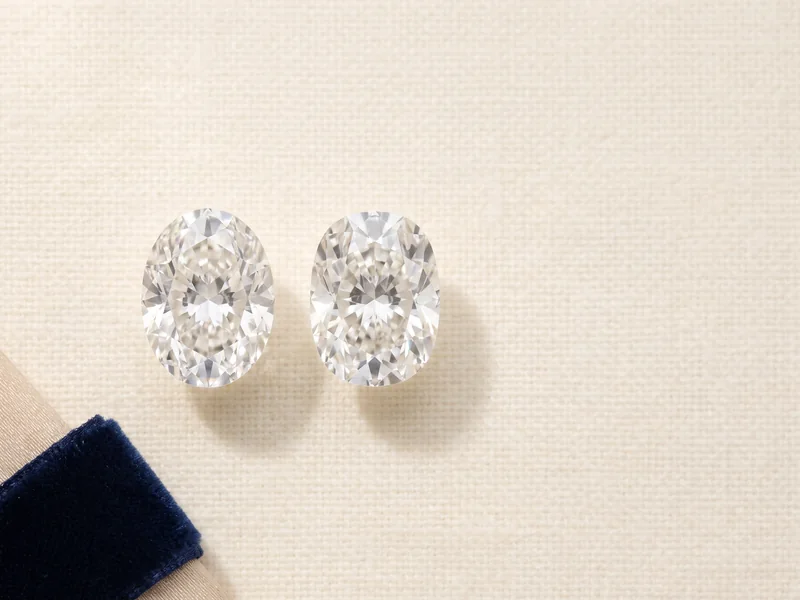 Diamond Anatomy & LightWindowing Across Diamond Shapes
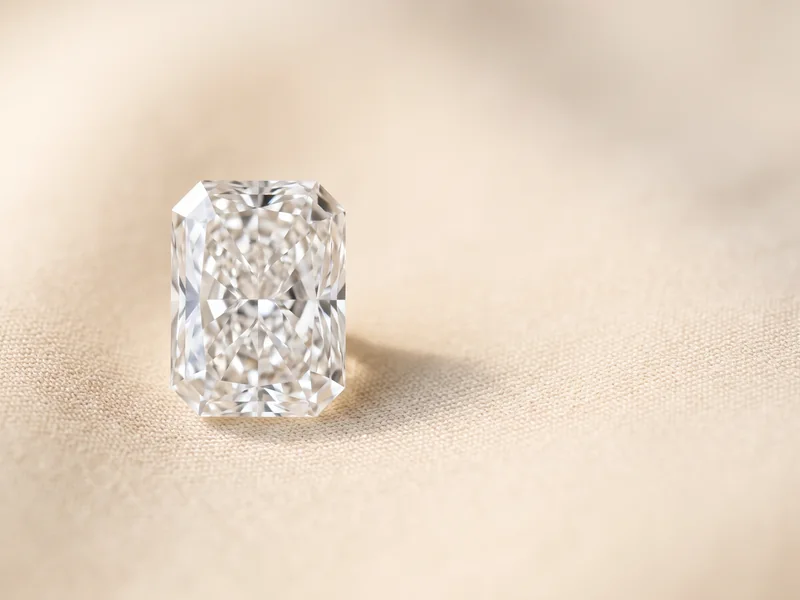 Diamond ShapesRadiant Diamond Corners: Why the Clipped Shape Matters
Explore more
More guides on this topic
Education