
Gemstones
February Birthstone: Amethyst History, Colours and Ring Advice
The February birthstone is amethyst, and it is one of the few coloured gems that is affordable in generous sizes and tough enough for a ring. Here is how to judge its colour, how well it wears, and which settings protect it.
 Reviewed by Raj Sood, Graduate Gemologist (GIA), AJP (GIA)Master jeweller and Graduate Gemologist (GIA) · reviewed 4 November 2026
Quick answer
The February birthstone is amethyst, the purple variety of quartz. It rates 7 on the Mohs scale, has no cleavage and is affordable, with fine deep purple stones usually about AUD $30–$150 per carat. It suits everyday rings in a protective bezel or six-claw setting, though facet edges can scuff over years and may need repolishing.
What is the February birthstone?
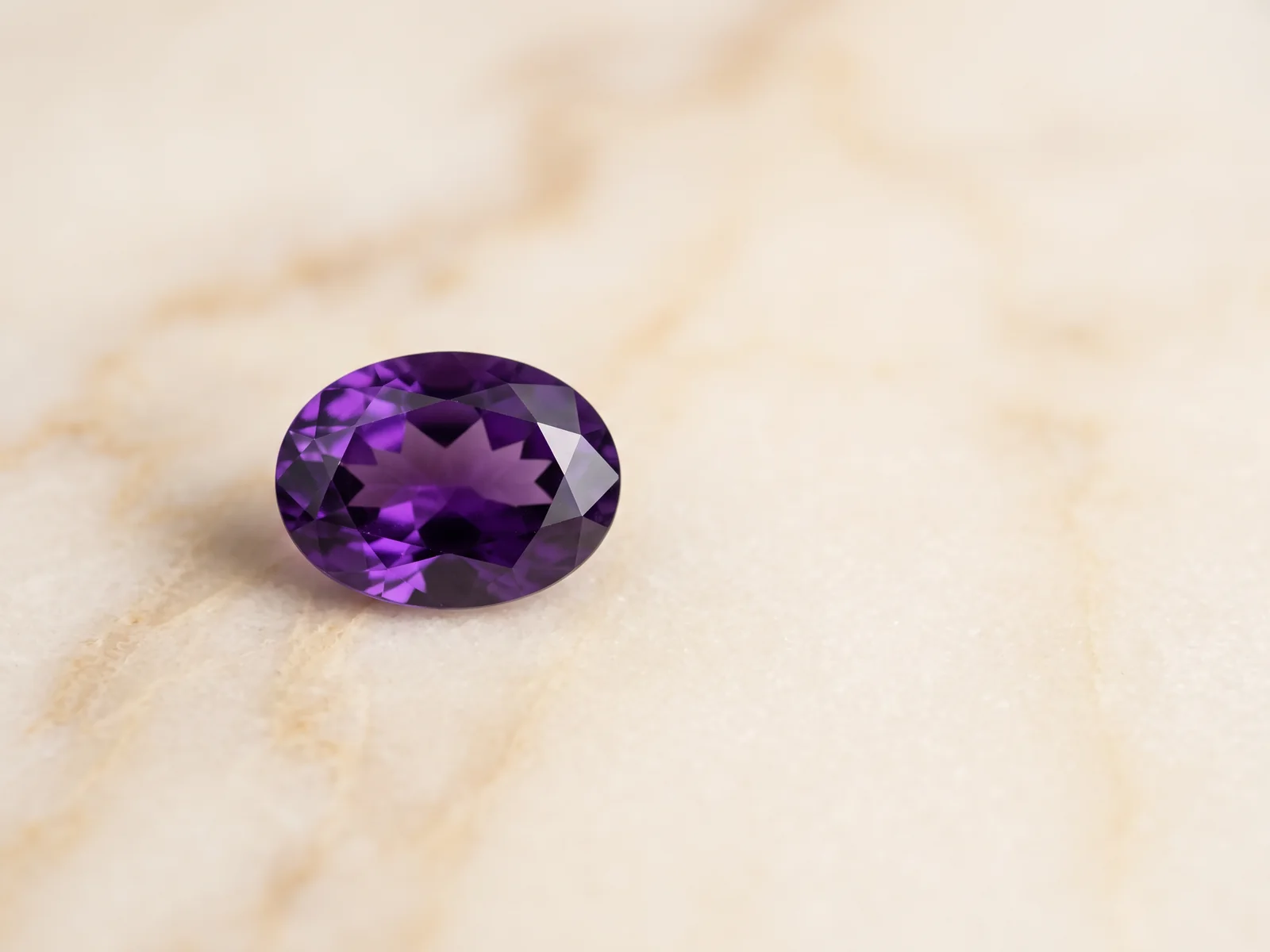
The February birthstone is amethyst, the purple variety of quartz. Quartz is silicon dioxide (SiO2), one of the most common minerals on Earth, but only a small share of it grows with the trace of iron and the natural radiation that together create purple colour. That combination is what makes amethyst a gem rather than just a rock crystal. Our full amethyst gemstone guide goes deeper into the mineral itself; this page focuses on amethyst as a birthstone and as a stone to wear.
A few numbers explain how amethyst behaves. It is 7 on the Mohs scale (a 1–10 scale of scratch resistance, where diamond is 10). Its refractive index, the measure of how strongly a gem bends light, is about 1.544–1.553, much lower than diamond's 2.42. So amethyst does not throw bright flashes of rainbow colour; its appeal is the depth and evenness of its purple. It has a specific gravity of about 2.65, which means it is fairly light for its size: a 10 × 8 mm oval weighs roughly 2.2–2.5 carats.
Amethyst is the only official February stone on the modern birthstone list, which keeps things simple, much like January's garnet family, and unlike months that share gems, such as March's sea-blue aquamarine and bloodstone. If a word on this page is new to you, the plain-English jewellery glossary explains it, and the wider collection of coloured gemstone guides covers every other month.
Why is amethyst the February birthstone?
The name comes from the ancient Greek amethystos, usually translated as "not intoxicated". Greeks and Romans believed the stone protected the wearer from drunkenness, and wine cups were sometimes carved from it. That is the root of most amethyst meaning you will read about: clear-headedness, calm and self-control.
For centuries amethyst sat alongside ruby, sapphire and emerald as one of the precious gems. It appears in royal regalia and church jewellery across Europe, and purple's link with royalty and the clergy made it a natural choice for bishops' rings. Its price fell in the 19th century, when very large deposits were found in Brazil and fine purple quartz suddenly became plentiful. That is good news for anyone buying today: the colour that once belonged to royalty is now within reach of most budgets.
Birthstone lists themselves are fairly modern. The list most jewellers follow today was standardised by the American jewellery trade in 1912, and amethyst was given February then. Earlier traditions, drawn from the twelve stones on the breastplate described in the Bible, also included amethyst, so its place has stayed steady while other months have changed. Australian jewellers generally follow the same modern list, which is why amethyst is the stone you will see in most birthstone jewellery for February birthdays.
Related guideAmethystWhat colours does amethyst come in?
Amethyst ranges from pale lilac to a deep, almost inky purple. Most gemmologists prize a strong reddish purple to purple of medium-dark tone, with no brown or grey and with the colour spread evenly across the stone. Two terms help when you compare stones: hue (the basic colour, from bluish purple to reddish purple), and tone (how light or dark it is). Saturation, the strength of the colour, matters most of all.
| Colour (trade term) | What it looks like | Typical use |
|---|---|---|
| Rose de France | Pale lilac to pinkish lavender | Larger cuts, delicate everyday pieces; lowest price |
| Light to medium purple | Clear, gentle purple | Most commercial jewellery |
| Deep purple ("Siberian") | Rich purple with red and blue flashes | Fine rings and pendants; highest price per carat |
| Very dark | Can look black or inky in low light | Best in smaller sizes or bright settings |
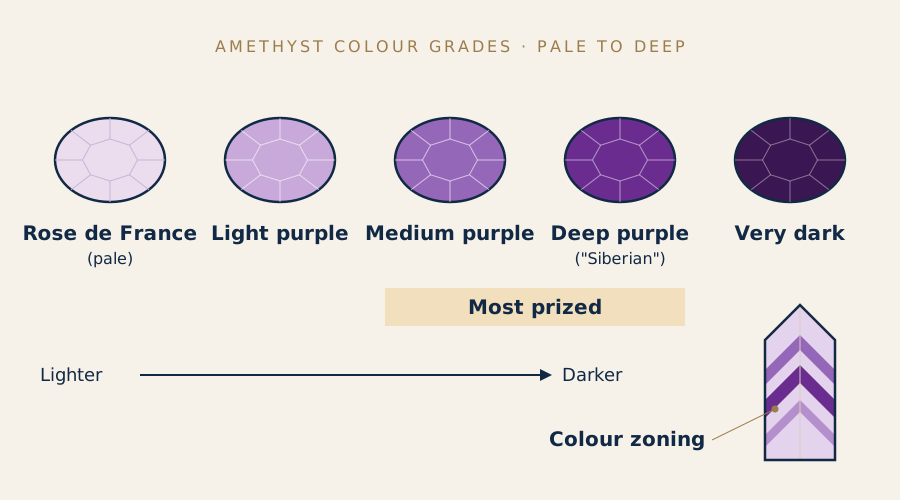
The term "Siberian" originally referred to deep amethyst from Russia's Ural Mountains, but today it is a colour grade, not a source; a "Siberian" amethyst is more likely to come from Zambia, Brazil or Uruguay. Always ask where a stone was mined if origin matters to you.
Watch for colour zoning: bands or patches of stronger and weaker purple that follow the original crystal faces. A skilled cutter orients the stone so the deepest colour shows through the table (the large top facet). Look at the stone face-up and then from the side; light streaks you can see from above will be visible on the hand. Amethyst also shifts slightly with lighting, looking bluer in daylight and redder under warm indoor globes.
Amethyst has close quartz relatives. Gentle heating can turn some amethyst yellow to orange, which is how most citrine on the market is produced, so citrine, one of November's birthstones is very often heated amethyst. Certain deposits turn green when heated, sold as prasiolite. Ametrine, from Bolivia, is a natural mix of amethyst and citrine in one crystal, showing purple and gold halves.
Where does amethyst come from, and is there Australian amethyst?
Most gem amethyst today comes from Brazil and Uruguay, where it lines large hollow volcanic cavities called geodes, and from Zambia, known for deep, slightly reddish purple. Madagascar, Bolivia, Mexico, Russia and the Four Peaks area of Arizona also produce it, each with its own typical colour.
- Brazil: large volumes, light to medium purple, big clean pieces.
- Uruguay: smaller crystals with intense, often deeper colour.
- Zambia: deep purple with red undertones; source of many top stones.
- Bolivia: amethyst and ametrine.
- Australia: amethyst occurs in several states, but it is rarely mined at a scale or quality for jewellery.
Amethyst has been found in Australia, including in Queensland and Western Australia, and collectors prize local crystal specimens. Faceted Australian amethyst of fine colour is uncommon, though, so it is worth asking for documented origin if you want a locally sourced February stone. If an Australian-mined gem matters more than the exact birthstone, Australia is far better known for other stones: Australian-mined sapphire, the September stone, and Australian opal for October birthdays. Some people pair a February amethyst with a small Australian sapphire accent to combine both.
Not sure which one is right?
Send us the stones you are looking at and our gemologist will tell you which to choose and why.
Is amethyst durable enough for an everyday ring?
Yes, with some care. Three properties decide how a gem wears: hardness (resistance to scratching), toughness (resistance to chipping and breaking) and stability (resistance to heat, light and chemicals). Amethyst does reasonably well on all three.
- Hardness 7: harder than glass and most household materials. Ordinary dust contains quartz, also 7, so over years a ring stone will gather fine scratches and its facet edges will soften.
- Toughness good: amethyst has no cleavage (no natural plane where it splits cleanly). It breaks with a curved, shell-like fracture, which makes it less prone to sudden splitting than topaz.
- Stability fair: some amethyst can fade with long exposure to strong sunlight or heat, and sudden temperature changes can crack it.
Compared with other birthstones, amethyst sits in the practical middle. It is not as hard as diamond, April's birthstone or July's ruby, but it is generally tougher than emerald for May, which is often heavily included, and far better suited to rings than pearl or opal.
| Birthstone | Month | Mohs hardness | Everyday ring? |
|---|---|---|---|
| Diamond | April | 10 | Excellent |
| Ruby / sapphire | July / September | 9 | Excellent |
| Aquamarine | March | 7.5–8 | Very good |
| Emerald | May | 7.5–8 | Fair; inclusions make it brittle |
| Amethyst | February | 7 | Good, in a protective setting |
| Garnet | January | 6.5–7.5 | Good |
| Peridot | August | 6.5–7 | Fair to good |
| Tanzanite | December | 6–7 | Fair; best protected |
| Opal | October | 5.5–6.5 | Care needed |
| Pearl | June | 2.5–4.5 | Occasional wear |
For months that share gems, the details matter: June's pearl, moonstone and alexandrite range from very soft to very hard, and August's peridot and spinel and December's tanzanite, zircon and turquoise vary just as widely. For a side-by-side look at every month as an engagement stone, see how each birthstone holds up in an engagement ring.
As an amethyst engagement ring worn every day, expect the stone to look fresh for several years and then gradually lose crispness on the top facets. Because amethyst is inexpensive, a jeweller can repolish or even replace it far more cheaply than most centre stones, which many couples see as a real advantage.
Is amethyst treated, and what is lab-created amethyst?
Much natural amethyst is sold untreated. Some is heat treated at moderate temperatures to lighten very dark material or remove brownish or smoky tints; heated further, it turns yellow to orange (citrine). Heat treatment is stable and common, but it should still be disclosed. Irradiation is occasionally used to restore or deepen colour.
Lab-created amethyst (also called synthetic amethyst) is real quartz grown in a laboratory, usually by the hydrothermal method, in which crystals grow from a hot water solution under pressure. It has the same hardness, refractive index and colour range as natural amethyst and costs very little. It is not fake, but it must always be described as lab-created or synthetic. Separating it from natural can be difficult: gem labs look at growth features such as natural twinning patterns and use infrared spectroscopy. If you are paying for natural amethyst, especially a large, very clean and deeply coloured stone, ask for a report or written disclosure.
Imitations exist too, mostly purple glass. Glass is softer (about 5.5), often shows round gas bubbles under magnification and feels warmer to the touch than quartz.
Browse natural gemstones, including amethyst
How much does amethyst cost in Australia?
Amethyst is one of the most affordable coloured gems, and unlike sapphire or ruby its price per carat rises only gently with size, because large clean crystals are plentiful. Colour drives the price far more than weight. Clarity matters too: most faceted amethyst is eye-clean (no inclusions visible without magnification), so visible inclusions bring the price down noticeably.
| Quality | Approximate price per carat (AUD) |
|---|---|
| Lab-created amethyst | about $1–$10 |
| Pale or zoned natural (commercial) | about $5–$20 |
| Medium purple, eye-clean natural | about $15–$40 |
| Fine deep purple, even colour, eye-clean | about $30–$150 |
These are broad ranges only and move with the market, the cut and the source. The setting usually costs more than the stone: a solid gold ring will often be most of the budget, while the amethyst itself may be a few hundred dollars even for a large, fine example. Precision cutting and unusual shapes add to the stone's price.
What is the best setting for a February birthstone ring?
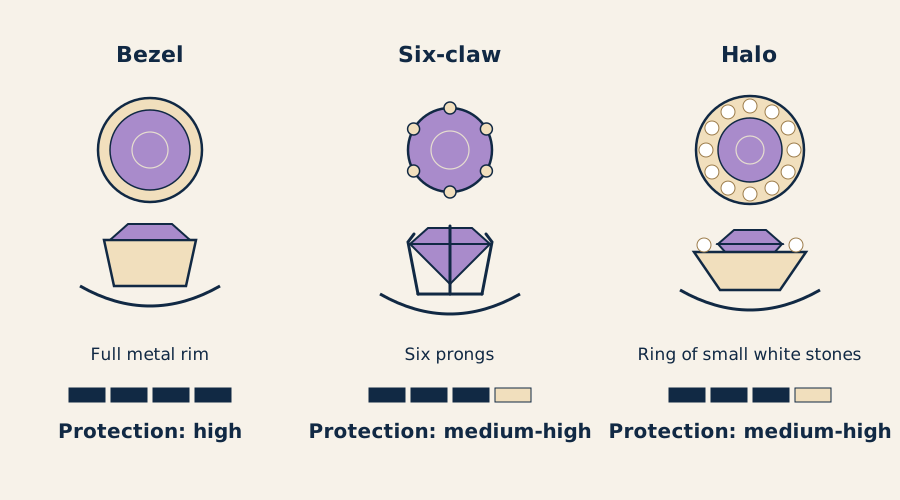
Because amethyst is 7 on the Mohs scale, the setting should shield its edges and keep the stone from taking direct knocks. The common options for an amethyst ring:
- Bezel or half-bezel: a rim of metal around the stone. The most protective choice for daily wear, and it frames the colour neatly.
- Six claws: more secure than four and protects more of the edge; suits rounds and ovals.
- Claws with protected corners: for pear, marquise or emerald cuts, a V-claw at each point.
- Halo: a ring of small diamonds or white sapphires adds sparkle that amethyst lacks on its own and guards the girdle (the outer edge).
- Three-stone: amethyst centre with diamond or other gem sides; the side stones take some of the knocks.
- Low profile: a stone sitting closer to the finger is less likely to catch and chip.
Metal colour changes how amethyst reads. Yellow gold warms it and suits deep reddish purples; rose gold flatters pale Rose de France tones; white gold and platinum keep the purple cool and crisp. Pendants and earrings take far less wear than rings, so large or very pale amethysts are often happiest there.
How do you choose and care for an amethyst ring? Step by step
- Decide on colour first. Choose the purple you love, from lilac to deep purple, in both daylight and indoor light.
- Check for zoning. View face-up and from the side; avoid pale streaks that show through the table.
- Confirm natural or lab-created. Ask in writing whether the stone is natural or lab-created and whether it has been heated.
- Look for an eye-clean stone. Most amethyst is; visible inclusions should mean a lower price.
- Pick a protective setting. A bezel, six claws or a halo for everyday rings.
- Clean it gently. Warm water, mild detergent and a soft brush. Avoid steam cleaners and sudden temperature changes.
- Store and protect. Keep it out of long, direct sunlight, store it apart from harder gems, and have claws and facets checked every year or two.
Free consultation
Talk to a gemologist
Compare stones in person or online with Raj Sood, Graduate Gemologist (GIA), AJP (GIA).
Book a consultationShop this shape
FAQ
Common questions
What is the February birthstone?
Amethyst, the purple variety of quartz, is the February birthstone. It is the only official stone for the month on the modern birthstone list.
What does amethyst mean?
The name comes from the Greek amethystos, meaning "not intoxicated", because the ancient Greeks believed it protected against drunkenness. It has long been associated with calm, clarity and self-control.
Is amethyst good for an engagement ring?
It can be, in a protective setting such as a bezel, six claws or a halo. At 7 on the Mohs scale it will gather fine scratches over the years, but it is inexpensive to repolish or replace.
Does amethyst fade?
Some amethyst can lighten after long exposure to strong sunlight or heat. Normal wear is fine, but avoid leaving it on a sunny windowsill or in a hot car.
Is lab-created amethyst real amethyst?
Lab-created amethyst is real quartz with the same hardness and optical properties as natural amethyst, grown in a laboratory. It costs much less and must always be sold as lab-created or synthetic.
Can you clean amethyst in an ultrasonic cleaner?
Ultrasonic cleaning is usually safe for untreated, uncracked amethyst, but steam cleaning is not recommended. Warm soapy water and a soft brush is the safest routine.

Ask a gemologist
Not sure which diamond to choose?
Raj Sood is a Graduate Gemologist (GIA) and master jeweller. Bring the stones you are considering, or send the reports, and he will tell you honestly which one is better and why.
Keep learning
Related guides
 GemstonesAmethyst
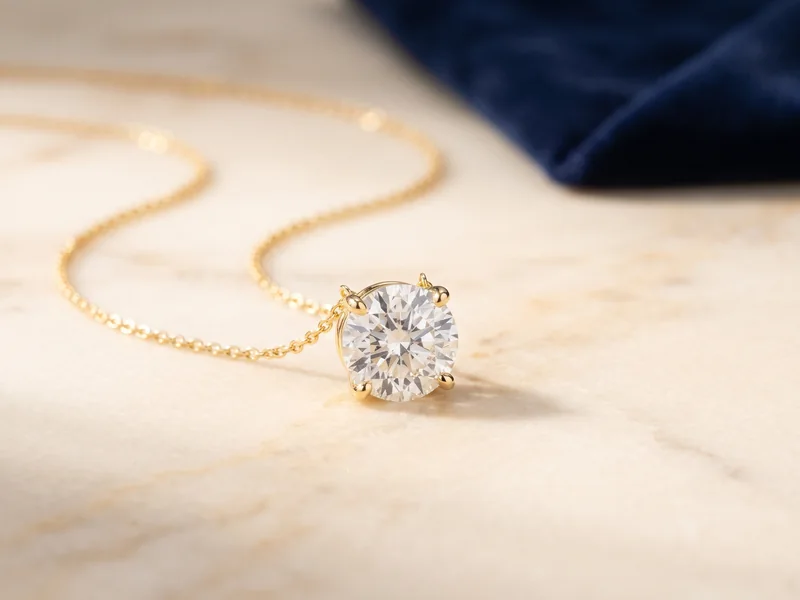 GemstonesBirthstone Jewellery Melbourne
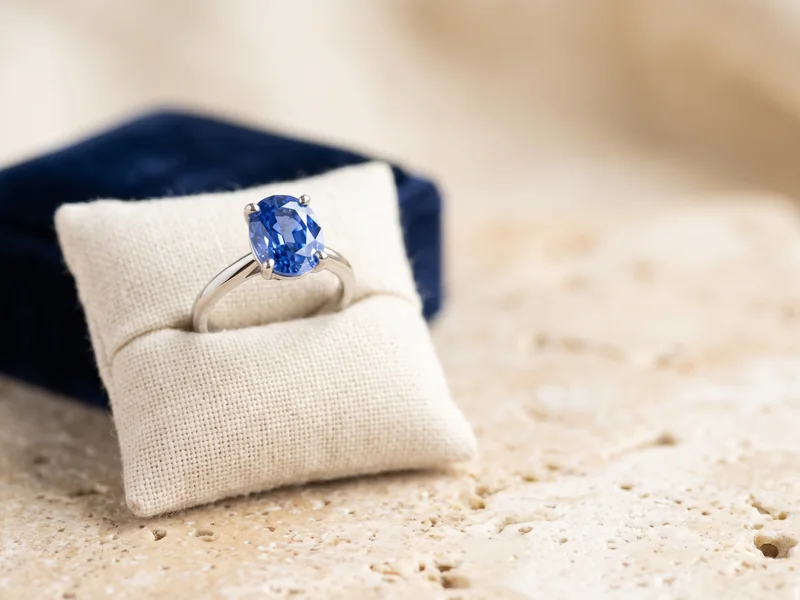 GemstonesBirthstone Engagement Rings: Choosing for DurabilityGemstonesGemstones | Coloured Gemstones, Birthstones and Custom Jewellery
 GemstonesApril Birthstone: Diamond
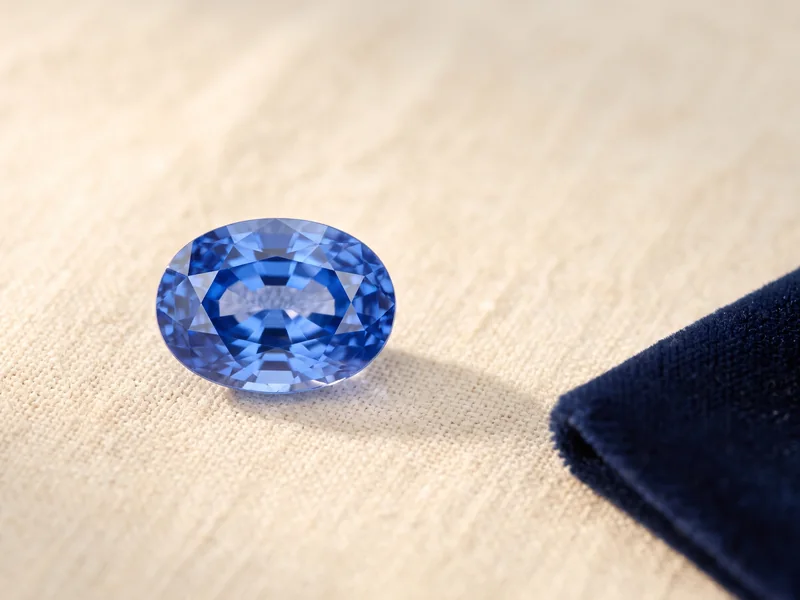 GemstonesSeptember Birthstone: Sapphire
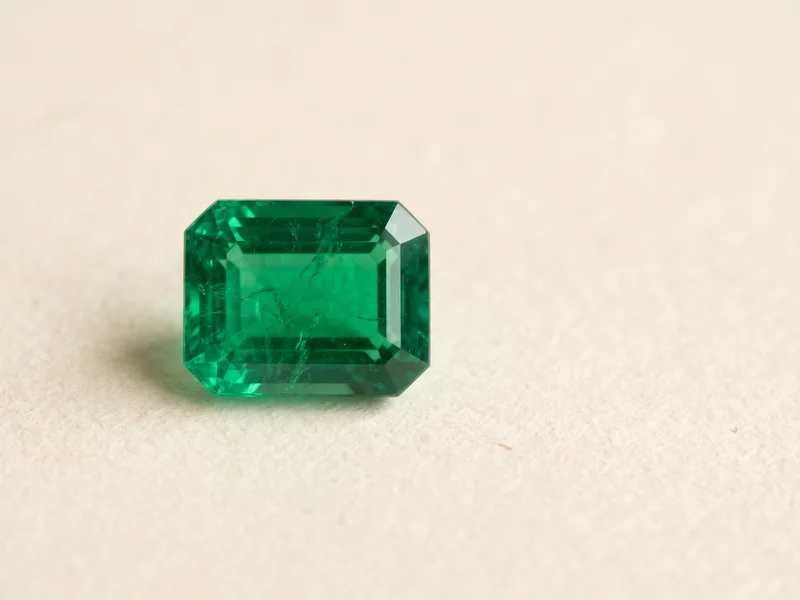 GemstonesMay Birthstone: Emerald
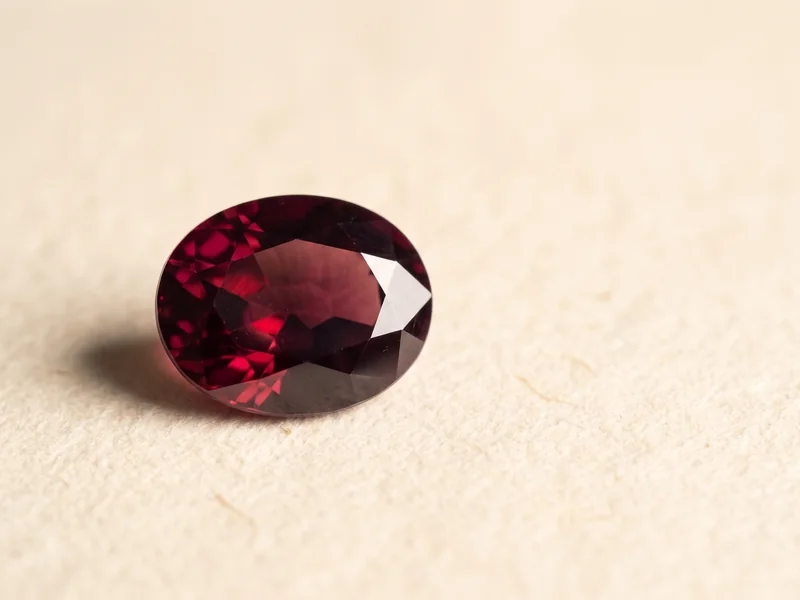 GemstonesJanuary Birthstone: Garnet
Explore more
More guides on this topic
Education