
- Education
- Engagement Rings & Settings
- Comfort Fit Engagement Ring Guide: What Changes on the Finger
Engagement Rings & Settings
Comfort Fit Engagement Ring Guide: What Changes on the Finger
The inside of the band decides how a ring feels every day. A comfort fit engagement ring changes that inside shape, and with it the way the ring slides on, sits, sizes and wears over the years.
 Reviewed by Raj Sood, Graduate Gemologist (GIA), AJP (GIA)Master jeweller and Graduate Gemologist (GIA) · reviewed 4 November 2026
Quick answer
A comfort fit engagement ring has a band with a gently domed inside instead of a flat one. On the finger it slides over the knuckle more easily, presses less at the edges and lets air and moisture move. It may need a quarter to half size smaller on bands 4 mm or wider, and it uses slightly more metal.
What is a comfort fit engagement ring?
A comfort fit band has an inside surface that is gently domed, a little like the back of a spoon, instead of flat. The edges where the inside meets the sides are rounded off too. In Australia and the UK the same idea is often called a court profile, and a band that is domed inside but flat across the top is called a flat court. A standard fit band, by contrast, is flat inside with squarer inner edges. If any of these words are new, our glossary of court, flat court and other ring terms defines them.
Comfort fit describes only the shank, the part of the ring that goes around your finger. It says nothing about the head (the part that holds the stone) or the setting style, so a comfort fit engagement ring can be a solitaire, a halo, a three-stone or a bezel design. Our overview of engagement ring setting styles covers those choices. This page is about what happens underneath, where metal meets skin.
The profile began with men's wedding bands, which are often 5–8 mm wide and can feel tight and sticky when flat inside. Engagement ring shanks are usually much narrower, about 1.8–3 mm wide, so the change is subtler. It is still clearly noticeable on thicker shanks, on the wider bands used for men's engagement rings and for anyone whose knuckle is larger than the base of their finger.
Comfort fit vs standard fit: what ring profiles are there?
A ring's profile is its cross-section: the shape you would see if you sliced the band and looked at the cut end. These are the profiles you will meet when choosing an engagement ring or wedding band.
| Profile | Inside | Outside | How it feels | Typical use |
|---|---|---|---|---|
| Standard (flat) | Flat, square inner edges | Flat or slightly rounded | Full contact; edges can feel snug when fingers swell | Fine shanks, simple bands |
| Half-round (D shape) | Flat | Domed | Traditional look; flat contact inside | Classic wedding bands |
| Light comfort | Flat with softened inner edges | Any | Easier on than standard; usually same size | Many modern engagement shanks |
| Full comfort (court) | Domed | Domed | Glides on and off; least edge pressure | Wider bands, men's rings |
| Flat court | Domed | Flat top, square sides | Modern flat look with comfort inside | Contemporary bands and matched pairs |
| Euro shank | Flat with a squared base | Flat sides | Grips the finger; resists spinning | Top-heavy settings |
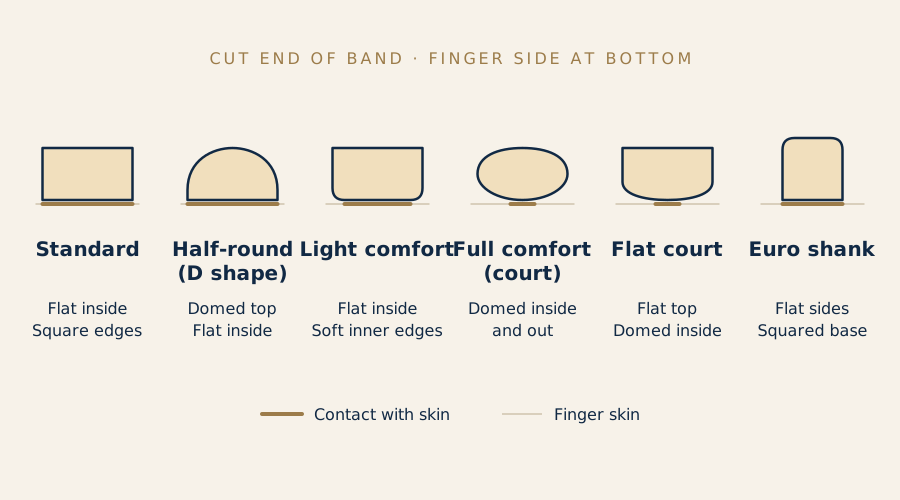
Many engagement rings made today sit somewhere in between, with a lightly rounded inside edge rather than a full dome. The words used vary from jeweller to jeweller, so ask which profile you are actually getting. If the ring is being made to order, ask to see a cross-section in the CAD render (the 3D computer model made before the ring is cast), so the inside shape is not a surprise when you first put it on.
What changes on the finger with a comfort fit band?
The outside of the ring can look identical either way. The differences are all in how it feels and behaves:
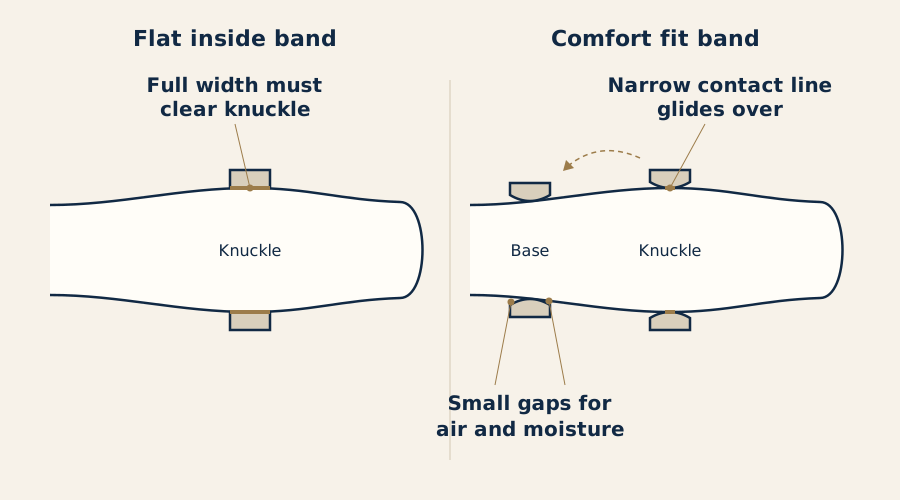
- Putting it on and taking it off: the dome means only a narrow band of metal passes over the knuckle at any moment, so the ring glides rather than drags. This is the change most people notice first.
- Edge pressure: there is no square inner edge to press into the skin when you bend your fingers, grip a steering wheel or your hands swell in the heat.
- Air and moisture: a small gap either side of the contact line lets water, soap and hand cream escape rather than sitting trapped under a flat band, which some people find kinder to their skin.
- Grip: less metal touching the finger means the ring moves a little more freely. That is comfortable, but it matters if the head is heavy (see the section on spinning below).
- Weight: a true dome needs a slightly thicker shank, so the ring can feel more solid on the hand.
What does not change is the sparkle, the security of the stone or the look from above. The comfort profile is mostly hidden, so it does not alter how a shape sits on your hand; for that, our guide to diamond shapes that flatter small hands and long fingers is more useful, and our overview of every diamond shape shows the full range. Nor does it matter which hand you wear it on: in Australia most people choose the left ring finger, and our page on which finger an engagement ring goes on explains the traditions.
Because comfort fit is about the band, it works with any centre stone: a round diamond, a coloured stone such as a colour-change sapphire that shifts between blue and violet, or alexandrite with its daylight-to-lamplight colour shift. Softer gems still need a protective head, but the shank choice is the same.
Do you need a smaller size for a comfort fit engagement ring?
Often, but not always. Ring size is measured across the inside of the band. On a comfort fit band that measurement is taken at the high point of the dome, and the metal falls away towards the edges. With less metal touching the finger, the ring feels looser than a flat band of the same size, and the wider the band, the bigger the effect.
Australia uses letter sizes (for example J, M, P) with half sizes in between. Each full letter adds roughly 1.2–1.3 mm to the inside circumference, so a half size is a small step, but it is enough to feel the difference between a ring that stays put and one that slides around.
| Band width | Usual sizing change vs a flat-inside ring |
|---|---|
| Under 3 mm | Usually none |
| 3–4 mm | None to a quarter size smaller |
| 4–6 mm | About a quarter to half size smaller |
| 6 mm and wider | Often about half a size smaller |
These are starting points only. Knuckle size matters as much as width: someone with a large knuckle and a slim finger base can often go a little smaller in comfort fit, because the dome eases the ring over the knuckle. The only reliable answer is to try a sizer with the same width and profile as the ring you are ordering.
Fingers change through the day and the year. In a Melbourne summer a finger can swell by around half a size compared with a cold winter morning. Aim for a ring that needs a gentle push and a twist to come off over the knuckle, but does not leave a deep mark at the base.
Not sure which one is right?
Send us the stones you are looking at and our gemologist will tell you which to choose and why.
Which band widths and thicknesses suit comfort fit?
A dome needs metal to form it. On a shank that is only about 1.2–1.4 mm thick (measured from the inside surface to the outside), there is not enough depth for a meaningful curve, so jewellers usually just soften the inner edges. A true comfort dome generally starts to make sense at a thickness of about 1.6–2.0 mm, which is also a sensible thickness for an engagement ring that will be worn every day for decades.
- Fine shanks (1.5–2 mm wide): light comfort edges are usually enough; a full dome adds little.
- Standard shanks (2–3 mm wide): light or full comfort both work; it comes down to personal feel.
- Wide bands (4 mm and over): full comfort or flat court makes a real difference, which is why it is the norm in men's rings.
- Pavé shanks: small diamonds set into the band need depth for their seats, so the inside is often only lightly rounded rather than fully domed.
If your knuckles are noticeably larger than the base of your fingers, a comfort fit shank is one of the simplest fixes, because it lets you choose a size that suits the base without a struggle over the knuckle. For a very large difference, sizing beads or a hinged shank (covered below) may suit better.
Will a comfort fit engagement ring spin on your finger?
It can, and this is the main trade-off of comfort fit. A domed inside has less surface touching the finger, so a ring with a heavy head, such as a 1.5 carat stone in a tall setting or a large halo, has a greater tendency to roll towards your little finger. Elongated stones set high are especially prone to it; our guide to low, protective settings for marquise diamonds shows how keeping the head low helps, and the same thinking applies to V-claw and bezel settings for heart diamonds.
There are several ways to keep a comfort fit ring upright:
- Get the size right first: most spinning comes from a ring that is a little too big, not from the profile itself.
- A tapered shank: thinner near the head and heavier at the base, so the weight sits underneath and helps balance the top.
- A lower head: bringing the stone closer to the finger reduces the leverage that makes it roll.
- A flattened base: the inside can be domed at the sides and gently flattened at the bottom, a hybrid between comfort fit and a Euro shank.
- Sizing beads: two small metal balls soldered inside the band grip the finger while still letting the ring pass over the knuckle. They can be removed later.
Head design affects balance as much as the shank. If you are still choosing between styles, our page on claw, bezel and halo settings compared explains how each one carries its weight.
Does a comfort fit engagement ring sit well with a wedding band?
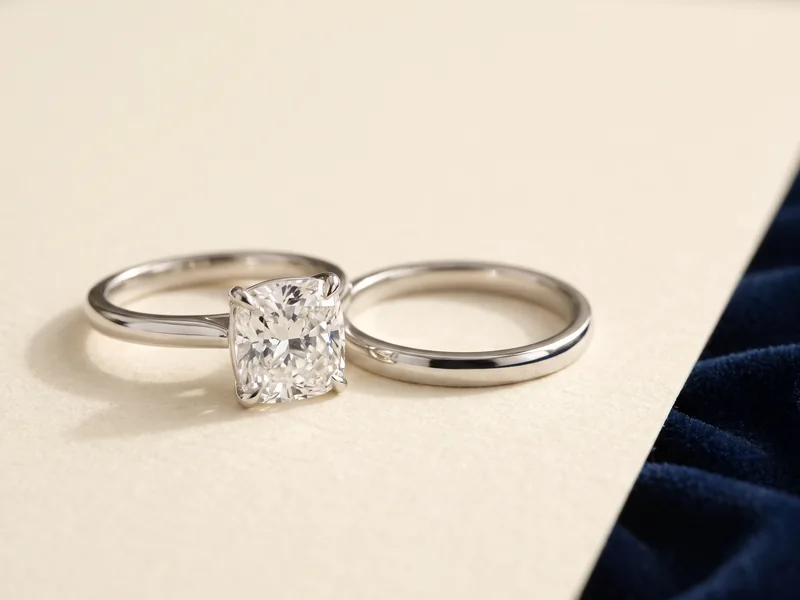
Yes. The inside profile has almost no effect on how two rings sit together, because they meet along their sides and outer edges, not the inside. What matters is the outside profile, the width of each band and how high the head sits above the shank. Our guide to how setting height affects wedding band fit covers that in detail.
- Two full comfort (court) bands: their rounded outer edges leave a small V-shaped gap where they meet. Many people like the separation.
- Two flat court bands: the flat sides sit tightly together with no gap, a clean, stacked look.
- Mixing profiles: a comfort fit engagement ring with a flat-inside wedding band is fine, but the wedding band may need its own size, because the two profiles fit differently at the same letter size.
- Low-set heads: if you want the band to sit flush, choose a head that clears the band or a contoured band shaped around it.
Contoured bands are common with fancy shapes; our page on curved wedding bands that sit beside a heart engagement ring shows how they are shaped. If you plan to wear both rings together every day, size them together. Two rings side by side feel tighter than either on its own, often by around a quarter size, so try the combination before both are finished.
How does a comfort fit band wear, resize and repair over the years?
From the repair bench, the bottom of the shank, on the palm side, is where every engagement ring shows its age. It rubs against benches, steering wheels and other rings. A comfort fit shank starts a little thicker, which helps, but over 15–25 years of daily wear the dome flattens and the base thins, just as a flat band does. The metal you choose shapes how that happens, and it also changes the look of the stone; see how your ring metal changes the way diamond colour looks.
| Metal | Approx. density (g/cm³) | How it wears | Comfort fit notes |
|---|---|---|---|
| Platinum (950) | about 20 | Metal moves rather than wears away; develops a soft grey patina | Heaviest feel; dome holds its shape well and can be re-polished |
| 18ct yellow or rose gold | about 15–16 | Wears slowly; scratches polish out | Comfortable weight; rose gold is slightly harder |
| 18ct white gold | about 14.5–16 | Rhodium plating wears first on the palm side | Re-plating every 1–3 years keeps it bright white |
| 9ct gold | about 11–12 | Harder surface but less gold content | Lightest feel; suits wider comfort bands on a budget |
Resizing: a comfort fit shank can usually be resized up or down by about one to two letter sizes. The jeweller cuts the band, adds or removes metal, solders it, then has to re-form the dome and re-polish the inside, which takes a little more work than a flat band. As a rough guide, resizing a plain gold shank costs about AUD 80–250, with platinum, pavé or larger changes costing more. Rings with stones all the way around, such as full eternity bands, generally cannot be resized.
Re-shanking: when the base becomes too thin (a common sign is the band flexing out of round or feeling sharp), the worn bottom section is cut out and replaced with new metal. The new piece can be shaped as comfort fit again, so the ring keeps its feel. In cost terms, a full comfort shank on an engagement ring usually adds roughly AUD 100–400 in metal and labour compared with a lightly rounded one, more in platinum or on wide bands.
Create your ring with a comfort fit shank
How do you choose a comfort fit engagement ring? Step by step
- Decide the band width. Under 2 mm, light comfort edges are enough; from about 3 mm, a full comfort or flat court profile makes a clear difference.
- Check the thickness. Ask for a shank about 1.6–2.0 mm thick at the base so there is metal for a dome and for decades of wear.
- Size with the right sizer. Use a comfort fit sizer of the same width, at the end of the day, and try it over your knuckle as well as at the base.
- Think about balance. For a large or tall head, ask about a tapered shank, a lower setting, a flattened base or sizing beads to stop spinning.
- Plan the wedding band. Choose its outside profile and confirm the head clears it, then size the two rings together.
- Review the CAD render. Check the cross-section and shank thickness before the ring is cast, and ask how it can be resized or re-shanked later.
If you are comparing several designs at once, keep the definitions of shank, profile and head handy, and look at wider men's engagement bands if you want to feel a full comfort profile at its most obvious. Pairing advice for different heights is in our page on low-set heads that let a wedding band sit flush.
Free consultation
Talk to a gemologist
Compare stones in person or online with Raj Sood, Graduate Gemologist (GIA), AJP (GIA).
Book a consultationShop this shape
FAQ
Common questions
Is a comfort fit ring worth it for an engagement ring?
For shanks of about 3 mm or wider, or if your knuckles are larger than the base of your finger, most people find it noticeably easier to wear. On very fine shanks the difference is small, and lightly rounded inner edges give most of the benefit.
Do comfort fit rings run small or large?
They usually feel larger, or looser, than a flat-inside ring of the same size, because less metal touches the finger. On bands 4 mm or wider, many people go a quarter to half size smaller, but always confirm with a comfort fit sizer.
Can a comfort fit engagement ring be resized?
Yes, usually by about one to two letter sizes. The jeweller re-forms and re-polishes the dome after cutting and soldering, so it takes a little more work than resizing a flat band.
Does comfort fit make a ring spin more?
It can, because the domed inside grips the finger less. Getting the size right, a heavier tapered base, a lower head or sizing beads all help keep a top-heavy ring upright.
What is the difference between court and comfort fit?
In Australia and the UK, court is the traditional name for a band that is domed on the inside and the outside, which is a full comfort fit. A flat court band is domed inside but flat on top.
Will my wedding band need to be comfort fit too?
No. Rings meet along their sides, so the inside profiles do not need to match. Choose the outside profile you like, and size the wedding band separately if its inside profile differs.

Ask a gemologist
Not sure which diamond to choose?
Raj Sood is a Graduate Gemologist (GIA) and master jeweller. Bring the stones you are considering, or send the reports, and he will tell you honestly which one is better and why.
Keep learning
Related guides
 Engagement Rings & SettingsSetting Height and Wedding Band FitEngagement Rings & SettingsEngagement Ring Setting Styles Guide
 Engagement Rings & SettingsMen's Engagement RingsEngagement Rings & SettingsWhich Finger Does an Engagement Ring Go On?
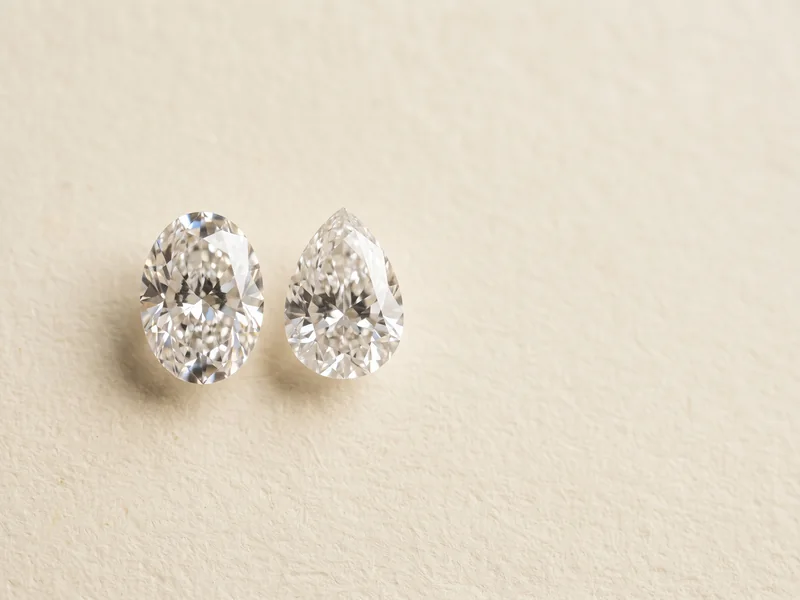 Diamond ShapesBest Diamond Shapes for Small Hands and Long Fingers
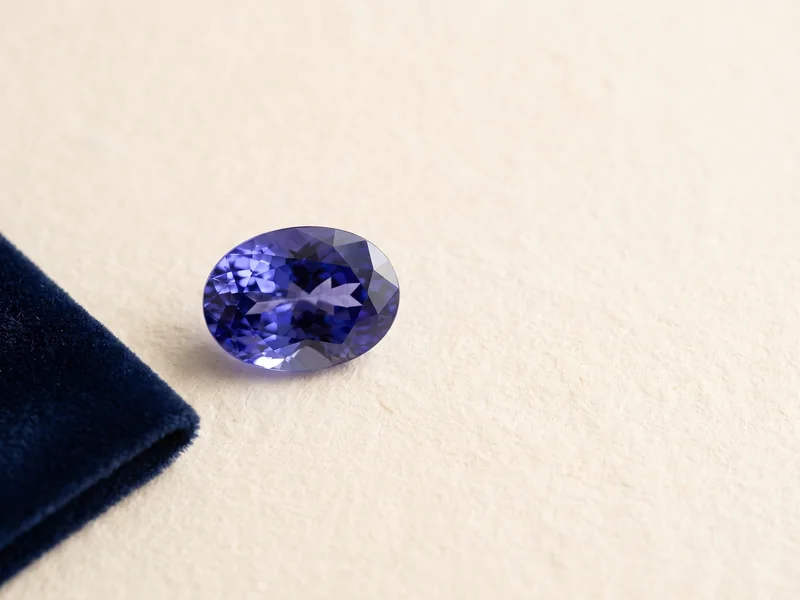 GemstonesColour-Change Sapphire
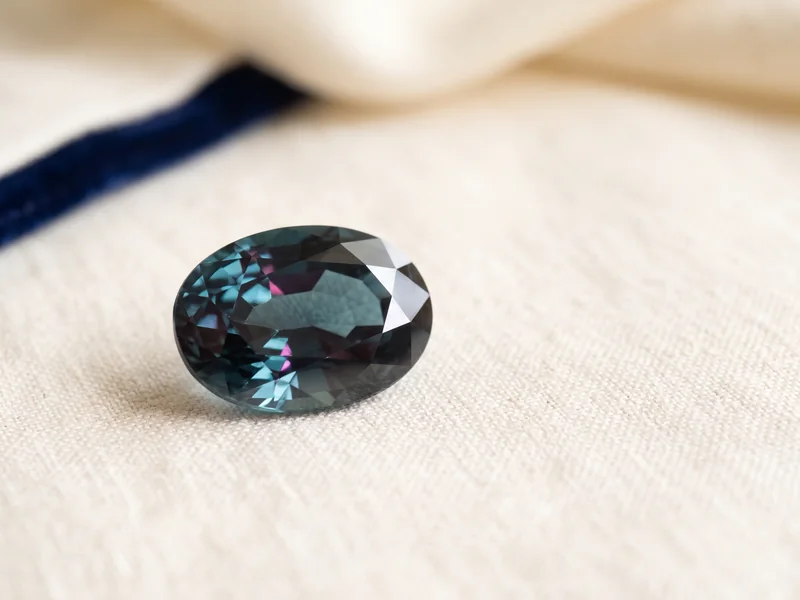 GemstonesAlexandrite: Understanding the Colour-Change Effect
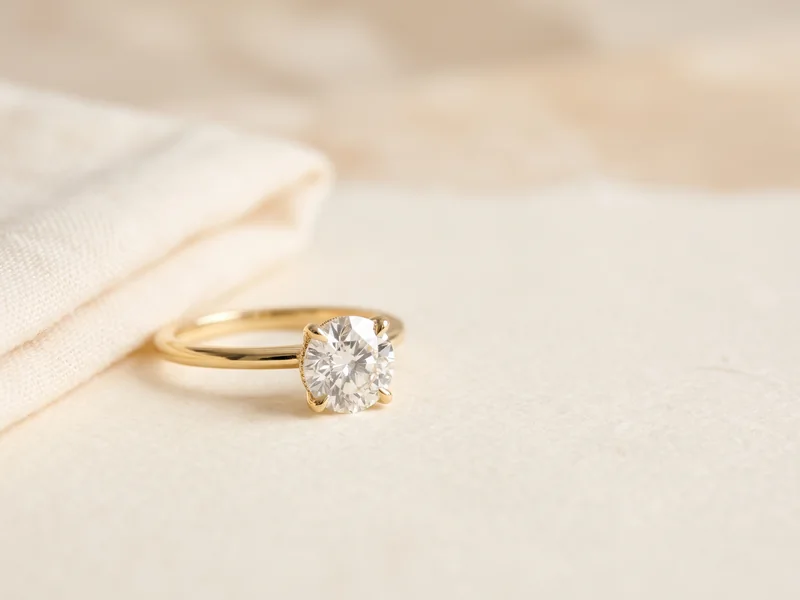 Diamond 4Cs & GradingHow Ring Metal Changes the Way Diamond Colour Looks
Explore more
More guides on this topic
Education