
Gemstones
Colour Change Sapphire Guide: Colours, Causes, Value and Care
A colour change sapphire looks like one gem by the window and another under a lamp. Here is what causes the change, how to judge its strength, and what to check before you choose one for a ring.
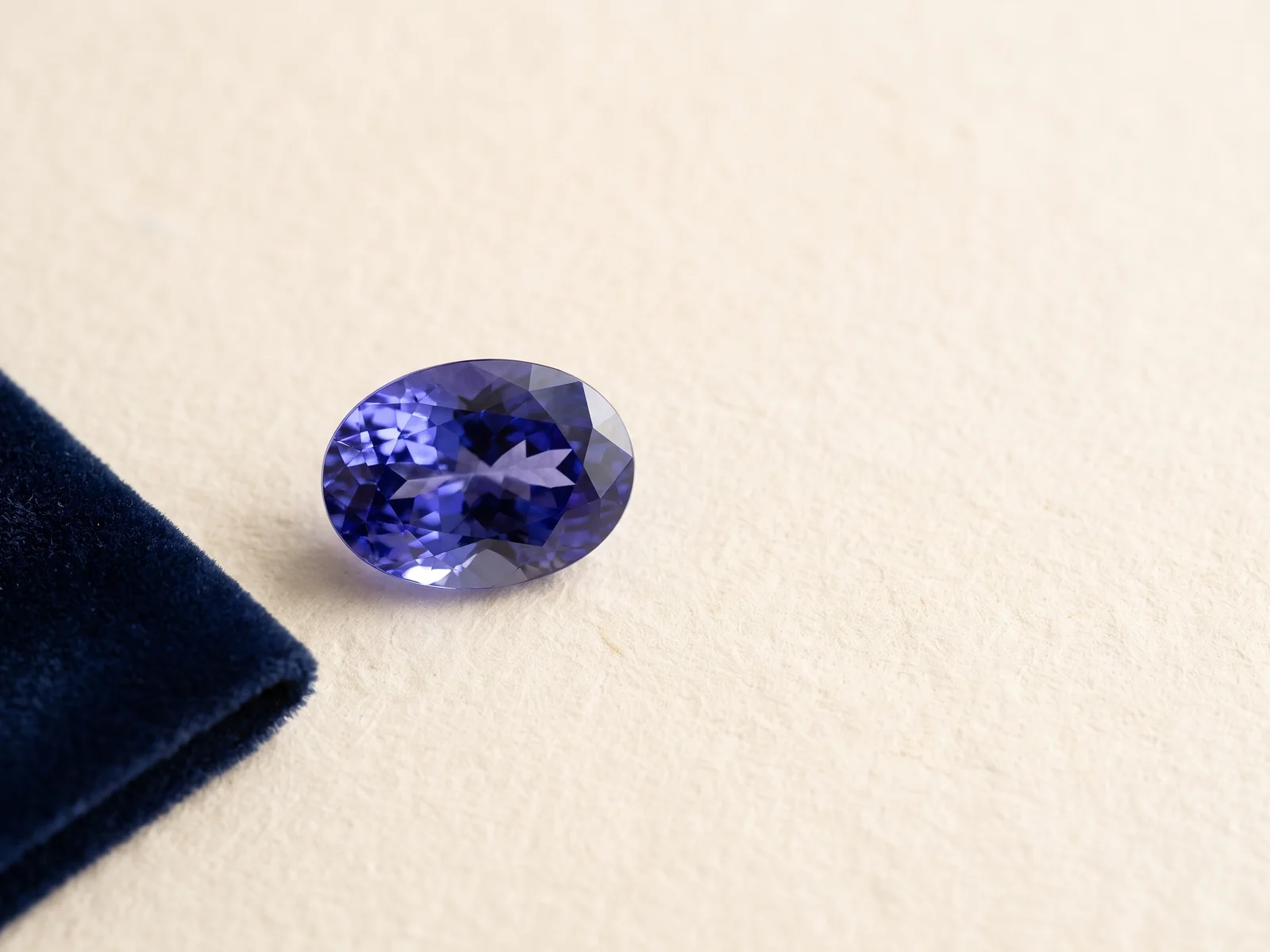
 Reviewed by Raj Sood, Graduate Gemologist (GIA), AJP (GIA)Master jeweller and Graduate Gemologist (GIA) · reviewed 4 November 2026
Quick answer
A colour change sapphire is a natural sapphire (corundum) that looks one colour in daylight and another under warm indoor light, most often blue or violet-blue outdoors and purple to reddish-purple under lamps. Value depends on how strong and attractive the change is. At 9 on the Mohs scale with no cleavage, it suits everyday rings.
What is a colour change sapphire?
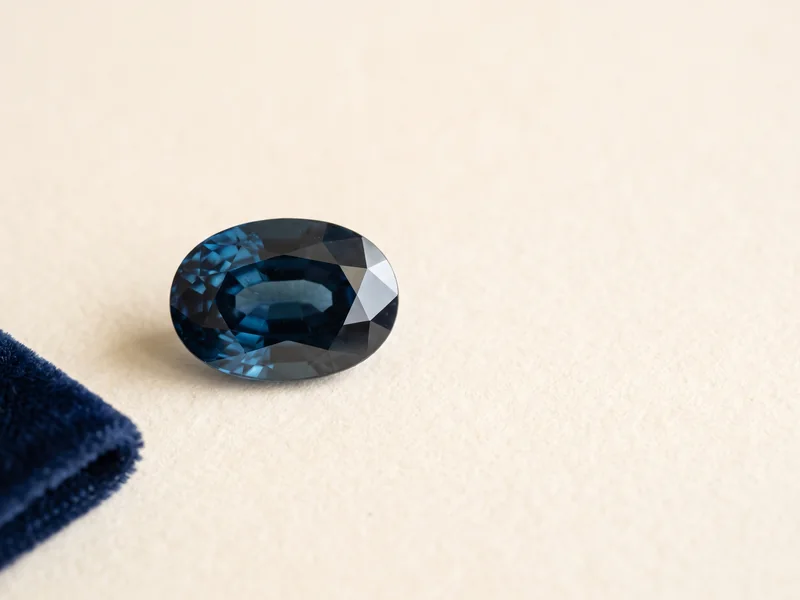
A colour change sapphire is a variety of corundum, the mineral (aluminium oxide, Al2O3) that also gives us ruby and every other sapphire colour. What sets it apart is that its colour depends on the light. In daylight or under cool white light it usually looks blue, violet-blue or greyish blue. Under warm light, such as an incandescent globe, a candle or a warm LED, it turns purple, plum or even reddish-purple.
Nothing inside the stone changes. The gem simply lets through two narrow bands of colour, and the light source decides which band your eye notices more. It is the same principle behind alexandrite, which is why colour change sapphires are sometimes, loosely, called "alexandrite-like". If you are new to sapphire generally, our guide to sapphire as a gemstone, from formation to grading covers the basics, and the wider family sits in our coloured gemstone guides.
Colour change sapphires are uncommon rather than legendary. Most sapphire rough shows a single stable colour, and only a small share of stones from certain deposits show a change that is strong enough to be worth naming. Gemmologists separate a true colour change (an obvious shift to a different hue) from a colour shift (a subtle move, such as blue to slightly more violet-blue). Terms like these, and others below, are explained in our plain-English jewellery glossary.
Physically, a colour change sapphire behaves like any other sapphire: hardness 9 on the Mohs scale, a refractive index (how strongly it bends light) of about 1.762–1.770, a specific gravity of about 4.00, and no cleavage, so it does not split along flat planes the way some gems can.
What colours does a colour-change sapphire show?
The classic pairing is blue to purple, and that is what most people mean when they search for a blue to purple sapphire. But the range is wider, and the exact pairing depends on the balance of trace elements in the crystal.
| Daylight colour | Warm (incandescent) colour | How often seen |
|---|---|---|
| Blue or violet-blue | Purple to violet | Most common |
| Violet or purple | Reddish-purple to purplish-red | Fairly common; strong examples prized |
| Greyish blue | Purple | Common in lighter stones |
| Greenish blue or teal | Purplish or brownish | Less common |
| Green or yellowish green | Brownish red to reddish brown | Rare |
| Pinkish purple | Pink to pinkish red | Uncommon |
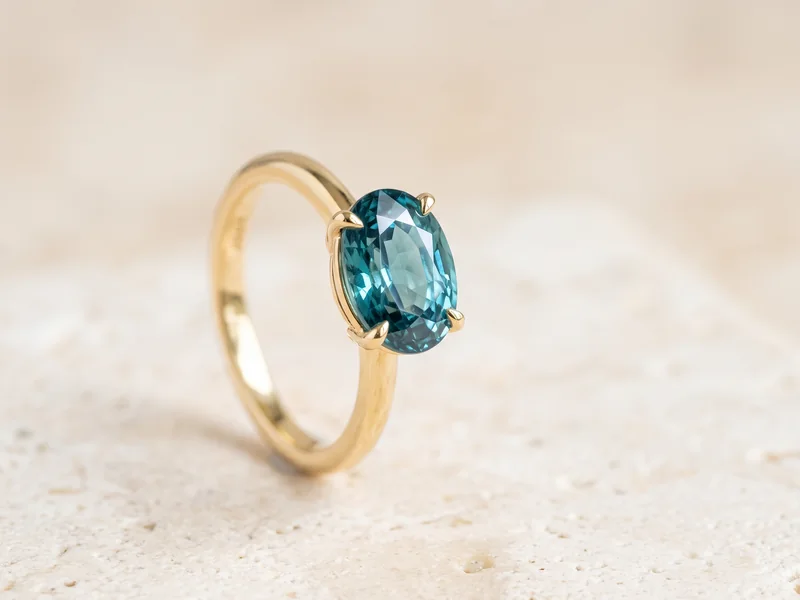
A stone that holds the same purple in every light is a regular purple sapphire; see our guide to purple sapphires that hold one colour for how those are graded. Likewise, many teal stones look slightly different indoors without being true colour change; our page on teal sapphire engagement rings explains the blue-green middle ground, and green sapphire covers the greener end.
Do not confuse colour change with parti colour. A parti sapphire shows two or three colours in different zones of the stone at the same time, in any light. A colour change sapphire shows one overall colour at a time, and that colour depends on the light. Our guide to parti sapphires, which show two colours at once goes into that look in detail.
Sapphire is also pleochroic, meaning it can show slightly different colours when viewed along different directions in the crystal. Pleochroism changes with viewing angle; colour change changes with the light. A good cutter orients the rough so the more attractive pleochroic colour faces up, which can strengthen or soften how the change reads.
Why does a sapphire change colour in different light?
The effect comes down to trace elements and the light you view the stone in. Pure corundum is colourless. Small amounts of chromium and vanadium absorb light in the yellow-green part of the spectrum, leaving two "windows" where light passes through: one in the blue-violet and one in the red. Iron and titanium, which make sapphire blue, add to the blue side.
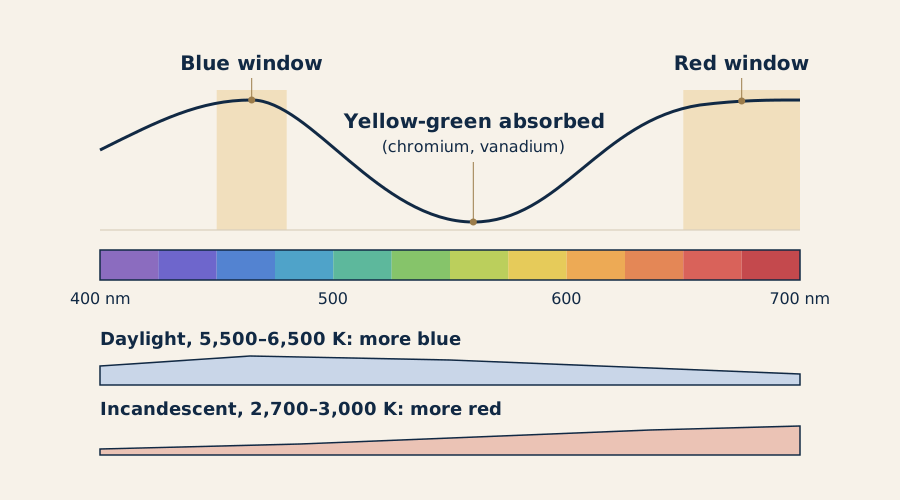
Daylight and cool white LEDs (around 5,500–6,500 K colour temperature) are rich in blue, so the blue window dominates and the stone looks blue or violet. Incandescent globes and warm LEDs (around 2,700–3,000 K) are rich in red, so the red window gains ground and the stone tips towards purple or reddish-purple. When the two windows are almost evenly balanced, the change is dramatic; when one dominates, the change is slight.
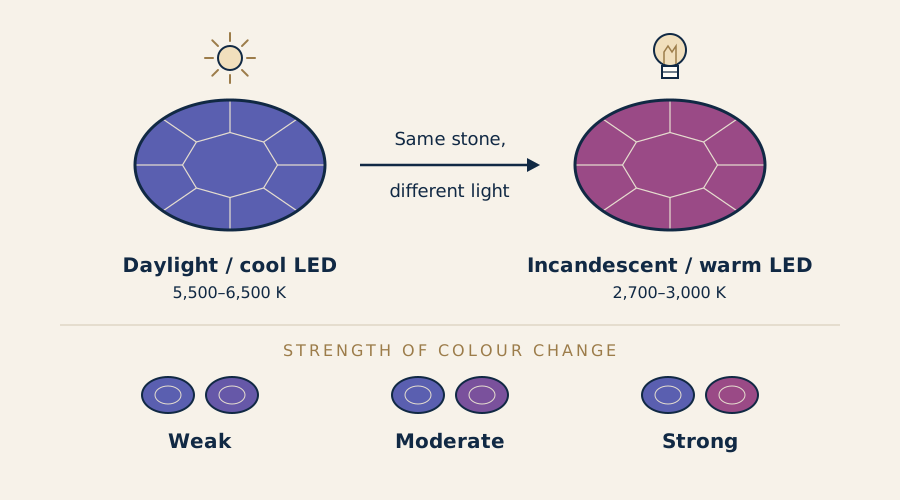
This is why the stone can look different in your kitchen, the office and a restaurant on the same day. Modern lighting complicates things: many homes now use neutral LEDs that sit between daylight and incandescent, so the full change may only appear at the two extremes.
Colour change sapphire vs alexandrite: what is the difference?
Alexandrite is a different mineral, a colour change variety of chrysoberyl. Fine alexandrite shifts from green or bluish green in daylight to red or purplish red under incandescent light. Colour change sapphire usually moves from blue to purple, so the two look quite different side by side, even though the cause is similar. Our guide to how alexandrite's colour change works explains its own story.
| Colour change sapphire | Alexandrite | Colour change garnet | Lab-created colour change corundum | |
|---|---|---|---|---|
| Mineral | Corundum | Chrysoberyl | Garnet (pyrope-spessartite) | Synthetic corundum |
| Typical change | Blue to purple | Green to red | Blue-green or brown to purple-red | Grey-blue or greenish to purple |
| Mohs hardness | 9 | 8.5 | about 7–7.5 | 9 |
| Refractive index | about 1.76–1.77 | about 1.74–1.76 | about 1.74–1.78 | about 1.76–1.77 |
| Natural or not | Natural | Natural (lab-created also exists) | Natural | Laboratory-made |
| Relative price | Moderate to high | High to very high | Moderate | Very low |
The column to watch is the last one. Vanadium-doped synthetic corundum has been made for about a century and was widely sold as "alexandrite" in costume and souvenir jewellery. It is real corundum made in a laboratory, so it is correctly called lab-created colour change sapphire or synthetic corundum, not alexandrite and not a natural sapphire. If you have inherited a "family alexandrite" that turns grey-blue to mauve, there is a fair chance it is this material.
Related guideAlexandrite: Understanding the Colour-Change EffectNot sure which one is right?
Send us the stones you are looking at and our gemologist will tell you which to choose and why.
Is a colour change sapphire good for an engagement ring?
Yes. Sapphire is one of the few coloured gems that handles daily wear well. Hardness (resistance to scratching) is only half the picture; toughness (resistance to chipping and breaking) matters just as much in a ring that gets knocked on benches and car doors.
| Gem | Mohs hardness | Toughness | Everyday ring? |
|---|---|---|---|
| Diamond | 10 | Good (has cleavage) | Yes |
| Sapphire, including colour change | 9 | Excellent (no cleavage) | Yes |
| Ruby | 9 | Excellent | Yes |
| Alexandrite | 8.5 | Excellent | Yes |
| Garnet | about 6.5–7.5 | Fair to good | With a protective setting |
| Emerald | 7.5–8 | Poor to good (often fractured) | With care |
| Amethyst | 7 | Good | With care; scratches over time |
For a head-to-head on daily wear, see our comparison of diamond vs sapphire for everyday wear, and for a softer gem, why sapphire outlasts emerald on the hand. The main caution with sapphire is parting: some stones have planes of weakness from twinning, and a hard knock along one can cause a break. It is uncommon, but a stone with visible twinning lines near the surface deserves a protective setting.
Setting choice also affects the colour change. An open setting lets more light into the stone and shows both colours well. Yellow gold can warm a blue stone towards violet and slightly mute the daylight colour; white gold and platinum keep the daylight blue crisp. Claws suit most cuts; a bezel (a metal rim) protects the edge but blocks some light from the side. Our sapphire engagement ring designs show how these choices look in practice, and if you wear your ring all day, it is worth reading about comfort-fit band profiles too.
Are colour change sapphires treated, and how are lab-created ones identified?
Most sapphires on the market are heated to improve colour and clarity, and that is an accepted, stable treatment when it is disclosed. Colour change sapphires are a partial exception. Heating can alter the balance between the blue and red windows and weaken or remove the change, so many colour change stones are sold unheated. That is a general pattern, not a rule; always check what the report says.
- Heat treatment: common in sapphire generally, stable and permanent. In colour change stones it may reduce the effect, so unheated stones with a strong change are sought after.
- Beryllium diffusion: a high-temperature treatment that adds colour, mostly used for orange, yellow and padparadscha-like stones. It should always be disclosed.
- Fracture or glass filling: used on lower-quality corundum to hide cracks. Filled stones are less durable and need gentler care.
- Lab-created: not a treatment but a different origin. It must be described as lab-created or synthetic.
Beryllium treatment is covered in more depth in our guides to orange sapphire and padparadscha, the pink-orange sapphire, where it matters most.
Identification notes from the bench, as a Graduate Gemologist (GIA) would approach it: natural colour change sapphire usually shows straight or angular colour zoning that follows the crystal's hexagonal growth, along with natural inclusions such as fine rutile needles ("silk"), small mineral crystals and fingerprint-like healed fractures. Flame-fusion lab-created corundum, the most common synthetic, often shows curved growth lines (like the grooves on a record) and round or elongated gas bubbles under magnification. Other synthetic methods can be harder to separate, and some treatments can only be confirmed with laboratory instruments, which is why an independent report from a lab such as GIA, GRS, SSEF or AGL is worth having on a valuable stone.
Where do colour change sapphires come from?
Colour change sapphires come from a handful of deposits where the chromium and vanadium chemistry happens to line up. The main sources are:
- Sri Lanka: a long-standing source of blue-to-purple and violet-to-purple stones, often lighter in tone with good clarity.
- Madagascar: since the late 1990s a major source of colour change and colour-shift sapphires in a wide range of pairings.
- Tanzania: the Umba Valley and Tunduru regions produce unusual colours, including some greenish and brownish changes.
- Myanmar and Thailand: occasional colour change stones from classic sapphire areas.
- Kenya: smaller amounts, sometimes with stronger purple-red tones.
- Australia: occasional stones from the New England fields in New South Wales and the Queensland gemfields, though they are not a regular part of Australian output.
Australian sapphires are mostly iron-rich: deep blues, teal, greens, golden yellows and parti stones. You can see that palette in our guides to Australian sapphire rings and yellow sapphires. An Australian colour change stone is a genuine curiosity rather than something you can easily shop for.
Origin can affect price, but less than it does for classic blue sapphire. For colour change stones, the strength and beauty of the change matter far more than the country. Origin reports are opinions based on inclusions and chemistry, so treat them as useful context rather than certainty.
How much is a colour change sapphire worth?
Value comes from a few factors, roughly in this order of importance:
- Strength of the change: a strong, obvious change is worth much more than a slight shift. Labs and dealers often describe it as weak, moderate or strong.
- Beauty of both colours: a saturated blue that turns to a rich purple is more valuable than a greyish blue that turns to a dull mauve.
- Tone and saturation: medium tones show the change most clearly; very dark or very pale stones show it less.
- Clarity and cut: eye-clean stones with even, lively faceting and no large windows (washed-out centres).
- Size: clean stones over 2 carats with a strong change are uncommon and priced accordingly.
- Treatment and report: unheated, documented stones carry a premium.
| About 1 ct stone | Approximate price range (AUD) |
|---|---|
| Lab-created colour change corundum | about $20–$150 |
| Natural, slight shift or weak change | about $300–$1,000 |
| Natural, moderate change, good colour | about $1,000–$3,000 |
| Natural, strong change, fine colour, unheated | about $3,000–$8,000 or more |
These are broad ranges only and move with the market. Sapphire is denser than diamond (about 4.00 versus 3.52), so a 1 carat round sapphire is a little smaller face-up, at about 6.0 mm compared with about 6.4 mm for a round diamond. Compare millimetre sizes, not just carat weight. For a feel for how hue affects price across the sapphire family, our teal vs blue sapphire comparison is a useful reference.
Browse natural gemstones
How do you choose and care for a colour change sapphire ring?
- Confirm what it is. Check the report says natural corundum (sapphire) with a colour change, or clearly states lab-created if it is synthetic.
- Read the treatment line. Note whether the stone is heated, unheated, diffused or filled.
- See it in two lights. Ask for photos or video in daylight and under warm light, taken side by side.
- Rate the change honestly. Decide whether both colours appeal to you, not just the dramatic one.
- Check clarity and cut. Look for an eye-clean stone without a large window in the centre.
- Choose a setting that suits daily wear. An open claw or half-bezel setting lets in light and protects the edges.
Care is simple. Clean the ring in warm water with a little mild dish soap and a soft toothbrush, then rinse and dry. Ultrasonic and steam cleaners are generally safe for unheated and heat-treated sapphire without surface-reaching fractures, but avoid them for fracture-filled stones. Store the ring apart from other jewellery, because at 9 on the Mohs scale a sapphire can scratch softer gems and gold.
The colour change itself is stable. Unlike amethyst, which can fade with long exposure to strong sun, sapphire colour does not fade in normal light. Have the claws checked by a jeweller about once a year, especially on a ring worn every day.
Free consultation
Talk to a gemologist
Compare stones in person or online with Raj Sood, Graduate Gemologist (GIA), AJP (GIA).
Book a consultationShop this shape
FAQ
Common questions
Is a colour change sapphire rare?
It is uncommon. Only a small share of sapphires show a change, and stones with a strong, attractive change in larger sizes are genuinely scarce.
Is a colour change sapphire the same as alexandrite?
No. Alexandrite is chrysoberyl and usually changes from green to red; colour change sapphire is corundum and usually changes from blue to purple. The cause, a balance between blue and red light passing through the stone, is similar.
Does the colour change wear off over time?
No. The change comes from the stone's chemistry and how it absorbs light, so it is permanent. Strong heating during treatment or repairs could alter it, so tell your jeweller before any work involving a torch.
Are colour change sapphires sold as alexandrite?
Lab-created colour change corundum has long been sold as "alexandrite" in inexpensive jewellery. It is synthetic sapphire, not alexandrite, and should be labelled lab-created.
Is a colour change sapphire good for an everyday ring?
Yes. It has the same hardness (9) and excellent toughness as other sapphires, so it suits engagement rings and daily wear in a secure setting.
Why does my colour change sapphire look the same indoors?
Many homes use neutral or cool LEDs, which are close to daylight. You will usually see the full change only under warm incandescent or 2,700 K light.

Ask a gemologist
Not sure which diamond to choose?
Raj Sood is a Graduate Gemologist (GIA) and master jeweller. Bring the stones you are considering, or send the reports, and he will tell you honestly which one is better and why.
Keep learning
Related guides
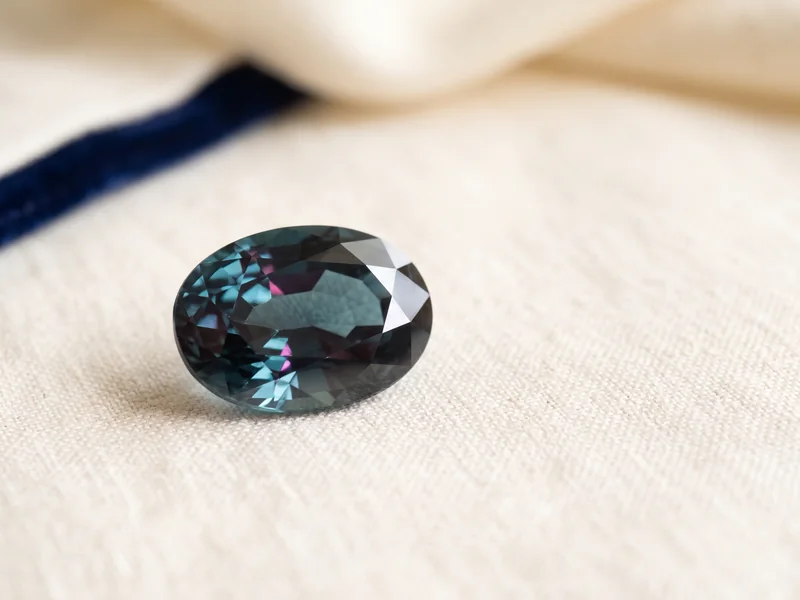 GemstonesAlexandrite: Understanding the Colour-Change Effect
 GemstonesSapphire Gemstones
 GemstonesPurple Sapphire
 GemstonesSapphire Engagement Rings in MelbourneGemstonesGemstones | Coloured Gemstones, Birthstones and Custom Jewellery
 GemstonesDiamond vs Sapphire Engagement Rings
 GemstonesAustralian Sapphire Engagement Rings
 GemstonesTeal Sapphire Engagement Rings
Explore more
More guides on this topic
Education