
- Education
- Diamond Shapes
- Diamond Shapes for Small Hands and Long Fingers: Which Shape Suits Your Hand?
Diamond shapes
Diamond Shapes for Small Hands and Long Fingers: Which Shape Suits Your Hand?
Choosing between diamond shapes for small hands or long fingers comes down to two things: which way the outline runs and how much of the finger it covers. Get those right and the ring looks in proportion before you spend a dollar on grades.
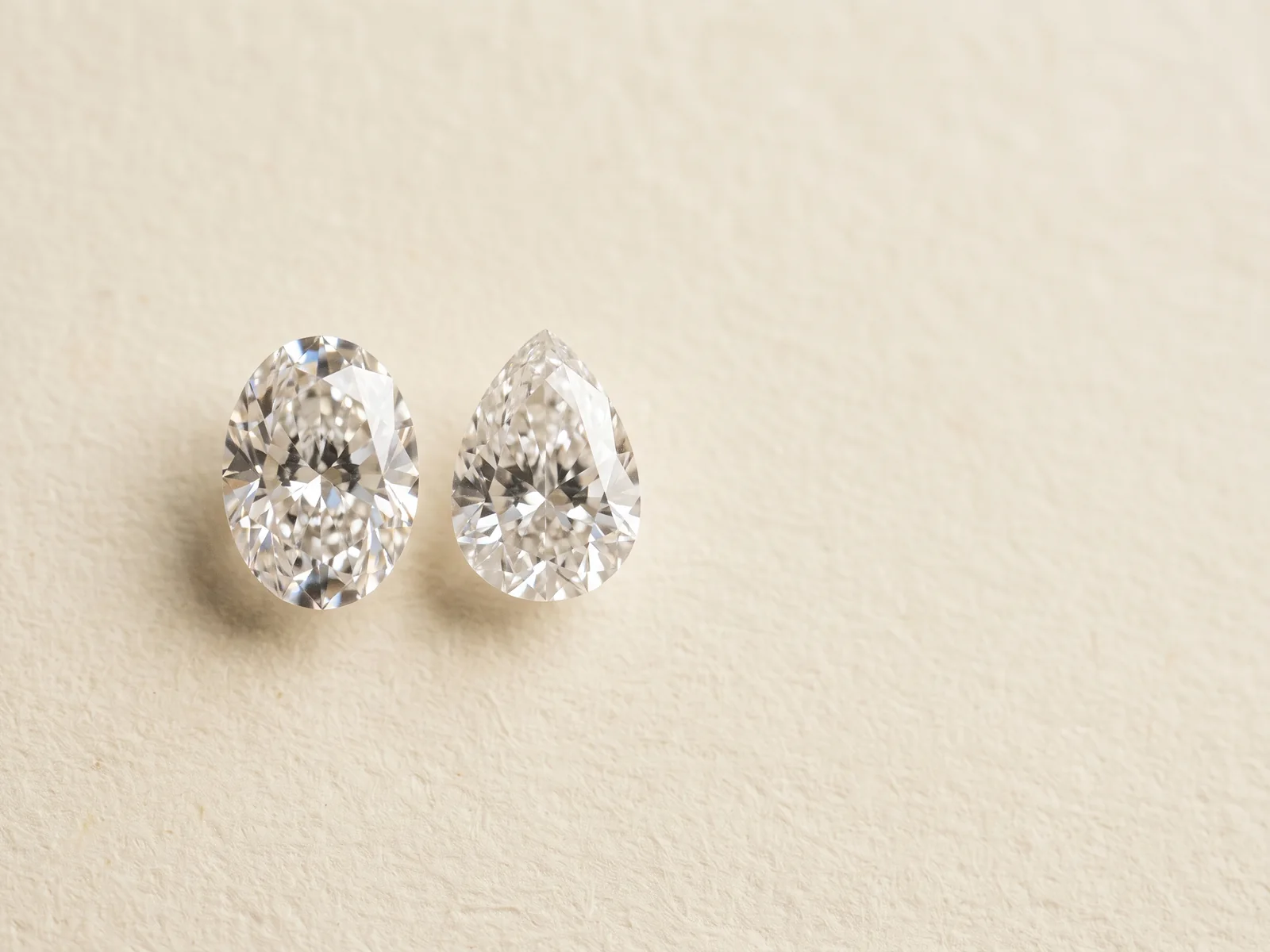
 Reviewed by Raj Sood, Graduate Gemologist (GIA), AJP (GIA)Master jeweller and Graduate Gemologist (GIA) · reviewed 4 November 2026
Quick answer
The best diamond shapes for small hands are elongated cuts such as oval, pear and marquise, or a round of 0.50–1.00 carat, because they lengthen a short finger without covering it. Long fingers carry almost anything, including emerald, radiant, cushion and wider ovals. Keep the stone in proportion to the finger and the band about 1.8–2.5 mm wide.
How does diamond shape change the look of your hand?
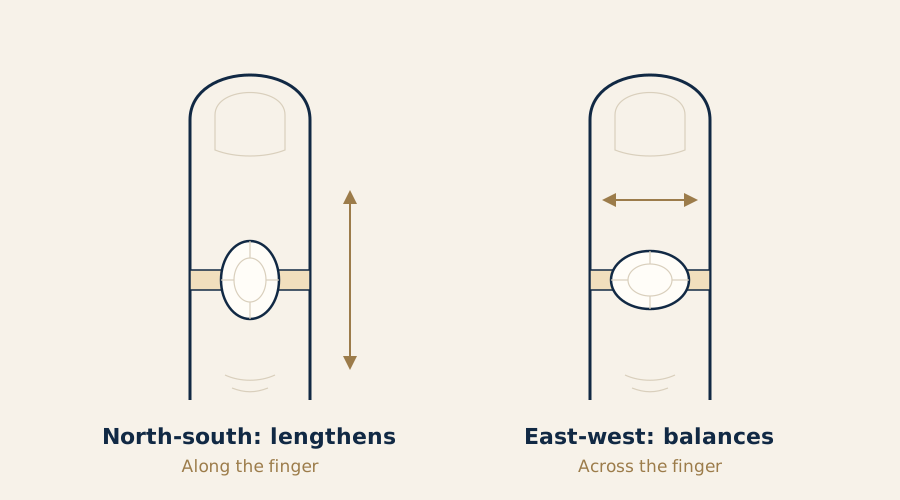
Two things decide how a diamond looks on a hand: the direction of its outline and how much of the finger it covers. A shape that runs along the finger, such as an oval, pear or marquise, draws the eye lengthways and makes a short finger look longer and slimmer. A shape that is about as wide as it is long, such as a round, cushion, princess or Asscher, sits as a compact block and lets the finger set the proportions. Turn an elongated stone sideways, in what jewellers call an east-west setting, and the effect reverses: it widens the finger visually and shortens it.
The second factor is finger coverage, meaning the width of the stone compared with the width of the finger. Many women's ring fingers measure roughly 15–17 mm across at the base. A 1 carat round brilliant is about 6.4 mm wide, so on a size K finger (about 16 mm inside diameter) it covers around 40% of the width. On a size H finger (about 14.8 mm) the same diamond covers closer to 43% and looks noticeably bigger. That is good news if you have small hands: every carat goes further.
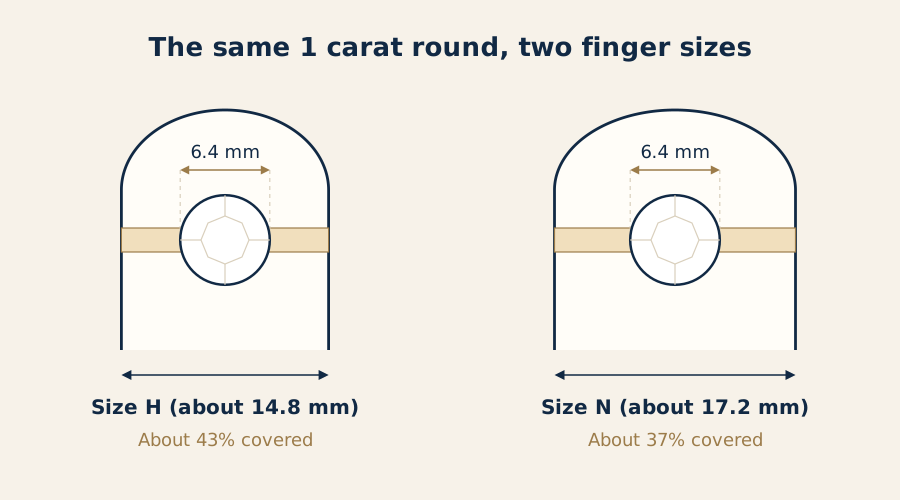
None of this is a rule. Plenty of people with petite hands wear an emerald cut well, and long fingers can carry a tiny round solitaire. Think of the guidance as a way to predict the effect before you see the ring on. If you want the background on each outline first, our overview of every diamond shape explains how each one is cut, and any unfamiliar word is defined in the GemTrove jewellery glossary.
What are the best diamond shapes for small hands?
By small hands we mean a ring size of roughly H to K in the Australian letter system, often with fingers that are short from knuckle to base. The aim is usually to add a little length without swamping the finger. The length-to-width ratio (the stone's length divided by its width, both taken from the grading report) is the number that tells you how much length a shape will add.
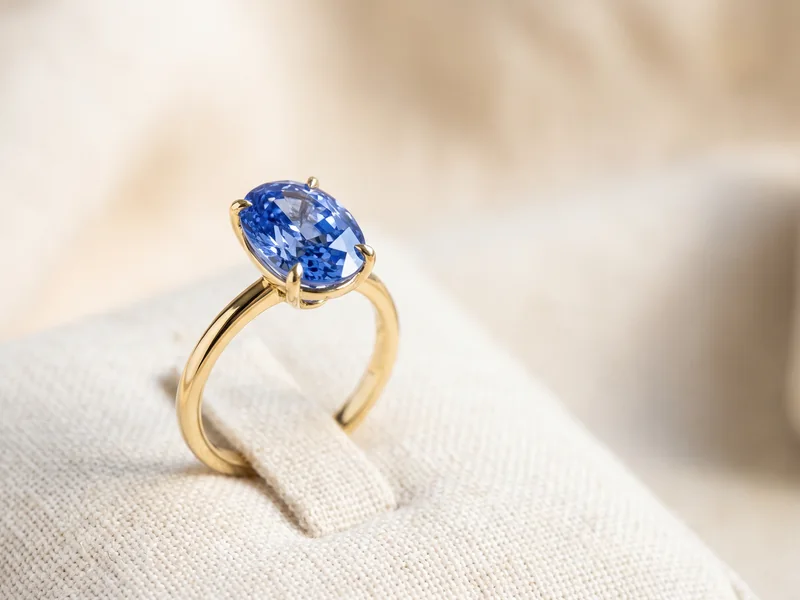
- Oval (ratio about 1.35–1.50): the most forgiving choice. Soft ends, no points to catch, and a 1 carat oval measures about 7.7 × 5.7 mm, so it looks longer than a round of the same weight while staying narrower across the finger.
- Pear (ratio about 1.50–1.70): the point leads the eye towards the fingertip and slims the hand. Most people wear it point towards the nail for exactly that reason.
- Marquise (ratio about 1.85–2.10): the most lengthening shape there is. At 1 carat it is about 10 × 5 mm, so on a very short finger keep it around 0.50–0.90 carat so its length does not run up to the knuckle.
- Elongated cushion or radiant (ratio about 1.15–1.30): a squarer, softer look that still adds a touch of length.
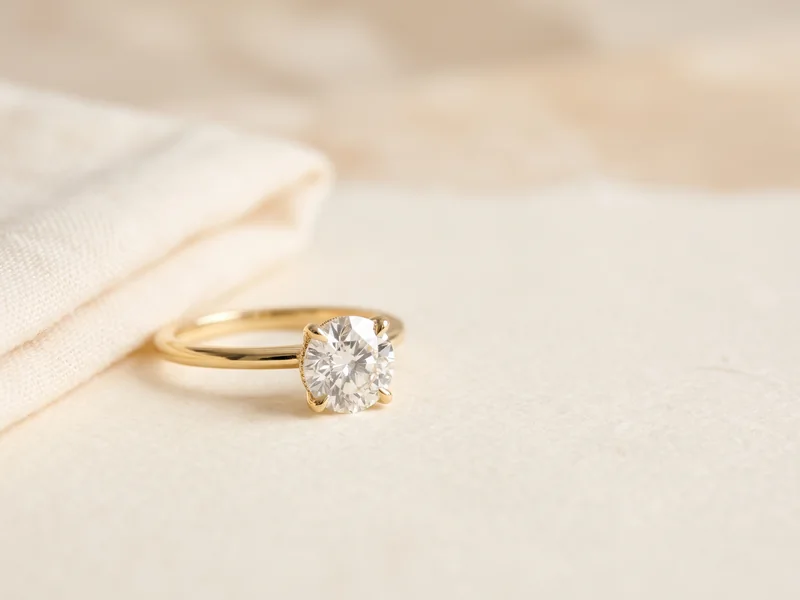
- Round, 0.50–1.00 carat: balanced on any hand. On a small finger a 0.70 carat round, about 5.7 mm across, already reads as a clear solitaire.
The diamond shapes for small hands to think twice about are wide, square ones in large sizes. A 2 carat Asscher (about 7 × 7 mm) or a broad cushion can cover most of a small finger and make it look shorter. They are not wrong, just bolder. Going down in weight solves most of this, and our guide to how 0.25 to 0.4 carat diamonds look on the hand shows how much presence a small stone can still have.
Elongated stones bring one practical point: the ends and tips need protecting. Pears and marquise diamonds have thin points that can chip if they take a knock, so they are usually held with V-shaped claws or a bezel. Our page on claws and bezels for ovals, pears and marquise diamonds covers the options.
Which diamond shapes suit long fingers?
Long, slender fingers have room for both length and width, so almost any shape works. The real question is whether you want to emphasise that length or balance it.
- Emerald cut (ratio about 1.35–1.50): long, parallel step-cut facets (flat, staircase-like rows) echo a long finger. A 1 carat emerald is about 7.0 × 5.0 mm.
- Radiant: a similar rectangular outline with brilliant sparkle and clipped corners. Those trimmed corners are there for strength as much as looks; see why a radiant's clipped corners matter.
- Round and cushion: wider shapes that balance a very slim finger and stop it looking even longer. A cushion at a ratio of 1.00–1.05 is close to square.
- Princess and Asscher: crisp, geometric outlines. On long fingers a 1.50 carat princess, about 6.5 mm square, looks in proportion. The four sharp corners need cover, which is explained in our guide to protecting princess corners with the right claws.
- East-west settings: an oval, emerald or marquise turned sideways across the finger breaks up the length and gives a modern, low look.
- Larger elongated stones: if you want to lean into the length, a 2 carat oval at about 9.5 × 7.0 mm or a long marquise looks balanced on a long hand where it might overwhelm a short one.
If your fingers are long but your knuckles are wide, the ring has to pass over the knuckle and then sits a little loose at the base, which can let a tall stone tip sideways. A slightly wider shape or a lower setting helps it sit straight, and a sizing bead or a comfort-fit inside can stop it spinning.
How do diamond shapes for small hands and long fingers compare?
This table puts every common shape side by side. Measurements are typical for a well-proportioned 1 carat stone; the effect columns describe how each one tends to look, not a rule.
| Shape | Typical ratio | About 1 ct face-up (mm) | On small hands | On long fingers |
|---|---|---|---|---|
| Round | 1.00 | 6.4 × 6.4 | Balanced; keep to 0.50–1.00 ct | Classic; larger sizes look in proportion |
| Oval | 1.35–1.50 | 7.7 × 5.7 | Lengthens; very flattering | Works well; wider ovals balance length |
| Pear | 1.50–1.70 | 8.5 × 5.5 | Slims the finger, point to nail | Elegant; long pears emphasise length |
| Marquise | 1.85–2.10 | 10.0 × 5.0 | Lengthens most; keep the size modest | Dramatic; can be worn east-west |
| Emerald | 1.35–1.50 | 7.0 × 5.0 | Works if kept under about 1 ct | Echoes long fingers; a natural fit |
| Radiant | 1.15–1.35 | 6.5 × 5.2 | Elongated versions lengthen | Balanced and bright |
| Cushion | 1.00–1.15 | 5.8 × 5.5 | Fine in smaller sizes | Softens a very slim finger |
| Princess | 1.00–1.05 | 5.5 × 5.5 | Compact; can look wide in large sizes | Crisp and geometric |
| Asscher | 1.00–1.05 | 5.5 × 5.5 | Bold; best under about 1 ct | Looks in proportion at 1.5 ct+ |
| Heart | 0.90–1.10 | 6.8 × 6.3 (width × length) | Wide for its length; choose 0.50–0.90 ct | Reads clearly at 1 ct+ |
Treat the ratios as typical ranges rather than targets. Fancy shapes have no single correct set of proportions, as we explain in why fancy shapes have no perfect proportion chart. Face-up size, the size you see from above, also depends on depth: a deep stone carries weight underneath and looks smaller than its carat weight suggests. Always compare the millimetre measurements on the report, not carats alone.
Not sure which one is right?
Send us the stones you are looking at and our gemologist will tell you which to choose and why.
What carat size suits small hands?
There is no correct carat weight, but finger coverage gives you a useful starting point. The table below shows how much of the finger a 1 carat round covers at common Australian ring sizes, and the solitaire range many people settle on at each size.
| Ring size (AU) | Approx. inside diameter | 1 ct round covers | Common solitaire range |
|---|---|---|---|
| H | about 14.8 mm | about 43% | 0.50–1.00 ct |
| K | about 16.0 mm | about 40% | 0.70–1.50 ct |
| N | about 17.2 mm | about 37% | 1.00–2.00 ct |
| Q | about 18.4 mm | about 35% | 1.00–2.50 ct |
Most people who want the stone to look generous but still in proportion end up with a centre diamond covering about a third to a half of the finger's width. Above that, the ring reads as a statement piece; below about a quarter, it reads as delicate. Both are valid, and they suit different hands and personalities.
Which hand you wear the ring on matters too. In Australia the engagement ring traditionally sits on the fourth finger of the left hand, and our guide to which finger an engagement ring goes on explains the custom and the exceptions. The right hand is often slightly larger, by about half a size, so a stone that looks big on the left can look smaller on the right. If you are choosing a dress ring rather than an engagement ring, how right-hand rings are worn and sized is worth reading.
Related guideSmall Diamonds: 0.25 to 0.4 CaratWhich settings and band widths flatter small hands?
The setting can change the look of a shape as much as the stone itself. On small hands, three choices make the most difference:
- Band width: a fine band of about 1.8–2.2 mm makes the centre stone look larger by contrast and keeps a small hand from looking crowded. Long fingers can carry 2.5–3.0 mm comfortably. Below about 1.6 mm a band can bend over years of wear, so balance delicacy with strength.
- Setting height: a low setting, with the stone sitting roughly 5–6 mm above the finger, looks neater on a short finger and catches less. Tall cathedral settings suit long fingers and give room for a straight wedding band underneath.
- Halo: a ring of small diamonds, each about 1 mm, adds roughly 2–3 mm to the overall width. That makes a 0.50 carat centre look closer to a 1 carat, but on a very small finger it also increases coverage, so choose a thin halo.
Halos also change the outline: a round halo softens a cushion, and a halo that follows an oval makes it look longer. Our guide to how halo shapes change a centre stone shows the combinations. If the ring will be worn through gym sessions, gardening or a hands-on job, the profile and claw style matter more than the shape, and settings built for active hands covers the lowest, most secure options.
Comfort matters on small hands too, because a band that feels bulky is noticed every day. A rounded inside profile slides over the knuckle more easily; what a comfort-fit band changes on the finger explains the difference. Very fine bands also depend on how they are made, and the difference between cast and hand-fabricated rings explains why metal density matters in a thin shank. For larger hands and men's rings the proportions shift again, with bands commonly 4–8 mm wide; see choosing a men's band for hands-on work.
Do colour and clarity matter more on a small hand?
Smaller stones are generally more forgiving. A 0.50 carat diamond shows less body colour than a 2 carat of the same grade, because light travels a shorter path through it, and inclusions (small internal features) are physically smaller and harder to see. On a small hand wearing a modest stone, many people are happy with G–H colour and VS2–SI1 clarity, as long as the stone is eye-clean, meaning no inclusions visible without magnification at normal distance.
Shape changes this. Elongated brilliants such as ovals, pears and marquise diamonds tend to show warmth at their ends and points, while step cuts such as emeralds and Asschers have open, mirror-like facets that show inclusions more readily, so they usually need VS2 or better. Our guide to the right colour and clarity for each shape gives grade suggestions shape by shape, and which shapes mask colour and inclusions explains why brilliant faceting is more forgiving.
- Brilliant shapes (round, oval, pear, cushion, radiant): G–H colour, VS2–SI1 eye-clean in white metal.
- Step cuts (emerald, Asscher): G or better colour, VS2 or better clarity.
- Yellow or rose gold: I–J colour can look white in most shapes.
How much do different diamond shapes cost, natural or lab-grown?
Every shape here is cut from both natural and laboratory-grown diamond. Lab-grown diamonds are real diamond, with the same hardness (10 on the Mohs scale) and refractive index (about 2.42) as natural, but grown in a laboratory rather than mined; they cost much less. Natural diamonds are rarer. Both should come with an independent grading report from a lab such as GIA or IGI that states which one it is.
| 1 ct, G–H, VS | Price per carat vs a round | Lab-grown (approx. AUD) | Natural (approx. AUD) |
|---|---|---|---|
| Round brilliant | Highest | about $1,000–$3,000 | about $8,000–$16,000 |
| Oval, pear, cushion, radiant | Usually 15–35% lower | about $800–$2,500 | about $5,500–$12,000 |
| Emerald, Asscher, princess, marquise, heart | Usually 15–35% lower | about $800–$2,500 | about $5,000–$11,000 |
These are broad ranges only; prices move with the market and with exact grades. Fancy shapes usually cost less per carat than rounds, partly because more of the rough crystal is kept when they are cut and partly because demand for rounds is higher. For small hands that is a double benefit: an elongated shape at 0.70–0.90 carat can face up as large as a 1 carat round and cost less. Our diamond price comparison by shape sets out the pattern in more detail.
Browse natural and lab-grown diamonds in every shape
How do you choose a diamond shape for your hand? Step by step
- Know your ring size. Get measured in the late afternoon, when fingers are at their usual size, and note the inside diameter in millimetres.
- Decide on the effect. Do you want to lengthen the finger (oval, pear, marquise, north-south), balance it (round, cushion) or emphasise length (emerald, long oval)?
- Check the coverage. Divide the stone's width by your finger's diameter; about a third to a half reads as generous but in proportion.
- Compare millimetres, not carats. Use the report measurements and ratio to see how big each shape will actually look.
- Pick the setting and band together. Aim for 1.8–2.5 mm bands on small hands, a low profile if you are active, and claws or a bezel that protect any points or corners.
- Try it on. Use a sample ring or a paper cut-out of the outline before you commit to a stone.
Free consultation
Talk to a gemologist
Compare stones in person or online with Raj Sood, Graduate Gemologist (GIA), AJP (GIA).
Book a consultationShop this shape
FAQ
Common questions
What diamond shape makes fingers look longer?
Elongated shapes set along the finger make it look longer, with the marquise doing this most, followed by the pear and the oval. A ratio of about 1.35 or more gives a clear lengthening effect.
Do big diamonds look bad on small hands?
Not necessarily. A larger stone simply covers more of a small finger, so it reads as bold. Choosing an elongated shape and a fine band keeps it in proportion.
What carat looks good on a size H or J finger?
Many people with fingers around size H to J choose 0.50–1.00 carat. A 1 carat round covers over 40% of a finger that size, so it already looks substantial.
Are emerald cuts good for small hands?
They can be, especially under about 1 carat and at a ratio of 1.40 or more so they add length. Larger, squarer emerald cuts suit long fingers more naturally.
What is the best diamond shape for long, slim fingers?
Almost any shape works. Rounds and cushions balance very slim fingers, while emerald cuts and long ovals emphasise their length.
Does a thin band make the diamond look bigger?
Yes. A band of about 1.8–2.2 mm makes the centre stone look larger by contrast, though bands thinner than about 1.6 mm may bend over time.

Ask a gemologist
Not sure which diamond to choose?
Raj Sood is a Graduate Gemologist (GIA) and master jeweller. Bring the stones you are considering, or send the reports, and he will tell you honestly which one is better and why.
Keep learning
Related guides
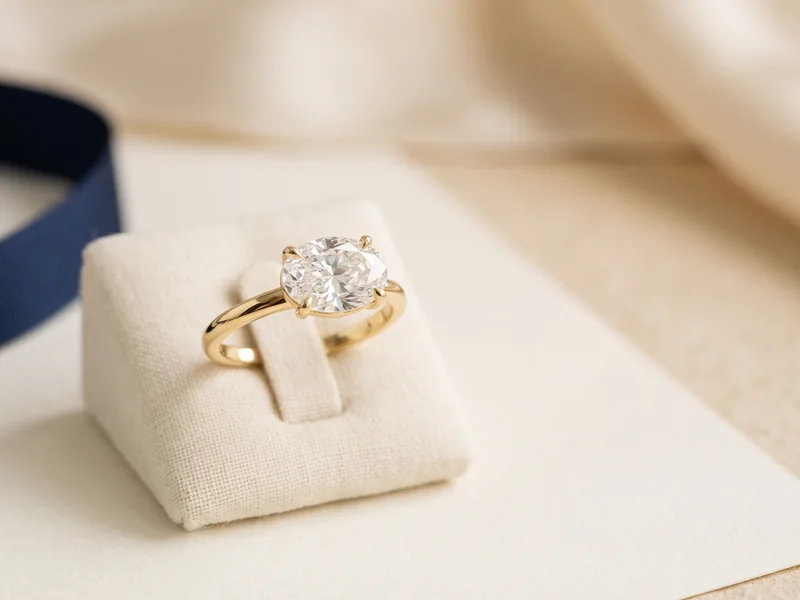 Engagement Rings & SettingsBest Settings for Elongated Diamond Shapes
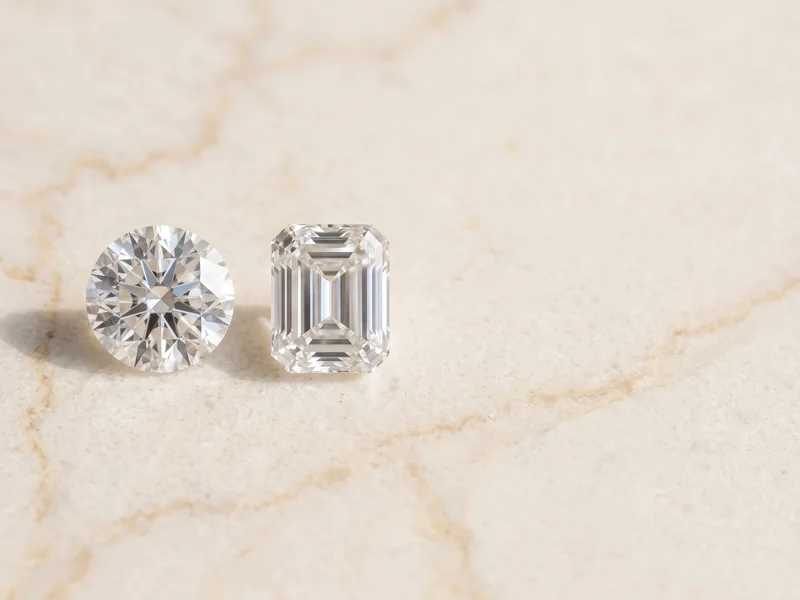 Diamond ShapesDiamond Shape Price ComparisonDiamond ShapesUnderstanding Diamond Shapes
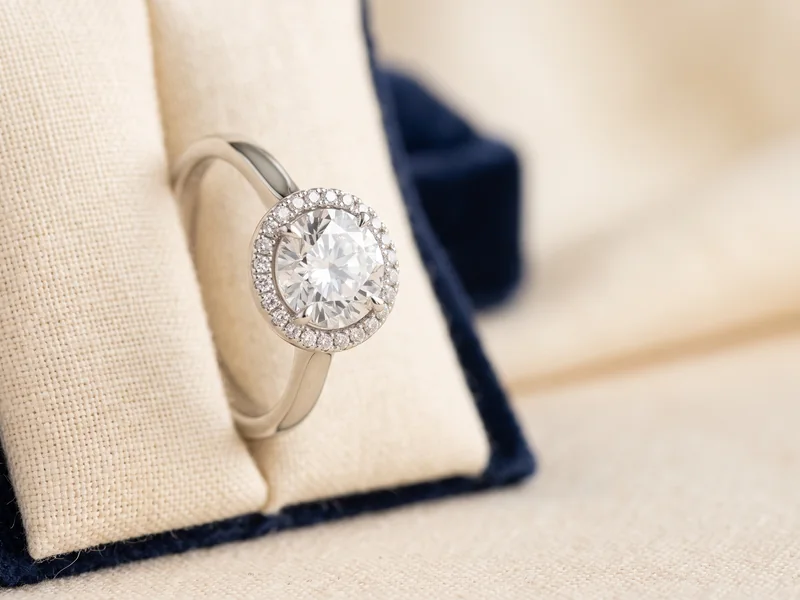 Engagement Rings & SettingsHalo Shapes Explained
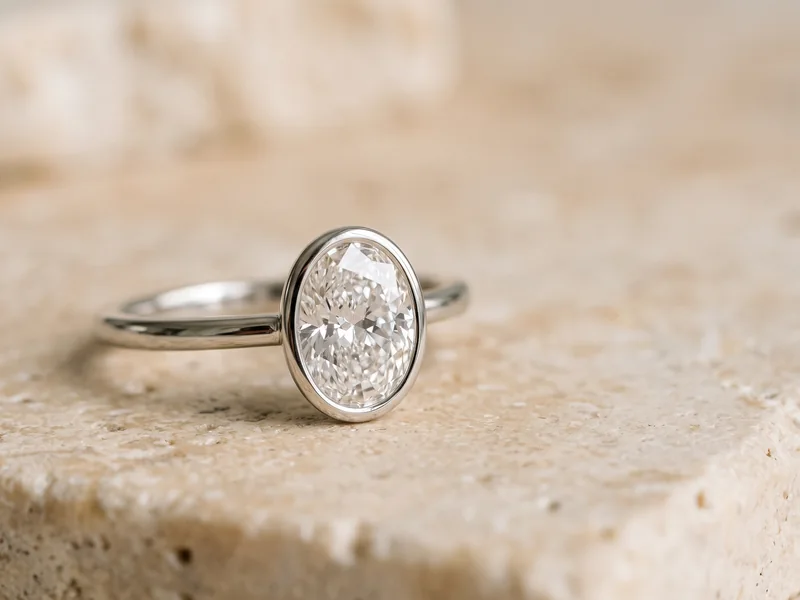 Engagement Rings & SettingsBest Engagement Ring Settings for Active Hands
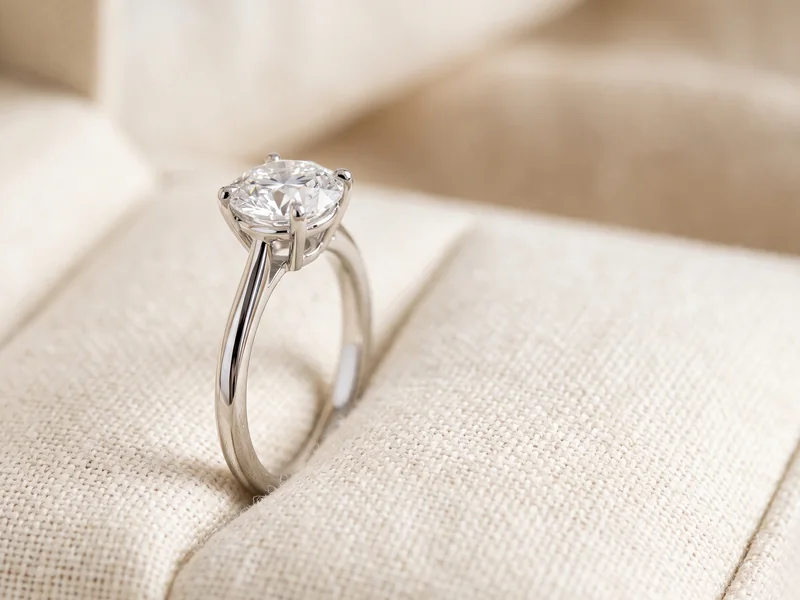 Engagement Rings & SettingsWhich Finger Does an Engagement Ring Go On?
 Engagement Rings & SettingsRight-Hand Rings Explained
 Engagement Rings & SettingsComfort-Fit Engagement Rings: What Changes on the Finger?
Explore more
More guides on this topic
Education