
- Education
- Buying Knowledge & Custom Process
- Rush Custom Engagement Ring Guide: What Can and Cannot Be Rushed
Buying Knowledge & Custom Process
Rush Custom Engagement Ring Guide: What Can and Cannot Be Rushed
A proposal date can arrive faster than a ring. Here is what a rush custom engagement ring can realistically achieve in Australia, which stages are fixed, and how GST refunds and insurance fit around a tight deadline.
 Reviewed by Raj Sood, Graduate Gemologist (GIA), AJP (GIA)Master jeweller and Graduate Gemologist (GIA) · reviewed 4 November 2026
Quick answer
A rush custom engagement ring can usually be finished in about two to three weeks if the diamond is already in Australia and you approve the CAD design quickly. Decisions, sourcing and approvals can be rushed. Casting, setting, finishing, grading reports, hand engraving and properly arranged insurance cannot be cut short without risking quality.
What is a rush custom engagement ring?
A rush custom engagement ring is a ring designed and made for you, either from scratch or from a modified design, on a shorter timeline than usual because there is a fixed date: a proposal on an overseas trip, an anniversary, a family gathering. Nothing about the materials changes. It is the same diamond, the same 18ct gold or platinum, and the same casting and setting steps. What changes is how quickly decisions are made and how tightly the stages are scheduled back to back.
That distinction matters, because most of a custom ring's timeline is not bench time. It is waiting: for a diamond to arrive, for you to approve a design, for a casting batch to run. Those waits can often be shortened. The physical work of making and finishing a ring mostly cannot, at least not without risking how it looks and how long it lasts.
If you are still deciding whether custom is the right path at all, start with our complete engagement ring buying guide and our guide to weighing custom against a ready-made ring. A ready-made ring is sometimes the honest answer when the date is only days away.
How long does a custom engagement ring take normally?
A fully custom ring in Australia usually takes about 4 to 8 weeks from first consultation to collection. The table shows each stage, what a typical and a rushed version look like, and how much room there is to compress it. Each stage is explained further in our walk-through of each stage from CAD to casting.
| Stage | Typical time | Rushed time | Can it be rushed? |
|---|---|---|---|
| Consultation and brief | One meeting, about 1 hour | Same week | Yes: book early and come prepared |
| Diamond sourcing | 2 days to 3 weeks | 1–5 days if the stone is in Australia | Partly: depends where the stone is |
| CAD design, first render | 3–7 business days | 1–3 business days | Partly: depends on complexity |
| Design revisions | 1–2 days per round | Same or next day | Yes, if you reply quickly |
| 3D print or wax model | 1–2 days | 1 day | Slightly |
| Casting | 3–7 business days | 2–4 business days | Limited: set by the casting schedule |
| Clean-up and pre-polish | 1–3 days | 1–2 days | Limited |
| Stone setting | 1–3 days | 1–2 days | No, beyond scheduling |
| Final polish, plating, quality check | 1–2 days | 1 day | No |
| Engraving | Same day (laser) to about a week (hand) | Laser only | Hand engraving: no |
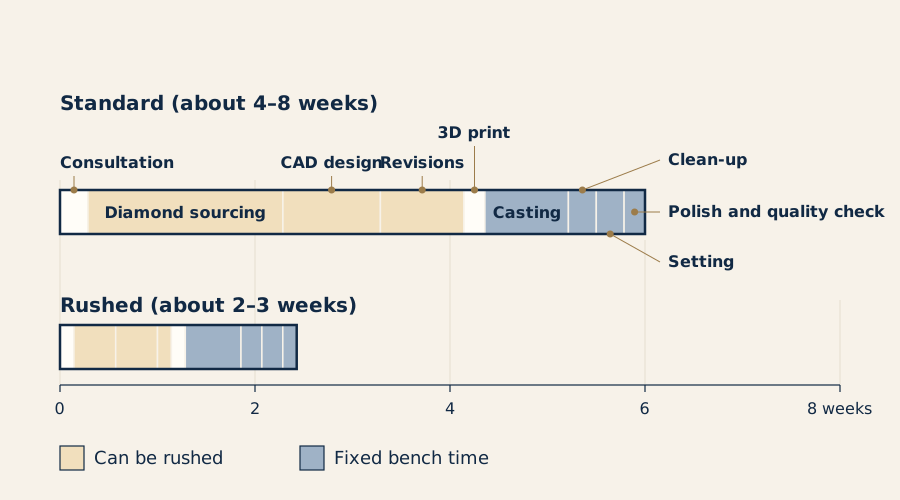
CAD (computer-aided design) is software that builds the ring as a precise 3D model before any metal is used. Our page on how CAD renders are used to approve a design shows what you will be asked to sign off. The approved model is 3D printed in castable resin and turned into metal by lost-wax casting: the resin is burnt out of a plaster mould and molten metal is poured into the hollow it leaves.
Some rings are hand-fabricated instead, with the jeweller forming the setting from wire and sheet metal. That skips the casting queue but uses more bench hours, so it is not automatically faster. The difference between handmade and CAD-built rings covers when each method makes sense.
Which parts of a custom engagement ring timeline can be rushed?
Almost everything that can be sped up sits on your side of the counter. These are the places where a tight deadline is genuinely won:
- Decisions before the consultation. Settle the shape, metal, budget range and ring size before you walk in, and bring photos of rings you like. If the shape is still open, a side-by-side look at every diamond shape helps narrow it down quickly. Knowing what to expect at your first design consultation means the meeting ends with a brief, not a list of open questions.
- Diamond choice. A stone already held in Australia can be in the workshop within days. Holding out for one exact combination of grades that has to come from overseas can add one to three weeks.
- Design complexity. Starting from an existing design and changing the details is far quicker than drawing from a blank page. Our guide to how semi-custom differs from fully custom explains where the line sits.
- Approvals. Reply to CAD renders on the day you receive them, and aim for one or two revision rounds rather than four or five. Each round usually costs one to two days.
- Payment. Most custom work starts once a deposit clears. Bank transfers between different banks can take a business day or two, so pay early in the week.
- Metal. Common alloys such as 18ct yellow, white and rose gold are usually cast often. Platinum, palladium or unusual colours may wait for a less frequent casting run.
- Extras. Laser engraving can be done in a day. A matching wedding band can be designed after the proposal, when there is no deadline.
Done well, these choices can take two to four weeks off a standard timeline without touching the quality of the ring itself.
What cannot be rushed in a custom engagement ring?
These stages are limited by metal, stone and skill rather than by scheduling. Pushing them harder does not make the ring sooner; it makes it worse.
- Casting. The mould has to be burnt out at the right temperature and the metal poured and cooled correctly. Rushing it causes porosity, tiny holes in the metal that appear during polishing and can weaken claws. Read about the lost-wax casting process explained to see why the steps run in a fixed order.
- Clean-up and polishing. The cast is filed, sanded through several finer grits and polished. Skipping a grit leaves fine scratches that show once the ring is worn.
- Stone setting. Claws and seats are cut to the diamond's exact dimensions, often to a few hundredths of a millimetre. A setter working too fast can chip a thin girdle (the outer edge of the stone). See why the setting is built to the diamond's exact measurements.
- Pavé and micro-pavé. Bands set with dozens of small diamonds are worked stone by stone under magnification. A pavé band can add several days of setting on its own.
- Rhodium plating. White gold is usually plated with rhodium, a bright white metal, which only bonds properly to a perfectly clean surface.
- Grading reports. A natural diamond that has not yet been graded can take several weeks at a laboratory such as GIA. If you need a report, choose a stone that already has one.
- Imported stones. International courier and customs clearance usually take several days and can stretch past a week.
- Holiday shutdowns. Many casting houses and suppliers close for around two weeks over Christmas and New Year. A Christmas or New Year proposal needs the ring ordered well before December.
- Hand engraving. Done with gravers under a microscope, it cannot be hurried and usually adds days.
Ask which steps happen in-house and which go to outside casters or setters, because outside work runs on someone else's calendar. Our list of questions worth asking before you pay a deposit includes the timing questions to raise on day one.
Not sure which one is right?
Send us the stones you are looking at and our gemologist will tell you which to choose and why.
How fast can a rush custom engagement ring be made?
The realistic floor for a fully custom ring, with a diamond already in the country, quick approvals and a simple design, is about two to three weeks. Anything faster usually means a ready-made or semi-custom ring. This comparison shows where each route lands.
| Route | Realistic timeline | What you choose | Trade-off |
|---|---|---|---|
| Ready-made ring with a set diamond | Same day to a few days (sizing) | Ring and stone from what is available | Least personal |
| Semi-custom: existing setting, your diamond | About 1–3 weeks | Stone, metal, small design changes | Limited design freedom |
| Rush fully custom, diamond in Australia | About 2–3 weeks | Everything, with fast decisions | Few revision rounds, simpler details |
| Standard fully custom | About 4–8 weeks | Everything | Needs planning time |
| Complex design or rare stone | About 8–12 weeks or more | Everything | Very little can be compressed |
The design itself changes the timeline. A four- or six-claw solitaire is the quickest custom ring to make well. A halo, a hidden halo (a ring of small diamonds under the centre stone), micro-pavé, filigree or a split shank each add design, casting or setting time. For a very short deadline, the semi-custom route for tight deadlines often gives you the stone you want in a proven setting, and why hand-fabricated settings take longer explains why hand-built pieces rarely suit a rush.
Related guideWhat Happens at a Custom Engagement Ring Consultation?Is a natural or lab-grown diamond faster for a rush custom ring?
Lab-grown diamonds are real diamond, grown in a laboratory by CVD (chemical vapour deposition) or HPHT (high pressure, high temperature) rather than mined. They have the same hardness, 10 on the Mohs scale, and the same refractive index of about 2.42 as natural diamond. They cost much less than natural diamonds of the same size and grades, and Australian suppliers hold a wide range of sizes, so a suitable stone can often reach the workshop within days.
Natural diamonds formed deep in the earth over a very long time and are rarer. Many are held in Australian inventory too, but a specific combination, say a 1.50 ct oval cut diamond in D colour and VVS clarity with a GIA report, may have to be called in from overseas. Being flexible by one colour or clarity grade often widens the local choice enough to save a week or more. Our guide to choosing colour, clarity and carat on a deadline shows which grades are worth trading.
Either way, the setting cannot be finalised until the stone's real measurements are confirmed. Grading reports list them to 0.01 mm, and two stones of the same carat weight can differ by a few tenths of a millimetre in width and depth. That is why millimetre-accurate stone measurements come before the CAD file is locked. Coloured gemstones, natural pink diamonds and matched pairs of side stones are the slowest to source, so allow extra time if your design includes them.
Explore custom jewellery, natural and lab-grown diamonds
Can you claim a GST refund on an engagement ring under the TRS?
If you are proposing overseas, the Tourist Refund Scheme (TRS) may let you claim back the GST (goods and services tax) on the ring when you leave Australia. It is run by the Australian Border Force and the Australian Taxation Office, and it is open to Australian residents as well as visitors. A rushed ring has to meet every condition, and the timing rules are the ones that catch people out.
| TRS rule | What it means for a custom ring |
|---|---|
| Bought no more than 60 days before you depart | The final payment and tax invoice need to fall inside this window. A long custom job paid in full early can miss it. |
| At least AUD 300 (GST-inclusive) with one business | An engagement ring easily clears this. Invoices from the same business, under one ABN, can be combined. |
| Original tax invoice | It must show the business name and ABN, a description of the ring, the price and the GST. |
| Carried on board or worn | The ring goes in your hand luggage or on your person, never in a checked bag. |
| Claim at the airport TRS facility | Usually at least 30 minutes before departure, showing the ring, passport, boarding pass and invoice. |
| Refund amount | The GST component, which is one-eleventh of the GST-inclusive price, paid to a card or an Australian bank account. |
The catch for Australians is coming home. If you bring the ring back into Australia, you must declare it on arrival. It counts towards your duty-free allowance for general goods (AUD 900 for an adult), and GST may be payable above that. For most residents who will live here with the ring, the refund is effectively temporary, and making a claim without declaring the ring on return can lead to penalties.
A different case is a ring sent directly by the jeweller to an overseas address, which can be treated as a GST-free export. You would not claim TRS on top, the destination country may charge its own import taxes, and international courier adds days to a schedule that is already tight. Rules change, so check the current requirements with the Australian Border Force before you travel.
How do you insure an engagement ring before the proposal?
The riskiest stretch for a new ring is the gap between collection and proposal: hidden in a sock drawer, carried through airports, kept in a jacket pocket on the big day. Arrange engagement ring insurance before you collect, not after you have asked.
- Home contents policies often cap unspecified jewellery at roughly AUD 1,000–3,000 per item. List the ring as a specified item so it is covered for its full value.
- An insurance valuation describes the ring in detail, including diamond measurements, grades, metal and weight, and gives a replacement value. It is usually prepared by a registered valuer, such as a member of the National Council of Jewellery Valuers, and can take a few days, so request it when you order.
- Start date. Ask for cover from collection day. Some insurers accept the tax invoice first and the valuation later.
- Travel insurance often has low per-item limits, roughly AUD 500–1,500, and excludes valuables in checked luggage or left unattended. Check whether your contents policy covers specified items worldwide.
- Standalone jewellery insurance is another option if your contents policy does not suit.
- While it is being made, the diamond sits in the jeweller's care. Add how it is insured to a checklist of questions for your jeweller.
Keep the grading report, valuation and clear photos of the ring together, and note any laser inscription on the diamond's girdle. That record makes a claim, or identifying the stone after a repair, far simpler.
How to plan a rush custom engagement ring: step by step
- Fix the date and work backwards. Build in at least a week of buffer for a revision, a courier delay or a sizing check.
- Confirm the ring size. Borrow a ring they already wear on their ring finger, or ask a trusted friend. A wrong size means resizing later, which is harder on pavé bands.
- Set your budget and must-haves. Shape, metal, centre stone size and one or two design features. Our comparison of prices across diamond shapes shows how the shape you choose affects the budget.
- Book the consultation and choose the diamond. Favour stones already in Australia with an existing grading report.
- Hold the stone and confirm its measurements before the CAD design begins.
- Approve the CAD design quickly. Reply the same day and aim for no more than two revision rounds.
- Pay on schedule. If you plan a TRS claim, make sure the final payment and tax invoice fall within 60 days of departure.
- Arrange insurance and a valuation so cover starts on collection day.
- Collect early and check the ring. Look at the claws, the fit and that the report matches the stone, then carry it in your hand luggage.
Any unfamiliar word along the way, from girdle to rhodium, is explained in our glossary of jewellery terms.
Free consultation
Talk to a gemologist
Compare stones in person or online with Raj Sood, Graduate Gemologist (GIA), AJP (GIA).
Book a consultationShop this shape
FAQ
Common questions
How long does a custom engagement ring take in Australia?
Usually about 4 to 8 weeks from consultation to collection. With a diamond already in Australia, a simple design and quick approvals, a rushed ring can often be ready in about two to three weeks.
Can a custom engagement ring be made in one week?
A fully custom ring in one week is rarely realistic, because casting, setting and polishing need several days each. For a one-week deadline, a ready-made ring or a semi-custom setting with a stone already in stock is the safer choice.
Does rushing a custom ring cost more?
It depends on the jeweller. Some charge for priority casting or after-hours bench work, others do not if the schedule allows, so ask for any rush fee in writing before you pay a deposit.
Can I claim a GST refund on an engagement ring when I leave Australia?
Possibly, under the Tourist Refund Scheme, if you buy it within 60 days of departure, spend at least AUD 300 with one business, keep the original tax invoice and carry the ring on board. Australian residents who bring the ring back must declare it on return, and GST may be payable.
Is my engagement ring covered by home contents insurance?
Often only up to a set limit for unspecified jewellery, which may be well below the ring's value. Listing it as a specified item with a valuation is the usual way to cover it fully.
Is a lab-grown diamond quicker to get for a custom ring?
Often, because a wide range of lab-grown sizes is held in Australia. Natural diamonds can also be quick if a suitable stone is held locally, but a very specific natural stone may need to come from overseas.

Ask a gemologist
Not sure which diamond to choose?
Raj Sood is a Graduate Gemologist (GIA) and master jeweller. Bring the stones you are considering, or send the reports, and he will tell you honestly which one is better and why.
Keep learning
Related guides
 Buying Knowledge & Custom ProcessFrom CAD to Casting: How a Custom Ring Is MadeBuying Knowledge & Custom ProcessCustom vs Semi-Custom Engagement Rings
 Buying Knowledge & Custom ProcessQuestions to Ask Before Ordering a Custom Engagement Ring
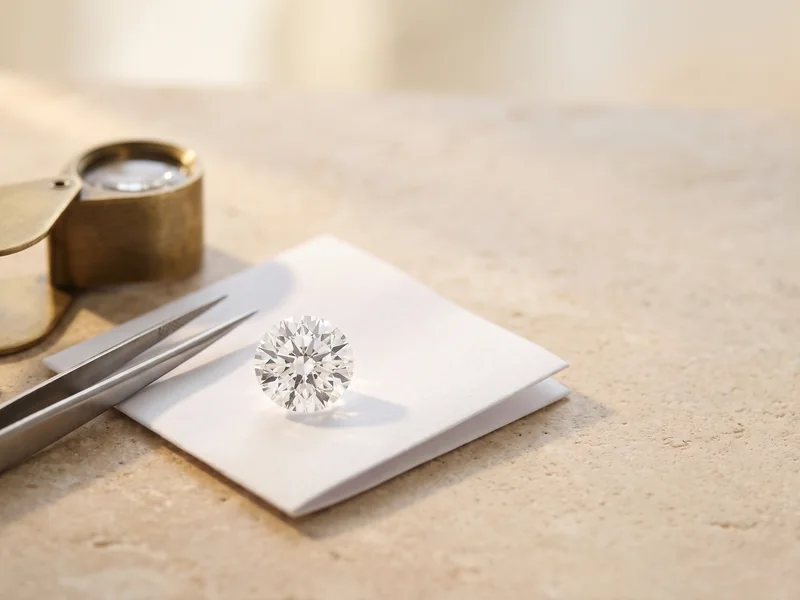 Buying Knowledge & Custom ProcessWhat Happens at a Custom Engagement Ring Consultation?Buying Knowledge & Custom ProcessEngagement Ring Buying GuideBuying Knowledge & Custom ProcessShould You Choose a Custom Engagement Ring or a Ready-Made Ring?Buying Knowledge & Custom ProcessHow CAD Is Used in Custom Engagement Ring Design
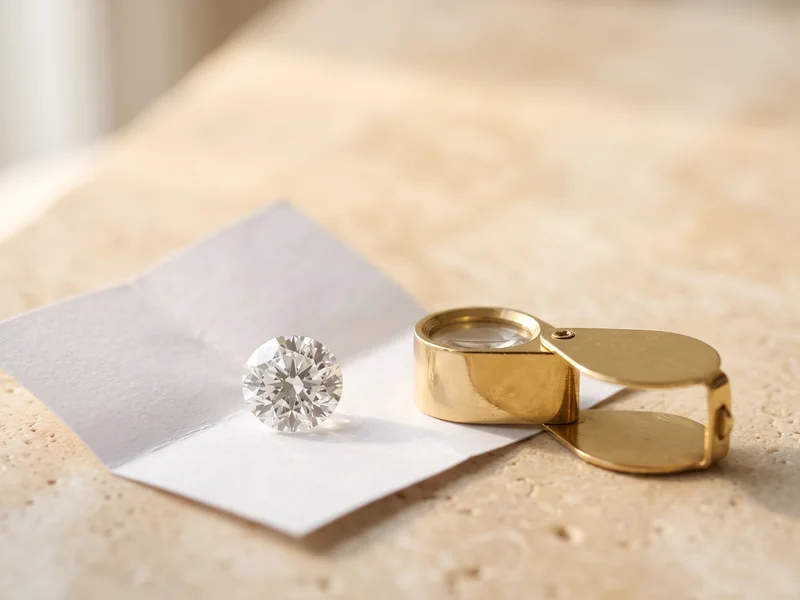 Buying Knowledge & Custom ProcessWhy Exact Diamond Measurements Matter in a Custom Setting
Explore more
More guides on this topic
Education