
- Education
- Buying Knowledge & Custom Process
- Why Exact Diamond Measurements Matter in a Custom Setting
Buying Knowledge & Custom Process
Why Exact Diamond Measurements Matter in a Custom Setting
A custom ring is made for one stone only. Here is why the millimetre measurements of your diamond matter more than its carat weight, and how they flow from the grading report into the CAD design, the setting and your insurance valuation.
 Reviewed by Raj Sood, Graduate Gemologist (GIA), AJP (GIA)Master jeweller and Graduate Gemologist (GIA) · reviewed 4 November 2026
Quick answer
Diamond measurements are the length, width and depth of a stone in millimetres, recorded to 0.01 mm on its grading report. A custom setting is built around those numbers, not carat weight: the seat, claws, bezel, halo and height depend on them. Being out by 0.2 mm can mean loose claws, a gappy halo or a high-set stone.
What do diamond measurements on a grading report mean?
Every diamond graded by an independent laboratory such as GIA or IGI comes with a line of measurements near the top of the report. They are given in millimetres to two decimal places, and they describe the physical size of that one stone. For a custom ring, this line matters more than any other, because it is what the setting is designed around.
For a round brilliant, the measurements look like this: 6.42–6.46 × 3.95 mm. The first two figures are the minimum and maximum diameter across the girdle (the thin edge around the widest part of the stone), and the third is the total depth, from the table (the flat top facet) down to the culet (the point or tiny facet at the bottom). No round diamond is perfectly circular, so the lab measures it in many directions and reports the smallest and largest result.
For fancy shapes such as ovals, pears, princesses and emerald cuts, the format changes to length × width × depth, for example 7.85 × 5.62 × 3.68 mm. Divide the length by the width and you have the length-to-width ratio, which tells you how elongated the stone is.
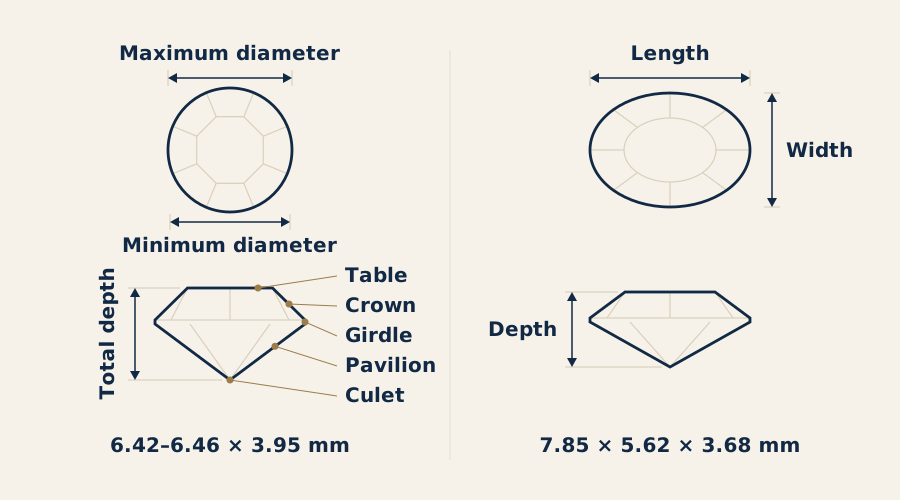
Alongside the millimetre figures, the report gives proportions as percentages: depth % (total depth divided by average width), table % (table width divided by average width) and a description of the girdle thickness, such as thin to medium. All of these affect how the stone sits in metal. If you are still at the stage of choosing a diamond at all, start with our complete engagement ring buying guide, and if a term on the report is new to you, our plain-English jewellery glossary explains it.
Why isn't carat weight enough to design a setting?
Carat is a unit of weight (one carat is 0.2 grams), not size. Two diamonds of exactly the same weight can have quite different widths, because a deeper stone carries more of its weight underneath, where you cannot see it, and a shallower stone spreads that weight across a wider face. A thick girdle also adds weight without adding much width.
Here is how depth changes the size of a 1 carat round brilliant. The figures are approximate, but the pattern is consistent:
| Depth % | Approximate diameter | Approximate total depth | What it means for the setting |
|---|---|---|---|
| 58% | about 6.5 mm | about 3.8 mm | Wider seat, lower profile |
| 61% | about 6.4 mm | about 3.9 mm | A typical well-cut round |
| 64% | about 6.3 mm | about 4.0 mm | Narrower seat, sits higher above the finger |
A difference of 0.2 mm across the stone sounds tiny, but a setter works to hundredths of a millimetre. Claws designed for a 6.5 mm stone will close on a 6.3 mm stone at a different angle, and a bezel made for one will not hold the other. That is why a jeweller making a custom ring asks for the report, or better still the diamond itself, before finalising the design. Carat weight tells you about price and rarity; the millimetre measurements tell the workshop how to build the ring.
Shape changes the picture again. An oval or pear spreads its weight over a longer outline than a round of the same weight, so it looks bigger face-up and needs a differently proportioned head. Our comparison of how face-up size varies between diamond shapes sets out the millimetre differences.
The same applies to natural and lab-grown diamonds equally. A laboratory-grown diamond and a natural diamond with identical measurements will fit the same setting, because the setting only cares about shape and size. The report will state clearly whether the stone is natural or lab-grown.
How do diamond measurements shape a custom setting?
In a custom ring, the designer builds a 3D computer model (CAD, computer-aided design) of the setting with a digital copy of your diamond sitting inside it, drawn to the measurements on the report. Every part of the head (the part of the ring that holds the stone) is then sized around that model. Our guide to each stage from CAD model to cast ring follows the whole journey; these are the parts the measurements control:
- The seat: a small groove the setter cuts into each claw or around the inside of a bezel, where the girdle locks in. Its position depends on the stone's width and crown height (the part above the girdle).
- Claw spacing and length: claws are placed so they close over the crown just above the girdle. Too far apart and they barely grip; too close and they cover too much of the stone.
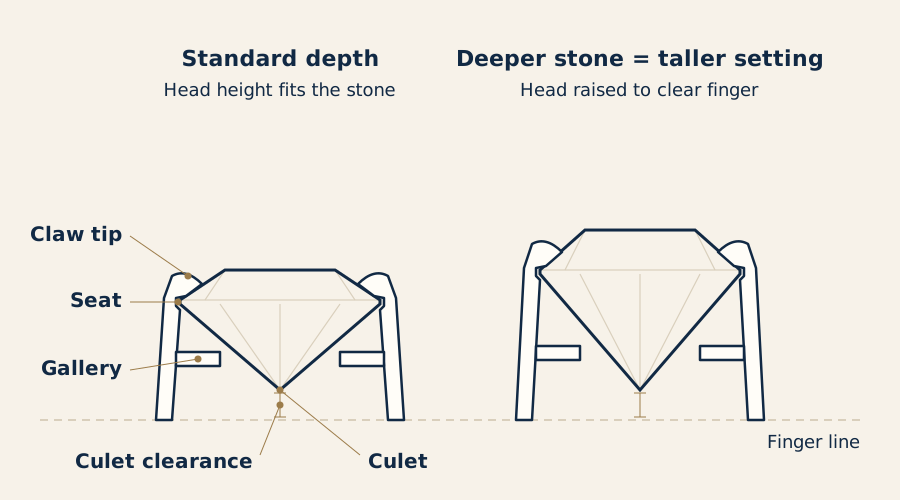
- Setting height: the total depth decides how high the head must be so the culet clears the finger and any band underneath. A deeper stone means a taller ring.
- Gallery and basket: the open framework under the stone is drawn to the pavilion (the lower half), so it supports without touching the culet.
- Halo opening: a halo of small diamonds is drawn to follow the centre stone's outline with a consistent tiny gap.
Different settings tolerate different amounts of error. Our guide to how claw, bezel and channel settings hold a stone covers each style in more depth; this table shows how exact each one needs the numbers to be.
| Setting style | How closely it must fit | If the measurements are off |
|---|---|---|
| Four or six claws | Most forgiving; claws can be adjusted a few tenths of a millimetre | Claws close at odd angles, look uneven or grip too little |
| Bezel or half-bezel | Very close; the metal rim is pressed over the girdle all round | Gaps along the edge, or the stone will not drop into the seat |
| Halo | Opening is drawn to the centre stone's exact outline | Visible gap between centre and halo, or the halo must be remade |
| Channel | Walls spaced to the stone width; side stones must match | Loose stones or crooked rows |
| Flush or gypsy | Hole drilled and seat cut to the girdle diameter | Stone sits too deep, too proud or tilted |
| Tension style | Extremely tight; stone held in notches by pressure | Not safe to set; the ring may need remaking |
Which diamond shapes need the most exact measurements?
Every shape needs accurate figures, but some are far less forgiving than others.
- Out-of-round rounds: when the minimum and maximum diameter differ by more than about 1%, a round is slightly oval. You will not notice it face-up in a claw setting, but a bezel or halo will show it. The setter needs both figures, not just the average.
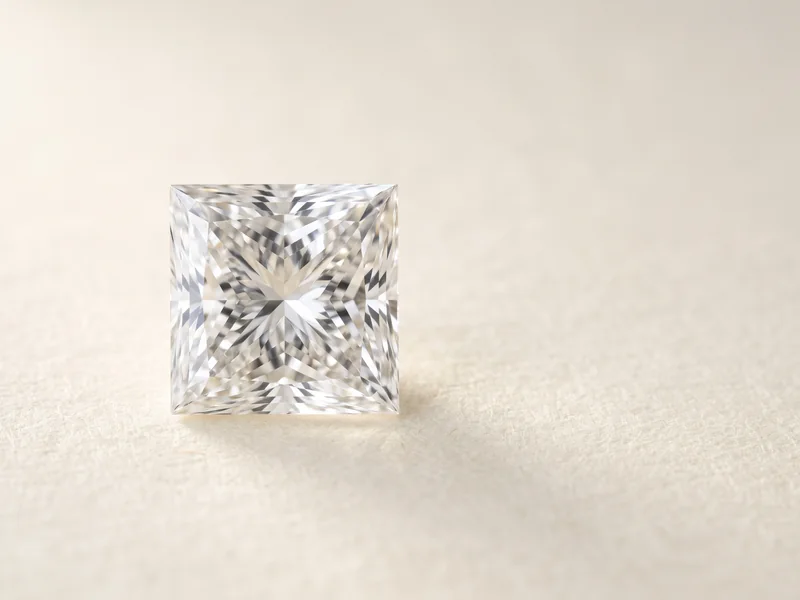
- Princess cuts: the four sharp corners are the weak points and must sit inside V-claws or corner claws. A small change in width moves the corners, so the claws must be placed to the stone's real outline. See our page on settings that protect a princess cut's corners.
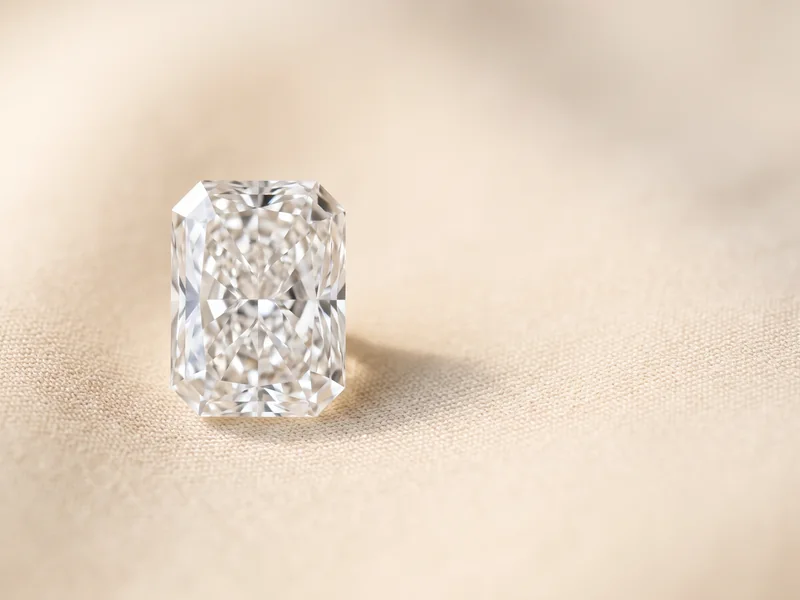
- Radiant and emerald cuts: the corners are clipped (cut off at an angle), and the claws are usually placed on those clipped faces. The length of each clipped edge varies from stone to stone; our guide to why a radiant's clipped corners change the claw position explains the detail.
- Pears, marquises and hearts: the point must land exactly inside a V-claw. If the length is out by even 0.1 mm, the V-claw either fails to cover the tip or crushes against it. Our heart setting examples with protective V-claws show how the claw is drawn to the tip.
- Ovals and cushions: two ovals of the same weight can have ratios of 1.30 and 1.45, which changes the shape of the halo, the claw positions and how the wedding band sits beside it.
Coloured gemstones add another layer. Commercial sapphires and other gems are often cut to calibrated sizes such as 7 × 5 mm, but finer stones are usually cut to save weight from the rough, with uneven outlines and deep pavilions. They may also come without a lab report, so the jeweller measures the stone directly. Sapphire (9 on the Mohs hardness scale) and softer gems such as emerald (7.5–8) also need a seat cut with less pressure, which makes an accurate fit even more important.
Not sure which one is right?
Send us the stones you are looking at and our gemologist will tell you which to choose and why.
What happens if the measurements are wrong?
Most problems are caught at the CAD or wax stage, before metal is cast. When they are not, the result is usually one of these:
- Loose stone: claws or a bezel made too large cannot be closed tightly enough, and the stone can rotate or fall out later.
- Stressed stone: a seat cut too tight puts pressure on the girdle. Diamond is 10 on the Mohs scale but can still chip along its cleavage planes, especially at thin girdles and points.
- Uneven look: claws that close at different heights, a halo with a gap on one side, or a centre stone that tilts.
- Ring sits too high: a deeper stone than expected pushes the culet down, so the head has to be raised and the ring snags more easily.
- Wedding band will not sit flush: if the head grows, a straight band may no longer sit against the engagement ring.
- Remake: in the worst case, the head or the whole ring is recast.
Detailed designs carry more risk because there are more parts drawn to the stone. Floral settings with petal-shaped claws are a good example: each petal is modelled to curve over the crown at a precise point, so a stone that is a little wider or deeper than expected changes how the flower looks. The same is true of hidden halos and intricate galleries, which are covered in our overview of setting styles for diamonds and coloured gemstones.
How are diamond measurements taken and checked?
Grading laboratories measure diamonds with non-contact optical scanners, which rotate the stone in front of a camera and build a 3D profile. These are accurate to within a few hundredths of a millimetre. A jeweller checking a loose stone at the bench usually uses a digital calliper or a Leveridge gauge (a spring-loaded measuring tool made for gemstones), both reading to 0.01 mm.
Before any design work starts, a careful workshop does three things:
- Confirms identity: checks any laser inscription on the girdle under magnification against the report number (or compares inclusions with the report's plot if there is none), so the measurements belong to the stone in hand.
- Re-measures: a small difference of 0.01–0.03 mm from the report is normal. A bigger gap is a reason to stop and check.
- Notes the details: girdle thickness, any natural (a small unpolished patch of original crystal surface on the girdle) and any chips, all of which affect where the claws should land.
Once a diamond is set, its depth and full outline can no longer be measured accurately, because metal covers part of it. That is one reason the measurements should be recorded before setting, and why buying the stone loose gives the most control. It applies whether you choose a natural diamond or a laboratory-grown one.
Browse natural and lab-grown diamonds for a custom ring
Why do diamond measurements matter for insurance and valuations?
In Australia, most jewellery insurance, whether a contents policy or a specialist policy, relies on a written valuation to set the insured amount and to replace an item if it is lost or stolen. A thorough valuation lists the diamond's measurements, weight, shape, colour, clarity, report number and the metal type and weight of the ring. If the ring has to be replaced, the insurer or their supplier uses those figures to source a like-for-like stone and remake the setting.
Vague descriptions cause trouble. "1 ct round diamond, good quality" leaves too much room for argument; "6.42–6.46 × 3.95 mm round brilliant, 1.01 ct, G VS1, GIA report number…" does not. Measurements also help identify a recovered stone, and they let a new setting be made from the existing CAD file.
When a set stone has no report, a valuer estimates its weight from the measurements. For a round brilliant, a common formula is average diameter² × depth × 0.0061. The 6.44 mm average and 3.95 mm depth above give about 1.00 ct. Different shapes use different factors, and the result is an estimate only, which is why a valuation should say whether the weight was measured loose or estimated.
Many insurers suggest updating a valuation every two to three years, as diamond and metal prices move. Lab-grown diamond prices in particular have changed quickly, so an older valuation may no longer match the replacement cost in either direction. Always check your own policy wording.
Stones from overseas: some people buy a loose diamond abroad and bring it home for a custom setting. Goods imported into Australia may attract 10% GST at the border, and items over the low-value threshold (AUD 1,000) need a formal import declaration. Going the other way, travellers leaving Australia can sometimes claim the GST back on goods bought here through the Tourist Refund Scheme (TRS), generally for purchases of AUD 300 or more from one business within 60 days of departure, carried with you. Check the current Australian Border Force rules before you rely on either. Whichever way the stone travels, have it measured again when it reaches the workshop.
When should the diamond be chosen in the custom ring process?
Ideally, first. When the diamond is chosen before the CAD model is finalised, the design is drawn to the real stone and there are no surprises at setting. Our guide to what to bring to a custom ring consultation covers this; the report, or the stone itself, is the most useful thing you can bring.
Sometimes the design comes first, for example when you want to propose with a setting and choose the stone together later. In that case the head is drawn to a target size, such as a 6.5 mm round, and the stone must then fall within a narrow range of that figure. The claws can be adjusted a little; a bezel or halo usually cannot. Semi-custom rings work this way too, using standard heads in set sizes, which is one of the real differences between fully custom and semi-custom rings. If you are still deciding which route suits you, our page on weighing a custom ring against a ready-made one sets out the trade-offs.
Related guideCustom vs Semi-Custom Engagement RingsTight deadlines do not change the measuring steps. Sourcing a stone can sometimes be sped up; confirming its measurements and checking the model against them should never be skipped. Our guide to which custom steps can safely be rushed explains where time can and cannot be saved.
How to make sure your custom setting fits your diamond: step by step
- Get the grading report. Note the full measurements line, depth %, table % and girdle thickness, and confirm whether the diamond is natural or lab-grown.
- Have the stone checked in person. The jeweller matches any girdle inscription to the report and re-measures with a gauge or calliper.
- Design to the real numbers. At the first design meeting, make sure the CAD model uses the measured figures, not a generic size for the carat weight.
- Check height and clearance. Review the side view for culet clearance, how far the head sits above the finger and how a wedding band will sit alongside.
- Approve a resin or wax print. A 3D-printed model shows proportions on your hand before metal is cast; this is part of the CAD and casting process.
- Set and inspect. After setting, check that every claw sits evenly, the stone is level and there are no gaps in a bezel or halo.
- Record it. Ask for a valuation listing the diamond's measurements, weight, grades and report number, and keep it with your insurance papers.
If you are planning the whole ring from scratch, our guide to choosing the diamond and ring together puts these steps in the wider context of budget, shape and metal.
Free consultation
Talk to a gemologist
Compare stones in person or online with Raj Sood, Graduate Gemologist (GIA), AJP (GIA).
Book a consultationShop this shape
FAQ
Common questions
Do two diamonds of the same carat weight fit the same setting?
Not necessarily. A 1 ct round can measure anywhere from about 6.3 mm to 6.5 mm across depending on its depth and girdle, so a setting made for one may not hold the other properly. The setting should be made to the millimetre measurements, not the weight.
Can I supply my own diamond for a custom ring?
Usually yes. Bring the grading report and the stone so the jeweller can confirm its identity, measure it and check for any chips before the design is drawn around it.
What does out of round mean on a diamond report?
It means the minimum and maximum diameters of a round diamond differ noticeably. A difference under about 1% is normal and invisible in claws, but a bezel or halo has to follow the stone's true outline.
Why does diamond depth matter for the setting height?
The total depth sets how far the culet sits below the girdle. A deeper stone needs a taller head so the culet clears the finger, which makes the ring sit higher.
Can a lab-grown diamond replace a natural diamond in the same setting?
Yes, if its measurements and shape match closely. The setting only responds to size and outline, though the replacement must still be disclosed and valued as laboratory-grown.
Should my insurance valuation list diamond measurements?
Yes. Measurements, weight, grades and the report number let an insurer source a like-for-like replacement and help identify the stone if it is ever recovered.
Terms in this guide

Ask a gemologist
Not sure which diamond to choose?
Raj Sood is a Graduate Gemologist (GIA) and master jeweller. Bring the stones you are considering, or send the reports, and he will tell you honestly which one is better and why.
Keep learning
Related guides
 Buying Knowledge & Custom ProcessFrom CAD to Casting: How a Custom Ring Is Made
 Buying Knowledge & Custom ProcessWhat Happens at a Custom Engagement Ring Consultation?Buying Knowledge & Custom ProcessCustom vs Semi-Custom Engagement Rings
 Engagement Rings & SettingsDiamond & Gemstone Setting GuideBuying Knowledge & Custom ProcessEngagement Ring Buying Guide
 Diamond ShapesRadiant Diamond Corners: Why the Clipped Shape Matters
 Engagement Rings & SettingsBest Settings for Princess DiamondsBuying Knowledge & Custom ProcessShould You Choose a Custom Engagement Ring or a Ready-Made Ring?
Explore more
More guides on this topic
Education