
- Education
- Buying Knowledge & Custom Process
- Lab-Grown Diamond Price in Australia: The Complete Guide
Buying Knowledge & Custom Process
Lab-Grown Diamond Price in Australia: The Complete Guide
Lab-grown diamond prices have moved fast, and most price guides online quote US dollars without GST. Here are approximate AUD ranges by carat and quality, the Australian rules that affect what you pay, and an honest look at value over time.
 Reviewed by Raj Sood, Graduate Gemologist (GIA), AJP (GIA)Master jeweller and Graduate Gemologist (GIA) · reviewed 4 November 2026
Quick answer
In Australia, a lab-grown diamond price for a well-cut 1 carat round usually sits around AUD 800–3,000 loose, GST included, depending on colour, clarity, cut and report. A 2 carat often runs about AUD 1,800–6,000. That is a fraction of a comparable natural diamond, but lab-grown prices keep falling and resale value is low.
What is the lab-grown diamond price in Australia by carat?
Most of what you pay for a lab-grown diamond comes down to carat weight, then cut, colour and clarity. A carat is a unit of weight (0.20 grams), not a measure of size. The table below gives approximate Australian retail ranges for a loose, well-cut round brilliant in the grades most people choose (roughly D–H colour and VVS1–SI1 clarity), with an independent grading report and GST included.
| Carat weight | Typical diameter | Approx. price, loose (AUD) | Approx. price per carat (AUD) |
|---|---|---|---|
| 0.50 ct | about 5.1 mm | 400–1,200 | 800–2,400 |
| 0.75 ct | about 5.8 mm | 600–1,800 | 800–2,400 |
| 1.00 ct | about 6.4 mm | 800–3,000 | 800–3,000 |
| 1.50 ct | about 7.3 mm | 1,200–4,000 | 800–2,700 |
| 2.00 ct | about 8.1 mm | 1,800–6,000 | 900–3,000 |
| 3.00 ct | about 9.3 mm | 3,000–9,000 | 1,000–3,000 |
Two things stand out. First, the spread inside each row is wide: a top-cut D VVS1 and a lightly included H SI1 of the same weight sit at opposite ends. Second, unlike natural diamonds, price per carat (the total price divided by the weight) rises only gently with size in lab-grown, because large laboratory-grown crystals are not rare in the way large natural ones are. That is why 2 and 3 carat lab-grown stones are now within reach of budgets that once stopped at 1 carat natural.
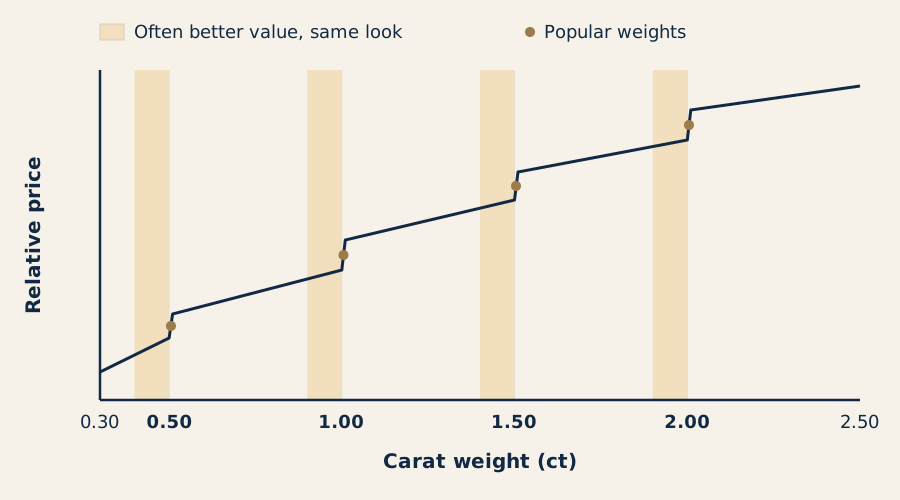
Price still steps up at round weights such as 0.50, 1.00, 1.50 and 2.00 carats, where demand clusters. A 0.95 ct stone can cost noticeably less than a 1.00 ct and look almost identical face-up, because 0.05 ct adds only about a tenth of a millimetre to the diameter. For the same carat-by-carat view of mined stones, see our Australian natural diamond price guide.
How do colour, clarity and cut change the price?
Within a carat weight, the other three Cs decide where a stone sits in the range. For lab-grown the balance is a little different from natural, because high colour and high clarity are easier to produce in a laboratory, so the premium for top grades is smaller.
| Quality tier (1.00 ct round) | Typical grades | Approx. price, loose (AUD) | What you see |
|---|---|---|---|
| Entry | H–I colour, SI1–SI2, Very Good cut | 800–1,400 | Slight warmth in white metal; check inclusions are eye-clean |
| Middle | F–G colour, VS1–VS2, Excellent or Ideal cut | 1,200–2,200 | White and eye-clean; where most people land |
| Top | D–E colour, VVS1–VVS2, Excellent or Ideal cut | 1,800–3,000 | Looks very like the middle tier to the eye; you pay for the grade |
Cut deserves most of your attention. It is the only C that controls how much light a diamond returns, and lab-grown cutting varies a lot, because some stones are cut quickly to keep weight rather than to maximise brightness. A well-proportioned round with an Excellent or Ideal cut grade looks brighter, and often larger, than a poorly cut stone of the same weight. Our guide to judging lab-grown cut quality shows what to check in the proportions.
Colour and clarity matter less to the eye than the price difference suggests. Most people cannot tell an E from a G once it is set, and VS2 is usually eye-clean, meaning no inclusions are visible without magnification. Fluorescence, a glow some diamonds show under ultraviolet light, rarely moves lab-grown prices much; how fluorescence shows up in lab-grown stones explains when it does. Shape matters too: ovals, pears and emerald cuts often cost a little less per carat than rounds, because cutting a round wastes more of the rough crystal.
How does the lab-grown diamond price in Australia compare with natural?
This is where the difference is largest. The figures below are approximate Australian retail ranges for loose rounds with matching grades and an independent report, GST included.
| Lab-grown diamond | Natural diamond | |
|---|---|---|
| 1.00 ct round, G VS2, Excellent cut | about AUD 1,200–2,200 | about AUD 7,000–14,000 |
| 2.00 ct round, same grades | about AUD 3,000–6,000 | about AUD 25,000–50,000 |
| Material | Carbon in a diamond crystal | Carbon in a diamond crystal |
| Hardness and refractive index | 10 on the Mohs scale, RI 2.42 | 10 on the Mohs scale, RI 2.42 |
| Price trend | Fallen sharply in recent years | Moves with the market; historically steadier |
| Second-hand market | Very limited | Established, usually well below retail |
| Report wording | Must state laboratory-grown | States natural origin |
Physically the two are the same material, with the same hardness, the same refractive index (how strongly the stone bends light) and the same sparkle when cut equally well. Why lab-grown counts as real diamond covers the science, and standard thermal testers read both as diamond, as how diamond testers read lab-grown stones explains. What differs is origin, rarity and therefore price: a natural diamond typically formed a billion years ago or more, while a lab-grown diamond grows in weeks.
Compare lab-grown and natural diamonds in our stock
If price is the main concern, lab-grown diamond is not the only route. Moissanite costs less again, but it is a different mineral (silicon carbide, about 9.25 on the Mohs scale) with stronger rainbow flashes. Our lab-grown diamond vs moissanite comparison sets out the trade-offs side by side.
Why is lab-grown diamond so much cheaper, and why do prices keep falling?
Lab-grown diamonds are made by one of two methods. HPHT (high pressure, high temperature) recreates the crushing heat and pressure deep in the earth around a small diamond seed. CVD (chemical vapour deposition) builds diamond layer by layer from a carbon-rich gas inside a vacuum chamber. Our explainer on how lab-grown diamonds are made goes through both. Either way, production can be scaled up, and it has been.
Over the past several years, new growing capacity, much of it in India and China, has pushed lab-grown prices down steeply. Growers have also become better at producing large, high-colour crystals, which is why the gap between a 1 carat and a 2 carat has narrowed. Some stones are treated after growth, commonly with heat and pressure, to improve colour; this is disclosed on the report and usually makes little difference to price.
Price is not set by the 4Cs alone. Polish and symmetry, table and depth proportions, the grading laboratory, demand for the shape and how much the cutter kept weight over brightness all move the figure. Our deeper guide to what really sets lab-grown diamond prices unpacks each factor, and why two stones with identical 4Cs can be priced differently shows it in practice. Matched pairs cost more than two single stones, because finding two that agree in size, colour and cut takes time; see matching lab-grown diamonds for earrings.
Not sure which one is right?
Send us the stones you are looking at and our gemologist will tell you which to choose and why.
What Australian rules affect the lab-grown diamond price you pay?
A few local rules change what you actually pay, and what you should expect to see on a price tag or invoice.
- GST is included. Australian businesses advertising to consumers must show the total price, including the 10% GST. Many overseas price guides quote US dollars before tax, so convert to AUD and add GST before you compare.
- Buying from overseas. Overseas sellers registered for GST must charge it on most goods worth A$1,000 or less sent to Australian consumers. Above that, import GST and any customs duty are collected at the border before release, and couriers often add a processing fee. Loose stones and finished jewellery can be treated differently, so check before you order.
- Clear disclosure. Under Australian Consumer Law, a lab-grown diamond must not be described in a way that misleads you about its origin. Look for 'lab-grown', 'laboratory-grown', 'laboratory-created' or 'synthetic' beside the word diamond. Our guide to the ACCC's rules on lab-grown diamond terms explains the wording.
- Independent reports. Most lab-grown diamonds sold in Australia come with a report from IGI or GIA. It states that the stone is laboratory-grown and often records the growth method and any treatment. A stone without a report is much harder to compare on price.
- Your consumer rights. The consumer guarantees, including a refund or replacement for a major failure, apply in the same way whether the diamond is natural or lab-grown.
Sustainability claims are another place to slow down. Energy use and power sources vary widely between growers, so a higher price attached to 'eco' branding deserves questions; the questions to ask about sustainability claims help you test them.
How much does a lab-grown diamond engagement ring cost in Australia?
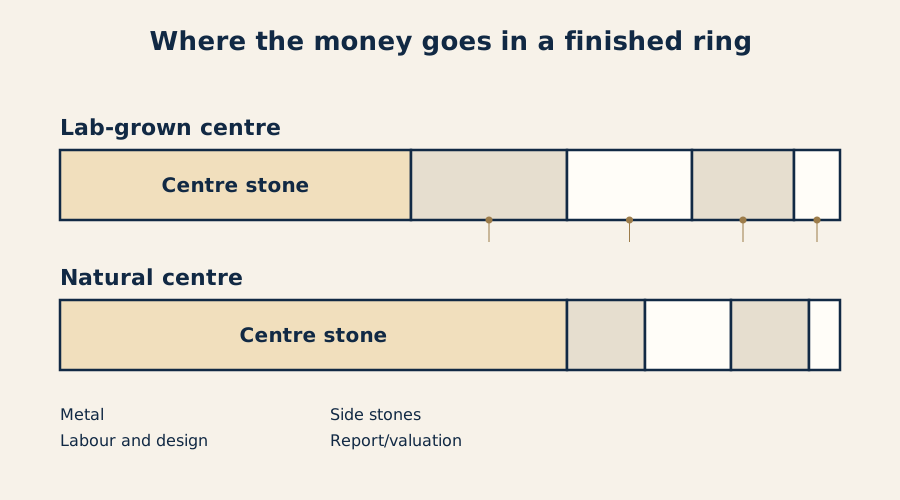
The loose stone is only part of the bill. A finished ring adds the setting (metal, design and labour), any side or halo stones, and sometimes a valuation for insurance. With lab-grown centre stones now so affordable, the setting can be half the total price or more, a reversal of how ring budgets used to work.
Approximate setting prices in Australia, before the centre stone:
- Solitaire in 18ct yellow, white or rose gold: about AUD 1,500–3,500.
- Solitaire in platinum: about AUD 2,500–5,000. Platinum is denser than gold, so the same design uses more metal by weight.
- Halo, hidden halo or pavé band: about AUD 2,500–6,000, depending on how many small diamonds are set and whether they are natural or lab-grown.
- Custom design: priced on the design, the finished metal weight and the hours at the bench.
Ring size affects price a little. Australia uses letter sizes from A to Z, with half sizes, the same system as the UK, rather than the US numbers on many overseas sites. A size P band uses more metal than a size J, and bands set with stones all the way round cannot easily be resized later, so settle the size first. Our Australian letter ring size guide shows how to measure, and the engagement ring buying guide brings the stone, setting and size together.
Do lab-grown diamonds hold their value?
Not in the way many people assume. Lab-grown diamonds have a very limited resale market, and because new stones keep getting cheaper, a lab-grown diamond bought today will usually be worth much less second-hand. Natural diamonds have an established second-hand trade, but resale there is also usually well below the retail price. Neither should be bought expecting a financial return.
The honest way to think about lab-grown value is what your money buys now: a real diamond, larger or higher in grade than the same budget buys in natural, that will look the same in thirty years as it does on the day you collect it. It will not fade, cloud or lose its sparkle.
Insurance is worth sorting early. A replacement valuation for a lab-grown diamond can drop as market prices fall, so ask your insurer whether they replace like for like or pay a set amount; whether to insure a lab-grown diamond covers the questions to ask. Day to day, lab-grown needs exactly the same cleaning and checks as natural, as caring for lab-grown diamonds explains. Any unfamiliar term on this page is defined in our jewellery glossary.
Related guideDiamond Price Guide AustraliaHow to check a lab-grown diamond price: step by step
- Set the total budget. Decide on the finished ring price first, then split it between the setting and the stone.
- Fix the shape and weight. Choose your shape and carat, and consider a weight just under a round number (0.90 instead of 1.00) to spend less without a visible size difference.
- Put cut first. Ask for an Excellent or Ideal cut grade in rounds, and check proportions and a 360° video in fancy shapes.
- Choose sensible colour and clarity. G–H colour and VS2 clarity look white and eye-clean to most people in white metal; go higher only if the price gap is small.
- Read the report. Confirm it says laboratory-grown, note the lab, growth method and any post-growth treatment, and match the report number to the stone's laser inscription.
- Compare like with like in AUD. Convert overseas prices, add GST, import charges, shipping and return costs, then compare with Australian prices that already include GST.
- Confirm your letter ring size. Measure before ordering, especially for pavé or eternity bands that are hard to resize.
Free consultation
Talk to a gemologist
Compare stones in person or online with Raj Sood, Graduate Gemologist (GIA), AJP (GIA).
Book a consultationShop this shape
FAQ
Common questions
How much is a 1 carat lab-grown diamond in Australia?
Roughly AUD 800–3,000 for a loose, well-cut round with a grading report, GST included. Where a stone sits in that range depends mainly on cut, colour and clarity.
How much is a 2 carat lab-grown diamond in Australia?
About AUD 1,800–6,000 loose for a well-cut round. Lab-grown price per carat rises only gently with size, so a 2 carat costs far less than a natural diamond of the same weight and grades.
Are lab-grown diamond prices still dropping?
They have fallen sharply over recent years as production has grown, and further falls are possible. No one can predict prices reliably, so choose a stone for how it looks rather than its future value.
Is it cheaper to buy a lab-grown diamond overseas?
Not always. Once you add GST, any import charges, shipping, insurance in transit and the cost of returns, the gap often narrows, and Australian consumer law rights are simpler to use with a local business.
Do lab-grown diamonds have resale value?
Very little. The second-hand market for lab-grown diamonds is small and new stones keep getting cheaper, so expect to receive far less than you paid.
Does ring size change the price of an engagement ring?
Slightly. Larger Australian letter sizes use more metal, and pavé or eternity bands cost more in bigger sizes because more small stones are needed to go round.
Terms in this guide

Ask a gemologist
Not sure which diamond to choose?
Raj Sood is a Graduate Gemologist (GIA) and master jeweller. Bring the stones you are considering, or send the reports, and he will tell you honestly which one is better and why.
Keep learning
Related guides
 Buying Knowledge & Custom ProcessDiamond Price Guide Australia
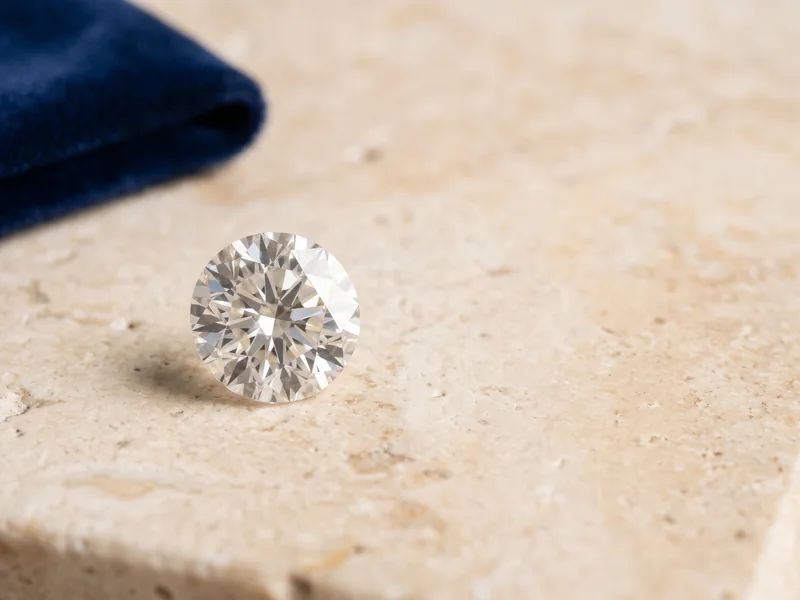 Lab-Grown DiamondsWhat Actually Drives Lab-Grown Diamond Prices?
 Lab-Grown DiamondsLab-Grown Diamond Terms in Australia (ACCC Rules)
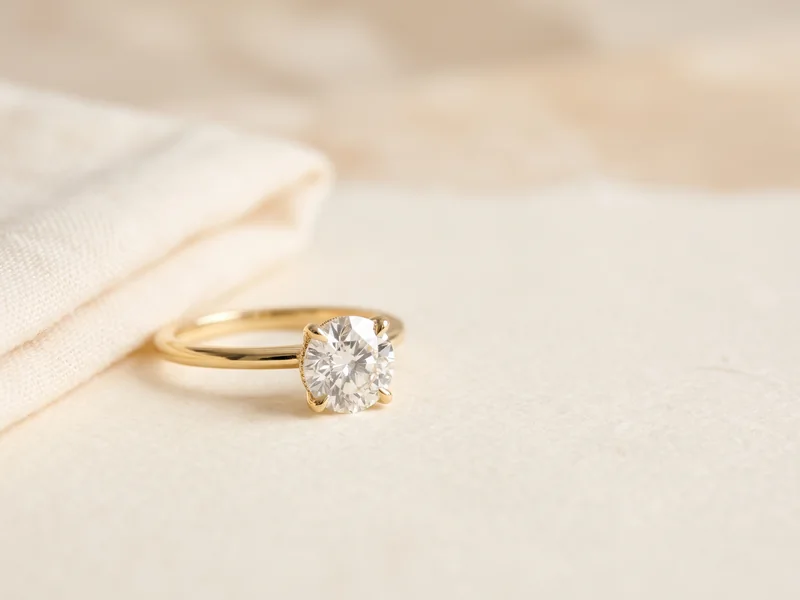 Buying Knowledge & Custom ProcessRing Size Guide AustraliaBuying Knowledge & Custom ProcessEngagement Ring Buying Guide
 Lab-Grown DiamondsShould a Lab-Grown Diamond Be Insured?Lab-Grown DiamondsHow Are Lab-Grown Diamonds Manufactured?
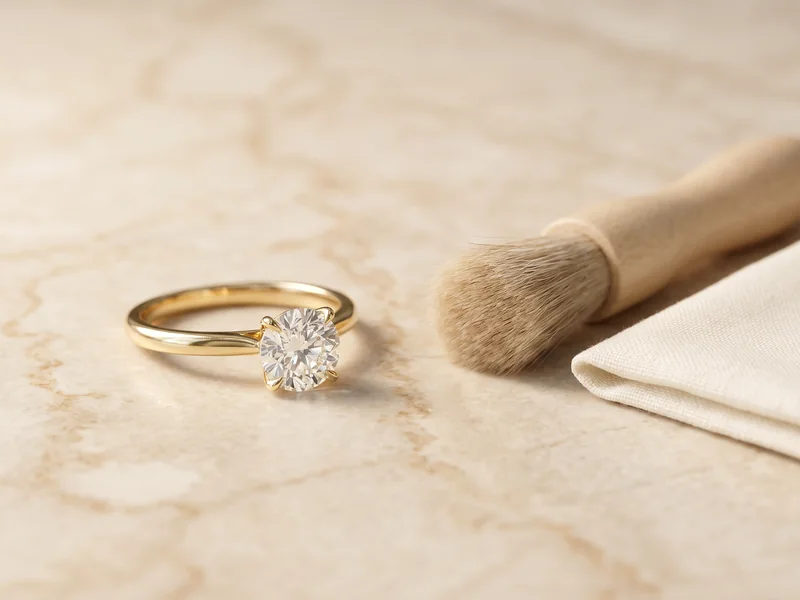 Lab-Grown DiamondsDo Lab-Grown Diamonds Need Different Care?
Explore more
More guides on this topic
Education