
Gemstones
Rubellite Tourmaline Guide: Colour, Hardness, Treatments and Value
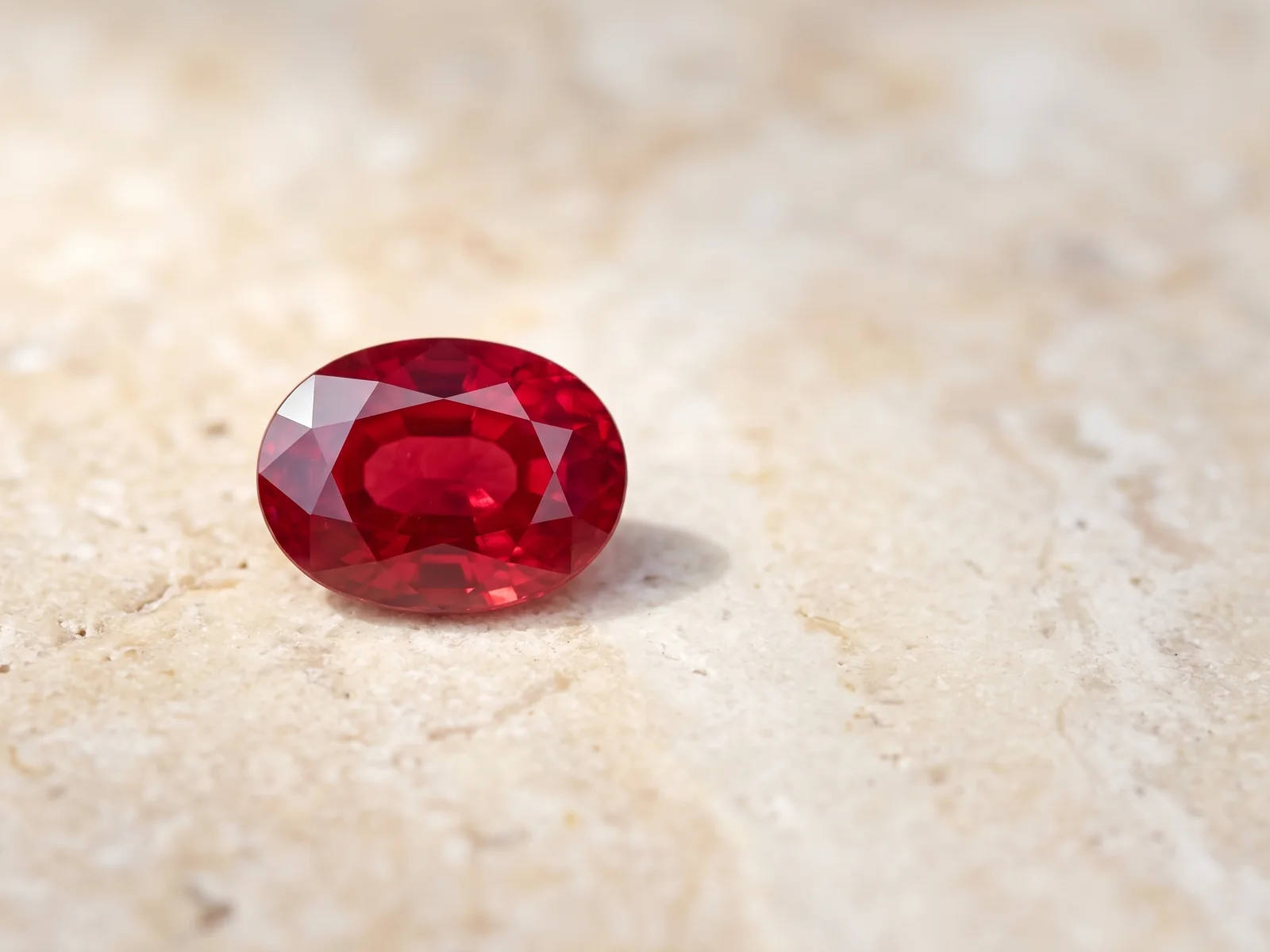
Rubellite tourmaline gives a ruby-like red for much less than a fine ruby, but it is softer, almost always included and often treated. Here is what a gemologist checks before a rubellite goes into a ring.
 Reviewed by Raj Sood, Graduate Gemologist (GIA), AJP (GIA)Master jeweller and Graduate Gemologist (GIA) · reviewed 4 November 2026
Quick answer
Rubellite tourmaline is the red to purplish-red variety of tourmaline, a name traditionally reserved for stones that keep their red colour in both daylight and indoor light. It is 7–7.5 on the Mohs scale with fair toughness, is almost always included, and is often irradiated. It suits rings in a protective setting; fine eye-clean stones cost far more per carat.
What is rubellite tourmaline?
Rubellite tourmaline is the name the gem trade gives to the red, pinkish-red and purplish-red stones in the wider tourmaline family. Tourmaline is not a single mineral but a group of complex boron silicates that share one crystal structure. Most gem rubellite is elbaite, the lithium-rich member of the group, though some is liddicoatite or rossmanite. The name comes from the Latin rubellus, meaning reddish.
Its red comes mainly from manganese in the crystal, usually deepened by natural radiation in the surrounding rock over millions of years. Change the chemistry slightly and you get a different colour, which is why tourmaline comes in more shades than almost any other gem. Rubellite's close relatives include indicolite, the blue to blue-green variety, the neon copper-bearing Paraíba tourmaline and watermelon tourmaline with its pink centre and green rind.
For centuries red tourmaline was confused with ruby and red spinel, because all three turned up in the same gem gravels and nobody could test them reliably. A red stone in the Russian imperial collection long known as 'Caesar's Ruby' was later identified as rubellite. In the early 1900s, demand from the Chinese imperial court, particularly the Empress Dowager Cixi, made pink and red tourmaline from San Diego County, California, one of the most valuable American gems of its day. Tourmaline is also one of the two October birthstones, alongside opal, which keeps rubellite popular for birthday and anniversary jewellery.
What colour is rubellite, and how is it different from pink tourmaline?
Rubellite covers a range from strong pink-red through raspberry and ruby red to a deep purplish red. The colours that command a premium are a saturated, slightly purplish to pure red with a medium to medium-dark tone (how light or dark the colour looks). Too dark and the centre of the stone looks blackish; too light and it drifts into pink tourmaline.
There is no fixed line between rubellite and pink tourmaline, and labs and dealers draw it differently. The traditional test is light: a true rubellite holds its red in daylight and under warm indoor light (incandescent or warm LED), while many pink and red tourmalines take on a brownish or dull tint indoors. Some laboratories don't use the word rubellite on reports at all and simply describe the stone as red or pink tourmaline, so ask how the seller defines it.
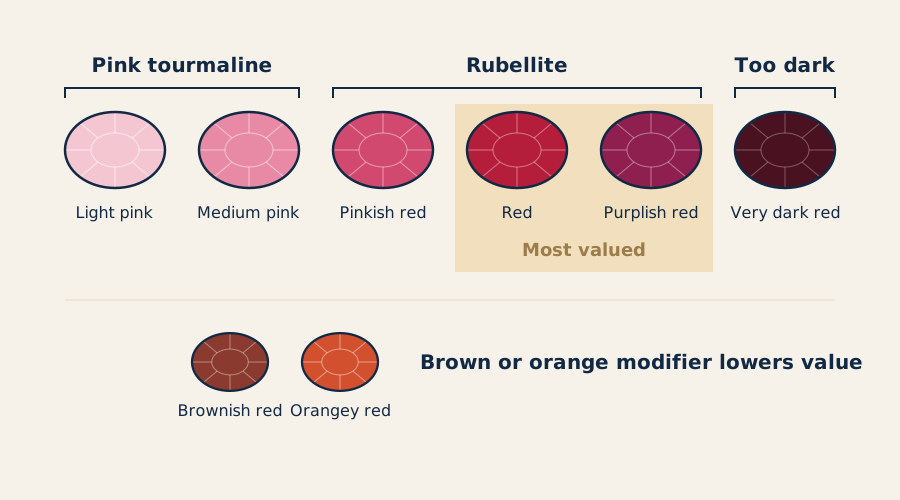
- Pink tourmaline: light to medium pink; may look washed out or brownish under indoor light.
- Pinkish-red rubellite: medium tone with a strong pink component; the most common commercial rubellite.
- Red to purplish-red rubellite: saturated medium to medium-dark colour that stays red indoors; the most valued range.
- Brownish or orangey red: a secondary brown or orange hue lowers the value, even when the stone is dark and saturated.
If you like softer pinks rather than red, compare rubellite with morganite, a peach-pink beryl, which is lighter in colour, usually much cleaner and slightly harder at 7.5–8 on the Mohs scale.
How hard is rubellite tourmaline, and is it tough enough for rings?
Rubellite rates 7 to 7.5 on the Mohs scale, the scale of scratch resistance from 1 (talc) to 10 (diamond). That is at least as hard as quartz, the main abrasive in household dust (Mohs 7), so a rubellite will not dull quickly from everyday wiping. Toughness, its resistance to chipping and breaking, is rated fair. Tourmaline has no easy cleavage (a natural plane along which a crystal splits), but rubellite is almost always included and fractured, and those internal breaks are where a knock does its damage.
| Gemstone | Mohs hardness | Toughness | Everyday ring wear |
|---|---|---|---|
| Diamond | 10 | Good (can cleave) | Excellent |
| Ruby and sapphire | 9 | Excellent | Excellent |
| Spinel | 8 | Good | Very good |
| Aquamarine | 7.5–8 | Good | Good |
| Morganite | 7.5–8 | Good | Good |
| Rubellite tourmaline | 7–7.5 | Fair | Good with a protective setting and care |
| Rhodolite garnet | 7–7.5 | Fair to good | Good with care |
| Emerald | 7.5–8 | Poor to fair | Needs a protective setting and care |
| Tanzanite | 6–6.5 | Fair (has cleavage) | Better for occasional wear |
On paper, rubellite sits with garnet and a little below beryls like aquamarine. In practice it is a reasonable ring stone for someone who takes rings off for heavy work, and a weaker choice for someone who never does. Compare it with aquamarine as an engagement stone, which is usually much cleaner and so more robust for its hardness, and with how emerald rings are set and worn, since emerald shares rubellite's heavily included nature. For a red stone that resists wear better, red spinel at 8 on the Mohs scale is the closest alternative, while softer tanzanite at 6–6.5 shows how much more care a lower-hardness stone asks of its owner.
Tourmaline also has an unusual electrical property: it is pyroelectric and piezoelectric, meaning it develops an electric charge when warmed or squeezed. A warm tourmaline can attract dust and ash, which is why Dutch traders once nicknamed it the ash puller. It does not affect durability, but it explains why a rubellite can seem to need cleaning more often than other stones.
How do gemologists identify rubellite?
Several red gems look alike to the eye, so identification comes down to measurements made with a refractometer, dichroscope and other gem-testing tools. These are the checks Raj Sood, Graduate Gemologist (GIA), works through on an unknown red stone at the bench:
- Refractive index (RI): how strongly the stone bends light. Rubellite reads about 1.624–1.644 on a refractometer, much lower than ruby, spinel or garnet.
- Birefringence: tourmaline is doubly refractive, splitting light into two rays, with a gap of about 0.018–0.020 between its two readings. In a larger stone you can often see the back facet edges doubled through a 10× loupe.
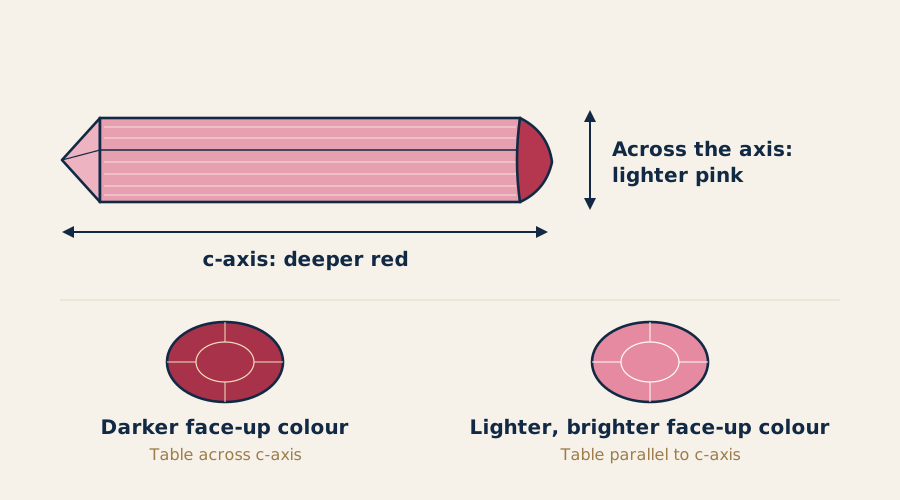
- Pleochroism: rubellite shows two distinct colours from different directions, typically a lighter pink and a deeper red. A dichroscope shows both side by side.
- Inclusions: long, thread-like gas and liquid inclusions (often called trichites) and healed fractures are typical of rubellite.
- Ultraviolet light: rubellite is usually inert, while natural ruby normally glows red.
| Gem | Refractive index | Double refraction | Specific gravity | Mohs |
|---|---|---|---|---|
| Rubellite tourmaline | 1.624–1.644 | Yes, strong (0.018–0.020) | 3.01–3.10 | 7–7.5 |
| Ruby | 1.762–1.770 | Yes, weak (about 0.008) | 4.00 | 9 |
| Pink sapphire | 1.762–1.770 | Yes, weak (about 0.008) | 4.00 | 9 |
| Red spinel | about 1.718 | No | 3.60 | 8 |
| Rhodolite garnet | about 1.750–1.770 | No | 3.74–3.94 | 7–7.5 |
| Red glass imitation | about 1.50–1.70 | No | 2.3–4.5 | 5–6 |
Rubellite is most often mixed up with rhodolite, the purplish-red garnet, which is singly refractive, shows no pleochroism and feels heavier in the hand. Ruby is the expensive confusion; it is far denser and much harder. Fibrous rubellite is occasionally cut as a cat's-eye, but a six-rayed star in a red stone usually points to corundum, as explained in our guide to star sapphires and star rubies.
Lab-created tourmaline has been grown experimentally but is not sold in jewellery in any meaningful quantity. The red imitations you are likely to meet are glass, lab-created ruby and lab-created spinel, all of which a refractometer separates quickly.
Not sure which one is right?
Send us the stones you are looking at and our gemologist will tell you which to choose and why.
Is rubellite tourmaline treated?
Often, yes. A treatment is any process beyond cutting and polishing that changes a gem's colour or clarity. Treatments should be disclosed, and a laboratory report will state what was detected and what could not be ruled out.
- Irradiation: the most common treatment for rubellite. Pale pink or near-colourless tourmaline is exposed to gamma radiation to create or deepen pink and red, mimicking what natural radiation does underground. The colour is generally stable in normal wear, the stones carry no radiation risk once released, and the treatment is usually impossible to prove, so many labs do not comment on it or note it as possible.
- Heat: less common for rubellite, because heat tends to lighten or remove red and can reverse irradiation. It is sometimes used to lighten a stone that is too dark.
- Fracture filling: surface-reaching fractures can be filled with oil or resin to make them less visible. Under magnification, fillers can show a flash of colour along the crack or trapped bubbles. Filled stones need gentler care and should cost noticeably less.
Because irradiation is so widespread and so hard to detect, the realistic question with rubellite is not whether it might be irradiated but whether it has been fracture-filled, which affects durability and value far more. On any larger or higher-priced stone, ask for a report that addresses clarity enhancement.
Where does rubellite come from, and is it found in Australia?
Rubellite forms in granite pegmatites, coarse-grained igneous rocks rich in lithium and boron. The main sources today and in the past:
- Brazil: Minas Gerais has produced rubellite for well over a century, from pinkish to deep red.
- Nigeria: a major source since the late 1990s, known for saturated red to purplish-red material.
- Mozambique and Madagascar: important sources of bright pinkish-red and red stones.
- Afghanistan and Pakistan: fine crystals and gem rough from the Hindu Kush pegmatites.
- United States: the historic pink and red tourmaline mines of San Diego County, California, and of Maine.
- Russia and Sri Lanka: historic sources, including the Ural Mountains.
Australia has tourmaline in many pegmatites, and pink and green crystals have been recorded in Western Australia and other states, but there is no regular commercial production of gem rubellite here. Most rubellite in Australian jewellery is cut from African or Brazilian rough. Origin is rarely stated on reports for tourmaline other than Paraíba, and on its own it does not move the price much; colour and clarity matter far more.
What affects rubellite tourmaline price?
Rubellite is priced per carat, and the price per carat climbs steeply as colour and clarity improve. In rough order of importance:
- Colour: saturated pure to purplish red that holds its colour indoors sits at the top. Brown, orange or a pale pink colour lowers the price.
- Clarity: GIA classes red tourmaline (rubellite) as a Type III gem, meaning it is almost always included; lighter pink tourmaline is Type II. Eye-clean stones (no inclusions visible without magnification at normal viewing distance) are scarce and carry a clear premium.
- Size: rubellite is found in larger sizes than ruby, and good 5–10 carat stones are available. Price per carat rises with size, but more gently than for ruby or sapphire.
- Cut: a well-cut rubellite is oriented for its strongest face-up colour and has no large dark areas or washed-out windows (patches where you see straight through the stone).
- Treatment: fracture-filled stones cost less than unfilled ones; irradiation is so routine that it is largely priced in.
| Natural rubellite quality | Approximate price per carat (AUD) |
|---|---|
| Commercial: pinkish-red, visibly included | about $50–$200 |
| Good: medium-strong red, slightly included, 1–3 ct | about $200–$600 |
| Fine: saturated red, eye-clean, 3 ct and up | about $600–$1,500 |
| Exceptional: top red, eye-clean, large | about $1,500 and up |
These are broad ranges only and move with supply and exact quality. For comparison, a fine natural ruby of similar colour costs many times more per carat, which is a large part of rubellite's appeal for a bold red centre stone.
Shop natural gemstones
Is rubellite tourmaline good for an engagement ring?
It can be, with the right setting and realistic expectations. At 7–7.5 on the Mohs scale rubellite resists everyday scratching, but its inclusions and fair toughness mean a hard knock on a benchtop or doorframe can chip an exposed edge, and over decades of daily wear the facet edges will soften slightly. Our guide to tourmaline engagement rings and how they hold up covers long-term wear in more detail. Settings that suit a rubellite engagement ring:
- Bezel or half-bezel: a rim of metal that protects the girdle (the outer edge) all the way round or on two sides.
- Four or six claws, set low: keeps the stone closer to the hand and less exposed.
- Halo: a ring of small diamonds that frames the red and guards the edge.
- Shape: ovals, cushions and emerald cuts with cut corners have no sharp points to chip.
For pendants and earrings, which take far fewer knocks than a ring, rubellite is an easy choice, and larger stones of 3 carats and up show off its colour well.
Related guideTourmaline Engagement Rings: Colour and DurabilityHow do you choose and care for rubellite tourmaline?
- Check the colour in two lights. Look in daylight and under warm indoor light; the red should hold without turning brown.
- Check clarity face-up. Some inclusions are normal; look for an eye-clean or near eye-clean face-up view, and avoid fractures that reach the surface near the edge.
- Ask about treatment. Assume irradiation is possible; ask directly whether the stone is fracture-filled.
- Confirm the identity. On a valuable stone, get a laboratory report or have a gemologist test the refractive index and birefringence.
- Choose a protective setting. A bezel, half-bezel, halo or low claws for a ring worn every day.
- Clean gently. Warm water, a drop of mild detergent and a soft brush. No ultrasonic or steam cleaners, which can open fractures or remove fillers.
- Avoid heat and knocks. Keep it away from sudden temperature changes and harsh chemicals, remove it for the gym and gardening, and store it apart from harder gems such as diamond and sapphire.
To compare rubellite with every other coloured stone, start with our guide to coloured gemstones and birthstones, and look up any unfamiliar term in the A–Z jewellery glossary.
Free consultation
Talk to a gemologist
Compare stones in person or online with Raj Sood, Graduate Gemologist (GIA), AJP (GIA).
Book a consultationShop this shape
FAQ
Common questions
Is rubellite the same as ruby?
No. Rubellite is a red tourmaline, while ruby is red corundum. Ruby is harder (Mohs 9 against 7–7.5), denser and has a much higher refractive index, and a gemologist can separate them in minutes.
What is the difference between rubellite and pink tourmaline?
Both are the same mineral. The trade generally reserves 'rubellite' for stronger red to purplish-red stones that keep their colour under warm indoor light, while lighter stones, or those that turn brownish indoors, are sold as pink tourmaline.
Is rubellite tourmaline expensive?
It costs much less than ruby of similar colour. Commercial stones can be under about AUD $200 per carat, while fine eye-clean red rubellite of several carats can reach about $600–$1,500 per carat or more.
Is rubellite tourmaline treated?
Often. Irradiation to deepen the pink or red is common, stable and usually undetectable, while fracture filling is less common but should be disclosed because it affects durability and value.
Can you wear a rubellite ring every day?
Yes, in a protective setting such as a bezel, halo or low claws, and if you take it off for heavy work. It is 7–7.5 on the Mohs scale with fair toughness, so it is less forgiving than sapphire or diamond.
How do you clean rubellite tourmaline?
Use warm water, a little mild detergent and a soft brush, then rinse and dry. Avoid ultrasonic and steam cleaners, heat and harsh chemicals.

Ask a gemologist
Not sure which diamond to choose?
Raj Sood is a Graduate Gemologist (GIA) and master jeweller. Bring the stones you are considering, or send the reports, and he will tell you honestly which one is better and why.
Keep learning
Related guides
 GemstonesTourmalineGemstonesIndicolite Tourmaline
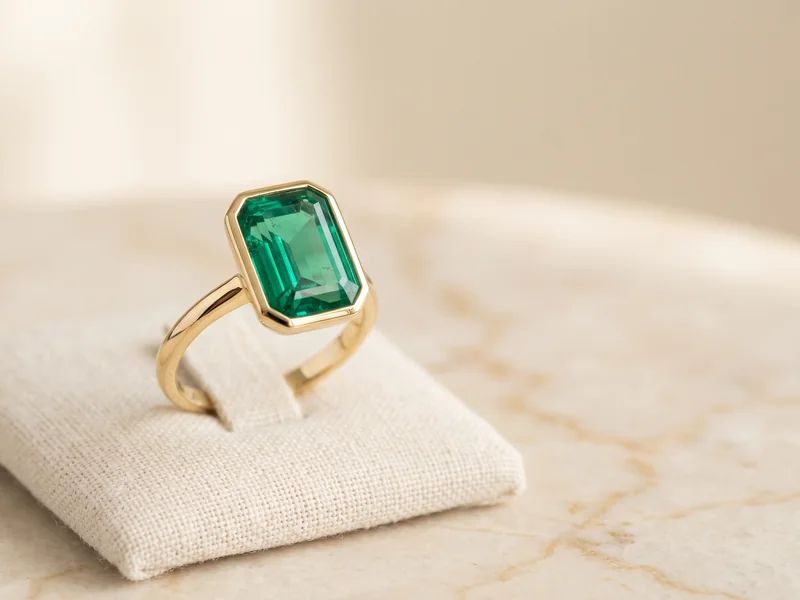 GemstonesTourmaline Engagement Rings: Colour and Durability
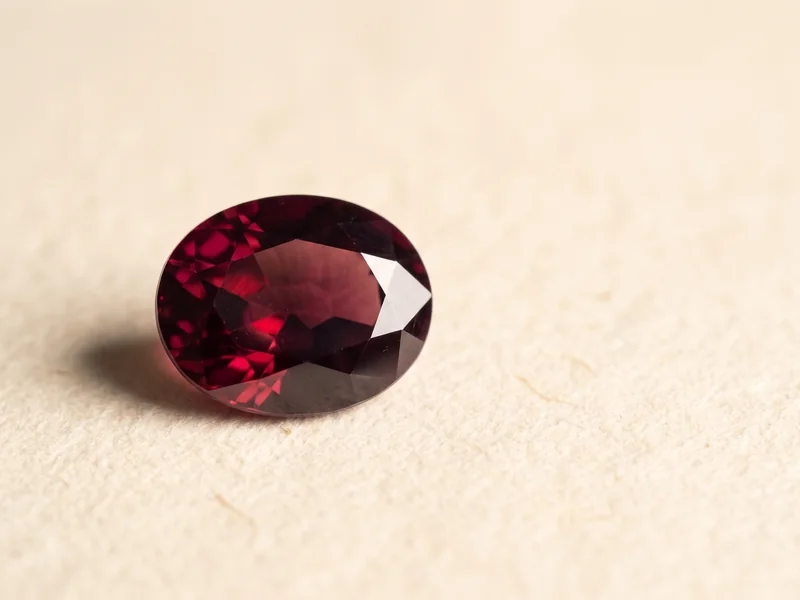 GemstonesRhodolite GarnetGemstonesGemstones | Coloured Gemstones, Birthstones and Custom Jewellery
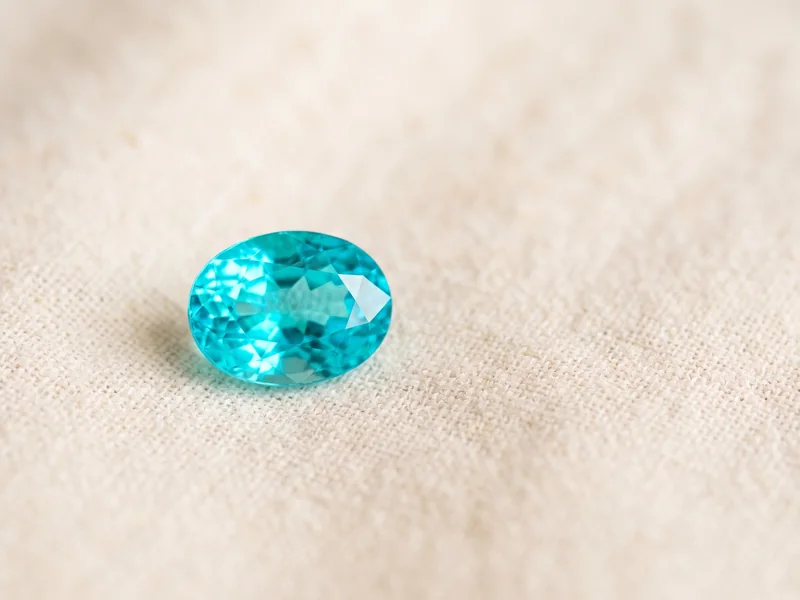 GemstonesParaíba Tourmaline
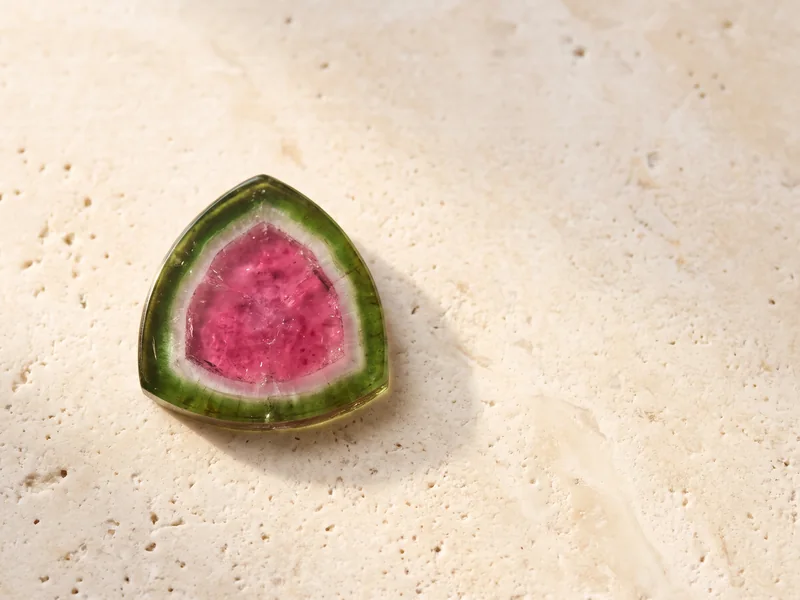 GemstonesWatermelon Tourmaline
 GemstonesOctober Birthstone: Opal and Tourmaline
Explore more
More guides on this topic
Education