
Gemstones
October Birthstone Guide: Opal and Tourmaline Colours, Durability and Settings
The October birthstone gives you a real choice: Australian opal with its moving play-of-colour, or tourmaline in almost any colour you can name. Here is how the two differ in history, colour, durability and setting, so the stone you choose suits the way you wear it.
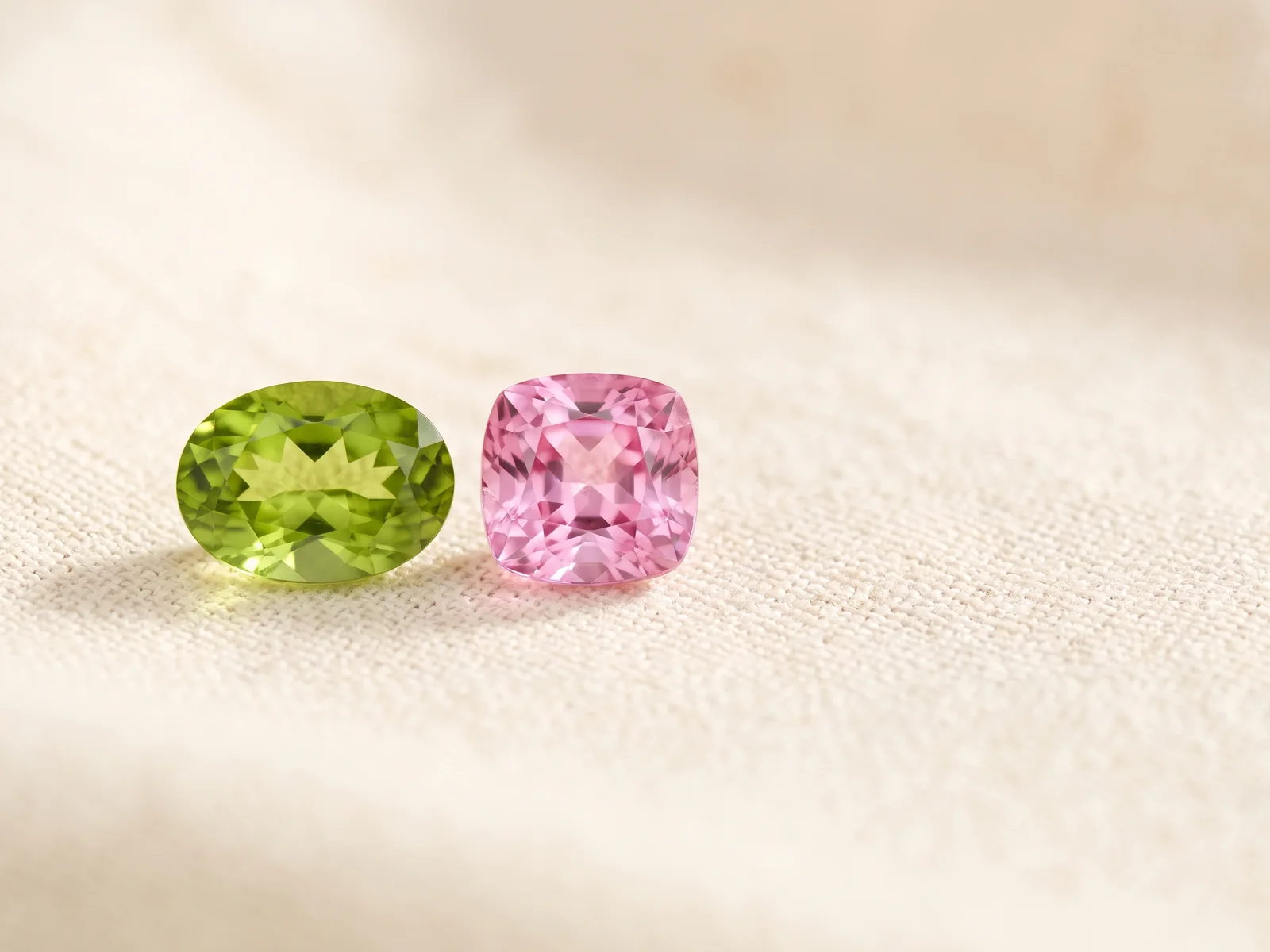
 Reviewed by Raj Sood, Graduate Gemologist (GIA), AJP (GIA)Master jeweller and Graduate Gemologist (GIA) · reviewed 4 November 2026
Quick answer
October has two birthstones: opal and tourmaline. Opal shows flashes of play-of-colour and is Australia's national gemstone, but at 5.5–6.5 on the Mohs scale it needs a protective bezel setting and gentle care. Tourmaline comes in every colour, rates 7–7.5 and suits everyday rings. Choose by colour, lifestyle and how often you will wear it.
What is the October birthstone?
The October birthstone is opal, with tourmaline as the official second choice. Most modern birthstone lists name both, so anyone born in October can pick whichever suits them. The two could hardly be more different. Opal is a soft, water-bearing form of silica known for play-of-colour: patches of spectral colour that flash and shift as the stone tilts. Tourmaline is a hard, crystalline gem that comes in a wider range of colours than almost any other gem family, from pale pink to neon blue.
Australia matters more to this month than to any other. Opal was proclaimed Australia's national gemstone in 1993, and Australian fields have supplied most of the world's precious opal for well over a century, from the black opal of Lightning Ridge to the boulder opal of western Queensland. If you want the wider picture first, our guide to coloured gemstones and birthstones shows where opal and tourmaline sit among other gems, and our page on birthstone jewellery made in Melbourne shows how each month's stone is commonly set.
This guide explains both stones in plain terms. Technical words are explained the first time they appear, and you can look up anything else in our plain-English jewellery glossary.
Why does October have two birthstones?
Opal is the older choice. Its name comes through the Latin word opalus, often traced to the Sanskrit upala, meaning precious stone. The Roman writer Pliny the Elder, in the first century AD, described opal as combining the fire of ruby, the purple of amethyst and the green of emerald in one stone, which is still a fair description of good play-of-colour.
Tourmaline joined later. In 1912 the American National Association of Jewelers (now Jewelers of America) published a standard birthstone list that gave October opal, with tourmaline as an alternative. Australia and many other countries follow a version of that list, and pink tourmaline is often singled out as the October tourmaline. The name tourmaline comes from the Sinhalese word toramalli, used in Sri Lanka for mixed, water-worn gem pebbles that Dutch traders brought to Europe from the 1700s. The same 1912 list is where the modern line-up for other months, such as diamond as April's birthstone, was settled.
The folklore around both stones is colourful. Opal has long been linked with hope and imagination, and its nineteenth-century reputation for bad luck is usually blamed on Sir Walter Scott's 1829 novel Anne of Geierstein, in which an opal loses its colour. Tourmaline has a genuine physical quirk behind its legend: it is pyroelectric, meaning it builds up an electric charge when warmed. Dutch traders are said to have used heated tourmaline to pull ash out of their pipes. Neither the luck nor the meanings are scientific, but they are part of why people choose these stones.
What is opal, and what makes Australian opal different?
Opal is amorphous hydrated silica (SiO2·nH2O). Amorphous means it has no crystal structure, and hydrated means it holds water, usually about 3–10% by weight. In precious opal, the silica forms tiny spheres around 150–300 nanometres across, stacked in a regular grid. That grid splits white light into colours, the way a fine grating does, and you see play-of-colour. Smaller spheres give blues and violets; larger spheres are needed for orange and red, which is why red flash is the rarest and most valued. Opal without the ordered spheres is called common opal or potch.
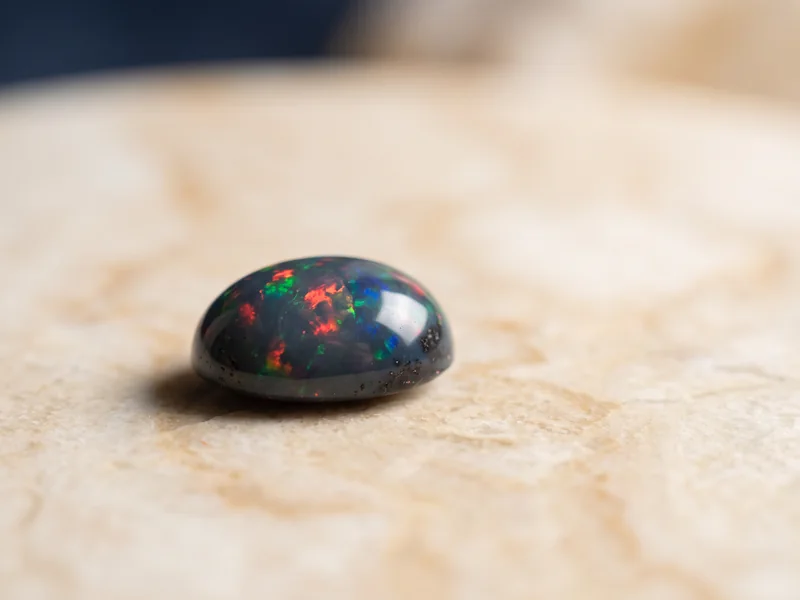
Opal is also graded by body tone, the background darkness behind the colour, on a scale from N1 (black) to N9 (very light). A dark body tone makes play-of-colour look more intense, much like colours on a black screen.
| Opal type | Look | Main source | What to know |
|---|---|---|---|
| Black opal | Dark body tone, N1–N4, vivid colour | Lightning Ridge, NSW | Usually the most valuable opal per carat |
| Boulder opal | Opal in seams on ironstone | Western Queensland | Natural ironstone backing adds strength; often freeform shapes |
| White (light) opal | Milky body tone, N7–N9 | Coober Pedy, SA | Softer-looking colour; the most affordable solid opal |
| Crystal opal | Transparent to translucent | Coober Pedy, Mintabie, Lightning Ridge | Colour seems to float inside the stone |
| Fire opal | Transparent orange to red body colour | Mainly Mexico | Prized for body colour; may show little or no play-of-colour |
| Ethiopian (Welo) opal | White to crystal, often bright | Ethiopia | Often hydrophane: can absorb water and change temporarily |
Each type has its own guide. Start with black opal from Lightning Ridge if you want the darkest, most intense look, or boulder opal on its ironstone host if durability is a priority. Lighter options are covered in our guides to milky white opal and see-through crystal opal. For orange body colour rather than flash, read about Mexican-style fire opal.
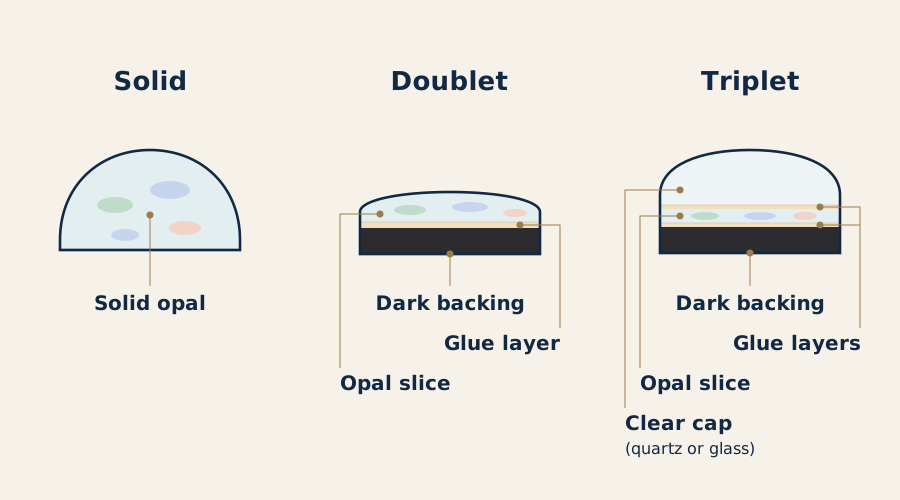
Not every opal is solid. A doublet is a thin slice of precious opal glued to a dark backing, and a triplet adds a clear quartz or glass dome on top. Both are genuine opal in part, cost much less than solid opal, and must be disclosed as composites. They should never be soaked, because water can get into the glue layer and cloud it. There is also lab-created opal, made since the 1970s, and plastic or glass imitations. A lab-created opal has the same silica-sphere structure but often shows a regular snakeskin or chicken-wire pattern under magnification.
Ethiopian opal has become common since about 2008 and behaves differently from most Australian opal; see how Australian opal compares with Ethiopian opal before you choose between them.
Related guideAustralian Opal Types ComparedWhat colours does the tourmaline birthstone come in?
Tourmaline is not one mineral but a group of related borosilicate minerals. Most gem tourmaline is a species called elbaite. It grows as long, striated prisms with a rough triangular cross-section, is 7–7.5 on the Mohs scale and has a refractive index of about 1.62–1.64. It is doubly refractive, and it shows strong pleochroism: the colour changes depending on which direction you look through the crystal. Cutters orient each stone so the better colour faces up, which is why tourmaline is often cut long, in emerald, oval or cushion shapes. Our complete tourmaline guide covers the mineral in more depth.
| Variety | Colour | Notes |
|---|---|---|
| Pink tourmaline | Pale to medium pink | The tourmaline most often linked with October |
| Rubellite | Deep pink to red | Should keep its red in both daylight and lamplight |
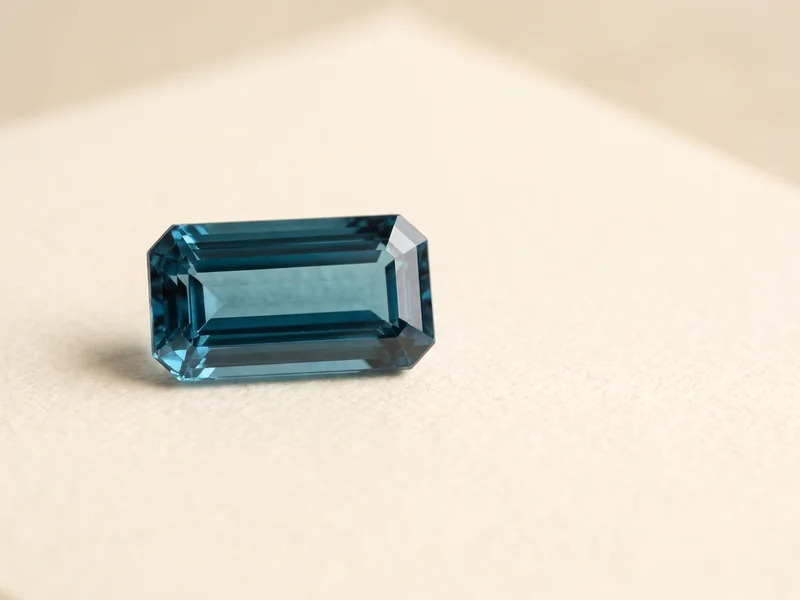
| Indicolite | Blue to blue-green | Blue tourmaline; can be very dark if cut too deep |
| Green (verdelite) | Mint to forest green | The most common colour; often very clean |
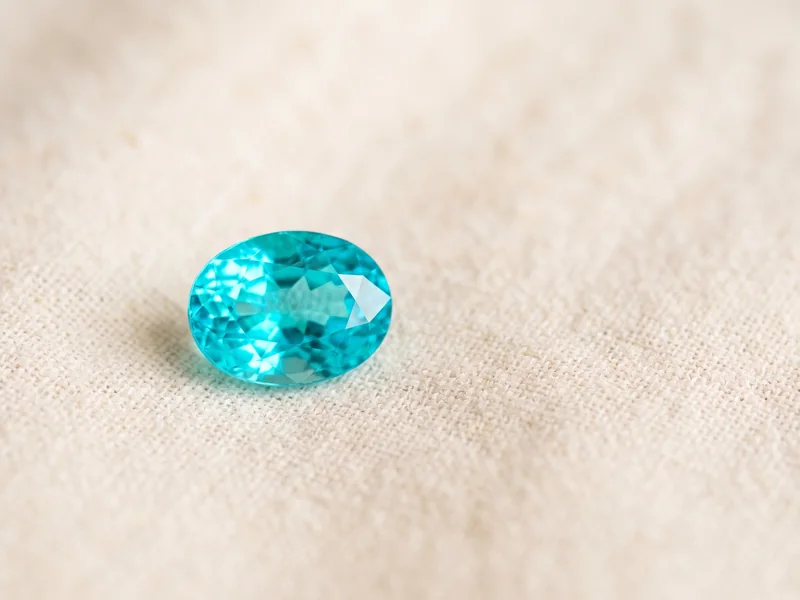
| Paraíba | Neon blue to green | Coloured by copper; first found in Brazil in the late 1980s |
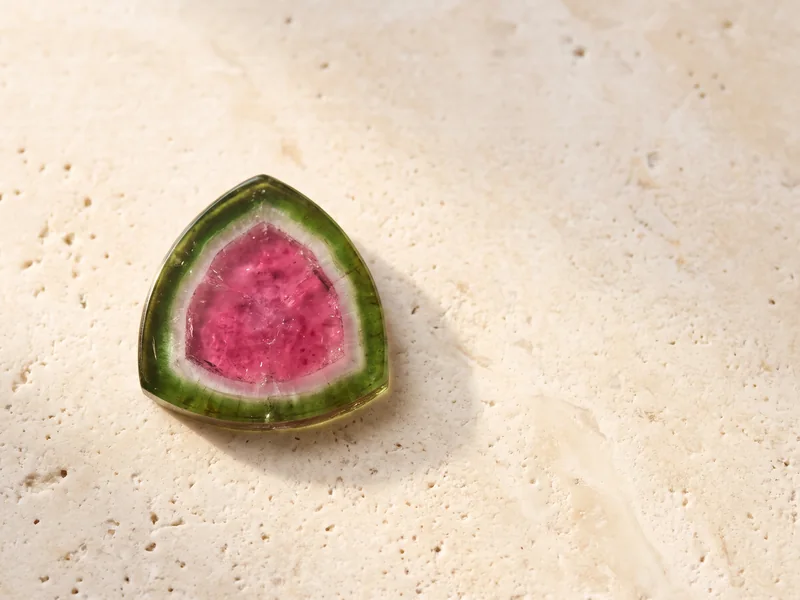
| Watermelon | Pink centre, green rim | Colour zoning, often cut as slices across the crystal |
| Bi-colour | Two or more colours | Zoned along the length of the crystal |
The named varieties each have their own detail. Rubellite, the red end of the range is judged on how well its colour holds in different light, while indicolite and other blue tourmalines are judged on brightness. The copper-bearing stones described in our Paraíba tourmaline guide are in a price class of their own, and pink-and-green watermelon slices are popular for pendants.
Clarity expectations depend on colour. Green and blue tourmaline are often eye-clean, meaning no inclusions (internal features) visible without magnification. Pink and red tourmaline usually contain more inclusions, and a slightly included rubellite is normal. Many tourmalines are heated to lighten or brighten colour, and some pinks are irradiated; both treatments are stable and should be disclosed. Lab-created tourmaline is rarely seen in jewellery, so imitations are usually glass or other gems.
Not sure which one is right?
Send us the stones you are looking at and our gemologist will tell you which to choose and why.
Opal vs tourmaline: which October birthstone is more durable for a ring?
| Opal | Tourmaline | |
|---|---|---|
| What it is | Amorphous hydrated silica | Crystalline borosilicate |
| Mohs hardness | 5.5–6.5 | 7–7.5 |
| Toughness | Fair to poor | Fair; brittle under a sharp knock |
| Refractive index | About 1.37–1.47 | About 1.62–1.64 |
| Optical feature | Play-of-colour | Pleochroism, wide colour range |
| Sensitive to | Knocks, heat, sudden temperature change, drying out | Heat (can change colour), sharp blows |
| Ultrasonic or steam cleaning | Never | Usually avoid, especially if included |
| Everyday ring | Possible with a protective setting and care | Well suited |
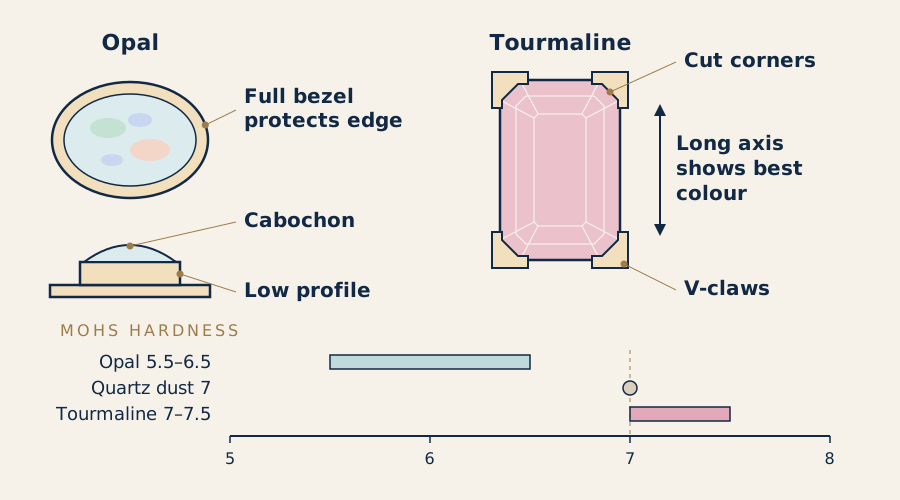
Hardness is resistance to scratching. Ordinary household dust contains quartz, which is about 7 on the Mohs scale, so any stone softer than 7 will slowly lose its polish with daily wear. Opal, at 5.5–6.5, will show fine scratches and dull over the years, and may need re-polishing every so often. Tourmaline, at 7–7.5, holds its polish well. For comparison, sapphire is 9 and diamond is 10.
Toughness is resistance to chipping and cracking, and here neither stone is a match for sapphire. Opal can crack from a hard knock or a sudden temperature change, such as going from a hot car into cold water. Tourmaline can chip at sharp corners. That is why setting choice matters so much this month. Our guide to tourmaline engagement rings and how they wear goes into everyday wear in more detail.
What is the best setting for an October birthstone ring?
The setting should match the stone's weak points. For an October birthstone ring, the usual approach is:
- Opal, full bezel: a rim of metal around the whole edge (also called a rub-over setting) protects the girdle, the stone's outer edge, from knocks. Most opals are cut as cabochons, smooth domes without facets, which suit a bezel well.
- Opal, low profile: keeping the stone close to the finger reduces the chance of it hitting door frames and benches.
- Boulder opal, custom bezel: freeform shapes usually need a bezel made to the outline of the individual stone.
- Tourmaline, claws: four or six claws suit oval, cushion and round tourmaline and let in plenty of light.
- Tourmaline, protected corners: for emerald cuts, choose cut corners and V-shaped claws or a bezel so the corners are not exposed.
- Earrings and pendants: lower-risk options for either stone, and the safest choice for crystal and white opal.
Metal colour changes how each stone reads. Yellow gold warms the play-of-colour in a dark-bodied Lightning Ridge opal, white metals sharpen blue and green tourmaline, and rose gold sits naturally with pink tourmaline. If you are combining October stones with other family birthstones in one piece, the layouts on our birthstone jewellery page are a good starting point.
How much does an October birthstone cost in Australia?
Opal is priced on body tone, brightness, pattern, the colours present (red is valued most), size and whether the stone is solid or composite. Tourmaline is priced mainly on colour saturation, variety and clarity. The ranges below are broad and only a guide; individual stones fall well outside them.
| Stone | Approximate price (AUD) |
|---|---|
| Opal doublet or triplet | about $20–$300 per stone, small to medium sizes |
| White opal (solid) | about $30–$500 per carat |
| Crystal opal (solid) | about $100–$2,000 per carat |
| Boulder opal | about $50–$3,000 per carat |
| Black opal (solid) | about $200 to over $10,000 per carat |
| Green or pink tourmaline | about $100–$600 per carat |
| Fine rubellite or indicolite | about $300–$1,500 per carat |
| Paraíba (copper-bearing) tourmaline | about $3,000 to over $30,000 per carat |
Paraíba prices depend heavily on origin reports and colour, so check the details in our page on what sets the price of copper-bearing tourmaline before comparing stones. Lab-created opal costs a fraction of good natural opal and must always be described as lab-created or synthetic. Natural stones should come with a clear description of type, any treatment and, for valuable opals, the body tone and whether the stone is solid.
Shop natural gemstones: opal, tourmaline and more
How do you care for opal and tourmaline jewellery?
- Opal: clean with lukewarm water, mild soap and a soft cloth. Never use an ultrasonic cleaner, steam or harsh chemicals.
- Doublets and triplets: wipe only; do not soak or wear them swimming, as water can lift the glue layer.
- Opal and temperature: avoid sudden changes, such as hot dishwater or a sauna, which can cause cracking or crazing (fine surface cracks).
- Tourmaline: warm soapy water and a soft brush. Avoid ultrasonic cleaners for included pinks and reds, and keep it away from strong heat, which can change its colour.
- Storage: keep each piece in its own soft pouch so harder stones, such as diamond, cannot scratch it.
- Checks: have claws and bezels looked at about once a year, especially on a daily-wear ring.
How do you choose an October birthstone? Step by step
- Decide how you will wear it. A daily ring points to tourmaline or a protected solid opal; earrings and pendants open up every option.
- Pick the stone. Opal for play-of-colour and an Australian story; tourmaline for a clear, faceted colour.
- Confirm what it is. Ask whether an opal is solid, a doublet, a triplet or lab-created, and whether a tourmaline has been heated or irradiated.
- Judge it in moving light. Tilt an opal to see how its colour flashes from every angle; turn a tourmaline to check the face-up colour is not dark or washed out.
- Check the size in millimetres. Opal is light for its size (specific gravity about 2.15) and tourmaline about 3.06, so carat weight alone can mislead.
- Match the setting. Bezel for opal, claws with protected corners for tourmaline, and a metal colour that suits the stone.
Free consultation
Talk to a gemologist
Compare stones in person or online with Raj Sood, Graduate Gemologist (GIA), AJP (GIA).
Book a consultationShop this shape
FAQ
Common questions
What is the October birthstone?
October has two birthstones: opal and tourmaline. Opal is the traditional stone, and tourmaline was added as an alternative on the 1912 standard list; pink tourmaline is the shade most often linked with October today.
What colour is the October birthstone?
Opal shows many colours at once through play-of-colour, on a white, crystal or dark body. Tourmaline comes in almost every colour, but pink is the shade most often linked with October.
Is opal good for an engagement ring?
It can be, with care. Opal is 5.5–6.5 on the Mohs scale and can scratch or crack, so a solid opal in a low, full bezel is the usual choice, removed for sport, gardening and cleaning.
Is opal bad luck?
No. The bad-luck myth is usually traced to an 1829 novel by Sir Walter Scott. In many traditions opal stands for hope and creativity.
Is tourmaline durable enough for everyday wear?
Yes, for most people. At 7–7.5 on the Mohs scale it resists everyday scratching, though it can chip from a sharp knock, so protected corners or a bezel help.
Is Australian opal different from Ethiopian opal?
Yes. Most Australian opal is stable when wet, while much Ethiopian opal is hydrophane and can absorb water and lose colour temporarily. Both are natural opal, so the choice comes down to look, price and how you will wear it.

Ask a gemologist
Not sure which diamond to choose?
Raj Sood is a Graduate Gemologist (GIA) and master jeweller. Bring the stones you are considering, or send the reports, and he will tell you honestly which one is better and why.
Keep learning
Related guides
Explore more
More guides on this topic
Education