
Gemstones
Watermelon Tourmaline: Colour, Durability, Value and Care Guide
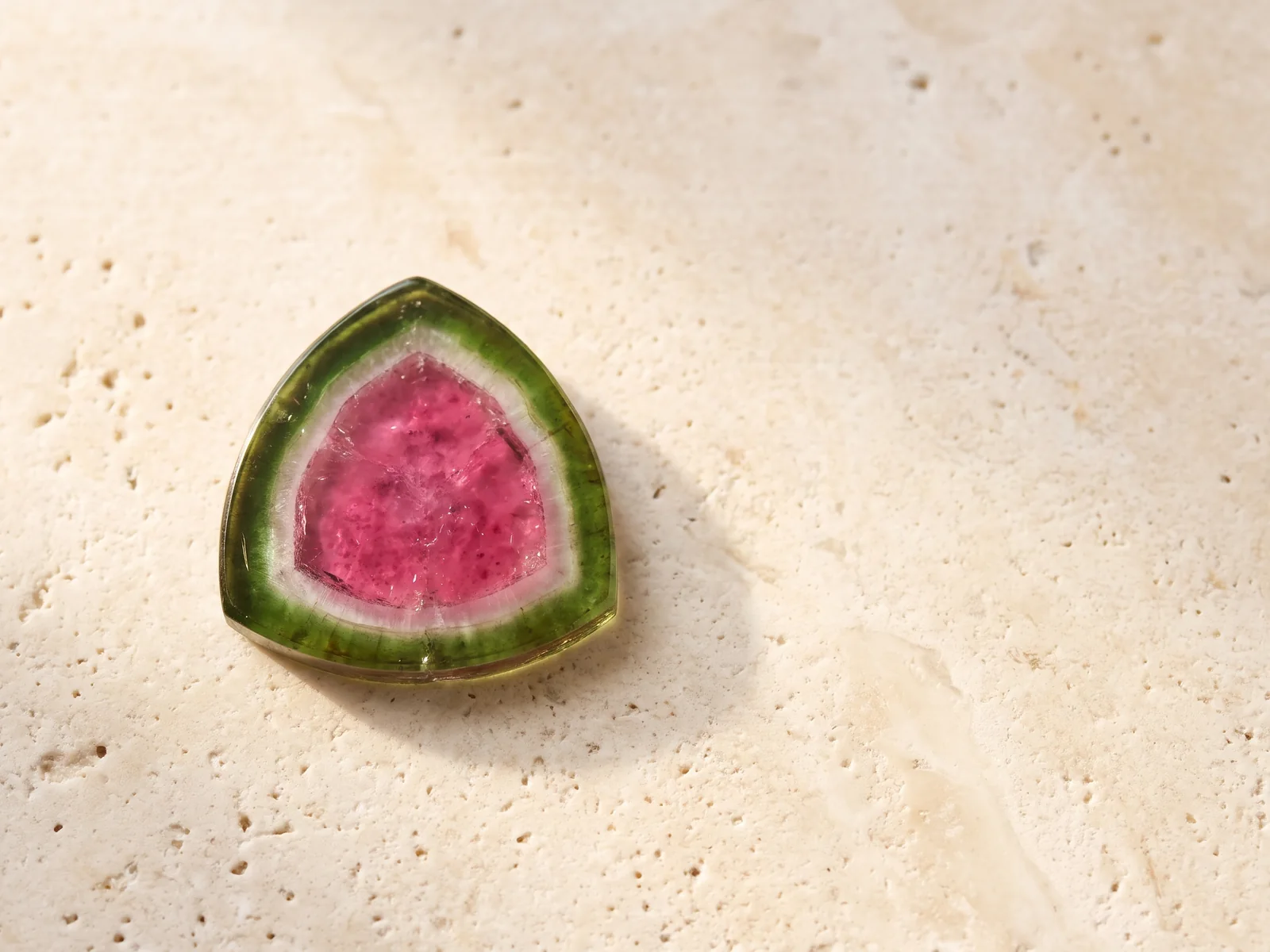
Watermelon tourmaline is one of the few gems that shows its own growth story in one stone, a pink centre ringed with green. Here is how it forms, how tough it really is, and what separates a fine piece from an ordinary one.
 Reviewed by Raj Sood, Graduate Gemologist (GIA), AJP (GIA)Master jeweller and Graduate Gemologist (GIA) · reviewed 4 November 2026
Quick answer
Watermelon tourmaline is natural tourmaline, usually elbaite, that grew with a pink or red core and a green rim, like a slice of watermelon. It rates 7–7.5 on the Mohs scale with fair toughness, so it suits pendants, earrings and carefully set rings. Value depends on sharp colour contrast, saturation, clarity, size and whether slices are resin-stabilised.
What is watermelon tourmaline?
Watermelon tourmaline is a colour-zoned tourmaline: a single crystal with a pink or red core surrounded by a green outer layer, often with a thin colourless or white band in between. Cut across the crystal, it looks just like a slice of watermelon, which is where the trade name comes from. It is not a separate mineral, but a colour variety within the wider tourmaline family, a group of complex boron silicate minerals that come in more colours than almost any other gem.
Most watermelon material is elbaite, the lithium-rich tourmaline species that also gives us most pink, green and blue gem tourmaline. Some slices, particularly from Madagascar, are liddicoatite (now formally fluor-liddicoatite), a closely related calcium-rich species known for triangular and star-shaped zoning. To the eye and in jewellery the two behave the same way; telling them apart needs laboratory chemical analysis.
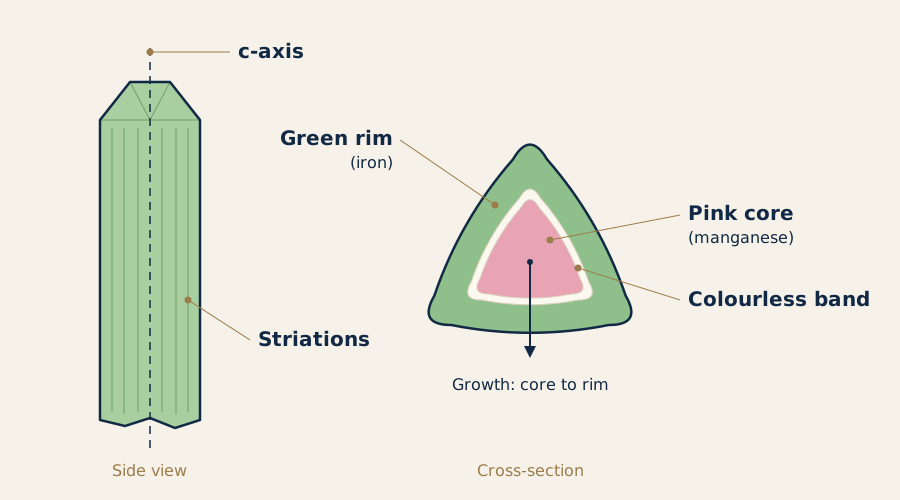
The zoning forms while the crystal grows in a pegmatite, a very coarse-grained granite pocket rich in rare elements such as lithium and boron. Tourmaline crystals grow outward along their length and their sides. When the fluid feeding the crystal is rich in manganese, the new layers grow pink; when iron (and sometimes titanium) becomes more available, the layers turn green. Each colour band is a record of the fluid changing over time. Occasionally the order is reversed, giving a green core with a pink rim, sometimes called reverse watermelon.
Tourmaline crystals are trigonal, so a true cross-section usually has a rounded triangular outline, and the long sides carry fine parallel grooves called striations. Both clues help a gemmologist recognise natural crystal slices. If any term here is new, our glossary of jewellery and gem terms explains it, and our coloured gemstone guides cover the other gems mentioned below.
What colours and cuts does watermelon tourmaline come in?
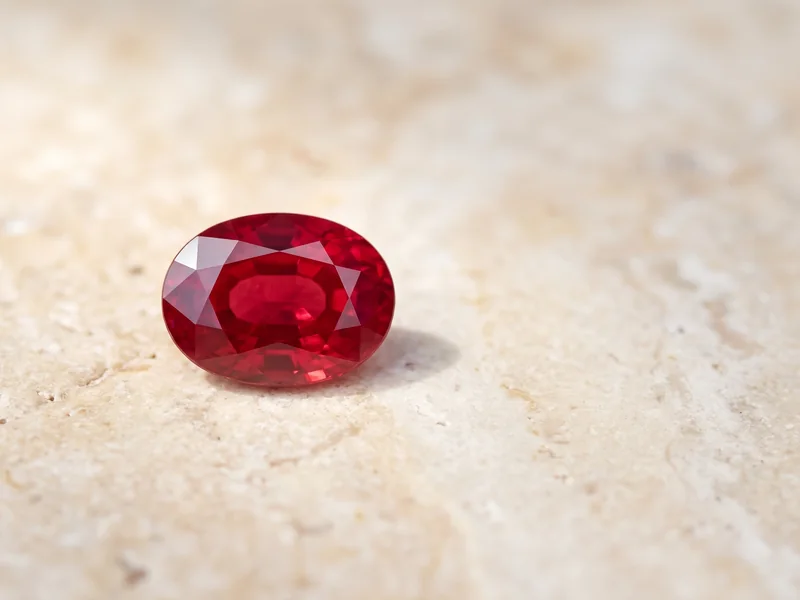
The classic look is a pink-to-red centre with a green rim, but the range is wide. Pinks run from pale candy pink to deep magenta; greens from mint and leaf green to dark olive and blue-green. Some crystals have three or more bands, and some show a sharp boundary while others blend softly. When the pink in the core is strong and saturated, it approaches rubellite, the rich pink-to-red tourmaline; when the rim leans blue, it overlaps with blue indicolite tourmaline.
How the crystal is cut decides which pattern you see. Cutters work with the zoning in two main ways:
| Cut style | How it is cut | What you see | Typical use |
|---|---|---|---|
| Slice | Across the crystal, at right angles to its length; polished flat, about 2–6 mm thick | Pink centre, green rim, often a triangular outline | Pendants, statement rings, bezel-set earrings |
| Bicolour bar or step cut | Along the crystal's length | Pink at one end, green at the other | Faceted rings, earrings, pendants |
| Faceted round, oval or cushion | Usually along the length, with the colour boundary across the stone | Two colours split across the face | Rings and earrings |
| Cabochon | Domed, unfaceted | Softer colour blend, hides inclusions | Pendants and rings |
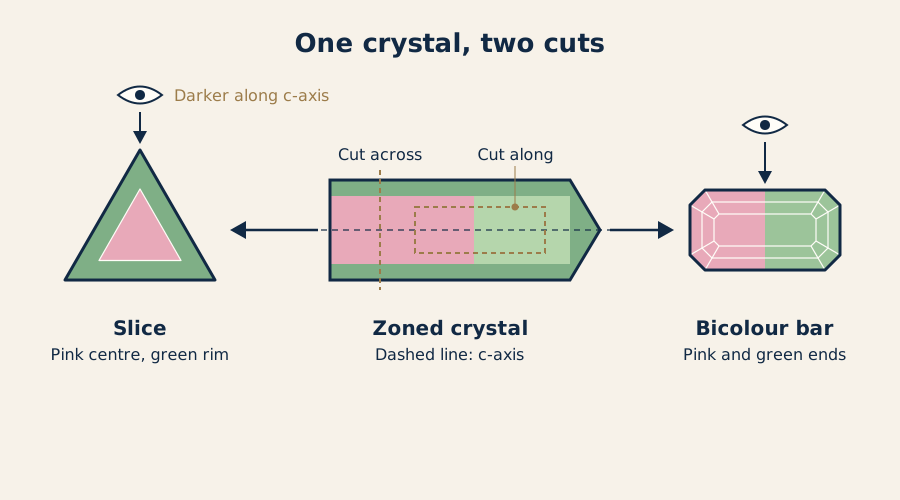
Tourmaline has strong pleochroism, meaning it shows different colour intensity depending on the direction you look through it. Looking down the length of the crystal (along its c-axis, the main growth axis) the colour is much darker, sometimes almost closed. That is why slices, which are viewed straight down that axis, are usually cut thin to let light through, and why faceted bicolour stones are normally cut along the crystal's length.
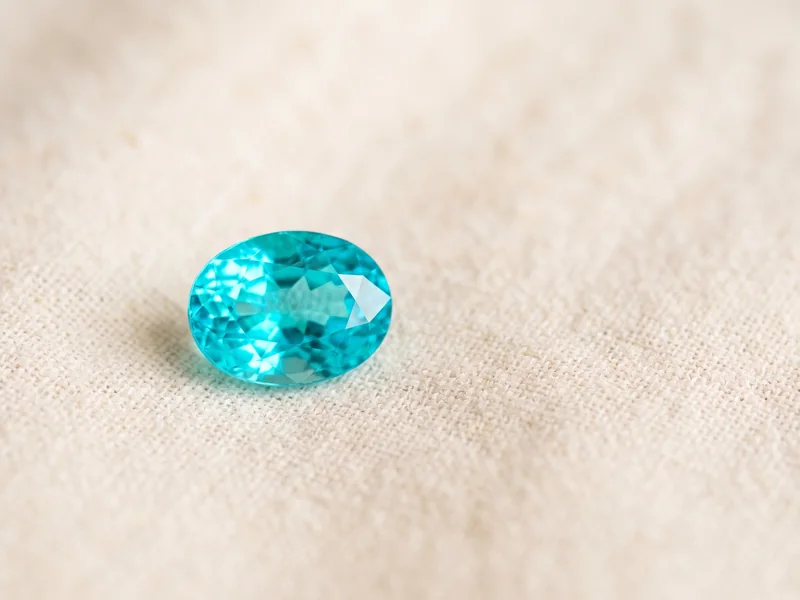
Watermelon is a natural bicolour, which sets it apart from single-colour varieties such as neon copper-bearing Paraíba tourmaline, whose glow comes from copper rather than zoning.
How hard is watermelon tourmaline compared with other gems?
Watermelon tourmaline rates 7–7.5 on the Mohs scale, the scale of scratch resistance from 1 (talc) to 10 (diamond). That makes it harder than household dust, which contains quartz at about 7, so it resists everyday scratching reasonably well. Hardness is only half the story, though. Toughness, a gem's resistance to chipping and breaking, is rated only fair for tourmaline. It has no easy cleavage (a flat plane along which a crystal splits), but it is brittle and breaks with a curved, shell-like fracture if knocked hard on an edge.
| Gem | Mohs hardness | Toughness | Everyday ring wear |
|---|---|---|---|
| Diamond | 10 | Good (can cleave) | Very well suited |
| Sapphire | 9 | Excellent | Very well suited |
| Watermelon tourmaline | 7–7.5 | Fair | Suitable with a protective setting and some care |
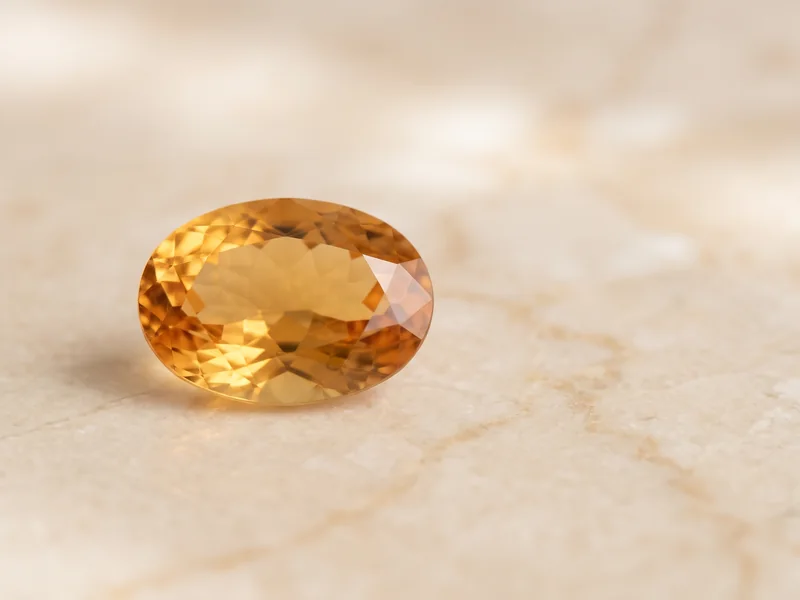
| Ametrine and citrine (quartz) | 7 | Good | Suitable with a protective setting |
| Moonstone, sunstone, labradorite (feldspar) | 6–6.5 | Poor to fair (cleavage) | Occasional wear; better in pendants |
| Opal | 5.5–6.5 | Poor to fair | Occasional wear; protective setting essential |
So tourmaline sits in the middle: tougher in practice than the feldspars such as moonstone with its easy cleavage, glittering sunstone and flashy labradorite, and harder than opals like Australian black opal or transparent crystal opal. It is a little harder than citrine, the yellow quartz, but not as tough. Slices are the most vulnerable form, because they are thin and have long exposed edges.
Tourmaline is also pyroelectric and piezoelectric: warming or squeezing it builds up a small electric charge. In a shop window under warm lights, a tourmaline can attract dust quickly. It is harmless, but it is one reason the stone needs regular gentle cleaning.
Is watermelon tourmaline good for a ring?
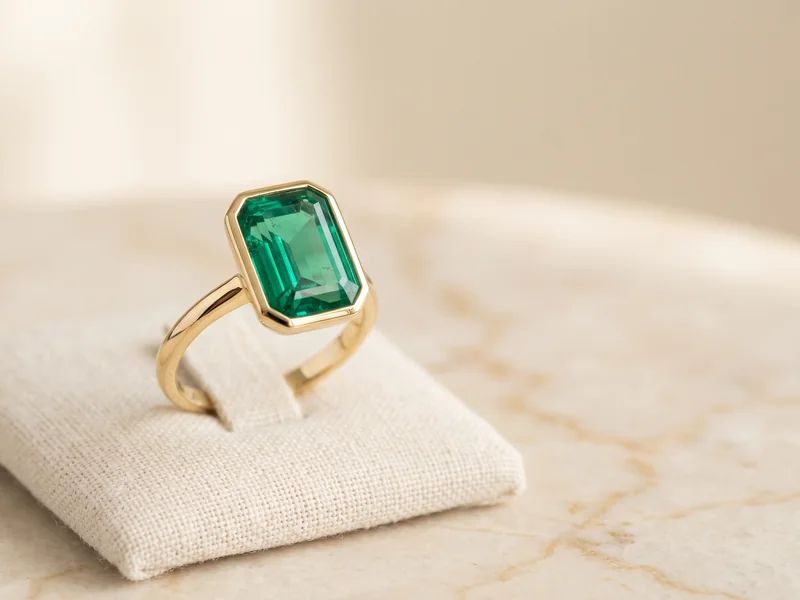
Yes, with the right setting and realistic expectations. A faceted watermelon tourmaline in a protective setting can be worn often, but it is not a gem to wear while gardening, at the gym or doing renovation work. A slice is better suited to a statement ring worn now and then, or to a pendant or earrings, where knocks are rare. If you are weighing it up for a proposal, our guide to tourmaline engagement ring durability goes into everyday wear in more detail.
- Bezel: a rim of metal around the whole edge. The most protective choice, and the standard way to set a slice.
- Half-bezel or tension-free collet: covers the most exposed sides while showing more of the colour.
- Four or six claws: fine for faceted stones with a sensible depth; claws should sit at the corners of step cuts, where breaks tend to start.
- Halo: small diamonds around the stone shield its edge and frame the pink and green.
- Height: a lower setting reduces the chance of the stone taking a direct knock.
Metal colour changes the look. Yellow and rose gold warm up the pink core; white gold and platinum make the green rim look cooler and crisper. Because tourmaline is heat sensitive, any resizing or repair should be done with the stone removed or carefully protected, since a jeweller's torch can crack it or alter its colour.
Not sure which one is right?
Send us the stones you are looking at and our gemologist will tell you which to choose and why.
Is watermelon tourmaline treated?
Many watermelon tourmalines are untreated, but treatments do occur and should always be disclosed. The main ones:
- Resin or polymer stabilisation: common in slices. Natural slices often contain fractures, and a clear resin is soaked in to hold them together and improve polish. Some slices are also backed with resin or a thin layer of material for strength.
- Fracture filling: oil or resin worked into surface-reaching cracks to make them less visible.
- Irradiation: used across the tourmaline trade to deepen pink; it is usually stable and very hard to detect.
- Heating: used on some green and blue tourmaline to lighten or change the colour, but less common on watermelon because it can fade the pink.
Treatments are not necessarily bad; they just change how you care for the stone and what it is worth. A stabilised slice should never go in an ultrasonic cleaner or near solvents, and it is valued below an untreated slice of the same look. Ask the seller to state any treatment in writing, and for an important stone, ask for a report from an independent gem laboratory.
Where does watermelon tourmaline come from?
Watermelon tourmaline forms only in lithium-rich pegmatites, so it comes from a handful of well-known regions. Most of the material on the market today is from Brazil and Africa.
| Source | Known for |
|---|---|
| Brazil (especially Minas Gerais) | Long elbaite crystals, faceted bicolour bars and slices; a major source |
| Madagascar | Large slices, including liddicoatite with triangular and star-shaped zoning |
| Mozambique and Nigeria | Faceted bicolour and zoned crystals |
| Namibia and Afghanistan | Crystals and some faceting material |
| United States (Maine, California) | Historic mines, now mostly mineral specimens |
| Australia | Tourmaline occurs in some pegmatites, but gem watermelon material is uncommon |
Australia is far better known for its opals, such as boulder opal from western Queensland, and for sapphires than for tourmaline. Australian parti-colour sapphires, with blue, green and yellow zones in one stone, are the nearest local equivalent to a zoned gem, and are much harder, at 9 on the Mohs scale. Country of origin rarely changes the price of watermelon tourmaline much; the pattern and quality matter far more. If you want to learn more about how tourmaline grows in pegmatite pockets, our main tourmaline guide covers the whole group.
How can you tell if watermelon tourmaline is real?
Gem-quality lab-created tourmaline is not commercially available, so the risk is not synthetic tourmaline but imitations: coloured glass, assembled stones (two pieces glued together) and dyed or layered materials made to look like slices. A gemmologist checks the following:
- Refractive index: about 1.62–1.64 on a refractometer, with a birefringence (the difference between the two readings) of about 0.018–0.020. Glass shows a single reading.
- Doubling: with a 10× loupe, facet edges at the back of a faceted stone look doubled because light splits in two inside tourmaline. Glass shows no doubling.
- Pleochroism: a dichroscope shows two different shades as it is turned. Glass and most dyes show none.
- Specific gravity: about 3.06, noticeably heavier than quartz (2.65) and most glass.
- Natural features: a rounded triangular outline in slices, striations along the crystal sides, and liquid-filled 'trichites' (thread-like inclusions) or fine fractures. Gas bubbles and swirls point to glass.
- Joins: a flat plane where the colour changes abruptly, especially with bubbles in it, can indicate an assembled stone.
One honest look-alike is worth knowing about. Ametrine, the natural purple-and-gold quartz, is also a natural bicolour, but it splits purple and yellow and has a lower refractive index of about 1.54–1.55, so a refractometer separates the two in seconds.
What affects watermelon tourmaline price in Australia?
There is no formal grading scale for watermelon tourmaline, but dealers and gemmologists judge it on the same few points:
- Colour contrast: a clear, saturated pink and a lively green, with a sharp boundary. Washed-out or brownish colours are worth much less.
- Pattern: in slices, a centred core with an even rim all the way round. In bars, a roughly even split between pink and green.
- Clarity: pink and watermelon tourmaline are Type III gems in GIA's clarity classification, meaning they almost always grow with inclusions, so some are expected. Eye-clean faceted bicolour stones are scarce and priced accordingly.
- Size: clean faceted stones above about 5 carats are uncommon; large slices are easier to find.
- Treatment: untreated stones are valued above stabilised or filled ones.
- Cut: even polish, a sensible depth and good light return in faceted stones; a smooth, flat, well-polished surface in slices.
| Type | Approximate price range (AUD) |
|---|---|
| Commercial slice, 15–30 mm, some fractures or stabilised | about $30–$300 each |
| Fine slice, sharp centred zoning, strong colour | about $300–$1,500 or more each |
| Faceted bicolour, small inclusions | about $80–$400 per carat |
| Faceted bicolour, eye-clean, strong colour, 3 ct+ | about $400–$1,500 per carat |
These are broad ranges only and move with the market and the individual stone. Tourmaline is the modern alternative birthstone for October alongside opal, so many people buy watermelon pieces as an October birthstone gift; the stone's quality, not the occasion, should guide what you pay.
Shop natural gemstones
How do you care for watermelon tourmaline jewellery?
Watermelon tourmaline is easy to look after if you avoid heat, harsh cleaning and hard knocks. Treated slices need the most care.
- Clean gently. Use lukewarm water, a drop of mild dishwashing liquid and a soft toothbrush, then rinse and pat dry with a lint-free cloth.
- Skip the machines. Never use an ultrasonic or steam cleaner; vibration and heat can open fractures and damage resin in stabilised stones.
- Keep it away from heat. Avoid saunas, hot dishwashing water and sudden temperature changes, which can crack tourmaline.
- Take it off for rough work. Remove rings for gardening, sport, cleaning and lifting, where an edge can take a knock.
- Store it separately. Keep it in a soft pouch away from diamonds and sapphires, which can scratch it, and from softer gems such as opal, which it can scratch.
- Have the setting checked. Ask a jeweller to inspect claws or bezels about once a year, and to remove the stone before any soldering or resizing.
Free consultation
Talk to a gemologist
Compare stones in person or online with Raj Sood, Graduate Gemologist (GIA), AJP (GIA).
Book a consultationShop this shape
FAQ
Common questions
Is watermelon tourmaline rare?
Watermelon tourmaline is not extremely rare, and commercial slices are widely available. Stones with sharp, saturated, evenly centred zoning, and eye-clean faceted bicolour stones, are genuinely scarce.
Can you wear a watermelon tourmaline ring every day?
A faceted stone in a bezel or well-made claw setting can be worn often, as long as you take it off for rough work. Thin slices are more fragile and suit occasional wear, pendants or earrings better.
Why is my watermelon tourmaline slice so dark?
Tourmaline shows its darkest colour when you look along the length of the crystal, which is exactly how a slice is viewed. Thinner slices and settings with an open back let more light through.
Is watermelon tourmaline the same as bicolour tourmaline?
Watermelon is a type of bicolour tourmaline. The name usually means pink and green zoning, especially a pink core with a green rim, while bicolour covers any tourmaline with two colours.
Is there lab-created watermelon tourmaline?
Gem-quality lab-created tourmaline is not sold commercially. The imitations you may meet are glass, assembled stones and dyed materials, which a gemmologist can separate with a refractometer and loupe.
Does watermelon tourmaline fade?
Natural and irradiated pink tourmaline is generally stable in normal light. Strong heat is the real risk, as it can fade the pink or crack the stone.

Ask a gemologist
Not sure which diamond to choose?
Raj Sood is a Graduate Gemologist (GIA) and master jeweller. Bring the stones you are considering, or send the reports, and he will tell you honestly which one is better and why.
Keep learning
Related guides
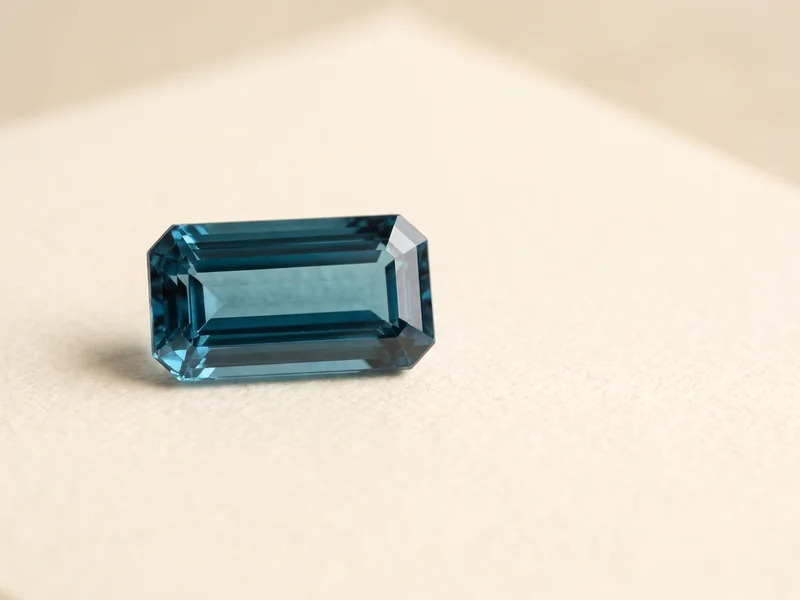 GemstonesTourmaline
 GemstonesRubellite Tourmaline
 GemstonesTourmaline Engagement Rings: Colour and Durability
 GemstonesParaíba TourmalineGemstonesGemstones | Coloured Gemstones, Birthstones and Custom JewelleryGemstonesIndicolite Tourmaline
 GemstonesOctober Birthstone: Opal and Tourmaline
 GemstonesCitrine
Explore more
More guides on this topic
Education