
Gemstones
Gemstone Colour Grading: How Hue, Tone and Saturation Decide a Stone's Colour
In a coloured gemstone, colour matters more than anything else on the grading list. Here is how gemstone colour grading actually works, so you can read a report, compare two sapphires side by side and understand what you are paying for.
 Reviewed by Raj Sood, Graduate Gemologist (GIA), AJP (GIA)Master jeweller and Graduate Gemologist (GIA) · reviewed 4 November 2026
Quick answer
Gemstone colour grading describes a coloured stone by three things: hue (the basic colour, such as blue or slightly purplish blue), tone (how light or dark, usually on a 0–10 scale) and saturation (how pure or intense, from greyish to vivid). The most valued stones show a pure hue, medium to medium-dark tone and strong to vivid saturation.
What is gemstone colour grading?
Gemstone colour grading is the way a gemologist describes and compares the colour of a coloured stone such as a sapphire, ruby, emerald or tourmaline. Instead of a single letter, the colour is broken into three parts: hue (which colour it is), tone (how light or dark) and saturation (how strong or pure the colour is). Together they pin down a colour precisely enough that two people can picture the same stone.
This is very different from the D-to-Z diamond colour scale, which measures how little colour a white diamond has. With coloured gems the colour is the whole point, so the question is not "how much colour is missing?" but "how good is the colour that is there?" For most coloured stones, colour accounts for more of the value than clarity, cut or carat weight.
There is no single worldwide standard. GIA (the Gemological Institute of America) teaches a hue, tone and saturation system with 31 hues, a 0–10 tone scale and a 1–6 saturation scale, and many gemologists, including those trained at GIA, use it to describe stones. Other labs, such as GRS, Gübelin and SSEF, use their own wording and sometimes trade names like "royal blue". Most commercial lab reports for coloured gems confirm identity, treatment and sometimes origin, and describe the colour in words, without giving it a letter or number grade.
If you are new to coloured stones, our coloured gemstone guides cover each gem in turn, and any unfamiliar term here is explained in our plain-English jewellery glossary.
What is hue in a gemstone?
Hue is the first impression: blue, red, green, purple, orange and so on. Very few gems are a single pure hue. Most show a main hue with a secondary one, called a modifier. A sapphire might be "violetish blue" or "slightly greenish blue"; a ruby might be "purplish red" or "orangy red".
GIA's system arranges 31 hues around a colour wheel and writes them in a shorthand. A capital letter is the main hue, lower-case letters are modifiers, and "sl" or "vsl" mean slightly or very slightly. So slpB is slightly purplish blue and bG is bluish green. The same idea of modifiers appears in coloured diamonds; see how modifiers and overtones work in coloured diamonds for the diamond version.
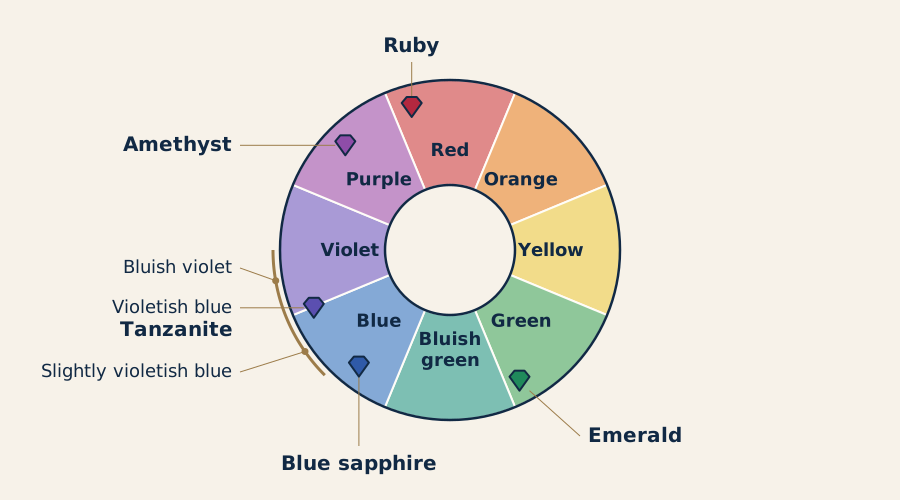
For most gems, the closer the hue is to the pure main colour, the higher the value. A modifier of about 10–15% purple in a blue sapphire is widely liked because it looks rich in warm light. A green modifier in the same sapphire usually lowers the price, and a strong one can turn it into a "teal" stone, which some people now choose for exactly that look.
Related guideTourmaline Engagement Rings: Colour and DurabilityWhat are tone and saturation in gemstones?
Tone is how light or dark the colour looks, ignoring the hue. On GIA's scale, 0 is colourless and 10 is black. Gem-quality stones almost always fall between about 2 (very very light) and 8 (dark). Saturation is the strength or purity of the colour, from 1 (greyish or brownish) to 6 (vivid). Cool hues such as blue, green and violet dull towards grey; warm hues such as red, orange and yellow dull towards brown.
| Dimension | Scale | Low end | High end | What most people prefer |
|---|---|---|---|---|
| Hue | 31 named hues | Strong modifier (e.g. greenish blue) | Pure hue (e.g. blue) | Pure hue or a slight, pleasing modifier |
| Tone | 0–10 | 2–3: very light, pastel | 8–9: very dark, inky | About 6–7, medium to medium-dark |
| Saturation | 1–6 | 1–2: greyish or brownish | 6: vivid | 5–6, strong to vivid |
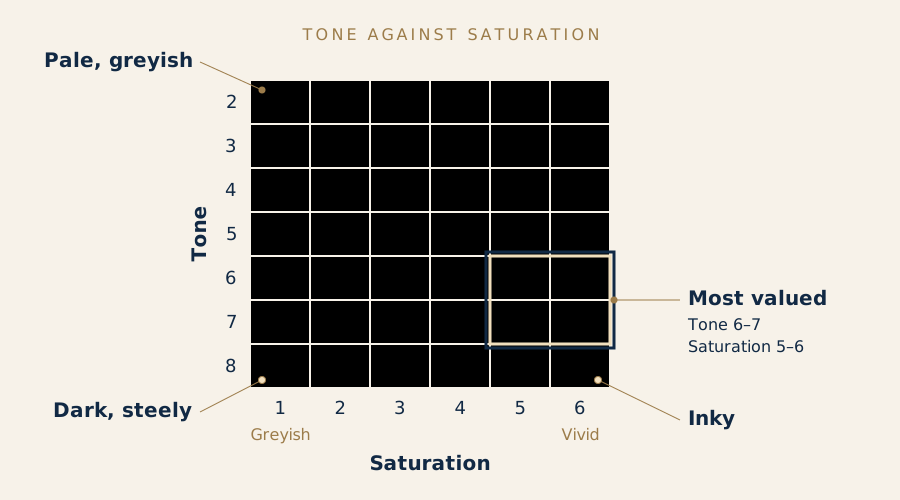
Tone and saturation work together. A stone can be dark but greyish, which looks dull and steely, or light but vivid, which looks bright and fresh. Very dark tones also limit saturation, because the stone starts returning less light. That is why the sweet spot for most gems is medium to medium-dark, about 6–7 on the tone scale, with strong to vivid saturation.
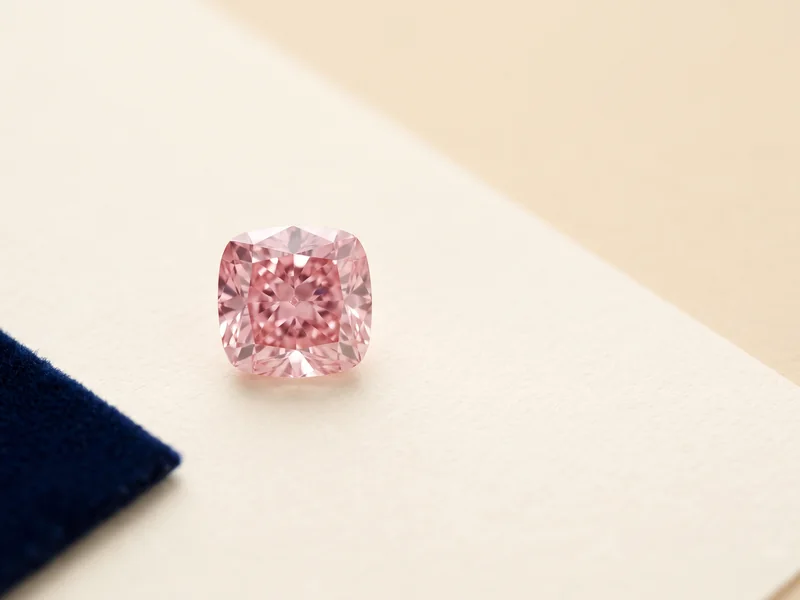
In coloured diamonds, tone and saturation are combined into one intensity grade instead, running from Faint to Fancy Vivid. Our guide to the Faint to Vivid intensity scale shows how that compares.
What is the best colour for a sapphire, ruby, emerald and other gems?
Each gem has its own ideal, and the ideal is set by the market rather than by a rule book. Here is how gemologists generally describe the most sought-after colour in the stones most often set in Australian jewellery, along with the hardness (Mohs) and refractive index (RI, how strongly the stone bends light) that affect how the colour shows.
| Gem | Most sought-after hue | Tone | Saturation | Common colour problem |
|---|---|---|---|---|
| Blue sapphire (Mohs 9, RI 1.76–1.77) | Blue to slightly violetish blue | Medium to medium-dark | Strong to vivid | Too dark and inky, or greyish |
| Ruby (Mohs 9, RI 1.76–1.77) | Red to slightly purplish red | Medium-dark | Vivid | Brownish or orangy modifier |
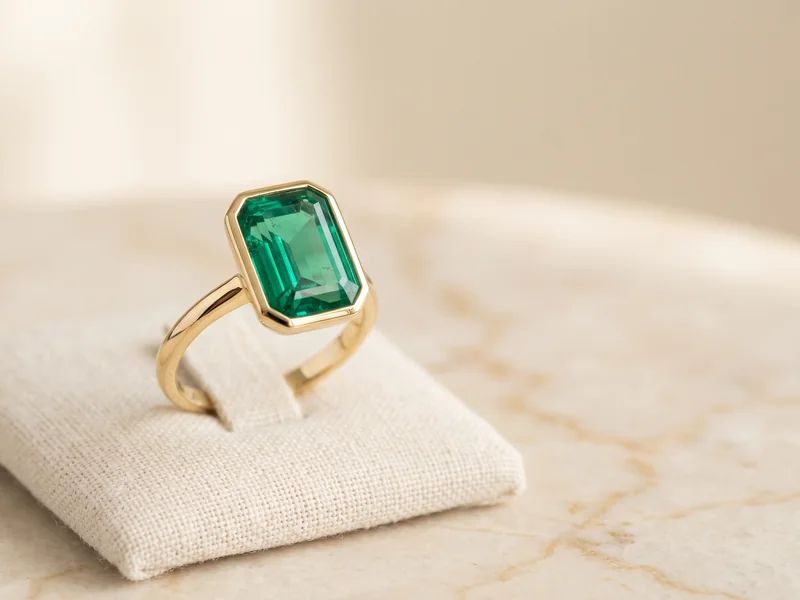
| Emerald (Mohs 7.5–8, RI 1.57–1.58) | Green to slightly bluish green | Medium to medium-dark | Strong to vivid | Too yellowish, or too light to be called emerald |
| Amethyst (Mohs 7, RI 1.54–1.55) | Purple to reddish purple | Medium-dark | Vivid | Colour zoning, brownish tint |
| Tanzanite (Mohs 6–7, RI 1.69–1.70) | Violetish blue to bluish violet | Medium-dark | Strong to vivid | Light, washed-out colour |
| Aquamarine (Mohs 7.5–8, RI 1.57–1.58) | Blue to slightly greenish blue | Light to medium | Moderate to strong | Too pale or too green |
| Tourmaline (Mohs 7–7.5, RI 1.62–1.64) | Varies by colour | Medium | Strong to vivid | Too dark along the crystal length |
Australian sapphires from central Queensland and the New England region of New South Wales are a useful example. Many are naturally dark, tone 7–8, with an inky blue or greenish blue colour, so they are often cut shallower to lighten them. Australia is also known for parti sapphires, which show two or more colours, such as yellow and green, in one stone; these are judged on the pattern and balance of colour rather than a single hue.
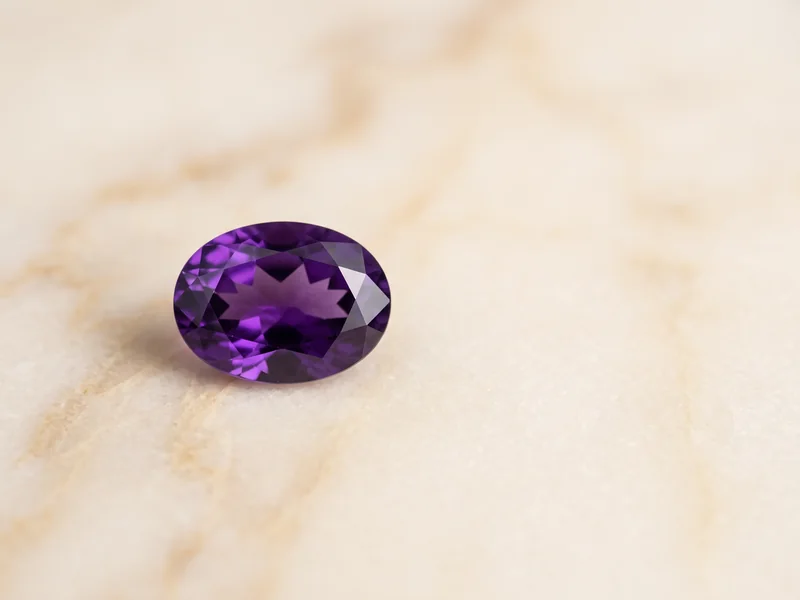
Some gems have very wide colour ranges. Tourmaline comes in almost every hue, and the right choice is often personal; see tourmaline's huge colour range. Amethyst can lose colour with long exposure to strong light or heat, which our page on amethyst colour and why it can fade explains. If you are weighing up colour for a ring you will wear every day, start with choosing a coloured engagement stone.
Trade names are part of this too. "Pigeon's blood" (ruby), "royal blue" and "cornflower blue" (sapphire) and padparadscha (a pinkish orange to orangy pink sapphire) are used by some labs, each with their own criteria. They are descriptions of colour, not formal grades, and two labs may not agree on the same stone.
Not sure which one is right?
Send us the stones you are looking at and our gemologist will tell you which to choose and why.
Why does a gemstone look a different colour in different light?
Colour is only as good as the light it is seen in. Gemologists judge colour under daylight-equivalent light, about 5,500–6,500 K (kelvin, a measure of how warm or cool the light is), against a neutral white or grey background. The same sapphire can look a little greener under cool LED lighting and a little more purple under warm household globes.
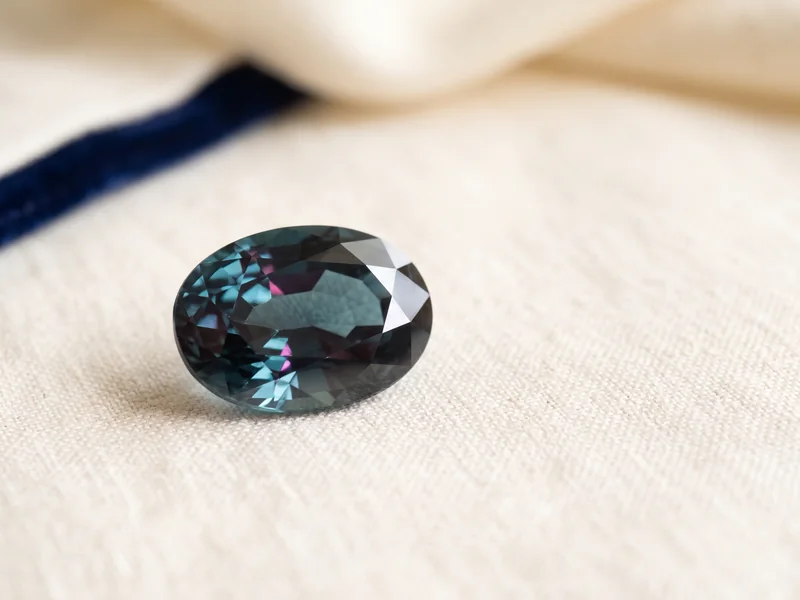
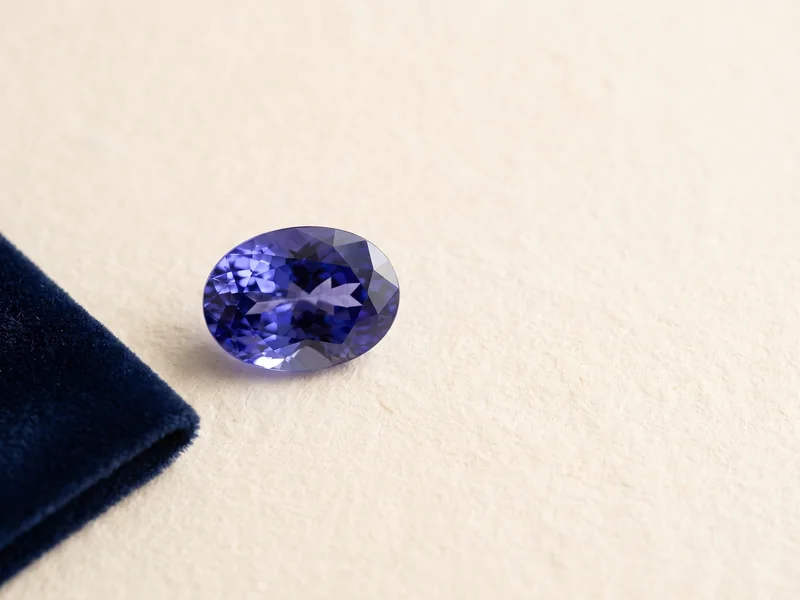
- Colour change: some gems change hue under different light. Alexandrite shifts from bluish green in daylight to purplish red under warm light; see alexandrite's green-to-red colour change. Colour-change sapphires typically move from blue to purple.
- Pleochroism: many gems show different colours when viewed along different crystal directions. Ruby and sapphire show two (dichroic); tanzanite shows three (trichroic). A good cutter orients the rough so the finest colour faces up.
- Colour zoning: uneven bands or patches of colour inside the stone, common in sapphire and amethyst. Zoning seen face-up lowers the grade; zoning only visible from the side often does not matter.
- Windowing: a washed-out, see-through patch in the centre where light leaks out of a shallow pavilion (the lower half of the stone).
- Extinction: dark, almost black areas, often at the ends of ovals or in very dark stones, where little light returns to the eye.
Because cut changes how much light comes back, the face-up colour is what is graded, not the colour of the rough. A stone with fine colour but a large window can look paler than its tone suggests, so always judge colour and cut together.
How is gemstone colour grading different from diamond colour grading?
White diamonds and coloured gems are graded for opposite reasons. In a colourless diamond, less colour is better, so labs grade it on a letter scale from D (colourless) to Z (light yellow or brown). In a coloured gem, the right colour, and enough of it, is what you want.
| Coloured gemstone | White diamond | Fancy colour diamond | |
|---|---|---|---|
| What is judged | Quality of hue, tone and saturation | Absence of colour | Hue and intensity of colour |
| Scale | Described in words or hue/tone/saturation notation | D to Z letter grades | Faint to Fancy Vivid, plus hue |
| Grade on a typical report | Usually a colour description, not a grade | Yes, a letter | Yes, a named grade |
| Ideal | Pure hue, medium-dark tone, vivid saturation | D–F colourless | Pure hue at Fancy Intense or Vivid |
| Biggest price driver | Colour | Cut, colour, clarity, carat together | Colour, then rarity of the hue |
If you are comparing white diamonds, our guides to G colour diamonds, warmer J colour diamonds and G vs H for an engagement ring show how a single letter grade looks in a setting. For coloured diamonds, see how labs grade fancy colour diamonds, which uses a system much closer to the gemstone approach described here.
Are gemstone colours treated, and does it matter?
Many coloured gems are treated to improve their colour, and this is a normal, long-accepted part of the trade, as long as it is disclosed. The treatment does not change the grade of the colour you see, but it does change rarity and price.
- Heat treatment: very common in sapphire and ruby, used to deepen blue, remove silk or reduce purple. Almost all tanzanite is heated to bring out the violetish blue. Heat is stable and permanent.
- Lattice (beryllium) diffusion: a stronger process that adds colour from outside the stone, used on some orange, pink and yellow sapphires. It must be disclosed and sells for much less than heated-only stones.
- Oil or resin: used in emerald mainly to improve clarity, which also affects how evenly the colour appears.
- Irradiation: used on some topaz and tourmaline; in diamonds it is often combined with HPHT, covered in HPHT and irradiation treatments in diamonds.
Origin matters too. Lab-created (synthetic) sapphire, ruby, emerald and alexandrite have the same chemistry and hardness as the natural gems and are described with the same hue, tone and saturation terms. Their colour is often very even and saturated. They cost a small fraction of natural stones and must always be sold as lab-created or synthetic. Natural stones with fine, unheated colour are the rarest of all.
How does gemstone colour grading affect price?
For most coloured gems, colour sets the price more than anything else. Two 1 carat sapphires of the same size and clarity can differ several times over in price because one is a medium-dark vivid blue and the other is a light, slightly greyish blue. The same pattern drives coloured diamonds, as our page on what pushes fancy colour diamond prices up shows.
| 1 ct natural blue sapphire, eye-clean | Typical colour description | Approximate price range (AUD) |
|---|---|---|
| Light or greyish blue | Tone 3–4, saturation 2–3 | about $400–$1,500 |
| Very dark, inky blue | Tone 8, saturation 3–4 | about $300–$1,500 |
| Medium-dark strong blue, heated | Tone 6–7, saturation 5 | about $2,000–$6,000 |
| Medium-dark vivid blue, unheated | Tone 6–7, saturation 6 | about $6,000–$15,000 or more |
| Lab-created blue sapphire | Often tone 6–7, saturation 5–6 | about $50–$300 |
These are broad ranges only; prices vary with origin, treatment, cut quality and the market. Price also climbs steeply with size, because fine colour in a large crystal is rarer. In general, saturation is rewarded most, then tone, then hue: a vivid stone with a slight modifier usually outprices a pure-hue stone that looks greyish.
Shop natural gemstones
Does the metal setting change how a gemstone's colour looks?
Yes, more than many people expect. Metal reflects into the stone and frames its edges. White gold and platinum keep blues, purples and cool greens looking crisp. Yellow gold warms everything around it, which flatters rubies, orange and yellow sapphires and many emeralds, but can add a greenish cast to a pale blue stone such as aquamarine. Rose gold suits pinks and peaches, including morganite and padparadscha-coloured sapphires.
The setting style matters as well. An open setting lets light in from the sides and back, which can brighten a dark Australian sapphire. A full bezel with a closed back can deepen a pale stone but may make a dark one look darker still.
How do you judge gemstone colour yourself? Step by step
- Use the right light. Look in daylight near a window, out of direct sun, or under a daylight-balanced lamp, away from coloured walls and clothing.
- Look face-up. Judge the stone from above at normal viewing distance, the way it will be seen when worn.
- Name the hue. Say the main colour and any modifier you notice, such as violetish blue or greenish blue.
- Judge the tone. Against a white card, is it light, medium or dark? Aim for medium to medium-dark for most gems.
- Judge the saturation. Look for grey in blues and greens or brown in reds and oranges. The less you see, the better.
- Rock the stone. Tilt it slowly to check for a window, dark extinction areas and colour zoning across the face.
- Check warm light too. Look under a warm globe to see how the colour shifts in the evening.
- Read the report. Confirm the gem, whether it is natural or lab-created, and any treatments such as heat or diffusion.
Free consultation
Talk to a gemologist
Compare stones in person or online with Raj Sood, Graduate Gemologist (GIA), AJP (GIA).
Book a consultationShop this shape
FAQ
Common questions
What does hue, tone and saturation mean in gemstones?
Hue is the basic colour, such as blue or red. Tone is how light or dark it is, and saturation is how strong or pure it is, from greyish or brownish to vivid.
Is there an official colour grade for gemstones like there is for diamonds?
Not a universal one. Gemologists commonly use GIA's hue, tone and saturation system to describe stones, but most lab reports for coloured gems describe colour in words rather than giving a letter or number grade.
What is the best tone for a sapphire?
Most people prefer a medium to medium-dark tone, about 6–7 on a 10-point scale, with strong to vivid saturation. Lighter stones look pastel and darker ones, common in Australian sapphires, can look inky.
Does heat treatment lower a gemstone's colour grade?
No, the colour you see is described the same way. Heat treatment is stable and widely accepted, but an unheated stone with the same colour is rarer and usually costs more, so the treatment must be disclosed.
Why does my gemstone look different at home than in the shop?
Different light changes how colour looks. Warm household globes add red and yellow, cool LEDs add blue, and some gems also show colour change or pleochroism.
Are lab-created gemstones graded for colour the same way?
Yes, lab-created sapphires, rubies and emeralds are described with the same hue, tone and saturation terms. They often show very even, saturated colour and must always be disclosed as lab-created or synthetic.
Terms in this guide

Ask a gemologist
Not sure which diamond to choose?
Raj Sood is a Graduate Gemologist (GIA) and master jeweller. Bring the stones you are considering, or send the reports, and he will tell you honestly which one is better and why.
Keep learning
Related guides
 GemstonesEngagement Rings with Colour, Meaning and Personal Gemstone Choice
 GemstonesAlexandrite: Understanding the Colour-Change Effect
 Fancy Colour DiamondsFancy Colour Intensity Scale: Faint to Vivid
 GemstonesAmethyst Jewellery: Colour, Fading and Care
 GemstonesColour-Change Sapphire
 GemstonesTourmaline Engagement Rings: Colour and Durability
 Diamond 4Cs & GradingDiamond Colour Grading
Explore more
More guides on this topic
Education