
Gemstones
Indicolite Tourmaline Guide: Colour, Durability, Treatments and Value
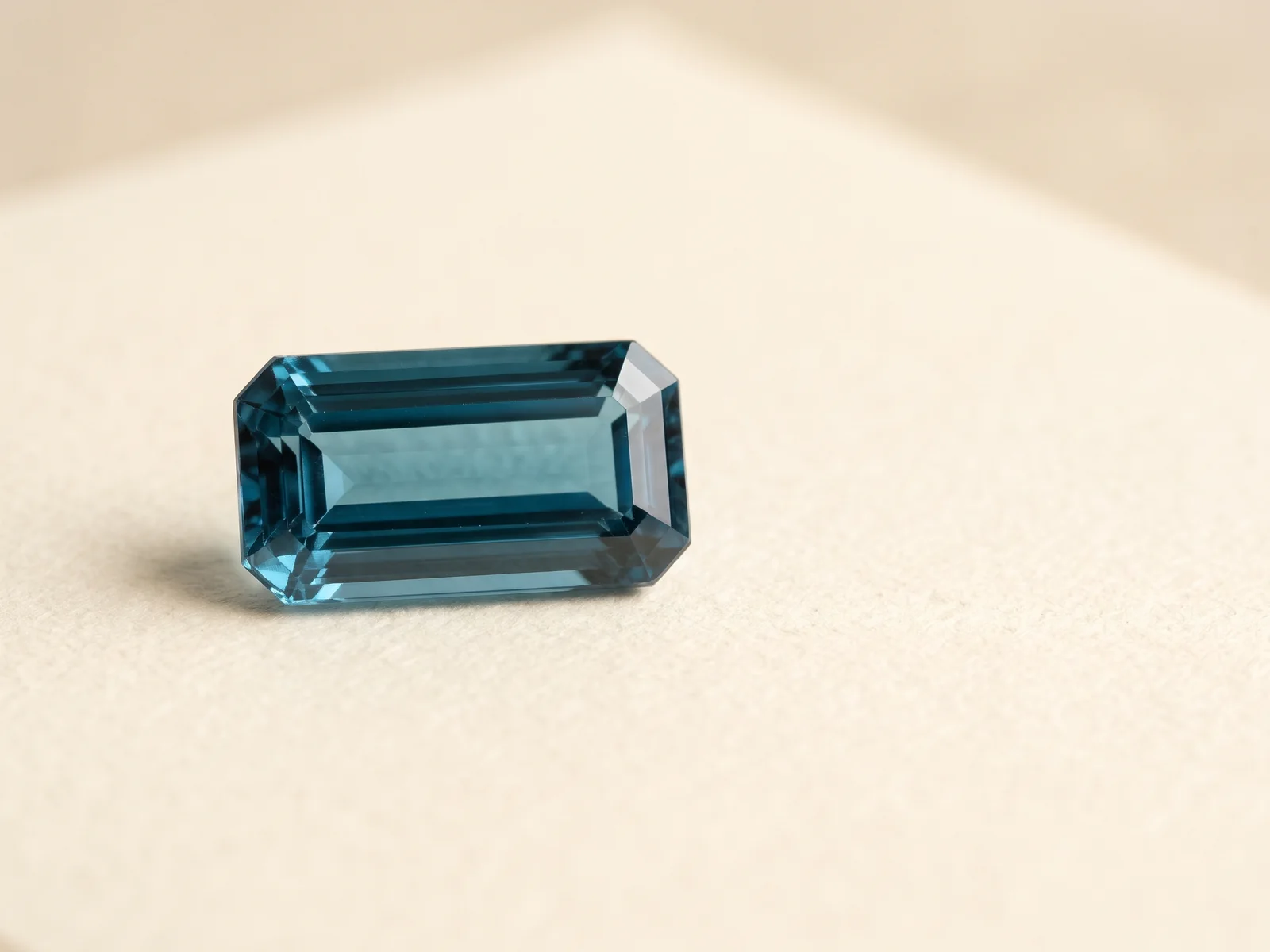
Indicolite tourmaline is blue tourmaline, and its colour can change dramatically depending on how the stone was cut. Knowing what to look for, from the c-axis to heat treatment, is what separates a lively blue from a dark, inky one.
 Reviewed by Raj Sood, Graduate Gemologist (GIA), AJP (GIA)Master jeweller and Graduate Gemologist (GIA) · reviewed 4 November 2026
Quick answer
Indicolite tourmaline is the blue to greenish-blue variety of tourmaline, coloured mainly by iron. It rates 7–7.5 on the Mohs scale with fair toughness, so it suits rings in a protective setting. Most value sits in a bright medium blue without grey or olive tones, good clarity and size; heat treatment to lighten dark stones is common.
What is indicolite tourmaline?
Indicolite is the name used for blue tourmaline, from light sky blue to deep navy, including the blue-green and violet-blue stones in between. The name comes from indigo, the blue dye. Most indicolite is elbaite, the lithium-rich member of the wider tourmaline family. Tourmaline is not one mineral but a group of more than 30 closely related borosilicate minerals (minerals built around boron and silicon) that share the same crystal structure.
Tourmaline grows as long, striated prisms with a rounded triangular cross-section, usually in pegmatites: very coarse-grained granite bodies that concentrate rare elements such as lithium and boron. In indicolite the blue comes mainly from iron. That is what sets it apart from copper-bearing Paraíba tourmaline, whose neon blue comes from copper and manganese and which costs many times more per carat.
Indicolite is one of the blue options across our coloured gemstone guides, alongside sapphire, aquamarine, spinel and topaz. Technical words used here, such as pleochroism and birefringence, are explained as we go, and you will find them again in our jewellery glossary of gem terms.
What colours does indicolite tourmaline come in?
Indicolite covers a broad band of blues. In the trade, some dealers keep the name for stones that look predominantly blue and sell the greener ones as blue-green or teal tourmaline. There is no single official cut-off, so it pays to judge the stone in front of you rather than the label. A useful way to describe what you see is by hue, tone and saturation: the basic colour, how light or dark it is, and how strong or greyish it looks.
- Light sky blue: pale, bright and usually clean; the most affordable end.
- Medium to medium-dark pure blue: the most sought-after look, with strong saturation and no grey.
- Violet-blue: uncommon and attractive; often valued close to pure blue.
- Greenish blue (teal): popular for its own sake and usually priced below pure blue.
- Dark blue with grey or olive: common; looks inky indoors and is the type most often heated to lighten it.
The most important thing to understand about blue tourmaline is pleochroism: the stone shows different colours when viewed in different directions through the crystal. Tourmaline is strongly dichroic (two-coloured). Looking down the length of the crystal, along what gemmologists call the c-axis, blue tourmaline is much darker, often near black, olive or steely grey. Looking across the crystal it is a lighter, cleaner blue or blue-green. Many blue crystals are described as having a closed c-axis, meaning almost no light passes along that direction.
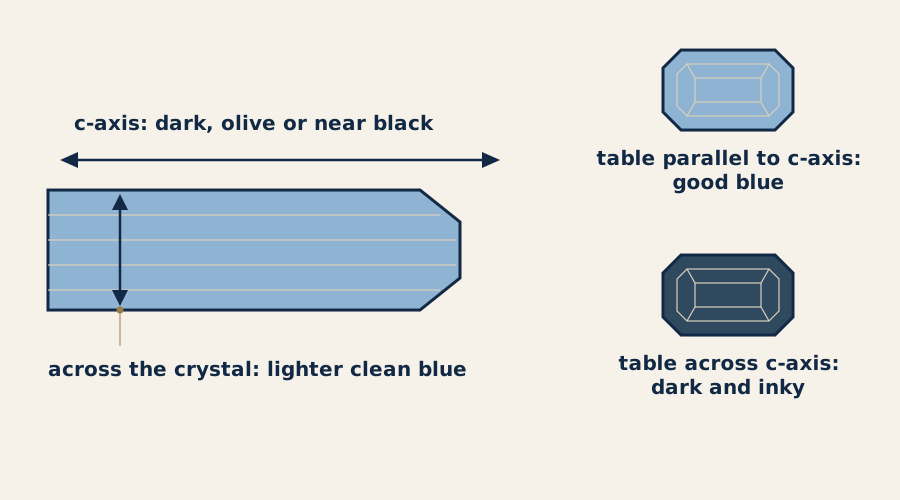
Because of this, a cutter usually lays the table (the large top facet) parallel to the length of the crystal so the face-up colour is the lighter blue. That is why so many indicolites are long emerald cuts, elongated cushions and ovals. A stone cut the other way, with the c-axis pointing at you, can look dull and dark even when the rough had fine colour.
Tourmaline shows its whole family of colours in single crystals too. Its red to pink sister is rubellite, the red-pink variety, and crystals that are pink in the centre with a green rim are sold as bicoloured watermelon tourmaline. Some crystals change from blue to green or pink along their length, which cutters can use for parti-coloured stones.
Related guideParaíba TourmalineHow hard and durable is indicolite tourmaline for everyday wear?
Indicolite rates 7–7.5 on the Mohs scale, the scale of scratch resistance from 1 (talc) to 10 (diamond). That is about the same as quartz gems such as smoky quartz and a little harder. Ordinary household dust contains quartz particles, so over years of daily wear the facet edges of a tourmaline can gradually round and scuff, especially on a ring.
Toughness, meaning resistance to chipping and breaking, is a separate question. Tourmaline has no distinct cleavage (no plane along which it splits cleanly), which helps, but its toughness is generally rated only fair. It breaks with a conchoidal (shell-like) fracture, and stones with internal fractures are more vulnerable to a sharp knock. Long, thin stones with sharp corners are the most exposed.
| Gemstone | Mohs hardness | Toughness | Everyday ring wear |
|---|---|---|---|
| Diamond | 10 | Good (has cleavage) | Excellent |
| Sapphire | 9 | Excellent | Excellent |
| Spinel | 8 | Good | Very good |
| Aquamarine | 7.5–8 | Good | Good with care |
| Indicolite tourmaline | 7–7.5 | Fair | Good in a protective setting |
| Quartz (smoky, rose) | 7 | Good | Fair to good; edges wear |
| Iolite | 7–7.5 | Fair (has cleavage) | Occasional wear |
| Blue topaz | 8 | Poor (perfect cleavage) | Fair; can split on a knock |
| Amber | 2–2.5 | Poor | Not suited to daily rings |
If you are weighing a blue tourmaline against harder stones, the trade-offs are similar to those covered in how ruby and diamond compare for hardness and in our morganite versus pink sapphire comparison: a softer stone can be worn every day, but it will need more care and an occasional re-polish.
Tourmaline is also pyroelectric and piezoelectric: it builds up an electric charge when heated or squeezed. In practice this means a warm tourmaline can attract dust and lint, so it may need cleaning a little more often than other stones. Sudden temperature changes, such as from a jeweller's torch or very hot water, can also stress it and cause fractures.
How do gemmologists identify indicolite?
Several blue gems can look like indicolite at a glance, so identification relies on measured properties. A gemmologist will check the refractive index (how strongly the stone bends light) with a refractometer, the birefringence (the difference between its two refractive indices), the specific gravity (its density compared with water) and the pleochroism seen through a dichroscope.
| Gem | Refractive index | Birefringence | Specific gravity | Pleochroism |
|---|---|---|---|---|
| Indicolite tourmaline | 1.62–1.64 | 0.018–0.020 | about 3.06 | Strong: dark along c-axis |
| Blue topaz | 1.61–1.63 | 0.008–0.010 | about 3.53 | Weak |
| Aquamarine | 1.57–1.58 | 0.005–0.009 | about 2.72 | Weak to moderate |
| Iolite | 1.54–1.55 | 0.008–0.012 | about 2.6 | Very strong: violet, blue, yellowish grey |
| Blue apatite | 1.63–1.64 | 0.002–0.006 | about 3.18 | Moderate to strong |
| Glass | 1.50–1.70 | None | 2.3–4.5 | None |
Tourmaline's fairly high birefringence means that in a larger stone you can often see doubling of the back facet edges through a 10× loupe: each edge appears as two lines. Combined with strong dichroism and a refractive index around 1.62–1.64, that is a reliable indicator. Iron-coloured indicolite and copper-bearing Paraíba can overlap in appearance; separating them needs laboratory chemical analysis, which is why a fine neon-blue stone sold as Paraíba should come with a report from a recognised lab.
Tourmaline is not produced as a lab-created gem for the jewellery trade, so a blue stone offered as tourmaline that is flawless, large and very cheap is more likely to be glass or lab-created (synthetic) spinel. Our guide to glass and other common simulants explains how imitations like these are spotted.
Not sure which one is right?
Send us the stones you are looking at and our gemologist will tell you which to choose and why.
Is indicolite tourmaline heat treated?
Often, yes. Heat treatment is the most common treatment for blue and blue-green tourmaline. Heating at moderate temperatures can lighten stones that are too dark and can shift some greenish stones towards blue. The result is generally stable in normal wear and very difficult to prove or disprove, so many dealers simply assume blue tourmaline may have been heated.
- Heating: lightens dark tones and can improve blue hue. Common, stable and usually undetectable.
- Clarity enhancement: surface-reaching fractures filled with oil or resin to make them less visible. Can show as a flash of colour or trapped bubbles under magnification, and can be damaged by heat, solvents or ultrasonic cleaning.
- Irradiation: mainly used on pink and red tourmaline, rarely on blue.
- Coatings: uncommon, but occasionally used on pale or low-grade material to deepen colour.
None of these makes a stone fake: a heated indicolite is still natural tourmaline. What matters is that treatments are disclosed, because a filled stone needs different care and an untreated stone of fine colour can be priced higher. Ask the seller what treatment is known or assumed, and for a significant stone, ask whether a laboratory report is available.
Where does indicolite come from?
Blue tourmaline comes from pegmatite deposits on several continents. The best-known sources include:
- Brazil: especially Minas Gerais, a long-standing source of blue, green and bicoloured tourmaline.
- Afghanistan: the Nuristan and Laghman regions, known for bright blue and blue-green crystals.
- Namibia, Nigeria and Mozambique: important African sources of blue to blue-green elbaite.
- Madagascar and Pakistan: produce blue tourmaline alongside other colours.
- United States: historic pegmatite mines in Maine and California.
Australia has tourmaline-bearing pegmatites, including in Western Australia, and black schorl tourmaline is widespread. Gem-quality blue tourmaline from Australian sources is rarely seen on the market in cut sizes, so most indicolite set in Australian jewellery is imported rough or cut stones. Australia's signature October gem is opal, which shares the month with tourmaline; our page on October's two birthstones covers both.
Unlike Paraíba, where origin can strongly affect price, origin is rarely stated on indicolite and usually matters far less than colour, clarity and cut.
What affects the price of indicolite tourmaline?
Colour drives most of the value, followed by clarity, size and cut. In order of importance:
- Colour: a bright, saturated medium blue with no grey or olive commands the most. Teal and lighter blues cost less; dark, grey-blue stones least.
- Clarity: blue and green tourmaline are often reasonably clean, so buyers expect eye-clean faceted stones (no inclusions visible without magnification). Visible fractures lower value and durability.
- Size: fine blue colour becomes rarer above about 2–3 carats, and price per carat rises with it.
- Cut: correct orientation away from the c-axis, even brightness and no large dark windows.
- Treatment: filled stones sell for less; well-documented unheated stones of fine colour can carry a premium.
Included or cloudy indicolite is still useful material; it is often cut as cabochons (smooth, domed stones) or carvings. Our guide to cabochon, faceted and carved cuts explains how cutters choose between them.
| Indicolite quality | Approximate price per carat (AUD) |
|---|---|
| Commercial: dark or included, under 1 ct | about $50–$200 |
| Good: medium blue or teal, eye-clean, 1–3 ct | about $200–$800 |
| Fine: bright saturated blue, eye-clean, 3 ct+ | about $800–$2,500 or more |
| For comparison: copper-bearing Paraíba | usually several thousand dollars per carat and up |
These are broad ranges only. Prices move with supply from individual mines, and two stones of similar weight can differ greatly because of colour alone. Almost all indicolite on the market is natural; if a stone is ever offered as lab-created tourmaline it must be described that way.
Browse natural gemstones
Is indicolite tourmaline good for an engagement ring?
It can be, with the right design and realistic expectations. At 7–7.5 hardness with fair toughness, indicolite is well suited to pendants, earrings and dress rings, and it can be worn daily in a ring if the setting protects it and you take it off for heavy work. Over ten or more years of constant wear, expect some softening of the facet edges, which a jeweller can usually re-polish. Our guide to tourmaline engagement rings and everyday durability goes further into the pros and cons.
- Bezel or half-bezel: a rim of metal around the edge; the most protective option for daily wear.
- Claws on the corners: elongated emerald and cushion cuts need claws covering the corners, where chips most often start.
- Moderate height: a lower setting is less likely to be knocked than a tall cathedral design.
- Halo: small diamonds around the centre stone frame the blue and shield its girdle (the outer edge).
Metal colour changes how the blue reads. White gold and platinum keep indicolite looking cool and clear. Yellow gold warms the stone and can push a teal towards green, which some people love. Rose gold suits greenish blues especially well. Because tourmaline is sensitive to heat, any resizing or repair should be done with the stone removed or carefully protected.
How do you clean and care for indicolite jewellery?
- Clean gently: warm water, a drop of mild detergent and a soft toothbrush, then rinse and dry with a lint-free cloth.
- Avoid ultrasonic and steam cleaners: vibration and heat can enlarge fractures and damage fillings.
- Avoid heat and sudden temperature changes: do not wear it into a sauna or rinse it in very hot water, and tell any jeweller doing repair work that the stone is tourmaline.
- Take it off for hard work: gardening, the gym, moving furniture and cleaning with chemicals.
- Store separately: keep it away from diamonds and sapphires, which will scratch it, and from softer gems such as amber, which it can scratch.
- Check the setting: have claws checked about once a year.
Quartz gems such as rose quartz are about as hard as tourmaline, so pieces stored loose together will slowly scuff each other; separate pouches or a lined box divided into compartments solve this.
How to choose an indicolite tourmaline: step by step
- Decide on the colour you love. Pure blue, violet-blue or teal; compare them side by side in daylight and indoor light.
- Check the face-up colour, not just the photo. Look for grey or olive tones and for a dark band from the c-axis.
- Look for eye-clean clarity. Inspect at arm's length, then with a loupe, especially near corners and edges.
- Ask about treatment. Assume heating is possible; ask specifically whether fractures have been filled.
- Confirm identity on larger stones. For neon blues or stones over a few carats, ask for a laboratory report, particularly if Paraíba is mentioned.
- Plan the setting and wear. Choose a bezel or corner-protecting claws for a daily ring, and a metal that flatters the hue.
Free consultation
Talk to a gemologist
Compare stones in person or online with Raj Sood, Graduate Gemologist (GIA), AJP (GIA).
Book a consultationShop this shape
FAQ
Common questions
What is the difference between indicolite and Paraíba tourmaline?
Both are blue tourmaline, but indicolite is coloured mainly by iron, while Paraíba gets its neon blue from copper and manganese. Paraíba is much rarer and usually costs many times more per carat, and separating the two can need laboratory testing.
Is indicolite tourmaline rare?
Blue tourmaline is less common than green or pink, and bright, saturated pure blue in larger sizes is genuinely scarce. Lighter, teal and dark stones are easier to find and more affordable.
Is indicolite heat treated?
Much blue tourmaline is heated to lighten dark colour or improve the blue. The treatment is stable and usually undetectable, so it is worth assuming it may have been done and asking the seller what is known.
Can you wear an indicolite ring every day?
Yes, in a protective setting such as a bezel and with sensible care, since it rates 7–7.5 on the Mohs scale with fair toughness. Remove it for heavy work and expect the facet edges may need re-polishing after many years.
Why does my blue tourmaline look darker indoors?
Tourmaline is strongly pleochroic, so some of the light reaching your eye travels along the darker c-axis direction. Under dim or warm indoor light that darker component becomes more noticeable than in daylight.
Is indicolite an October birthstone?
Yes. Tourmaline in all its colours, including blue indicolite, is an October birthstone alongside opal.

Ask a gemologist
Not sure which diamond to choose?
Raj Sood is a Graduate Gemologist (GIA) and master jeweller. Bring the stones you are considering, or send the reports, and he will tell you honestly which one is better and why.
Keep learning
Related guides
 GemstonesTourmaline
 GemstonesParaíba Tourmaline
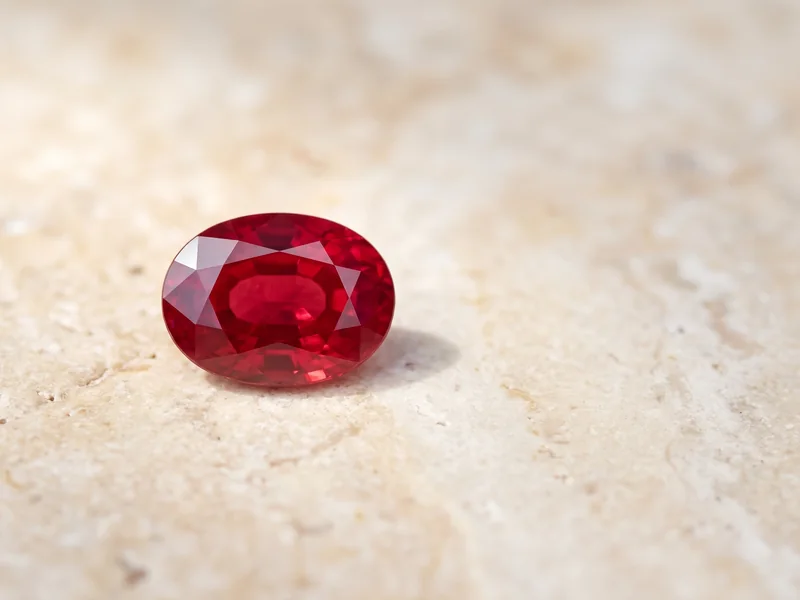 GemstonesRubellite Tourmaline
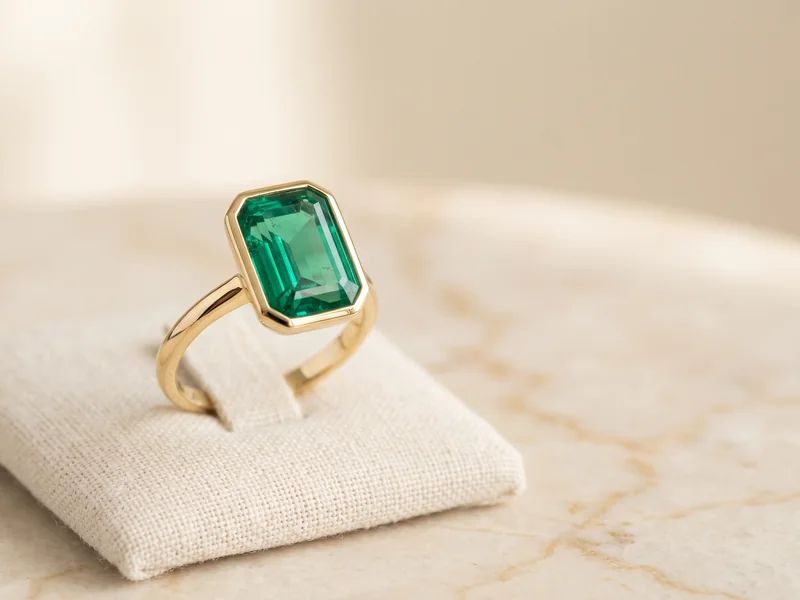 GemstonesTourmaline Engagement Rings: Colour and DurabilityGemstonesGemstones | Coloured Gemstones, Birthstones and Custom Jewellery
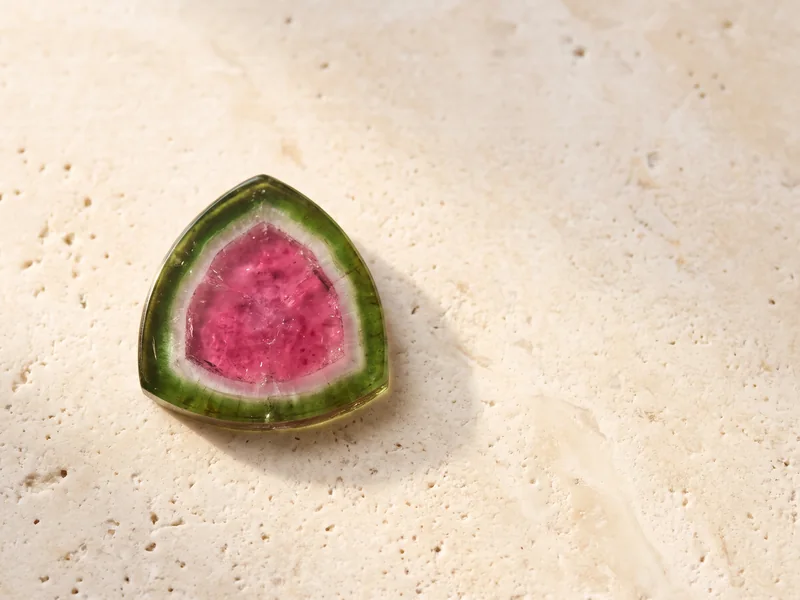 GemstonesWatermelon Tourmaline
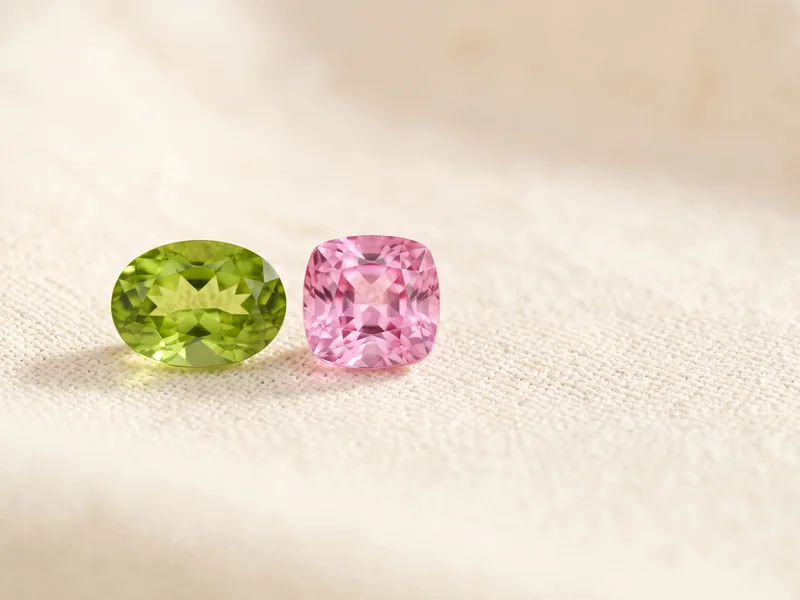 GemstonesOctober Birthstone: Opal and Tourmaline
 GemstonesDiamond Simulants: CZ, YAG, GGG and Glass
Explore more
More guides on this topic
Education