
Metals
14K Gold Explained: Purity, Colours, Strength and What It Costs
14K gold is the everyday standard in America but less familiar in Australia, where 9K and 18K dominate the shop windows. Here is what 14K gold actually contains, how it wears, who it suits and how to tell the real thing from a plated look-alike.
 Reviewed by Raj Sood, Graduate Gemologist (GIA), AJP (GIA)Master jeweller and Graduate Gemologist (GIA) · reviewed 4 November 2026
Quick answer
14K gold is 58.5% pure gold alloyed with metals such as silver, copper, zinc, nickel or palladium, and is stamped 585 or 14ct in Australia. It sits between 9K and 18K: harder-wearing and cheaper than 18K, richer in colour and gold content than 9K, and suits rings, chains and everyday jewellery.
What is 14K gold?
Gold purity is measured in carats, written ct in Australia and K in America. Pure gold is 24 carat, so each carat is one twenty-fourth of the metal by weight. 14K gold is therefore 14 parts gold and 10 parts other metals. Note this is a different carat from the one used for diamonds, where a carat is a unit of weight (0.2 grams). Both terms, and the other words in this guide, are explained in our plain-English jewellery glossary.
Mathematically, 14 ÷ 24 is 58.33%. In practice the trade rounds up and alloys 14K to a minimum of 58.5% gold, which is why the stamp reads 585 (parts per thousand). That small margin means a piece never falls below its stated purity after soldering and finishing. The same logic gives 9K its 375 stamp and 18K its 750.
So, is 14K gold real gold? Yes. It is solid gold all the way through, just not pure gold. Pure gold is very soft, about 2.5–3 on the Mohs scratch scale, and bends easily, which is why only some cultures traditionally wear high-purity pieces; our guide to 22K and 24K gold jewellery explains how those are worn and cared for. For rings that face daily knocks, an alloy (a blend of metals) is far more practical.
In Australia, 9K and 18K have long been the common choices, and 14K sits in the gap between them. It is the dominant purity in the United States, so many imported pieces and online designs are 14K. For the wider picture of purities, colours and craft, start with our complete guide to gold jewellery.
What is 14K gold made of?
The 41.5% that is not gold decides almost everything else: colour, hardness, how easily the metal can be worked, and whether it may irritate sensitive skin. Each manufacturer has its own recipes, but typical 14K alloys look like this:
| 14K colour | Gold | Main other metals (approximate) | What they do |
|---|---|---|---|
| Yellow | 58.5% | Silver about 10–20%, copper about 20–30%, a little zinc | Silver softens the red of copper; copper adds strength |
| Rose | 58.5% | Copper about 30–35%, less silver, some zinc | More copper pushes the colour towards pink |
| White (nickel) | 58.5% | Nickel about 10–17%, copper, zinc | Nickel bleaches the yellow and makes a hard, springy metal |
| White (palladium) | 58.5% | Palladium about 10–20%, silver, copper | Nickel-free whitening; softer and usually dearer |
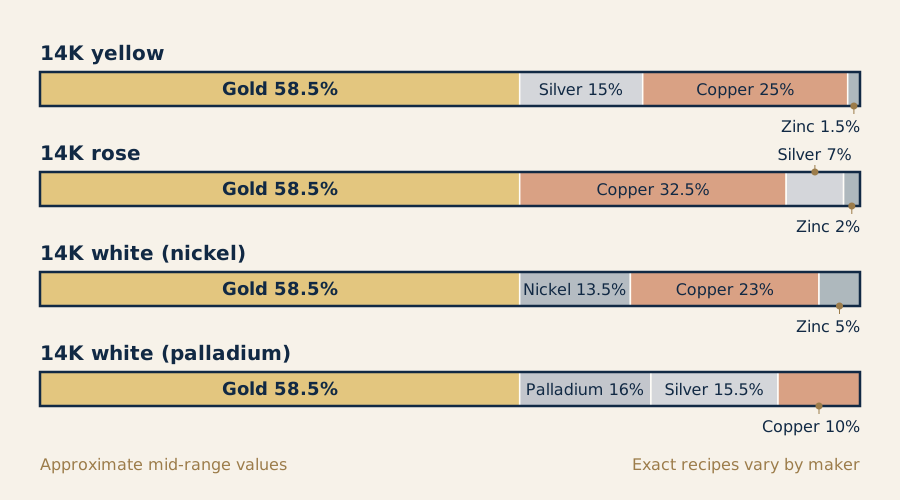
Copper is the workhorse. It hardens the alloy and gives warmth, and the more of it there is, the pinker the result; our page on why rose gold turns pink goes into the chemistry. Silver lightens and greens the colour slightly, which is how makers fine-tune a yellow. For the full story of how these two metals interact with gold, see what makes yellow gold both warm and strong.
No white gold alloy is truly white. Most have a faint grey or straw tint, so white gold is usually plated with rhodium, a bright white metal from the platinum family. Our explainer on the reason white gold gets a rhodium coat covers how long it lasts and when to redo it.
How does 14K gold compare with 9K and 18K gold?
Most Australians weighing up 14K are really choosing between three purities. Here they are side by side, using yellow gold as the reference.
| 9K | 14K | 18K | |
|---|---|---|---|
| Gold content | 37.5% | 58.5% | 75% |
| Stamp | 375 / 9ct | 585 / 14ct | 750 / 18ct |
| Typical density (yellow) | about 11.1–11.6 g/cm³ | about 12.9–13.6 g/cm³ | about 15.2–15.9 g/cm³ |
| Colour | Paler, slightly brassy | Medium, warm yellow | Rich, deep yellow |
| Scratch and dent resistance | Good | Good | Fair to good |
| Tarnish risk | Can darken over years | Low, occasional on high-copper alloys | Very low |
| Relative metal cost | Lowest | Middle | Highest |
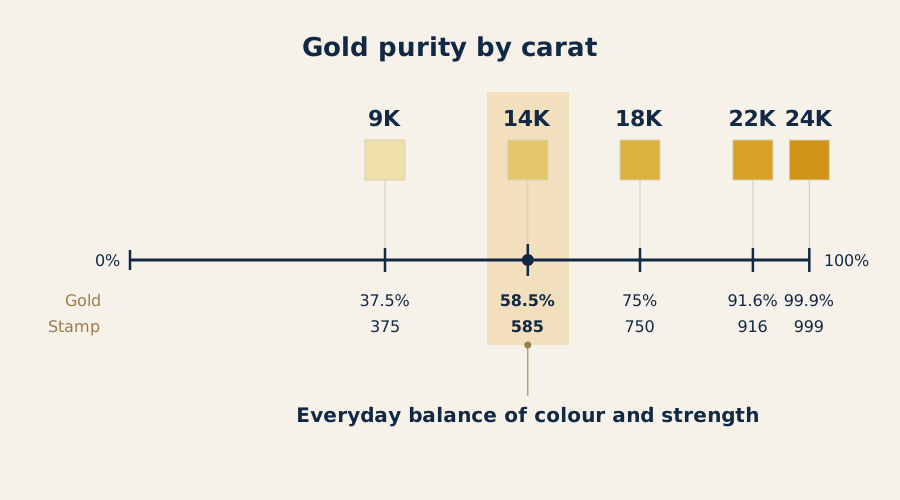
14K gold vs 18K gold: 18K has more gold, so it looks richer and is gentler on skin, but it is softer and heavier, and costs more for the same design. 14K is the more practical everyday metal; 18K is the more traditional fine-jewellery choice in Australia. 14K gold vs 9K gold: 9K is the most affordable solid gold and wears well, but with less than 40% gold it can look paler and is more likely to tarnish slowly or react with chlorine. Our detailed 9K versus 18K comparison covers the two ends of the range, and 14K falls neatly between them on almost every measure.
Hardness depends on the exact alloy and on whether the metal has been work-hardened by rolling or hammering. As a rough guide, annealed (softened) 14K yellow alloys tend to measure around 130–170 on the Vickers hardness scale, compared with about 25 for pure gold. Nickel white golds are harder again, which is why they hold claws well but can be tough for a jeweller to size.
What colours does 14K gold come in?
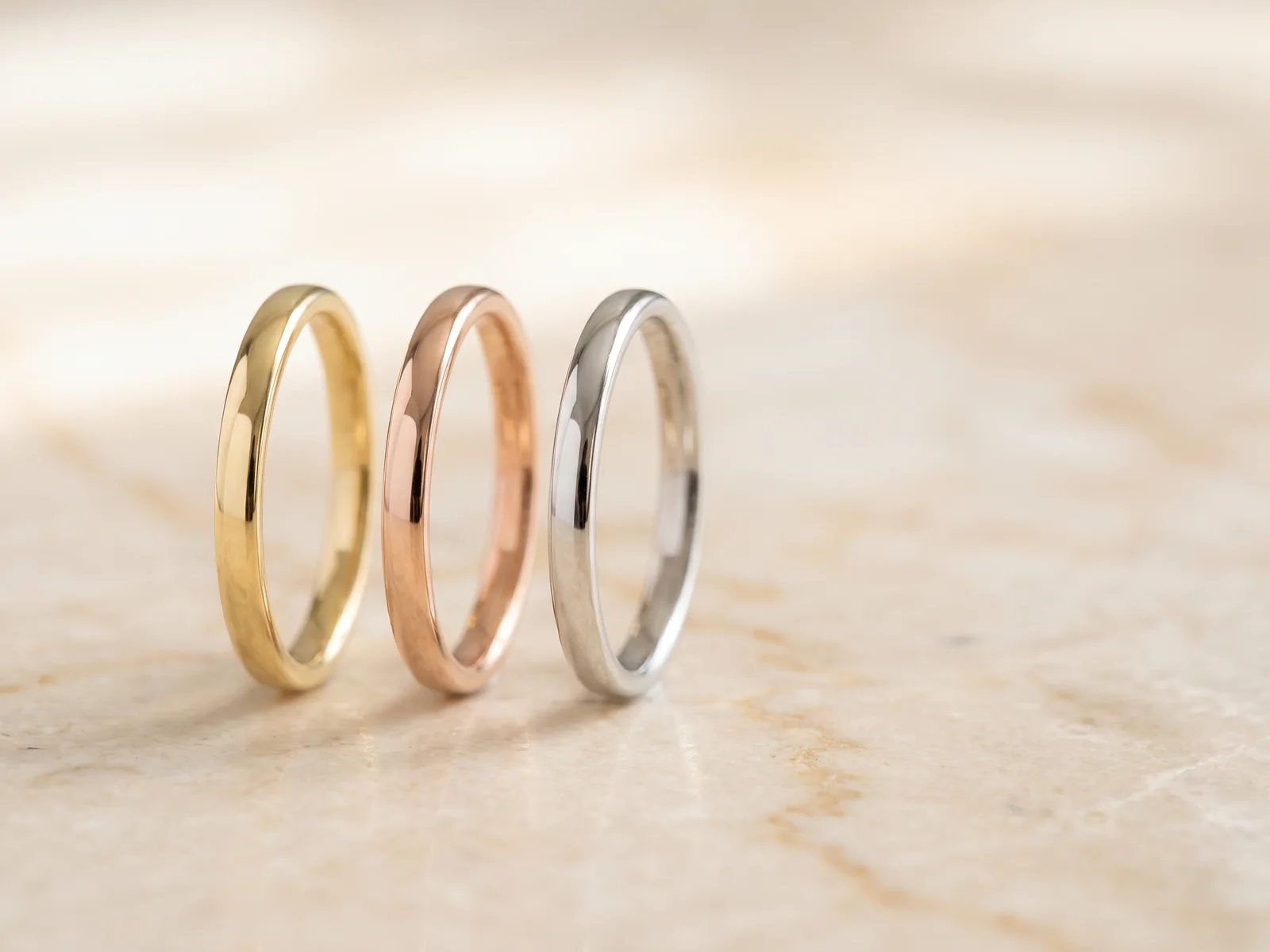
Because 14K leaves plenty of room for other metals, it comes in a wide range of shades. The three main colours are compared in depth in our yellow, white and rose gold comparison, but here is how they behave at 14K specifically.
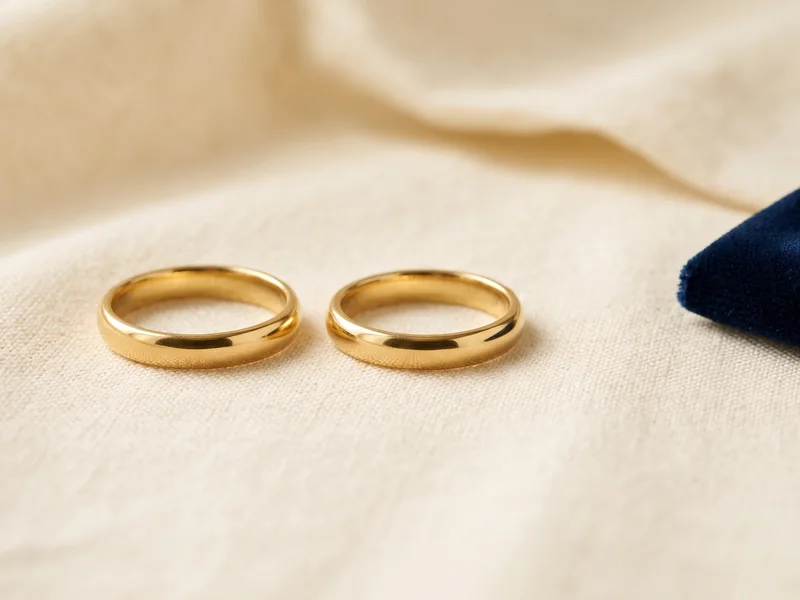
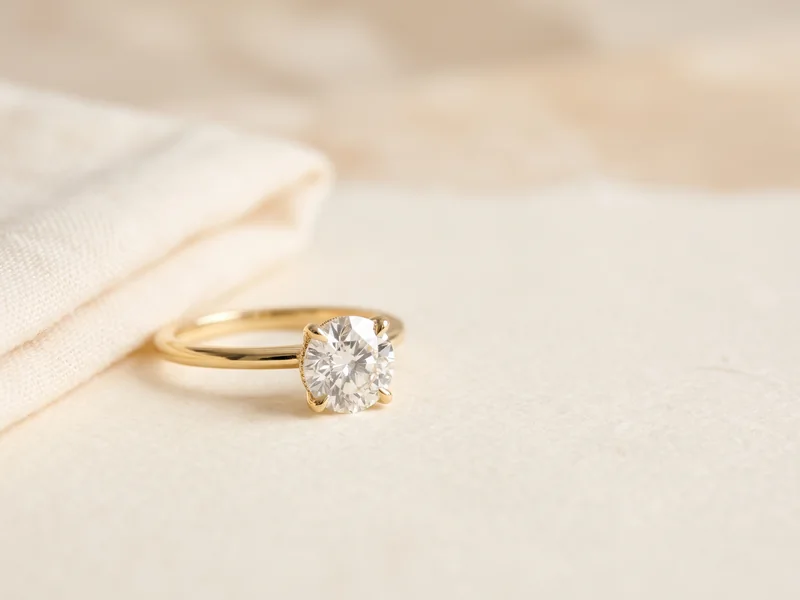
- 14K yellow gold: a medium, slightly softer yellow than 18K. It suits people who find 18K too orange. It also makes a warm frame for diamonds; see pairing colourless diamonds with yellow gold.
- 14K rose gold: often a stronger pink than 18K rose, because there is more room for copper. It is a hard, durable alloy. Our guide to diamonds and gemstones in rose gold shows which stones suit it.
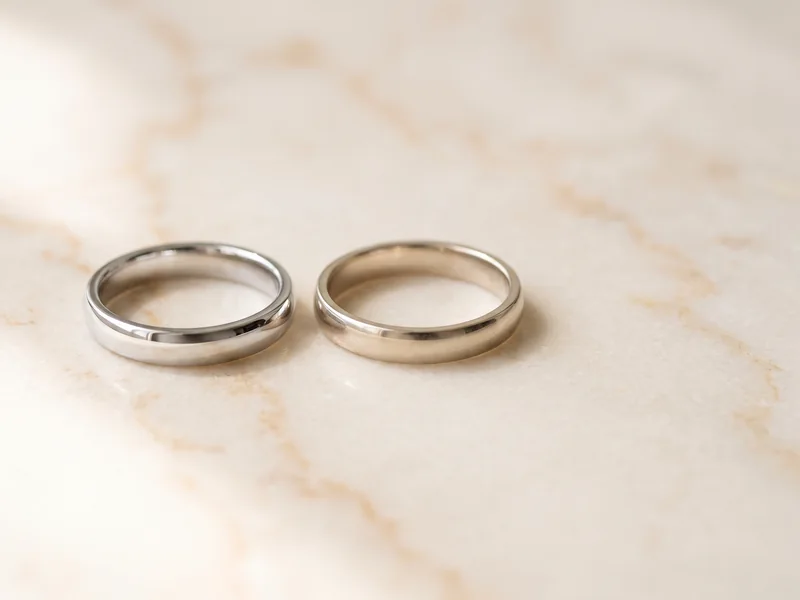
- 14K white gold: a slightly warm grey under the rhodium plating, which shows through as the plating wears. If you want a metal that stays white with no plating, compare it with platinum in our white gold and platinum comparison.
- Green and other tints: some makers alloy 14K with extra silver for a greenish gold. These are specialist alloys and less common.
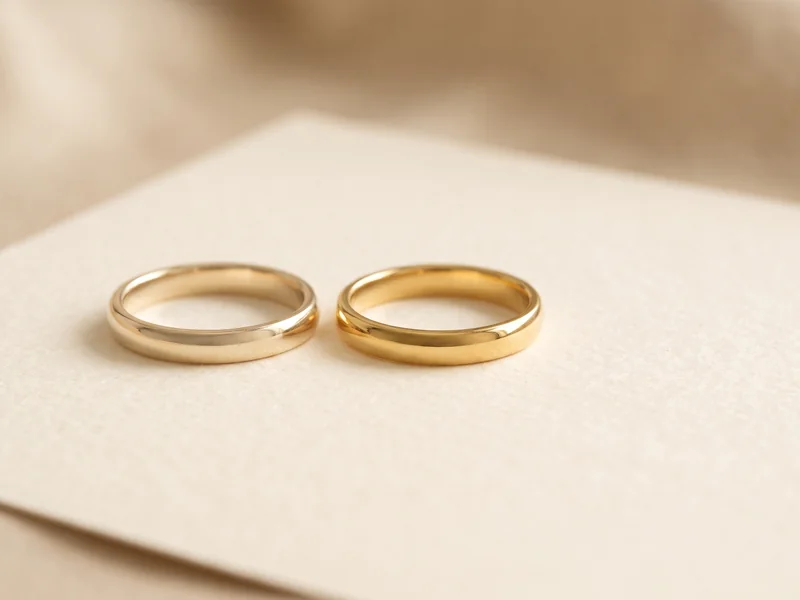
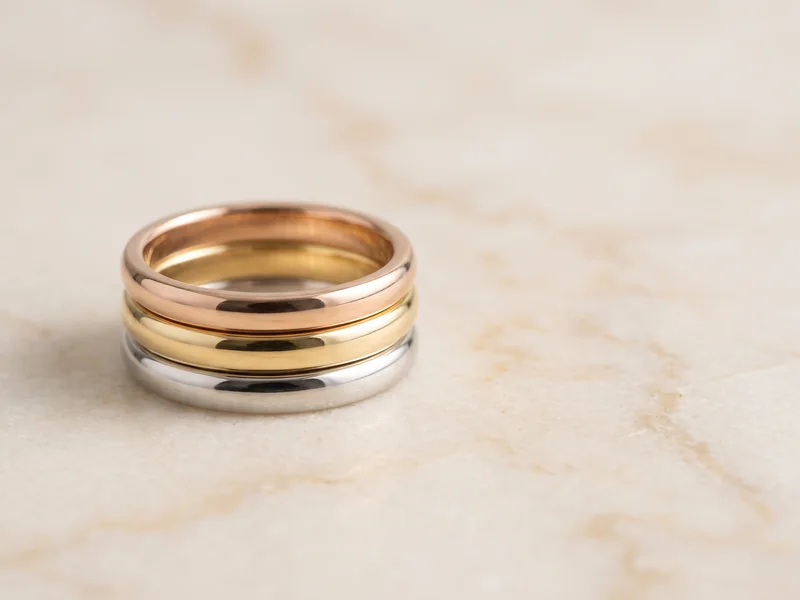
One practical point for bridal sets: two 14K yellow alloys from different makers can differ visibly in colour, and 14K can look noticeably lighter than 18K beside it. If your engagement ring and wedding band come from different sources or purities, compare them in daylight. Our page on combining gold colours in a bridal set covers how to make a deliberate mix look intentional.
Related guideYellow Gold vs White Gold vs Rose GoldNot sure which one is right?
Send us the stones you are looking at and our gemologist will tell you which to choose and why.
Is 14K gold durable enough for everyday wear?
Yes. 14K is widely considered a sound choice for rings worn every day, including engagement rings and wedding bands. With 41.5% hardening metals it resists dents and bending better than 18K, and it holds claws (the small metal prongs that grip a stone) firmly. It will still scratch: every gold alloy picks up fine surface marks, and over years a ring loses a little metal at the back of the band where it rubs on surfaces.
What wears in practice:
- Polish: a high shine softens to a satin look within months. A jeweller can re-polish it.
- Claw tips: wear thin over many years and need re-tipping, sooner on rings worn during gym work or gardening.
- Rhodium on white gold: usually needs replating every 12–24 months for daily-wear rings, depending on wear.
- Band thickness: a thin band (under about 1.5 mm) in any gold can eventually thin or crack; 1.8–2.2 mm suits most everyday rings.
Does 14K gold tarnish? Rarely. Gold itself does not oxidise, but copper and silver in the alloy can darken slightly with sweat, perfume or sulphur in some environments. At 58.5% gold this is uncommon and wipes off; it is more noticeable in 9K. For how 14K stacks up against platinum and other metals for an engagement ring specifically, see our guide to choosing a metal for an engagement ring.
Is 14K gold safe for sensitive skin and nickel allergies?
For most people, yes. A 14K gold allergy is almost always a reaction to nickel, not to gold. Nickel is one of the most common causes of allergic contact dermatitis (an itchy, red rash where metal touches skin), and it is used in many white gold alloys because it whitens and hardens the metal.
- Yellow and rose 14K: usually nickel-free, since they rely on silver, copper and zinc. Not every manufacturer guarantees this, so ask for the alloy specification if you react easily.
- Nickel white 14K: the alloy most likely to cause a reaction. Rhodium plating acts as a barrier while it is intact, which is why some people only notice irritation once it wears through.
- Palladium white 14K: nickel-free and a sensible choice for people with a known nickel allergy. It is softer and generally costs more.
- Copper: high-copper rose alloys can occasionally leave a faint green or dark mark on skin, especially with sweat or certain lotions. This is usually staining rather than allergy.
Some people react only to a particular combination of moisture, soap residue and a tight fit, so a rash under a ring is not always a metal allergy. Clean the ring, dry your skin well, and if it persists, ask a dermatologist about patch testing before changing metals. True allergy to gold itself exists but is rare. If you already know you react to nickel, tell your jeweller before anything is made or resized, because solder and sizing stock should also be nickel-free.
How do you read a 14K gold hallmark in Australia?
Australia has no national assay office and no compulsory hallmarking. Instead, the maker or importer stamps the purity and, ideally, their own mark, and Australian Consumer Law makes it illegal to describe a product misleadingly, which includes a false purity stamp. Here is what you will commonly see inside a band or on a clasp:
| Stamp | What it means |
|---|---|
| 585 | 14K solid gold (58.5% gold), the international fineness mark |
| 583 | Older or some European 14K, at the strict 58.3% |
| 14ct or 14CT | 14 carat solid gold, the usual Australian and British wording |
| 14K or 14KT | 14 carat solid gold, American-style marking |
| 14K GP, GE or HGE | Gold plated or electroplated over base metal, not solid gold |
| 14K GF or 1/20 14K | Gold filled: a bonded layer of 14K over a base metal core |
| 925 with gold colour | Sterling silver, often plated; may be vermeil |
| Initials or a logo | Maker's or sponsor's mark identifying who made or sold it |
Those last lines matter. A piece stamped 14K GF or 14K GP has a thin gold surface over brass or another base metal and will eventually wear through. Our guide to plated, filled and solid gold differences explains how long each lasts, and how gold vermeil works over sterling silver covers the silver-based option.
Older Australian and British jewellery is mostly 9ct, 15ct or 18ct; 15ct was used for much fine jewellery made before the early 1930s. If you inherit a piece marked 15ct, it is about 62.5% gold, slightly richer than 14K. A stamp is a claim, not a test: for unmarked or doubtful pieces a jeweller can test purity with acid, a touchstone or an X-ray fluorescence (XRF) analyser.
How much does 14K gold cost in Australia?
The metal cost of any gold piece follows the gold price, which is quoted for pure gold and moves daily. Our explainer on how the gold price flows through to jewellery prices covers why quotes change. Two things set the metal value of a 14K piece: how much it weighs, and the 58.5% of that weight that is gold.
Density matters too. The same design weighs more in a higher purity, because gold is heavy. Here is one plain band design in three purities, using an illustrative pure-gold price of about AUD $150–$200 per gram.
| Same band design | Approx. weight | Pure gold in it | Approx. gold value (AUD) |
|---|---|---|---|
| 9K yellow | about 3.4 g | about 1.3 g | about $190–$260 |
| 14K yellow | about 4.0 g | about 2.3 g | about $350–$470 |
| 18K yellow | about 4.7 g | about 3.5 g | about $530–$710 |
These figures are the gold content only. The retail price of a ring also covers the other alloy metals, design, casting, setting, finishing, plating for white gold and any stones, so a finished 14K band typically costs well above its gold value. As a broad guide, a 14K piece usually lands somewhere between the same design in 9K and in 18K.
Ring settings by metal
How do you choose and care for 14K gold jewellery? Step by step
- Check the stamp. Look for 585, 14ct or 14K with a maker's mark, and make sure there is no GP, GE, HGE or GF after it.
- Pick the colour, then the alloy. If you have ever reacted to cheap earrings, ask for a nickel-free yellow, rose or palladium white alloy.
- Check the build. For daily-wear rings, aim for a band of about 1.8 mm thick or more and solid claws.
- Match your other pieces. Compare colour in daylight against any ring or band you will wear beside it.
- Clean gently. Soak in warm water with a drop of mild dishwashing liquid, brush with a soft toothbrush, rinse and dry.
- Keep it away from chlorine. Take rings off in pools and spas and when using bleach, which can weaken gold alloys over time.
- Book a yearly check. Have claws inspected, and rhodium on white gold replated when the warm tone starts showing.
Store each piece separately in a soft pouch so harder gemstones and other jewellery do not scratch it, and remove rings for heavy lifting, gardening and the gym.
Free consultation
Talk to a gemologist
Compare stones in person or online with Raj Sood, Graduate Gemologist (GIA), AJP (GIA).
Book a consultationShop this shape
FAQ
Common questions
Is 14K gold real gold?
Yes. 14K is solid gold all the way through, containing 58.5% pure gold alloyed with other metals for strength and colour. It is different from gold plated or gold filled jewellery, which has only a gold surface layer.
What does 585 mean on gold?
585 means the metal is 585 parts per thousand pure gold, or 58.5%. It is the international fineness mark for 14K gold.
Is 14K or 18K gold better for an engagement ring?
Both work well. 14K is harder, lighter and costs less for the same design, while 18K has a richer colour and more gold, which some people with sensitive skin prefer.
Does 14K gold tarnish?
Rarely. The copper and silver in the alloy can darken slightly over time, but at 58.5% gold this is uncommon and cleans off with warm soapy water.
Can I wear 14K gold if I have a nickel allergy?
Usually, as long as the alloy is nickel-free. Yellow and rose 14K are typically nickel-free and palladium white 14K is nickel-free, but standard white 14K often contains nickel, so ask for the alloy specification.
Why is 14K gold less common in Australia?
Australian jewellers have traditionally worked in 9ct and 18ct, so those purities dominate local stock. 14K is the standard in the United States, so you will see it more often in imported and online jewellery.

Ask a gemologist
Not sure which diamond to choose?
Raj Sood is a Graduate Gemologist (GIA) and master jeweller. Bring the stones you are considering, or send the reports, and he will tell you honestly which one is better and why.
Keep learning
Related guides
 Metals9K vs 18K Gold: Which Gold Is Better for Jewellery?MetalsGold Plated vs Gold Filled vs Solid Gold
 MetalsWhy White Gold Is Rhodium PlatedMetalsBest Metal for Engagement Rings
 MetalsYellow Gold vs White Gold vs Rose Gold
 MetalsGold Vermeil ExplainedMetals22K and 24K Gold Jewellery
 MetalsYellow Gold Engagement Rings With Colourless Diamonds
Explore more
More guides on this topic
Education