
- Education
- Wedding Bands & Eternity
- Best Wedding Band for a Pear Engagement Ring: Curved, Straight and Fitted Bands
Wedding Bands & Eternity
Best Wedding Band for a Pear Engagement Ring: Curved, Straight and Fitted Bands
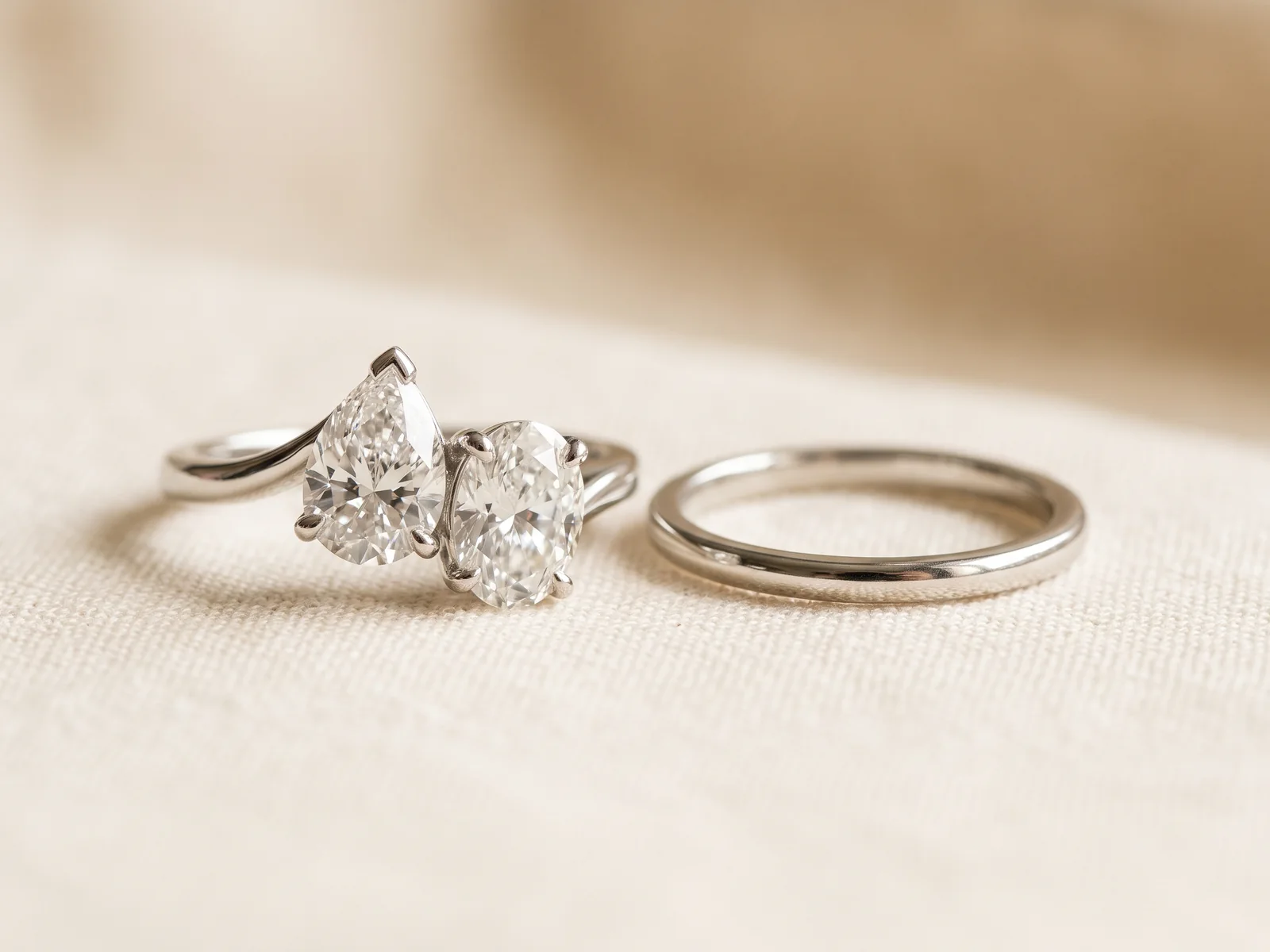
A pear engagement ring has a rounded end and a point, so a straight band rarely sits neatly against it. Here is how to choose a wedding band for a pear engagement ring that sits the way you want, protects the stone and wears well for decades.
 Reviewed by Raj Sood, Graduate Gemologist (GIA), AJP (GIA)Master jeweller and Graduate Gemologist (GIA) · reviewed 4 November 2026
Quick answer
The best wedding band for a pear engagement ring is usually a curved or contoured band that follows the stone's outline, or a fitted band shaped to the setting. A straight band works if the pear sits high enough to clear it. Keep the band about 1.5–2.5 mm wide and match the metal to the engagement ring.
What is the best wedding band for a pear engagement ring?
A pear (or teardrop) diamond has a rounded head at one end, a tapering point at the other and gently curved shoulders in between. Most pears have a length-to-width ratio of about 1.45–1.75, so a 1 carat pear is roughly 8.5 mm long but under 6 mm wide. That length is what makes it flattering on the finger, and it is also what makes pairing a band tricky. If you are still sorting out the terms, here is the difference between a wedding ring and a wedding band.
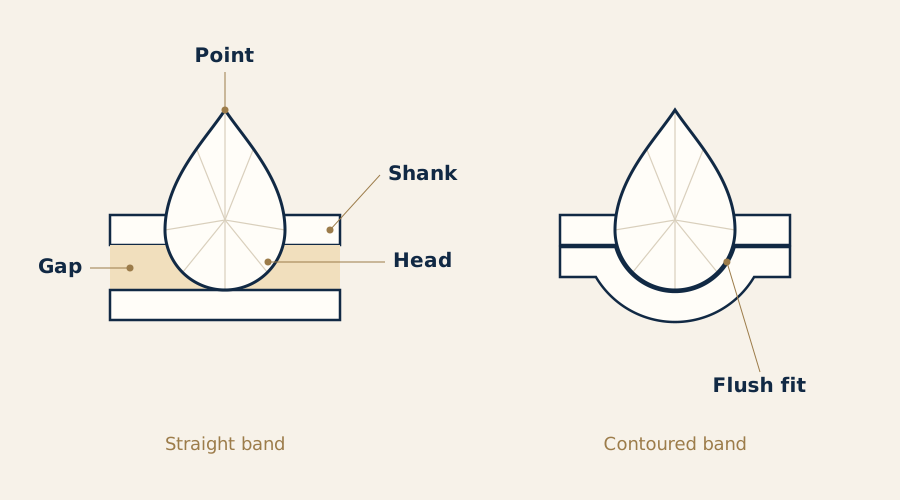
A straight band sits along a straight line. A pear's outline is anything but straight, and its head or point usually overhangs the shank (the band of metal that goes around your finger). Put a straight band beside it and the two rings often touch at only one spot, leaving a wedge-shaped gap. There are three ways to deal with that:
- Straight band: works when the pear sits high enough that the band slides underneath the head. Simple, easy to resize and the least expensive.
- Curved or contoured band: a band with a curve or V built in, so it wraps around the head or nests under the point.
- Fitted band: a custom band shaped to the exact outline of your engagement ring, so the two sit together with no gap.
There is no single right answer. It depends on how high your pear is set, which way it points, whether it has a halo or bezel, and whether you mind a small gap. The general principles in our guide on matching any band to an engagement ring apply here too, and anything unfamiliar is explained in our glossary of ring and jewellery terms.
Should a wedding band sit flush or leave a gap next to a pear?
A flush fit means the band touches the engagement ring along its length, so the pair looks like one piece. A gap is the visible space left where the band and the engagement ring only meet at one point. Neither is wrong. Some people like the clean, separate look of a small gap; others want the rings to sit as a single set.
Whether a straight band can sit flush comes down mostly to the gallery, the metalwork under the diamond, and how high it sits above the shank. If the bottom of the setting clears the top of the band, a straight band can slide underneath the head. If the setting sits low, or has a bezel or halo that reaches down to the shank, the band will be pushed away.
| Engagement ring setting | Straight band | What usually works |
|---|---|---|
| High claw solitaire | Often sits flush underneath | Straight band, plain or diamond |
| Low claw solitaire | Small gap at the head | Gentle contour, or accept the gap |
| Bezel-set pear | Gap of about 1–2 mm | Contoured or fitted band |
| Halo around the pear | Gap of about 1–3 mm | Chevron, contoured or fitted band |
| Hidden halo or high cathedral shoulders | Varies; shoulders can block the band | Try a straight band first, then a fitted one |
| Split or twisted shank | Gap where the shank widens | Fitted band |
A gap is not just about looks. Two rings that only touch at one point tend to twist against each other, and a band that keeps pressing on the claws of the pear can wear those claws thin over the years. A band that sits flush, or one that clearly clears the setting, avoids that rubbing.
Curved, straight or fitted: which wedding band suits a pear?
Curved bands come in several shapes, and the names are used loosely between jewellers, so judge by how the band actually sits rather than by the label.
| Band type | How it sits with a pear | Suits | Watch for |
|---|---|---|---|
| Straight plain | Flush only if the pear is set high | Classic, minimal sets | A gap with low or haloed settings |
| Straight diamond | As above, with sparkle along the band | High-set solitaires | Band stones rubbing the pear's claws |
| Contoured (gentle arc) | Curves around the rounded head | Pear pointing to the fingertip | Too shallow a curve still leaves a gap |
| Chevron or V | A sharp V nests under the point | Pear pointing towards the wrist | The V must match the angle of the point |
| Wishbone | V points outwards, away from the pear | A bold, open look | Can catch on clothing |
| Notched | Small cut-out where the head sits | Low settings that need a small clearance | Cut-out weakens the band if too deep |
| Fitted (custom) | Shaped to the exact outline | Halos, bezels, unusual shanks | Best made with the engagement ring in hand |
| Enhancer or ring guard | Two curves wrap both sides | A bigger, framed look | Wider overall; feels like one wide ring |
The fitted option gives the most precise result because it is made to your ring, not to a generic curve. Our explainer on how custom curved bands are shaped and made shows the process, including how the band is measured against the engagement ring before it is cast.
Related guideFitted Wedding Bands Explained | Custom Curved Bands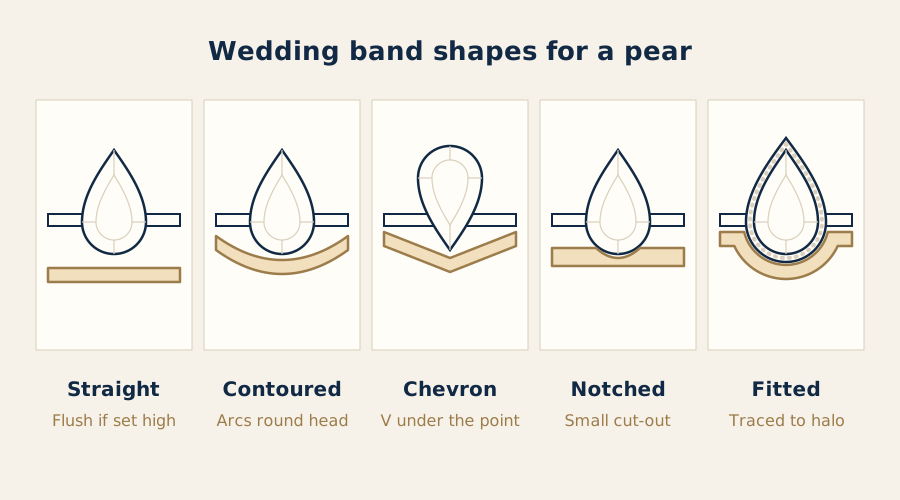
Does it matter which way the pear points?
Yes, and it changes which curved band fits. Most people wear the wedding band on the hand side of the engagement ring (closer to the palm), so the band meets whichever end of the pear faces the wrist.
- Point towards the fingertip (the traditional way): the rounded head faces the band. A gentle contour that arcs around the head usually sits neatly.
- Point towards the wrist: the point faces the band. A chevron or V band nests under the point and also shields it from knocks.
- East-west (sideways): the long side of the pear runs along the band. A straight band can sit close to a low-set east-west pear, but check that the head and point do not overhang it.
- Band worn above the engagement ring: the opposite end now meets the band, so reverse the advice above.
Pointing the pear towards the fingertip makes the finger look longer and slimmer, which is why it is the usual choice. If you swap the order of your rings or wear them on different hands at different times, a fitted band will only fit one way round, so decide on the arrangement first.
Not sure which one is right?
Send us the stones you are looking at and our gemologist will tell you which to choose and why.
How wide should a wedding band be next to a pear engagement ring?
A good starting point is a band roughly the same width as the engagement ring's shank, which on most pear solitaires is about 1.8–2.5 mm. A band much wider than the shank can look heavy beside a slim pear, while one much narrower can look like an afterthought next to a larger stone.
| Pear carat | Approximate size (length × width) | Band width that balances |
|---|---|---|
| 0.50 ct | about 7.0 × 4.5 mm | 1.5–2.0 mm |
| 0.75 ct | about 8.0 × 5.2 mm | 1.6–2.2 mm |
| 1.00 ct | about 8.5 × 5.7 mm | 1.8–2.5 mm |
| 1.50 ct | about 9.8 × 6.5 mm | 2.0–2.5 mm |
| 2.00 ct | about 11.0 × 7.0 mm | 2.0–3.0 mm |
These sizes are typical for a pear around 1.50–1.55 in ratio; a longer or deeper stone will measure differently. Thickness matters as well as width. A band about 1.5–1.8 mm deep holds its shape over decades of wear, and a curved band needs that depth more than a straight one, because the bend is where it is most likely to distort.
The profile (the shape of the band in cross-section) changes how two rings sit together. A flat or flat-sided profile sits closer to the engagement ring than a rounded court or D-shape, which touch only along their widest line. Our page on how band profiles change comfort and fit compares them. If your partner is choosing a band at the same time, the guide to men's wedding bands covers wider widths, usually 4–6 mm, and heavier profiles.
Should you pair a pear with a plain or diamond wedding band?
A plain band keeps the attention on the pear and is the easiest to resize and repair. A diamond band adds a line of sparkle that echoes the centre stone. Both work; our comparison of plain and diamond-set wedding bands covers wear, cost and upkeep in detail.
On a 2 mm band, diamonds of about 1.3–2.0 mm across (roughly 0.01–0.03 carat each) look in proportion with a 1 carat pear. Going larger makes the band compete with the centre stone; going much smaller reads as a glittery texture rather than separate diamonds. Our page on sizing the diamonds in a wedding band sets out the numbers by band width.
- Claw or micro-claw set: the most sparkle, but the claws can catch and need checking.
- Channel set: diamonds held between two walls of metal; smooth and secure, a good choice for curved bands.
- Half-eternity: diamonds across the top only, often about 9–15 stones, leaving plain metal underneath that can be resized.
- Full eternity: diamonds all the way round. Harder to curve evenly and hard to resize; read whether a full-eternity ring can be resized before choosing one.
Diamond band stones can be natural or laboratory-grown. Lab-grown diamonds are real diamond, with the same hardness (10 on the Mohs scale) and refractive index (about 2.42), and cost much less than natural; the band's paperwork should state which you have. If your pear is natural and the band is lab-grown, or the other way round, the two will look the same to the eye.
Which metal should a pear bridal set be in?
Match the band's metal to the engagement ring wherever you can. Two different metals rubbing together all day wear unevenly: a softer alloy beside a harder one will slowly lose shape where they touch. The usual choices:
- Platinum (950): 95% platinum, dense and naturally white. It scratches into a soft satin patina rather than losing metal, which suits curved bands that take steady contact.
- 18ct gold: 75% gold, in yellow, white or rose. White gold is usually rhodium plated and needs replating every one to two years or so to stay bright white.
- 9ct gold: 37.5% gold. Harder-wearing in some alloys and less expensive, but the colour is a little paler than 18ct.
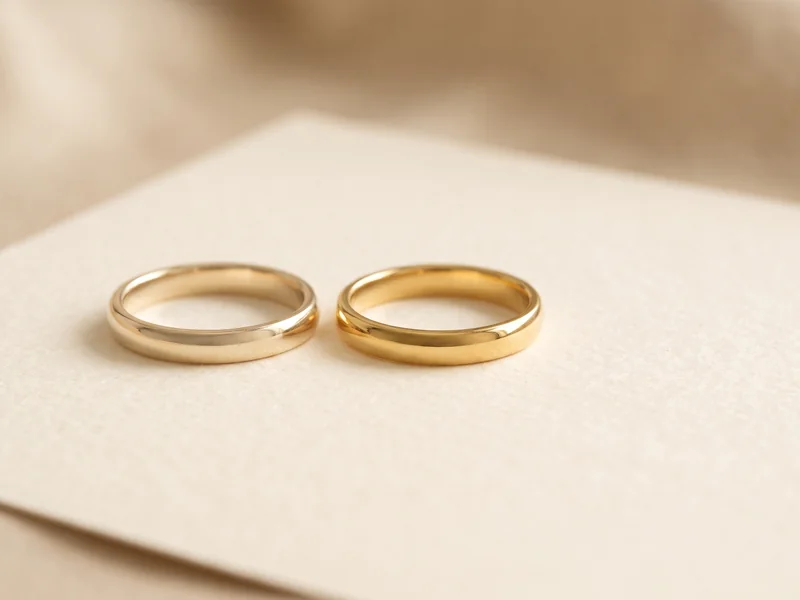
Mixing colours, such as a yellow gold band beside a platinum engagement ring, is a popular look. If you do it, choose alloys of similar hardness and expect to have both rings checked more often. Our complete wedding ring buying guide covers metals, sizing and budgeting in more depth.
How is pairing a pear different from other diamond shapes?
The pear is one of the harder shapes to pair, because it combines a wide rounded end with a point and is usually set length-wise. Here is how it compares:
- Round: symmetrical and usually set high, so a straight band almost always fits. See band options for round solitaires.
- Oval: a smooth curve with no point; a gentle contour or straight band usually works. See how to pair a band with an oval.
- Marquise: two points instead of one, so chevron and double-curve bands are common. See wedding bands that suit a marquise.
- Emerald and Asscher: straight-sided step cuts that suit straight bands and baguette-set bands. See bands for emerald cut rings and bands for Asscher cut rings.
- Princess and cushion: square or rounded-square outlines with corners that can overhang the shank. See pairing a band with a princess cut and bands that sit beside a cushion.
The practical lesson from all of them is the same: the more a stone overhangs the shank, and the lower it sits, the more likely you are to need a curved or fitted band.
How much does a wedding band for a pear engagement ring cost in Australia?
Price depends on metal, width, whether the band is curved or custom-fitted, and the size and type of any diamonds. Curved bands usually cost more than straight bands of the same metal, because they take more design and finishing time, and fitted bands more again.
| Band (about 2 mm, women's size) | Approximate price range (AUD) |
|---|---|
| Plain straight, 18ct gold | about $600–$1,500 |
| Plain straight, platinum | about $900–$2,000 |
| Plain contoured or chevron, 18ct gold or platinum | about $800–$2,200 |
| Diamond half-eternity, lab-grown diamonds | about $900–$2,500 |
| Diamond half-eternity, natural diamonds | about $1,500–$3,500 |
| Custom fitted band, plain or diamond-set | about $1,500–$4,000+ |
These are broad ranges only; metal prices move with the market and every design is different. If you are still choosing the pear itself, natural and lab-grown pear diamonds can be compared side by side, and planning the band at the same time as the engagement ring makes a flush fit much easier to achieve.
Shop pear diamonds, engagement rings and wedding bands
How do you choose a wedding band for a pear engagement ring? Step by step
- Decide which way the pear points and which side of it you will wear the band, because that sets which end of the stone the band meets.
- Try a straight band first. Slide a plain band beside the engagement ring and look from the side for a gap at the head or point.
- Check the setting height. If the gallery clears the band, a straight band can sit flush; if not, move on to curved options.
- Choose the curve. A gentle contour for a head facing the band, a chevron or V for a point facing the band, or a fitted band for halos, bezels and unusual shanks.
- Match width and profile. Aim for about 1.5–2.5 mm wide, at least 1.5 mm deep, in a profile that sits close to the engagement ring.
- Match the metal. Use the same alloy as the engagement ring, or one of similar hardness if you are mixing colours.
- Decide on diamonds. Plain, half-eternity or full eternity, with stones of about 1.3–2.0 mm, and confirm whether they are natural or lab-grown.
- Test the pair together. Wear them side by side, check that nothing catches or rocks, and confirm the band can be resized if needed.
Free consultation
Talk to a gemologist
Compare stones in person or online with Raj Sood, Graduate Gemologist (GIA), AJP (GIA).
Book a consultationFAQ
Common questions
Can you wear a straight wedding band with a pear engagement ring?
Yes, if the pear is set high enough for the band to slide underneath it. With a low setting, bezel or halo, a straight band usually leaves a small gap, which some people like and others prefer to avoid with a curved band.
What is the difference between a contoured and a chevron wedding band?
A contoured band has a gentle arc that curves around a rounded edge, such as the head of a pear. A chevron band has a sharper V shape that nests under a point, which suits a pear pointing towards the wrist.
Which way should a pear engagement ring point?
Traditionally the point faces the fingertip, which makes the finger look longer. Pointing it towards the wrist is also common, and it changes the band you need, because the point then meets the wedding band.
Should my wedding band be the same metal as my pear engagement ring?
Ideally, yes. Rings in the same alloy wear evenly where they touch, while a softer metal beside a harder one slowly loses shape.
Can a curved wedding band be resized?
Usually by about one size up or down, if the curve sits at the top and the back of the band is plain metal. Fully diamond-set or heavily shaped bands are much harder to resize, so get the size right first.
Do I need to buy the wedding band at the same time as the engagement ring?
No, but planning them together makes a flush fit easier, especially for low or haloed pears. If you buy later, bring the engagement ring so the band can be checked or fitted against it.

Ask a gemologist
Not sure which diamond to choose?
Raj Sood is a Graduate Gemologist (GIA) and master jeweller. Bring the stones you are considering, or send the reports, and he will tell you honestly which one is better and why.
Keep learning
Related guides
 Wedding Bands & EternityFitted Wedding Bands Explained | Custom Curved Bands
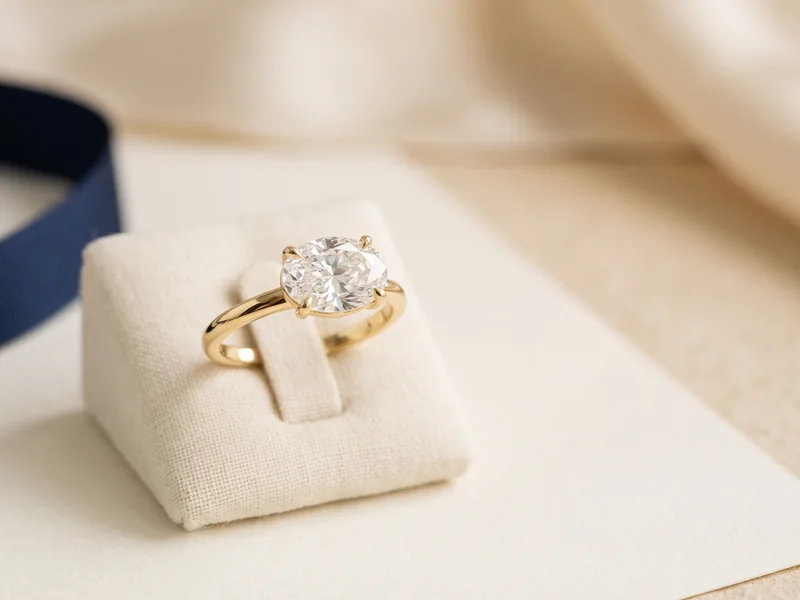 Wedding Bands & EternityHow to Match a Wedding Band to an Engagement Ring
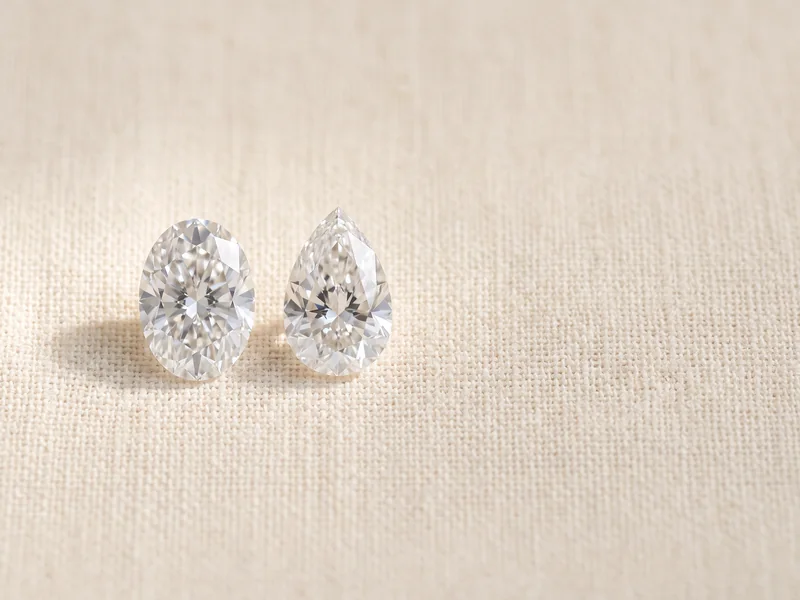 Wedding Bands & EternityBest Wedding Band for Marquise Engagement Rings
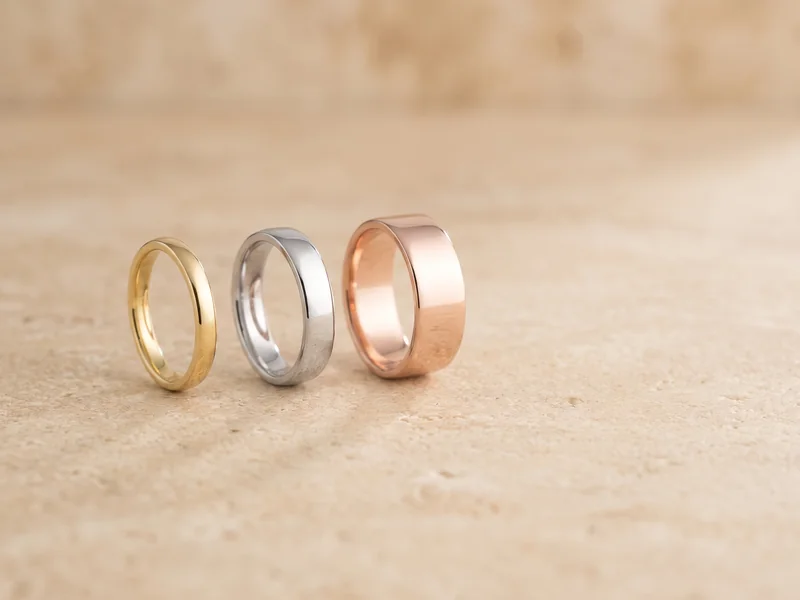 Wedding Bands & EternityWedding Band Profiles ExplainedWedding Bands & EternityWedding Ring Buying Guide
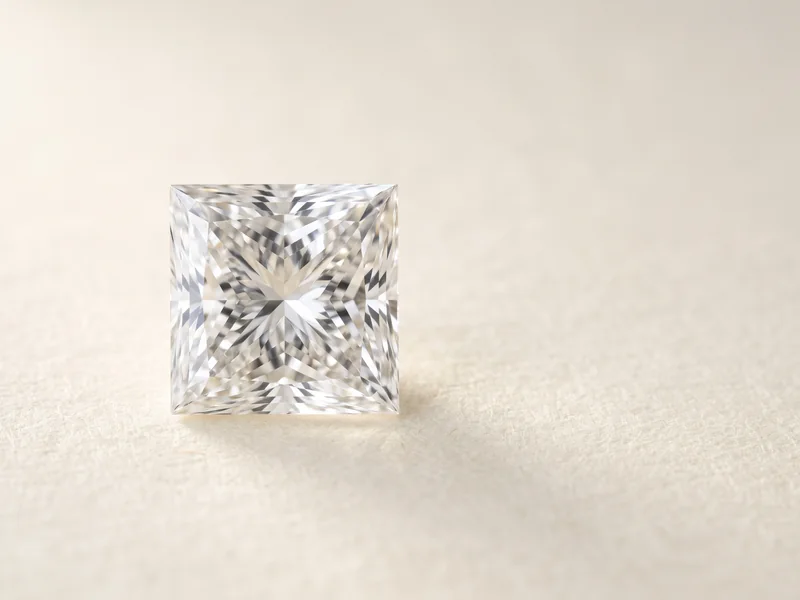 Wedding Bands & EternityBest Wedding Band for Princess Engagement Rings
 Wedding Bands & EternityWedding Ring vs Wedding Band
 Wedding Bands & EternityMen’s Wedding Band Guide
Explore more
More guides on this topic
Education