
- Education
- Wedding Bands & Eternity
- Choosing a Wedding Band for a Halo Engagement Ring: Fit, Width and Metal
Wedding Bands & Eternity
Choosing a Wedding Band for a Halo Engagement Ring: Fit, Width and Metal
A halo makes the head of a ring wider than almost any other setting, so a wedding band for a halo engagement ring has to be chosen around the halo's diameter, height and metal. Get those right and the two rings sit together for decades without rubbing or gaps you did not plan.
 Reviewed by Raj Sood, Graduate Gemologist (GIA), AJP (GIA)Master jeweller and Graduate Gemologist (GIA) · reviewed 4 November 2026
Quick answer
Most halo engagement rings pair well with a straight band of 1.5–2.5 mm if the halo sits high enough to clear it, giving a flush fit. If the halo sits low or overhangs the shank, choose a contoured or notched band that curves around it, or accept a small gap. Match the metal and claw colour for even wear.
Why is a halo engagement ring tricky to pair with a wedding band?
A halo is a ring of small diamonds, usually about 1.0–1.5 mm each, set in a frame around the centre stone. It makes the centre look larger and adds sparkle, but it also makes the head of the ring (the part that holds the stones) much wider than a plain solitaire. A 1 carat round brilliant measures about 6.4 mm across; with a single halo the head is usually around 9–10 mm. That extra width hangs out over the shank (the band part of the engagement ring) on both sides, which is exactly where a wedding band wants to sit. Our complete guide to halo engagement rings explains how halos are built and why people choose them.
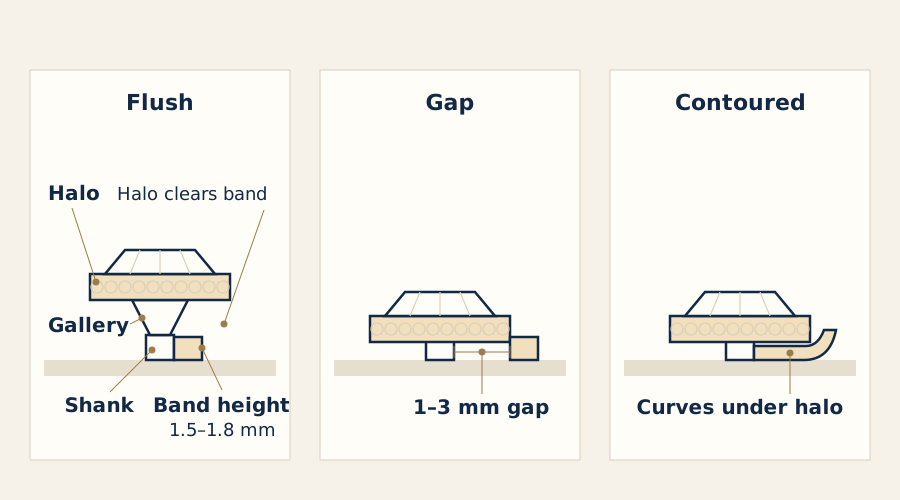
Whether a band will sit neatly comes down to three measurements. The first is the halo's diameter: how far it overhangs the shank. The second is the height of the halo's underside above the finger, set by the gallery (the metal framework under the stones). The third is the shape of the shank itself: straight, tapered, cathedral (rising up to the head in arches) or split. If any of these terms are new, the GemTrove jewellery glossary defines each one in plain English.
The shape of the halo matters too. A round halo overhangs evenly on both sides of the finger. An oval, pear or marquise halo set north-south (long axis along the finger) overhangs the band area most, while a cushion or emerald halo has straighter edges that can sit more comfortably against a straight band. Our page on how round, cushion and elongated halos differ shows each outline.
A quick note on words: Australians use wedding ring and wedding band almost interchangeably, and jewellers use band for the narrower styles worn beside an engagement ring. If you want the finer distinction, see the difference between a wedding ring and a wedding band.
Should a wedding band for a halo engagement ring sit flush or with a gap?
A flush fit means the two rings touch along their whole length, with no space showing between them. With a halo, that only happens when the underside of the halo sits higher than the top of the wedding band. Most wedding bands are about 1.4–1.8 mm deep (top to bottom), so the halo needs at least that much clearance above the shank. Many modern halo settings are designed this way on purpose, often described as wedding band friendly or flush fit.
If the halo sits lower, a straight band will bump into it and stand off, leaving a gap. A gap of 1–3 mm at the narrowest point is common and perfectly sound; plenty of people like the separation. The third option is a contoured band, shaped to curve around the halo so the rings close together.
| Flush (straight band) | Gap (straight band) | Contoured band | |
|---|---|---|---|
| How it looks | One continuous set, no space | Two separate rings with a visible space | Band wraps the halo, rings close together |
| What the halo needs | Underside clears the band's top edge | Nothing special | Nothing special; band is shaped to suit |
| Band choice | Any straight band of a similar width | Any straight band | Curved, notched, V or custom shadow band |
| Wear risk | Low if heights are right | Some rubbing as rings move | Low, but band must match the ring exactly |
| Wear the band alone? | Yes | Yes | Looks unusual without the engagement ring |
| Flexibility later | High | High | Low; tied to this engagement ring |
A gap is not a fault, but watch for one thing: when a straight band presses against the halo every time you move your hand, the band rubs the halo's claws (the tiny metal prongs holding each diamond). Over a year or two that can thin the claws and loosen small stones. If you choose a gap, make sure it is a real gap, not light contact.
A hidden halo changes the picture. It is a row of small diamonds set around the gallery under the centre stone, visible from the side but not from above, so the face-up look is a solitaire. Because it adds little width, a straight band often sits flush; the thing to check is that a pavé band does not grind against the hidden halo's stones. See our comparison of a classic halo against a hidden halo for how each affects band choice.
What is a contoured wedding band and when does a halo need one?
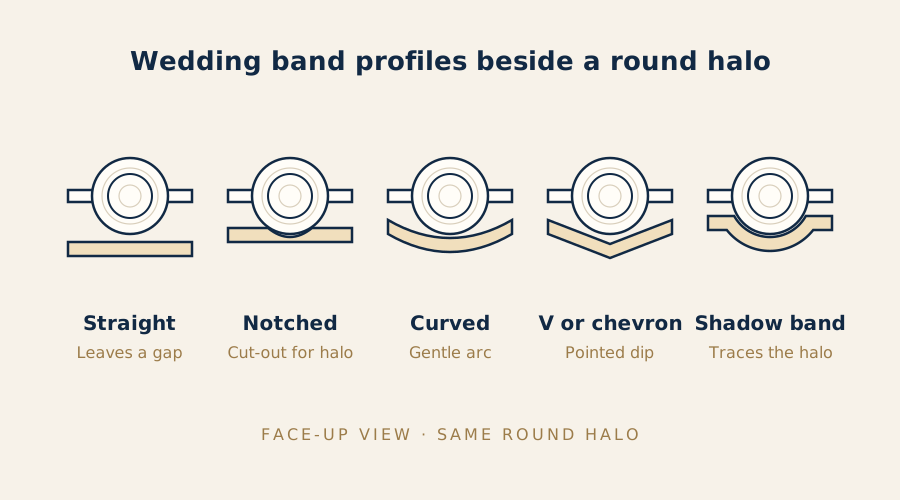
A contoured wedding band is any band shaped to follow the outline of the engagement ring instead of running straight. With a low halo it is the way to close the gap without forcing the rings together. The main types:
- Curved band: a gentle arc in the centre that sits around a round, oval or cushion halo. The most common choice for halos.
- Notched band: straight, with a small cut-out in the middle for the halo's lowest point. Looks almost straight when worn alone.
- V or chevron band: a pointed dip that suits pear and marquise halos, or a round halo where you want a more defined look.
- Shadow band: made to the exact profile of one engagement ring, so the two lock together like a set.
- Open or crown band: rises up either side of the halo, framing it rather than sitting below it.
Off-the-shelf curved bands come in a few standard depths of curve, and halos vary a lot in size, so a ready-made curve can leave a crescent of space or press against the halo. A shadow band avoids that because it is designed from the real engagement ring: the ring is measured or scanned, the band is drawn in CAD (computer-aided design) to follow the halo's edge with a hair of clearance, then cast and hand-finished. That small clearance matters; metal touching metal still rubs.
The trade-off is flexibility. A contoured band looks finished beside its engagement ring but a little odd on its own, for example if you take the engagement ring off for work or travel. If you expect to wear the wedding band alone often, a straight band with a gap may suit you better.
How wide should a wedding band be next to a halo engagement ring?
The simplest rule is to match the width of the engagement ring's shank, or go slightly narrower. Most halo engagement rings have a shank of about 1.6–2.2 mm at the base, because a slim shank makes the halo look bigger by contrast. A band much wider than the shank can make the halo look small and the set look heavy.
| Band width | How it looks beside a halo | Suits |
|---|---|---|
| 1.2–1.5 mm | Very fine; lets the halo dominate | Petite halos, slim fingers, future stacking |
| 1.8–2.2 mm | Balanced; matches most halo shanks | The majority of halo rings |
| 2.5–3 mm | Noticeable; the band holds its own | Larger halos (head 10 mm+), longer fingers |
| 3.5 mm+ | Bold; competes with the halo | Usually worn with a gap or on its own |
Depth (thickness) matters as much as width. A band of about 1.5–1.8 mm deep is strong enough for daily wear; very thin bands under about 1.2 mm can bend out of round over time. A comfort-fit profile, slightly rounded inside, slides over the knuckle more easily.
Two rings worn together also feel tighter than one, because together they cover more of the finger. Some people go up a quarter size for the pair; try both rings on at the same time, at the end of the day when fingers are slightly larger. Our wedding ring buying guide for Australian couples covers sizing, profiles and metals in more depth.
Related guideWedding Ring Buying GuideNot sure which one is right?
Send us the stones you are looking at and our gemologist will tell you which to choose and why.
Should the wedding band match the metal of a halo engagement ring?
Yes, in most cases match the exact alloy, not just the colour: platinum with platinum, 18ct white gold with 18ct white gold. Rings worn side by side rub constantly, and when one metal is more wear-resistant than the other, the other one wears faster. Matching the alloy also keeps the colour consistent as both rings age.
- Platinum: naturally white, dense and heavy. It scratches into a soft satin look (a patina) but the metal moves rather than wearing away, so claws last well. A platinum halo with a gold band will usually wear the gold faster.
- 18ct white gold: 75% gold alloyed with white metals, then usually plated with rhodium (a bright white metal). The plating wears off with rubbing, and between two rings it wears faster where they touch. Many people replate both rings every one to two years.
- 18ct yellow or rose gold: no plating, so colour stays even; rose gold gets its warmth from copper and is fairly hard-wearing.
- 9ct gold: 37.5% gold, harder but paler in colour than 18ct. A 9ct band beside an 18ct ring will look slightly different and wear the 18ct ring faster.
Two-tone rings are common with halos: a white gold or platinum head to make the diamonds look whiter, on a yellow or rose shank. In that case match the band to the shank, because that is the metal it touches and sits beside. Mixing metals on purpose, such as a yellow band against a white ring, is a valid style; just expect slightly uneven wear where they meet.
Check the claw colour too. Many halos set in yellow gold still use white claws on the centre stone, and a pavé band with white claws will pick up that detail.
Which wedding band styles suit a halo engagement ring?
A halo already carries a lot of sparkle, so the band is usually either quiet (to let the halo lead) or diamond-set to continue it. The common choices:
- Plain polished band: clean contrast, easiest to resize and the most durable. Sits well with very busy halos.
- Pavé half-eternity: small diamonds held by tiny beads of metal across the top half. Continues the halo's sparkle and can still be resized.
- Full eternity: diamonds all the way round. Matches the look from every angle but cannot be resized easily, so the size must be right.
- Channel-set: diamonds held between two rails of metal. Smooth edges, so it rubs the halo less than claw-set pavé.
- Milgrain edge: a fine beaded border that suits vintage-style halos.
- Baguette or princess-set: straight-edged stones that suit emerald, Asscher and princess halos.
For a diamond-set band, match the stone size to the halo melee (the small diamonds), usually about 1.1–1.5 mm, and match the colour grade so the band does not look whiter or warmer than the halo. Natural and lab-grown diamonds look the same to the eye, so a lab-grown band can sit beside a natural halo, but the stones in each ring should be disclosed and described correctly on paperwork.
| Band style (18ct gold, about 2 mm) | Approximate price range (AUD) |
|---|---|
| Plain polished | about $700–$1,500 |
| Pavé half-eternity, lab-grown diamonds | about $1,200–$2,500 |
| Pavé half-eternity, natural diamonds | about $1,800–$4,000 |
| Full eternity, natural diamonds | about $3,000–$7,000 |
| Custom contoured or shadow band, plain | about $1,000–$2,500 |
These are broad ranges only. Gold prices have moved a lot in recent years, and platinum, carat weight and diamond grades all shift the figure.
Does the halo shape change which band works?
It does, mostly through how the halo overhangs the shank and whether it has points or corners that can catch. Round halos are the most forgiving because they are symmetrical, and a curved band fits them neatly; our guide to bands that suit round engagement rings goes further. Cushion halos have softer corners that sit well against a straight band; see pairing a band with a cushion.
Elongated halos change things. A north-south oval halo overhangs less at the sides than a round of the same carat but is longer along the finger, so a gentle curve usually closes any gap; read more on wedding bands for oval rings. Pear halos have a point that can catch a straight band, which is why V and chevron bands are popular, as our page on bands that follow a pear's point shows. Marquise halos have two points, and a deeper V or a gap is common; see matching a band to a marquise.
Step-cut and square halos have straight edges. An emerald cut halo sits beautifully against a straight band if the gallery is high enough; see band ideas for emerald cuts. Princess halos have sharp corners that can rub a pavé band, covered in pairing bands with princess cuts, and Asscher halos behave much the same, explained in wedding bands beside an Asscher. Two-stone rings sometimes have a halo around each stone, which makes the head very wide; bands for toi et moi rings looks at that layout.
How do you stack a wedding band with a halo engagement ring?
In Australia both rings are usually worn on the left ring finger, with the wedding band closest to the hand (below the engagement ring), a tradition that puts it closest to the heart. Some people switch the order for comfort or so a contoured band locks in properly; there is no rule beyond what feels right. Common stacks with a halo:
- Classic pair: halo engagement ring with one plain or pavé band of the same width.
- Sandwich: a band either side of the halo, often the wedding band below and an anniversary band above. Frames the halo well, but needs a halo that clears bands on both sides.
- Curved and straight: a curved band hugging the halo with a fine straight band below it, so the stack sits flat.
- Mixed metals: a white halo ring with a yellow or rose band for contrast, accepting a little extra wear.
- Growing stack: starting with one band and adding eternity bands for anniversaries; leave room by keeping the first band narrow.
Stacks of three or more rings can feel wide on shorter fingers, roughly 6–8 mm across in total, so try the whole stack on before committing. Every extra diamond-set band also means more claws to check; have the set looked at by a jeweller every 6–12 months.
If your partner is choosing a band too, the guide to men's wedding bands covers widths, profiles and harder-wearing metals for larger rings.
Create your ring, or design a matching wedding band
How to choose a wedding band for a halo engagement ring, step by step
- Measure the halo. Note the head's diameter and whether it overhangs the shank, and what shape it is.
- Check the side view. See whether the halo's underside sits above the height of a typical band, about 1.5–1.8 mm.
- Decide flush, gap or contoured. Straight band if it clears, curved or shadow band if it does not, or a deliberate gap.
- Match the width. Aim for the same width as the engagement shank, usually 1.6–2.2 mm, or slightly narrower.
- Match the alloy. Same metal and caratage as the shank, and similar claw colour for diamond-set bands.
- Match the diamonds. Stone size close to the halo melee and the same colour grade, with natural or lab-grown clearly stated.
- Try the pair together. Check comfort, sizing and that nothing rubs, then plan a claw check every 6–12 months.
Free consultation
Talk to a gemologist
Compare stones in person or online with Raj Sood, Graduate Gemologist (GIA), AJP (GIA).
Book a consultationShop this shape
FAQ
Common questions
Can any wedding band sit flush with a halo engagement ring?
Only if the halo's underside sits higher than the top of the band. If it sits lower, a straight band will leave a gap, and you will need a curved, notched or custom shadow band to close it.
Is a gap between a halo ring and wedding band a problem?
No, a gap of 1–3 mm is common and sound. The only concern is light contact, where the band rubs the halo claws each time you move, which can wear them over time.
What width wedding band goes with a halo engagement ring?
Most halos pair well with a band of about 1.8–2.2 mm, close to the width of the engagement shank. Finer bands of 1.2–1.5 mm let the halo dominate, while 2.5–3 mm bands suit larger halos.
Should a wedding band be the same metal as a halo ring?
Usually yes, ideally the same alloy and caratage. Different metals wear each other unevenly, and white gold beside platinum can look slightly different once the rhodium plating wears.
Can I wear a pavé band with a halo engagement ring?
Yes, and many people do. Match the stone size and colour to the halo, and make sure the rings do not grind together, because pavé claws are small and can wear where they touch the halo.
Do curved wedding bands look odd on their own?
A gentle curve looks fine on its own to most people, but a deep curve or a shadow band made for one ring can look unfinished when worn alone. If you will often wear the band by itself, consider a straight band with a gap.
Terms in this guide

Ask a gemologist
Not sure which diamond to choose?
Raj Sood is a Graduate Gemologist (GIA) and master jeweller. Bring the stones you are considering, or send the reports, and he will tell you honestly which one is better and why.
Keep learning
Related guides
 Engagement Rings & SettingsHalo Engagement Rings
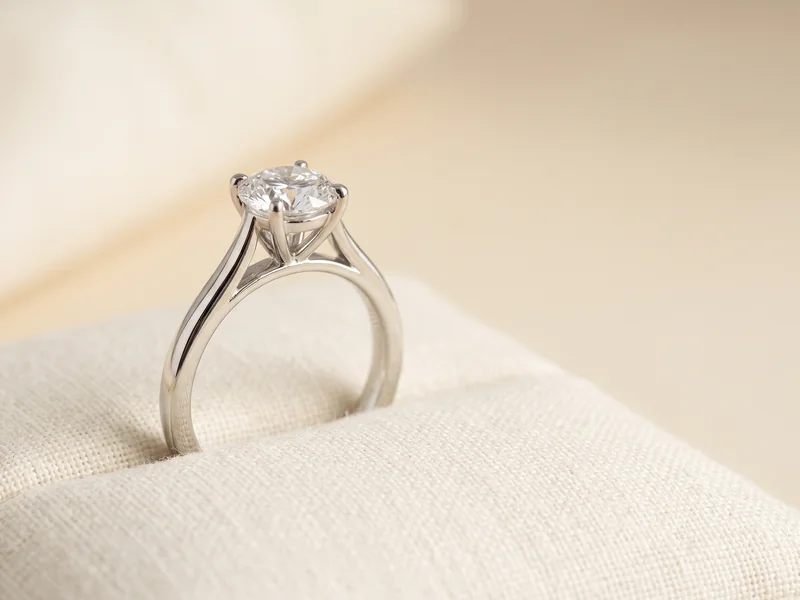 Engagement Rings & SettingsHalo vs Hidden Halo Engagement Rings
 Wedding Bands & EternityBest Wedding Band for Round Engagement RingsWedding Bands & EternityWedding Ring Buying Guide
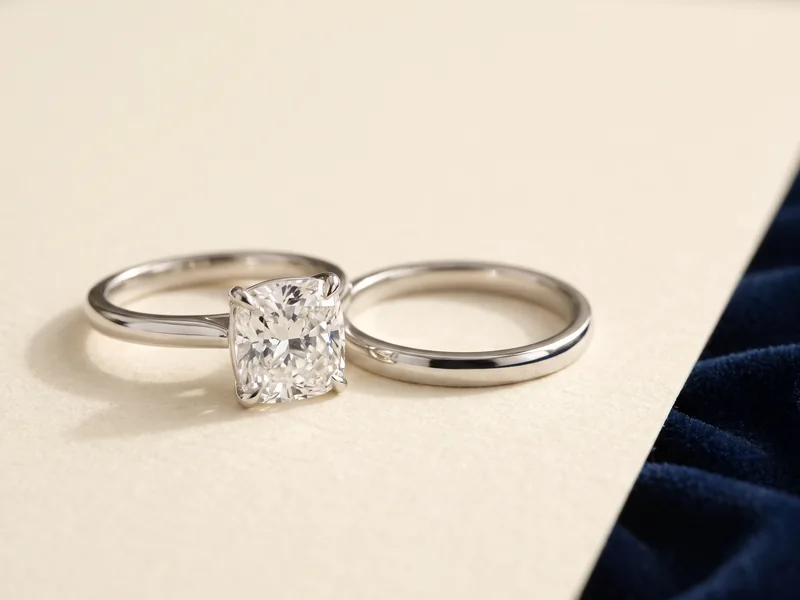 Wedding Bands & EternityWedding Ring vs Wedding Band
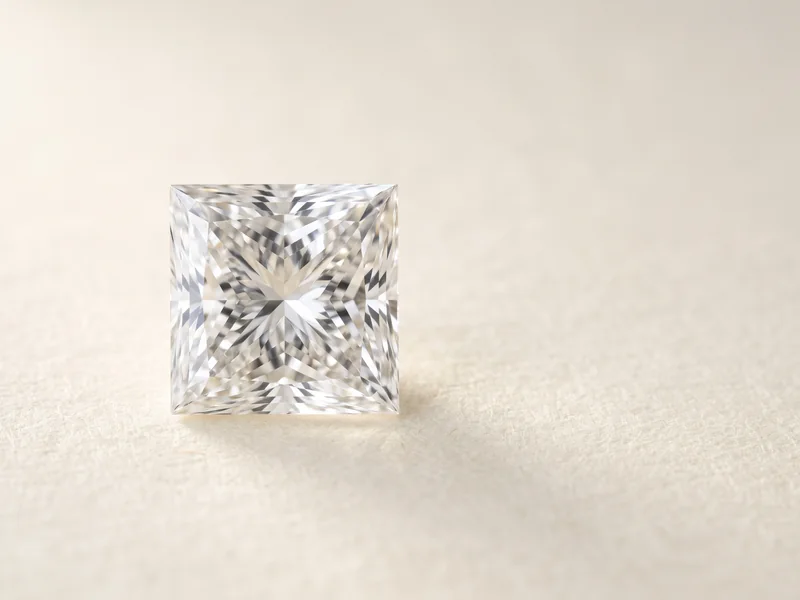 Wedding Bands & EternityBest Wedding Band for Princess Engagement Rings
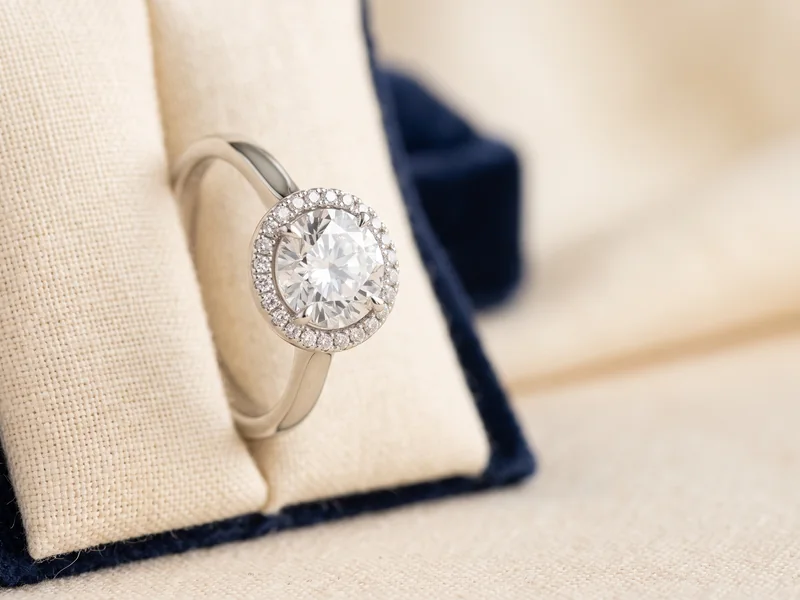 Engagement Rings & SettingsHalo Shapes Explained
 Wedding Bands & EternityMen’s Wedding Band Guide
Explore more
More guides on this topic
Education