
Gemstones
Star Sapphire and Star Ruby Guide: Asterism, Colour, Value and Care
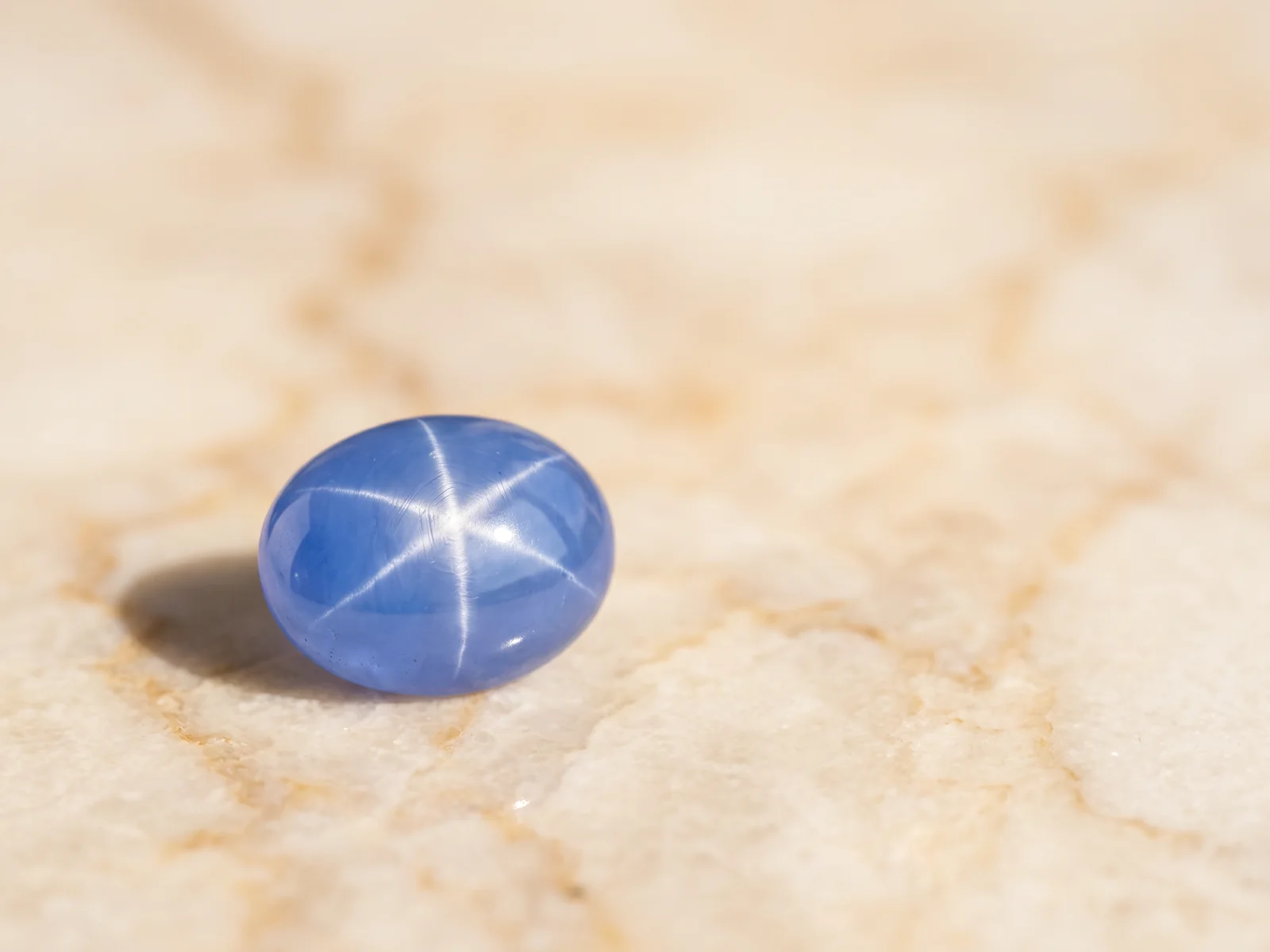
A star sapphire or star ruby hides a moving star inside a domed stone, and the quality of that star decides most of its value. Here is how the star forms, how to judge it, and how to tell natural, treated and lab-created stars apart.
 Reviewed by Raj Sood, Graduate Gemologist (GIA), AJP (GIA)Master jeweller and Graduate Gemologist (GIA) · reviewed 4 November 2026
Quick answer
A star sapphire or star ruby is a corundum cabochon showing asterism: a six-rayed star caused by fine needle-like rutile inclusions aligned in three directions. Look for a sharp, centred star with straight, even rays, good body colour and some translucency. Both are 9 on the Mohs scale and tough enough for everyday rings.
What is a star sapphire or star ruby?
A star sapphire and a star ruby are both corundum, the mineral form of aluminium oxide (Al2O3). Red corundum is called ruby; every other colour, including blue, black, grey, pink, purple and yellow, is called sapphire. What makes them star stones is asterism: a bright, usually six-rayed star that glides across the surface when a single light shines on it. Our complete sapphire gemstone guide and our guide to ruby as a gemstone cover the transparent, faceted versions. This page is about the star.
Star stones are cut as cabochons: smooth, domed stones with a flat or slightly rounded base and no facets. The dome works like a lens, gathering the light reflected from tiny inclusions inside and focusing it into thin lines. A faceted cut would break that light into sparkle instead, so a stone with good asterism is almost always cut en cabochon.
Corundum is 9 on the Mohs scale of hardness, has a refractive index of about 1.762–1.770 and a specific gravity (density compared with water) of about 4.00. It has no true cleavage, the tendency some gems have to split cleanly along flat planes, which is why it wears so well. If any term on this page is new to you, our plain-English jewellery glossary explains it.
Related guideRuby vs Sapphire Engagement RingsHow does the star form in a star sapphire?
The star comes from silk, the trade name for masses of microscopic needle-like inclusions, usually the mineral rutile (titanium dioxide). When corundum crystallises deep underground, small amounts of titanium are held inside the crystal. As the crystal slowly cools, that titanium comes out of solution and forms needles, much like sugar crystallising out of a cooling syrup.
Corundum is a trigonal crystal, so those needles line up in three directions, 60° apart, all lying in the plane at right angles to the crystal's main axis (the c-axis). Each set of parallel needles reflects a band of light at right angles to itself. Three sets of needles give three bands, which cross at the centre to make six rays.
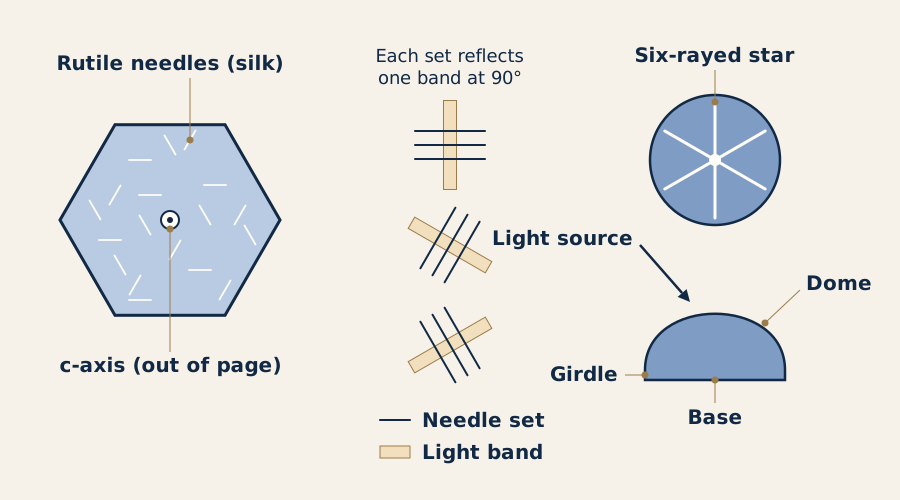
- Six-rayed star: the normal form in star sapphire and star ruby.
- Twelve-rayed star: occurs when a second set of inclusions, such as hematite or ilmenite platelets, sits at 30° to the rutile, producing a second star offset from the first. It is seen most often in some black star sapphires from Thailand and is rare.
- Cat's-eye: if only one set of needles is well developed, you get a single line of light, called chatoyancy. Cat's-eye corundum exists but is far less common than star corundum.
To centre the star, the cutter must orient the base of the cabochon at right angles to the c-axis. If the orientation is off, the star sits to one side of the dome when the stone is level. The star shows clearly under a single point of light, such as direct sunlight, a torch or a downlight, and appears to float across the dome as you tilt the stone. Under soft, diffuse light, such as an overcast day or fluorescent office lighting, even a good star can almost disappear. That is normal, not a fault.
What colours do star sapphires and star rubies come in?
Star corundum covers nearly the full sapphire colour range, though the silk that creates the star also softens the colour and lowers transparency. Most star stones are translucent (light passes through but you cannot see clearly through them) to opaque, with a slightly milky or velvety look.
| Colour | What it looks like | Notes |
|---|---|---|
| Blue star sapphire | Grey-blue to cornflower blue, often softly milky | The classic star sapphire; Sri Lanka and Myanmar are well known for it |
| Black star sapphire | Very dark brown, green or blue-black body with a silvery or golden star | Queensland and Thailand are known for it; the star shows strongly against the dark body |
| Grey or white star sapphire | Silvery grey to near-white | Usually more affordable; the star can be strong but colour is weak |
| Pink and purple star sapphire | Soft pink to violet | The line between pink sapphire and ruby is judged by the lab |
| Yellow, orange and green star sapphire | Golden, brownish orange or olive tones | Less common; some Australian stones show a golden star |
| Star ruby | Purplish red to brownish red, rarely a pure strong red | Fine red colour with a sharp star is rare and valued highly |
Where pink sapphire ends and ruby begins is not fixed by one universal rule; laboratories judge it by the depth and saturation of the red, so a borderline stone may be called pink sapphire by one lab and ruby by another. Our guide on what separates a fine ruby red from pink explains how colour is graded.
Australia's sapphire fields are best known for faceted stones, including the green-blue teal sapphires used in engagement rings and the two-tone parti sapphires with blue, green and yellow zones. The same fields also produce black star sapphires. If you are weighing a faceted stone against a star, our comparison of teal and classic blue sapphire and our page on rings set with Australian-mined sapphire are good next steps. The pinkish-orange padparadscha sapphire is almost always faceted, and star padparadscha is very rare.
Where do star sapphires and star rubies come from?
Star corundum forms wherever corundum grows with enough titanium to make silk. A few localities have become known for particular looks:
| Origin | Known for |
|---|---|
| Sri Lanka | Blue and grey-blue star sapphires, often with good translucency; the source of the famous Star of India |
| Myanmar (Burma), Mogok area | Star rubies and blue star sapphires with strong colour and fine silk |
| Thailand (Chanthaburi and Kanchanaburi) | Black star sapphires, including some twelve-rayed stars |
| Australia (Central Queensland and New England, NSW) | Black star sapphires, some with golden stars; the Anakie gemfields around Sapphire and Rubyvale are especially known for them |
| India | Commercial, mostly opaque star rubies and star sapphires, often treated |
| East Africa and Madagascar | Star rubies and sapphires in a range of colours |
Australia has a long history with star corundum. The Anakie gemfields in Central Queensland have produced black star sapphires for well over a century, and the large black star sapphire known as the Black Star of Queensland was found there in the 1930s. Many Australian black star sapphires show a sharp silvery star against a near-black body, which suits strong, simple settings in white or yellow gold.
Origin cannot be judged reliably by eye. Experienced gemmologists can read clues from the colour, silk pattern and inclusions, but a reliable origin statement needs a laboratory report. If origin matters to you, ask for the report and check exactly what it states. To see how star stones fit alongside other coloured gems, browse our overview of coloured gemstones and birthstones.
Not sure which one is right?
Send us the stones you are looking at and our gemologist will tell you which to choose and why.
Are star sapphires and star rubies treated, or lab-created?
Most faceted sapphires and rubies are heated to improve colour and clarity, a standard trade practice explained in our page on how heat treatment is used on faceted sapphire. Strong heating dissolves rutile silk, which is exactly what makes a star, so many star stones are unheated or only lightly heated. That does not mean every star stone is untreated. These are the treatments and look-alikes to know about:
- Diffusion-induced star: titanium is diffused into the surface of a cabochon at high temperature, then the stone is heated so needles form only in a thin skin. The star looks very sharp and even, but sits on the surface rather than deep in the stone. It must be disclosed.
- Fracture filling and glass filling: low-grade, heavily fractured star rubies are sometimes filled with glass or resin to improve their look. Filled stones need gentler care.
- Dyeing and oiling: seen mainly in inexpensive commercial star rubies; colour may concentrate in cracks.
- Imitations: some low-cost pieces are other materials with a star scratched or engraved on the base. They are not corundum at all.
Lab-created star sapphires and star rubies are real corundum, grown in a factory rather than mined. They were first produced commercially in the late 1940s, and the best-known brand was Linde, which is why older pieces are often called Linde stars. They are usually grown by the flame fusion (Verneuil) method with added titanium, then heated so rutile needles form. They have the same hardness and refractive index as natural corundum and must always be sold as lab-created or synthetic.
| Natural star | Lab-created star | Diffused star (natural stone) | |
|---|---|---|---|
| Star | Sharp to soft; rays may be slightly uneven or broken | Very sharp, bright and evenly perfect | Very sharp, straight and uniform |
| Body colour | Usually some colour zoning, often straight or hexagonal | Very even colour, often unusually clean | Colour as natural, star sits in a thin surface layer |
| Under magnification | Visible silk, natural crystals and fingerprints | Curved growth lines, gas bubbles | Fine silk concentrated just under the surface |
| Price | Wide range, set by star, colour and origin | Low | Well below an untreated natural stone of similar look |
| Disclosure | Report states any treatment | Must be called lab-created or synthetic | Treatment must be disclosed |
At the bench, a gemmologist separates these with a loupe and microscope, a refractometer reading of about 1.76 for any corundum, and a close look at the silk. A star that looks too perfect, with ruler-straight rays and a glassy, flawless body, is a reason to ask more questions. For a stone of real value, a report from an independent laboratory such as GIA, GRS, SSEF or Gübelin is the reliable way to confirm natural origin and treatment status.
What makes a star sapphire valuable?
Star stones are judged differently from faceted gems. Clarity matters less, because the inclusions are what create the star. What matters most is how well the star and the colour work together. In rough order of importance:
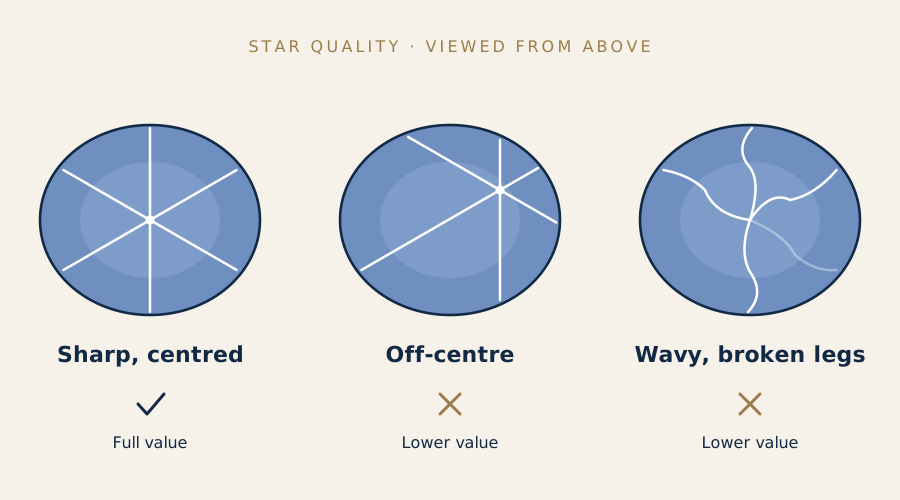
- Star quality: sharp, bright rays that are straight, of equal length, meet in the centre and run all the way down to the base of the dome. Wavy, broken, faint or missing legs lower the value.
- Centring: the star should sit in the middle of the dome when the stone lies flat.
- Body colour: a rich, even colour adds the most value. A strong red star ruby or a vivid blue star sapphire is worth far more than a grey or brownish one with the same star.
- Translucency: a stone that glows with light from within looks livelier than an opaque one. A strong star in a translucent, well-coloured stone is the rare combination.
- Cut: a smooth, symmetrical dome of good height and a base that is not overly thick. Very heavy bases add carat weight you never see, and make setting harder.
- Size and origin: larger fine stones are rarer, and some origins attract higher prices.
- Treatment: untreated natural stones are valued above treated ones of similar appearance.
There is a built-in trade-off. More silk usually means a stronger star but a greyer, more opaque stone; less silk means better colour and transparency but a weaker star. That balance is why a fine star ruby costs so much more than a faceted ruby with average colour. Our guide to how ruby and sapphire compare for rings covers the same colour principles for faceted stones.
Is a star sapphire or star ruby good for an engagement ring?
Yes, for most people. Corundum's hardness of 9 means it resists the scratches that dull softer gems, and its toughness, its resistance to chipping and breaking, is rated good. The catch is that some star stones, especially commercial star rubies, are heavily fractured, and a filled or fractured stone is more vulnerable to a hard knock. Here is how star corundum compares with other gems people consider for rings:
| Gem | Mohs hardness | Toughness | Suits daily ring wear? |
|---|---|---|---|
| Star sapphire / star ruby | 9 | Good (no cleavage) | Yes, with a protective setting |
| Diamond | 10 | Good (has cleavage) | Yes |
| Star garnet | 6.5–7.5 | Fair to good | With care; usually a four-rayed star |
| Star rose quartz | 7 | Fair | Occasional wear |
| Star diopside | 5–6 | Fair to poor | Occasional wear; four-rayed star |
| Moonstone | 6–6.5 | Poor (cleavage) | Occasional wear |
| Opal | 5.5–6.5 | Poor to fair | With care, in a protective setting |
For a star stone, a bezel (a thin rim of metal around the edge) is a natural fit: it protects the girdle, holds a cabochon securely and leaves the dome free to show the star. Four or six claws also work and let in more light from the side. A lower, smoother dome sits closer to the finger and is less likely to take knocks; a very high dome looks dramatic but sits taller. Because cabochons often have thick bases, the setting must be built around the stone's actual depth.
Our pages on sapphire engagement ring designs and ruby engagement rings show setting styles that suit coloured stones. For how corundum stands up against diamond on wear and price, see diamond vs sapphire for an engagement ring and ruby compared with diamond.
How much does a star sapphire or star ruby cost in Australia?
Prices range more widely for star corundum than for almost any other gem, from a few dollars a carat for lab-created stones to many thousands for fine natural stars. The table shows broad, approximate per-carat ranges in AUD; individual stones can fall well outside them.
| Type | Approximate price per carat (AUD) |
|---|---|
| Lab-created star sapphire or star ruby | about $10–$100 |
| Commercial opaque star ruby, often treated | about $20–$200 |
| Australian or Thai black star sapphire | about $50–$500 |
| Good blue star sapphire, translucent with a clear star | about $300–$2,000 |
| Fine blue star sapphire, strong colour and sharp star | about $2,000–$6,000 or more |
| Fine natural star ruby, strong red and sharp star | about $2,000–$15,000 or more |
What moves the price most is the combination of star sharpness, body colour and translucency, followed by size, origin and treatment status. Two stones of the same weight and colour name can differ in price many times over because of the star alone. Always confirm whether the stone is natural, treated or lab-created before comparing prices.
Browse natural gemstones
How do you clean and care for a star sapphire?
Untreated star corundum is easy to look after. Treated and fractured stones need more care, so check what your report or receipt says first.
- Everyday cleaning: warm water, a drop of mild detergent and a soft toothbrush, then rinse and dry with a lint-free cloth. Clean under the stone, where soap and skin oils build up and dull the star.
- Ultrasonic and steam cleaners: usually safe for untreated stones without surface-reaching fractures. Avoid them for glass-filled, fracture-filled, dyed or oiled stones.
- Chemicals: keep filled stones away from household cleaners, chlorine and jewellery dips, which can damage fillers.
- Storage: store separately in a soft pouch. Corundum will scratch almost every other gem except diamond, and a diamond can scratch a sapphire's dome.
- Checks: have claws or bezels checked about once a year, especially on rings worn daily.
- Repolishing: a scratched or worn dome can be repolished by a lapidary, though reshaping can slightly change how the star sits.
Ruby is the July birthstone and sapphire is the September birthstone, so star stones are often given as birthstone gifts; our July birthstone page on ruby covers that tradition.
How do you choose a star sapphire or star ruby? Step by step
- Confirm what it is. Ask whether the stone is natural or lab-created, and whether it has been heated, diffused, filled or dyed. For valuable stones, ask for an independent laboratory report.
- Check the star under a single light. Use sunlight or a torch. Look for six sharp, straight rays of equal length that meet in the centre.
- Tilt the stone. The star should glide smoothly across the dome and return to the centre when the stone is level.
- Judge the colour in normal light. Look at the body colour with the star switched off, under diffuse light, because that is how it will look most of the day.
- Look at the cut. Check for a smooth, symmetrical dome and ask about the total depth so you know how high it will sit in a ring.
- Plan the setting. Choose a bezel or secure claws, a dome height that suits daily wear, and a metal colour that flatters the body colour.
Free consultation
Talk to a gemologist
Compare stones in person or online with Raj Sood, Graduate Gemologist (GIA), AJP (GIA).
Book a consultationShop this shape
FAQ
Common questions
Are star sapphires real sapphires?
Yes. A natural star sapphire is corundum, the same mineral as any sapphire, with rutile needles that create the star. Lab-created star sapphires are also corundum but are grown in a factory and must be sold as lab-created.
Why can't I see the star on my star sapphire indoors?
Asterism needs a single point of light, such as sunlight, a torch or a downlight. Under soft, diffuse light the star fades or disappears, which is normal and not a fault.
How can you tell if a star sapphire is real or lab-created?
Lab-created stars often look too perfect, with very sharp, even rays and very uniform colour, and show curved growth lines and gas bubbles under magnification. Natural stones usually show straight colour zoning and natural inclusions, but a gemmologist or laboratory report is the reliable way to confirm.
Can you wear a star sapphire ring every day?
Yes. At 9 on the Mohs scale with good toughness, star corundum suits daily wear, especially in a bezel or secure claw setting. Heavily fractured or filled stones need more care.
Do Australian sapphires have stars?
Some do. Central Queensland and the New England region of NSW produce black star sapphires, often with a sharp silvery or golden star on a near-black body.
What is a 12-ray star sapphire?
It is a stone with two sets of inclusions, typically rutile plus hematite or ilmenite, that create two overlapping six-rayed stars. Twelve-rayed stars are rare and seen most often in some black star sapphires from Thailand.
Terms in this guide

Ask a gemologist
Not sure which diamond to choose?
Raj Sood is a Graduate Gemologist (GIA) and master jeweller. Bring the stones you are considering, or send the reports, and he will tell you honestly which one is better and why.
Keep learning
Related guides
 GemstonesSapphire Gemstones
 GemstonesRuby Gemstones Melbourne
 GemstonesSapphire Engagement Rings in Melbourne
 GemstonesAustralian Sapphire Engagement RingsGemstonesGemstones | Coloured Gemstones, Birthstones and Custom Jewellery
 GemstonesRuby vs Sapphire Engagement Rings
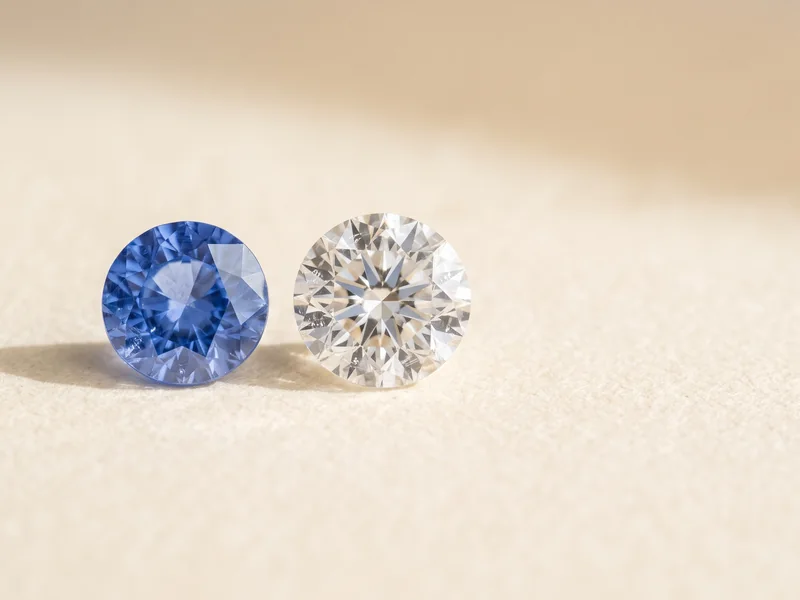 GemstonesRuby vs DiamondGemstonesRuby Engagement Rings
Explore more
More guides on this topic
Education