
Gemstones
Teal Sapphire Engagement Ring Guide: Colour, Origin, Durability and Price
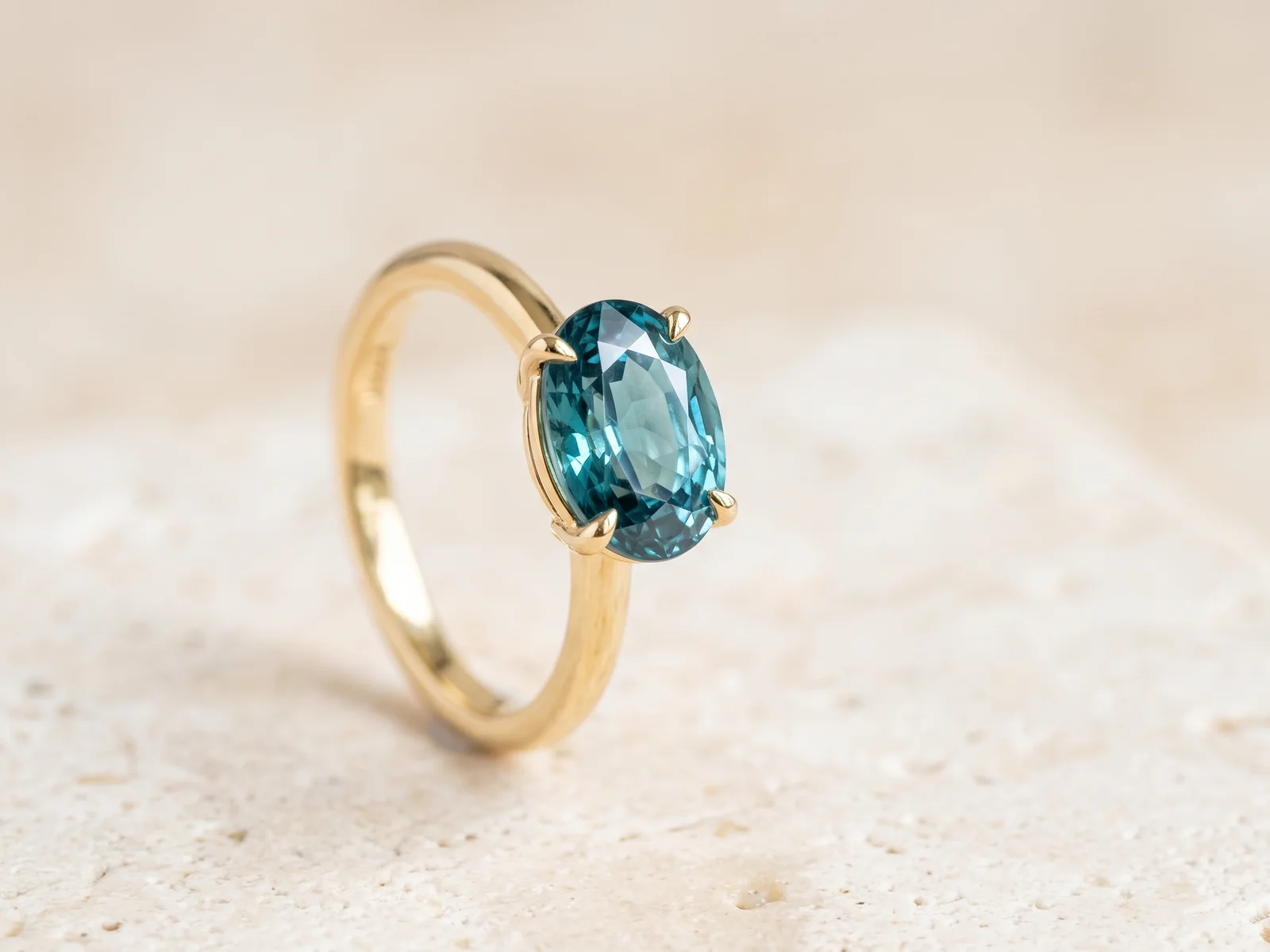
A teal sapphire engagement ring is one of the most popular coloured alternatives to a diamond, and Australia is one of the classic sources of the colour. Here is how to judge the shade, origin, treatment and setting before you choose.
 Reviewed by Raj Sood, Graduate Gemologist (GIA), AJP (GIA)Master jeweller and Graduate Gemologist (GIA) · reviewed 4 November 2026
Quick answer
A teal sapphire engagement ring uses a natural or lab-created sapphire whose colour sits between blue and green. Sapphire is 9 on the Mohs scale with excellent toughness, so it suits daily wear. Look for a medium tone, even colour face-up, eye-clean clarity, disclosed treatment, and a claw or bezel setting in a metal that flatters the shade.
What is a teal sapphire?
A teal sapphire is a variety of corundum, the mineral species that includes every sapphire and ruby. Corundum is crystalline aluminium oxide (Al2O3). Pure corundum is colourless; trace elements give it colour. In teal stones, iron and titanium together create blue, while iron on its own adds green and yellow. The balance between them is what pushes a stone towards blue-green. For the wider picture of the species, see our page on sapphire as a gem species.
"Teal" is a trade name, not a formal grade. Laboratories such as GIA describe these stones as blue-green or green-blue sapphire, with the dominant colour named last. A report that says "greenish blue" means a mostly blue stone with a green secondary colour; "bluish green" means the reverse. Teal is usually used for stones somewhere in between.
Teal is one of many sapphire colours, alongside the classic blue and the fancy sapphires: pink, yellow, purple, orange and green. Our coloured gemstones hub covers them all, and any unfamiliar term in this guide is explained in the glossary of jewellery and gem terms.
What colour is a teal sapphire, and which shade should you choose?
Gemmologists describe colour with three words. Hue is the colour itself (blue, green or a mix). Tone is how light or dark it is. Saturation is how strong or greyish it looks. In teal sapphire, tone and saturation matter more than the exact blue-to-green split, because that split is a matter of taste.
| Shade | How it looks | What to watch for |
|---|---|---|
| Light seafoam teal | Pale, minty blue-green | Can look washed out in white metal; check saturation |
| Medium teal | Balanced blue and green, lively | The most popular range for rings |
| Deep peacock teal | Rich, dark blue-green | Can go inky in low light, especially Australian stones |
| Greenish teal | Mostly green with a blue edge | Sits close to a green sapphire |
| Bluish teal | Mostly blue with a green edge | Shifts towards blue in daylight |
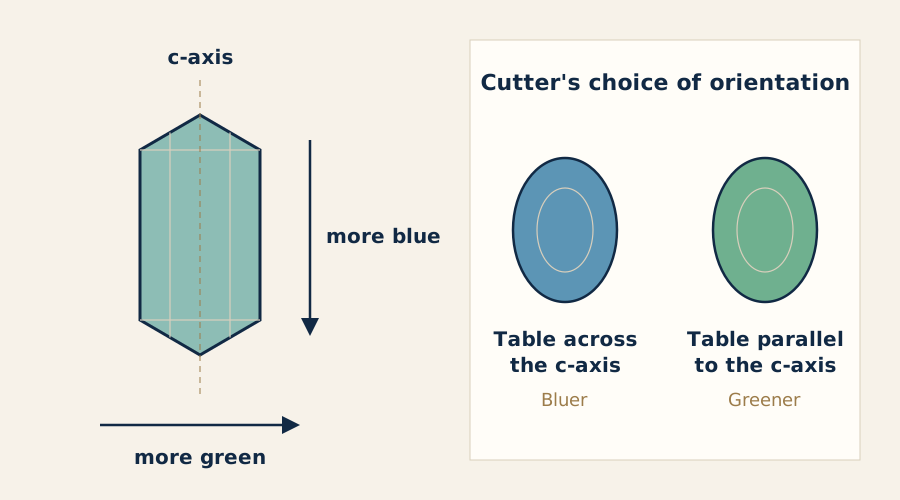
Sapphire is pleochroic (sometimes called dichroic): it shows a different colour depending on which direction light travels through the crystal. In blue-green sapphire, one direction tends to look more blue and the other more green or slightly yellowish. The cutter decides which way the table (the large top facet) faces, so two stones from the same rough can face up quite differently. Turning a teal stone in your fingers often shows flashes of both colours, and many people like that movement.
Lighting changes teal too. Cool daylight usually brings out the blue; warm indoor light and many LED globes push the stone greener. This is a gentle shift, not the strong switch you see in colour-change sapphires that swap hue under different light. Stones that show distinct blue and green zones, rather than a blended teal, are sold as parti sapphires; see our guide to parti sapphire rings with two or three colours.
Related guideTeal Sapphire vs Blue Sapphire Engagement RingsWhere do teal sapphires come from? Australian and other origins
Teal sapphires come mostly from basalt-related deposits, where volcanic eruptions carried corundum crystals to the surface. These stones are rich in iron, which is why they so often show blue-green and green tones. Australia is one of the best-known sources.
| Origin | Typical teal character | Notes |
|---|---|---|
| Central Queensland (Anakie, Rubyvale, Sapphire) | Medium to deep blue-green, often with parti zoning | Long-worked gemfields; many stones heated |
| New England, NSW (Inverell, Glen Innes) | Deep blue to blue-green, can be dark | Strong straight colour banding is common |
| Montana, USA | Lighter, brighter steely teal | Rock Creek and Missouri River deposits; usually heated |
| Nigeria and Madagascar | Wide range, medium blue-green | Significant recent supply |
| Thailand and Cambodia | Darker blue-green | Basalt-related, similar to Australian material |
| Sri Lanka | Less often teal; mostly lighter blue | Better known for cornflower and pastel colours |
Australian sapphires were once a large share of world production, much of it sent to Thailand for cutting and sold without its origin. Today, buyers increasingly ask for it. Our page on engagement rings set with Australian-mined sapphire covers the fields in more detail, and for contrast, what a Ceylon (Sri Lankan) origin really means explains how origin affects colour and price.
Origin is an opinion from a laboratory based on inclusions and trace-element chemistry, not something you can see. It mostly matters for the top end of the market. For a teal ring, colour and cut affect the look far more than where the rough was found.
Are teal sapphires heat treated, and does it matter?
Most sapphires on the market are heated. Heating to high temperatures can lighten an overly dark stone, dissolve fine silk (tiny rutile needles) and even out colour. It is permanent and widely accepted, but it must be disclosed. A heated teal sapphire is still a natural sapphire.
- Unheated: colour is as the stone came from the ground. Many teal stones are sold unheated because their colour is already attractive; they usually cost more.
- Heated only: the most common treatment, stable for life.
- Diffusion: elements such as beryllium or titanium are driven into the stone during heating. Much less common in teal, must be disclosed and usually lowers value.
- Fillers: glass or resin in fractures; rare in sapphire and needs gentler care.
A lab-created teal sapphire (also called synthetic sapphire) is real corundum grown in a laboratory, with the same hardness and refractive index as natural. The common flame-fusion method can produce teal colours cheaply, and some newer methods grow cleaner crystals. Lab-created sapphire is a fair choice if you want the colour at a low price, but it must always be sold as lab-created, and it is priced very differently from natural.
Not sure which one is right?
Send us the stones you are looking at and our gemologist will tell you which to choose and why.
Is a teal sapphire engagement ring durable enough for everyday wear?
Yes. Two separate properties decide how a gem survives daily wear. Hardness (the Mohs scale) is resistance to scratching; household dust contains quartz at 7, so anything below 7 slowly dulls. Toughness is resistance to chipping and breaking. Sapphire scores well on both: 9 for hardness and excellent toughness, with no true cleavage (a plane along which a crystal splits easily), although some stones have parting planes.
| Gem | Mohs hardness | Toughness | For an engagement ring |
|---|---|---|---|
| Diamond | 10 | Good (has cleavage) | Excellent |
| Sapphire (natural or lab-created) | 9 | Excellent | Excellent |
| Moissanite (lab-created) | 9.25 | Good | Excellent |
| Spinel | 8 | Good | Very good |
| Aquamarine | 7.5–8 | Good | Good, scratches over years |
| Emerald | 7.5–8 | Poor to good (often fractured) | Needs a protective setting |
| Teal tourmaline | 7–7.5 | Fair | Fair, best for occasional wear |
| Tanzanite | 6–6.5 | Poor to fair, has cleavage | Not ideal for daily wear |
That is why sapphire has long been the main coloured alternative for engagement rings. If you are weighing it against the hardest option, our comparison of diamond vs sapphire for a lifetime of wear sets out the trade-offs, and why emerald is more delicate than sapphire explains the other common green-leaning choice.
How do gemmologists identify a teal sapphire?
Several blue-green gems look like teal sapphire across a counter. A gemmologist separates them with a refractometer (which measures how much a stone bends light), a loupe or microscope, and sometimes specific gravity (density). These are the readings we check.
| Property | Sapphire | Teal tourmaline | Spinel | Blue-green zircon | Lab-created sapphire |
|---|---|---|---|---|---|
| Refractive index | 1.762–1.778 | 1.62–1.64 | about 1.718 | 1.92–1.98 | Same as natural |
| Birefringence | 0.008–0.010 | 0.018–0.020 | None (singly refractive) | Up to about 0.059 | Same as natural |
| Specific gravity | about 4.00 | about 3.06 | about 3.60 | about 4.6–4.7 | about 4.00 |
| Typical clues | Straight, angular colour bands; silk; fingerprints | Long tubes, strong pleochroism | Small octahedral crystals | Strong doubling of back facet edges | Curved growth lines and gas bubbles (flame fusion) |
The hardest separation is natural from lab-created, because the properties match. Under magnification, natural sapphire shows straight, angular colour zoning following the crystal's hexagonal shape, while flame-fusion stones show curved lines. Newer lab-created stones can be very clean, so an independent laboratory report is the safe way to confirm a natural stone and its treatment status, especially above about 1 carat.
What is the best setting and metal for a teal sapphire engagement ring?
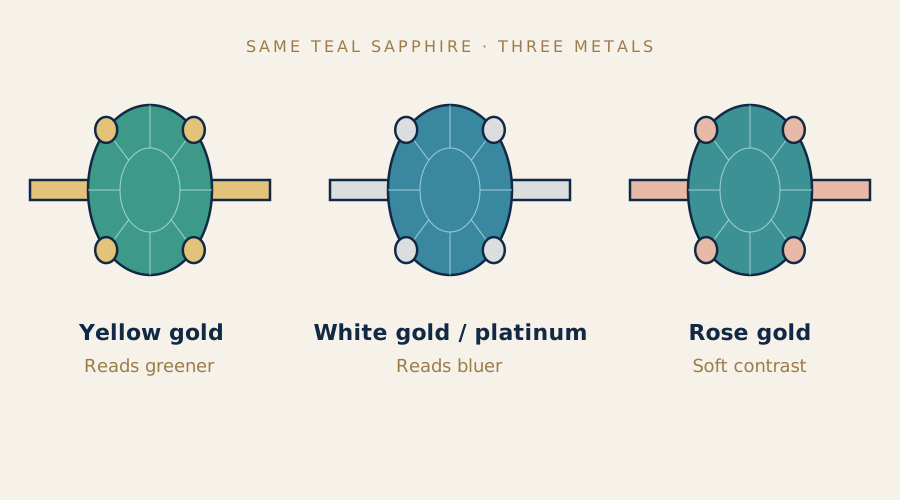
Metal colour reflects up into a sapphire and changes how teal it looks. As a rule of thumb:
- Yellow gold: warms the stone and pushes it greener. A teal sapphire ring in yellow gold suits greenish and peacock shades.
- White gold or platinum: keeps the stone cooler and bluer, and makes light teal look crisper.
- Rose gold: a softer contrast that flatters medium teal; the pink and blue-green sit opposite each other on the colour wheel.
Because sapphire is tough, most setting styles work. Four or six claws show the most of the stone. A bezel (a metal rim) is very secure and suits active hands. A halo of small diamonds, or white sapphire accents for a lower price, frames the colour and makes the centre look larger. Three-stone designs often pair teal with diamonds, or with other fancy colours such as yellow sapphire side stones or a soft purple sapphire.
Oval, cushion, emerald cut and hexagon shapes are popular for teal because they show broad flashes of colour. Deep stones, common in Australian material, can look dark in a closed-back setting, so an open gallery that lets light in from the side helps. For more design ideas across every sapphire colour, see our Melbourne sapphire engagement ring guide.
How much does a teal sapphire engagement ring cost in Australia?
Teal sapphire usually costs less per carat than a fine blue sapphire of the same size, because classic blue has more demand. Price rises sharply with size, saturation and an unheated report. The ranges below are loose-stone prices only and are broad guides, not quotes.
| About 1 ct teal sapphire | Approximate price range (AUD) |
|---|---|
| Lab-created | about $50–$300 |
| Natural, heated, Australian or Montana | about $800–$2,500 |
| Natural, unheated, fine medium teal | about $2,000–$5,000 |
| Natural, about 2 ct, heated, good colour | about $2,500–$8,000 |
Add the setting. A solitaire mount in 18ct gold or platinum typically adds about $1,500–$4,000, and a diamond halo or three-stone design adds more depending on the diamonds. Compared with other fancy colours, teal usually sits well below padparadscha, the rarest pink-orange sapphire, and in a similar range to orange sapphire and green.
Browse natural gemstones, including teal sapphires
How do you choose a teal sapphire engagement ring? Step by step
- Decide on the shade. More blue or more green, light or deep. Compare a few stones side by side; teal looks very different next to a classic blue.
- Check tone. Aim for medium to medium-dark. Look at the stone in dim light to make sure it does not turn inky.
- Look for even colour face-up. Some zoning is natural, but a clear window (a pale washed-out patch in the centre) means shallow cutting.
- Confirm natural or lab-created, and treatment. Ask for a laboratory report on larger natural stones stating heated or unheated.
- Check clarity by eye. Eye-clean is the usual goal; fine silk is normal and can soften the colour attractively.
- Match the metal. Try the stone against yellow and white metal before you settle on the design.
- Plan care. Clean with warm soapy water and a soft brush, and have the claws checked about once a year.
Heated and unheated sapphires can generally go in an ultrasonic cleaner, but filled or fractured stones should not, so ask first. Store the ring separately from diamonds, which can scratch sapphire.
Free consultation
Talk to a gemologist
Compare stones in person or online with Raj Sood, Graduate Gemologist (GIA), AJP (GIA).
Book a consultationShop this shape
FAQ
Common questions
Is teal sapphire a good choice for an engagement ring?
Yes. Sapphire is 9 on the Mohs scale with excellent toughness, so a teal sapphire handles daily wear far better than most coloured gems. A well-made setting keeps it secure for decades.
What is the difference between teal sapphire and blue sapphire?
Teal sapphire shows both blue and green, while blue sapphire is predominantly blue. They are the same mineral with the same durability; teal usually costs less per carat than fine blue.
Are Australian teal sapphires real sapphires?
Yes. Australian teal sapphires from Queensland and New South Wales are natural corundum. Many are heated to improve colour, which should be disclosed.
Does teal sapphire change colour?
It shifts slightly: bluer in daylight and greener under warm indoor light. It also shows blue and green flashes from different angles because of pleochroism.
Is a lab-created teal sapphire a real sapphire?
A lab-created teal sapphire is real corundum with the same hardness and refractive index as natural, grown in a laboratory instead of mined. It costs much less and must always be sold as lab-created or synthetic.
Which metal suits a teal sapphire ring?
Yellow gold brings out the green side, while white gold and platinum keep the stone bluer. Rose gold is a softer option that suits medium teal.

Ask a gemologist
Not sure which diamond to choose?
Raj Sood is a Graduate Gemologist (GIA) and master jeweller. Bring the stones you are considering, or send the reports, and he will tell you honestly which one is better and why.
Keep learning
Related guides
 GemstonesTeal Sapphire vs Blue Sapphire Engagement Rings
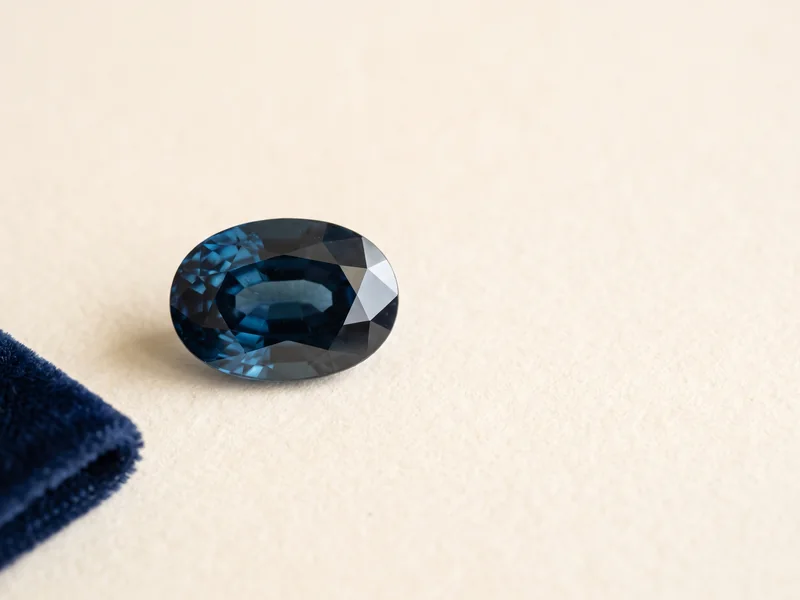 GemstonesAustralian Sapphire Engagement Rings
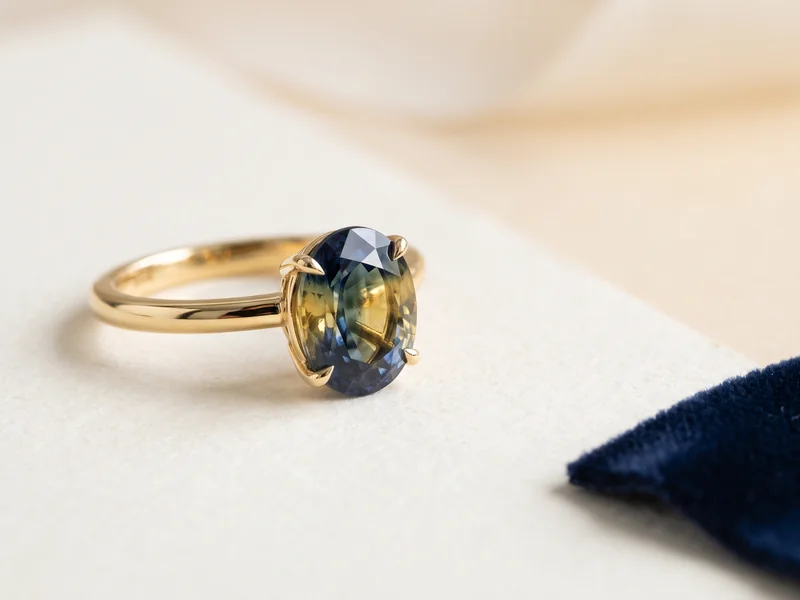 GemstonesParti Sapphire Engagement Rings
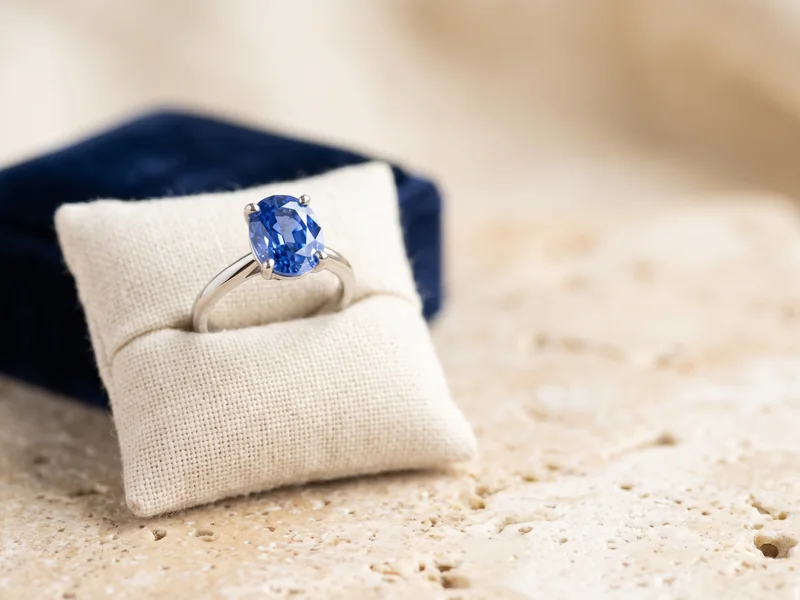 GemstonesSapphire Engagement Rings in MelbourneGemstonesGemstones | Coloured Gemstones, Birthstones and Custom Jewellery
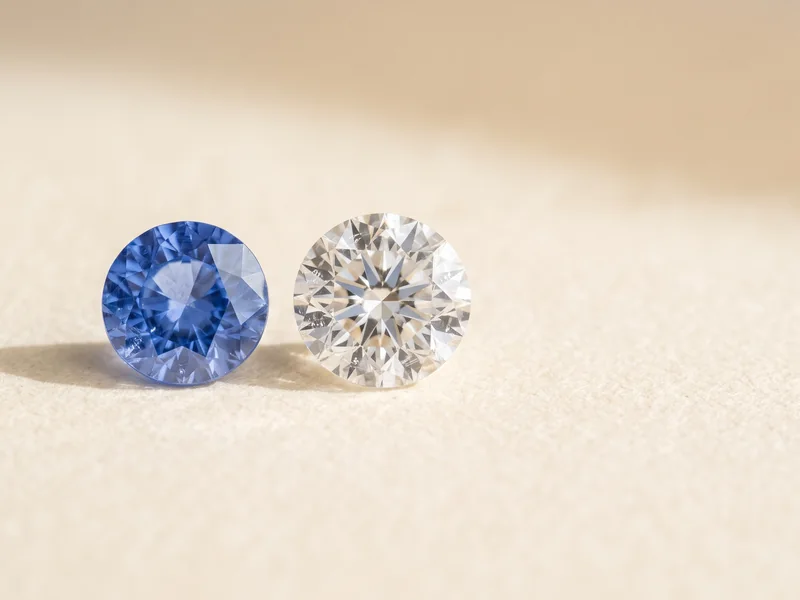 GemstonesDiamond vs Sapphire Engagement Rings
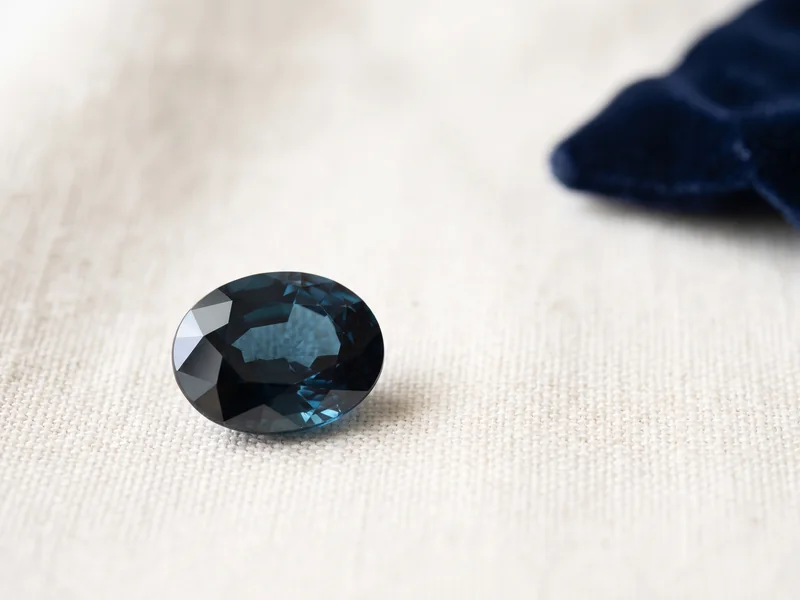 GemstonesSapphire Gemstones
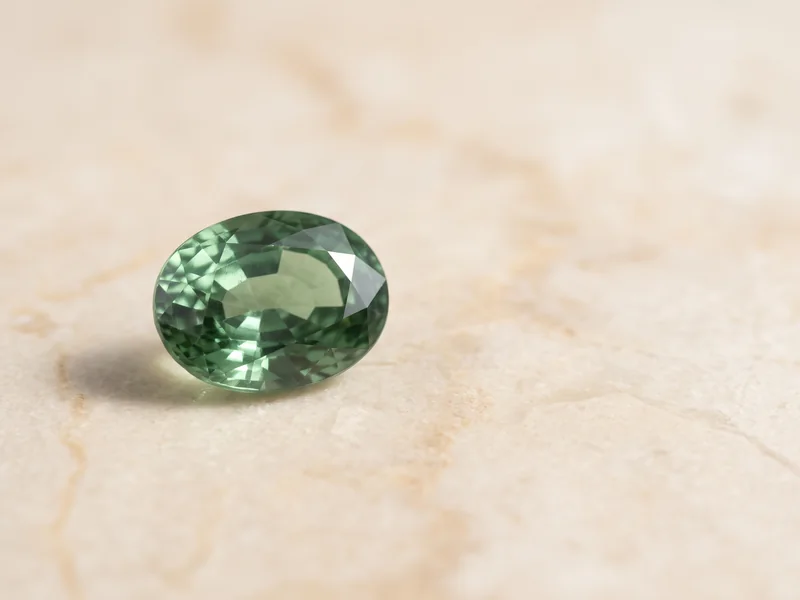 GemstonesGreen Sapphire
Explore more
More guides on this topic
Education