
Gemstones
Sunstone Gemstone Guide: Colour, Types, Value and Ring Wear
Sunstone is the feldspar that glitters from the inside. Here is how to tell its types apart, which treatments to ask about, and whether a sunstone will cope with daily life in a ring.
 Reviewed by Raj Sood, Graduate Gemologist (GIA), AJP (GIA)Master jeweller and Graduate Gemologist (GIA) · reviewed 4 November 2026
Quick answer
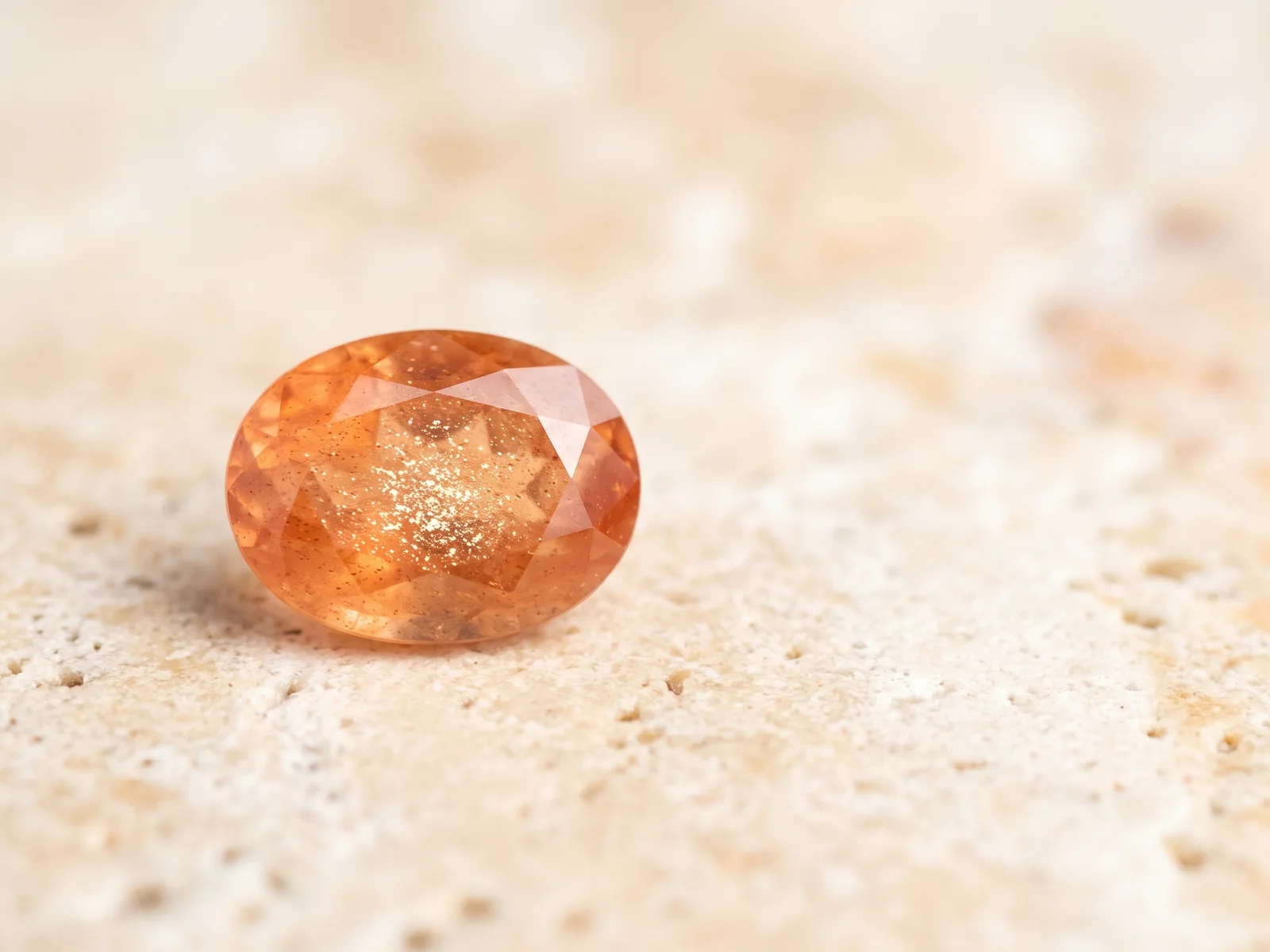
Sunstone is a feldspar gemstone that sparkles with tiny metallic platelets inside, an effect called aventurescence. Oregon sunstone (labradorite with copper) is transparent, from pale yellow to red and green; oligoclase sunstone from India, Norway and Tanzania is orange with glittering hematite. At Mohs 6–6.5 with easy cleavage, it suits pendants, earrings and protected ring settings.
What is sunstone?
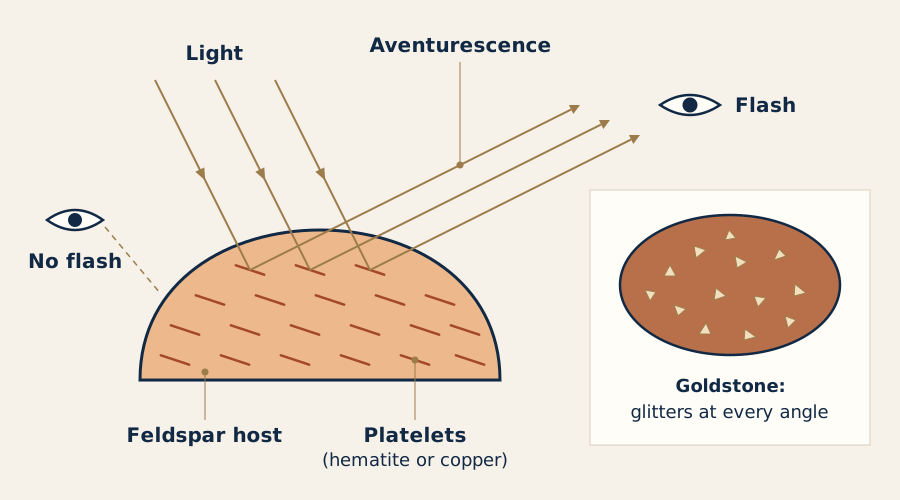
Sunstone is a member of the feldspar group, the most common family of minerals in the Earth's crust. What turns ordinary feldspar into a gem is what is trapped inside it: thin, flat crystals of metal or metal oxide, called platelets, lying parallel to each other. When light hits them at the right angle they flash together like a sheet of tiny mirrors. Gemmologists call this effect aventurescence. In Oregon sunstone the trade often calls the same coppery glow schiller.
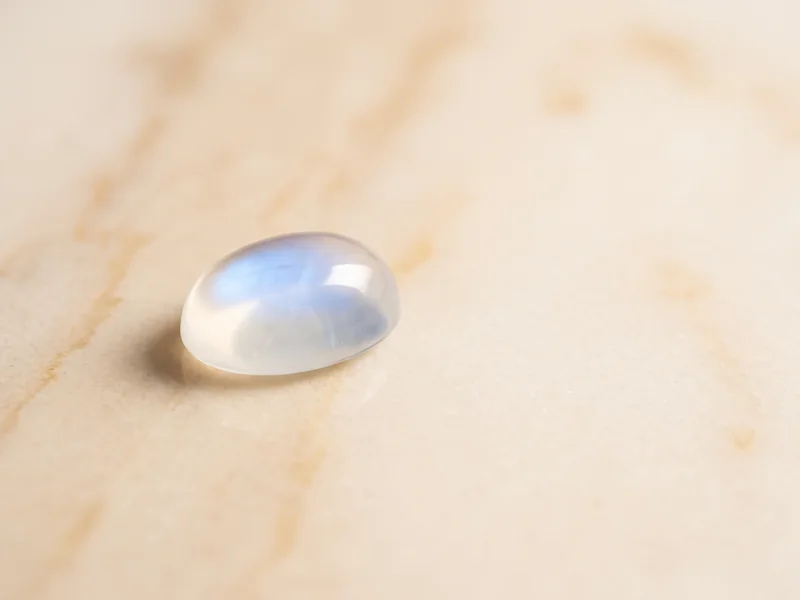
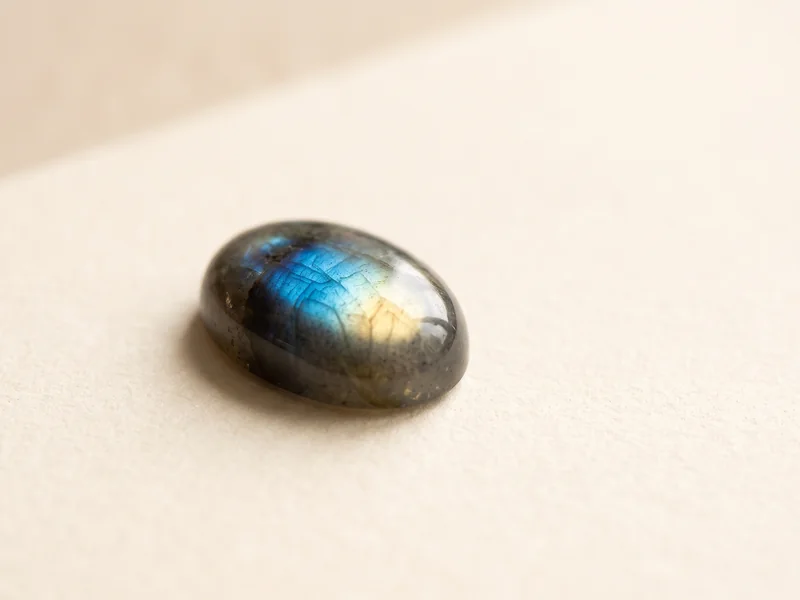
Feldspar gives us three well-known phenomenal gems, meaning gems prized for a light effect rather than colour alone. Sunstone has its glitter, moonstone has its floating blue-white sheen, and labradorite shows a peacock-coloured flash called labradorescence. All three share similar hardness and the same weakness, cleavage, which comes up again in the ring section. If any term here is new, our plain-English glossary of gem and jewellery terms explains it.
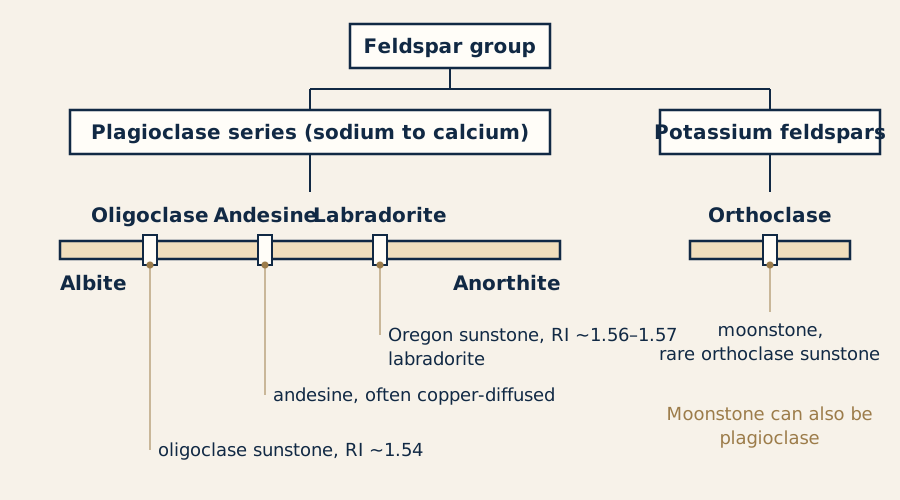
Most sunstone belongs to the plagioclase series, a run of feldspars that blend from sodium-rich albite to calcium-rich anorthite. Along that series sit oligoclase (the classic orange, glittering sunstone), andesine and labradorite (the mineral behind Oregon sunstone). A rarer potassium feldspar sunstone, orthoclase, is also known. So when someone says sunstone, the first gemmological question is: which feldspar?
The key numbers are close across the group. Hardness is 6–6.5 on the Mohs scale, a little softer than quartz at 7. The refractive index (how strongly the stone bends light) is about 1.54–1.55 for oligoclase and about 1.56–1.57 for Oregon labradorite, and specific gravity (density compared with water) runs from about 2.62 to 2.72. Those low figures mean sunstone does not have the fiery sparkle of a diamond or zircon; its appeal is the glow from within.
What colours does sunstone come in?
Sunstone colour depends on the type. Oligoclase sunstone is usually translucent, meaning light passes through but you cannot see clearly through it. Its body colour is orange, red-brown or golden, and it is packed with reddish hematite (iron oxide) platelets that glitter gold and copper as you move it. It is almost always cut as a cabochon, a smooth domed stone with no facets, which shows the glitter well.
Oregon sunstone is a different animal. It is often transparent enough to facet, and copper in the crystal creates both its colour and its schiller. The more copper, the stronger the colour tends to be. The range includes:
- Colourless to pale straw: the most common, with little or no schiller.
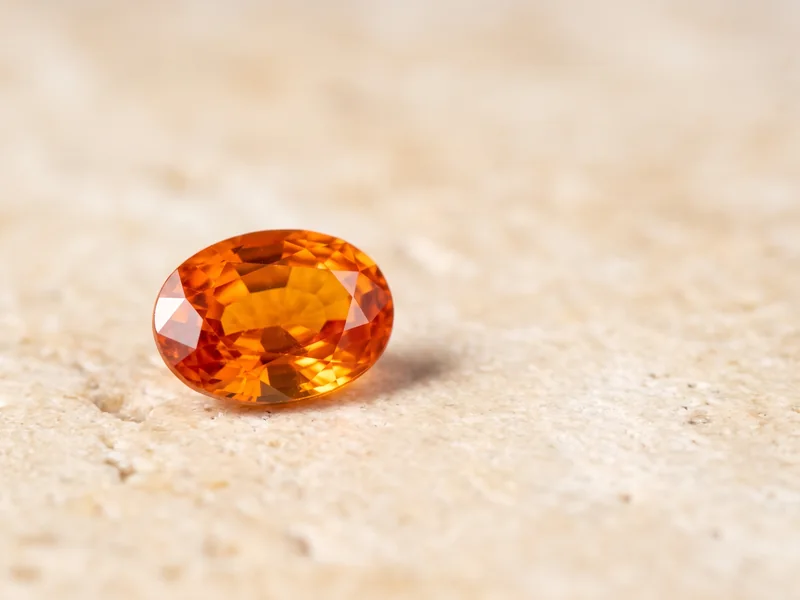
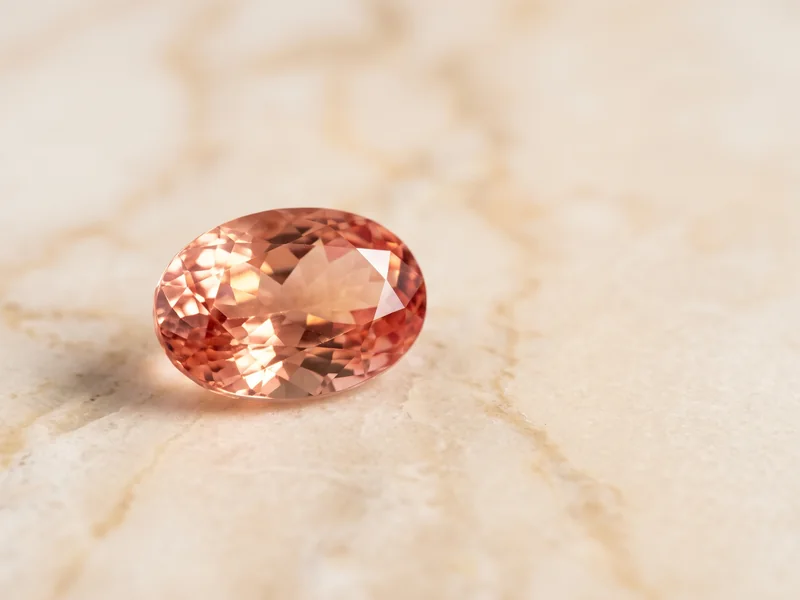
- Champagne, peach and orange: warm, soft tones, often with a coppery shimmer.
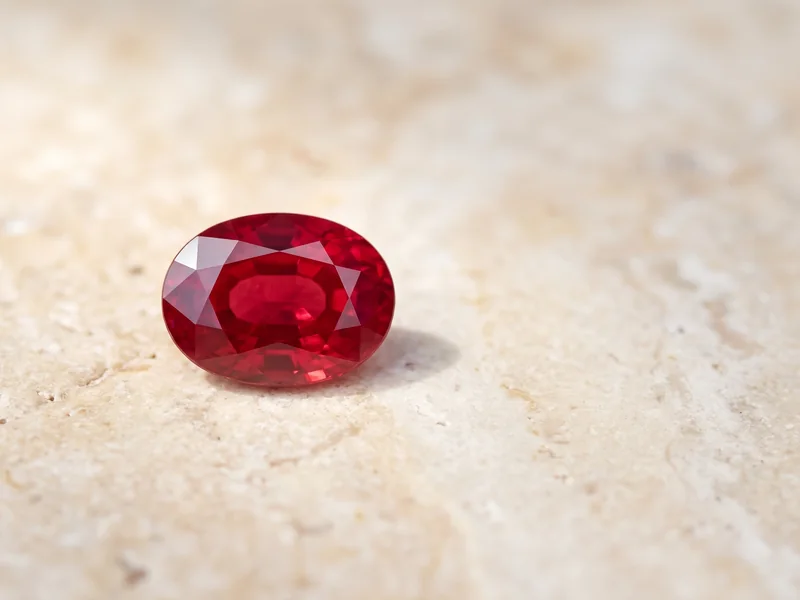
- Pink to red: rarer and more valued, especially when the colour is even.
- Green and blue-green: scarce; green is one of the most sought-after Oregon colours.
- Bicolour and multicolour: red and green zones in the same stone, cut to show both.
Some red and green Oregon stones are also pleochroic, meaning they show different colours when viewed from different directions. A cutter has to orient the rough carefully so the face-up colour is the one you want. If you love warm orange tones but want a stone without glitter, compare it with bright orange spessartine garnet, golden-orange imperial topaz or yellow to orange citrine quartz.
Oregon sunstone vs other sunstone: what is the difference?
This is the comparison that matters most when you shop, because the names overlap and the prices do not. Here is how the main types, plus one common imitation, line up.
| Type | Mineral | Cause of colour and glitter | Typical look | Notes |
|---|---|---|---|---|
| Oregon sunstone | Labradorite feldspar | Copper, dissolved and as platelets | Transparent, pale yellow to red and green, often faceted | Usually untreated; mined in Oregon, USA |
| Oligoclase sunstone | Oligoclase feldspar | Hematite platelets | Translucent orange to red-brown with gold glitter, cabochon | Norway, India, Tanzania and other sources |
| Orthoclase sunstone | Orthoclase feldspar | Hematite or similar platelets | Translucent, glittering | Uncommon in jewellery |
| Red or green andesine | Andesine feldspar | Often copper added by diffusion | Transparent, strong red or green | Much of this material is treated; ask for disclosure |
| Goldstone | Man-made glass | Copper crystals added to the melt | Brown, blue or green glass with even glitter | Imitation, not sunstone |
The short version: Oregon sunstone is the transparent, copper-coloured labradorite that can be faceted like other coloured gems. Oligoclase sunstone is the traditional glittering orange cabochon. Both are natural. Red andesine needs careful questions, and goldstone is glass.
Where does sunstone come from, and is there Australian sunstone?
Oregon, USA is the source most people mean today. The stones form in ancient basalt lava flows in south-central and south-eastern Oregon, around Lake and Harney counties, and are recovered from the weathered rock and soil. Some areas are worked as commercial mines; others are open to the public, including a free public collection area and private fee-dig mines. Oregon named sunstone its state gem in 1987.
Oligoclase sunstone has been found in Norway, historically one of the classic localities, as well as in India and Tanzania, which supply much of the inexpensive cabochon material on the market. Other feldspar sunstones have been reported from Russia, Canada and elsewhere. Ethiopia has produced copper-bearing feldspar that can resemble Oregon material, which is one reason origin claims need supporting evidence.
Australia is not a commercial sunstone source. Feldspars showing aventurescence have been reported from a handful of local sites, including in the Northern Territory, but nearly all sunstone sold in Australia is imported, mostly from the USA, India and East Africa. Australia's great phenomenal gem is opal; if you want a gem with a strong local story, see our guide to Lightning Ridge black opal and how it is valued. For the wider picture, start with our guide to coloured gemstones and birthstones.
Not sure which one is right?
Send us the stones you are looking at and our gemologist will tell you which to choose and why.
Is sunstone treated? The andesine story
Oregon sunstone and oligoclase sunstone are normally sold untreated, which is part of their appeal. The treatment issue sits with andesine. From the early 2000s, strongly coloured red and green andesine appeared on the market, sold under names such as Congo, Tibetan or Mongolian sunstone. Investigations by GIA and other laboratories, published from around 2008 to 2010, found that much of it was pale yellow andesine, largely from Inner Mongolia, that had been diffusion treated: heated for a long time in contact with copper so the copper moved into the crystal and changed its colour.
Copper-diffused andesine is a real feldspar, but the colour is not natural and the stone is worth much less than untreated Oregon sunstone of a similar look. Telling the two apart can be hard with standard tools; laboratories used advanced methods, including argon isotope analysis, to separate treated from untreated material. That is why disclosure and a laboratory report matter for any expensive red or green stone.
There is no meaningful commercial production of lab-created sunstone. The imitation you are most likely to meet is goldstone, a man-made glass full of tiny copper crystals. It is attractive in its own right and inexpensive, but it is glass and should always be described that way.
- Ask: which feldspar is it, and where was it mined?
- Ask: has the stone been treated in any way, and is that on the paperwork?
- For red or green stones of real value: ask for a report from an independent gem laboratory.
How do gemmologists identify sunstone?
At the bench, identification starts with the refractometer, which measures refractive index. A reading of about 1.54–1.55 points to oligoclase; about 1.56–1.57 points to labradorite such as Oregon material. Feldspars are doubly refractive with a small birefringence (the gap between the two readings) of about 0.008–0.010. Glass imitations show a single reading, and goldstone is typically around 1.53.
Under the microscope, the platelets tell the story. Hematite platelets in oligoclase are often reddish and plate-like; copper platelets in Oregon stone look metallic and coppery. Parallel twinning lines, common in plagioclase, and cleavage cracks also confirm a feldspar. Goldstone shows sharp triangular or hexagonal copper crystals scattered at every angle, and sometimes gas bubbles, which give away a glass.
Separating untreated Oregon sunstone from copper-diffused andesine is harder. The refractive index helps, since andesine reads slightly lower than labradorite, but the overlap is close and confirming treatment can require a specialist laboratory. For an expensive red or green stone, that report is worth having.
Related guideMoonstoneWhat affects sunstone value and price in Australia?
Sunstone prices span a huge range, from a few dollars for a small Indian cabochon to well over a thousand dollars per carat for a fine Oregon red or green. What moves the price:
- Type: faceted Oregon sunstone sits well above oligoclase cabochons.
- Colour: in Oregon material, red, green and strong bicolours command the most; pale yellow the least.
- Schiller or glitter: an even, attractive shimmer adds value; very dense schiller can cloud transparency.
- Clarity and transparency: clean, bright faceted stones are worth more; visible cleavage cracks lower value and durability.
- Size: fine-coloured Oregon stones over a few carats are scarce.
- Treatment and origin: copper-diffused andesine is worth far less than untreated Oregon stone of similar colour.
| Sunstone type and quality | Approximate price (AUD per carat) |
|---|---|
| Oligoclase cabochon (India, Tanzania) | about $2–$20 |
| Oregon, faceted, pale yellow or champagne | about $20–$80 |
| Oregon, faceted, orange or peach with schiller | about $80–$300 |
| Oregon, faceted, fine red, green or bicolour | about $300–$1,500+ |
| Copper-diffused andesine (disclosed) | usually well below untreated Oregon of similar colour |
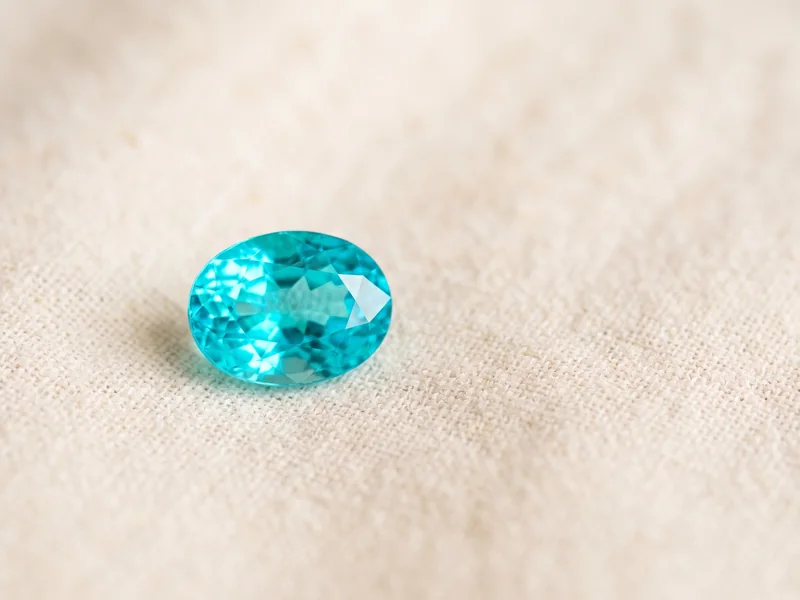
These are broad ranges only and move with size, cut and supply. Copper also colours another, far pricier gem: copper-bearing Paraíba tourmaline, with its neon blue-green. If you are drawn to the red end of the sunstone range, rubellite, the pink-red tourmaline, is a harder alternative at Mohs 7–7.5.
Browse natural gemstones
Is sunstone good for an engagement ring or everyday ring?
Sunstone can be worn in a ring, but it needs thought. Two properties matter. Hardness (resistance to scratching) is 6–6.5, so household dust, which contains quartz at 7, will slowly dull the surface. Toughness (resistance to chipping and breaking) is only poor to fair, because feldspar has two directions of perfect cleavage, planes along which the crystal can split cleanly if it takes a sharp knock.
| Gem | Mohs hardness | Toughness | Everyday ring? |
|---|---|---|---|
| Sapphire | 9 | Excellent | Yes |
| Spinel | 8 | Good | Yes |
| Blue topaz | 8 | Poor (one perfect cleavage) | Yes, in a protective setting |
| Amethyst and citrine | 7 | Good | Yes, with some care |
| Peridot | 6.5–7 | Fair | Occasional wear |
| Zircon | 6–7.5 | Poor to fair (facet edges wear) | Occasional wear |
| Sunstone | 6–6.5 | Poor to fair (two cleavages) | Occasional wear, protective setting |
| Moonstone | 6–6.5 | Poor | Occasional wear |
| Labradorite | 6–6.5 | Poor to fair | Occasional wear |
For a sunstone engagement ring worn every day, choose a setting that shields the stone: a full or half bezel (a rim of metal around the edge), a slightly lower profile, or raised shoulders that take knocks first. Cabochons are more forgiving than faceted stones, because they have no sharp edges to chip. Pendants and drop earrings are the easiest way to enjoy sunstone without worry.
If you want a warm-toned gem for daily wear, spinel, which comes in orange and red and is tough enough for daily wear, is worth a look. Lime-green peridot sits just above sunstone in hardness, while purple amethyst and its two-toned cousin ametrine, which combines purple and gold in one crystal, both reach 7. Avoid comparing on hardness alone: natural zircon, the high-dispersion gem, and treated blue topaz are harder than sunstone (zircon only in part of its range) but have their own weaknesses.
How do you choose and care for a sunstone?
Whether you are choosing a loose stone or a finished piece, these steps cover what a gemmologist checks, followed by the care that keeps sunstone looking right for years.
- Confirm the type. Ask whether it is Oregon labradorite, oligoclase, andesine or glass, and where it was mined.
- Ask about treatment. Any treatment should be disclosed in writing; for expensive red or green stones, ask for an independent laboratory report.
- Judge the schiller. Tilt the stone under one light; you want an even shimmer that does not leave the stone looking cloudy.
- Check for cleavage cracks. Look with a 10× loupe for straight, flat breaks reaching the surface, especially near the edges.
- Match the setting to the wear. A bezel or protected setting for rings; pendants and earrings for worry-free wear.
- Clean it gently. Use warm water, mild soap and a soft brush, then rinse and dry with a soft cloth.
- Skip ultrasonic and steam cleaners. Vibration and heat can open cleavage; avoid sudden temperature changes too.
- Store it separately. Keep sunstone in a soft pouch away from diamonds, sapphires and quartz gems, which can scratch it.
Free consultation
Talk to a gemologist
Compare stones in person or online with Raj Sood, Graduate Gemologist (GIA), AJP (GIA).
Book a consultationShop this shape
FAQ
Common questions
What is sunstone made of?
Sunstone is a feldspar, most often oligoclase or labradorite, containing tiny parallel platelets of hematite or copper. Those platelets reflect light together and create the glittering effect called aventurescence.
What is the difference between sunstone and moonstone?
Both are feldspars with a similar hardness of 6–6.5. Sunstone glitters with metallic platelets and is usually orange, red or golden, while moonstone shows a soft, floating blue-white sheen caused by thin layers within the crystal.
Is Oregon sunstone treated?
Oregon sunstone is normally sold untreated. The treatment concern applies mainly to red and green andesine, much of which has been coloured by copper diffusion, so ask for disclosure and a laboratory report on valuable stones.
Is goldstone a real sunstone?
No. Goldstone is man-made glass containing copper crystals. It imitates the glitter of sunstone but is not a natural gemstone and should be sold as glass.
Can you wear a sunstone ring every day?
You can, but it needs care. With a hardness of 6–6.5 and two directions of cleavage, sunstone is safest in a bezel or other protective setting, and it should come off for gardening, the gym and heavy work.
How much is sunstone worth in Australia?
Prices vary widely. Oligoclase cabochons cost roughly AUD $2–$20 per carat, while fine faceted Oregon sunstone in red or green can run from about AUD $300 to over $1,500 per carat.

Ask a gemologist
Not sure which diamond to choose?
Raj Sood is a Graduate Gemologist (GIA) and master jeweller. Bring the stones you are considering, or send the reports, and he will tell you honestly which one is better and why.
Keep learning
Related guides
Explore more
More guides on this topic
Education