
- Education
- Engagement Rings & Settings
- Hidden Details That Make a Custom Engagement Ring Personal
Engagement Rings & Settings
Hidden Details That Make a Custom Engagement Ring Personal
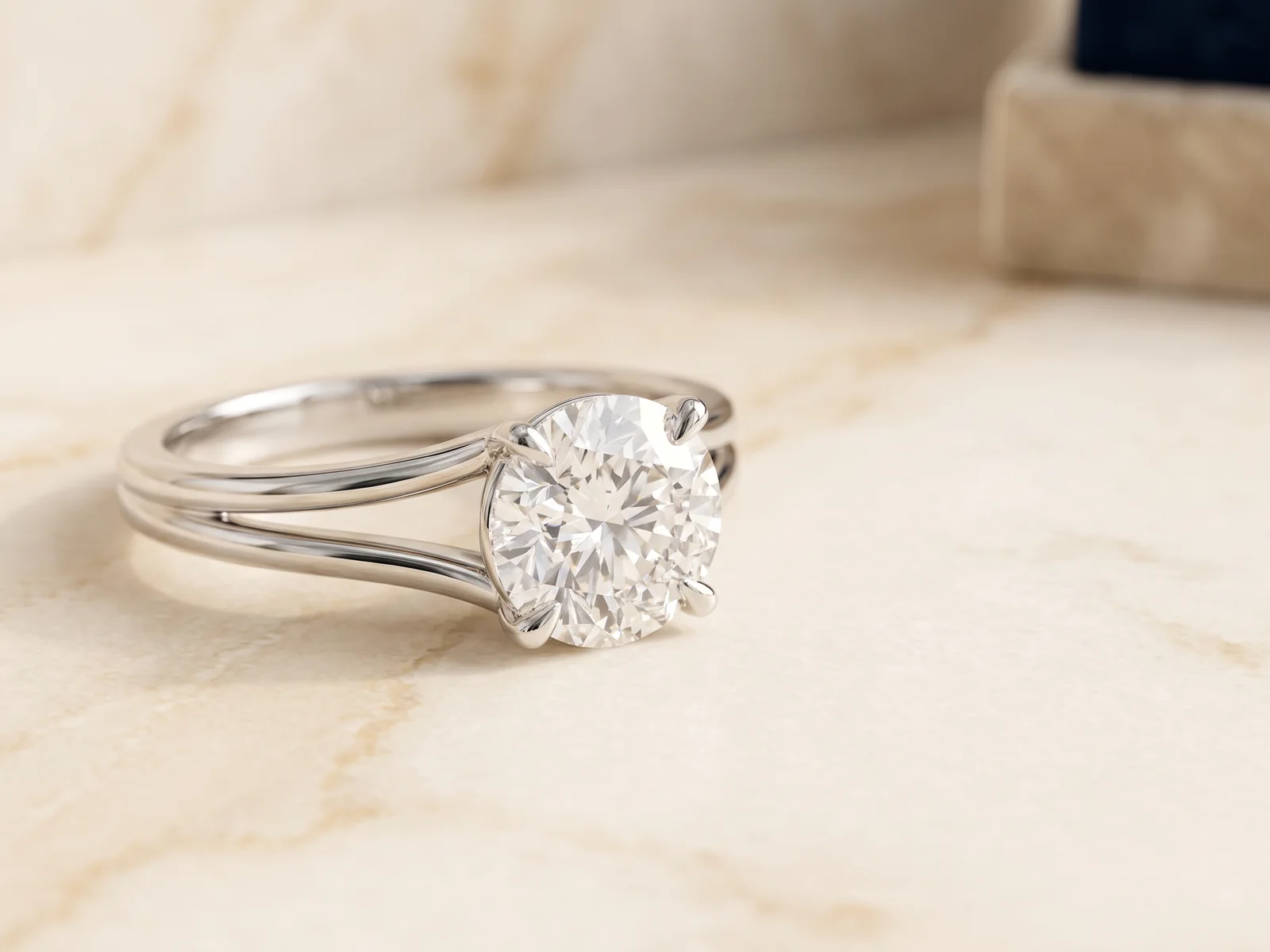
The hidden details of an engagement ring are the parts only the wearer, and the jeweller, ever really see. Here is what you can add, what each one costs and how each holds up after years of daily wear.
 Reviewed by Raj Sood, Graduate Gemologist (GIA), AJP (GIA)Master jeweller and Graduate Gemologist (GIA) · reviewed 4 November 2026
Quick answer
Hidden details are features seen up close: a hidden halo under the centre stone, a shaped or pierced gallery, peekaboo gemstones inside the band, engraving on the inner shank, or a message laser-inscribed on the diamond's girdle. In a custom engagement ring they are designed in CAD first, so you can see and adjust each one before casting.
What are hidden details in an engagement ring?
A hidden detail is any part of an engagement ring designed to be noticed only up close, by the wearer or by someone who knows where to look. From across a room the ring reads as a simple solitaire or halo. Turn it side-on, look under the centre stone or slip it off, and there is something extra: a ring of small diamonds under the head, a pattern cut into the metal, a birthstone set inside the band, or a date written in the wearer's own handwriting.
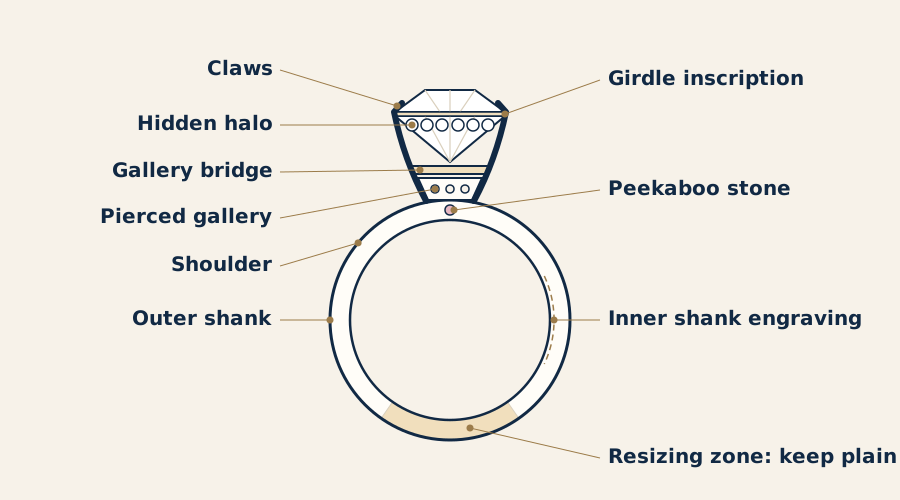
Most hidden details sit in five places. The head holds the centre stone and is made up of the claws (also called prongs) and the basket beneath them. The gallery is the side view of that structure, the metalwork you see between the stone and the band. The shoulders are the parts of the band nearest the head. The shank is the band itself, with an outer and an inner surface. Finally, the diamond's own girdle, its thin outer edge, can carry a microscopic inscription. If any of these words is new, our plain-English jewellery glossary explains them.
Hidden details are one of the main reasons people choose a custom engagement ring rather than one off the shelf. A ready-made ring can usually be engraved, but a gallery pattern, a hidden halo sized exactly to your diamond or a stone set flush inside the shank has to be designed in from the start. Our comparison of how fully custom and semi-custom rings differ explains how much freedom each route gives you, and the guide to engagement ring setting styles shows the base designs these details are added to.
A good rule from the bench: one or two well-made hidden details look intentional; five or six crowded into one ring look busy and give you more to maintain. The rest of this guide goes through each option, how it is made, how it wears and roughly what it adds to the price.
What is a hidden halo engagement ring, and is it worth it?
A hidden halo is a row of small diamonds set around the basket just below the centre stone's girdle. Face-up you barely see it; from the side it shows as a band of sparkle under the main stone. It is one of the most requested hidden details in custom work, and our page on hidden halo engagement rings explained goes through it shape by shape.
The stones in a hidden halo are melee, the trade word for small diamonds, usually about 1.0–1.5 mm across, or roughly 0.005–0.015 carat each. A 1 carat round, about 6.4 mm wide, generally takes around 18–24 of them, depending on their size and spacing. They are usually micro-pavé or bead set, meaning each stone is held by tiny raised beads of metal rather than full claws. On ovals, pears and other elongated shapes the halo follows the outline, so the stone count rises with length.
Does a hidden halo make the centre diamond look bigger? Only a little, and mainly from the side. A face-up halo, where small stones surround the top of the diamond, adds much more apparent size. Our page on settings that make a centre diamond look larger compares the options. The hidden halo is about detail and side-on sparkle, not size.
From the repair bench: hidden halos sit close to the finger and take fewer knocks than a face-up halo, but the beads holding 1 mm stones are very small. The most common repair is a lost melee stone after a hard knock on a doorframe or benchtop. Ask for the halo to sit slightly inside the outline of the centre stone, so the larger diamond shields it, and have it checked about every 12 months. The melee can be natural or lab-grown diamond, and your paperwork should state which.
What engagement ring gallery details can be customised?
The gallery is the metalwork under the centre stone, seen from the side. On a basic ring it is just a few straight wires joining the claws. In custom work it becomes a small canvas, and our page of ideas for under-gallery detailing shows examples as CAD renders and as finished rings.
| Gallery detail | What it is | How it wears |
|---|---|---|
| Bridge | A bar of metal under the stone between the shoulders, sometimes set with small diamonds | Strong; adds support to the head |
| Cathedral shoulders | The shoulders sweep up in arches to hold the head | Strong; lifts the stone, but a tall head can catch on gloves and knitwear |
| Pierced or filigree work | Openwork patterns cut through the metal | Fine edges soften over 10–20 years; needs enough metal thickness to last |
| Milgrain | A row of tiny metal beads along an edge | Beads flatten with wear; can be redone |
| Initials or motifs | Letters, hearts or symbols cut into the basket | Durable if cut from solid metal rather than thin wire |
| Contrast metal | Yellow or rose gold claws or basket on a white ring | Rhodium plating on white gold wears first at the join |
Vintage styles lean heavily on gallery work: filigree, milgrain and engraved scrolls all feature heavily in Edwardian and Art Deco rings. If that look appeals, see our collection of vintage-inspired rings with old-world detail.
An open gallery also helps the diamond itself. It lets light and cleaning water reach the pavilion, the lower half of the stone. A closed or heavily patterned basket traps soap and skin oils, which makes any diamond look duller and warmer. Some shapes show body colour more than others, so if you plan a dense gallery, read about diamond shapes that hide colour and inclusions before choosing the stone.
Which gemstones work as a peekaboo stone in an engagement ring?
A peekaboo stone, also called a surprise or secret stone, is a small gem set into the inside of the band or into the side of the gallery, so it faces the finger or shows only side-on. Birthstones are the usual choice, along with a favourite colour or a stone tied to a place. Most are about 1.5–3 mm and are flush set: a seat is drilled into the metal so the stone's top sits level with the surface, and the metal is pushed over its edge. Nothing sticks out to scratch the skin.
| Gem | Mohs hardness | Inside a band? |
|---|---|---|
| Diamond (any colour) | 10 | Yes |
| Sapphire (blue, pink, yellow) | 9 | Yes |
| Ruby | 9 | Yes |
| Aquamarine | 7.5–8 | Yes, flush set |
| Emerald | 7.5–8 | With care; often included and can crack under setting pressure |
| Amethyst | 7 | Yes, flush set |
| Peridot | 6.5–7 | With care; scratches more easily |
| Opal | 5.5–6.5 | Generally not recommended |
The Mohs scale runs from 1 to 10 and measures scratch resistance. Inside a band a stone is shielded from knocks, but it still rubs against the next finger and anything you grip, so gems of 7 and above hold up well. Peridot, the August birthstone, is softer at 6.5–7, but its olive green comes from iron in the crystal itself; our page on why peridot's green looks different explains it. For more on choosing colour with meaning, see engagement rings built around a coloured gemstone.
Many birthstones are available both natural and lab-created. A lab-created sapphire or ruby has the same chemistry and hardness as a natural one and costs much less; it should always be described as lab-created or synthetic. The band also needs enough thickness to take a drilled seat, usually at least about 1.6–2 mm deep for a 2 mm stone.
Not sure which one is right?
Send us the stones you are looking at and our gemologist will tell you which to choose and why.
How much can you engrave inside an engagement ring?
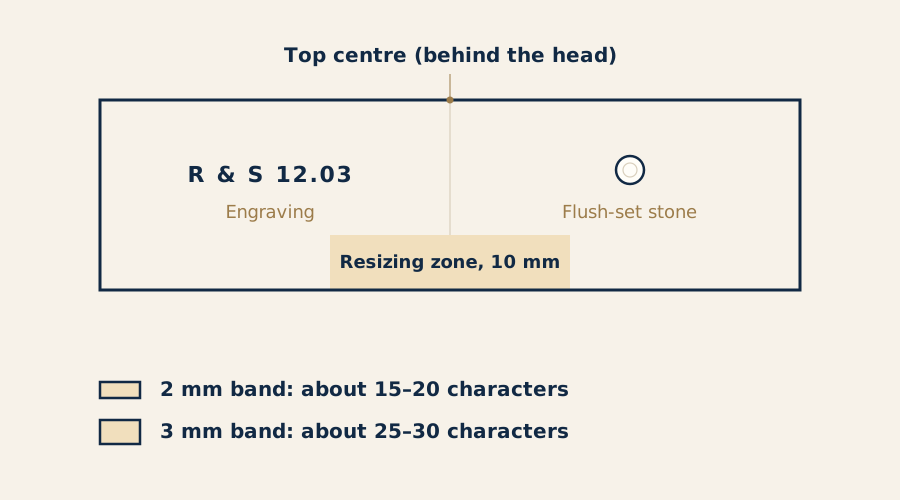
Engraving inside the band is the oldest hidden detail and still the most common. How much fits depends on the band's width and the ring size. As a rough guide, a 2 mm band around size L to N fits about 15–20 characters in a simple font; a 3 mm or wider band fits about 25–30. Longer messages are possible in smaller type, but very small letters wear away faster.
- Machine engraving: clean, even letters cut by a rotary or diamond-drag tool. Fairly shallow. Suits names, initials and dates.
- Hand engraving: cut by an engraver with a graver (a hardened steel chisel). The deepest and crispest cut, but slower and more costly. Suits script and decorative work.
- Laser engraving: very fine detail that can reproduce handwriting, a fingerprint, map coordinates or a sound wave. The shallowest method, so it softens first.
- Cast-in detail: designed into the CAD model and cast with the ring, either raised or recessed. Suits patterns on the outer shank, shoulders or gallery.
Popular ideas include the date you met, the GPS coordinates of where you got engaged, a short phrase in a family language, a fingerprint, or a few words in your partner's handwriting scanned from an old card. Anything with fine lines, such as a fingerprint, needs the flattest and widest part of the band, so a comfort-fit (domed inside) band may not suit it.
Timing matters too. Engraving is usually done after the ring is finished and polished, so it adds a day or more, and hand or laser work cannot always be squeezed into a tight deadline. Our page on what can and cannot be rushed in a custom ring sets out which steps have fixed times.
Can you engrave a message on the diamond itself?
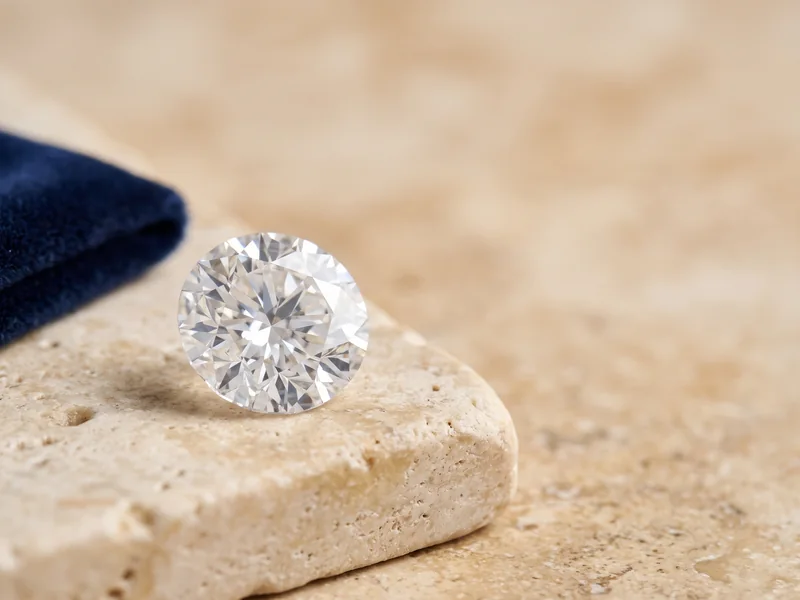
Yes. A diamond's girdle can be laser inscribed with a short message: a name, a date, initials or a small symbol. The letters are microscopic, visible only under a 10× loupe (a jeweller's magnifier), and they do not change the stone's colour or clarity grade. It is the most hidden detail of all, tucked on the stone's edge under the claws, and it stays with the diamond if it is ever reset into a new ring.
Grading labs already use the girdle for the report number, and lab-grown diamonds graded by major labs are usually inscribed to show they are laboratory-grown. A personal message can sit alongside these. Space is tight, often around 15–20 characters depending on the stone's size. Our guide to names, dates and messages on a diamond's girdle covers fonts, length and when to order it.
Inscription works on natural and lab-grown diamonds alike. It is usually done before the stone is set, because the laser needs clear access to the girdle. It is not normally offered on softer coloured gemstones.
Which side-profile details give a ring its character?
Some details are not hidden so much as quiet: they show in profile, when hands rest on a table, or in a photo taken side-on. They give the ring character without changing the face-up look.
- Split shank: the band divides in two near the head. Adds width and presence; more surfaces to clean.
- Twisted or plaited shank: two strands wound together. Soft, organic look; the inner grooves collect dirt.
- Engraved or scrolled shoulders: pattern on the band either side of the head. Softens over years but can be recut.
- Side or bridge diamonds: single small stones set in the gallery, visible only from the side.
- Two-tone metal: for example yellow gold claws on a platinum band, or a rose gold gallery on white gold.
- Shaped claws: eagle claws (pointed), tulip or petal claws, or claws with tiny heart tips.
- Knife-edge shank: the band rises to a fine ridge on top, catching light along its length.
Each of these works with most head styles; our overview of how solitaire, halo and three-stone profiles compare shows which combinations sit comfortably together. The trade-off is maintenance: every split, twist and fine edge is another place for wear and grime, so plan for a professional clean once or twice a year.
Related guideUnder-Gallery DetailsHow do hidden details in an engagement ring wear over the years?
An engagement ring is worn daily for decades, and hidden details are often its finest metalwork. This is what typically comes back to the repair bench, and what each detail needs over time.
| Detail | What changes over time | Usual maintenance |
|---|---|---|
| Hidden halo | Beads wear; melee loosens or is lost after knocks | Check about every 12 months; re-bead or replace melee |
| Inside engraving | Lettering softens; laser work fades first | Can be recut, but only so many times |
| Peekaboo stone | Metal edge around the stone thins | Check and tighten; the stone can be reset |
| Filigree and milgrain | Edges round off; beads flatten | Milgrain can be redone; filigree refreshed, not fully restored |
| Girdle inscription | Nothing; it is cut into the diamond | None |
| Rhodium on white gold | Plating wears, showing a warmer tone | Re-plate about every 1–2 years |
Resizing is the other risk. Most rings are resized by cutting and rejoining the bottom of the shank, so anything set or engraved there can be lost or distorted. Keep roughly the bottom 10 mm of the shank plain. A plain band can usually move about two sizes up or down without harming the design; a band with stones most of the way round may not resize at all.
Metal choice changes how wear shows. Platinum tends to push aside rather than wear away, so milgrain and beads flatten but the metal stays on the ring; 18 carat gold loses a little metal with each polish. For fine hidden work, thickness matters more than the type of metal, so check claw and band dimensions on the CAD model before approving it.
How much do hidden details add to a custom engagement ring?
Hidden details vary widely in cost because some only add a few minutes of work while others add stones and hours at the setting bench. These are broad ranges for a typical ladies' ring in 18 carat gold or platinum.
| Hidden detail | Approximate added cost (AUD) |
|---|---|
| Machine engraving inside the band | about $50–$150 |
| Hand or laser engraving (handwriting, fingerprint) | about $150–$400 |
| Girdle inscription on the diamond | about $100–$300 |
| Peekaboo stone (sapphire or birthstone) | about $150–$600 each |
| Hidden halo, lab-grown melee | about $500–$1,200 |
| Hidden halo, natural melee | about $800–$2,000 |
| Custom gallery (filigree, initials, bridge) | about $300–$1,500 |
Engraving is the least costly way to make a ring personal; hidden halos and intricate galleries add the most because they bring both stones and skilled setting time. If budget is tight, a semi-custom route that adapts an existing design can still carry a hidden halo or engraving at a lower cost than a ring drawn from scratch.
At a consultation each detail can be priced on its own, so you can see what it adds and decide what matters most. See what to expect at a custom ring consultation for how that conversation usually runs.
Explore ring settings and custom design
How do you plan hidden details for a custom ring? Step by step
- Start with the stone and setting style. The centre stone's shape and size decide how much room there is for a hidden halo or gallery pattern.
- Choose one or two hidden details. Pick the ones with meaning to you, rather than adding every option.
- Decide where each sits. Keep engraving and peekaboo stones off the bottom of the shank, away from the resizing zone.
- Check dimensions in CAD. Ask for claw thickness, band width and band depth, and confirm the band can take a flush-set stone.
- Review the render from every angle. Look side-on and from underneath, where hidden details live, not just face-up.
- Confirm wording and font in writing. Check spelling, dates and character count, and order any girdle inscription before the stone is set.
- Plan the upkeep. Book a check-up about every 12 months for claws, melee and flush-set stones.
Free consultation
Talk to a gemologist
Compare stones in person or online with Raj Sood, Graduate Gemologist (GIA), AJP (GIA).
Book a consultationShop this shape
FAQ
Common questions
What is a hidden detail on an engagement ring?
It is a feature designed to be seen only up close, such as a hidden halo under the centre stone, a pattern in the gallery, a gemstone inside the band or engraving. It makes the ring personal without changing how it looks from a distance.
Does a hidden halo make a diamond look bigger?
Only slightly, and mostly from the side. A face-up halo adds far more apparent size; a hidden halo is chosen for side-on sparkle and detail.
Can you add hidden details to an existing engagement ring?
Often, yes. Engraving and a girdle inscription can usually be added later (the diamond may need to be unset for the inscription), and a peekaboo stone if the band is thick enough, while a hidden halo or new gallery usually needs a new head.
How many characters can you engrave inside an engagement ring?
As a rough guide, about 15–20 characters on a 2 mm band and 25–30 on a 3 mm band. It depends on the ring size, the font and the engraving method.
Will engraving stop a ring from being resized?
Not if it is placed on the upper sides of the band. Engraving or stones at the bottom of the shank can be cut through or stretched when the ring is resized.
Is a peekaboo stone inside the band uncomfortable?
No, when it is flush set. The top of the stone sits level with the metal, so you should not feel it against your finger.

Ask a gemologist
Not sure which diamond to choose?
Raj Sood is a Graduate Gemologist (GIA) and master jeweller. Bring the stones you are considering, or send the reports, and he will tell you honestly which one is better and why.
Keep learning
Related guides
 Engagement Rings & SettingsHidden Halo Engagement RingsEngagement Rings & SettingsUnder-Gallery Details
 Care, Repairs & RemodellingDiamond Girdle Engraving: Names, Dates and Custom Messages
 Buying Knowledge & Custom ProcessWhat Happens at a Custom Engagement Ring Consultation?Engagement Rings & SettingsEngagement Ring Setting Styles Guide
 Engagement Rings & SettingsSettings That Make a Diamond Look Bigger
 Engagement Rings & SettingsVintage-Inspired Engagement Rings with Old-World Detail and Custom Character
 Buying Knowledge & Custom ProcessCustom vs Semi-Custom Engagement Rings
Explore more
More guides on this topic
Education