
Gemstones
Coloured Gemstone Engagement Rings: Choosing a Gem with Colour and Meaning
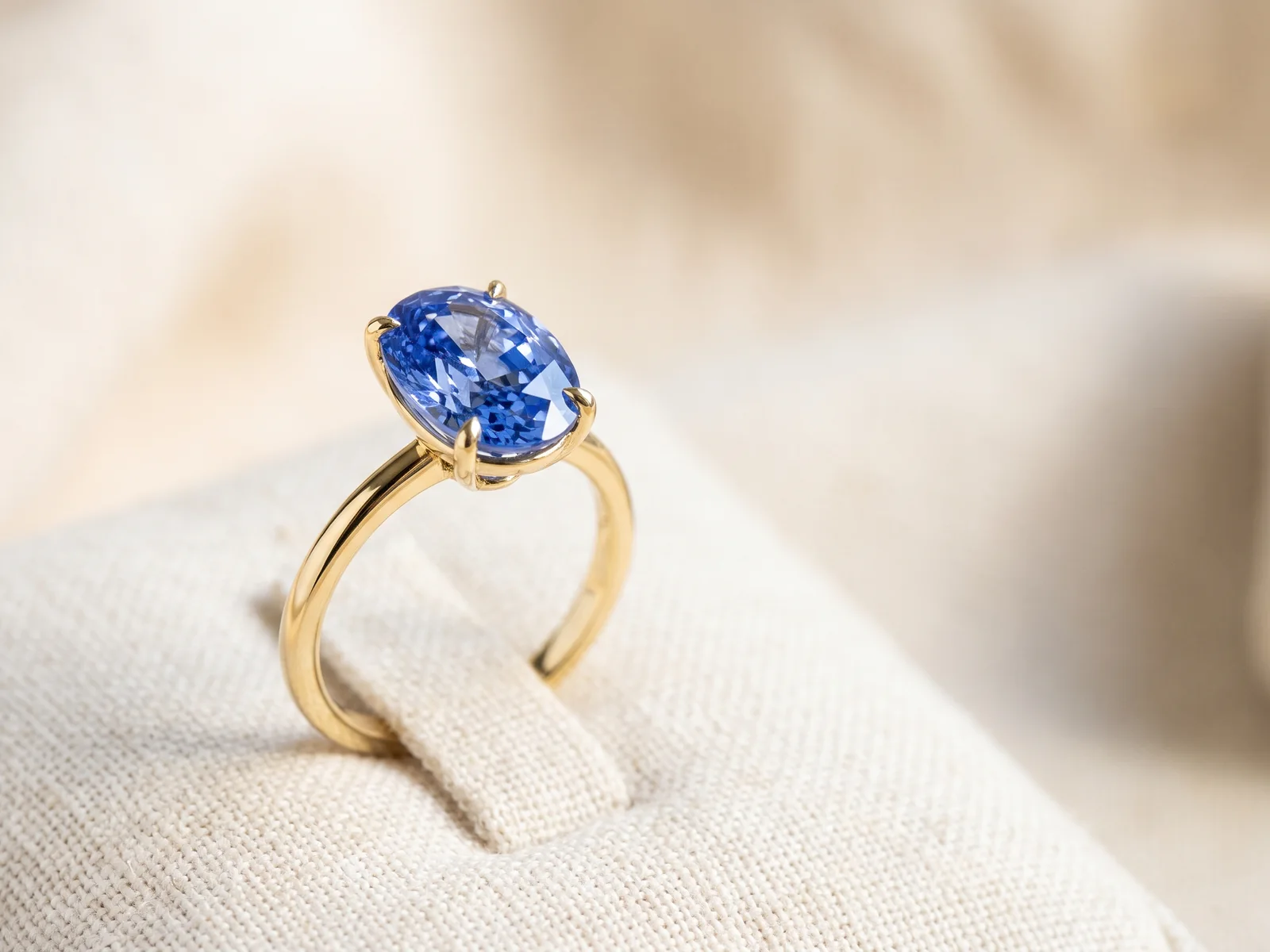
Coloured gemstone engagement rings let you choose a colour, a birthstone or an Australian origin instead of a colourless diamond. The trick is picking a gem that will still look good after decades of daily wear.
 Reviewed by Raj Sood, Graduate Gemologist (GIA), AJP (GIA)Master jeweller and Graduate Gemologist (GIA) · reviewed 4 November 2026
Quick answer
For coloured gemstone engagement rings, choose a gem that can handle decades of daily knocks. After diamond, sapphire and ruby (Mohs 9) are the most durable coloured choices, followed by alexandrite (8.5) and spinel (8). Tourmaline, aquamarine and morganite need protective settings, while emerald, opal and tanzanite suit careful owners. Then choose colour by hue, tone and saturation.
What are coloured gemstone engagement rings?
A coloured gemstone engagement ring is any engagement ring with a centre stone that is not a colourless diamond. That could be a blue sapphire, a red ruby, a pink spinel, a green tourmaline, an Australian opal or a fancy colour diamond. People choose colour for different reasons. Some want a birthstone or a family gem, some want a colour that suits their style, and some want more size for their budget, because a fine 1 carat sapphire usually costs less than a fine 1 carat natural colourless diamond. Our coloured gemstone hub introduces each gem in more detail.
The challenge is that an engagement ring is the hardest-working piece of jewellery most people own. It is worn every day for decades, through gardening, gym sessions, car doors and washing up. Household dust contains quartz, which is 7 on the Mohs scale (a 1–10 ranking of scratch resistance). Any gem softer than 7 will slowly lose its polish and its crisp facet edges. That one fact rules out many beautiful gems for daily wear, or at least means they need extra protection.
Three questions decide whether a coloured gem suits an engagement ring:
- Durability: is it hard enough to resist scratches and tough enough to resist chips?
- Colour: do you love its hue, and is the tone and saturation right in every kind of light?
- Origin and treatment: is it natural or lab-created, and has it been heated, oiled or filled?
Any term on this page you have not met before is explained in our plain-English jewellery glossary.
Which gemstones are hard enough for an engagement ring?
Hardness is resistance to scratching. Toughness is resistance to chipping and breaking, and it is a separate property. Diamond is the hardest natural material at Mohs 10, but it has cleavage (directions along which a crystal can split cleanly), so a hard knock on a thin edge can chip it. Sapphire is softer at 9 but has no true cleavage and is rated excellent for toughness. For an everyday engagement ring, aim for both: Mohs 8 or above and good or better toughness.
| Gemstone | Mohs hardness | Toughness | Refractive index | Everyday engagement ring? |
|---|---|---|---|---|
| Diamond (incl. fancy colour) | 10 | Good (has cleavage) | 2.42 | Yes |
| Sapphire and ruby (corundum) | 9 | Excellent | 1.76–1.77 | Yes |
| Alexandrite (chrysoberyl) | 8.5 | Excellent | 1.74–1.76 | Yes |
| Spinel | 8 | Good | about 1.72 | Yes |
| Topaz | 8 | Poor (perfect cleavage) | 1.61–1.64 | With a protective setting |
| Aquamarine and morganite (beryl) | 7.5–8 | Good | 1.57–1.59 | Yes, with care |
| Emerald (beryl) | 7.5–8 | Poor to fair (usually included) | 1.57–1.59 | Careful wear, bezel advised |
| Tourmaline | 7–7.5 | Fair | 1.62–1.64 | With a protective setting |
| Amethyst and citrine (quartz) | 7 | Good | 1.54–1.55 | With care; shows wear over years |
| Garnet | 6.5–7.5 | Fair to good | about 1.72–1.89 | With a protective setting |
| Tanzanite (zoisite) | 6–7 | Poor (perfect cleavage) | 1.69–1.70 | Occasional or very careful wear |
| Opal | 5.5–6.5 | Poor to fair | about 1.45 | Occasional or very careful wear |
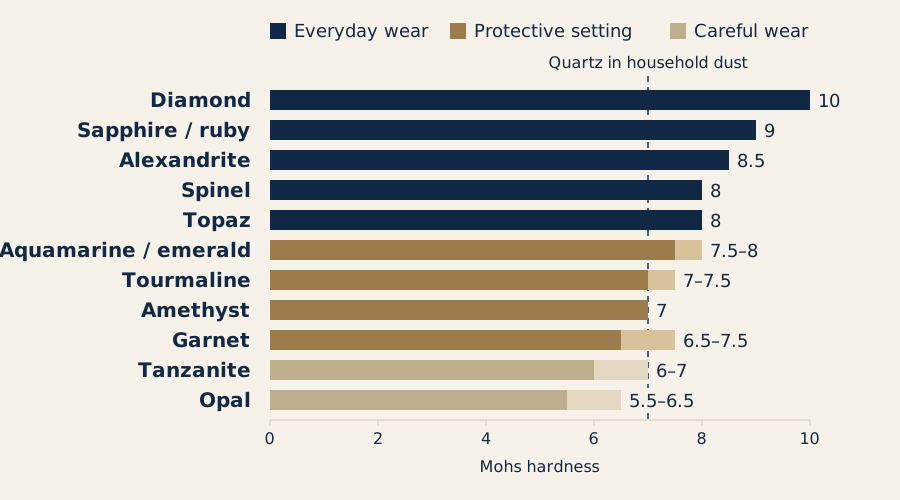
Mohs is a ranking, not an even scale. On absolute measurements corundum at 9 is roughly twice as hard as topaz at 8, and diamond at 10 is several times harder than corundum. So the gap between a sapphire and a tourmaline is bigger than the numbers suggest. Our full Mohs hardness guide explains the scale gem by gem, and our page on how each gem holds up to everyday wear adds stability, meaning how stones react to heat, light and household chemicals.
Related guideGemstone Durability for Everyday RingsWhy is a sapphire engagement ring the most popular coloured choice?
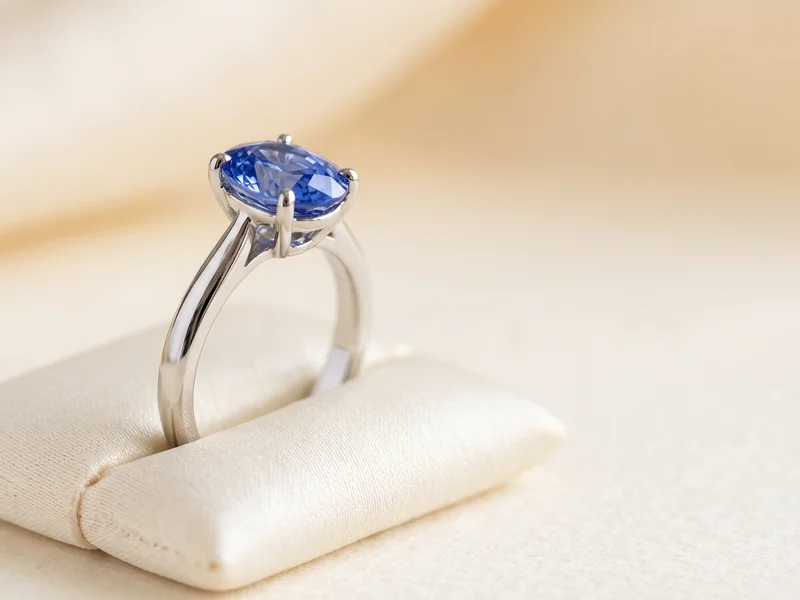
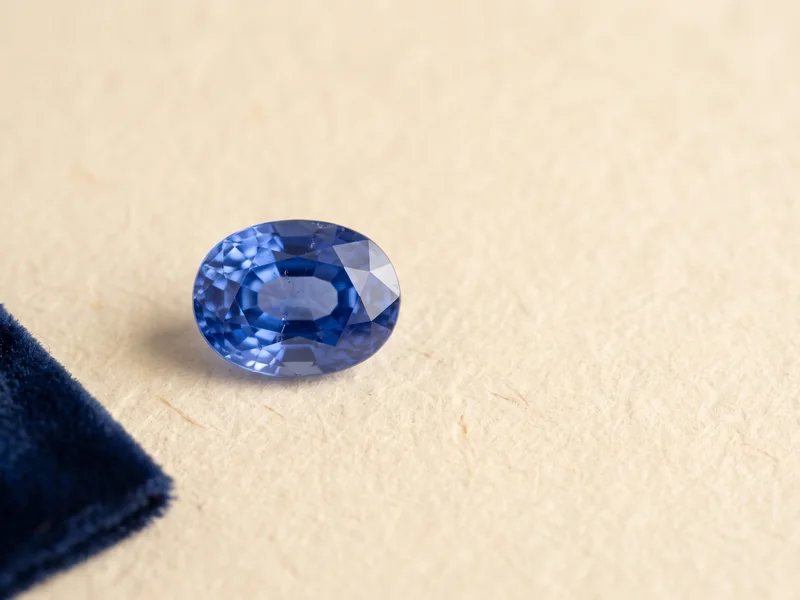
Sapphire is the gem variety of corundum, crystalline aluminium oxide (Al2O3). Red corundum is called ruby; every other colour, including blue, pink, yellow, green, purple, orange and near-colourless, is sapphire. Trace elements create the colour: iron and titanium for blue, chromium for pink and red. At Mohs 9 with excellent toughness, sapphire is the most practical coloured centre stone after diamond, which is why it has been a traditional engagement choice for generations.
Australia is a genuine sapphire country. The main fields are around Anakie, Rubyvale and Sapphire in Central Queensland, and around Inverell and Glen Innes in the New England region of New South Wales. Australian sapphires are rich in iron, so many blues are deep and dark, sometimes with a green or inky edge. The fields are also known for parti sapphires: single stones showing blue, green and yellow zones together. A well-cut Australian blue with a lighter tone, or an Australian parti, yellow or green sapphire, gives an engagement ring a real local origin.
From the gemmologist's bench: natural sapphires often contain fine needles of rutile called silk, plus fingerprints (healed fractures) and colour zoning in straight, angular bands. Heat treatment, used on most sapphires sold today, can partly dissolve that silk, and altered silk is one of the signs a lab looks for. Lab-created sapphire grown by flame fusion shows curved growth lines and round gas bubbles under magnification instead, which is how it is separated from natural.
For colour grades, origins and what moves the price, see our guide to sapphire colours, origins and grading. Some sapphires change colour between daylight and indoor light; colour-change sapphires that shift from blue to purple are a rarer, more personal choice with the same Mohs 9 durability.
Which other coloured gemstones work in an engagement ring?
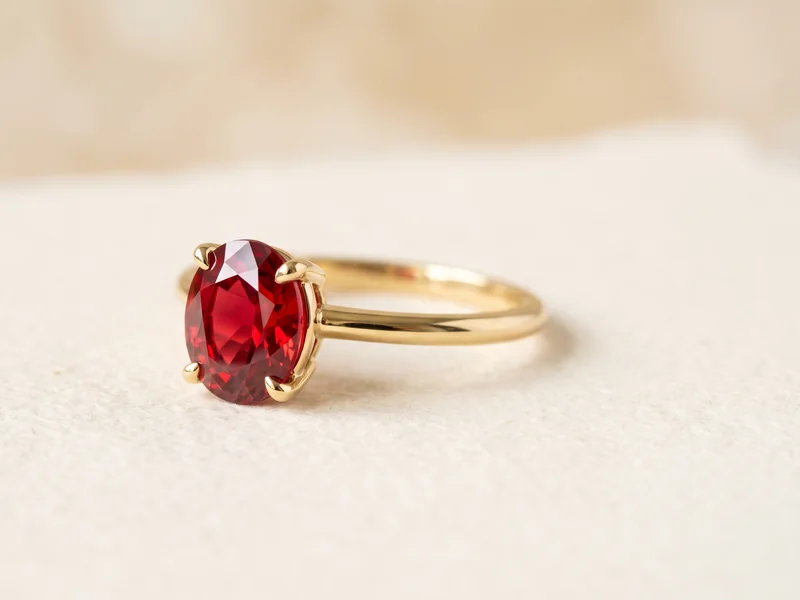
- Ruby: red corundum, so the same Mohs 9 and excellent toughness as sapphire. Fine natural rubies usually cost more than sapphires of similar quality. Avoid lead-glass-filled ruby for an engagement ring (see treatments below).
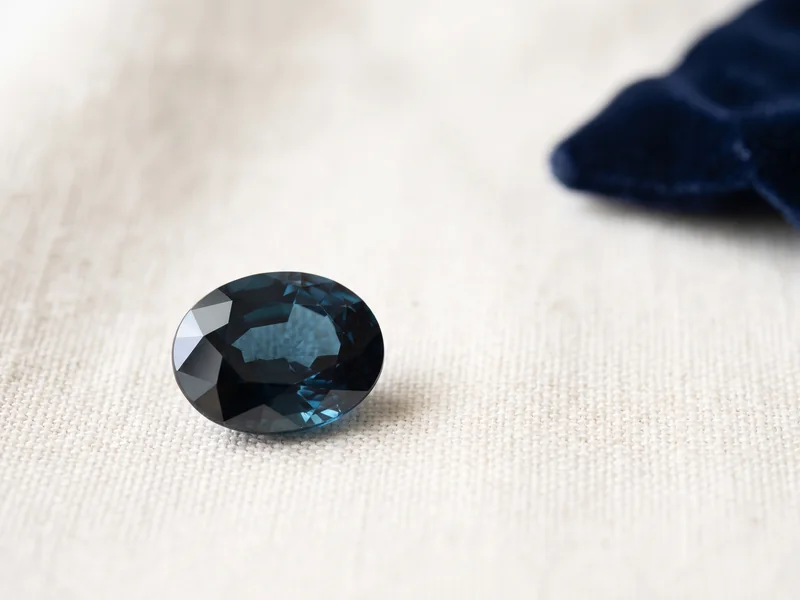
- Spinel: Mohs 8 with good toughness, in red, pink, lavender, grey and cobalt blue. Spinel is singly refractive, so its colour looks the same from every direction. It was mistaken for ruby for centuries; the Black Prince's Ruby in the British Imperial State Crown is actually a spinel. Read why spinel deserves more attention.
- Alexandrite: a colour-change chrysoberyl, Mohs 8.5 with excellent toughness. It looks green to bluish green in daylight and purplish red under warm incandescent light. Fine natural stones are rare and priced accordingly. Our guide to how alexandrite's colour change works explains the science.
- Tourmaline: Mohs 7–7.5 with fair toughness, in almost every colour, including bi-colour watermelon stones. It shows strong pleochroism (different colours from different directions). See tourmaline as an engagement stone before you commit.
- Aquamarine and morganite: blue and pink beryl, Mohs 7.5–8. Often very clean, but light-toned stones show dirt quickly and facet edges can soften after many years of daily wear.
- Emerald: also beryl, but almost always included (the inclusions are called jardin, French for garden) and usually treated with oil or resin. In practice it is brittle, so choose a bezel or an emerald cut with protected corners.
- Opal: Australia's national gemstone, from Lightning Ridge (black opal), Queensland (boulder opal) and Coober Pedy (white opal). At Mohs 5.5–6.5 and containing water, it needs a bezel and gentle wear. Choose a solid opal for a ring; doublets and triplets (thin opal glued to a backing) can lift if soaked.
- Tanzanite and amethyst: tanzanite (Mohs 6–7) has perfect cleavage and chips easily. Amethyst (Mohs 7) is tougher but can fade in strong sunlight and heat, so it suits careful owners.
Not sure which one is right?
Send us the stones you are looking at and our gemologist will tell you which to choose and why.
How do you judge colour in a coloured gemstone?
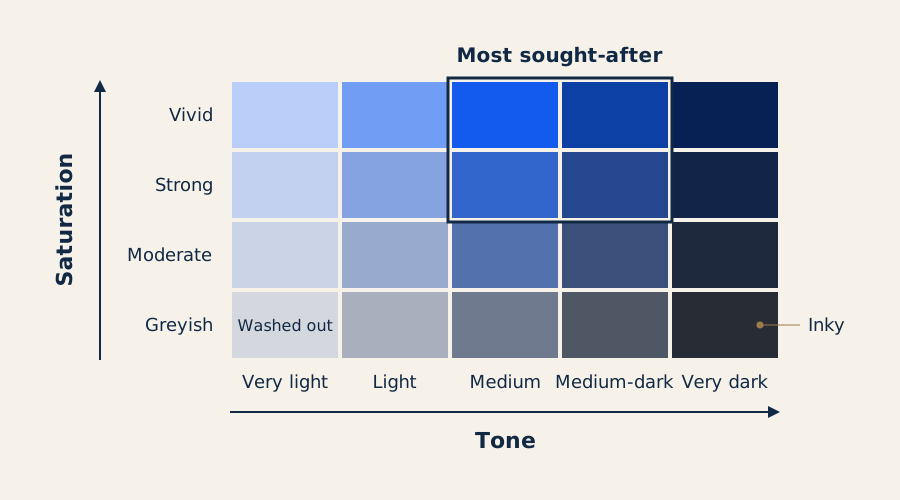
Colour drives most of a coloured gem's value, and gemmologists describe it with three terms. Hue is the basic colour, such as blue, violet-blue or purplish red. Tone is how light or dark it is. Saturation is the strength of the colour, from greyish or brownish to vivid. The most valued stones usually sit at a medium to medium-dark tone with strong to vivid saturation: too dark and the stone goes inky at night, too light and it looks washed out. Our guide to hue, tone and saturation in colour grading has worked examples.
Cut changes colour too. A shallow pavilion (the lower half of the stone) lets light leak straight through, creating a window, a pale, see-through patch in the centre. Overly deep cuts create extinction, dark areas that stay dark as the stone moves. With pleochroic gems such as tourmaline and tanzanite, the cutter also chooses which direction faces up; a tourmaline viewed down its length can look much darker than the same stone seen from the side.
Coloured diamonds follow a different system. GIA grades them by intensity, from Faint, Very Light and Light through Fancy Light, Fancy, Fancy Intense and Fancy Vivid to Fancy Deep and Fancy Dark. Our page on how fancy colour diamonds are graded explains each step.
Is a lab-created gemstone the same as a natural one?
A natural gem formed in the earth over millions of years. A lab-created (or synthetic) gem has been grown in a laboratory with the same chemistry and crystal structure, so a lab-created sapphire has the same Mohs 9 hardness and 1.76–1.77 refractive index as a natural one. Lab-created sapphire, ruby and spinel have been produced commercially since the early 1900s, emerald since the 1940s and alexandrite since the 1970s. They cost much less and are often cleaner than natural stones, while natural stones are rarer. Both are legitimate choices as long as they are clearly disclosed. A simulant is something else again: glass or cubic zirconia that only imitates the look.
Most natural coloured gems are also treated in some way. The common treatments, and what they mean for an engagement ring:
- Heat: used on most sapphires and rubies to improve colour and clarity. Stable, permanent and widely accepted, but it should still be disclosed.
- Beryllium diffusion: heating with beryllium to create or deepen yellow and orange colours in sapphire. Durable, but valued well below unheated or simply heated stones.
- Lead-glass filling: rubies with heavy fractures filled with lead glass. The glass can be damaged by jeweller's torch heat, acids such as lemon juice and some cleaners, so these stones do not suit engagement rings.
- Oil or resin: standard for emeralds, filling surface-reaching fractures. It can dry out or be pulled out by ultrasonic and steam cleaning.
- Irradiation: used to create blue topaz and to intensify some tourmalines. Stable in normal wear.
For any significant centre stone, ask for a report from an independent lab such as GIA, AGL, SSEF or Gübelin. It states whether the stone is natural or synthetic, which treatments were detected and, on some reports, the likely country of origin.
Browse natural gemstones
Can you use a birthstone in an engagement ring?
Meaning is personal. Traditionally sapphire is linked with faithfulness and sincerity, ruby with passion and emerald with renewal, but many couples simply choose a birth month, a colour from a shared place or a gem from a family piece. The modern birthstone list varies slightly between sources, and not every birthstone is tough enough for daily wear:
| Month | Birthstone(s) | Mohs hardness | As an everyday engagement ring |
|---|---|---|---|
| January | Garnet | 6.5–7.5 | With a protective setting |
| February | Amethyst | 7 | With care; can fade in strong light |
| March | Aquamarine | 7.5–8 | Yes, with care |
| April | Diamond | 10 | Yes |
| May | Emerald | 7.5–8 | Careful wear, bezel advised |
| June | Alexandrite, pearl, moonstone | 8.5 / 2.5–4.5 / 6–6.5 | Alexandrite yes; pearl and moonstone no |
| July | Ruby | 9 | Yes |
| August | Spinel, peridot | 8 / 6.5–7 | Spinel yes; peridot with care |
| September | Sapphire | 9 | Yes |
| October | Tourmaline, opal | 7–7.5 / 5.5–6.5 | Tourmaline with protection; opal with great care |
| November | Topaz, citrine | 8 / 7 | With protection (topaz cleaves) |
| December | Tanzanite, zircon, turquoise | about 5–7.5 | Careful or occasional wear |
If your birthstone is too soft for a centre stone, there are workable alternatives. Set it as small accent stones on the shoulders, hide it inside the band where it will not take knocks, or choose a tougher gem in a similar colour: a pink sapphire instead of morganite, a green sapphire instead of emerald, or a purple sapphire or spinel instead of amethyst or tanzanite.
Which setting best protects a coloured gemstone engagement ring?
The softer or more brittle the gem, the more the setting has to do. A bezel (a continuous rim of metal around the stone) gives the most protection and suits opal, emerald and tanzanite. Claws show more of the stone; six claws, or four slightly heavier claws, are sensible for a sapphire or spinel. A lower profile, with the stone sitting closer to the finger, takes fewer knocks than a tall setting. A halo of small diamonds frames the colour and shields the girdle (the outer edge). See claw, bezel and halo settings compared and our walk-through on designing a secure setting for a coloured stone.
Metal colour changes how a gem looks. White gold and platinum keep blues and greens crisp, yellow gold warms rubies and can flatter emeralds, and rose gold suits pink stones such as morganite and pink sapphire. Pale aquamarine can look greener against yellow gold. Coloured diamonds follow similar rules; our page on metals and settings that suit coloured diamonds covers them in detail.
Care depends on the gem. Warm water, a drop of mild detergent and a soft brush are safe for almost everything. Untreated or heated sapphire, ruby and spinel without fractures usually tolerate professional cleaning, while emerald, opal, tanzanite and fracture-filled stones should never go in an ultrasonic or steamer. Our care instructions for each gemstone and our page on which gems are safe in an ultrasonic cleaner list the details. Have the claws or bezel checked about once a year.
How much do coloured gemstone engagement rings cost?
Price depends far more on the gem species, colour quality, treatment and origin than on carat weight alone. The ranges below are broad guides for a loose centre stone of about 1 carat with good colour, before the cost of the ring itself.
| Centre stone (about 1 ct, good colour) | Approximate price range (AUD) |
|---|---|
| Lab-created sapphire or ruby | about $50–$500 |
| Amethyst or citrine | about $20–$150 |
| Aquamarine or morganite | about $150–$900 |
| Tourmaline (not Paraíba) | about $150–$1,500 |
| Australian blue or parti sapphire (heated) | about $500–$3,000 |
| Sri Lankan blue sapphire (heated) | about $1,000–$6,000 |
| Natural spinel (red, pink, cobalt blue) | about $800–$6,000 |
| Natural ruby (heated) | about $1,500–$10,000 |
| Natural alexandrite, clear colour change | about $5,000–$25,000 |
| Natural fancy pink diamond | far higher; often well above $50,000 |
Unheated stones, top colours and documented origins can cost several times these figures, while included or very dark stones sit below them. Coloured diamonds have their own price logic, explained in what pushes fancy colour diamond prices up. Lab-grown coloured diamonds are also available, are real diamond and cost a small fraction of natural fancy colours.
How do you choose a coloured gemstone for an engagement ring? Step by step
- Be honest about wear. If the ring will be worn every day, including at work and the gym, shortlist gems at Mohs 8 or above with good toughness.
- Choose the colour in person. Compare stones in daylight, warm indoor light and shade, and check for windows and dark extinction.
- Ask natural or lab-created. Both are fine; just make sure it is stated in writing.
- Ask about treatment. Heat is normal; avoid lead-glass-filled ruby, and expect oil in emerald.
- Get a report for significant stones. Look for an independent lab such as GIA, AGL, SSEF or Gübelin.
- Design the setting around the gem. Bezel or low claws for softer stones, and a metal colour that flatters the hue.
- Plan the care. Learn which cleaning methods are safe and book a yearly check of the setting.
Free consultation
Talk to a gemologist
Compare stones in person or online with Raj Sood, Graduate Gemologist (GIA), AJP (GIA).
Book a consultationShop this shape
FAQ
Common questions
Are coloured gemstone engagement rings durable enough for every day?
Some are. Sapphire, ruby, alexandrite and spinel (Mohs 8–9) handle daily wear well, while softer gems such as opal, emerald and tanzanite need a protective setting and gentle wear.
What is the most durable coloured gemstone for an engagement ring?
After diamond, sapphire and ruby are the most durable, at Mohs 9 with excellent toughness. Alexandrite (8.5) and spinel (8) follow closely.
Are Australian sapphires good for an engagement ring?
Yes. They are corundum like any sapphire, so they have the same hardness and toughness. Australian blues tend to be darker, and parti sapphires with blue, green and yellow zones are a distinctive local choice.
Is a lab-created sapphire a real sapphire?
Yes. A lab-created sapphire has the same chemistry, hardness and refractive index as a natural one; it was grown in a laboratory rather than mined. It should always be described as lab-created or synthetic.
Can I have an opal engagement ring?
You can, as long as you choose a solid opal, a bezel setting and treat it gently. At Mohs 5.5–6.5 opal scratches and chips more easily than sapphire, so take it off for gardening, gym and cleaning.
Can I use my birthstone in an engagement ring if it is soft?
Yes. Set it as accent stones or inside the band, or choose a tougher gem in the same colour, such as a pink sapphire instead of morganite.
Terms in this guide

Ask a gemologist
Not sure which diamond to choose?
Raj Sood is a Graduate Gemologist (GIA) and master jeweller. Bring the stones you are considering, or send the reports, and he will tell you honestly which one is better and why.
Keep learning
Related guides
 GemstonesGemstone Durability for Everyday Rings
 GemstonesHow to Design a Secure Setting for a Coloured Gemstone
 GemstonesSapphire Gemstones
 GemstonesSpinel Engagement Rings: An Underrated GemstoneGemstonesGemstones | Coloured Gemstones, Birthstones and Custom Jewellery
 GemstonesGemstone Colour Grading: Hue, Tone, Saturation
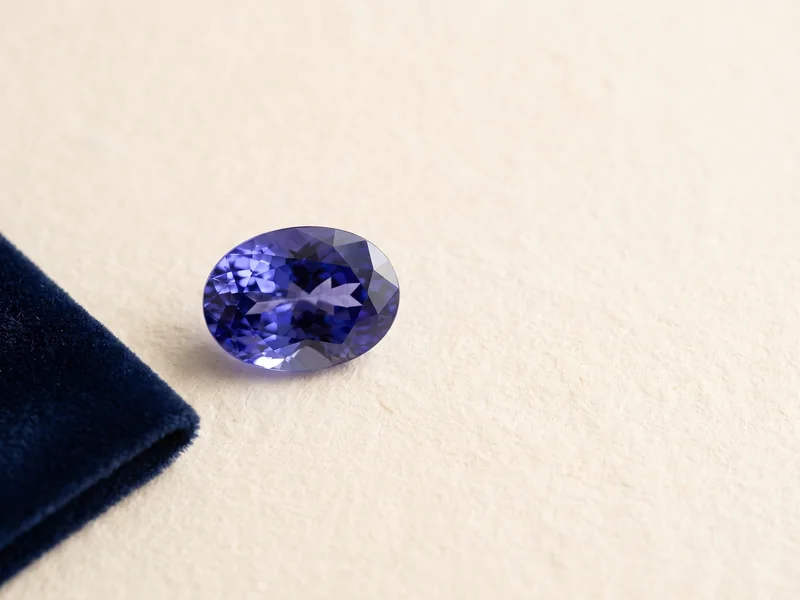 GemstonesColour-Change Sapphire
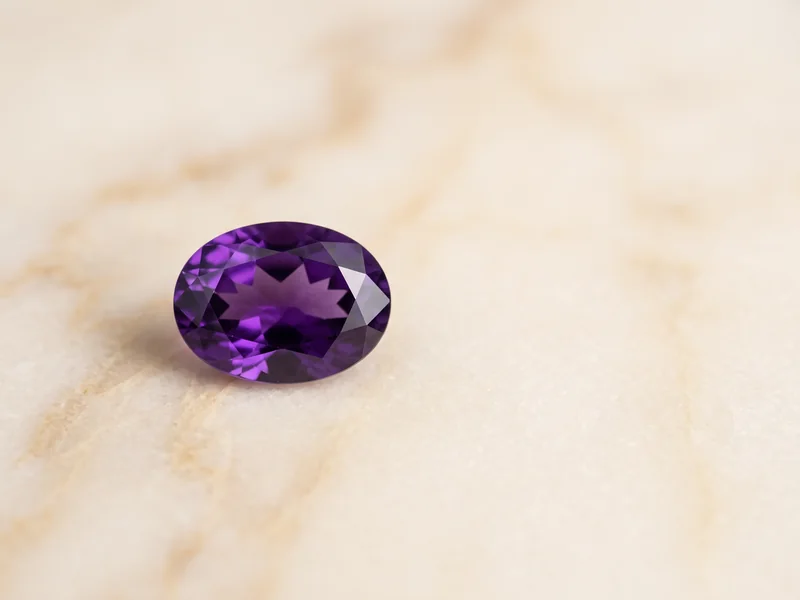 GemstonesAmethyst Jewellery: Colour, Fading and Care
Explore more
More guides on this topic
Education