
- Education
- Engagement Rings & Settings
- Floral Engagement Ring Settings: Styles, Anatomy and History
Engagement Rings & Settings
Floral Engagement Ring Settings: Styles, Anatomy and History
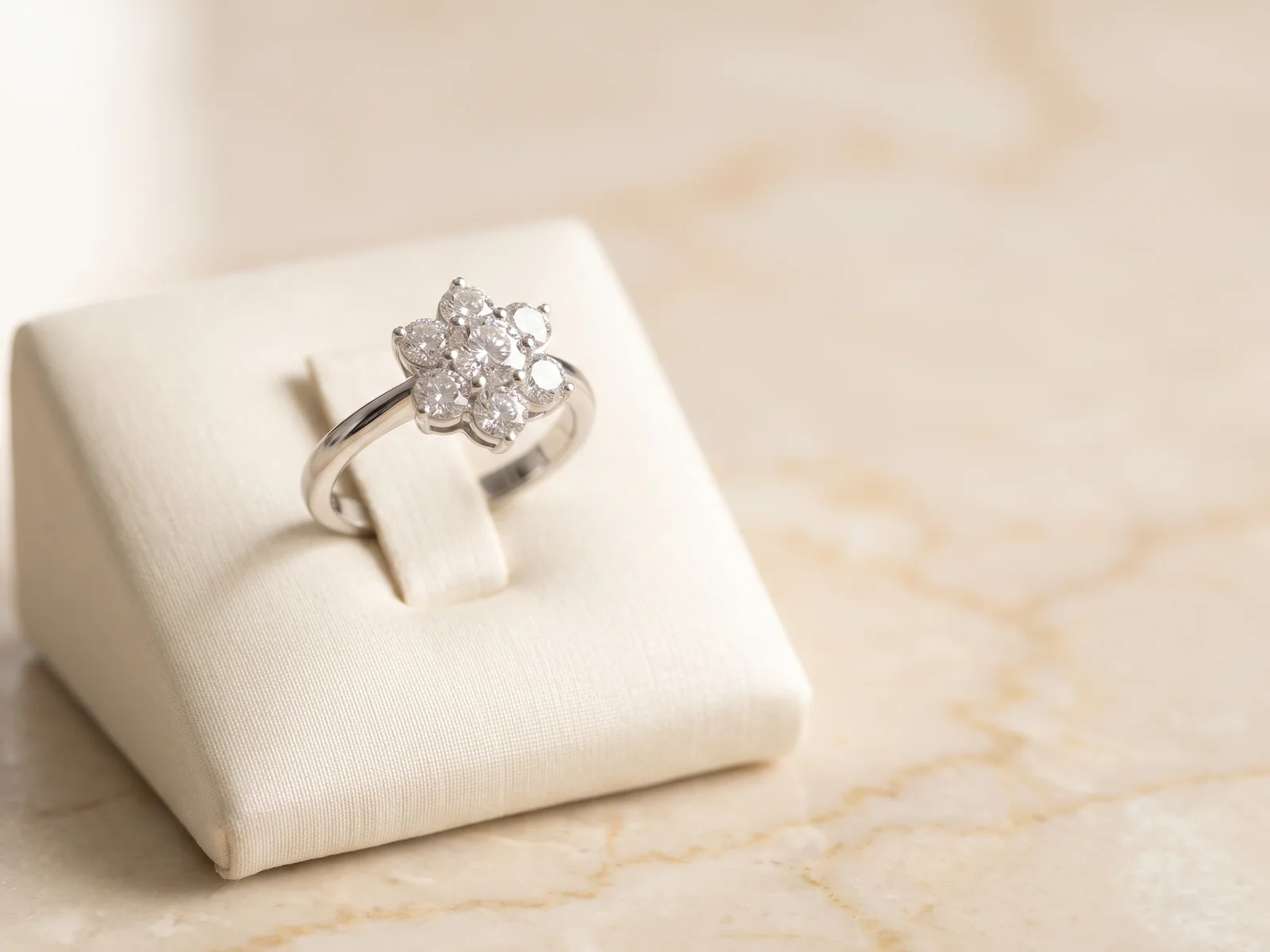
A floral engagement ring puts as much detail into the metal as into the diamond, so how it is built matters as much as how it looks. Here is how each style works, where it came from and what keeps the petals intact for decades.
 Reviewed by Raj Sood, Graduate Gemologist (GIA), AJP (GIA)Master jeweller and Graduate Gemologist (GIA) · reviewed 4 November 2026
Quick answer
A floral engagement ring arranges the stones or metal to look like a flower: a centre stone ringed by petal-shaped claws, a cluster of small stones, or a halo shaped into petals. They date back to Georgian and Victorian clusters. Choose low, rounded claws and a sturdy gallery so the petals survive daily wear.
What is a floral engagement ring?
A floral engagement ring is any ring whose design borrows from a flower. Sometimes the flower is made of the stones themselves: a centre diamond with smaller stones arranged around it like petals. Sometimes it is made of metal: claws shaped like petals, leaves running down the shoulders, or a vine engraved along the band. Many rings combine both. The style sits within the full range of engagement ring setting styles, but it is less a single setting than a design language that can be applied to claws, clusters and halos.
Almost every flower engagement ring falls into one of three families:
- Petal claw solitaire: one centre stone held by four to six claws (the small metal arms that grip the stone) that are flattened and shaped like petals, so the head looks like an open flower from above.
- Flower cluster: a centre stone surrounded by a ring of smaller stones of similar size, most often six, so the whole head reads as one bloom. It is also called a daisy cluster.
- Floral halo: a halo (a ring of small diamonds around the centre) with a scalloped, petal-shaped outline instead of a smooth circle.
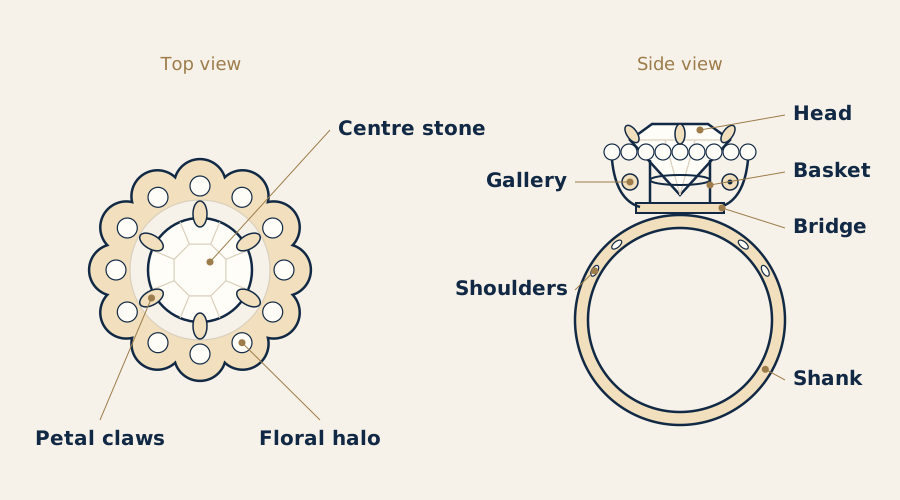
Underneath all three is the same anatomy: a head that holds the stones, a gallery (the side profile of the metalwork beneath the head), shoulders where the band rises to meet the head, and the shank, which is the band itself. Floral designs put detail into every one of those parts, which is why a labelled diagram helps. If any term is new, our plain-English jewellery glossary defines it.
What are the main types of floral engagement ring setting?
| Style | What you see | Centre stone | Upkeep | Suits |
|---|---|---|---|---|
| Petal claw solitaire | Four to six petal-shaped claws opening around one stone | The focus; petals cover slightly more edge than plain claws | Low; check claw tips yearly | Rounds, ovals, cushions |
| Flower (daisy) cluster | Centre stone ringed by six or more similar stones | Shares attention with the petal stones | Medium; many small claws to check | Smaller centres, coloured centres |
| Floral halo | Scalloped halo of small diamonds shaped into petals | Looks larger and framed | Medium; small stones can loosen | Rounds, ovals, pears |
| Edwardian-style filigree | Lace-like openwork gallery, milgrain edges, garland motifs | Usually a modest centre | Medium; fine metalwork wears over decades | Old cuts, rounds |
| Art Deco stylised flower | Geometric petals, often in contrasting coloured stones | Bold, symmetrical frame | Medium to high; small square-cut stones can chip | Asscher, round, emerald cuts |
| Vine or leaf band | Plain head; leaves or vines along shoulders and band | Unchanged | Low to medium; engraving softens with years of wear | Any shape |
The flower cluster engagement ring is the oldest of these. Because the small stones sit tight together, the head reads as one larger shape from a distance, which is why clusters were used for centuries to make modest diamonds look generous. A classic daisy cluster uses one centre and six surrounding stones of near-equal size. A graduated cluster uses smaller petals so the centre clearly dominates. Each petal stone is held by its own tiny claws or by claws it shares with its neighbour, so understanding how claw, pavé and bezel setting methods work helps you judge how securely they sit.
A floral halo engagement ring works like any halo, but the outline dips between each petal. Around a 1 carat round, a floral halo usually uses somewhere between 10 and 16 small diamonds, often called melee (diamonds under about 0.20 carat), depending on how many petals the design has. The scallops add movement and catch light from more angles than a smooth halo. The petal claw solitaire is the quietest option: from the side it looks like a normal claw setting, and only from above do you see the flower.
Related guideSettings That Make a Diamond Look BiggerWhere did the flower engagement ring come from?
Flowers are one of the oldest motifs in jewellery, and the vintage floral engagement ring has a clear line of descent. Each era built its flowers differently, because the tools, metals and diamond cuts available changed.
| Era | Approx. dates | Floral details | Typical stones |
|---|---|---|---|
| Georgian | c. 1714–1837 | Closed-back clusters, foiled stones, silver-topped gold | Rose cuts, table cuts, coloured gems |
| Victorian | 1837–1901 | Daisy clusters, forget-me-nots, engraved and scrolled shanks | Old mine cuts, pearls, turquoise, garnet |
| Edwardian | c. 1901–1915 | Platinum filigree, milgrain, garland and bow motifs | Old European cuts, rose cuts, pearls |
| Art Deco | c. 1920–1935 | Stylised geometric flowers, strong colour contrast | Old European and Asscher cuts, calibré sapphires, emeralds |
| Retro | c. 1935–1950 | Bold, scrolling rose and yellow gold petals | Smaller diamonds, lab-created (synthetic) rubies |
| Modern | 1990s–today | Petal claws, floral halos, CAD-modelled galleries | Modern brilliants, natural and lab-grown diamonds |
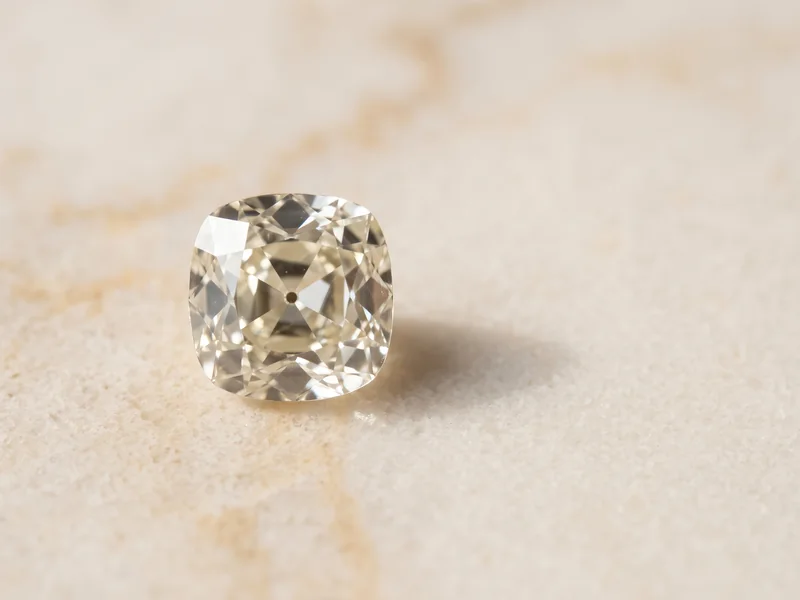
Georgian clusters were made for candlelight. Stones were set in closed backs with a thin foil behind them to push light back out, and the top of the setting was often silver over a gold back so the diamonds looked white. Those closed backs mean a Georgian ring should never be soaked, because water gets under the foil and dulls it. Victorian jewellers leaned into the language of flowers, in which each bloom carried a meaning, and the daisy cluster of old mine cuts became a standard engagement design. If you have inherited one of those cushion-like stones, our guide to settings that suit an old mine cut covers how to remount it.
The Edwardian era is where floral settings became truly fine. Platinum came into wide use, and because it is strong in thin sections, jewellers could pierce galleries into lace-like filigree and edge every rim with milgrain (a row of tiny beads pressed into the metal). Art Deco flowers turned geometric: petals became squares and triangles, often outlined in calibré-cut sapphires (small stones cut to fit a specific space exactly). An art deco floral engagement ring often pairs well with a step-cut centre; see our Asscher settings with an Art Deco feel.
When a workshop restores or remakes an antique ring, the era shows in small details: the profile of the milgrain, whether the gallery was pierced by hand or die-struck, and the depth of the engraving. Copying those details accurately is what separates a convincing vintage-style ring from one that only looks old in photos.
What are the parts of a floral setting?
A floral head is more complex than a plain claw head, because the decoration has to do structural work. Here is what each part does:
- Petals or claws: the arms that hold the centre stone. On a petal claw head they are flattened and widened at the tip, usually 1.0–1.5 mm across where they touch the stone.
- Basket: the cage of wire under the stone that the claws rise from. Floral baskets often have a second ring, called a bearer, shaped like sepals (the green leaves under a real flower).
- Gallery: the side view of the head. On floral rings it may be pierced with petals, scrolls or filigree.
- Halo or cluster frame: the ring of small stones and their seats. Each seat is drilled so the small diamond sits level.
- Shoulders: where leaves, vines or split shanks usually appear.
- Bridge: the small support between the head and the band, often hidden, which keeps a tall floral head rigid.
- Shank: the band. It needs at least about 1.6–2.0 mm of thickness at the base to stay round for decades.
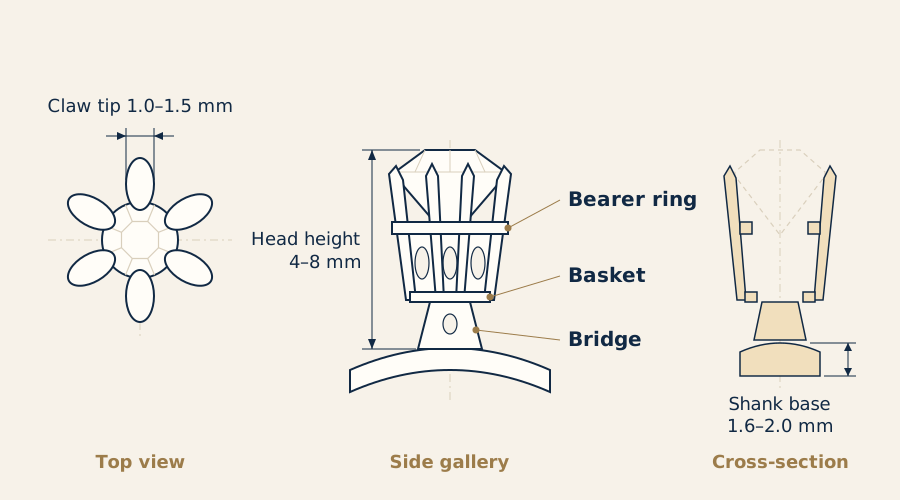
Most new floral rings are designed in CAD (computer-aided design) first. The jeweller models the head in 3D, checks every petal tip and gallery opening for thickness, renders it so you can see it from all sides, then prints a resin model that is cast in metal. CAD matters more for floral work than for a plain solitaire, because a petal that looks delicate on screen may be too thin to hold a stone. A good design keeps the delicate look in the outline and the strength in the hidden metal underneath.
Not sure which one is right?
Send us the stones you are looking at and our gemologist will tell you which to choose and why.
Which diamond shapes suit a floral setting?
Round stones are the natural centre for a flower, but almost any shape can work if the petals are arranged around its outline:
- Round: suits any number of petals, from a five-petal claw head to a twelve-stone halo. See our round diamond setting options.
- Oval and other elongated shapes: the petals stretch along the length so the flower looks like a bud. Our page on settings for ovals and other long shapes explains how to keep the outline balanced.
- Pear: pear-shaped stones make natural petals around a round centre, and a pear centre works if a V-claw protects the point. Read more on protecting the point of a pear.
- Marquise: small marquise stones make convincing leaves and petals; as a centre, both points need cover. See claw and bezel choices for a marquise.
- Heart: a heart inside a floral halo is a romantic combination; the cleft needs its own claw. Compare heart diamond setting examples.
- Cushion: its soft corners echo a bloom, and it was the classic Victorian cluster centre. See cushion settings, from halo to cluster.
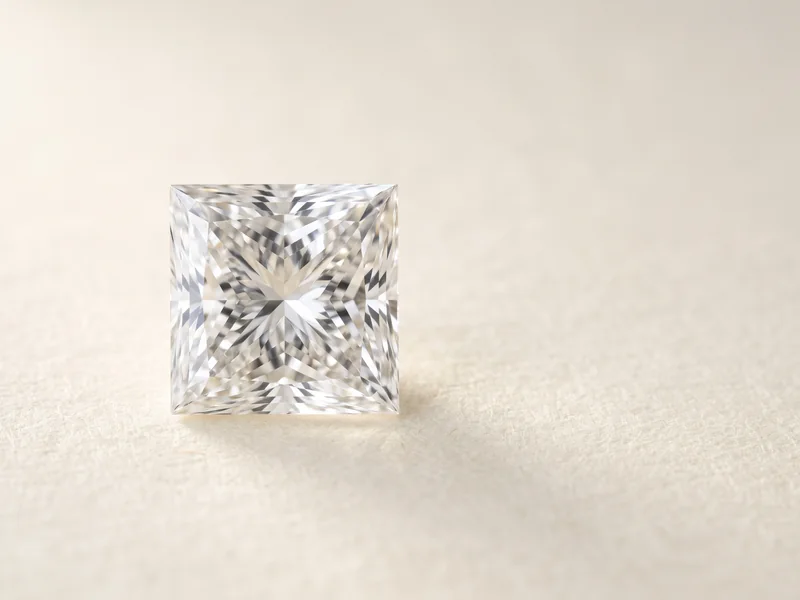
- Princess: the sharp corners are the weak points, so petal claws sit on each corner. Our guide to keeping princess corners safe shows how.
Floral rings are also popular with coloured centres. Sapphire and ruby (both 9 on the Mohs scale of scratch hardness) suit daily wear well, and lab-created sapphires offer the same hardness at a lower cost. Emerald (7.5–8) is hard enough but often brittle and included, so a protective cluster or halo helps. Morganite (7.5–8) scratches sooner than sapphire, and opal (about 5.5–6.5) and pearl (about 2.5–4.5) are better kept for rings that are not worn every day.
Is a floral engagement ring practical for everyday wear?
Yes, if it is built for it. The honest trade-off is that a floral ring has more edges, more small stones and more openings than a plain solitaire, so it needs a little more care. The usual issues are:
- Catching: petal tips that stand proud can snag on knitwear, hair and gloves. Rounded, slightly cupped petal tips sit closer to the stone.
- Claw wear: the small claws on a cluster or halo are often under 0.6 mm and wear down faster than the centre claws.
- Dirt: pierced galleries trap soap and moisturiser, which dulls the underside of the diamond and makes it look less bright.
- Height: a tall floral head, often 6–8 mm off the finger, knocks against things more than a low head of about 4–5 mm.
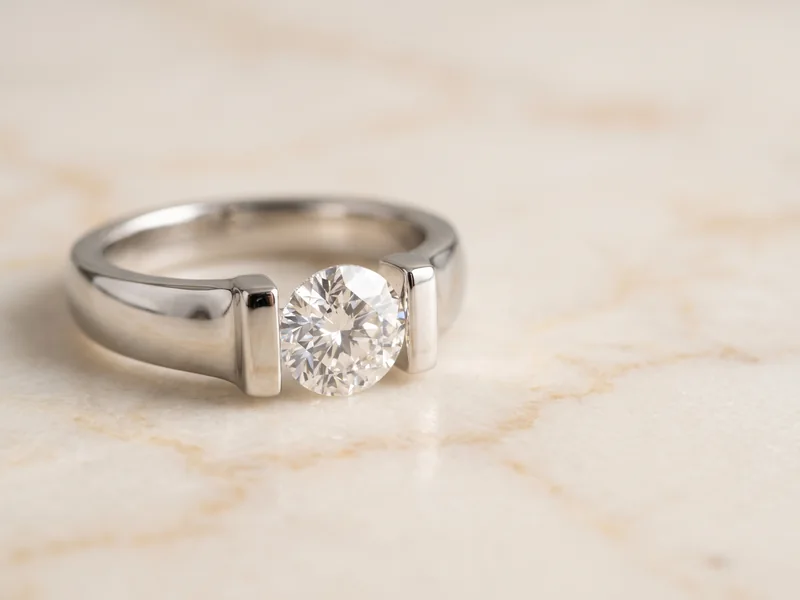
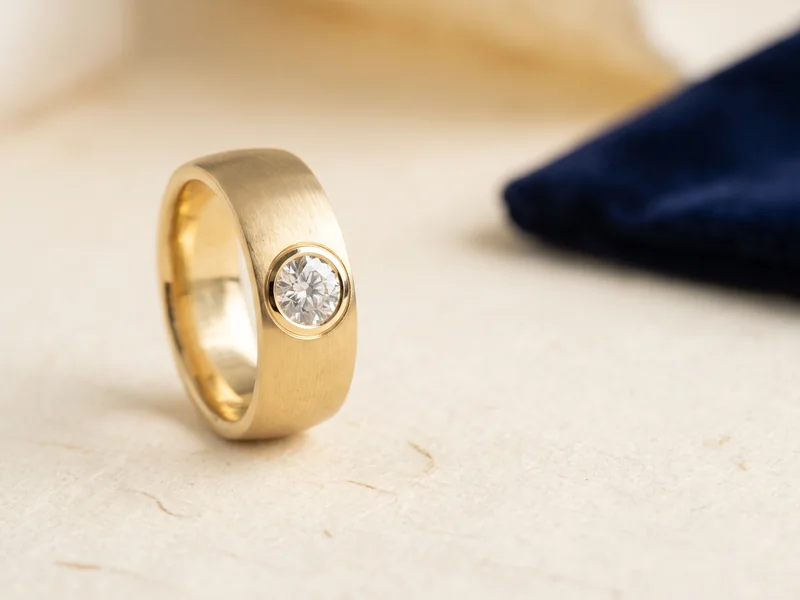
If you work with your hands, a lower petal head or a floral halo set flush with the band is a sensible compromise; our guide to ring settings for hands that work hard compares the options. For the lowest profile of all, a stone set into the band with an engraved flower around it, as in flush (gypsy) settings, has nothing to catch. At the other extreme, tension and suspended settings trade floral detail for a minimal look, and are worth comparing if you are undecided.
For care, soak the ring in warm water with a drop of dishwashing liquid and brush the gallery gently with a soft toothbrush once a week or so. Have the claws checked every 6–12 months. Avoid home ultrasonic cleaners for clusters with emerald, opal, pearl or turquoise, and never soak a closed-back antique.
Which metal suits a floral engagement ring?
Fine petals and filigree need a metal that holds its shape in thin sections. The metal also sets the mood: platinum and white gold read Edwardian, yellow gold reads Victorian and rose gold reads Retro.
| Metal | Colour | Fine petal work | Notes |
|---|---|---|---|
| Platinum (Pt950) | Naturally white-grey | Very good; metal moves rather than breaks off | Dense and heavy; develops a soft satin patina |
| 18ct white gold | Bright white with rhodium plating | Good | Plating wears; usually re-plated every 1–2 years |
| 18ct yellow gold | Rich yellow | Good | Warms the look of lower colour diamonds |
| 18ct rose gold | Pink | Good; copper makes it a little harder | Suits Retro and Victorian styles |
| 9ct or 14ct gold | Paler tones | Harder but less ductile | Lower gold content and lower cost |
A popular build for a floral design is two-tone: a platinum or white gold head, so the petals and claws look white around a colourless diamond, on a yellow or rose gold band. It mirrors how Georgian and Victorian jewellers topped gold with silver for the same reason.
How much does a floral engagement ring cost in Australia?
The price of a floral engagement ring depends on three things: the centre stone, the number and quality of small diamonds, and how much metal and hand-finishing the design needs. A pierced filigree gallery or hand-engraved vines take hours of bench work that a plain head does not.
| Ring | Approximate price range (AUD) |
|---|---|
| Petal claw setting only, 18ct gold | about $1,500–$3,500 |
| Floral halo setting only, 18ct gold, small diamonds included | about $2,500–$5,000 |
| Floral setting only, platinum | about $3,000–$6,500 |
| Complete ring with a 1 ct lab-grown round centre | about $3,500–$8,000 |
| Complete ring with a 1 ct natural round centre | about $10,000–$22,000 |
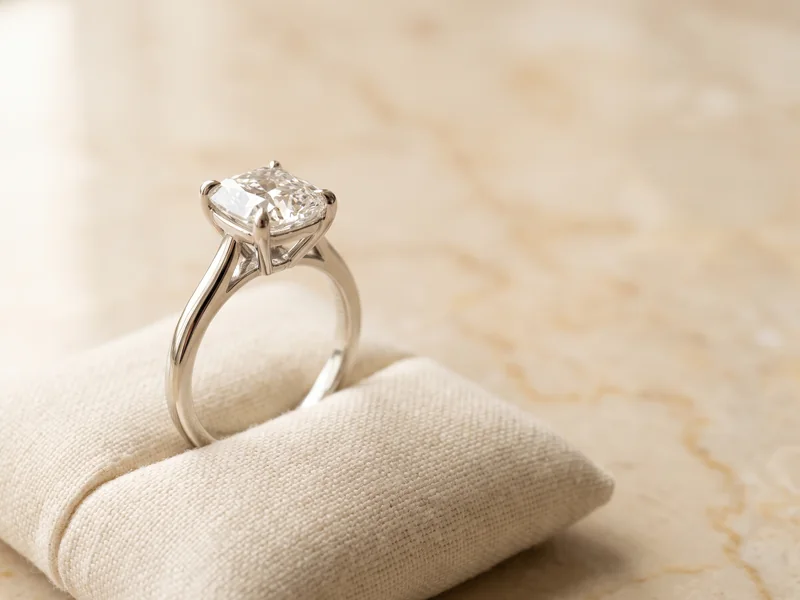
These are broad ranges only and move with metal prices and diamond grades. Lab-grown diamonds are real diamond, grown in a laboratory rather than mined, with the same hardness and sparkle; they cost much less than natural diamonds of the same size and grade. Natural diamonds are rarer and priced accordingly. A lab-grown diamond floral engagement ring lets you put more of the budget into the metalwork or a larger centre. Because a floral halo makes the centre look wider, it is also one of the settings that add visual size to a centre stone.
Explore ring settings and create your ring
How do you choose a floral engagement ring? Step by step
- Pick the family. Decide between petal claws, a cluster or a floral halo, and whether the flower should be in the head, the shoulders or both.
- Choose an era or mood. Victorian daisy, Edwardian filigree, Art Deco geometry or a modern petal head; this guides metal and stone choices.
- Match the centre shape. Make sure every point or corner of the centre stone is covered by a petal or claw.
- Check the height and claws. Ask for the head height in millimetres and the claw width; aim for about 1.0 mm or more on the centre claws.
- Review the CAD from every side. Look at the gallery, the bridge and the underside, not just the top render.
- Plan the band. Floral heads and halos often need a curved or notched wedding band to sit flush.
- Bring your own stone if you have one. An inherited or loose diamond can be measured and the floral head built around it; see how a loose diamond is set into a ring.
Free consultation
Talk to a gemologist
Compare stones in person or online with Raj Sood, Graduate Gemologist (GIA), AJP (GIA).
Book a consultationShop this shape
FAQ
Common questions
Is a floral engagement ring only a vintage style?
No. Floral designs go back to Georgian clusters, but modern petal claw heads and floral halos are designed in CAD and set with modern brilliant cuts. You can choose an era-accurate look or a clean contemporary flower.
Do petal claws hide more of the diamond?
Slightly. Petal claws are wider at the tip than round claws, so they cover a little more of the edge, but on a stone of 0.50 carat or more the difference is barely visible face-up.
Is a flower cluster the same as a halo?
Not quite. In a cluster the surrounding stones are similar in size to the centre and the head reads as one flower, while a halo uses much smaller diamonds to frame a clearly dominant centre stone.
Do floral settings get dirty more easily?
Yes, open galleries and many small seats trap soap and skin oils. A weekly soak in warm soapy water and a soft brush keeps the diamond bright.
Can a floral engagement ring have a lab-grown diamond?
Yes. Any floral setting can hold a lab-grown diamond centre and lab-grown small diamonds, and the grading report will state that the stone is laboratory-grown.
What wedding band goes with a floral engagement ring?
Floral heads and halos are often wider than the band, so a curved, notched or contoured wedding band usually sits closest. Some couples choose a band with a matching leaf or vine pattern.
Terms in this guide

Ask a gemologist
Not sure which diamond to choose?
Raj Sood is a Graduate Gemologist (GIA) and master jeweller. Bring the stones you are considering, or send the reports, and he will tell you honestly which one is better and why.
Keep learning
Related guides
 Engagement Rings & SettingsDiamond & Gemstone Setting Guide
 Engagement Rings & SettingsBest Settings for Old Mine Diamonds
 Engagement Rings & SettingsSettings That Make a Diamond Look Bigger
 Engagement Rings & SettingsBest Settings for Princess Diamonds
 Engagement Rings & SettingsTension and Suspended Settings
 Engagement Rings & SettingsFlush (Gypsy) Settings
 Engagement Rings & SettingsBest Engagement Ring Settings for Active Hands
Explore more
More guides on this topic
Education