
- Education
- Engagement Rings & Settings
- Halo Shapes Explained: Matching and Contrast Halos for Every Diamond Shape
Engagement Rings & Settings
Halo Shapes Explained: Matching and Contrast Halos for Every Diamond Shape
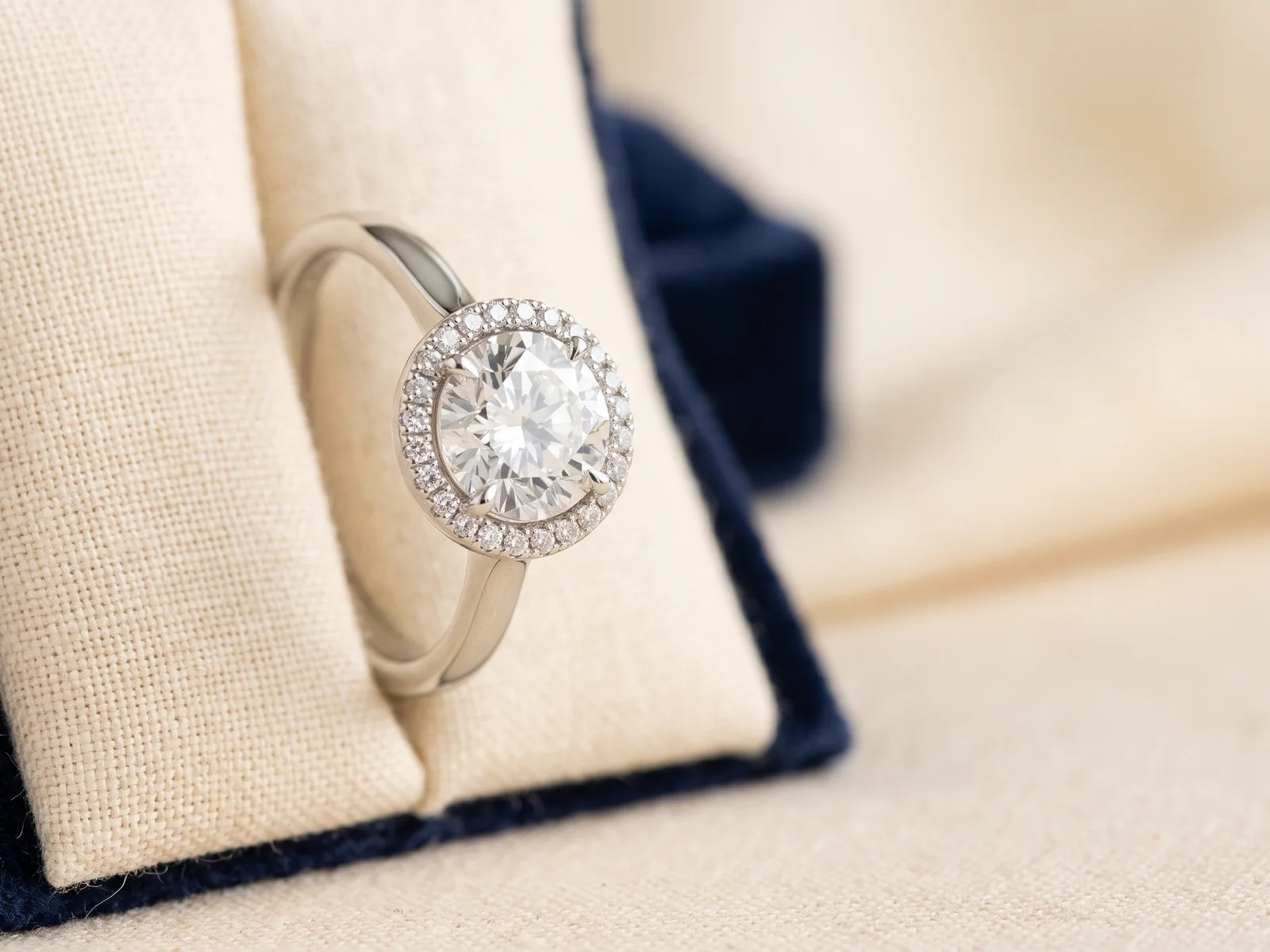
A halo can make a centre stone look two sizes larger, but the halo shape you choose changes the whole character of the ring. Here is how halo shapes are built, which suit each diamond, and how they wear over the years.
 Reviewed by Raj Sood, Graduate Gemologist (GIA), AJP (GIA)Master jeweller and Graduate Gemologist (GIA) · reviewed 4 November 2026
Quick answer
Halo shapes describe the outline of the ring of small diamonds around a centre stone. A matching halo follows the centre's shape, such as an oval halo on an oval, for a clean, larger look. A contrast halo, such as a cushion halo around a round, adds a vintage feel. Either typically adds about 2–3 mm across.
What are halo shapes?
A halo is a continuous ring of small diamonds, called melee (pronounced 'mel-ay', meaning diamonds under about 0.18 carat), set in a frame of metal around a larger centre stone. The halo shape is simply the outline that frame follows. It can mirror the centre stone exactly, or it can deliberately differ from it, and that choice does more to set the look of the ring than almost anything else apart from the centre stone itself.
Halo shapes fall into two broad families. A matching halo follows the outline of the centre: round on round, oval on oval, pear on pear. A contrast halo uses a different outline, most often a cushion (a square with softly rounded corners) or a square halo around a round diamond, or a petal-like floral halo. You will also see variations in how many rows there are and where the halo sits, which our guide to halo engagement ring designs covers in full.
The halo is one of several setting families. If you are still weighing it against claws, bezels and others, start with our overview of every engagement ring setting style. Any setting term on this page you have not met before is also explained in the jewellery glossary of setting and stone terms.
How is a halo setting built?
A halo setting has four working parts. The centre head holds the main stone, usually with four or six claws (small metal prongs). Around it sits the halo frame, a narrow rim of metal, often about 1.2–1.5 mm wide, into which the melee are set. Beneath both is the gallery, the open metalwork under the stones that lets light in and gives the ring its side profile. The shank is the band that goes around the finger.
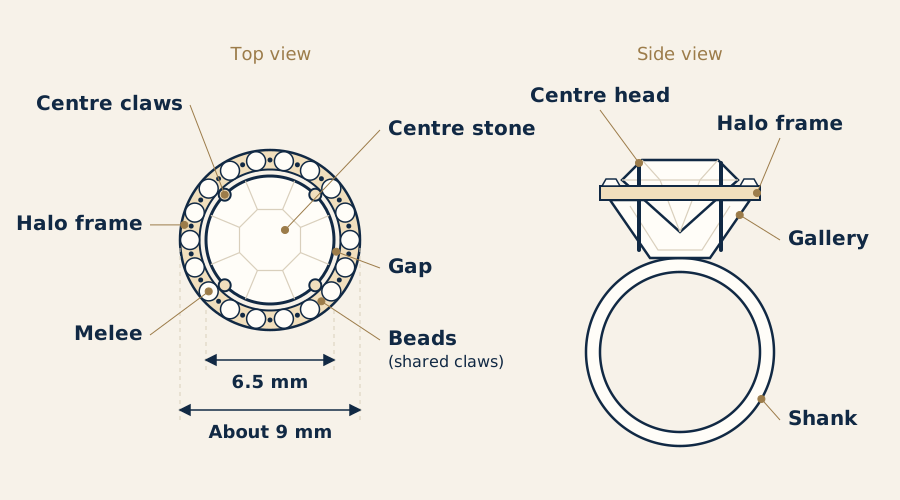
The melee in the halo are usually held by shared claws or tiny beads: small raised points of metal pushed over the edge of each stone, with one bead often holding two neighbouring stones. In finer micro-pavé work the beads are only about 0.3–0.5 mm across, which is why halo setting is slow, skilled bench work done under magnification.
Halo melee are typically 0.8–1.5 mm in diameter. Around a 1 carat round of about 6.4–6.5 mm, a single row of 1.1–1.3 mm stones usually needs about 16–22 melee, adding roughly 0.12–0.20 carat in total. Larger melee look bolder and are a little sturdier; smaller melee give a finer, lacier edge but hold on with less metal. Both natural and laboratory-grown melee are used, and our page on lab-grown melee in pavé and halo work explains how they differ in colour consistency and cost.
Most halos are made today from a CAD (computer-aided design) model. The designer draws the centre stone's exact measurements, spaces the melee evenly around it, then prints a wax or resin model that is cast in metal. CAD matters more for halos than for most settings, because even a 0.1 mm error in spacing shows as an uneven gap around the centre.
Which halo shapes suit each diamond shape?
Almost every centre shape can carry a halo, but some take one more naturally than others. The table sets out the usual halo shapes for each centre and what to watch for.
| Centre shape | Matching halo | Common contrast halo | What to watch |
|---|---|---|---|
| Round | Round | Cushion, square, floral | The most flexible; a round halo suits any band style |
| Oval | Oval | Cushion (elongated) | Keep the halo even at the ends so the oval does not look squashed |
| Cushion | Cushion | Round (less common) | Match the corner curve of the halo to the stone's corners |
| Princess | Square with sharp corners | Rarely contrasted | Corners need V-claws inside the halo |
| Emerald and Asscher | Rectangular or octagonal | Usually matched | Step cuts show gaps clearly; spacing must be precise |
| Pear | Pear | Rarely contrasted | The point needs a V-claw; the halo follows it to a tip |
| Marquise | Marquise | Oval (occasionally) | Two points to protect; halo ends can look heavy |
| Heart | Heart | Round (occasionally) | Cleft and point must stay crisp inside the halo |
| Radiant | Rectangular with cut corners | Cushion | Halo corners should mirror the stone's clipped corners |
Pointed shapes need the most thought. The tip of a pear, marquise or heart is its thinnest edge, so it is usually held by a V-claw (a V-shaped claw wrapping the point) set just inside the halo. Our guide to where the claws go on pears, marquises and hearts shows how that claw and the halo frame work together. For longer stones generally, see settings that flatter ovals, pears and other elongated stones.
Halos also suit coloured centre stones. A sapphire (9 on the Mohs hardness scale) or a softer gem such as morganite (about 7.5–8) benefits from the halo frame shielding its edge from knocks, and a ring of white diamonds sharpens the centre colour by contrast. If the centre is a lab-created sapphire or other synthetic gem, the report or invoice should say so.
Should the halo match the centre stone shape?
There is no right answer, but the two approaches give quite different results.
- Matching halo: reads as one larger stone from across the room. It is clean and modern, and it is the choice when the goal is maximum apparent size. A round halo on a round diamond is the most common halo ring of all.
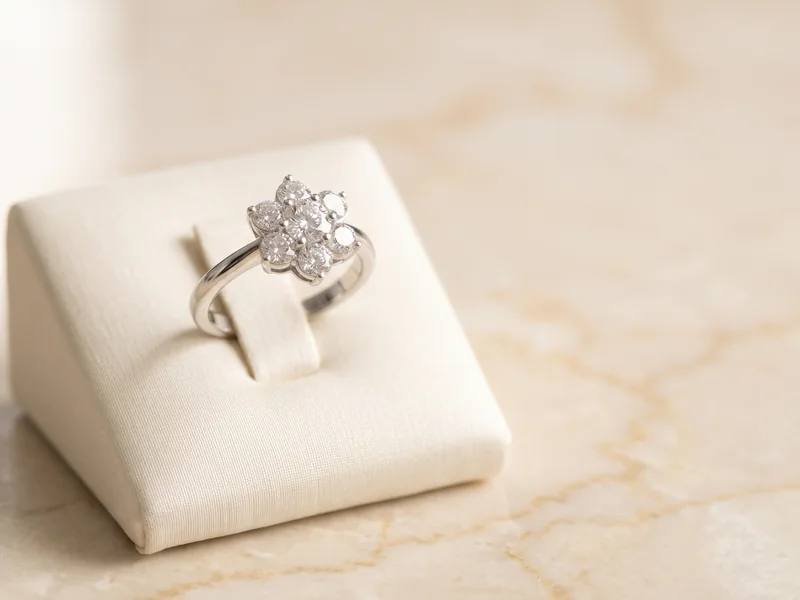
- Contrast halo: reads as a centre stone in a frame. A cushion halo on a round diamond recalls 1920s and earlier designs and suits engraved or vintage filigree galleries. Square halos on rounds look more architectural; floral halos, with larger melee forming petals, look softer.
- Partial or offset halos: a halo that runs only along the sides, or sits slightly off-centre, is a more contemporary variation; it shows more of the centre's outline but gives less protection.
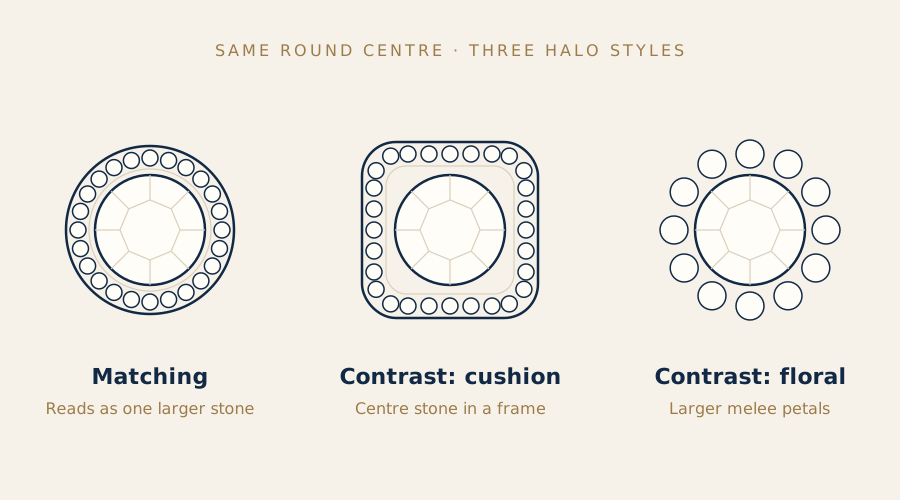
A useful test is to ask what you want people to notice first. If it is the size of the stone, match the halo. If it is the design of the ring, a contrast halo gives it more of a story. Contrast halos also hide small differences in a centre stone's outline; a slightly out-of-round diamond can look perfectly even inside a cushion frame, while a round halo will show any irregularity.
Not sure which one is right?
Send us the stones you are looking at and our gemologist will tell you which to choose and why.
How much bigger does a halo make a diamond look?
A single halo of 1.1–1.3 mm melee, plus its metal frame, usually adds about 2–3 mm to the overall width. That makes the face-up size (the size you see looking down on the ring) much larger than the centre alone. The halo is not as bright or as deep as a single large diamond, so up close it reads as a centre plus frame, but from normal viewing distance the effect is strong.
| Round centre | Centre diameter | Overall width with a single halo | Similar outline to a round of about |
|---|---|---|---|
| 0.50 ct | about 5.1–5.2 mm | about 7.0–7.5 mm | 1.30–1.60 ct |
| 0.75 ct | about 5.8–5.9 mm | about 7.8–8.3 mm | 1.85–2.20 ct |
| 1.00 ct | about 6.4–6.5 mm | about 8.5–9.3 mm | 2.40–3.00 ct |
| 1.50 ct | about 7.3–7.4 mm | about 9.5–10.3 mm | 3.30–4.20 ct |
| 2.00 ct | about 8.0–8.2 mm | about 10.3–11.2 mm | 4.20–5.40 ct |
Those figures vary with melee size, the gap between centre and halo, and the width of the frame. Because a halo widens a small stone so effectively, many people choose a slightly smaller centre and put the difference into colour or cut quality. The diamond size visualiser for each shape lets you compare a centre on its own with the same stone in a halo outline, on screen at true scale. Keep in mind that price per carat also depends on shape, as our breakdown of price per carat by shape explains.
Halos change proportions on the finger too. An oval halo around a 1 carat oval of about 7.7 × 5.7 mm can end up near 10 × 8 mm overall, which covers more of a slim finger than the stone alone. If you have small hands, a thinner frame and 0.8–1.0 mm melee keep the halo in scale.
Single, double or hidden halo: what is the difference?
Beyond the outline, halos differ in how many rows they have and where they sit. The comparison below sets halo styles against two common alternatives.
| Single halo | Double halo | Hidden halo | Solitaire | Bezel | |
|---|---|---|---|---|---|
| Where the melee sit | One row around the girdle | Two rows around the girdle | Under the girdle, seen from the side | None | None (metal rim) |
| Added face-up width | About 2–3 mm | About 4–5 mm | Almost none | None | About 0.5–1 mm |
| Look | Larger, brighter outline | Bold, vintage or statement | Clean solitaire from above, sparkle from the side | Simple, centre-focused | Smooth, modern |
| Melee to maintain | About 16–30 | About 40–60 | About 14–24 | None | None |
| Edge protection for centre | Good | Good | Some | Least | Most |
| Wedding band fit | Often needs a contoured band or extra height | Usually needs a contoured band | Straight band usually sits flush | Straight band usually sits flush | Depends on height |
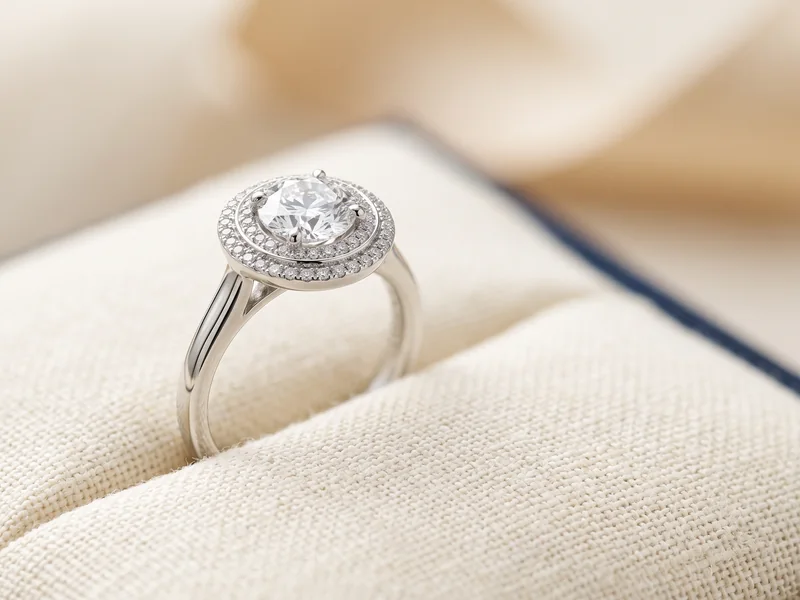
A double halo adds a second row outside the first; our page on double halo settings with two rows of melee covers spacing and melee sizes. A hidden halo moves the ring of melee underneath the centre stone, around the head, so it shows only from the side; see hidden halo rings, where the diamonds sit below the stone. If you want a clean outline from above, compare these with a plain claw-set solitaire or a smooth bezel-set ring with a metal rim.
Related guideHalo vs Hidden Halo Engagement RingsAre halo settings secure, and how do they wear over the years?
The centre stone in a halo is generally well protected. The halo frame sits around its girdle (the thin outer edge), so a knock on the side usually lands on the frame rather than the stone. The trade-off is that the halo itself holds many small stones by very small amounts of metal, and those beads are what wear first.
- Bead wear: every time a ring brushes a desk, a car door or another ring, a little metal is worn from the beads. Over years, a bead can thin until a melee works loose.
- Outer-edge knocks: the outside row of a halo, especially on the sides facing your other fingers, takes most impacts.
- Platinum vs gold: platinum tends to push aside rather than wear away, so beads keep their mass longer but can look slightly blurred; 18 carat white gold stays crisper but loses metal and usually needs rhodium re-plating every 12–24 months to stay bright white.
- Repairs: replacing a lost melee and re-tightening its neighbours is routine bench work. Re-tipping (rebuilding) worn centre claws is a larger job, typically needed after many years of daily wear.
For cleaning, soak the ring in warm water with a drop of mild dishwashing liquid, then brush gently under the halo and through the gallery with a soft toothbrush, where lotion and soap collect and dull the sparkle. Be cautious with home ultrasonic cleaners: vibration can loosen micro-pavé that already has a slightly worn bead, and they are not suitable for emeralds or many other coloured gems. A professional clean and check covers both.
What wedding band fits a halo engagement ring?
Band fit is the most common surprise with halo rings. The halo is wider than the centre, often 8–10 mm across on a 1 carat stone, and if it sits low it rests on top of a straight wedding band, leaving a gap between the two rings.
- Straight band, flush: possible if the halo and gallery sit high enough above the shank for the band to slide underneath. This needs planning in the CAD stage.
- Contoured or notched band: curves around the halo so the rings sit together. Common with low halos and double halos.
- Small gap: some people are happy with a 1–2 mm gap and a straight band; it can look deliberate, especially with a pavé band.
- Shoulder style: rings with raised cathedral shoulders lift the halo higher, which often makes a straight band fit more easily.
The simplest way to avoid trouble is to design the engagement ring and band together, or at least test the fit in a render before the engagement ring is cast. Our guide to wedding bands that sit neatly beside a halo shows each option with measurements.
How much does a halo add to the cost of a ring?
A halo adds both melee and labour. As a broad guide, a single halo usually adds about AUD $800–$2,500 to a comparable solitaire setting, depending on the metal, the melee size and count, and whether the melee are natural or lab-grown. A double halo roughly doubles the melee and setting time. These are approximate ranges only and change with metal prices.
Melee colour should be matched to the centre. Natural melee are commonly G–H colour and SI clarity; laboratory-grown melee can be matched more evenly in colour and generally cost much less. Both are real diamond, with the same hardness (10 on the Mohs scale) and a refractive index of about 2.42. If the centre is a natural diamond and the halo is lab-grown, or the reverse, the paperwork should state each clearly.
Explore halo settings and create your ring
How do you choose a halo shape? Step by step
- Start with the centre stone. Note its shape and exact millimetre measurements from the grading report, and whether it is natural or lab-grown.
- Decide matching or contrast. Match the outline for maximum size; choose a cushion, square or floral halo for a vintage or design-led look.
- Pick the halo style. Single, double or hidden, keeping in mind that more rows mean more melee to maintain.
- Choose melee size and colour. About 0.8–1.0 mm for a fine edge, 1.2–1.5 mm for a bolder frame; match melee colour to the centre.
- Plan protection for points. On pears, marquises and hearts, confirm a V-claw guards each tip inside the halo.
- Choose the metal. Platinum for bead longevity, 18 carat gold for colour choice, and factor in rhodium re-plating for white gold.
- Check band fit in the CAD render. Confirm the halo height lets your chosen wedding band sit flush or contour neatly.
- Book regular checks. Plan a claw and bead check every six to twelve months once you are wearing it daily.
Free consultation
Talk to a gemologist
Compare stones in person or online with Raj Sood, Graduate Gemologist (GIA), AJP (GIA).
Book a consultationShop this shape
FAQ
Common questions
What is the most popular halo shape?
A round halo around a round diamond is the most common, because it simply makes the centre look larger. Cushion halos around round diamonds are the most common contrast choice for a vintage look.
Can you put a cushion halo on a round diamond?
Yes. A cushion halo around a round centre is a classic contrast design that recalls early twentieth-century rings, and it can hide small irregularities in the round's outline.
Do halo settings lose stones?
The small melee can work loose as their beads wear over years of daily wear, most often on the outer edge. A claw and bead check every six to twelve months catches most problems before a stone is lost.
Does a halo make a diamond look bigger?
Yes. A single halo typically adds about 2–3 mm across, so a 1 carat round can have a similar overall outline to a much larger round, although up close it still reads as a centre with a frame.
Will a straight wedding band sit flush with a halo ring?
Only if the halo is set high enough for the band to slide underneath. Otherwise a contoured or notched band is usually needed, so it is worth checking fit before the engagement ring is made.
Is a hidden halo the same as a halo?
No. A hidden halo sits under the centre stone and shows mainly from the side, so from above the ring looks like a solitaire. A traditional halo sits around the stone's edge and widens it face-up.
Terms in this guide

Ask a gemologist
Not sure which diamond to choose?
Raj Sood is a Graduate Gemologist (GIA) and master jeweller. Bring the stones you are considering, or send the reports, and he will tell you honestly which one is better and why.
Keep learning
Related guides
 Engagement Rings & SettingsHalo Engagement Rings
 Engagement Rings & SettingsHalo vs Hidden Halo Engagement Rings
 Engagement Rings & SettingsDouble Halo Engagement Rings
 Wedding Bands & EternityBest Wedding Band for Halo Engagement RingsEngagement Rings & SettingsEngagement Ring Setting Styles Guide
 Engagement Rings & SettingsHidden Halo Engagement Rings
 Lab-Grown DiamondsLab-Grown Diamond Melee in Pavé and Halo Settings
 Diamond ShapesDiamond Shape Price Comparison
Explore more
More guides on this topic
Education