
- Education
- Engagement Rings & Settings
- Cathedral Engagement Ring Guide: Height, Styles and How They Wear
Engagement Rings & Settings
Cathedral Engagement Ring Guide: Height, Styles and How They Wear
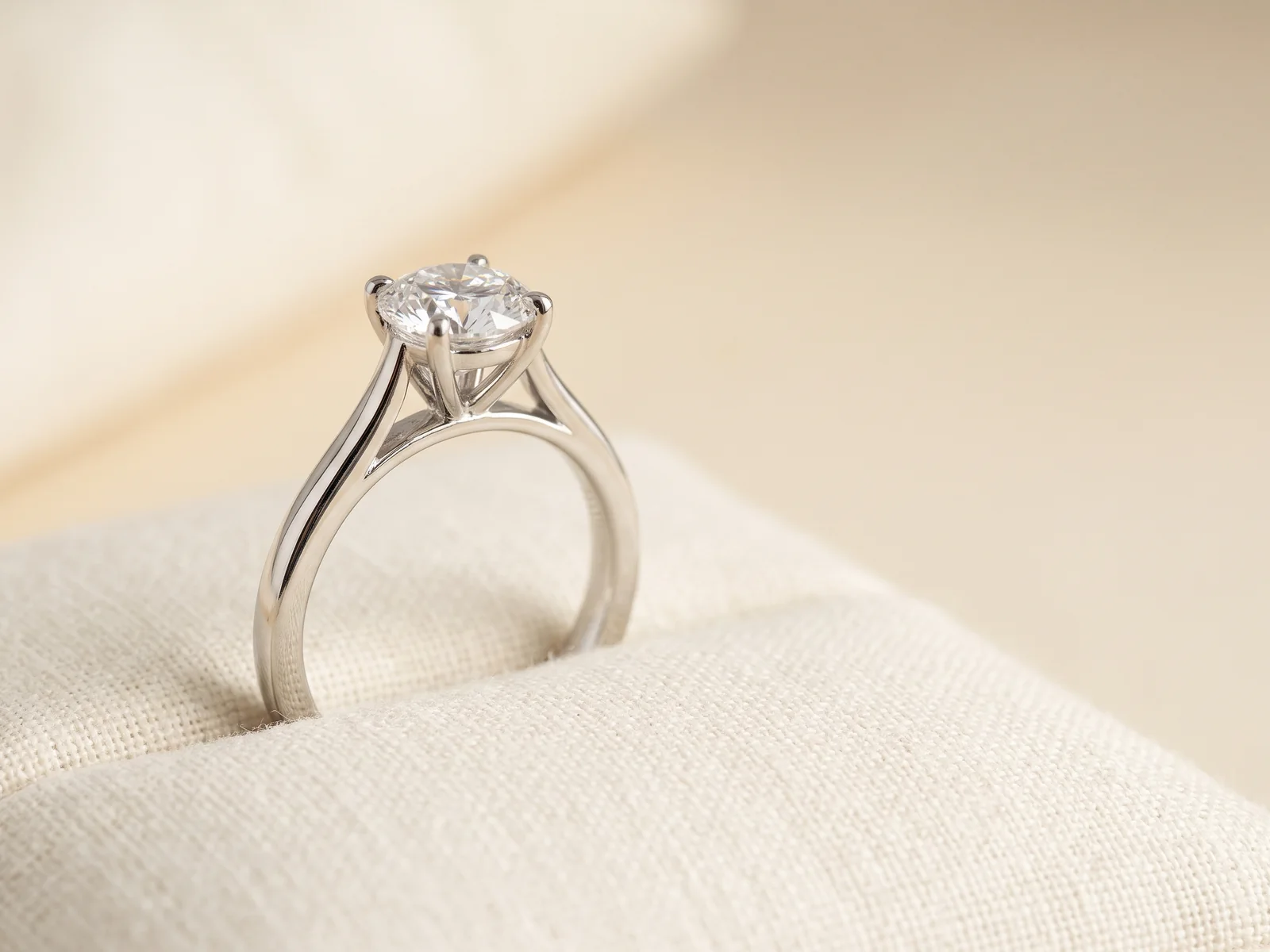
A cathedral engagement ring lifts the centre stone on graceful arches of metal, and that one design choice changes how the ring looks, how it sits beside a wedding band and how it wears over decades. Here is what to know before you choose one.
 Reviewed by Raj Sood, Graduate Gemologist (GIA), AJP (GIA)Master jeweller and Graduate Gemologist (GIA) · reviewed 4 November 2026
Quick answer
A cathedral engagement ring has two arches of metal that rise from the band to the head, so the centre stone sits cradled between them, like a cathedral's arched roof. It looks taller and more structured than a plain setting, supports the head well, and usually sits about 6–8 mm off the finger, so check wedding band fit.
What is a cathedral engagement ring?
A cathedral setting is named after the arched ceilings of Gothic cathedrals. Two curved sweeps of metal, often called the shoulders or arches, rise from the top of the band (the shank) and meet the head, the part of the ring that holds the centre stone. From the side, the head looks as if it is held up by a pair of flying buttresses rather than simply soldered on top of a flat band.
It is not a separate type of stone-holding method. A cathedral ring can still use claws, a bezel or a halo to grip the diamond. What makes it cathedral is the way the band climbs to meet the head. If you are new to setting terms, our guide to every main engagement ring setting style shows where the cathedral fits among solitaires, halos and three-stone designs, and our jewellery glossary of setting terms explains words such as gallery, shank and head.
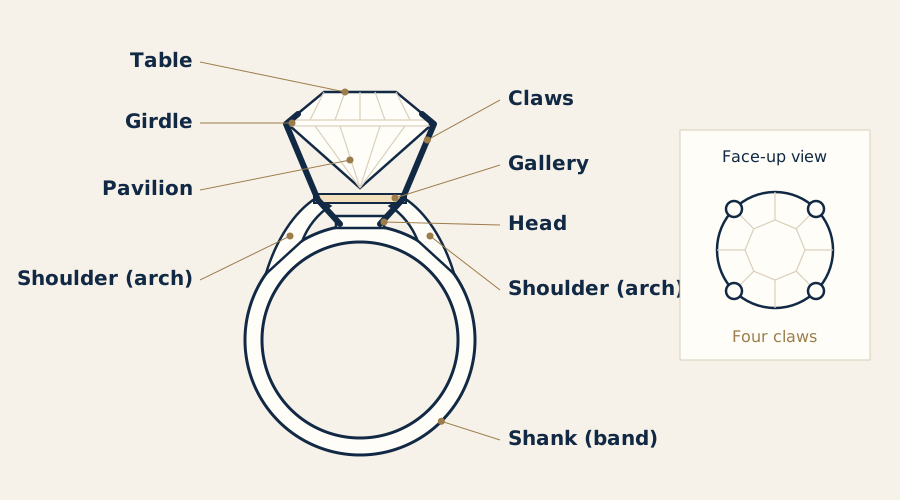
The head inside a cathedral ring can be a basket (claws joined by a horizontal rail), a trellis (claws that cross over each other in an X) or a peg head (a separate claw unit fitted into the band). Each changes how much light reaches the stone and how easy the ring is to clean; see how basket, trellis and peg heads differ for the detail.
Cathedral vs non-cathedral setting: what is the difference?
In a non-cathedral setting the band stays roughly the same height all the way round, and the head sits on top of it, joined at its base. In a cathedral setting the band rises to meet the head part-way up. That changes the look, the height and how the ring behaves beside a wedding band.
| Cathedral setting | Non-cathedral setting | |
|---|---|---|
| Side profile | Arches sweep up to the head | Flat band, head sits on top |
| Look | Taller, more structured, more formal | Cleaner, more minimal |
| Typical height (1 ct round) | about 6–8 mm finger to table | about 5.5–7 mm finger to table |
| Support for the head | Joined at the base and along the arches | Joined mainly at the base |
| Wedding band fit | Arches often leave a gap; a contoured band may be needed | A straight band usually sits closer |
| Cleaning | More nooks under the arches to trap soap and lotion | Fewer places for dirt to build up |
| Metal used | More, so usually a little more costly | Less |
Neither is more correct. Cathedral rings suit people who like a ring that looks substantial and architectural, while a plain solitaire suits those who want the diamond to do all the talking. If you want the stone right down against the finger, a flush or gypsy setting is the opposite end of the scale, and the trade-offs between tall and low rings are set out in low-profile and high-profile rings compared.
Are cathedral settings too high?
They have a reputation for being tall, but the height mostly comes from the diamond, not the arches. A 1 carat round brilliant is about 6.4 mm across and about 3.9 mm deep. Its pointed underside (the pavilion) has to sit clear of your finger, above a band that is usually 1.6–2.0 mm thick, with a little clearance for the gallery. Add those up and almost any 1 carat solitaire sits roughly 6 mm off the finger before design choices begin.
| Centre stone (round) | Approx. diameter | Low cathedral height | Classic cathedral height |
|---|---|---|---|
| 0.50 ct | about 5.1 mm | about 5–6 mm | about 6–7 mm |
| 1.00 ct | about 6.4 mm | about 6–6.5 mm | about 7–8 mm |
| 1.50 ct | about 7.3 mm | about 6.5–7 mm | about 7.5–8.5 mm |
| 2.00 ct | about 8.1 mm | about 7–7.5 mm | about 8–9 mm |
Height here means the distance from the bottom of the band (against your finger) to the top of the diamond's table. A well-made cathedral ring can be drawn quite low, with the arches rising only gently. What the arches change is how the height looks: because the metal visibly supports the head, a tall cathedral ring tends to look balanced rather than perched.
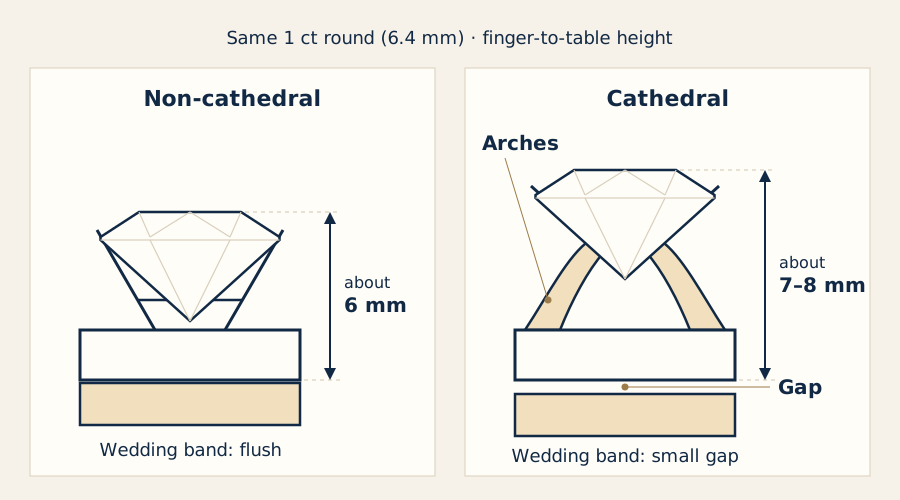
If you work with your hands, wear gloves often or have small children, a lower cathedral (around 6 mm for a 1 carat) catches less. Our guide to how setting height affects wedding band fit explains how each millimetre changes both snagging and band choice.
What cathedral setting styles can you choose?
The cathedral shape combines with almost every other ring feature. The common versions:
- Cathedral solitaire engagement ring: plain polished arches and a single centre stone. The most classic version, usually with four or six claws holding the stone.
- Pavé cathedral: small diamonds, typically 1.0–1.5 mm each, set along the top of the arches. Adds sparkle up to the head but needs more upkeep over the years.
- Cathedral ring with halo: a ring of small diamonds around the centre stone, carried on the arches. Our page on halo shapes shows round, cushion and shape-matched halos.
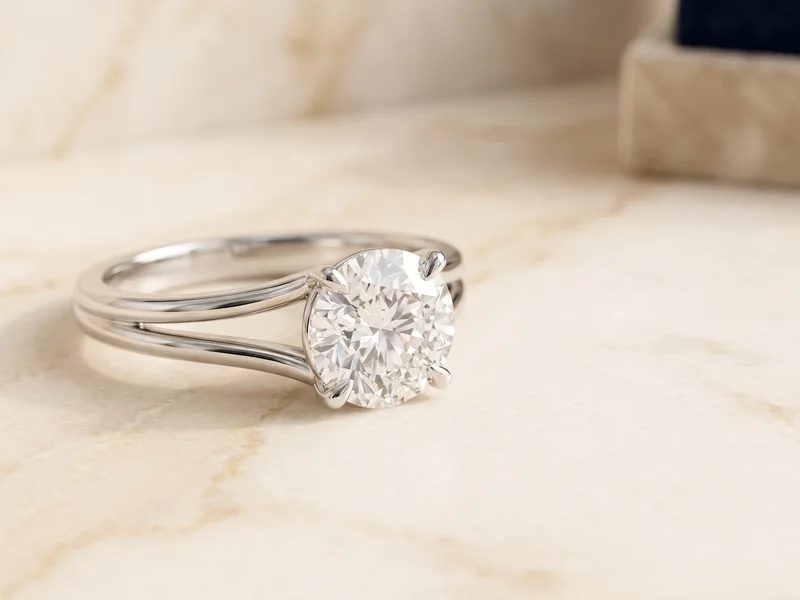
- Split shank cathedral: each shoulder divides into two thinner bands as it rises. Compare the options in our guide to split shank designs.
- Tapered cathedral: the band narrows as it climbs, so the centre stone looks larger. See tapered bands that narrow toward the head, or the reverse taper band if you want the shoulders to widen instead.
- Twisted cathedral: the arches spiral as they rise, for a softer, more romantic line; our twisted band guide covers how these are made and worn.
- Hidden-halo cathedral: a row of small diamonds tucked under the head, seen only from the side. Read more about under-gallery details such as hidden halos.
The claws themselves can be rounded, pointed, flat (tab) or V-shaped, and each meets the arches differently. Our guide to claw tip styles shows which shapes suit which stones.
Not sure which one is right?
Send us the stones you are looking at and our gemologist will tell you which to choose and why.
Which diamond shapes and gemstones suit a cathedral setting?
Rounds, ovals, cushions and pears all suit cathedral arches, because the curved metal echoes the curves of the stone. Emerald and radiant cuts work too, giving a more Art Deco feel when the arches are kept straight-edged. Marquise and pear stones need a V-claw at each point, and the arches should meet the head without crowding those claws.
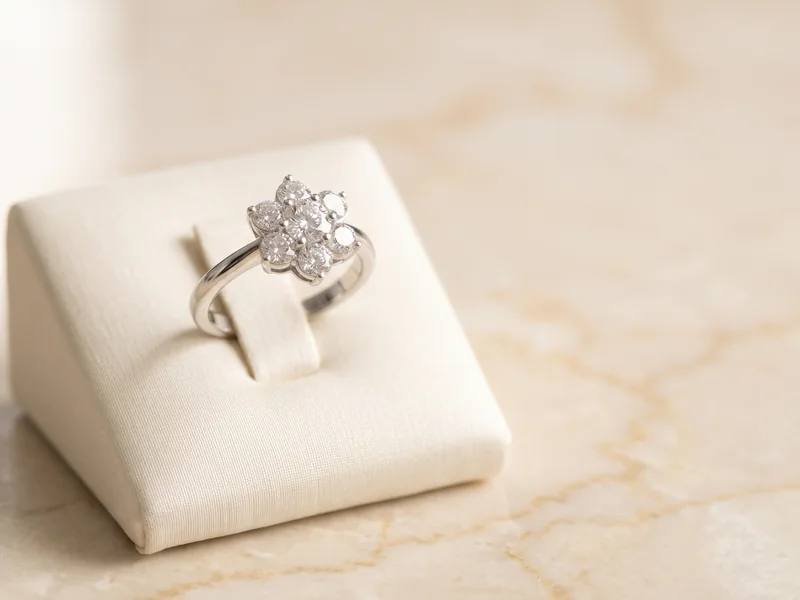
Orientation matters. Turning an oval or emerald cut sideways makes the arches meet the long side of the stone; we cover that look in east-west set ovals and emeralds. Two stones side by side, as in two-stone toi et moi rings, need a wider head and stronger arches, and a cluster ring spreads its weight across several small claws rather than one tall head.
Durability of the centre stone matters more in a taller ring, because it is more likely to take knocks. Diamond (10 on the Mohs hardness scale) and sapphire or ruby (9) are the safest choices for daily wear. Moissanite is about 9.25. Softer stones such as morganite (about 7.5–8) or emerald (about 7.5–8, and often included) are better in a lower cathedral or with a protective halo.
How does a cathedral engagement ring wear over the years?
From the workbench, cathedral rings are generally sturdy. Because the head is supported by the arches as well as at its base, the join between head and band takes less leverage when the ring is knocked than a tall head on a flat band. The wear we see over 10–20 years tends to fall in a few predictable places:
- Claw tips: the highest point of the ring wears first. In gold the metal slowly wears away; in platinum it tends to push and spread. Claws usually need re-tipping (rebuilding with new metal) at some point, often after many years of daily wear.
- Pavé on the arches: the top edge of each arch takes knocks from benches and doorframes, so small stones there are the ones most likely to loosen.
- Arch thickness: very fine arches (under about 1.5 mm) can bend if crushed. Slightly heavier arches last far longer.
- Under the arches: soap, hand cream and dust collect in the gap below the head, dulling the diamond from underneath.
- White gold colour: rhodium plating on white gold usually needs renewing every 1–2 years to keep it bright white; platinum does not need plating.
Resizing is usually simple: the band is cut and adjusted at the base, well away from the arches. One or two sizes up or down is normally fine. Pavé running down the shoulders or a split shank limits how far a ring can move without resetting stones, so tell your jeweller about likely size changes early.
Will a wedding band sit flush with a cathedral setting?
Often not with a straight band. The arches flare out where they meet the head, so a straight wedding band tends to touch the engagement ring at the base and leave a small gap higher up. Whether that matters is personal: some people like a visible gap, others want the two rings to sit tight.
- Straight band with a gap: simple, easy to resize and lets each ring be worn alone.
- Contoured or curved band: shaped to follow the arches so the two rings sit together.
- Notched band: a small cut-out lets the band slide under the head.
- Higher head: raising the gallery lets a straight band slip underneath, at the cost of a taller ring.
- Different design: a bypass design, where the band wraps around the stone, sidesteps the question altogether.
What are the pros and cons of a cathedral setting?
| Pros | Cons |
|---|---|
| Visually supports the head, so taller rings look balanced | Usually sits higher, so it can catch on gloves and knits |
| Extra structural support for the head | More metal, so it usually costs a little more |
| Draws the eye up to the centre stone | Straight wedding bands often leave a gap |
| Suits most shapes and adds presence to smaller stones | More spaces under the arches to clean |
| Works with pavé, halos, split shanks and twists | Pavé along the arches needs regular checks |
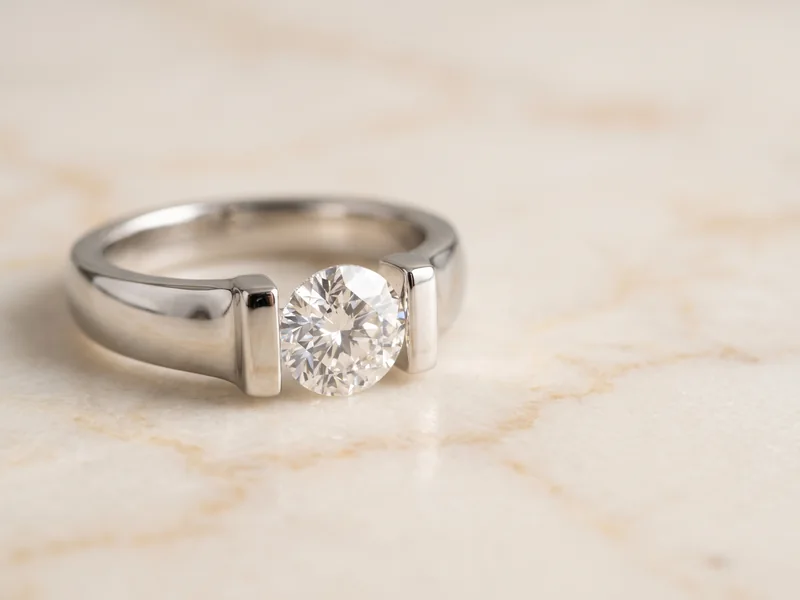
If none of the cons bother you, a cathedral is a reliable everyday choice. If you want the stone to appear to float with almost no metal around it, look at tension and suspended settings instead, keeping in mind that these place more demands on the metal and the fit.
How much does a cathedral engagement ring cost in Australia?
The setting and the centre stone are priced separately. The ranges below are for the setting only, and are broad because metal prices move and every design is different.
| Cathedral setting (no centre stone) | Approximate price range (AUD) |
|---|---|
| Plain cathedral solitaire, 18ct gold | about $1,500–$3,000 |
| Plain cathedral solitaire, platinum | about $2,500–$4,500 |
| Pavé cathedral, 18ct gold or platinum | about $2,500–$5,500 |
| Cathedral ring with halo | about $3,000–$6,500 |
A cathedral setting usually costs a little more than a comparable non-cathedral setting because the arches add metal and bench time. Platinum costs more than 18ct gold partly because it is much denser (about 21.4 g per cubic centimetre against roughly 15.5 for 18ct yellow gold), so the same ring uses more metal by weight. The centre stone usually makes up the larger part of the total; a laboratory-grown diamond costs much less than a natural diamond of the same size and grades, and both are real diamond.
Design your cathedral setting
How do you choose a cathedral engagement ring? Step by step
- Choose the centre stone first. Its shape and millimetre size set the head size and the minimum height of the ring.
- Decide on height. Ask for the finger-to-table measurement; around 6 mm for a 1 ct round is low, 7–8 mm is classic.
- Pick the arch style. Plain, pavé, split, tapered or twisted, keeping everyday wear in mind.
- Check arch thickness. Arches of about 1.5 mm or more stand up to knocks better than very fine ones.
- Plan the wedding band now. Try a straight band against the setting and decide on a gap, a contoured band or a higher head.
- Choose the metal. Platinum does not need plating; white gold needs rhodium renewed every 1–2 years.
- Review a CAD render. Look at the side profile and the under-gallery before the ring is cast.
- Book regular checks. Have claws and any pavé looked at every 6–12 months.
Free consultation
Talk to a gemologist
Compare stones in person or online with Raj Sood, Graduate Gemologist (GIA), AJP (GIA).
Book a consultationShop this shape
FAQ
Common questions
What is the difference between a cathedral and a non-cathedral setting?
In a cathedral setting the band rises in two arches to meet the head, while in a non-cathedral setting the head sits on top of a flat band. Cathedral rings look taller and more structured; non-cathedral rings look more minimal and usually sit closer to a straight wedding band.
Are cathedral settings too high for everyday wear?
Not usually. Much of a ring's height comes from the depth of the diamond, and a cathedral can be drawn low, around 6 mm for a 1 carat round. If you work with your hands, ask for a low cathedral or a smaller centre stone.
Can you wear a straight wedding band with a cathedral engagement ring?
Yes, but there is often a small gap between the rings near the head. A contoured or notched band closes that gap if you want the two rings to sit together.
Is a cathedral setting more secure?
The arches support the head along its sides as well as at its base, which helps the head resist knocks. The stone is only as secure as its claws, though, so regular checks still matter.
Can a cathedral engagement ring be resized?
Usually yes, by one or two sizes, because the band is adjusted at the base away from the arches. Pavé down the shoulders or a split shank can limit how far it can be resized.
Does a cathedral setting make a diamond look bigger?
It does not change the diamond's face-up size, but the arches lead the eye to the centre stone and give the ring more presence. A tapered band or halo adds to that effect.

Ask a gemologist
Not sure which diamond to choose?
Raj Sood is a Graduate Gemologist (GIA) and master jeweller. Bring the stones you are considering, or send the reports, and he will tell you honestly which one is better and why.
Keep learning
Related guides
 Engagement Rings & SettingsSetting Height and Wedding Band FitEngagement Rings & SettingsLow-Profile vs High-Profile Engagement RingsEngagement Rings & SettingsEngagement Ring Setting Styles GuideEngagement Rings & SettingsBasket vs Trellis vs Peg Head Settings
 Engagement Rings & SettingsCluster Engagement RingsEngagement Rings & SettingsBypass Engagement Rings
 Engagement Rings & SettingsSplit Shank Engagement Rings
 Engagement Rings & SettingsTension and Suspended Settings
Explore more
More guides on this topic
Education