
Gemstones
Pink Sapphire: The Complete Gemstone Guide
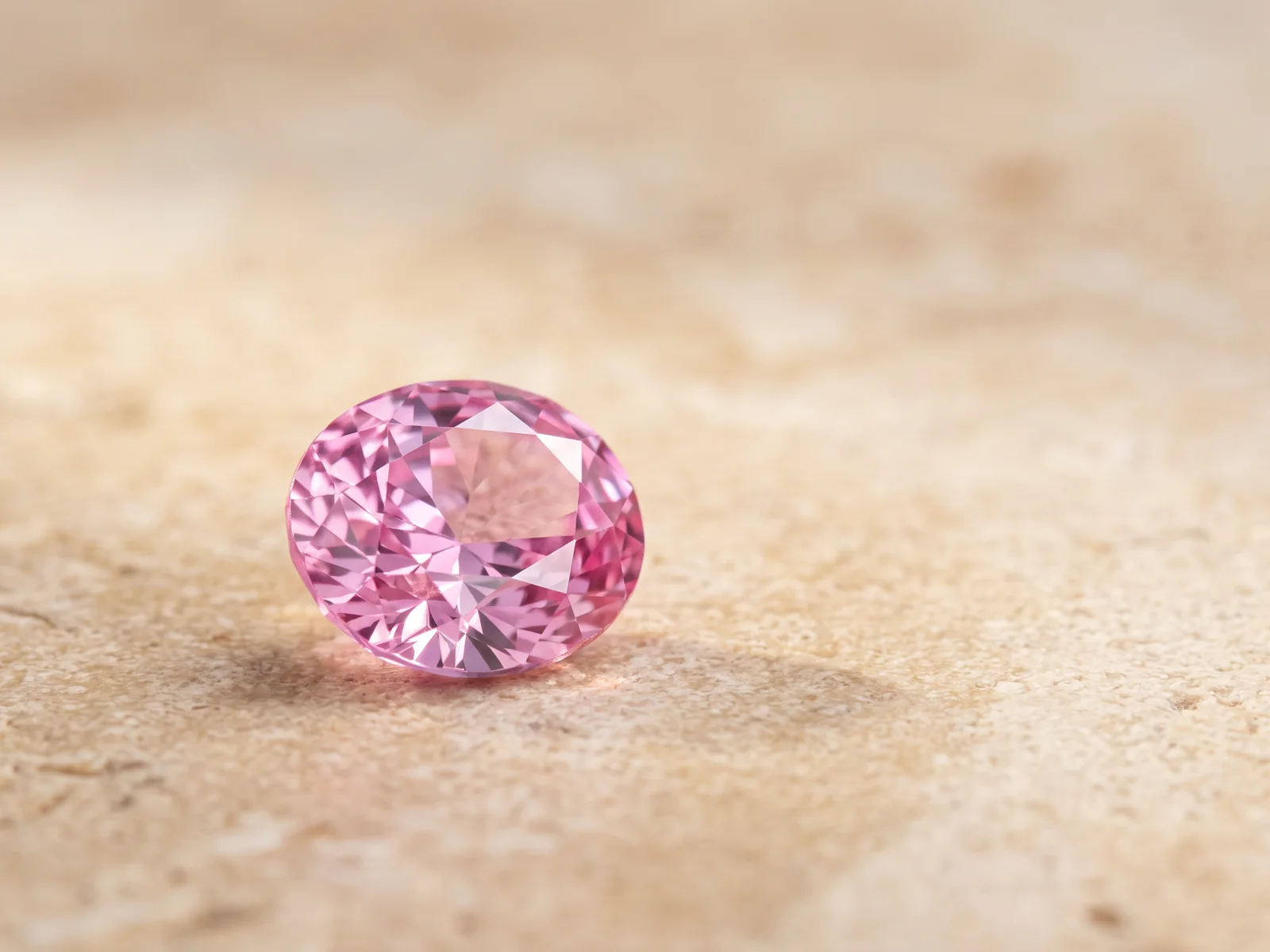
A pink sapphire gives you the colour of a pink diamond with the toughness of corundum, at a fraction of the price. Here is how to read its colour, spot treatments and choose a stone that will last in a ring.
 Reviewed by Raj Sood, Graduate Gemologist (GIA), AJP (GIA)Master jeweller and Graduate Gemologist (GIA) · reviewed 4 November 2026
Quick answer
A pink sapphire is pink corundum, the same mineral as ruby and blue sapphire, coloured by traces of chromium. It rates 9 on the Mohs scale with excellent toughness, so it suits everyday engagement rings. Most are heated. Value depends on colour saturation, origin, treatment, clarity and size; lab-created versions cost far less.
What is a pink sapphire?
A pink sapphire is a variety of corundum, a crystal of aluminium oxide (Al2O3). Pure corundum is colourless. Tiny amounts of chromium, a trace element, replace some of the aluminium in the crystal and absorb green and yellow light, so the stone looks pink. Add more chromium and the colour moves towards red, which is where ruby begins.
Every colour of corundum except red is sold as sapphire, which is why the family includes blue, yellow, green sapphire, purple sapphire and orange sapphire. Our sapphire family guide covers the whole range, and pink is one of the most requested of all the coloured gemstones we set.
For a gemmologist, pink sapphire is easy to place in the family: a refractive index (how strongly it bends light) of about 1.762–1.770, a specific gravity (density compared with water) of about 4.00, and dichroism, meaning it shows two slightly different shades of pink when viewed from different directions. Those numbers are identical in natural and lab-created stones, which is why identification takes more than a refractometer.
What colours do pink sapphires come in?
Pink sapphire runs from almost-white blush to a deep magenta. Three things describe any colour: hue (the basic colour), tone (how light or dark) and saturation (how strong or pure). In pink sapphire, saturation matters most to value.
| Trade description | Hue and tone | What to know |
|---|---|---|
| Baby or pastel pink | Pure pink, light tone, low saturation | Soft and pretty; usually the most affordable natural pinks |
| Bubblegum pink | Pure pink, medium-light tone | A popular engagement ring colour; shows well in white and rose gold |
| Hot pink | Pink, medium tone, high saturation | The most sought-after range; can border on ruby |
| Purplish or magenta pink | Pink with a purple secondary hue | Can shift more purple in shade and warm light |
| Orangey pink | Pink with an orange secondary hue | Close to the padparadscha zone; priced accordingly |
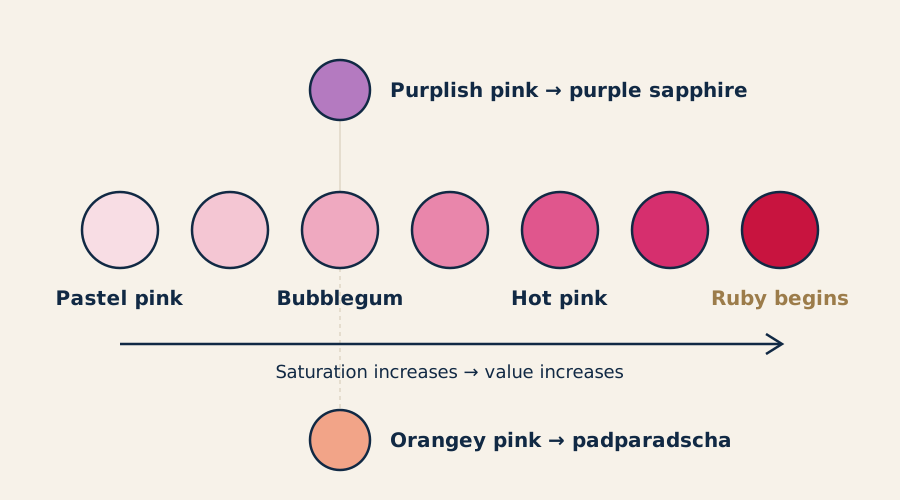
At the orange edge, a stone with a delicate balance of pink and orange may be called padparadscha, a separate and pricier trade name. At the purple edge, once purple dominates, it is sold as purple sapphire. Labs judge the dominant hue, so two stones that look similar in a photo can carry different names on their reports.
Pink sapphire vs ruby: where is the line?
Ruby and pink sapphire are the same mineral with the same colouring element, so the dividing line is a matter of colour judgement. GIA and most Western labs call a stone ruby only when red is the dominant hue at medium to dark tone. A lighter or less saturated stone is pink sapphire.
The grey zone is hot pink. Some dealers, particularly in parts of Asia, describe strongly saturated pinks as ruby, while another lab may call the same stone pink sapphire. Neither is wrong as such, but the name changes the price. If a ruby looks quite pink to you, ask which lab issued the report and how it describes the colour.
Pink sapphire is also often compared with pink diamonds. They look similar from a distance, but a natural pink diamond is far rarer and costs many times more per carat. Diamond shows more white sparkle and fire; pink sapphire shows richer, steadier body colour.
Is pink sapphire hard enough for an engagement ring?
Yes. Wearability depends on two properties. Hardness (resistance to scratching) is measured on the Mohs scale, and corundum sits at 9, below only diamond at 10. Toughness (resistance to chipping and breaking) is rated excellent for corundum, because it has no true cleavage, the flat planes along which some gems split. It can show parting, a weakness along twinning planes, but this is uncommon in well-chosen stones.
| Pink gem | Mohs hardness | Toughness | Everyday ring? |
|---|---|---|---|
| Pink diamond | 10 | Good (has cleavage) | Yes |
| Pink sapphire | 9 | Excellent | Yes |
| Pink spinel | 8 | Good | Yes, with some care |
| Morganite | 7.5–8 | Good | Yes, with care; scratches over time |
| Pink tourmaline | 7–7.5 | Fair | Better in pendants or occasional rings |
| Kunzite | 6.5–7 | Poor (strong cleavage) | Not recommended for daily rings |
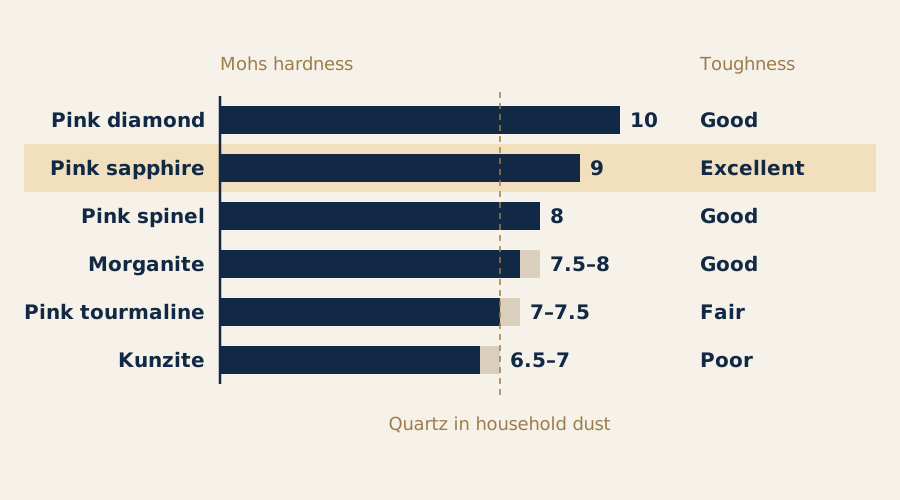
Household dust contains quartz, which is 7 on the Mohs scale. Anything softer than 7 will slowly lose its polish from everyday wear. Pink sapphire is well above that, which is why it keeps its facet edges crisp for decades. If you are weighing it against a softer pink stone, our morganite vs pink sapphire comparison goes through colour, price and wear side by side, and choosing between diamond or sapphire for an engagement ring covers the bigger decision.
Related guideMorganite vs Pink SapphireNot sure which one is right?
Send us the stones you are looking at and our gemologist will tell you which to choose and why.
Are pink sapphires treated?
Most are. Treatment is normal in the coloured gem trade and is not a problem in itself, as long as it is disclosed and you pay a price that reflects it. The common treatments in pink sapphire are:
| Treatment | What it does | Stability | Effect on value |
|---|---|---|---|
| Heat only | Improves colour and clarity, dissolves some silk | Permanent | The standard; priced as normal |
| No treatment (unheated) | Colour is as mined | Permanent | Commands a premium with a report |
| Beryllium diffusion | Beryllium heated into the stone to shift or add colour | Generally stable, but must be disclosed | Much lower than heat-only |
| Fracture or glass filling | Fills surface-reaching fractures to improve clarity | Can be damaged by heat, acids and ultrasonic cleaning | Much lower; less common in pink |
Heat evidence includes altered silk (fine needle-like rutile inclusions that look broken or dotted) and small disc-shaped fractures around crystals. Beryllium diffusion is harder to detect: it was widely used on pink and orange corundum from the early 2000s, and confirming it usually needs chemical analysis at a major lab. That is one reason a report from GIA or another respected lab matters for any valuable pink sapphire.
Where do pink sapphires come from?
Pink sapphire forms where chromium is present and silica is scarce, so it comes from a handful of regions:
- Madagascar: the largest modern source, especially around Ilakaka, with a wide range from pastel to hot pink.
- Sri Lanka: a historic source of bright, lighter pinks, often with fine silk.
- Myanmar (Burma): Mogok produces vivid pinks with strong red fluorescence, close to ruby in look.
- Tanzania and Mozambique: East African deposits supply pink, purple-pink and orangey-pink stones.
- Vietnam: Luc Yen produces pink and purplish-pink stones alongside ruby and spinel.
Australia is one of the world's great sapphire countries, but our fields in the New England region of New South Wales and the Central Queensland gemfields mostly produce blue, green, yellow and parti-coloured stones. Pink is rare from Australian deposits. If you want an Australian stone, look at Australian-mined sapphire rings, teal sapphire engagement rings or a parti sapphire, which show two or more colours in one stone.
Origin affects price mainly at the top end, where a report may state it. For most buyers, the colour in front of you matters far more than the country on the paperwork.
What affects the value of a pink sapphire?
Value is driven by the same factors as other coloured gems, roughly in this order:
- Colour: a strong, pure pink at medium tone sits at the top. Pastel, greyish or very purple stones sit lower.
- Treatment: unheated is premium; heated is standard; beryllium-diffused or filled stones sit well below.
- Clarity: pink sapphire usually has some inclusions. Aim for eye-clean, meaning nothing obvious at normal viewing distance.
- Cut: coloured stones are cut to save weight, so look for even colour and a bright face, not a dark or washed-out centre (a window).
- Carat: fine pinks above 2 carats are scarce, so price per carat rises sharply with size.
| Type | Approximate price per carat (AUD) |
|---|---|
| Lab-created pink sapphire | A$50–400 per finished stone |
| Beryllium-diffused pink | A$100–500 |
| Light pink, heated, commercial quality | A$300–1,000 |
| Medium to strong pink, heated, eye-clean | A$1,000–3,000 |
| Vivid hot pink, heated, 1–2 ct | A$2,500–6,000 |
| Fine unheated pink with lab report | A$4,000–12,000+ |
These are broad ranges and move with the market. Remember sapphire is denser than diamond, so a 1 carat round pink sapphire measures about 6.0 mm, a little smaller than a 1 carat round diamond at about 6.4 mm. Shop by millimetres as well as carats.
Natural vs lab-created pink sapphire: how can you tell?
Lab-created (synthetic) pink sapphire is real corundum grown in a laboratory, with the same hardness, refractive index and density as a natural stone. It is not fake; it is simply not mined, and it costs a small fraction of the price. It must always be sold as lab-created or synthetic, never just as pink sapphire.
Telling them apart is microscope work. The cheapest lab-created stones are made by flame fusion and often show curved growth lines (curved striae) and round gas bubbles. Flux-grown stones can show wispy, fingerprint-like flux residue that resembles natural inclusions, which is where an experienced eye or a lab report is needed. Natural stones show straight, angular colour zoning, silk and mineral crystals.
Raj, our Graduate Gemologist (GIA), checks every coloured stone under magnification before it is set, and for higher-value pinks we rely on an independent lab report for treatment and origin.
Browse natural gemstones in our stock
Pink sapphire engagement rings: metals and settings
Metal colour changes how pink reads. Rose gold warms pastel pinks and makes them look richer. White gold and platinum keep hot pinks crisp and cool. Yellow gold suits orangey pinks but can make purplish stones look muddy.
- Four or six claws: let in the most light, which helps lighter pinks show colour.
- Bezel: a rim of metal around the stone; very secure and good for active hands.
- Diamond halo: frames the colour and makes a modest stone look larger.
- Three-stone: a pink centre with white diamond sides, or pink sides around a diamond.
See our sapphire engagement rings made in Melbourne for design ideas, teal versus blue sapphire if you are still deciding on colour, and how emerald compares with sapphire for a softer alternative.
How to choose and care for a pink sapphire: step by step
- Pick your colour range. Decide between pastel, bubblegum, hot pink or a purple or orange lean, and view stones in more than one light.
- Ask about treatment. Heated, unheated, beryllium-diffused or filled? It should be written on the invoice or report.
- Check for a report. For stones above about A$3,000, ask for an independent lab report covering treatment and natural origin.
- Look at clarity and cut. Choose eye-clean, with even colour across the face and no washed-out window in the centre.
- Compare by millimetres. Sapphire is dense, so match face-up size to your setting rather than carat alone.
- Clean it simply. Warm water, mild dish soap and a soft toothbrush. Heated stones handle ultrasonic cleaning; fracture-filled stones should never go in one.
- Have the claws checked. Bring the ring in every 12 months so claws and bezels can be inspected before a stone works loose.
Unfamiliar with a term on a report? Our jewellery glossary explains it in plain English.
Free consultation
Talk to a gemologist
Compare stones in person or online with Raj Sood, Graduate Gemologist (GIA), AJP (GIA).
Book a consultationShop this shape
FAQ
Common questions
Is pink sapphire a real sapphire?
Yes. Pink sapphire is corundum, the same mineral as blue sapphire and ruby, with chromium giving the pink colour. Lab-created pink sapphire is also corundum, but it must be sold as lab-created or synthetic.
Is pink sapphire good for an everyday engagement ring?
Yes. At 9 on the Mohs scale with excellent toughness, it handles daily wear very well. A secure setting and a yearly claw check are all it needs.
What is the difference between pink sapphire and ruby?
They are the same mineral. A stone is called ruby when red dominates at medium to dark tone; lighter or less saturated stones are pink sapphire, and the boundary varies slightly between labs.
How much does a pink sapphire cost in Australia?
Roughly A$300 to A$3,000 per carat for heated natural stones in commercial to good quality, and more for vivid or unheated stones with a report. Lab-created pink sapphires usually cost a few hundred dollars or less.
Do pink sapphires fade?
Heated and unheated pink sapphires keep their colour permanently. Fracture-filled stones can be damaged by heat or chemicals, which is why treatment disclosure matters.
Is pink sapphire cheaper than a pink diamond?
Much cheaper. Natural pink diamonds are extremely rare and cost many times more per carat than even fine pink sapphire.

Ask a gemologist
Not sure which diamond to choose?
Raj Sood is a Graduate Gemologist (GIA) and master jeweller. Bring the stones you are considering, or send the reports, and he will tell you honestly which one is better and why.
Keep learning
Related guides
 GemstonesMorganite vs Pink Sapphire
 GemstonesSapphire Gemstones
 GemstonesPadparadscha Sapphire
 GemstonesDiamond vs Sapphire Engagement RingsGemstonesGemstones | Coloured Gemstones, Birthstones and Custom Jewellery
 Fancy Colour DiamondsPink Diamonds
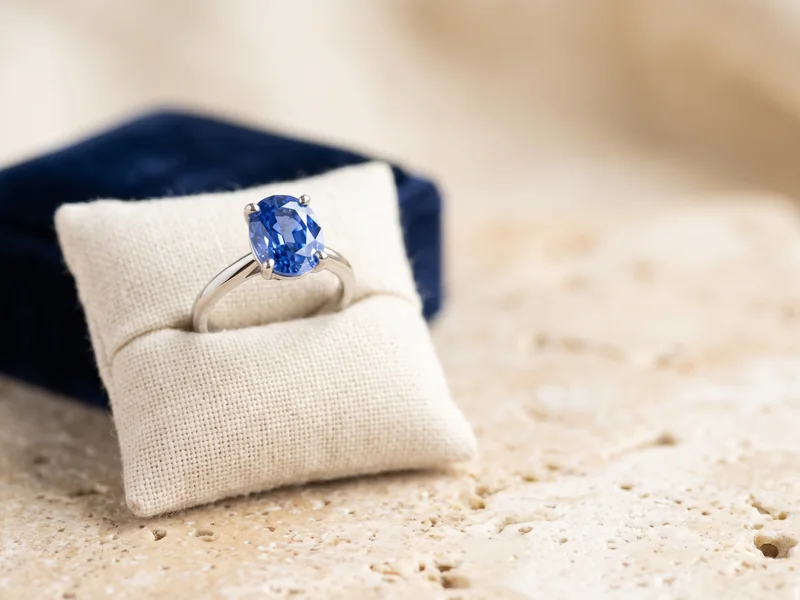 GemstonesSapphire Engagement Rings in Melbourne
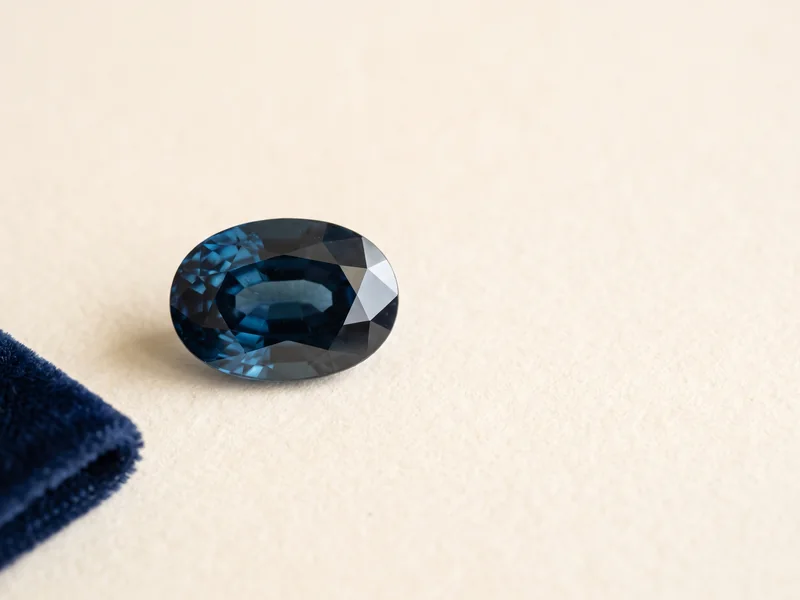 GemstonesAustralian Sapphire Engagement Rings
Explore more
More guides on this topic
Education