
Gemstones
Rare Gemstones Guide: Collector Stones, Origins, Value and Wear
Rare gemstones reward careful buyers and punish hasty ones. Here is what makes a collector stone rare, which species and colours matter, how hard each one really is, and what to check before one goes into a ring.
 Reviewed by Raj Sood, Graduate Gemologist (GIA), AJP (GIA)Master jeweller and Graduate Gemologist (GIA) · reviewed 4 November 2026
Quick answer
Rare gemstones are species or colours found in very small quantities, such as alexandrite, padparadscha sapphire, Paraíba tourmaline, demantoid garnet, red spinel, benitoite and taaffeite. Value depends on colour, clarity, size, treatment and origin. For rings, choose stones of Mohs 7.5 or harder with good toughness, like spinel, alexandrite or padparadscha; keep softer collector stones for pendants.
What are rare gemstones, and what makes a stone collectable?
Gemstone rarity comes in three kinds. Some species (the mineral itself) are rare everywhere: benitoite, taaffeite, musgravite and painite are known from only a handful of deposits worldwide. Others are common species in a rare colour or chemistry: a pinkish-orange padparadscha is a rare colour of sapphire, and a copper-bearing neon Paraíba is a rare type of tourmaline. And some are rare only in fine, clean sizes over a carat or two, such as demantoid garnet or alexandrite with a strong colour change. If you are new to coloured stones, our guide to coloured gemstones and birthstones covers the familiar species first.
A few terms come up constantly. A variety is a named colour or type within a species: ruby and sapphire are both varieties of corundum. Hardness is resistance to scratching on the Mohs scale of 1 to 10, while toughness is resistance to chipping and breaking. Refractive index (RI) measures how strongly a stone bends light, and it is one of the main numbers used to identify a gem. Our page on hardness, refractive index and density for each gem lists them in full, and any unfamiliar word is explained in the glossary of jewellery terms.
Rarity alone does not set value. A dark, heavily included taaffeite is rarer than a fine sapphire and can be worth far less, because buyers still pay most for colour, clarity and size. The stones in this guide are the ones where rarity and beauty overlap, and where a collector gemstone can realistically be worn as well as kept in a box.
Which rare gemstones do collectors look for?
| Gem | Species | Colour range | Main sources |
|---|---|---|---|
| Alexandrite | Chrysoberyl | Green to bluish-green in daylight, red to purplish-red under warm light | Russia, Sri Lanka, Brazil, India, East Africa |
| Padparadscha | Corundum (sapphire) | Pinkish-orange to orangey-pink, soft and pastel | Sri Lanka, Madagascar, Tanzania |
| Paraíba tourmaline | Elbaite tourmaline (copper-bearing) | Neon blue, blue-green, green, violet | Brazil, Nigeria, Mozambique |
| Demantoid | Andradite garnet | Yellowish-green to emerald green | Russia, Namibia, Madagascar |
| Tsavorite | Grossular garnet | Light to deep green | Kenya, Tanzania |
| Red and cobalt spinel | Spinel | Hot pink, red, vivid blue | Myanmar, Tajikistan, Tanzania, Sri Lanka, Vietnam |
| Benitoite | Barium titanium silicate | Blue to violet-blue | San Benito County, California |
| Taaffeite and musgravite | Beryllium magnesium aluminium oxides | Lavender, mauve, greyish-violet | Sri Lanka, Myanmar, Tanzania |
| Red beryl | Beryl | Raspberry red to purplish red | Wah Wah Mountains, Utah |
| Grandidierite | Grandidierite | Bluish-green to greenish-blue | Madagascar, Sri Lanka |
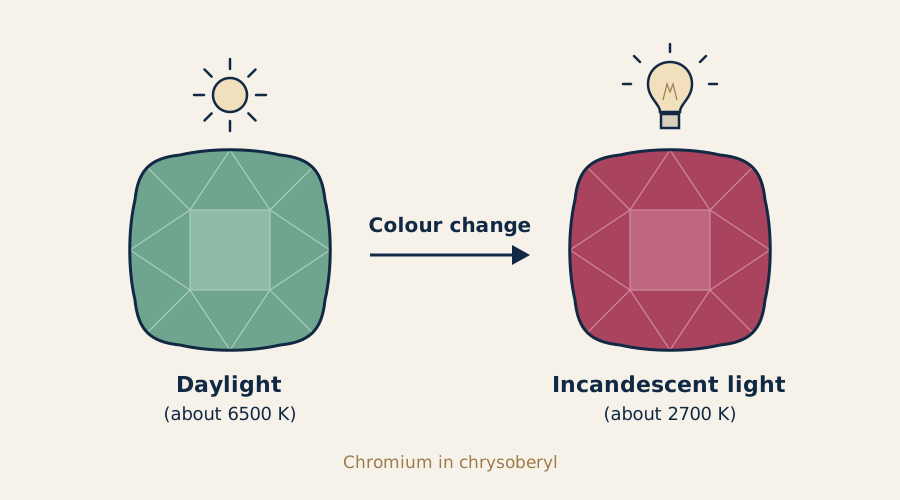
Alexandrite is the classic collector stone. Traces of chromium make it absorb light in a way that looks green in daylight and red under incandescent light, a colour change named after Tsar Alexander II after the stone was found in Russia's Ural Mountains in the 1830s. The strength of that change, often described by dealers as a percentage and by labs as weak to strong, drives most of its value. It is one of several colour change, play-of-colour and other optical effects that collectors prize.
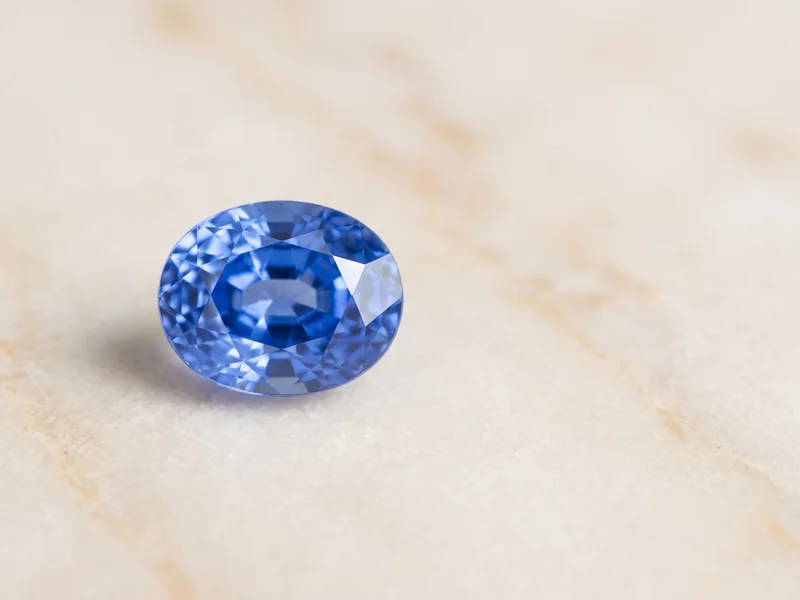
Padparadscha sapphire takes its name from the Sinhalese word for the lotus blossom. It must show both pink and orange together; a stone that is clearly pink or clearly orange is sold as pink or orange sapphire. Its hardness is the same as any corundum, Mohs 9, so our page on sapphire colours, grades and treatments applies to it too.
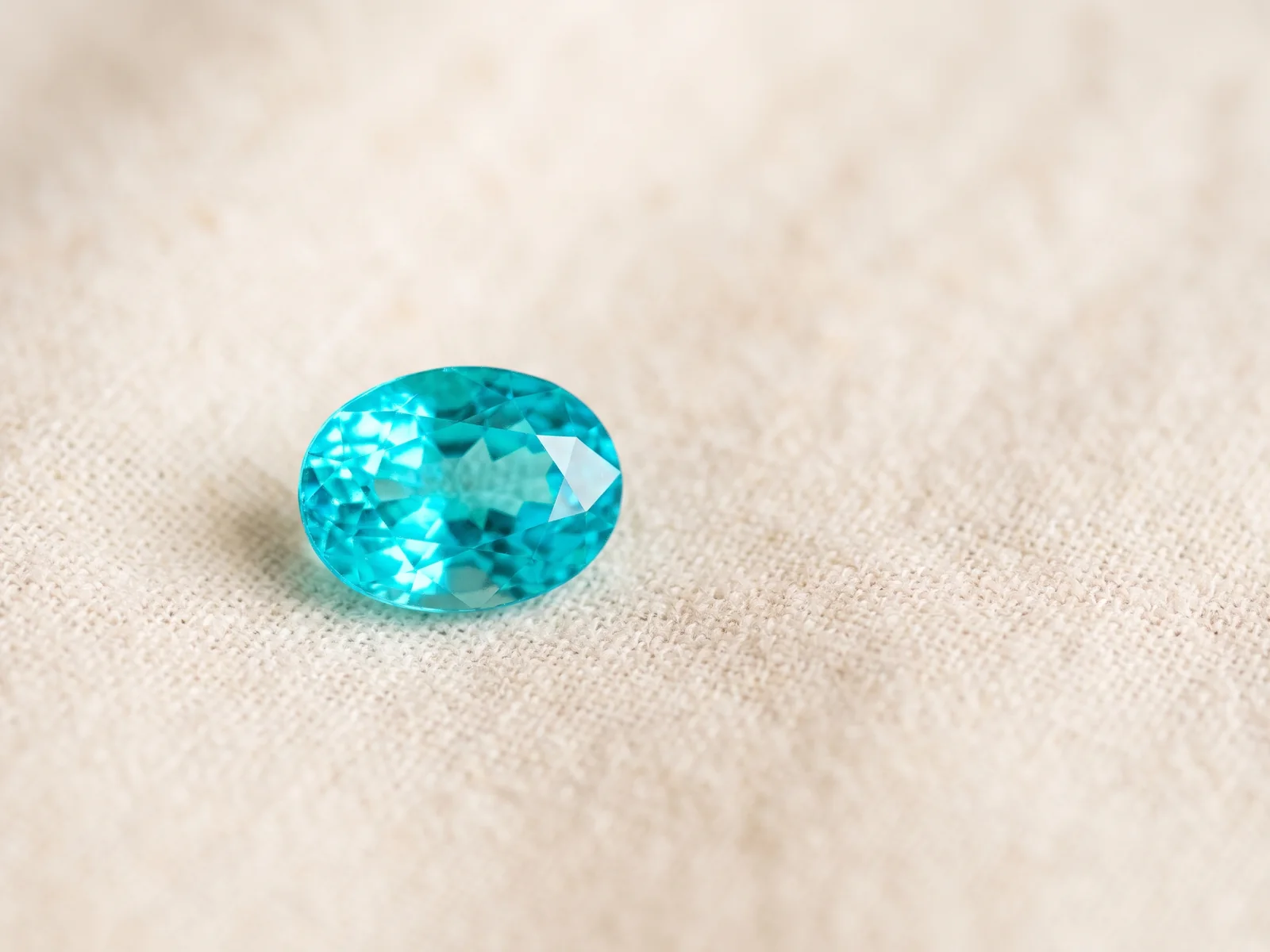
Paraíba tourmaline was found in the Brazilian state of Paraíba in the late 1980s. Copper gives it a glowing, almost electric blue-green no other tourmaline shows. The name is now used as a trade term for copper-bearing tourmaline from Brazil, Nigeria or Mozambique, so a report should say both that copper is present and where the stone is believed to come from.
Demantoid has a dispersion (the splitting of white light into spectral colours) of 0.057, higher than diamond's 0.044, so a well-cut demantoid shows strong fire. Spinel was long mistaken for ruby: the Black Prince's Ruby in the British Imperial State Crown is a red spinel. Our guides explain how ruby compares with red spinel and why gemmologists rate spinel as a hard-wearing ruby alternative.
Which rare gemstones come from Australia?
Australia has its own collector stones, and a few of them are found almost nowhere else in gem quality.
- Black opal: mined mainly around Lightning Ridge in New South Wales. A dark body tone behind the play-of-colour (flashes of spectral colour from tiny silica spheres) makes the colours look intense. Fine black opal is one of the most sought-after opal types.
- Boulder opal: from western Queensland, around Winton and Quilpie. Thin veins of opal sit naturally in ironstone, which acts as a dark backing.
- Australian sapphire: from Anakie in central Queensland and the New England region of New South Wales around Inverell and Glen Innes. Parti sapphires, which show two or more colours such as blue, green and yellow in one stone, are a local speciality.
- Chrysoprase: an apple-green chalcedony coloured by nickel, mined near Marlborough in Queensland.
- Musgravite: named after the Musgrave Ranges in South Australia, where it was first described in 1967. Gem-quality crystals have since come mostly from Sri Lanka and Myanmar.
- Argyle pink diamonds: not a coloured gemstone, but the most famous Australian rarity. The Argyle mine in Western Australia closed in 2020.
For Australian opal and sapphire, ask the seller to state the field or region. Origin rarely changes the price of opal the way it does for sapphire, but it is part of the story collectors want recorded.
How hard and tough are rare collector gemstones?
Everyday dust contains quartz, which is about 7 on the Mohs scale. Anything softer than 7 will slowly lose its polish if worn daily, and a stone with poor toughness can chip even if it is hard. That is why hardness and toughness have to be read together. Our Mohs hardness guide for every gem explains the scale in detail.
| Gem | Mohs hardness | Toughness | Daily ring wear? |
|---|---|---|---|
| Padparadscha sapphire | 9 | Excellent | Yes |
| Alexandrite | 8.5 | Excellent | Yes |
| Spinel | 8 | Good | Yes |
| Taaffeite / musgravite | 8–8.5 | Good (limited data) | Yes, with a protective setting |
| Red beryl | 7.5–8 | Fair; usually included | Occasional wear |
| Tsavorite | 7–7.5 | Good | Yes, with care |
| Paraíba tourmaline | 7–7.5 | Fair | Occasional wear or protective setting |
| Grandidierite | 7–7.5 | Fair | Occasional wear |
| Demantoid | 6.5–7 | Fair to good | Occasional wear, pendants, earrings |
| Benitoite | 6–6.5 | Fair | Pendants and earrings |
| Black and boulder opal | 5.5–6.5 | Poor to fair | Pendants, earrings, protective bezel for rings |
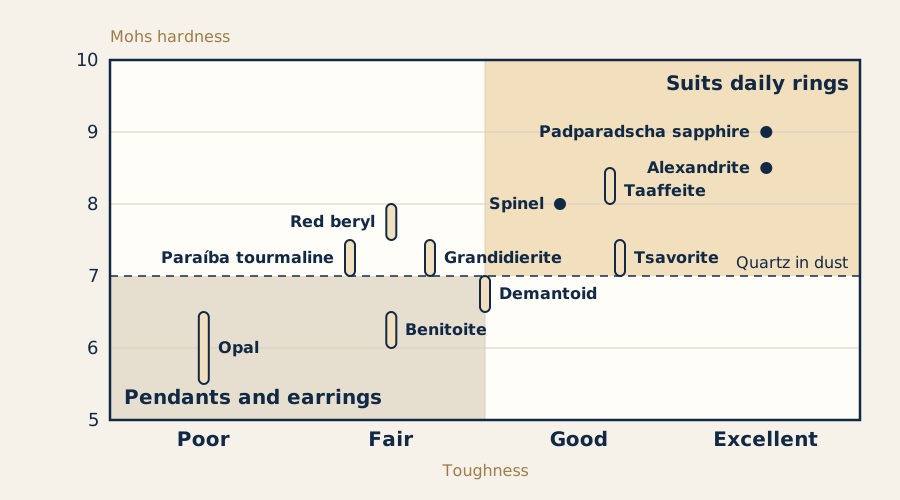
The short version: padparadscha, alexandrite and spinel are the collector stones that genuinely suit a daily ring. Tsavorite works with some care. Paraíba, demantoid, benitoite and opal are better in pieces that do not take knocks. Our guide to which gems survive everyday ring wear compares these with diamond, ruby and the common birthstones.
Not sure which one is right?
Send us the stones you are looking at and our gemologist will tell you which to choose and why.
Are rare collector gemstones treated?
Many coloured stones are treated to improve colour or clarity, and treatment has a large effect on the value of rare stones. Treatments must be disclosed. The usual picture:
- Padparadscha: heating is common and accepted. Beryllium diffusion, where heat drives beryllium into the crystal to create orange colour, has been used to imitate padparadscha and must be disclosed; it lowers value sharply.
- Paraíba tourmaline: often heated to remove purple tones and brighten the blue. Some stones are clarity-enhanced with oil or resin.
- Red beryl: fractures are often filled with oil or resin, much like the oil and resin filling used in emerald.
- Alexandrite, spinel, tsavorite: usually untreated, though heated spinel is occasionally seen.
- Demantoid: sometimes heated to reduce brown tones.
- Opal: doublets and triplets glue a thin slice of opal to a backing (and, for triplets, a clear cap). Some opal is dyed or smoke-treated to darken the body. These must be disclosed.
Several collector stones are also made in laboratories. Lab-created alexandrite, synthetic spinel, lab-created sapphire in padparadscha colours and lab-created opal all exist; most have essentially the same chemistry as natural stones, though lab-created opal often contains resin. They are genuine materials, not glass, and cost a fraction of natural, but they must always be sold as lab-created or synthetic. A natural rare stone and its lab-created version are different products with very different prices, which is why identification matters so much.
How do gemmologists identify a rare gemstone and its origin?
Most rare stones have look-alikes, and some fakes are convincing. These are the checks a gemmologist runs first:
| Gem | Key identification check |
|---|---|
| Alexandrite | View under daylight-equivalent and warm incandescent light; check RI 1.746–1.755. Lab-created stones may show curved growth lines or flux inclusions. |
| Red spinel | Singly refractive (light passes through without splitting), RI about 1.718. Ruby is doubly refractive, RI 1.762–1.770, so a polariscope separates them quickly. |
| Taaffeite | RI about 1.717–1.724, close to spinel, but doubly refractive. This is how Count Taaffe spotted the first one in a parcel of spinels in 1945. |
| Demantoid | High RI (about 1.88) and fine fibrous horsetail inclusions, which are typical of Russian stones but also occur in some Italian and Iranian material, so they suggest rather than prove origin. |
| Benitoite | Strong blue fluorescence under short-wave ultraviolet light; strong pleochroism (different colours in different directions). |
| Paraíba tourmaline | Standard tests confirm tourmaline; copper content needs a lab using chemical analysis such as LA-ICP-MS or EDXRF. |
| Padparadscha | Lab testing checks for beryllium diffusion and records the colour as padparadscha or not. |
Origin is harder. A gemmologist can sometimes suggest it from inclusions, but a confident origin opinion comes from a laboratory such as GIA, SSEF, Gübelin or AGL, combining inclusions, spectroscopy and trace-element chemistry. Origin matters most for Paraíba, padparadscha, alexandrite and demantoid. Our page on how labs work out where a gemstone was mined explains the methods and their limits. For any expensive collector stone, an independent report is the starting point, not an optional extra.
How much are rare gemstones worth?
The same factors apply across rare collector gemstones, in roughly this order:
- Colour: saturation and tone matter most. For alexandrite, the strength of the colour change; for Paraíba, the neon glow.
- Treatment: untreated stones command more, especially in sapphire and spinel. Diffusion or heavy filling lowers value a lot.
- Size: many collector stones are rarely found clean above 1–2 carats, so price per carat rises steeply with size.
- Clarity: judged against what is normal for the species; Paraíba and red beryl are usually included.
- Origin: Brazilian Paraíba and Russian demantoid usually carry a premium.
- Cut: a stone cut for weight with a deep belly or a large window (a see-through centre) is worth less than one cut for brightness.
| Fine 1 ct natural stone | Approximate price per carat (AUD) |
|---|---|
| Tsavorite | about $800–$5,000 |
| Red or cobalt spinel | about $1,500–$10,000 |
| Demantoid | about $2,000–$10,000 |
| Padparadscha sapphire | about $5,000–$30,000 |
| Alexandrite, strong colour change | about $10,000–$60,000 |
| Paraíba tourmaline (Brazil) | about $10,000–$80,000 |
These are very broad ranges only. Prices for rare stones vary enormously with the exact colour, treatment and origin, and fewer stones trade, so there is less of a market reference than for diamond or common sapphire. Lab-created versions cost a small fraction of these figures. Buy a collector stone because you love it and want to wear or keep it, not because you expect it to rise in value.
Browse natural gemstones
Are rare gemstones suitable for engagement rings?
Some are, and they make a distinctive engagement ring. Padparadscha, alexandrite and spinel all sit at Mohs 8 or above with good to excellent toughness, so they handle daily wear well. Tsavorite can work in a protective setting. Paraíba, demantoid and opal can be worn in a ring, but expect more care and possibly re-polishing over the years. Our guide to engagement rings set with coloured gemstones compares the options with ruby, sapphire and emerald.
Setting choice matters more for rare stones because they are often cut to unusual proportions to save weight, so each stone may need its own seat. A bezel (a rim of metal around the edge) or a well-placed claw setting with a low profile protects softer stones. Our article on designing a secure setting for a coloured stone covers claw counts, bezels and halos. If you already own a stone or an heirloom ring, 3D scanning a gemstone for CAD remodelling lets the setting be modelled around its exact measurements.
Related guideSpinel Engagement Rings: An Underrated GemstoneHow do you care for rare collector gemstones?
The safe default for every stone here is warm water, a drop of mild dishwashing liquid and a soft toothbrush, then a rinse and a lint-free cloth. Beyond that, care depends on the species, so check our cleaning and care advice for each gemstone before trying anything stronger.
- Ultrasonic and steam: generally fine for untreated sapphire, alexandrite and spinel. Avoid them for opal, Paraíba, red beryl, demantoid and any filled or fractured stone. Our guide on which gems are safe in an ultrasonic cleaner has the full list.
- Heat and sudden temperature change: can crack opal and stones with fractures.
- Chemicals: chlorine, perfume and harsh cleaners can damage resin fillings and opal doublets.
- Storage: keep each piece in its own pouch, because a sapphire or alexandrite will scratch softer stones like benitoite or opal.
- Checks: have claws and bezels inspected about once a year, especially on rings.
How do you buy a rare collector gemstone? Step by step
- Decide how it will be worn. Daily ring, occasional ring, pendant or collection. This narrows the species by hardness and toughness.
- Ask for an independent report. It should confirm the species, whether the stone is natural or lab-created, and any treatment.
- Ask about origin. For Paraíba, padparadscha, alexandrite and demantoid, an origin opinion from a recognised lab affects value.
- View it in several lights. Daylight, warm light and LED. For colour-change stones, this is essential.
- Check the cut. Look for a window in the centre and a deep belly that adds weight without adding size.
- Plan the setting before buying. Make sure the stone's shape and depth suit a protective setting.
- Keep the paperwork. Store the report and a record of measurements with the piece for insurance.
Free consultation
Talk to a gemologist
Compare stones in person or online with Raj Sood, Graduate Gemologist (GIA), AJP (GIA).
Book a consultationShop this shape
FAQ
Common questions
What is the rarest gemstone in the world?
There is no single answer, but painite, musgravite, taaffeite, red beryl and grandidierite are often listed among the rarest. For years painite was known from only a handful of crystals, though more have been found in Myanmar since the 2000s.
Is alexandrite good for an engagement ring?
Yes. Alexandrite is Mohs 8.5 with excellent toughness, so it handles daily wear well. Value depends mostly on how strong the colour change is between daylight and warm light.
What is the difference between padparadscha and orange sapphire?
A padparadscha must show both pink and orange together in a soft, balanced colour. A stone that reads clearly orange or clearly pink is sold as orange or pink sapphire, and a lab report will state whether the colour qualifies.
Are rare gemstones found in Australia?
Yes. Black opal from Lightning Ridge, boulder opal from western Queensland, parti sapphires from Queensland and New South Wales and chrysoprase from Queensland are all Australian collector stones. Musgravite is named after South Australia's Musgrave Ranges.
Are lab-created rare gemstones real?
Lab-created alexandrite, spinel and sapphire have essentially the same chemistry and properties as natural stones, and lab-created opal is similar though often contains resin, so they are genuine materials. They cost much less and must always be sold as lab-created or synthetic.
Do rare gemstones go up in value?
Some fine stones have risen in price over time, but there is no reliable resale market like there is for gold. Buy a rare gemstone because you love it, and keep its report for insurance.

Ask a gemologist
Not sure which diamond to choose?
Raj Sood is a Graduate Gemologist (GIA) and master jeweller. Bring the stones you are considering, or send the reports, and he will tell you honestly which one is better and why.
Keep learning
Related guides
 GemstonesGemstone Durability for Everyday Rings
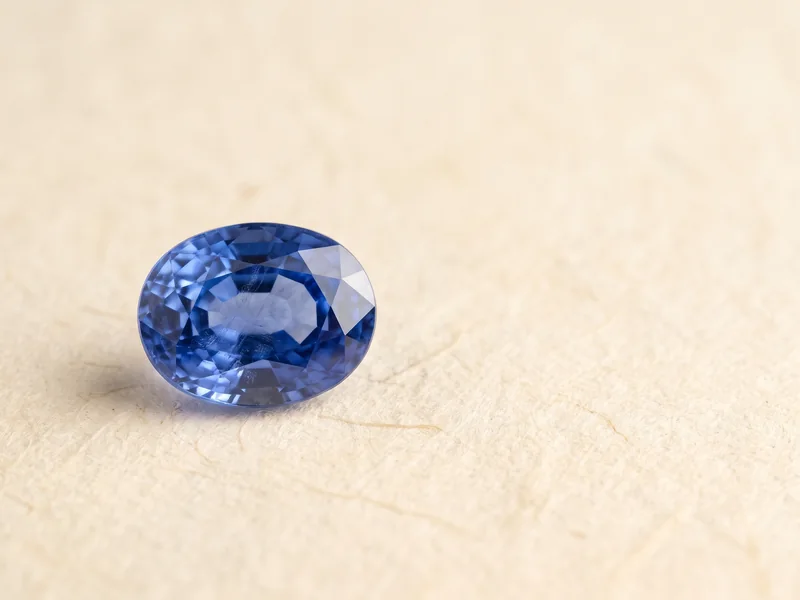 GemstonesHow Gemstone Origin Is Determined
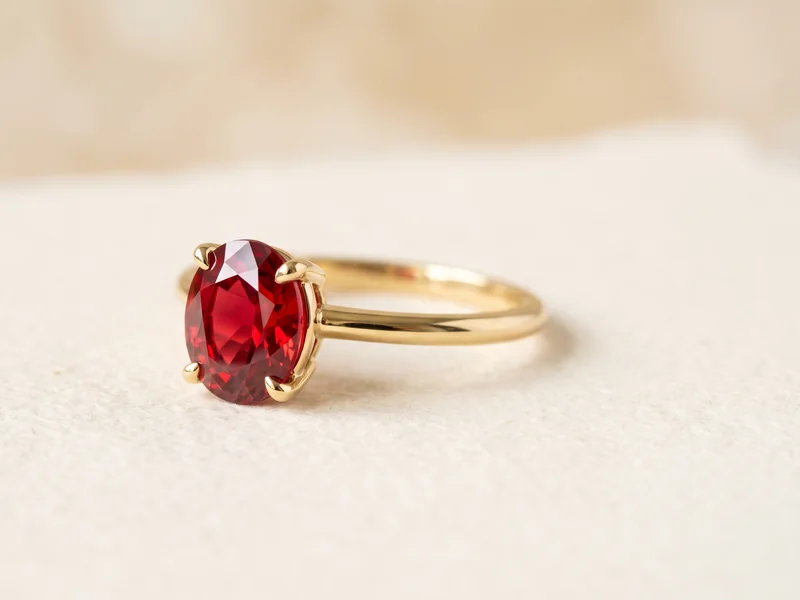 GemstonesSpinel Engagement Rings: An Underrated Gemstone
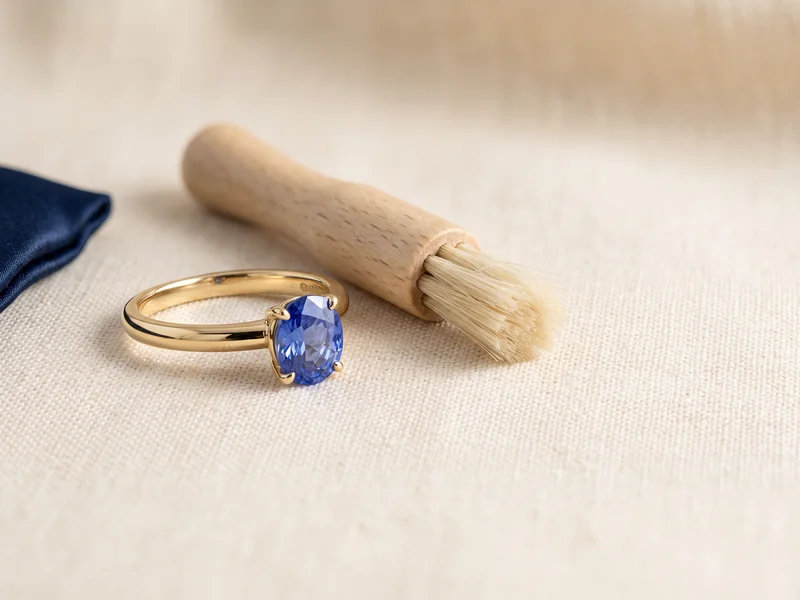 GemstonesGemstone Care by StoneGemstonesGemstones | Coloured Gemstones, Birthstones and Custom Jewellery
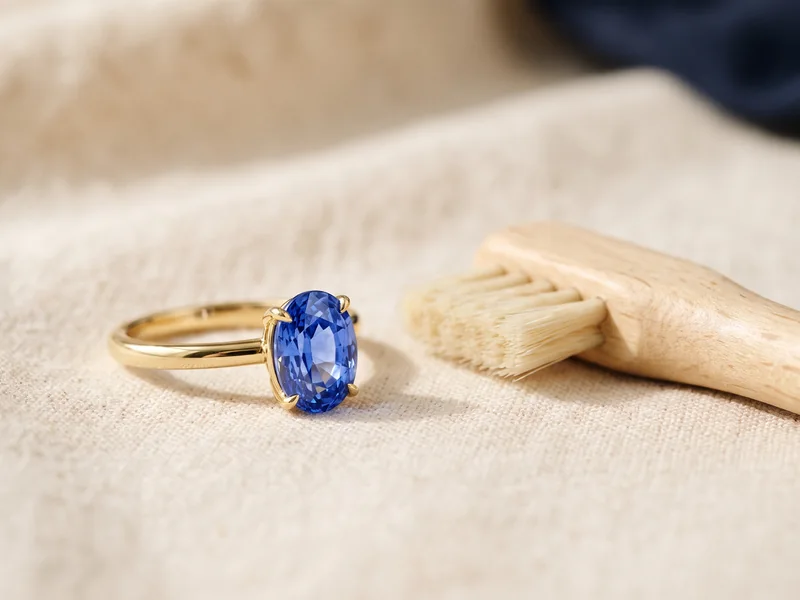 GemstonesCan Every Gemstone Go in an Ultrasonic Cleaner?
 GemstonesGemstone and Ring Scanning for CAD Remodelling
 GemstonesGemstone Properties: Hardness, RI, SG, Durability and Jewellery Use
Explore more
More guides on this topic
Education