
- Education
- Diamond 4Cs & Grading
- What Determines Diamond Value: A Gemologist Explains the Price
Diamond 4Cs & Grading
What Determines Diamond Value: A Gemologist Explains the Price
Two diamonds that look almost the same on paper can be thousands of dollars apart. Here is what really drives diamond value, explained by a gemologist and shown in Australian dollars.
 Reviewed by Raj Sood, Graduate Gemologist (GIA), AJP (GIA)Master jeweller and Graduate Gemologist (GIA) · reviewed 4 November 2026
Quick answer
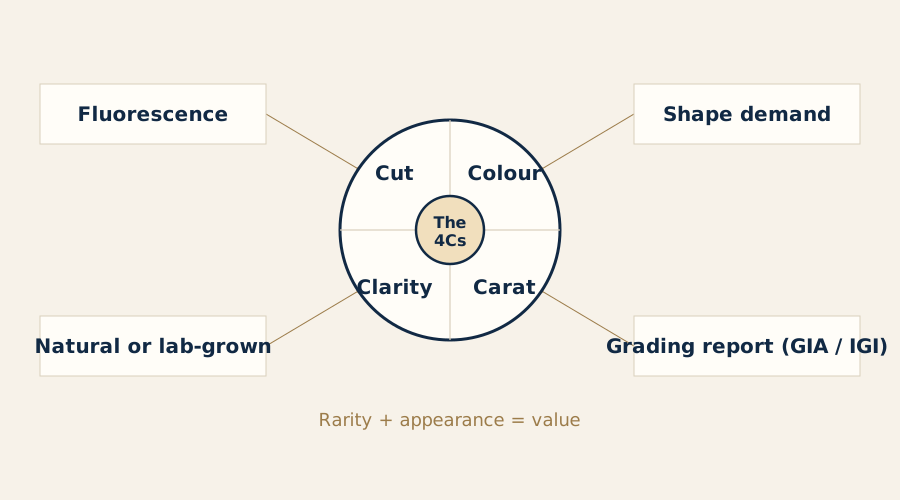
A diamond's value is set mainly by the 4Cs: cut, colour, clarity and carat weight, with cut having the biggest effect on beauty and carat on price. Fluorescence, shape, whether it is natural or lab-grown, and an independent grading report from GIA or IGI also move the price, often by thousands of dollars.
What determines diamond value?
Diamond value comes down to two questions: how rare is this stone, and how good does it look? Rarity is measured mostly by carat weight, colour and clarity. Appearance is decided mostly by cut. On top of those sit factors the 4Cs do not capture: fluorescence, shape, whether the diamond is natural or laboratory-grown, and whether an independent lab has graded it.
No single factor sets the price on its own. A large stone with poor cut can be worth less than a smaller, well-cut one. A top colour grade means little if strong fluorescence makes the stone look hazy. The skill is in seeing how the factors combine, which is what this guide and our wider diamond education library are built to help with.
It also helps to separate three different numbers that people call value: the retail price you pay, the replacement value an insurer uses, and the resale value a buyer would offer you later. They are rarely the same, and we come back to why near the end.
How do the 4Cs affect diamond value?
The 4Cs of diamond grading were standardised by GIA (the Gemological Institute of America) so that a diamond graded in New York means the same thing in Melbourne. Each C is graded on a fixed scale, and each one pushes the price in a different way. If any grading term is unfamiliar, our glossary of jewellery terms defines it.
| Factor | What is graded | Scale | How it moves the price |
|---|---|---|---|
| Carat | Weight (1 carat = 0.2 grams) | Measured to 0.01 ct | Biggest single driver; price per carat rises as stones get larger |
| Colour | Absence of yellow or brown tint | D (colourless) to Z | Each grade step up adds cost, most sharply from D to G |
| Clarity | Inclusions inside and blemishes on the surface | FL to I3 (11 grades) | Big jumps between grades that change how the stone looks; small ones between grades only a loupe shows |
| Cut | How well the stone returns light | Excellent to Poor (GIA rounds) | Can swing price widely within the same carat, colour and clarity |
The key idea is that price does not rise in a straight line. Rarity compounds: a 2-carat D flawless diamond is not twice as rare as a 1-carat one, it is many times rarer, and the price reflects that. That is why small compromises on one C can free up a surprising amount of budget.
Why does cut quality affect diamond value so much?
Cut is the only C made by people rather than nature, and it decides how much light a diamond sends back to your eye. Gemmologists describe that light in three parts: brightness (white light returned), fire (flashes of colour) and scintillation (the sparkle pattern as the stone moves). A well-cut diamond of a lower colour often looks better than a poorly cut one of a higher colour.
GIA gives round brilliants an overall cut grade from Excellent to Poor. For fancy shapes there is no overall cut grade, so the proportions, polish and symmetry carry more weight. Two rounds of the same carat, colour and clarity can differ substantially in price between Excellent and Good cut, because the Excellent stone needed more careful cutting and usually lost more of the rough crystal.
Cutting also involves a trade-off between weight and beauty. A cutter can keep extra weight by making a stone deep, which raises the carat (and the price) without making it look bigger. Others go the other way: our guide to shallow rounds and face-up spread explains when a slightly shallow stone gives you more visible size for the money, and when it starts to leak light.
Polish and symmetry matter too. Small finishing flaws such as pits and extra facets or polishing burn marks and lizard skin rarely affect what you see, but they can lower the polish or symmetry grade, and with it the price.
How does carat weight change the diamond price per carat?
Carat is weight, not size, and larger rough diamonds are much rarer than small ones. So the price per carat climbs as the weight goes up. Prices also jump at the round numbers buyers look for, often called magic sizes: 0.50, 0.70, 0.90, 1.00, 1.50 and 2.00 carats.
| Carat weight (natural round, G colour, VS2, Excellent cut, GIA report) | Approximate retail price (AUD) | Approximate diameter |
|---|---|---|
| 0.50 ct | about $1,500–$3,000 | about 5.1–5.2 mm |
| 0.70 ct | about $2,800–$5,000 | about 5.7–5.8 mm |
| 0.90 ct | about $4,500–$8,000 | about 6.1–6.2 mm |
| 1.00 ct | about $6,500–$12,000 | about 6.4–6.5 mm |
| 1.50 ct | about $13,000–$25,000 | about 7.3–7.4 mm |
| 2.00 ct | about $25,000–$45,000 | about 8.0–8.2 mm |
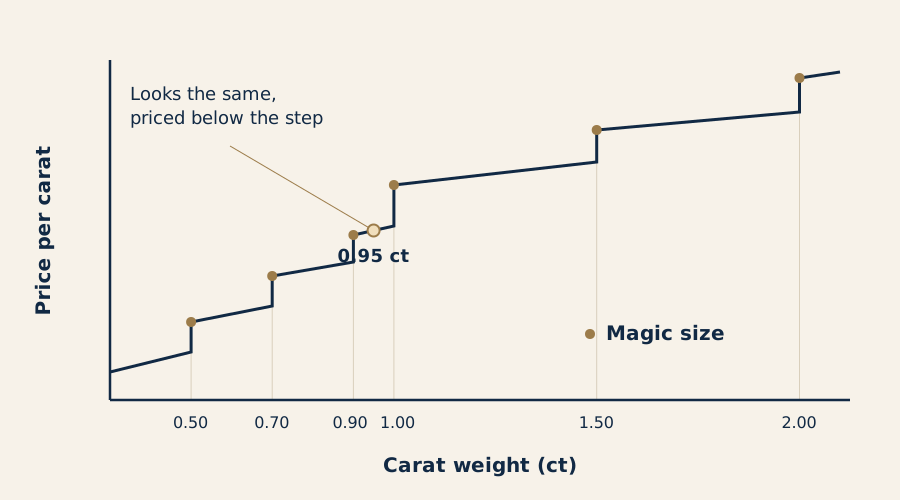
These are indicative market ranges, not quotes; real prices depend on the exact stone. The useful takeaway is the step pattern. A 0.95 ct round is only about 0.1 mm narrower than a 1.00 ct, which no one can see on the hand, yet it often costs noticeably less because it sits under the 1-carat line.
Not sure which one is right?
Send us the stones you are looking at and our gemologist will tell you which to choose and why.
Do colour and clarity matter as much as people think?
Colour and clarity are where most buyers overspend. Both are graded under magnification and controlled lighting, and many grade differences are invisible once a diamond is set and worn.
Colour: D, E and F are colourless; G to J are near-colourless. In a well-cut round set in white gold or platinum, most people cannot tell G from H face-up. The price difference between them is real, though, and grows with carat weight. In yellow or rose gold, I or J can look just as white, because the metal warms the stone anyway.
Clarity: what matters for value is whether you can see the inclusions. An eye-clean diamond, with no inclusions visible to the naked eye at normal viewing distance, is usually achievable at VS2 and often at SI1 in a round. Above that you are paying for rarity you can only see under a 10× loupe.
The type and position of a characteristic matters as much as the grade. A small natural left on the girdle (a patch of original crystal skin on the edge) barely affects value. Twinning wisps from crystal growth can be harmless or can cloud the stone, depending on size. Laser drill holes signal a treatment used to make a dark inclusion less visible, and treated diamonds trade below untreated stones of the same grade.
Does fluorescence affect diamond price?
Diamond fluorescence is a glow, usually blue, that some diamonds give off under ultraviolet light, including some of the UV in daylight. GIA grades it as None, Faint, Medium, Strong or Very Strong. About a quarter to a third of natural diamonds show some fluorescence, most of it faint.
- Faint: usually little or no effect on price or appearance.
- Medium to strong in D–G colours: often priced lower, because buyers worry about haze, even though most such stones look normal.
- Medium to strong in I–K colours: the blue glow can offset a slight yellow tint, so the price effect is often small.
- Very strong: a small number of stones look milky or oily in sunlight; these are discounted most, and you should see them before buying.
Because the market discounts fluorescence more than it usually affects beauty, a strong-fluorescence diamond that looks clear in daylight can be good value. The only way to know is to view it in natural light, not just under shop lights.
Why do round diamonds cost more than other shapes?
Round brilliants are usually the most expensive shape per carat. Two reasons: demand is highest, and cutting a round from an octahedral rough crystal typically keeps less of the original weight than fancy shapes do. A cutter may keep roughly 40–50% of the rough for a round, compared with more for shapes like ovals, pears or cushions.
| Shape | Typical price per carat vs a round of the same grades | Why |
|---|---|---|
| Round | Highest | Strongest demand, lower yield from rough |
| Oval, pear, marquise | Usually lower | Higher yield; larger face-up size per carat |
| Cushion, radiant | Usually lower | Good yield from rough; price varies with outline |
| Princess, emerald, asscher | Usually lower | High yield; emerald and asscher need higher clarity |
| Heart | Usually lower | Lower demand; symmetry strongly affects price within the shape |
Fashion moves fancy-shape prices too. When a shape becomes popular, its prices can firm; when demand cools, they soften. Within any shape, the outline, symmetry and length-to-width ratio decide where a stone sits in its price range.
How is lab-grown diamond value different from natural?
A laboratory-grown diamond is real diamond: the same carbon crystal, hardness (10 on the Mohs scale) and refractive index (2.42) as a natural one. It is grown in weeks by CVD (chemical vapour deposition) or HPHT (high pressure, high temperature) instead of forming deep in the earth, typically one to three billion years ago. The 4Cs apply to both, but origin changes the price completely.
| Natural diamond | Lab-grown diamond | |
|---|---|---|
| What it is | Formed in the earth, mined | Grown in a laboratory, chemically identical |
| 1.00 ct round, G VS2, Excellent (approx. AUD) | about $6,500–$12,000 | about $800–$2,000 |
| What drives price | Rarity plus the 4Cs | Production cost plus the 4Cs |
| Price trend | Fluctuates with the market | Has fallen steadily as production grows |
| Resale | Usually well below retail | Very limited resale market |
| Typical grading labs | GIA, IGI | IGI, GIA |
Neither is a better or worse choice; they are different products. Natural diamonds hold their rarity, but they are not an investment, and what they are worth later is covered in how natural diamond prices change over time. Lab-grown diamonds give you far more size and grade for the money, but if resale matters to you, read questions to ask about lab-grown resale first.
Browse natural and lab-grown diamonds
Does a grading report change diamond value and resale?
Yes. An independent grading report from a lab such as GIA or IGI is what lets a diamond be compared and priced against others. An ungraded stone carries risk for the buyer, so it usually sells for less, and a lab's strictness matters: the same stone can come back a grade apart from different labs, and the market prices that in.
A report should list the carat weight to two decimal places, measurements, colour, clarity, cut (for rounds), polish, symmetry, fluorescence and any known treatment. For lab-grown stones it must clearly state laboratory-grown, and many have a laser inscription on the girdle matching the report number.
Then there is the gap between price and later value. Retail includes cutting, setting, design and the jeweller's costs, so what a dealer will pay you is normally well below it. How diamond resale value works covers this, and replacement value versus resale value explains why your insurance valuation is a different, usually higher, number.
How to judge diamond value: step by step
- Set your priorities. Decide what matters most: size, whiteness, sparkle, or origin (natural or lab-grown).
- Start with cut. For a round, look for Excellent cut, polish and symmetry; for fancy shapes, check proportions and outline by eye.
- Choose the lowest colour and clarity that look right. Near-colourless (G–H) and eye-clean (VS2–SI1) suit most rings.
- Look just under the magic sizes. A 0.90–0.98 ct stone can look almost identical to 1.00 ct for less.
- Check fluorescence in daylight. Faint is usually fine; view medium to strong stones in natural light.
- Confirm the report. Match the report number to the girdle inscription and check for treatments.
- Compare like with like. Only compare prices between stones with the same lab, shape and grades.
The setting adds its own value: metal type and weight, how the stone is held, and the craftsmanship. Design choices also affect future work, such as whether a ring can be resized later.
Free consultation
Talk to a gemologist
Compare stones in person or online with Raj Sood, Graduate Gemologist (GIA), AJP (GIA).
Book a consultationShop this shape
FAQ
Common questions
What is the most important factor in a diamond's value?
Carat weight has the biggest effect on price, because large diamonds are much rarer. Cut has the biggest effect on how the diamond looks, so it is the factor most worth protecting when you set a budget.
How much is a 1 carat diamond worth in Australia?
A natural 1 carat round in G colour, VS2 clarity with an Excellent cut and a GIA report typically retails for roughly AUD 6,500–12,000. A lab-grown diamond of similar grades is usually around AUD 800–2,000.
Does fluorescence make a diamond worth less?
Medium to strong fluorescence often lowers the price, especially in D–G colours. Most fluorescent diamonds look normal, though a small number with very strong fluorescence can look hazy in sunlight.
Are lab-grown diamonds worth anything?
Lab-grown diamonds are real diamonds and are valued on the same 4Cs, but they cost much less than natural and have a very limited resale market. Their retail prices have also fallen as production has grown.
Why are round diamonds more expensive?
Rounds have the highest demand and usually keep less of the rough crystal when cut, so each carat costs more. Fancy shapes such as ovals and pears usually cost less per carat for the same grades.
Can I sell my diamond for what I paid?
Usually not. Resale offers are normally well below retail, because retail includes cutting, setting and the jeweller's costs, and buyers need a margin to resell.

Ask a gemologist
Not sure which diamond to choose?
Raj Sood is a Graduate Gemologist (GIA) and master jeweller. Bring the stones you are considering, or send the reports, and he will tell you honestly which one is better and why.
Keep learning
Related guides
 Buying Knowledge & Custom ProcessDiamond Resale Value Explained
 Diamond 4Cs & GradingFluorescence
 Diamond 4Cs & GradingEye Clean Diamonds
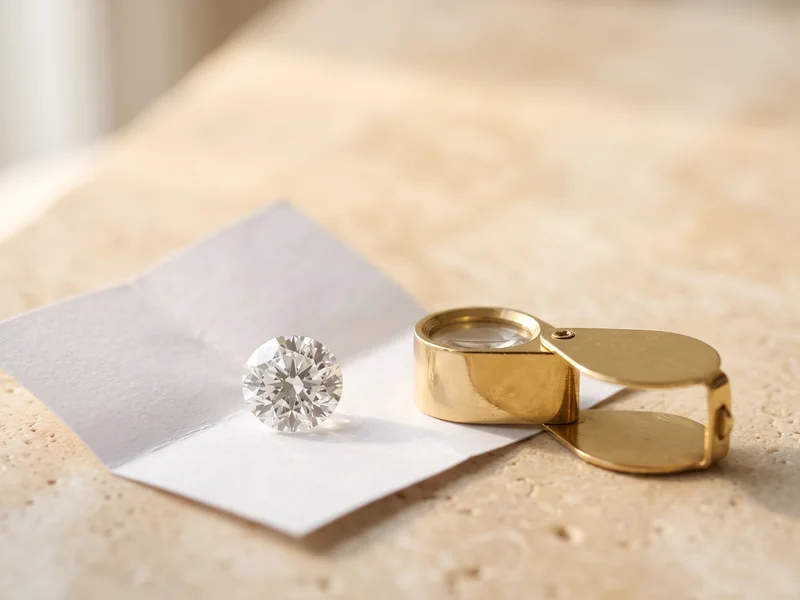 Certificates & ValuationsReplacement Value vs Resale Value in JewelleryLab-Grown DiamondsLab-Grown Diamond Resale Value: Questions to Ask Before Buying
 Diamond Anatomy & LightShallow Round Diamonds: Bigger Spread, Better Value?
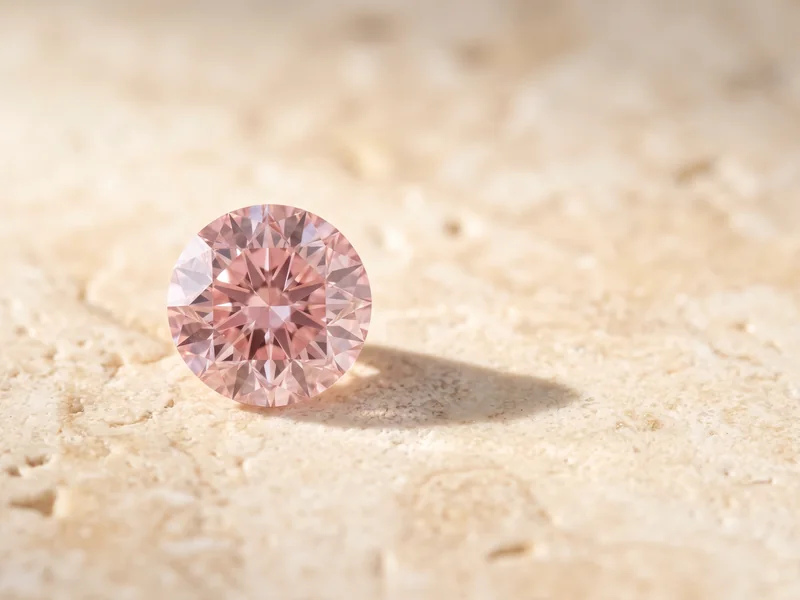 Natural DiamondsNatural Diamond Value Over Time
Explore more
More guides on this topic
Education