
- Education
- Engagement Rings & Settings
- Old Mine Diamond Setting Guide: Claws, Halos, Bezels and Bands
Engagement Rings & Settings
Old Mine Diamond Setting Guide: Claws, Halos, Bezels and Bands
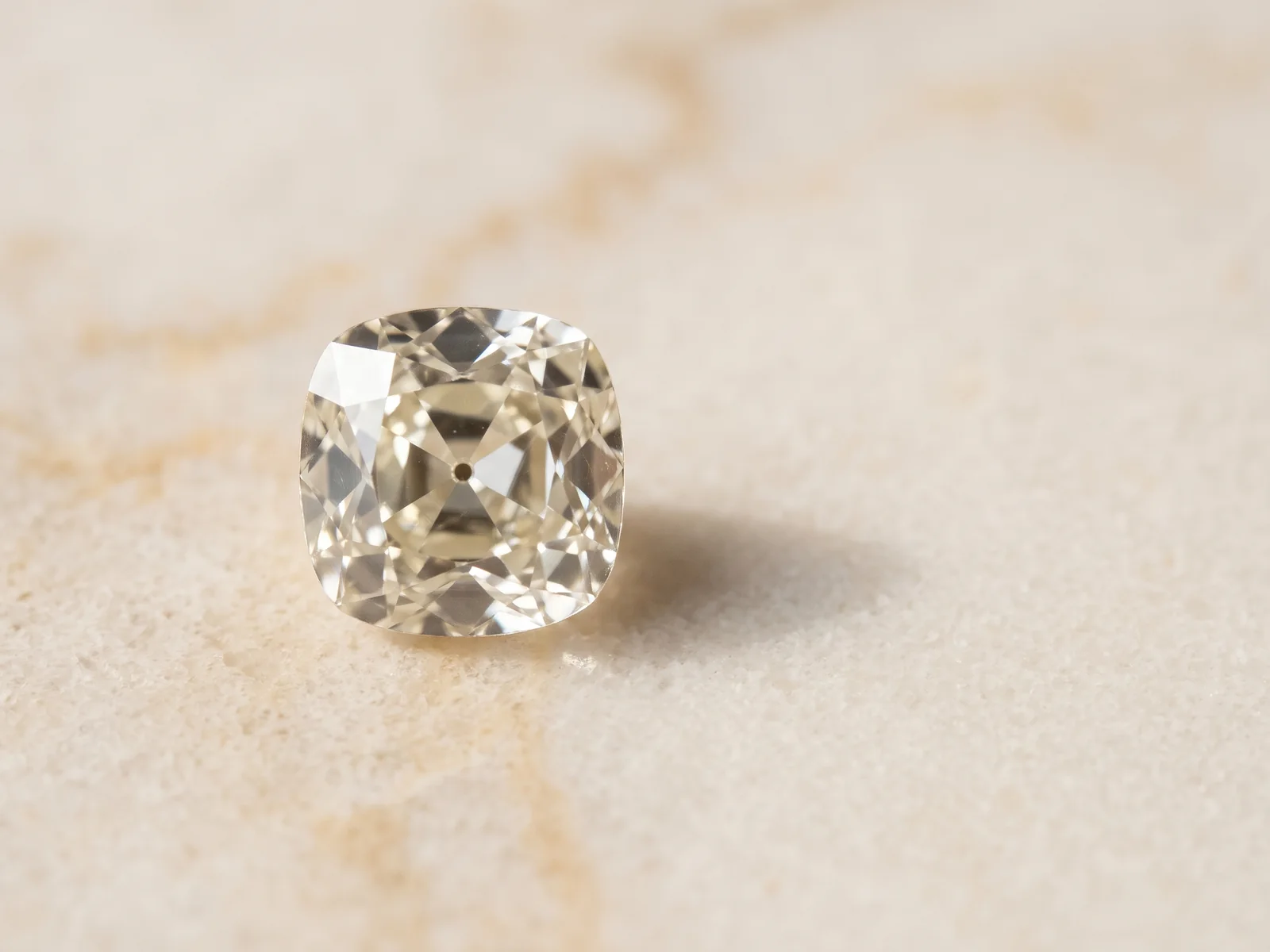
An old mine diamond was cut by hand for candlelight, with a tall crown, a deep body and a soft cushion outline. The right old mine diamond setting keeps that character and keeps an old stone safe for decades more of everyday wear.
 Reviewed by Raj Sood, Graduate Gemologist (GIA), AJP (GIA)Master jeweller and Graduate Gemologist (GIA) · reviewed 4 November 2026
Quick answer
The best old mine diamond setting protects the stone's thin, often antique girdle and shows off its chunky, broad flashes of light. Most people choose four or eight claws placed on the corners, a millgrain bezel, or a soft halo, set in yellow gold or platinum, with enough height for the deep pavilion.
What makes an old mine diamond setting different?
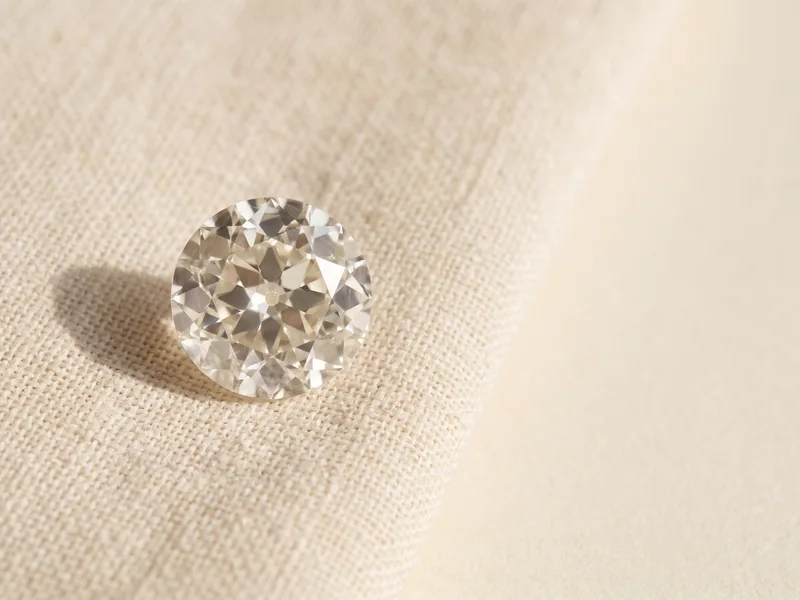
An old mine cut is the ancestor of today's round brilliant. It was cut by hand, mostly from the 1700s to the late 1800s, before machines could turn a diamond perfectly round. The result is a squarish outline with rounded corners and gently curved sides, a little like a modern cushion. It usually has 58 facets, a small table (the flat top facet), a tall crown, a deep pavilion (the lower half) and a large culet, a flat facet at the very bottom that you can often see face-up as a small circle in the centre. Our full guide to old mine cut diamonds covers the cut itself in detail.
Each of those features changes how the stone should be set:
- The corners: the outline is strongest and most exposed at its four corners, so that is where claws belong.
- The girdle: the girdle (the thin outer edge) of an antique stone is often uneven, very thin in places and sometimes already nicked. It needs a careful setter, not force.
- The deep pavilion: more depth underneath means the head (the part that holds the stone) must sit higher or be shaped to clear the culet.
- The open culet: because you can look straight down through it, a clogged or dirty gallery shows. An open, easy-to-clean gallery helps.
- Warmer colour: many antique stones have a soft warm tint, which affects which metal looks right.
Diamond is 10 on the Mohs hardness scale, but hardness is resistance to scratching, not to knocks. A diamond can still chip along its cleavage planes, and a stone that has been worn for a century often has abraded facet edges already. If you want to see how the old mine sits beside its cousins, our page on old mine, Old European and rose cuts compared lays them out side by side, and any unfamiliar word on this page is in our plain-English jewellery glossary.
How many claws does an old mine cut diamond need?
An old mine is set by its corners. A claw on each corner holds the stone where the outline turns, which is both the most secure spot and the most vulnerable one. There are three common layouts, plus the bezel as a claw-free alternative.
| Layout | How it looks | Security | Best for |
|---|---|---|---|
| 4 corner claws | Lightest look, most diamond showing | Good; each corner covered by one claw | Solitaires, stones with sound corners |
| 8 claws (double claws) | Frames the square outline, slightly more vintage | Very good; a worn claw has a partner | Antique stones, larger stones, daily wear |
| 4 compass claws (mid-sides) | Turns the stone on point visually | Poor for this shape; corners left exposed | Rarely suited to an old mine |
| Bezel (metal rim) | Soft, sleek outline, hides a little of the edge | Excellent; whole girdle protected | Thin or chipped girdles, active hands |
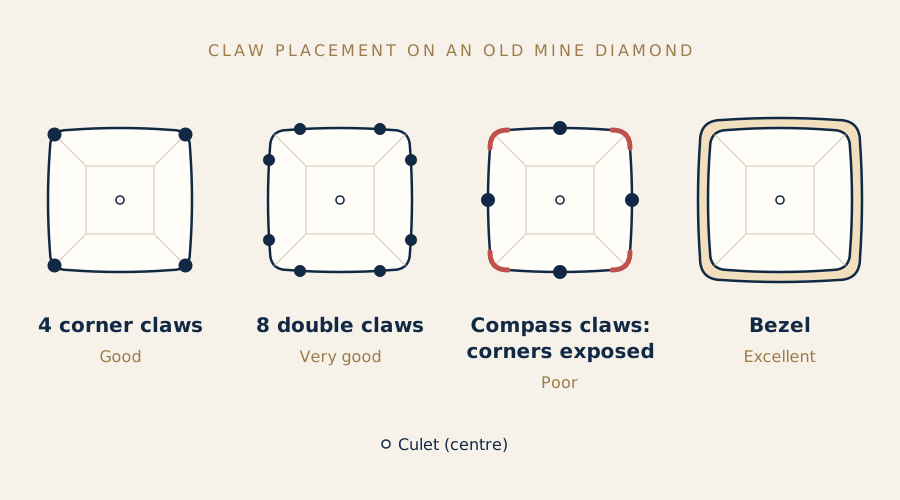
Double claws are a natural fit for antique stones. Two slim claws at each corner spread the grip, so neither has to press hard against a fragile girdle, and the stone stays held if one tip wears thin. For a 1 carat centre, claws are commonly around 1.0–1.5 mm across at the tip; heavier claws last longer but cover more of the stone.
Claw tips can be round, flat or pointed. Pointed talon claws follow the corner and suit the old mine's softly squared shape. Each claw also has a small notch, called a seat, cut into it to hold the girdle. With an old stone, the setter cuts each seat to match the girdle's real thickness at that point, because it can vary around the stone. The same corner logic applies to modern shapes; compare our claw layouts for modern cushion diamonds and how sharp-cornered princess cuts are set.
What is the best old mine diamond setting style?
There is no single right answer, but some styles suit the cut's character better than others. Here is how the main options compare for an old mine cut engagement ring.
| Setting | What it is | Why it suits an old mine | Watch for |
|---|---|---|---|
| Claw solitaire | Single stone on 4 or 8 claws | Shows the whole stone and its broad flashes | Height; claw wear on antique girdles |
| Bezel or half-bezel | Metal rim around all or part of the edge | Protects a thin or chipped girdle | Hides some outline; slightly less light from the sides |
| Millgrain bezel | Bezel edged with tiny metal beads | Classic Edwardian look that matches the era | Millgrain wears down over years and may need redoing |
| Halo | Ring of small diamonds around the centre | Adds face-up size and frames the outline | Modern melee can compete with the old cut's sparkle |
| Cluster | Larger stones grouped around the centre | Victorian and Edwardian character | More stones to check and clean |
| Three-stone | Centre plus a stone either side | Side stones can be old-cut too | Matching colour across antique stones |
| East-west | Stone set sideways across the finger | Suits slightly rectangular old mines | Less natural with very square stones |
For most people the choice comes down to two directions. A simple claw solitaire lets the old mine speak for itself: its large, chunky flashes of light and strong fire (flashes of colour) are the reason people choose it. A period-style setting, such as a millgrain bezel, a cluster or engraved shoulders, wraps the stone in detail from the era it was cut. Our guide to every engagement ring setting style explained covers each style in general, and our collection of vintage-inspired engagement rings with old-world detail shows how period touches look on the hand.
Related guideOld Mine vs Cushion Cut DiamondsShould an old mine diamond have a halo?
A halo can work well, but it needs more thought with an old mine than with a modern stone. A single row of 1.0–1.3 mm diamonds adds roughly 2.5–3 mm across the face, so a 6 mm old mine can look closer to 9 mm. The halo also shields the girdle from knocks.
The catch is the sparkle. Modern small diamonds are full-cut brilliants that give a fine, busy sparkle, sometimes called pinfire. An old mine gives fewer, bigger flashes. Put the two side by side and the halo can make the centre look quieter than it really is. There are three common fixes:
- Single-cut melee: small diamonds with about 17 facets instead of 57 or 58, giving broader flashes closer to the old mine.
- Old-cut accents: tiny old mine or round Old European cut diamonds around the centre, for a fully antique look.
- A spaced cluster: fewer, larger stones in the Victorian or Edwardian style rather than a tight modern halo.
A cushion halo follows the stone's outline and keeps the squarish look. A round halo softens it and pulls the ring towards a Georgian or Edwardian feel. Skip the halo if the stone is already a good size, if you love the bare outline, or if you want the lowest possible profile. Halos are more common on rounds; see halo and claw options for round diamonds for that comparison.
Not sure which one is right?
Send us the stones you are looking at and our gemologist will tell you which to choose and why.
Which metal suits an old mine cut diamond ring?
Old mine stones were cut to save weight, not to chase colour grades, and many antique stones sit somewhere around I to M on the GIA colour scale (D is colourless; letters further down the alphabet show more warmth). That makes metal choice more important than usual.
| Metal | Look with an old mine | Notes |
|---|---|---|
| 18ct yellow gold | Blends with warm tints so the stone reads soft and even | A popular yellow gold old mine ring choice for warmer stones |
| 18ct rose gold | Warm and romantic; suits Victorian styles | Pink tone can emphasise a brown tint |
| 18ct white gold | Bright white; contrasts with warmth | Usually rhodium plated; replating needed every so often |
| Platinum | White and dense; the Edwardian standard | Wears by moving metal rather than losing it; claws last well |
| Two-tone | Yellow band with white claws or head | A traditional way to make a warm stone look whiter face-up |
If the stone is near-colourless, platinum or white gold suits it well. If it is warm, yellow gold usually flatters it more than white metal does, because the contrast with bright white can make the tint more obvious. The two-tone option, a white head on a yellow band, has been used for over a century for exactly this reason.
How high should an old mine diamond sit?
A modern round brilliant usually has a total depth of about 59–63% of its width. Old mines often run 60–70% or more. As a worked example, a 6.5 mm wide old mine at 65% depth is about 4.2 mm deep, so the head must lift the culet clear of the finger and the band.
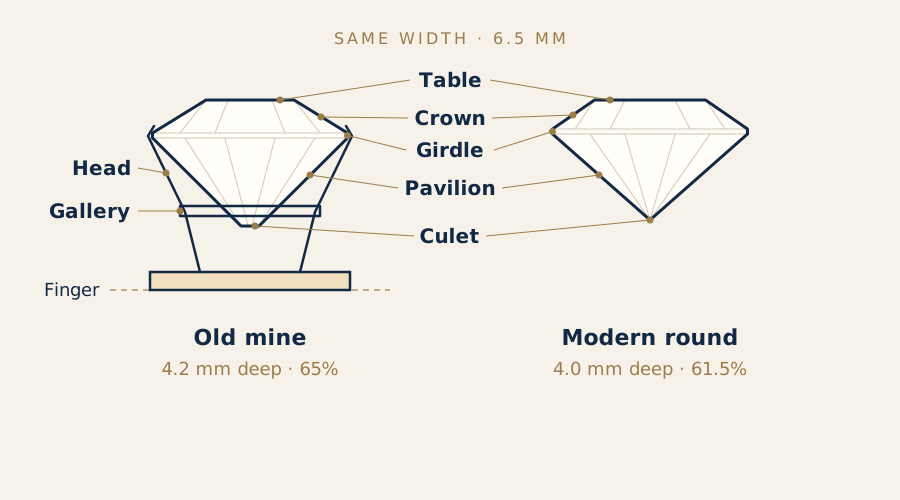
For a 1 carat old mine, the top of the stone often ends up around 5.5–7 mm above the finger, depending on the style. There are three ways to manage that height:
- Cathedral shoulders: the band rises in arches to meet the head, so the stone sits high without looking perched.
- A shaped gallery: the gallery (the open metal under the stone) is cut away to cradle the pavilion and let the stone sit lower.
- A low bezel: the most snag-free option; see our guide to low-profile settings for active hands if you work with your hands.
Keep the gallery open. Because the large culet works like a small window, soap and moisturiser trapped under the stone show from above. Some Georgian rings used closed backs, but an open gallery is easier to clean and lets the setter see the whole pavilion when checking the stone.
What wedding band goes with an old mine diamond ring?
Because an old mine has no points, a straight wedding band often sits flush beside it, as long as the head is high enough and the gallery does not flare out at the base. That is the main advantage over pointed shapes, which usually need a curved band; compare pear diamond settings and band-friendly marquise settings.
- Solitaire or bezel: a plain or millgrain band of 2–2.5 mm usually sits close.
- Halo or cluster: the wider head may leave a gap; a contoured or notched band fixes it.
- Period match: engraved, millgrain or single-cut eternity bands carry the antique look through.
- Metal match: match the band to the shank colour, not the claw colour, on a two-tone ring.
Plan the band when you plan the engagement ring. Small changes to head height or gallery shape now are much easier than reshaping metal later.
Can you reset an antique old mine diamond into a new ring?
Yes, and many old mines come to us this way, out of a grandparent's ring or brooch. Resetting an antique diamond starts with a careful inspection before any design work:
- Girdle check: look under 10× magnification for chips, old claw marks and thin spots.
- Surface wear: abraded facet edges are common after decades of wear and are part of the stone's history.
- Inclusions: any feather (an internal crack) that reaches the surface near a corner affects where claws can safely go.
- Measurements: width, length and depth decide the head size and height.
A stone can be recut to a modern shape, but this loses weight and the old mine character with it, so most owners keep the original cut. Any repair that needs heat, such as retipping claws or resizing, is safest with the stone removed. Our guide to redesigning an inherited ring walks through the process, and our page on where antique and old-stock diamonds come from explains how genuinely old stones differ from new ones.
Are there lab-grown old mine cut diamonds?
Yes. Cutters now reproduce old mine faceting on newly mined natural rough and on laboratory-grown diamond. Lab-grown diamonds are real diamond with the same hardness and a refractive index of about 2.42; they are grown in a laboratory rather than mined, and the grading report will say so. A lab-grown old mine cut diamond costs much less than a natural antique and is easy to find in colourless grades, or deliberately warmer ones for an antique look.
New old mine cuts are usually more precise than true antiques: more even outlines, sometimes a smaller culet, and a more even girdle. Some people prefer that; others want the slight irregularity of a hand-cut stone. As a broad guide, a 1 carat natural antique old mine is roughly AUD $4,000–$15,000 depending on colour, clarity and condition, and a 1 carat lab-grown old mine is roughly AUD $800–$2,500. For more on how these cuts differ from modern ones, see the differences between old mine and modern cushion cuts and how antique cuts differ from today's round brilliant.
Shop old mine diamonds: natural and lab-grown
How do you choose a setting for an old mine diamond? Step by step
- Measure and inspect the stone. Record width, length and depth, confirm natural or lab-grown, and map any girdle chips.
- Decide the look. A clean claw solitaire to show the stone, or a period-style setting such as a millgrain bezel or cluster.
- Place the claws. Four or eight claws on the corners, never mid-sides; use a bezel if the girdle is thin or chipped.
- Choose the metal by the stone's colour. Yellow gold for warm stones, platinum or white gold for near-colourless, two-tone to whiten a warm stone.
- Set the height. Allow for the deep pavilion and open culet, and keep the gallery open for cleaning.
- Plan the wedding band. Check it sits flush, or choose a contoured band before the ring is finalised.
Free consultation
Talk to a gemologist
Compare stones in person or online with Raj Sood, Graduate Gemologist (GIA), AJP (GIA).
Book a consultationFAQ
Common questions
How many claws should an old mine diamond have?
Four or eight, usually on the corners. Double claws (eight) spread the grip and suit antique stones with thin girdles, while four claws show more of the diamond.
Is a bezel setting good for an old mine cut diamond?
Yes, especially if the girdle is thin or chipped. A bezel protects the whole edge, and a millgrain bezel suits the cut's Edwardian heritage, though it hides a little of the outline.
Does a halo suit an old mine diamond?
It can. A halo adds roughly 2.5–3 mm across the face, but modern melee can compete with the old mine's broad flashes, so many people choose single-cut or old-cut accent stones instead.
What metal looks best with an old mine diamond?
Yellow gold usually flatters the warmer antique stones, while platinum or white gold suits near-colourless ones. A yellow band with white claws is a traditional way to make a warm stone look whiter.
Will a straight wedding band sit flush with an old mine ring?
Often yes, because the shape has no points. Halos, clusters and flared galleries can leave a gap, which a contoured band fixes.
Can an antique old mine diamond be reset safely?
Yes, with care. A jeweller should inspect the girdle first, place claws over any old chips and remove the stone before any repair that needs heat.
Terms in this guide

Ask a gemologist
Not sure which diamond to choose?
Raj Sood is a Graduate Gemologist (GIA) and master jeweller. Bring the stones you are considering, or send the reports, and he will tell you honestly which one is better and why.
Keep learning
Related guides
 Diamond ShapesOld Mine Cut Diamonds
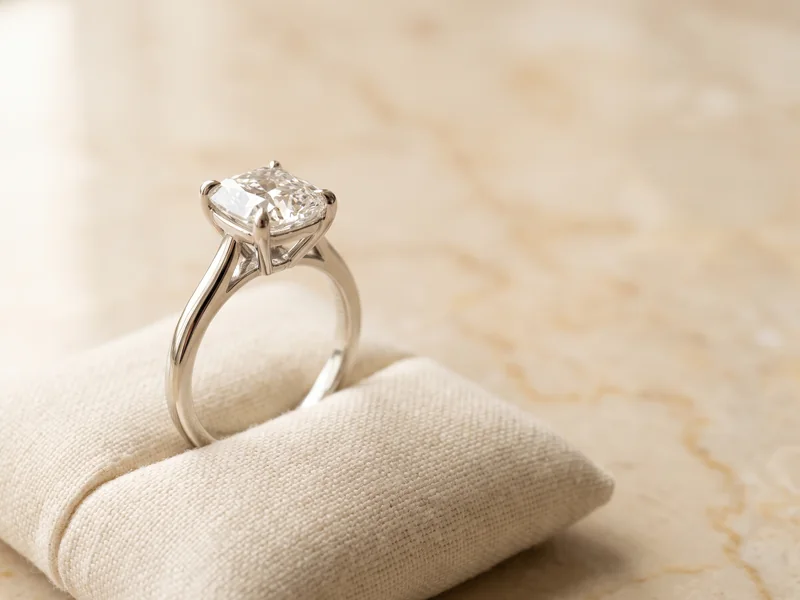 Engagement Rings & SettingsBest Settings for Cushion Diamonds
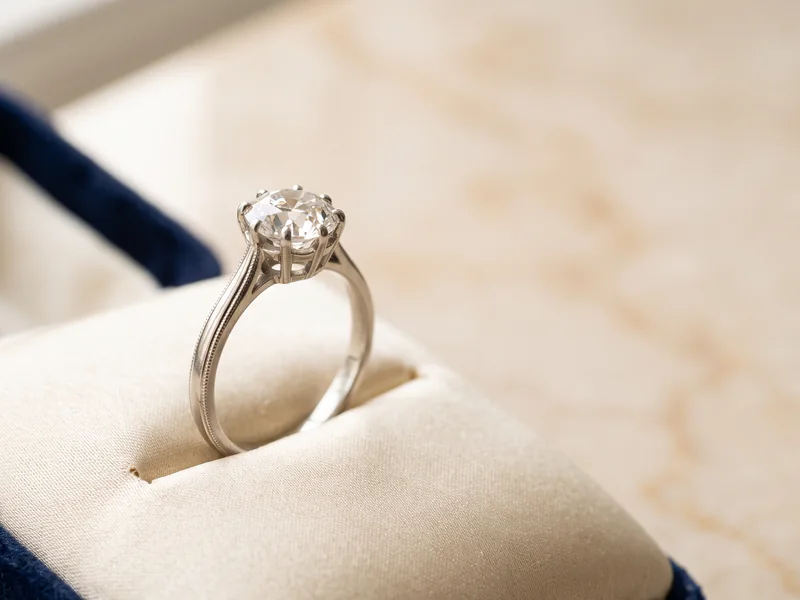 Engagement Rings & SettingsVintage-Inspired Engagement Rings with Old-World Detail and Custom Character
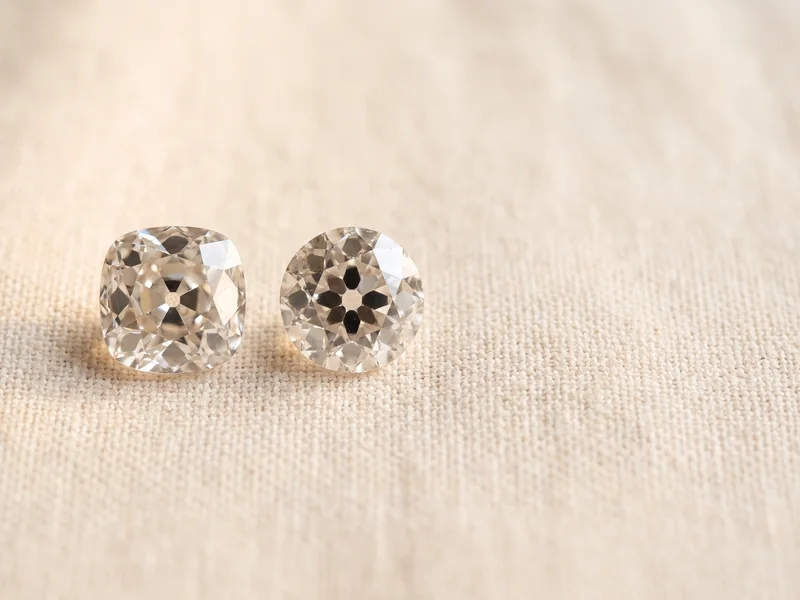 Diamond ShapesAntique Diamond Cuts: Old Mine, Old European and RoseEngagement Rings & SettingsEngagement Ring Setting Styles Guide
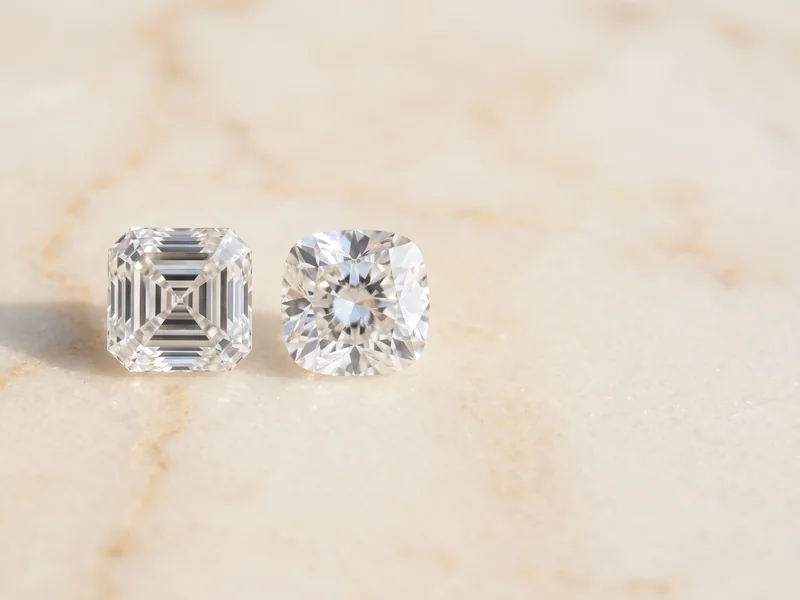 Diamond ShapesOld Mine vs Cushion Cut Diamonds
 Diamond ShapesOld European Cut Diamonds
 Diamond ShapesRound vs Old European Cut Diamonds
Explore more
More guides on this topic
Education