
- Education
- Wedding Bands & Eternity
- Brushed Ring Finish and Satin Finish Rings: Look, Wear and Care
Wedding Bands & Eternity
Brushed Ring Finish and Satin Finish Rings: Look, Wear and Care
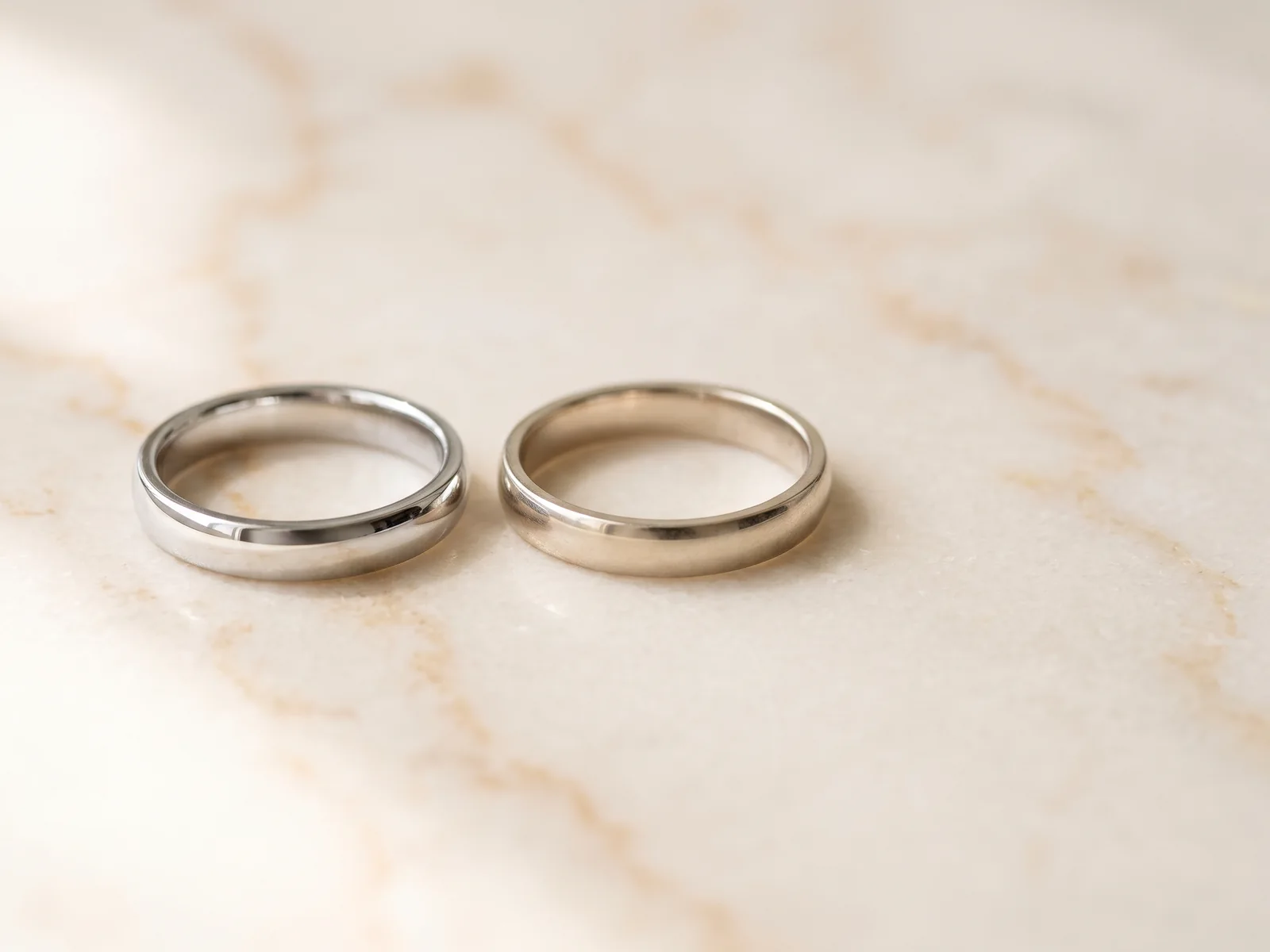
A brushed ring finish changes a plain band from mirror-bright to soft and understated, but it also changes how the ring ages. Here is what brushed and satin finishes look like, how they wear in each metal and how easily they are brought back.
 Reviewed by Raj Sood, Graduate Gemologist (GIA), AJP (GIA)Master jeweller and Graduate Gemologist (GIA) · reviewed 4 November 2026
Quick answer
A brushed ring finish is made by drawing an abrasive across the metal in one direction, leaving fine parallel lines; a satin finish is a softer, finer version with less visible grain. Both hide small scratches at first, but soften and pick up shine within months. A jeweller can re-brush a band in minutes, usually for a modest fee.
What is a brushed ring finish?
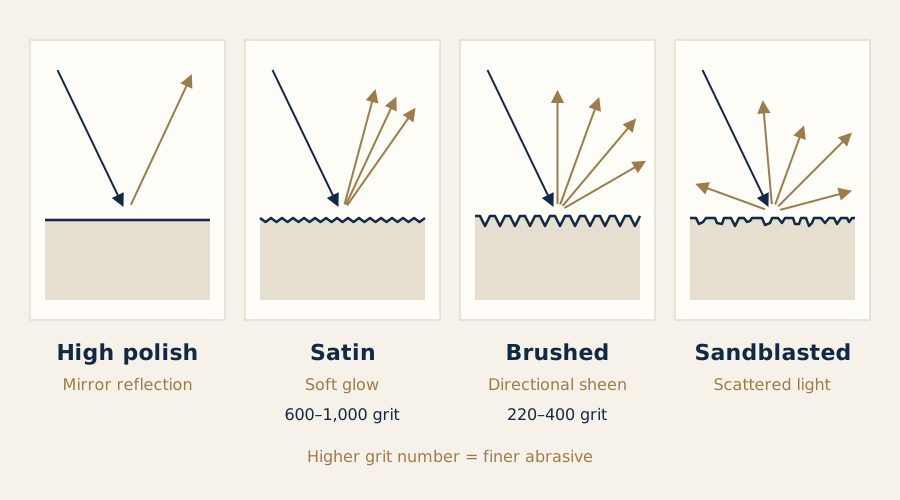
A brushed finish is a texture of fine, parallel lines cut into the surface of the metal. The jeweller draws an abrasive across the band in one direction, so instead of a mirror you get a soft, directional sheen that catches light along the lines. It is the same idea as brushed stainless steel on a kitchen appliance, just at a much finer scale. Most bands are first finished to a mirror-bright high polish finish, and brushing is usually applied on top of that polished surface as the last step.
At the bench, most brushed finishes are made on a polishing motor with a non-woven abrasive wheel, a fine brass or steel wire brush, or by hand with abrasive paper. The coarseness of the abrasive is described by its grit, a number for particle size: the higher the number, the finer the abrasive and the softer the result. A crisp, clearly lined brushed look is often made at around 220–400 grit. A satin finish is usually closer to 600–1,000 grit, fine enough that the lines blur into a gentle glow.
Direction matters as much as coarseness. The most common choice is lengthwise brushing, with lines running around the circumference of the ring. Cross-brushing runs the lines across the width of the band, which reads as more textured and is often used on a centre strip between polished edges. A few jewellers also use a random, swirled pattern that looks closer to frosted metal.
Words like matte, satin, brushed and frosted are used loosely across the trade, and one jeweller's satin is another's light brush. The only reliable way to agree on a finish is to look at a sample together. Our plain-English jewellery glossary explains each term, and the complete wedding ring buying guide covers the metal, width and profile decisions that sit alongside the finish.
Satin finish vs brushed finish: what is the difference?
Satin and brushed finishes are made the same way and differ mainly in how fine the abrasive is. A brushed finish shows visible lines when you look closely; a satin finish looks smooth and softly lustrous, like the sheen on satin fabric, with lines you only see under a loupe (a 10× hand magnifier). Here is how they sit among the other common band finishes.
| Finish | Surface look | How it is made | Hides fine scratches | Refreshing it |
|---|---|---|---|---|
| High polish | Mirror-bright, reflective | Progressively finer polishing compounds | Poorly; every mark shows | Re-polish; removes a little metal |
| Satin | Soft glow, lines barely visible | Fine abrasive, about 600–1,000 grit | Well at first | Quick re-satin at the bench |
| Brushed | Clear parallel lines, low shine | Coarser abrasive, about 220–400 grit | Well, especially lines along the grain | Quick re-brush at the bench |
| Sandblasted | Even frosted matte, no lines | Fine abrasive blasted under air pressure | Well, but polishes smooth on high spots | Re-blast; needs blasting equipment |
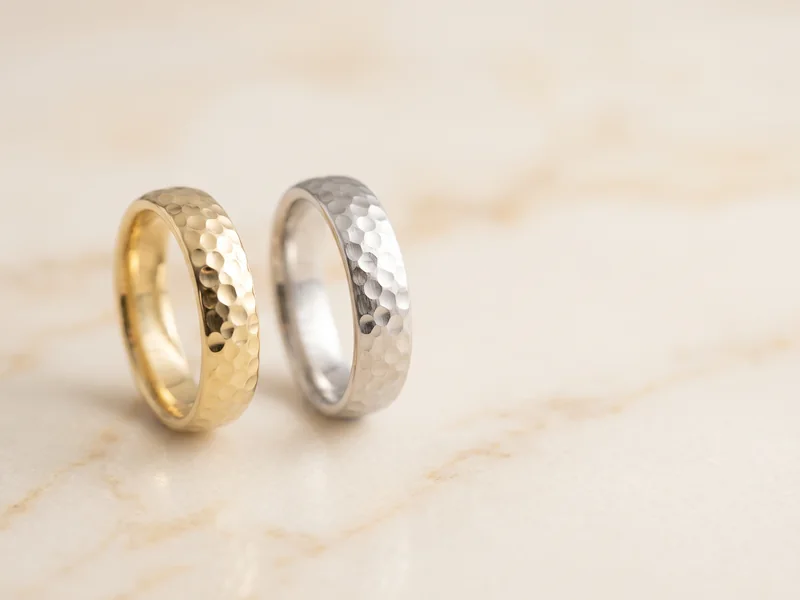
| Hammered | Faceted dimples that catch light | Shaped with hammers or punches | Very well; marks blend into texture | Can be re-polished; dimples soften over years |
If you like a matte look with no direction at all, the frosted sandblasted ring finish is the closest relative. If you want a texture that hides wear even better, a hand-hammered ring texture breaks up the surface so completely that new scratches have nowhere obvious to sit. Brushed and satin sit in the middle: understated, still clearly metal, and the easiest of the textured finishes to restore.
Which metals take a brushed or satin finish best?
Every precious metal can be brushed, but each one ages differently underneath the texture. The key difference is whether a scratch removes metal or pushes it aside, and whether the colour you see is the metal itself or a plating.
| Metal | How a brushed or satin finish behaves | Refinishing notes |
|---|---|---|
| Platinum (usually 950, 95% platinum) | Scratches push metal aside rather than removing it, so the grain gives way to a soft grey patina | Re-brushes easily; very little metal lost over the years |
| 18ct yellow or rose gold (75% gold) | Takes a crisp, warm grain; scratches remove a tiny amount of metal | Re-brushes easily; no plating to renew |
| 18ct white gold | Usually brushed and then rhodium plated, so the plating follows the texture; as rhodium wears, a warmer tone shows on high spots | Re-brush and re-plate together |
| 9ct gold (37.5% gold) | A harder alloy that can hold its grain a little longer, with a lighter colour | Re-brushes easily |
| Palladium (usually 950) | Naturally white, lighter than platinum, patinas in a similar way | Re-brushes easily; fewer workshops handle it |
| Titanium | Hard-wearing surface, very light on the hand | Can be re-brushed; resizing is very limited |
| Tungsten carbide | Very hard, so the finish lasts much longer | Most jewellers cannot re-brush, resize or repair it |
Hardness explains why every finish eventually changes. Pure gold is only about 2.5–3 on the Mohs scale (a 1–10 scale of scratch resistance) and platinum about 4–4.5; alloying makes ring metals tougher, but ordinary household dust contains quartz at Mohs 7. In practice, any gold, platinum or palladium band will pick up marks. A brushed platinum ring and a brushed gold wedding band do not scratch less than a polished one; they simply disguise the marks better while the grain is fresh.
Rhodium plating is a thin coating of rhodium, a hard, bright white metal from the platinum family, applied to white gold to make it whiter. On a brushed white gold band it wears first on the palm side and the edges, which is why re-plating is part of the normal maintenance for that metal.
How does a brushed ring finish wear over time?
This is the question most people forget to ask. A brushed or satin band is not a permanent texture; it is a surface that evolves with you. On a ring worn every day, the pattern usually looks something like this:
- First few weeks: the grain looks crisp. Small scratches that run in the same direction as the lines disappear into them.
- Around 3–6 months: fine random scratches begin crossing the grain, mainly on the palm side, where the band meets door handles, steering wheels and gym bars.
- Around 6–12 months: the high points, especially the edges and the underside, start to polish smooth from contact. The ring takes on a mix of soft matte and gentle shine.
- After a year or more: on gold, the finish reads as a softened satin with scattered marks; on platinum, it gives way to a grey, slightly velvety patina that many people like for its own sake.
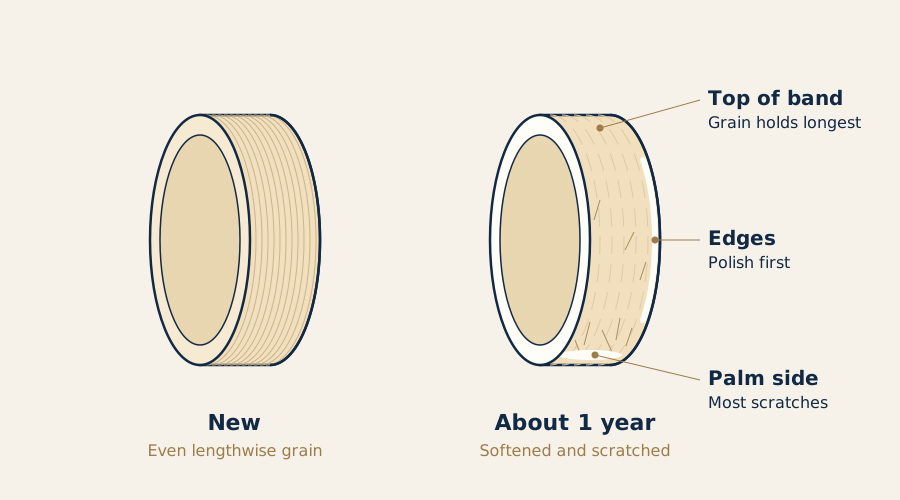
How fast this happens depends far more on your hands than on the ring. A desk worker might see the grain hold for well over a year; a builder, nurse or keen climber might see it soften within weeks. Neither is a fault. A finish is a surface treatment, not a protective coating.
Where rings touch each other they wear faster. A brushed wedding band worn against an engagement ring will usually polish along the edge where they rub, and a band with claws or a halo beside it can pick up a line of fine marks. If you plan to wear several rings together, our guide to stacking rings comfortably covers spacing and profiles that reduce rubbing.
Not sure which one is right?
Send us the stones you are looking at and our gemologist will tell you which to choose and why.
Can you mix brushed and polished finishes on one band?
Yes, and many brushed wedding band designs do exactly that. Contrast is what makes the texture read clearly from a distance. Common combinations include:
- Brushed centre, polished edges: a satin or brushed strip down the middle with bright bevelled or rounded edges. The polished edges show wear first but are easy to buff.
- Polished centre line: a thin bright groove or raised line through a brushed band.
- Cross-brushed panels: lengthwise and cross-brushed sections side by side, so the light changes as the hand moves.
- Two metals, one finish: for example a brushed white gold centre with polished rose gold edges.
- Texture with detail: satin finishes pair well with milgrain edges and engraved patterns, including the Florentine finish, a cross-hatched engraved texture that wears more like a hammered band than a brushed one.
Width changes how much of the finish you see. On a 2 mm band a brushed texture is subtle, almost a soft glow; on a 6–8 mm band it becomes the main feature. Our guide to how band width changes the look on the hand and our comparison of typical women's and men's band widths help you picture the finish at the size you are considering.
On eternity rings the finish only goes on the metal around and beneath the stones; the settings themselves are usually left polished so the diamonds sit in bright metal. A brushed shank with a polished channel can look very clean. If you are weighing up designs, compare half versus full eternity ring designs, because a half eternity leaves a plain lower shank where a brushed texture can show, and browse our overview of eternity and anniversary ring styles.
Related guideHigh Polish Ring FinishHow do you clean and care for a brushed or satin ring?
Looking after a textured band is mostly about not accidentally polishing the texture away. A few habits keep the grain crisp for longer:
- Wash with warm water and a drop of mild detergent. Soak for a few minutes, then use a soft toothbrush, brushing along the grain rather than across it.
- Skip the polishing cloth. Jewellery cloths contain mild polishing compound and will slowly bring a brushed surface back towards shine.
- Take it off for heavy work. Weights, rock climbing, gardening and building work polish edges quickly and can dent soft metals.
- Avoid chlorine and harsh chemicals. Pool chlorine and bleach can attack gold alloys over time and dull rhodium plating on white gold.
- Store it separately. A soft pouch stops harder stones in other jewellery from scratching the band.
Some people with titanium bands refresh the grain themselves with a non-woven abrasive pad. On gold, platinum or plated white gold we do not recommend it: it is easy to cut through rhodium, flatten a profile or scratch a stone, and a jeweller's bench result is far more even.
How is a brushed ring refinished, and how often?
Refinishing a brushed or satin band is one of the quickest jobs at a jeweller's bench. The ring is cleaned, any deep scratches or small dents are polished or worked out first, and the texture is then re-applied with the same grit and direction as the original. White gold is rhodium plated again at the end. Because the texture sits only on the very surface, each re-brush removes very little metal, much less than polishing out deep scratches on a high polish band.
| Job | What is involved | Approximate cost (AUD) |
|---|---|---|
| Re-brush or re-satin a plain gold or platinum band | Clean, light rework of the surface, new grain | about $40–$100 |
| Re-brush and rhodium plate white gold | As above, plus electroplating | about $80–$180 |
| Remove deep scratches or dents, then re-brush | Polishing back damage before texturing | about $80–$200 |
| Change a polished band to brushed (or back) | Full refinish to the new texture | about $50–$150 |
These are broad ranges only; the cost depends on the width, the metal, any stones and how much damage there is. As for frequency, there is no rule. Many people with gold bands have them re-brushed every one to two years, often at the same visit as a clean and a check of the claws on their engagement ring. Platinum owners often leave the patina alone for years because they like how it looks.
Knowing how to refinish a brushed ring also means knowing what to ask for. Tell the jeweller whether you want the grain crisp or soft, which direction it should run and whether polished edges should stay bright. Bring the ring in clean so the original texture is easy to read.
Does a brushed wedding band suit your engagement ring?
A brushed vs polished wedding ring is often less an either-or choice than a question of contrast. A satin band beside a high polish engagement ring makes the diamond ring look brighter, and the two finishes read as a deliberate pair. Matching finishes, polished with polished or brushed with brushed, give a more unified look. Neither is more correct; it comes down to whether you want the band to recede or stand apart.
The shape of your centre stone also decides how the band needs to sit. A curved or notched band follows a point or overhang, and a brushed texture on a contoured band shows the curve clearly. See our pages on bands that sit beside a heart engagement ring, wedding bands for two-stone toi et moi rings and bands that pair with radiant cut rings.
If you are adding an eternity ring later, a brushed band in between can separate two diamond rings visually. Our eternity ring stone sizes in points guide shows how stone size affects the height of the stack, and the difference between anniversary and eternity rings explains what each name usually means.
Design a brushed or satin wedding band or eternity ring
How to choose a brushed or satin wedding band: step by step
- Pick the metal first. Platinum patinas, yellow and rose gold keep their colour, and white gold needs occasional re-plating; this shapes how the finish will age.
- Choose the texture level. Look at real samples of a crisp brush and a soft satin side by side in daylight.
- Decide the direction. Lengthwise is the most common and easiest to refresh; cross-brushing suits a centre strip or a wider band.
- Consider contrast. Polished edges, a bright centre line or milgrain sharpen the look and can be buffed separately.
- Check the width and profile. Wider, flatter bands show more of the finish; rounded profiles show it more softly.
- Think about your day. Hands-on work softens any finish quickly; plan on an occasional re-brush rather than expecting the texture to last unchanged.
- Ask about refinishing. Confirm the metal can be re-brushed locally and note the original grit and direction so it can be matched later.
With those decisions made, the rest of the band, from comfort fit to engraving, follows the same choices covered in our step-by-step guide to choosing wedding rings.
Free consultation
Talk to a gemologist
Compare stones in person or online with Raj Sood, Graduate Gemologist (GIA), AJP (GIA).
Book a consultationShop this shape
FAQ
Common questions
Do brushed rings scratch easily?
Brushed rings scratch at the same rate as polished rings in the same metal, because the finish does not change the metal's hardness. The difference is that fine scratches blend into the brushed lines, so they are much less noticeable for the first months.
Is a brushed or polished wedding band better for everyday wear?
Neither is tougher. A brushed band hides small marks better at first but slowly gains shine, while a polished band shows marks sooner but softens into a gentle patina; both can be refreshed by a jeweller.
How often does a brushed ring need refinishing?
It depends on your work and hobbies. Many people with gold bands have them re-brushed every one to two years, while some platinum owners never do because they like the patina.
Can you change a polished ring to a brushed finish?
Yes. Most gold, platinum and palladium bands can be brushed or satin finished at the bench, and can be polished back again later if you change your mind.
Can I use a polishing cloth on a brushed ring?
It is better not to. Jewellery polishing cloths contain a mild compound that gradually brings the surface back towards shine; warm soapy water and a soft brush along the grain is enough.
Can tungsten or titanium bands be re-brushed?
Titanium can usually be re-brushed, though it can rarely be resized. Tungsten carbide is so hard that most jewellers cannot re-brush, resize or repair it, although its finish lasts much longer.

Ask a gemologist
Not sure which diamond to choose?
Raj Sood is a Graduate Gemologist (GIA) and master jeweller. Bring the stones you are considering, or send the reports, and he will tell you honestly which one is better and why.
Keep learning
Related guides
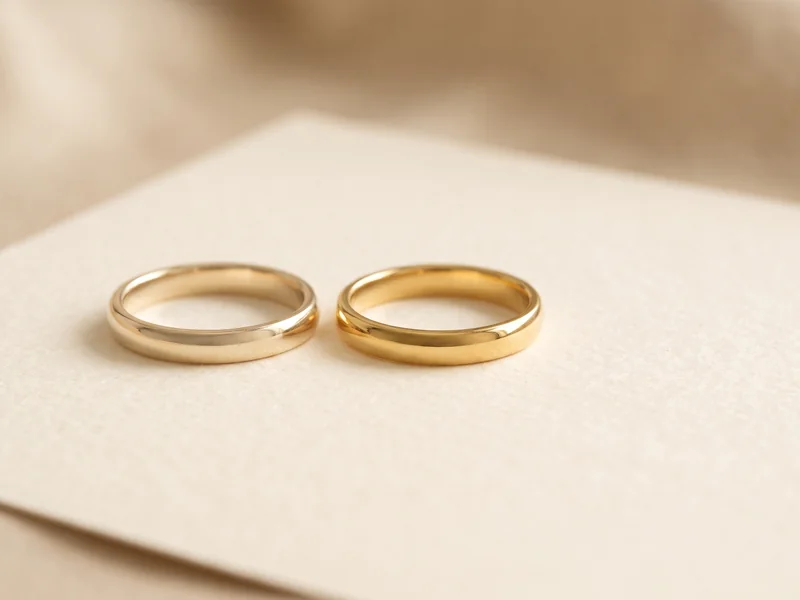
 Wedding Bands & EternityHigh Polish Ring Finish
 Wedding Bands & EternitySandblasted Ring Finish
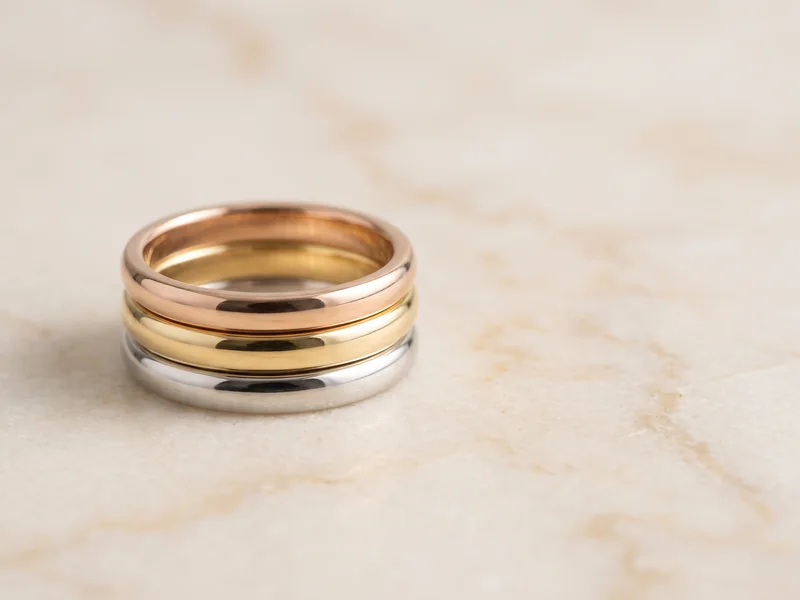
 Wedding Bands & EternityHammered Ring FinishWedding Bands & EternityWedding Ring Buying Guide
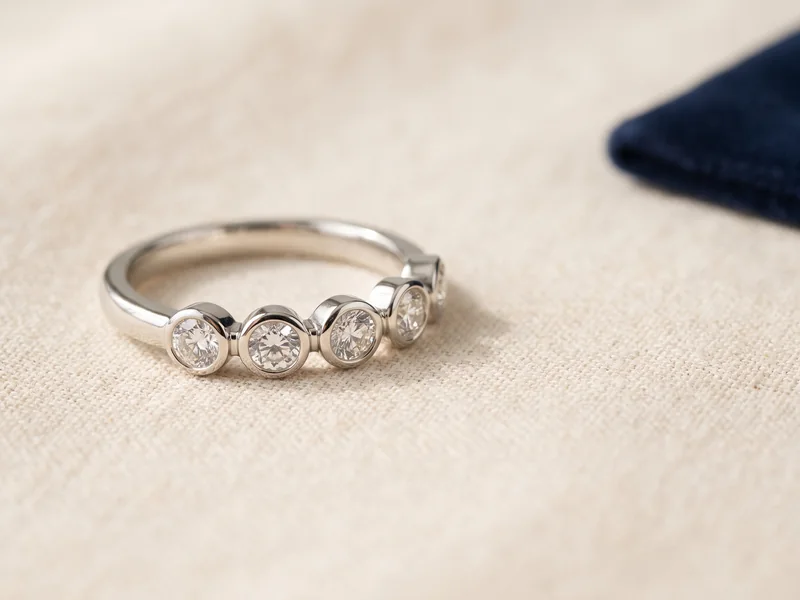
 Wedding Bands & EternityHow to Stack Rings
 Wedding Bands & EternityHalf Eternity vs Full Eternity Rings
 Wedding Bands & EternityAnniversary Ring vs Eternity RingWedding Bands & EternityEternity Rings & Anniversary Rings
Explore more
More guides on this topic
Education