
- Education
- Diamond Shapes
- Elongated Emerald Cut Diamond Guide: Ratio, Size, Clarity and Settings
Diamond shapes
Elongated Emerald Cut Diamond Guide: Ratio, Size, Clarity and Settings
An elongated emerald cut diamond trades sparkle for long, clean flashes of light, and that open look shows every detail of the cut. Here is what to check, from the ratio and windowing to clarity and the setting.
 Reviewed by Raj Sood, Graduate Gemologist (GIA), AJP (GIA)Master jeweller and Graduate Gemologist (GIA) · reviewed 4 November 2026
Quick answer
An elongated emerald cut diamond is a rectangular step cut with a length-to-width ratio of about 1.50 or more, longer and slimmer than the classic 1.30–1.45. Look for even step facets, minimal windowing, an eye-clean VS2 or better clarity, G–H colour in white metal, and a setting with claws protecting the cut corners.
What is an elongated emerald cut diamond?
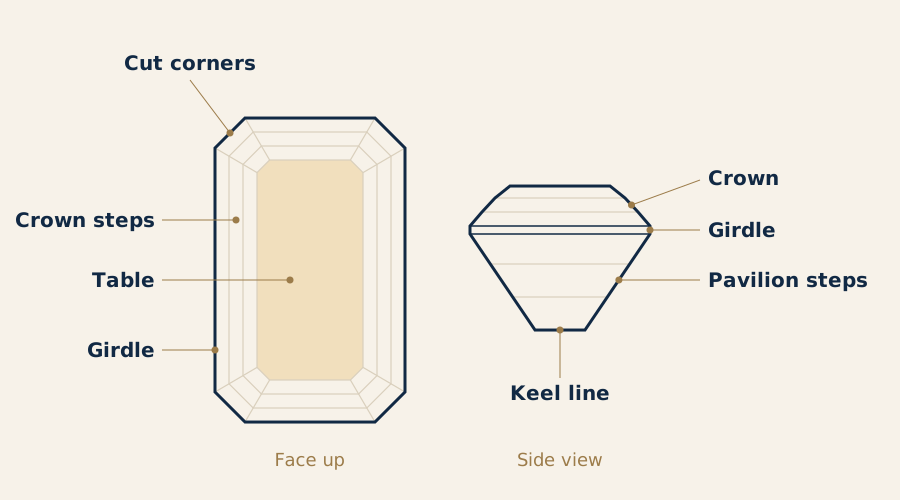
An emerald cut is a step cut. Instead of the triangular and kite-shaped facets of a brilliant, it has long, flat facets arranged in rows parallel to the edges, like the steps of a staircase. The outline is a rectangle with cut corners: small bevelled corners that remove the weak right angles. An elongated emerald cut diamond is the same design stretched further, with a length-to-width ratio of roughly 1.50 or more instead of the classic 1.30–1.45. Our main guide to emerald cut diamonds and how they are graded covers the shape as a whole; this page focuses on the longer versions.
Most emerald cuts have 57 or 58 facets. There is a large flat table on top, usually three rows of steps on the crown (the upper part), three or more rows on the pavilion (the lower part) and, at the very bottom, a short ridge called the keel rather than a single point. In a longer stone the keel line is longer too, which is one reason the proportions need care.
The name comes from the gemstone. Emeralds are brittle and often included, and cutters have long used this rectangular, corner-cut shape on them to reduce the risk of chipping and to show off their colour. On diamond, the step facets give a very different look from a brilliant: fewer, broader flashes of light and dark, often called the hall-of-mirrors effect, rather than the busy, fine sparkle of a round.
Diamond is 10 on the Mohs hardness scale, with a refractive index of about 2.42, so those flat steps stay crisp and polished for decades. Hardness is not toughness, though. Diamond can still chip along its cleavage planes if a thin edge takes a knock, which is exactly why the corners are cut rather than left square.
In the wider family, the elongated emerald sits alongside ovals, pears and marquises in our guide to long and slender diamond shapes. If any term on this page is new to you, the jeweller's glossary of cutting terms explains it in plain English.
What is the best elongated emerald cut ratio?
The length-to-width ratio is the length divided by the width, both taken from the measurements on the grading report. A stone measuring 7.5 × 4.7 mm has a ratio of about 1.60. The ratio, more than anything else, decides whether an emerald cut looks classic, long or almost like a bar.
| Ratio | How it looks | Suits |
|---|---|---|
| 1.00–1.10 | Square outline | Square emerald or Asscher look |
| 1.30–1.45 | Classic rectangle | The traditional emerald cut proportion |
| 1.50–1.65 | Long and slender, still clearly an emerald | Most people asking for an elongated emerald |
| 1.65–1.80 | Very long, a strong linear look | Long fingers, east-west settings, a modern style |
| Above 1.80 | Close to an oversized baguette | A personal preference; check the ends stay bright |
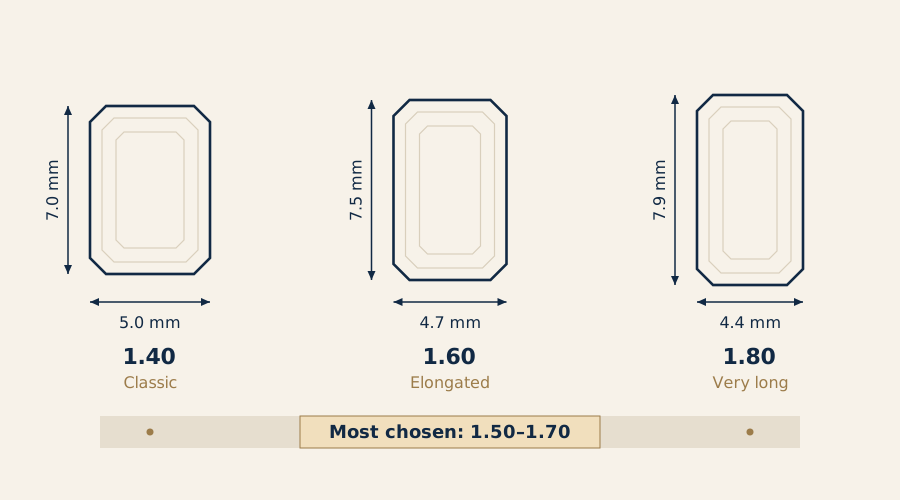
No grading lab draws an official line where an emerald cut becomes elongated. In the trade, most people use the word from about 1.50, and the 1.50–1.70 band is where the majority of long emerald cuts sit. Our emerald cut ratio chart shows every step from square to very long with examples on the hand.
Why choose a longer stone? On the finger, a long emerald covers more of the finger's length, which makes it look larger for its weight and makes the finger look slimmer. The trade-off is width. At 1 carat, a 1.40 stone is about 5.0 mm wide, while a 1.80 stone is closer to 4.4 mm. Very long stones can also look narrow from side-on and leave more of the band showing either side.
How do you judge the cut of an elongated emerald cut diamond?
GIA does not give emerald cuts an overall cut grade the way it does for rounds, so you judge the cut from the proportions, the polish and symmetry grades, and above all how the stone looks when it moves. As a rough guide, many well-cut emerald cuts fall within these ranges:
- Total depth: about 61–68% of the width. Much deeper and the stone looks small face-up (from above); much shallower and it can leak light.
- Table: about 61–69% of the width. A very large table gives broad, glassy flashes; a smaller one gives more step reflections.
- Polish and symmetry: Excellent or Very Good. Step facets are flat mirrors, so polish lines and misaligned steps show more than on a brilliant.
- Girdle: thin to slightly thick, and not extremely thin at the cut corners, where chips start.
- Steps: evenly spaced, parallel to the edges, with the corner facets similar in size at all four corners.
The main cut problem in any step cut is windowing: a pale, see-through patch in the centre where light passes straight through the stone instead of reflecting back. It usually means the pavilion is too shallow. A little windowing in a large table is normal and is part of the clear, watery emerald cut look; a dull, glassy window that stays put as the stone tilts is not. Our guide on how to spot windowing in an emerald cut shows good and poor examples side by side.
Elongated stones have one extra pitfall: dark ends. When an emerald cut is stretched, the short ends can lose light and look grey, a darkening called extinction. Some darkness at the ends that comes and goes as the stone moves gives the stone contrast. Ends that stay dark in every position make the diamond look shorter than it measures.
How big does an elongated emerald cut look for its carat weight?
Because a long stone spreads its weight along the finger, an elongated emerald cut tends to look longer than a classic emerald of the same carat weight, and much longer than a round. Typical face-up sizes for a stone around 1.60 in ratio with a well-judged depth:
| Carat weight | Typical size at about 1.60 ratio (length × width) | Classic 1.40 ratio for comparison |
|---|---|---|
| 0.50 ct | about 6.2 × 3.9 mm | about 5.8 × 4.1 mm |
| 0.75 ct | about 6.8 × 4.3 mm | about 6.4 × 4.6 mm |
| 1.00 ct | about 7.5 × 4.7 mm | about 7.0 × 5.0 mm |
| 1.50 ct | about 8.6 × 5.4 mm | about 8.0 × 5.7 mm |
| 2.00 ct | about 9.4 × 5.9 mm | about 8.8 × 6.3 mm |
| 3.00 ct | about 10.8 × 6.7 mm | about 9.8 × 7.0 mm |
These are typical figures only. A stone cut deeper carries more weight in the pavilion and looks smaller face-up; a shallower one spreads wider but risks windowing. Always compare millimetre measurements, not just carat weight. For how the emerald cut stacks up against every other outline on size, sparkle and price, start with our overview of how each diamond shape behaves.
Below about half a carat, step cuts lose some of their character: the rows of steps become so small that the hall-of-mirrors effect is hard to see. Small elongated emeralds still work well as side stones, in east-west stud earrings and in linear pendants.
Not sure which one is right?
Send us the stones you are looking at and our gemologist will tell you which to choose and why.
What colour and clarity should an elongated emerald cut have?
Clarity matters more in an emerald cut than in almost any other shape. The large open table and the flat steps act like a window into the diamond, and there are no small, broken-up brilliant facets to scatter the view. An inclusion (an internal feature such as a crystal or feather) that would disappear in a round can be plain to see. Our page on why inclusions show more in emerald cuts explains the optics in detail.
Colour shows a little more too. Step cuts return light in broad flashes rather than fine sparkle, so any body colour is not masked as well, and in a long stone the slightly deeper ends can collect a warm tint.
- Clarity, up to about 1.5 ct: VS2 is usually eye-clean (no inclusions visible without magnification at normal viewing distance). A carefully chosen SI1 can work if the inclusions are white and near the edge.
- Clarity, 2 ct and above: consider VS1 or better, because the larger table makes inclusions bigger and easier to see.
- Colour in white gold or platinum: G–H for most people; F or better if you are sensitive to warmth or the stone is over 2 ct.
- Colour in yellow or rose gold: H–J often looks white against the warm metal.
- Avoid: feathers (small internal cracks) near the cut corners, and dark crystals under the table.
Check the plotting diagram on the report, which maps each inclusion, and then look at a high-magnification video. In an elongated stone, the centre of the table and the line along the keel are where the eye goes first, so inclusions there matter most.
What is the best setting for an elongated emerald cut engagement ring?
The cut corners are the thinnest and most exposed part of an emerald cut, so the setting's first job is to protect them. The long straight sides also need to sit square and level, because any tilt is easy to see in a step cut. Common options for an elongated emerald cut engagement ring:
- Four claws: one at each cut corner, ideally a corner or V-shaped claw that wraps the corner rather than a round claw that only touches it. Double claws (eight in total) add security for larger stones.
- Bezel or half-bezel: a thin rim of metal around the edge, or along the long sides only. Very secure and modern; it hides a little of the outline.
- East-west: the stone set sideways across the finger, a popular look for long emeralds because it shows off the length without covering the knuckle.
- Three-stone: trapezoid, tapered baguette or smaller emerald cut side stones continue the step-cut look and the clean lines.
- Hidden halo: a row of small diamonds under the stone, seen from the side, which adds light without changing the outline from above.
- Pavé or plain band: a slim band of about 1.8–2.2 mm keeps the focus on the length of the centre stone.
Long stones also need a setting that sits them low enough to wear comfortably and high enough to fit a wedding band underneath. Our guide to emerald cut settings, claw by claw covers each style in detail, and settings that suit long diamond shapes compares how emeralds, ovals and pears behave in the same mounts. Because an emerald cut has straight sides, a plain straight wedding band usually sits flush against it without needing a contour.
How does an elongated emerald compare with radiant, cushion and Asscher cuts?
| Elongated emerald | Classic emerald | Elongated radiant | Elongated cushion | Asscher | |
|---|---|---|---|---|---|
| Faceting | Step cut | Step cut | Brilliant-step hybrid | Brilliant (modified) | Step cut |
| Outline | Long rectangle, cut corners | Rectangle, cut corners | Long rectangle, cut corners | Rounded rectangle | Square, large cut corners |
| Typical ratio | 1.50–1.80 | 1.30–1.45 | 1.25–1.50 | 1.15–1.40 | 1.00–1.05 |
| Look | Long flashes, open table | Hall of mirrors | Crushed-ice sparkle | Soft, pillowy sparkle | Concentric, windmill pattern |
| Hides inclusions | Poorly | Poorly | Well | Well | Poorly |
| Hides body colour | Moderately | Moderately | Well | Well | Moderately |
The closest relative is the radiant: the same outline, but with brilliant-style facets that hide inclusions and colour far better. If you like the long rectangle but want more sparkle, compare long radiant cut diamonds and read our emerald vs radiant comparison for how they differ face to face.
Related guideEmerald vs Radiant Cut DiamondsFor a softer outline with rounded corners, the elongated cushion cut is the usual alternative. Our square vs elongated cushion guide and the oval vs elongated cushion comparison help if you are weighing those up. At the other end of the scale, the Asscher is the square step cut; see how emerald and Asscher cuts differ for the trade-offs between a square and a rectangular step cut.
How much does an elongated emerald cut diamond cost in Australia?
Elongated emerald cuts are cut from both natural and laboratory-grown diamond, and the two look the same to the eye. Lab-grown diamonds are real diamond with the same hardness and refractive index, grown in a laboratory rather than mined; they cost much less and are easier to find in long, large sizes. Natural diamonds are rarer. Either way, ask for an independent grading report from a lab such as GIA or IGI, which will state clearly whether the stone is natural or lab-grown.
| 1 ct elongated emerald, G–H, VS2 | Approximate price range (AUD) |
|---|---|
| Lab-grown | about $900–$3,000 |
| Natural | about $6,000–$14,000 |
These are broad ranges only; prices move with the market and the exact grades. Emerald cuts usually cost less per carat than rounds of the same colour and clarity, partly because they keep more of the rough crystal. The ratio itself does not usually change the price much; what moves it is carat, colour, clarity and how well the stone is cut. Because clarity shows so readily, it is often worth spending on clarity before colour in an emerald cut, and our main emerald cut diamond guide sets out how to balance the grades.
Browse elongated emerald cut diamonds: natural and lab-grown
How do you choose an elongated emerald cut diamond? Step by step
- Read the report. Confirm the shape, measurements, colour, clarity, polish and symmetry, and whether the diamond is natural or lab-grown.
- Work out the ratio. Divide length by width; aim for about 1.50–1.70 for a clearly elongated look.
- Check the proportions. Depth about 61–68% and table about 61–69%, with polish and symmetry Excellent or Very Good.
- Watch a 360° video. Look for a glassy window in the centre and for ends that stay dark in every position.
- Check clarity at magnification. Use the plotting diagram and video to make sure nothing sits under the table or along the keel.
- Compare face-up size. Use the millimetre measurements, not just carat weight, and picture the width on the finger.
- Plan the setting. Make sure the cut corners are protected by corner claws or a bezel before you commit to the stone.
Free consultation
Talk to a gemologist
Compare stones in person or online with Raj Sood, Graduate Gemologist (GIA), AJP (GIA).
Book a consultationFAQ
Common questions
What ratio is an elongated emerald cut?
Most people call an emerald cut elongated from a length-to-width ratio of about 1.50, with 1.50–1.70 the most popular range. The classic emerald cut sits around 1.30–1.45.
Does an elongated emerald cut look bigger?
It looks longer for its weight than a classic emerald or a round, because it covers more of the finger's length. It is narrower, though, so compare the millimetre measurements of both length and width.
What clarity do I need for an elongated emerald cut diamond?
VS2 is usually eye-clean up to about 1.5 carat, and VS1 or better is worth considering at 2 carat and above. Step cuts show inclusions more than brilliant cuts, so always check a magnified video.
Are elongated emerald cuts more expensive than classic emerald cuts?
Usually there is little difference per carat between the two. Price depends mostly on carat, colour, clarity and cut quality rather than the ratio.
Do emerald cut diamonds chip easily?
The cut corners are designed to reduce chipping, and with claws or a bezel protecting them an emerald cut is fine for everyday wear. Avoid stones with feathers near the corners.
Can you get a lab-grown elongated emerald cut diamond?
Yes. Lab-grown elongated emerald cuts are widely available, cost much less than natural stones and are graded by labs such as IGI and GIA, with the report stating that the diamond is laboratory-grown.

Ask a gemologist
Not sure which diamond to choose?
Raj Sood is a Graduate Gemologist (GIA) and master jeweller. Bring the stones you are considering, or send the reports, and he will tell you honestly which one is better and why.
Keep learning
Related guides
 Diamond ShapesEmerald Cut DiamondsDiamond ShapesEmerald-Cut Diamond Length-to-Width RatioDiamond ShapesWhat Is Windowing in an Emerald-Cut Diamond?Engagement Rings & SettingsBest Settings for Emerald Cut DiamondsDiamond ShapesUnderstanding Diamond Shapes
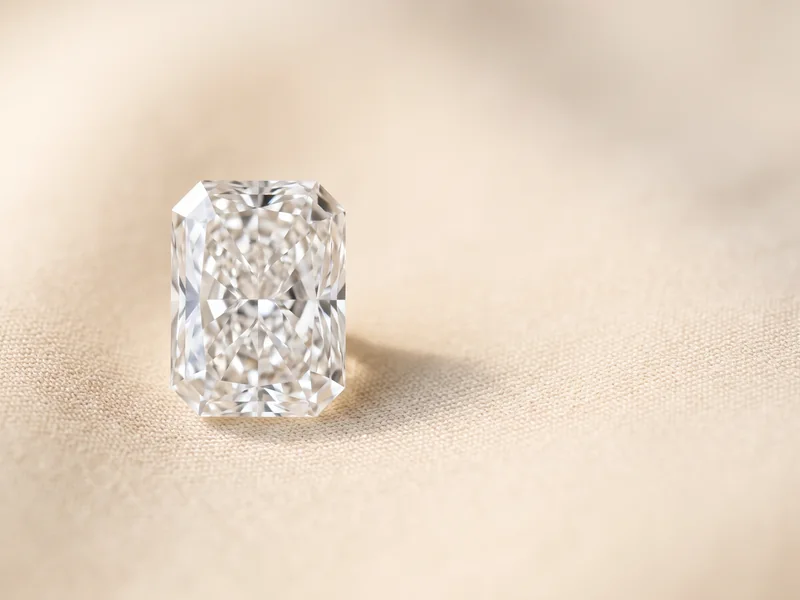 Diamond ShapesElongated Radiant Cut Diamonds
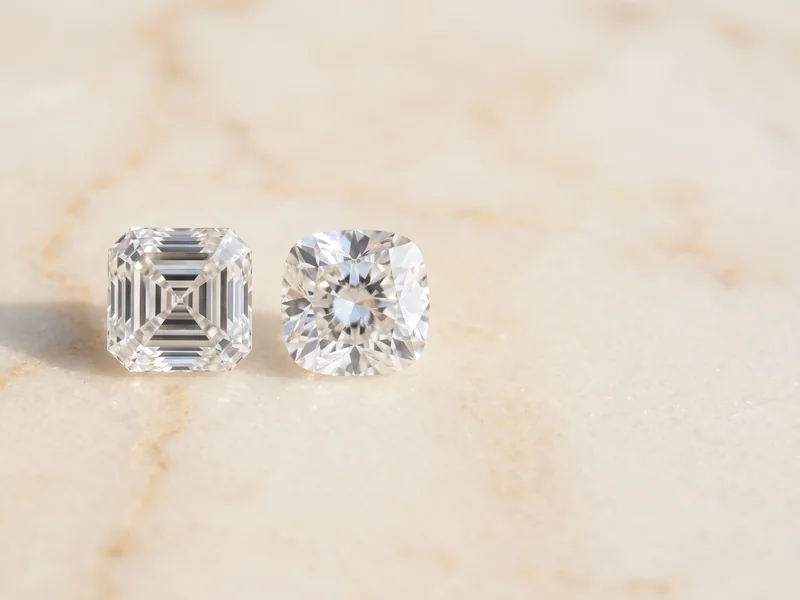 Diamond ShapesElongated Cushion Cut DiamondsDiamond ShapesEmerald vs Radiant Cut Diamonds
Explore more
More guides on this topic
Education