
- Education
- Diamond Shapes
- Emerald Cut Windowing: What It Is and How to Avoid a Washed-Out Diamond
Diamond shapes
Emerald Cut Windowing: What It Is and How to Avoid a Washed-Out Diamond
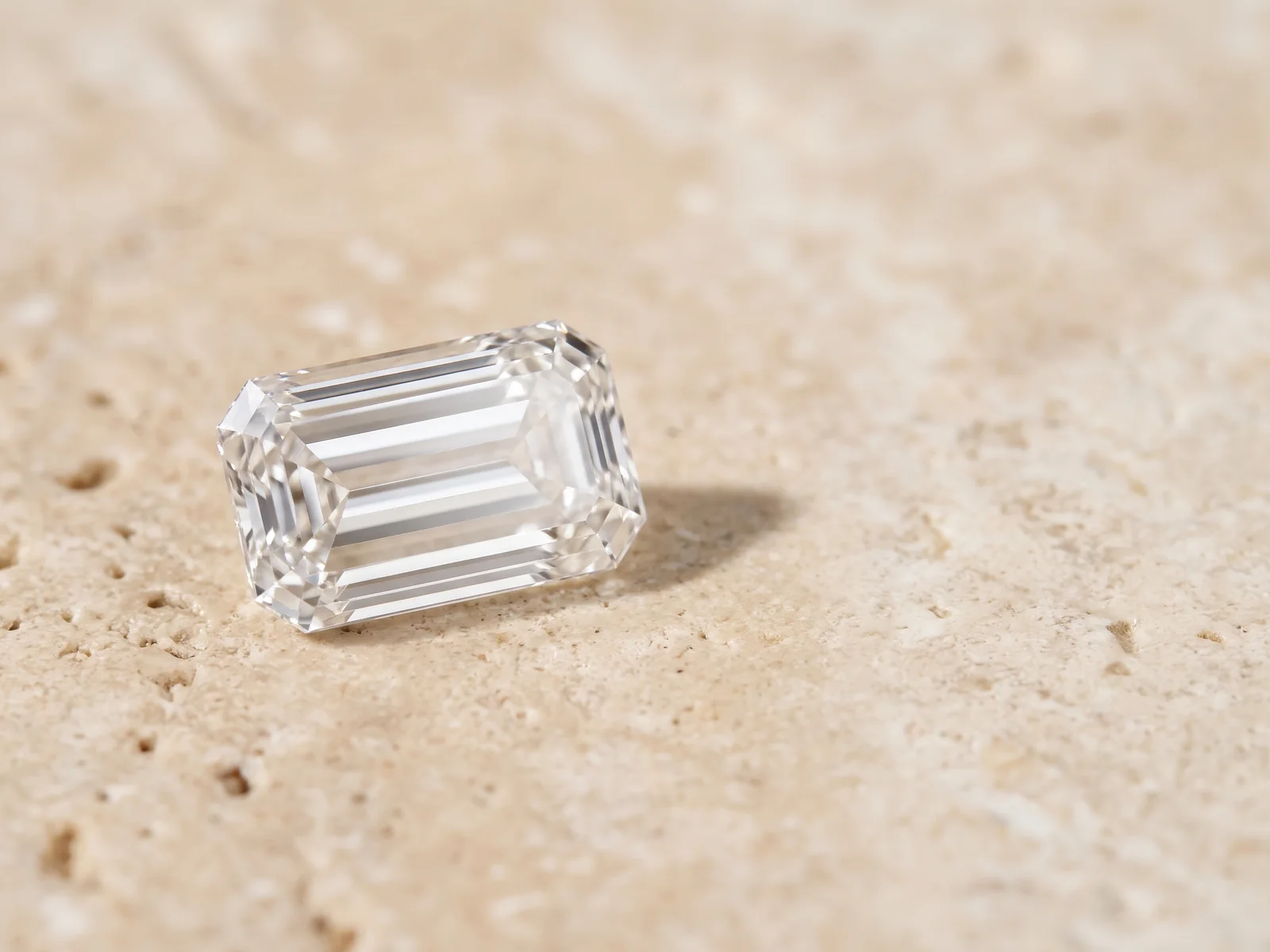
Emerald cut windowing is the most common reason a step-cut diamond looks flat, glassy or grey in the middle. Knowing what causes it, and how to spot it before you buy, is the difference between an emerald cut that glows and one that looks like a pane of glass.
 Reviewed by Raj Sood, Graduate Gemologist (GIA), AJP (GIA)Master jeweller and Graduate Gemologist (GIA) · reviewed 4 November 2026
Quick answer
Windowing is a washed-out, see-through patch in the centre of an emerald cut diamond, where light passes through the pavilion instead of reflecting back to your eye. It is caused mainly by a shallow pavilion. To avoid it, look for a total depth and table of about 61–69%, then check a 360° video.
What is windowing in an emerald cut diamond?
Windowing is a pale, see-through area in a diamond, usually in the centre, where you can look straight into the stone and out the other side. Instead of the bright flashes and dark contrast you expect, that patch looks watery, grey or simply empty, as if someone has set a small pane of glass into the middle of the diamond. If the stone is on a white background you see white through it; on your finger you may see skin or the metal of the setting.
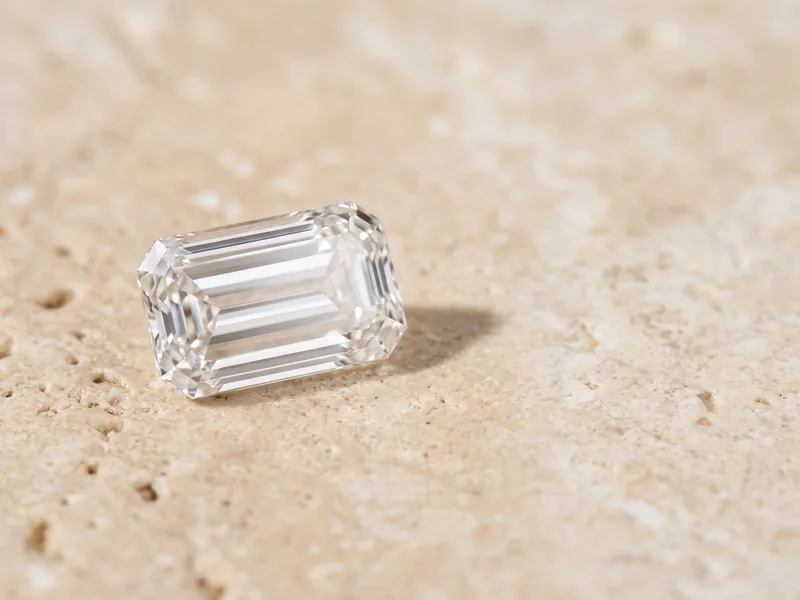
Every diamond shape can window, but emerald cuts are especially prone to it. An emerald cut is a step cut: rather than the triangular and kite-shaped facets of a brilliant, it has long, flat, parallel facets arranged like the steps of a staircase, with cut corners. Most emerald cuts have around 50 to 58 facets, with a large open table (the big flat facet on top) and a pavilion (the lower half) made of rows of stepped facets that meet in a ridge called the keel line rather than a point. Our complete emerald cut diamond guide covers the shape as a whole; this page focuses on the one flaw buyers most often miss.
Windowing is not a clarity issue and it is not printed on a grading report. It is a cut issue: the result of how the cutter chose to shape the stone. That makes it something you have to judge yourself, from the measurements and, above all, from a good photo or video. If any term here is new, our plain-English jewellery glossary explains it, our page on how step cuts differ from brilliant shapes puts the emerald cut in context, and our guide to all 34 diamond cuts, from step cuts to brilliants shows where it sits among every shape.
Why do emerald cut diamonds show windowing?
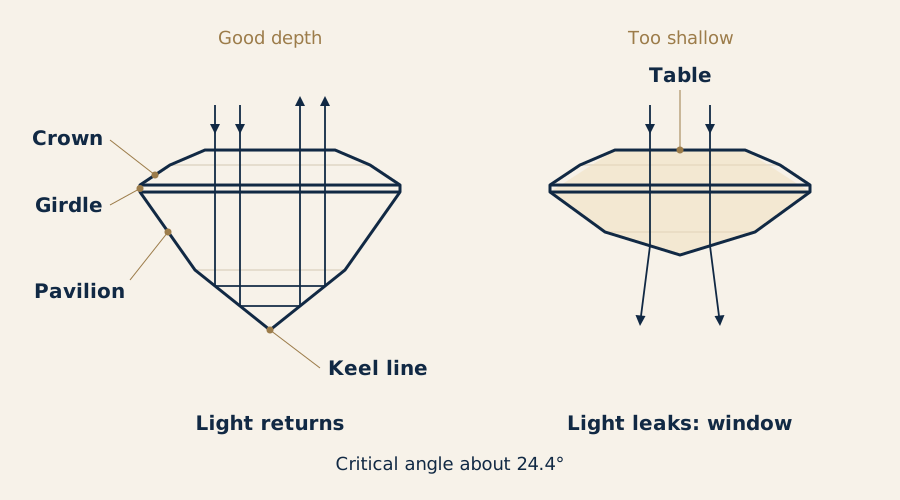
It comes down to a simple piece of optics. Diamond has a very high refractive index, about 2.42, which gives it a critical angle of about 24.4°. When light inside the diamond strikes a facet at an angle greater than that (measured from a line at right angles to the facet), it reflects back inside, a process called total internal reflection. When it strikes at a smaller angle than the critical angle, closer to head-on, it passes out of the stone and is lost.
In a well-cut diamond, light enters through the table, hits the pavilion facets at a steep enough angle to bounce, and heads back up to your eye. If the pavilion is too shallow, the facets near the centre sit almost flat, light hits them nearly head-on and slips straight out the back. That leaked light is the window. In an emerald cut the problem is magnified for three reasons:
- Fewer, larger facets: a brilliant's many small facets scatter and mix light, which can disguise a slightly shallow pavilion. An emerald cut's long steps are flat mirrors, so a poor angle shows clearly across a wide area.
- A big open table: the table on an emerald cut is often 60–70% of the width, so you are looking almost straight down into the pavilion.
- Cutting for spread: a shallow stone looks bigger face-up for its carat weight. Some emerald cuts are cut thin on purpose to make a 1 carat stone face up like a larger one, and windowing is the price of that extra spread.
If face-up size is what draws you to a thin stone, our comparison of which shapes face up largest for their weight shows how the emerald cut compares without cutting it shallow. Shape matters too. Longer stones have long, gently sloping pavilion steps through the middle, and if those are cut flat the window can run down the whole centre of the stone. Our guide to how length-to-width ratio changes an emerald cut explains how the outline affects the way light moves through the stone.
Is windowing the same as extinction or the hall-of-mirrors effect?
No. These three terms describe very different things, and people often mix them up when they compare emerald cuts online. The hall-of-mirrors effect is the good one: the alternating bright and dark rectangles you see receding into a well-cut emerald cut, like looking down a corridor of mirrors. It is the signature look of the shape, explained in detail on our page about the hall-of-mirrors flashes emerald cuts are known for. Extinction is the opposite of windowing: dark areas where the stone returns too little light, usually because it is cut too deep.
| Effect | What you see | Usual cause | Is it a problem? |
|---|---|---|---|
| Windowing | Pale, glassy, see-through patch, usually central | Pavilion too shallow; total depth often below about 60% | Yes, if it is obvious face-up |
| Extinction | Dark grey or black patches that stay dark as the stone moves | Pavilion too deep or steep; depth often above about 72% | Yes, if large or fixed |
| Hall-of-mirrors | Crisp, alternating bright and dark steps that shift as you tilt | Balanced pavilion angles and good symmetry | No, this is what you want |
| Bow-tie | Dark band across the centre | Mainly in ovals, pears and marquises, not emerald cuts | Only if strong |
The key point is that some darkness is healthy. A good emerald cut is a stone of contrast, with dark steps between the bright ones. A windowed stone loses that contrast in the middle: the steps fade, the centre goes uniformly pale, and the stone can look lifeless even when the colour and clarity grades are high.
What proportions reduce emerald cut windowing?
Because GIA does not give emerald cuts an overall cut grade, the report's proportions are your best early warning. Two numbers do most of the work: total depth (the height of the stone from table to keel line, as a percentage of its width) and table (the width of the table as a percentage of the stone's width). The ranges below are a common starting point among gemmologists.
| Measurement | Usually good | Watch for windowing | Watch for extinction |
|---|---|---|---|
| Total depth | about 61–69% | below about 60% | above about 72% |
| Table | about 61–69% | above about 72% (often paired with a shallow pavilion) | below about 58% (can look closed and dark) |
| Girdle | thin to slightly thick | very thin (often a sign of a flat stone) | very thick to extremely thick (hidden weight) |
| Culet | none or very small | not a direct cause | not a direct cause |
Treat these as a filter, not a verdict. Depth is an average across the whole stone, and the shape of the pavilion matters as much as its total height. Two stones at 64% depth can look quite different if one has a deep, thick girdle and a flat centre while the other has well-angled steps all the way down. Our full emerald cut proportions chart breaks down each measurement in more detail.
Elongated stones deserve extra care. At ratios of 1.50 and above, the keel line is longer and the central pavilion steps run further, so a shallow pavilion produces a longer window. If you love longer, slimmer emerald cuts, lean towards the middle or upper part of the depth range rather than the bottom.
Not sure which one is right?
Send us the stones you are looking at and our gemologist will tell you which to choose and why.
How do you spot windowing in photos and 360° video?
Numbers narrow the field; your eyes make the decision. Most windowing is easy to see once you know where to look. When you study an emerald cut online, check the following:
- The centre of the table: look for an area where the step pattern fades or disappears, leaving a flat, even tone.
- The background showing through: on a white or light background, a window looks white or pale grey; on a dark background it looks dark and empty. Either way, you are seeing what is behind the stone rather than light coming back from it.
- Movement: in a 360° video the steps of a well-cut stone flash on and off as it turns. A window stays dull at almost every angle.
- The edge versus the middle: if the outer steps are lively but the centre is flat, that contrast points to a shallow central pavilion.
- Face-up size: if a stone measures noticeably larger than others of the same carat weight, check it carefully; extra spread often comes from a thin pavilion.
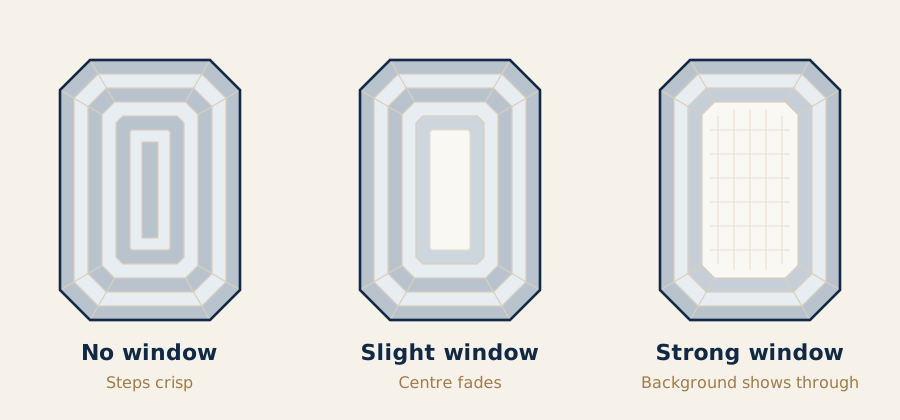
Be careful with photos taken under heavy, diffuse studio lighting, which can make windows look brighter than they really are, or with angled shots that hide the centre. A straight-down image and a slow 360° video under normal light are the most honest views. Compare what you see with what a healthy step pattern looks like and the difference is usually clear.
Is windowing bad in a diamond, and how much is acceptable?
A small amount of windowing is common in emerald cuts and is not automatically a reason to walk away. What matters is whether you notice it face-up, at normal viewing distance, in everyday light. Nobody grades windowing officially, but jewellers tend to describe it in four rough levels.
| Level | What it looks like | Our view |
|---|---|---|
| None | Steps visible right across the table; strong contrast | Ideal |
| Slight | A faint pale patch at the very centre, only from straight above | Usually fine; often invisible once set |
| Moderate | A clear pale area covering a noticeable part of the table | Think twice; compare it with other stones |
| Strong | Most of the table see-through; steps fade at most angles | Usually avoid, whatever the other grades |
Windowing also affects how colour and clarity read. Light passing straight through a window picks up the colour of whatever is behind it, so a windowed stone set in yellow gold can look tinted, and one on a white background can look whiter than it will on the hand. Inclusions (internal features) are also easier to see through a clear window than through a busy step pattern. That is one reason many people choose VS2 or better in an emerald cut, and G–H colour or better in white metal; see our depth and table targets by grade for how these fit together.
Size plays a part. A slight window in a 0.50 carat stone may be hard to see, while the same proportions in a 2 carat stone produce a window wide enough to notice easily.
Related guideEmerald Cut DiamondsDo Asscher and radiant cuts window like emerald cuts?
Asscher cuts are square step cuts and share the same risk, though their higher crowns and deeper pavilions mean well-made Asschers window less often. Radiant cuts combine an emerald-like outline with brilliant-style faceting on the crown and pavilion, which breaks light up and makes windowing less common and less obvious. Rounds and ovals can window too, but their many small facets usually hide mild leakage better.
| Emerald | Asscher | Radiant | Oval | Round brilliant | |
|---|---|---|---|---|---|
| Facet style | Step cut | Step cut | Modified brilliant (cut-cornered) | Modified brilliant | Brilliant |
| Typical ratio | 1.30–1.50 | 1.00–1.05 | 1.00–1.40 | 1.30–1.50 | 1.00 |
| Windowing risk | Higher | Moderate | Lower | Moderate | Lower when well cut |
| Main dark effect | Extinction if too deep | Extinction if too deep | Patchy extinction | Bow-tie | Rarely, if well cut |
| Hides inclusions | Least | Little | Well | Well | Well |
If windowing worries you but you love a rectangular outline, read our emerald vs radiant guide, which explains why radiants trade the clean step look for more sparkle. If you prefer a square, our emerald vs Asscher comparison sets out the differences in depth and light return. Small step cuts window too: baguette and tapered baguette side stones are shallow by nature, so a slight window in them is normal and rarely noticed. For the full picture, see our overview of every diamond shape.
Does windowing affect the price of natural and lab-grown emerald cuts?
Windowing follows the physics, not the origin. Natural and laboratory-grown diamonds have the same refractive index and critical angle, so a lab-grown emerald cut with a shallow pavilion windows exactly like a natural one. Lab-grown diamonds are real diamond, grown in a laboratory rather than mined; they cost much less than natural and are easy to find in larger sizes. Because larger sizes are so accessible, check the depth on lab-grown emerald cuts as carefully as on natural ones.
Windowing is not on the report, so prices do not adjust for it automatically. Two stones with identical colour, clarity and carat can sit at similar prices even if one windows badly. That is why a quick look at the proportions, and a good video, matters more than shaving a little off the price.
| 1 ct emerald cut, G–H, VS | Approximate price range (AUD) |
|---|---|
| Lab-grown | about $800–$2,500 |
| Natural | about $5,000–$12,000 |
These are broad ranges only, and prices move with the market and the exact grades. Emerald cuts usually cost less per carat than rounds of the same grades, partly because more of the rough crystal is kept; our page on how price per carat varies from shape to shape sets out the pattern. Our emerald cut colour, clarity and price advice goes into more detail.
Browse emerald cut diamonds: natural and lab-grown
Can a setting hide windowing in an emerald cut diamond ring?
A setting cannot fix a window, but it changes what you see through it. Light leaking through the pavilion will show whatever sits beneath the stone, so the design of the setting matters more for a windowed emerald cut than for most shapes.
- Metal colour: a window picks up the colour of the metal under it. Platinum or white gold keeps the centre looking neutral; yellow or rose gold will tint it.
- Open versus closed gallery: an open setting lets light in from the sides, which can brighten a stone but also makes a see-through window easier to notice against skin.
- Bezel settings: a rim of metal around the edge frames the stone and can make a slight window less obvious, though it will not hide a strong one.
- Halos: small diamonds around the emerald cut add sparkle at the edge and draw the eye, softening the impact of mild windowing.
- Four or six claws: corner claws protect the cut corners and leave the step pattern fully visible, so choose a stone without an obvious window.
Our guide to settings that suit emerald cuts compares claw, bezel, halo and three-stone designs, with notes on how each one affects the way the stone looks on the hand.
How to avoid windowing in an emerald cut: step by step
- Read the report. Confirm the shape, measurements, depth, table, girdle and polish and symmetry, and whether the diamond is natural or lab-grown.
- Filter by depth. Start with stones at about 61–69% total depth and a table of about 61–69%; be wary of anything below 60%.
- Check the girdle. A very thin girdle on a shallow stone is a warning sign; a very thick one hides weight without adding face-up size.
- Compare face-up size. Divide length by width for the ratio, and note stones that measure unusually large for their carat weight.
- Watch a straight-down 360° video. Look for steps that flash right across the centre, not a pale patch that stays dull as the stone turns.
- Try the read-through test. If you can see a loose stone in person, place it on printed text and check the words break up.
- Plan the setting. Choose a metal colour and setting style knowing that any slight window will show what lies beneath.
Follow these steps alongside our guide to choosing an emerald cut outline and you will rule out almost every badly windowed stone before it reaches the shortlist.
Free consultation
Talk to a gemologist
Compare stones in person or online with Raj Sood, Graduate Gemologist (GIA), AJP (GIA).
Book a consultationFAQ
Common questions
What causes windowing in an emerald cut diamond?
Mainly a pavilion cut too shallow, so light strikes the lower facets at less than diamond's critical angle of about 24.4° and passes out the back. Cutting for extra face-up spread is the most common reason.
What depth percentage avoids windowing in an emerald cut?
A total depth of about 61–69% usually avoids an obvious window. Below about 60% windowing becomes likely, and above about 72% the stone can turn dark instead.
Is windowing shown on a GIA report?
No. GIA does not grade windowing and does not give emerald cuts an overall cut grade, so you need to judge it from the proportions and a good photo or video.
Is a little windowing acceptable?
Yes. A faint pale area at the very centre, visible only from straight above, is common in step cuts and usually unnoticeable once set. A window covering a large part of the table is worth avoiding.
Do lab-grown emerald cut diamonds window more than natural ones?
No. Lab-grown and natural diamonds have the same optical properties, so windowing depends only on how the stone is cut. Check the depth and video for both.
Can windowing be fixed by recutting?
Sometimes a stone can be recut, but a shallow pavilion cannot be made deeper, so recutting usually means a smaller, lighter stone. It is generally simpler to choose a well-proportioned stone in the first place.

Ask a gemologist
Not sure which diamond to choose?
Raj Sood is a Graduate Gemologist (GIA) and master jeweller. Bring the stones you are considering, or send the reports, and he will tell you honestly which one is better and why.
Keep learning
Related guides
 Diamond ShapesEmerald-Cut Diamond Hall-of-Mirrors EffectDiamond Anatomy & LightIdeal Proportions Chart: Emerald Cut DiamondsDiamond ShapesEmerald Cut DiamondsEngagement Rings & SettingsBest Settings for Emerald Cut DiamondsDiamond ShapesUnderstanding Diamond Shapes
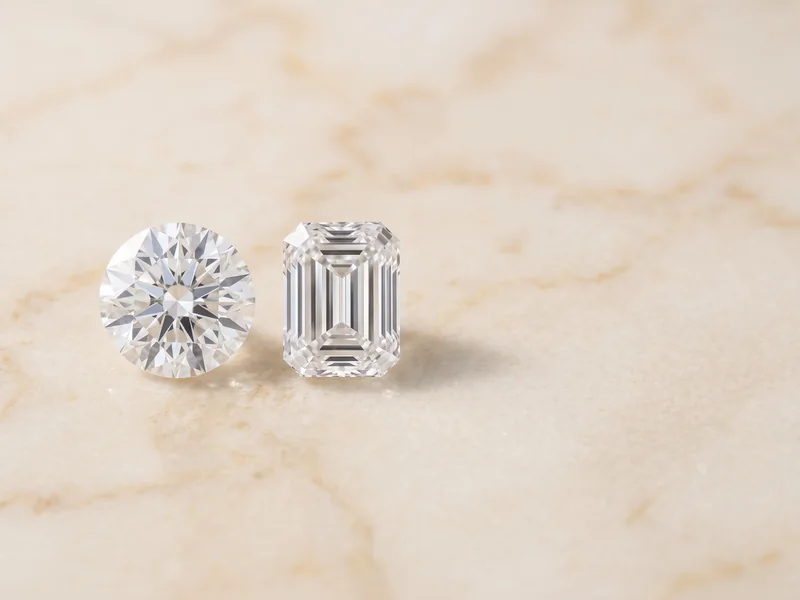 Diamond ShapesEmerald vs Asscher Cut Diamonds
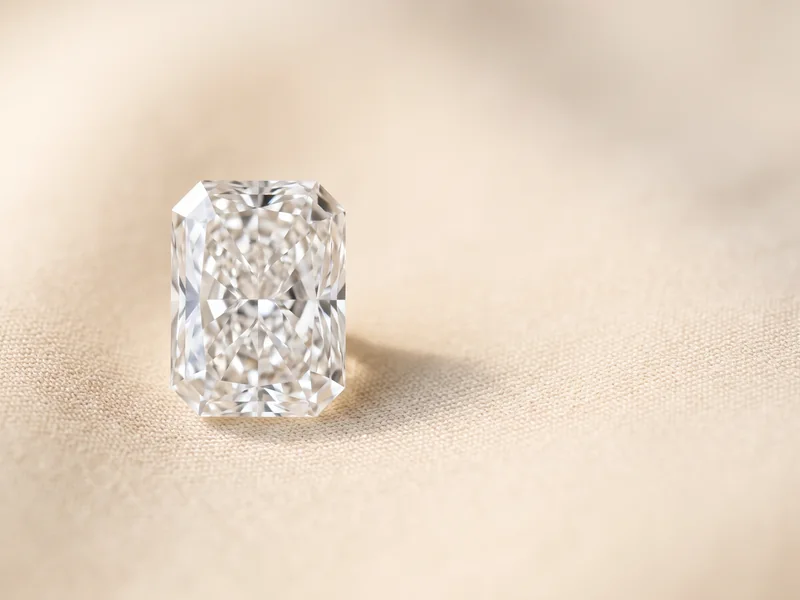 Diamond ShapesEmerald vs Radiant Cut DiamondsDiamond ShapesElongated Emerald Cut Diamonds
Explore more
More guides on this topic
Education