
- Education
- Diamond Shapes
- Emerald Cut Hall of Mirrors Effect: How Step Facets Create It
Diamond shapes
Emerald Cut Hall of Mirrors Effect: How Step Facets Create It
The emerald cut hall of mirrors effect is the reason people fall for this shape, and the first thing a poorly cut stone loses. Here is what causes it, which numbers protect it and how to check it in a real diamond.
 Reviewed by Raj Sood, Graduate Gemologist (GIA), AJP (GIA)Master jeweller and Graduate Gemologist (GIA) · reviewed 4 November 2026
Quick answer
The hall of mirrors effect is the pattern of broad, alternating light and dark rectangles you see inside a well-cut emerald cut diamond. It comes from parallel step facets reflecting one another down through the stone. It looks strongest with a total depth of about 60–68%, a table of about 60–69%, clean clarity and no windowing.
What is the hall of mirrors effect in an emerald cut diamond?
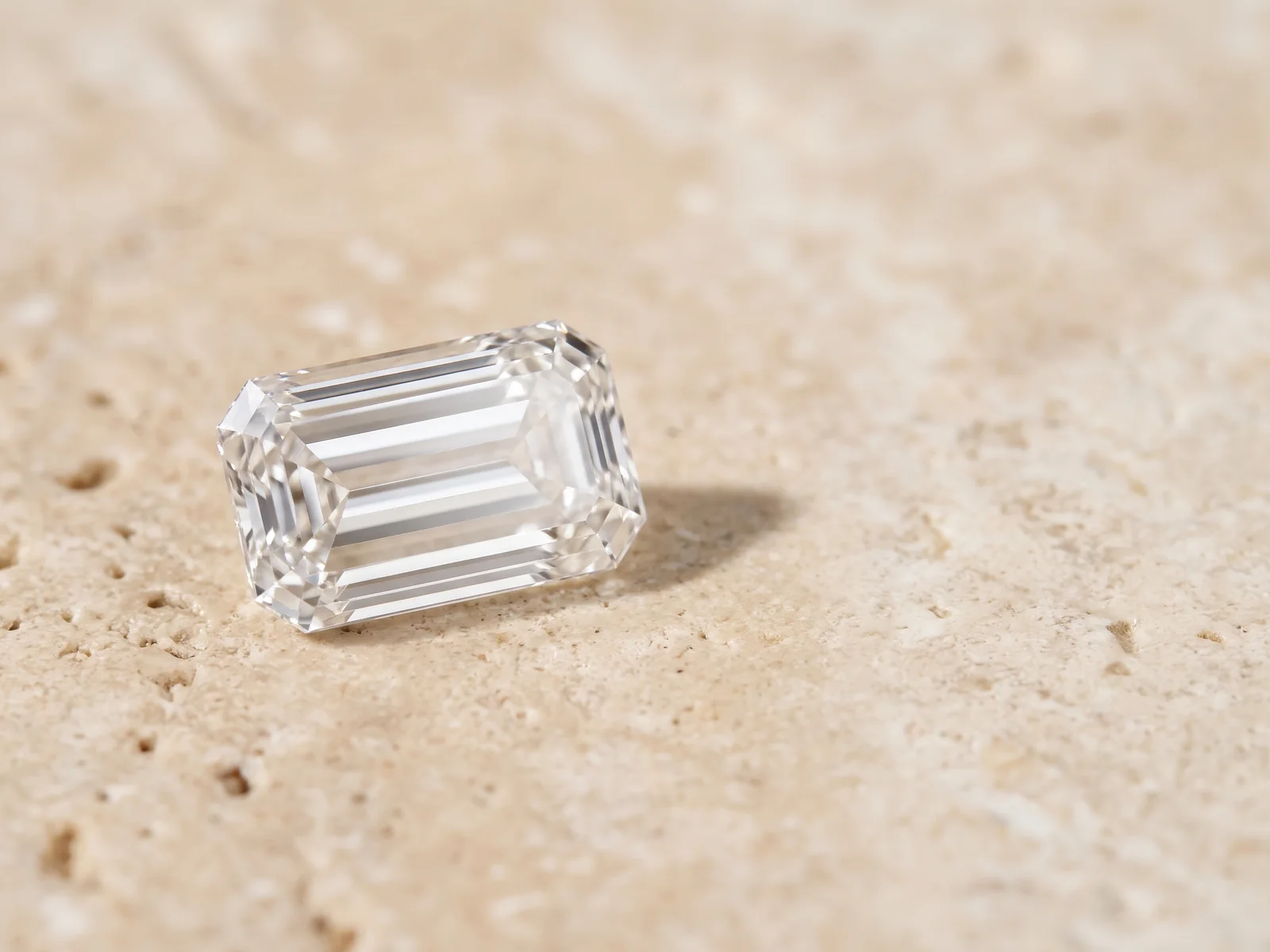
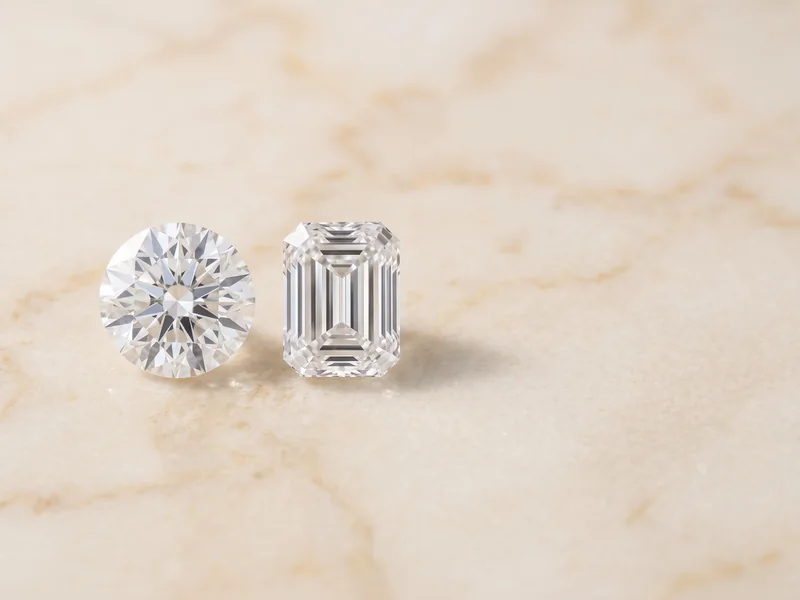
An emerald cut diamond is a step cut: a rectangle with cut corners, faceted in long, flat rows that run parallel to the edges, like the steps of a staircase. Look down through the large top facet (the table) of a well-cut stone and you see those steps repeat, one inside the other, as a series of rectangles that seem to recede into the diamond. As the stone moves, the rectangles switch between bright white and dark grey or black. That receding, flashing pattern is what jewellers call the hall of mirrors effect.
It is a different kind of beauty from the sparkle of a round brilliant. A brilliant breaks light into hundreds of small pinpoints. An emerald cut gives fewer, larger and calmer flashes, with strong contrast between light and dark. People often describe it as icy, architectural or glassy in the good sense: clear, like looking into still water. Our complete emerald cut diamond guide covers the shape as a whole; this page focuses on the one feature that makes or breaks it.
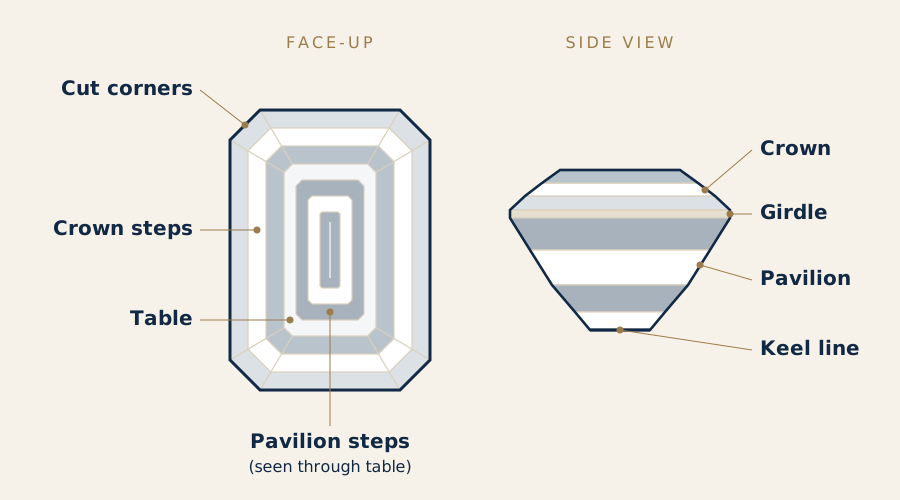
A traditional emerald cut has about 57 facets, though modern cutters vary the count by adding or splitting pavilion steps. The effect is shared by other step cuts too, including the square Asscher and the narrow baguette and tapered baguette. If you want to see where step cuts sit among all the outlines, start with our overview of every diamond shape side by side, or browse all 34 diamond cuts we explain.
What causes the emerald cut hall of mirrors effect?
Three things work together: the parallel steps, the pavilion angles and diamond's own optics.
- Parallel steps: the crown (the upper part above the girdle) usually has three rows of steps, and the pavilion (the lower part) has three to five. Because the facets are long and flat, each one acts like a small mirror, and the rows reflect each other.
- Pavilion angles: the pavilion steps meet at the bottom in a ridge called the keel line, rather than a single point. If the angles are right, light entering the table hits the pavilion steps, bounces across the stone and returns up to your eye.
- Diamond's optics: diamond has a refractive index of about 2.42 and a critical angle of about 24.4°. Any light that strikes an inner facet at more than that angle is reflected rather than escaping, which is why a well-angled pavilion works like a mirror.
The dark steps matter as much as the bright ones. Some of the reflections you see are of your own head, the room or the shadow of the ring, and these show as dark panels. That contrast is what gives the rectangles depth. A stone that is evenly bright all over usually is not showing a hall of mirrors at all; it is showing light leaking straight through, which is the windowing we cover below.
Diamond also has a dispersion of about 0.044, which splits white light into flashes of colour (often called fire). Large step facets throw fewer but broader colour flashes than brilliant facets. Unfamiliar terms such as crown, girdle and keel are all explained in our plain-English jewellery glossary.
How is the hall of mirrors different from brilliant sparkle?
The easiest way to understand the effect is to compare the emerald cut with the shapes people most often weigh it against.
| Emerald cut | Asscher cut | Radiant cut | Round brilliant | |
|---|---|---|---|---|
| Faceting style | Step cut | Step cut | Brilliant pavilion, step-like outline | Brilliant |
| Outline | Rectangle, cut corners | Square, large cut corners | Rectangle or square, cut corners | Circle |
| Typical ratio | 1.30–1.50 | 1.00–1.05 | 1.00–1.40 | 1.00 |
| What you see | Receding rectangles, broad flashes | Windmill or X pattern, concentric squares | Crushed-ice or fine sparkle | Many small pinpoint flashes |
| Shows inclusions | Easily | Easily | Hides them well | Hides them well |
| Windowing risk | Higher | Moderate | Low | Low |
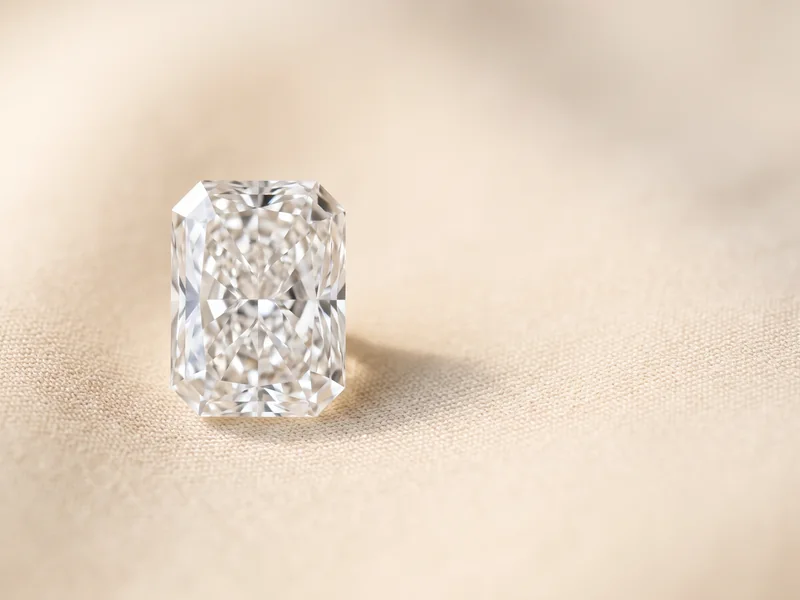
The radiant cut is the closest relative: it keeps the emerald's cut-corner outline but uses brilliant facets underneath, so it trades the hall of mirrors for more sparkle and better hiding of inclusions. Our guide on how an emerald compares with a radiant cut sets the two side by side. The Asscher is a square step cut with deeper proportions and bigger corners, which turns the receding rectangles into a windmill-like pattern; see the square-stepped Asscher compared with the emerald.
Related guideEmerald vs Radiant Cut DiamondsNone of these is better in general. It comes down to whether you prefer calm, mirror-like flashes or busy sparkle, and many people decide within a minute of seeing both in person. If you are curious how the round's pinpoint sparkle evolved, our page on how the modern round brilliant developed tells that story.
Which proportions give a strong hall of mirrors effect in an emerald cut?
GIA does not give emerald cuts an overall cut grade the way it does for round brilliants, so the report leaves you to judge the cut from its numbers and its appearance. These are the ranges many cutters and gemmologists use as a starting point:
| Measurement | Range often preferred | What happens outside it |
|---|---|---|
| Total depth | about 60–68% | Shallower: windowing and a washed-out centre. Deeper: looks small face-up and can go dark |
| Table | about 60–69% of width | Too large: fewer crown steps, weaker contrast. Too small: crown dominates, less light in |
| Crown steps | 3 rows | Fewer rows reduce the layered look |
| Pavilion steps | 3–5 rows | Too few: blocky flashes. Many: finer, busier pattern |
| Girdle | Thin to slightly thick | Very thick: hidden weight. Very thin: chipping risk at corners |
| Culet | None (keel line) | A visible open culet shows as a dot or line in the centre |
| Length-to-width ratio | about 1.30–1.50 | Purely a taste question, but it changes how long the hall looks |
These ranges are guides, not rules. Two stones with identical numbers can look different, because the angle of each step row matters and the report does not list those. Our full proportions chart for emerald cuts goes through each measurement in more detail.
Ratio changes the character of the effect. At about 1.30 the stone is broader and the rectangles look like a deep, wide corridor. At 1.50 and beyond the steps stretch out and the pattern reads as long, slim lines. Our page on how length-to-width ratio changes an emerald cut shows the outlines, and the longer, slimmer emerald cuts guide covers stones above 1.50.
Not sure which one is right?
Send us the stones you are looking at and our gemologist will tell you which to choose and why.
How does windowing spoil the hall of mirrors effect in an emerald cut?
Windowing is a pale, see-through patch in the middle of a diamond where light passes straight through instead of being reflected back. In an emerald cut it is the main enemy of the hall of mirrors, because the large table gives light an easy way in, and a shallow pavilion gives it an easy way out. Instead of crisp rectangles you see a grey, glassy panel, and sometimes the pattern of whatever the stone is sitting on.
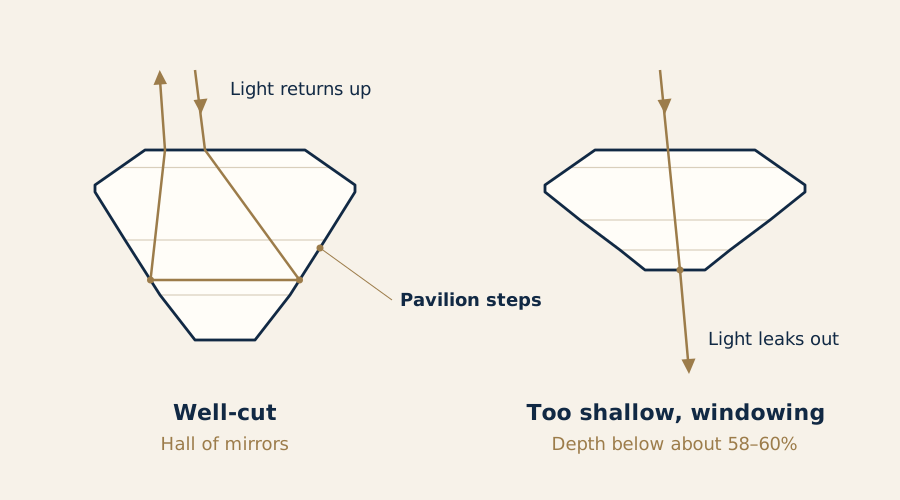
Windowing usually comes from a total depth below about 58–60% or pavilion angles that are too shallow, often because the cutter was saving weight from a flat piece of rough. The stone then spreads wider for its carat weight, which can look like good value on paper. The opposite fault, a very deep stone, gives a dark centre and a smaller face-up size. Our guide to what windowing is and how to spot it has photos of both.
Do clarity and colour matter more in an emerald cut?
Yes, and the same features that create the hall of mirrors are the reason. Broad, flat step facets and a large table give you a clear view into the stone, with none of the busy sparkle that disguises inclusions (internal features) in a brilliant. An inclusion can also be reflected along the steps, so a single crystal may appear more than once.
- Clarity: most buyers choose VS2 or better, and VS1 where the stone is over about 1.5 carats. An SI1 can be eye-clean (nothing visible without magnification at normal viewing distance), but in an emerald cut that needs checking stone by stone.
- Where inclusions sit: anything under the table is most visible. Small features near the corners or tucked under the crown steps are easier to live with.
- Colour: step cuts tend to show body colour a little more than brilliants, especially at the corners and ends. In white gold or platinum many people choose G or better; H can look fine in smaller stones. In yellow or rose gold, H or I often looks white.
Clarity also affects the effect directly. A cloud (a group of tiny pinpoint inclusions) can soften the contrast between light and dark steps so the stone looks slightly hazy. For more on choosing grades across the whole shape, see our advice on choosing colour and clarity for an emerald cut.
Does carat size change the hall of mirrors effect?
It does. The effect depends on being able to see each step clearly, and in small stones the steps become so narrow that the pattern blurs into a general glassy look. From about 0.70 carat the rectangles are easy to read, and from 1 carat upwards most people find the effect obvious across a table. Typical sizes at a ratio of about 1.40:
| Carat weight | Typical size (length × width) |
|---|---|
| 0.50 ct | about 6.0 × 4.0 mm |
| 0.75 ct | about 6.5 × 4.6 mm |
| 1.00 ct | about 7.0 × 5.0 mm |
| 1.50 ct | about 8.0 × 5.8 mm |
| 2.00 ct | about 8.6 × 6.2 mm |
Emerald cuts carry a fair amount of weight in the pavilion, so they can look a little smaller face-up than a round or oval of the same carat weight; our comparison of which shapes face up largest for their weight puts the numbers side by side. Compare millimetre measurements rather than carat alone, and remember that a deeper stone looks smaller still. Small emerald cuts still work well as side stones or in eternity bands, where they read as clean lines rather than a full hall of mirrors.
Does a lab-grown emerald cut show the same hall of mirrors effect?
Yes. Lab-grown diamonds are real diamond, grown in a laboratory rather than mined, with the same hardness (10 on the Mohs scale), the same refractive index and the same dispersion as natural diamond. The hall of mirrors comes from how the stone is cut, not where it came from, so a well-cut lab-grown emerald cut and a well-cut natural one look the same to the eye. Cutting quality varies in both, so the proportion and windowing checks above apply to every stone.
The difference is price and availability. Lab-grown emerald cuts cost much less than natural ones and are easy to find in larger, cleaner grades, which suits a shape that rewards high clarity. Natural emerald cuts are rarer. Both should come with an independent grading report from a lab such as GIA or IGI that states clearly whether the diamond is natural or laboratory-grown.
| 1 ct emerald cut, G–H, VS | Approximate price range (AUD) |
|---|---|
| Lab-grown | about $1,000–$3,000 |
| Natural | about $6,000–$15,000 |
These are broad ranges that move with the market and the exact grades. Emerald cuts usually cost less per carat than round brilliants of the same weight, colour and clarity, partly because more of the rough crystal can be kept when cutting. Our page on how prices differ between diamond shapes sets out the pattern across the main cuts.
Browse emerald cut diamonds: natural and lab-grown
Which settings show off an emerald cut's step facets?
The setting cannot create a hall of mirrors, but it can frame it or hide it. Because the effect is about clean lines, most settings for emerald cuts are kept simple.
- Four claws: one at each cut corner. The most open view of the steps, with the corners protected.
- Double claws: eight claws in pairs; more secure, slightly busier at the corners.
- Bezel or half-bezel: a rim of metal around the edge. Very secure and modern; it frames the rectangle like a picture.
- Side stones: tapered baguettes or trapezoids continue the step-cut look; a halo adds brilliance but can soften the calm, mirror-like effect.
- East-west: the stone set sideways across the finger, which shows the steps as a wide, shallow corridor.
Metal colour plays a part too. White metals keep the contrast crisp; yellow gold warms the reflections in the steps, which some people love. See our guide to bezel, claw and east-west settings that frame step facets for side-by-side examples.
How do you check the hall of mirrors effect before you buy? Step by step
- Read the report. Note total depth, table percentage, girdle, culet, polish and symmetry, and confirm whether the diamond is natural or lab-grown.
- Check the numbers. Compare depth and table with the proportion numbers worth checking against; be wary of a total depth below about 60%.
- Work out the ratio. Divide length by width; see working out an emerald cut's ratio to decide which look you prefer.
- Watch a 360° video. Look for rectangles that flash clearly between light and dark as the stone turns, not a pale centre that never changes.
- Run a window test. Look through the table at a white card or printed text; follow a quick windowing check if anything shows through.
- Check clarity in the video. Look under the table for inclusions, especially ones that repeat in the reflections.
- See it in more than one light. Daylight, office light and a spot light all change the pattern; a good stone shows contrast in all three.
Free consultation
Talk to a gemologist
Compare stones in person or online with Raj Sood, Graduate Gemologist (GIA), AJP (GIA).
Book a consultationFAQ
Common questions
What is the hall of mirrors effect in a diamond?
It is the pattern of receding rectangles and broad light and dark flashes seen in step-cut diamonds, mainly the emerald cut. Parallel step facets reflect one another so the stone looks like a corridor of mirrors.
Why does my emerald cut look glassy or grey in the middle?
A pale, see-through centre is usually windowing, caused by a shallow pavilion letting light pass straight through. A stone with a total depth of about 60–68% and well-angled pavilion steps is less likely to window.
Does an emerald cut sparkle like a round diamond?
Not in the same way. An emerald cut gives fewer, larger flashes with strong contrast, while a round brilliant gives many small pinpoint flashes. If you want an emerald outline with more sparkle, look at a radiant cut.
Is the hall of mirrors effect visible in small emerald cuts?
It is visible but less obvious, because the steps become very narrow. Most people find the effect easy to see from about 0.70 carat and clear from 1 carat upwards.
Do lab-grown emerald cut diamonds have the hall of mirrors effect?
Yes. Lab-grown diamonds have the same optical properties as natural diamonds, so a well-cut lab-grown emerald cut shows the same effect. It depends on the cut, not the origin.
What clarity do I need for an emerald cut diamond?
Most buyers choose VS2 or better, because the large table and flat steps make inclusions easier to see. An SI1 can be eye-clean, but it needs checking stone by stone.

Ask a gemologist
Not sure which diamond to choose?
Raj Sood is a Graduate Gemologist (GIA) and master jeweller. Bring the stones you are considering, or send the reports, and he will tell you honestly which one is better and why.
Keep learning
Related guides
 Diamond ShapesEmerald Cut DiamondsDiamond ShapesWhat Is Windowing in an Emerald-Cut Diamond?Diamond Anatomy & LightIdeal Proportions Chart: Emerald Cut Diamonds
 Diamond ShapesEmerald vs Asscher Cut DiamondsDiamond ShapesUnderstanding Diamond Shapes
 Diamond ShapesEmerald vs Radiant Cut DiamondsDiamond ShapesElongated Emerald Cut DiamondsEngagement Rings & SettingsBest Settings for Emerald Cut Diamonds
Explore more
More guides on this topic
Education