
- Education
- Diamond Shapes
- Rose Cut Diamond Guide: Facets, Shapes, Colour and Settings
Diamond shapes
Rose Cut Diamond Guide: Facets, Shapes, Colour and Settings
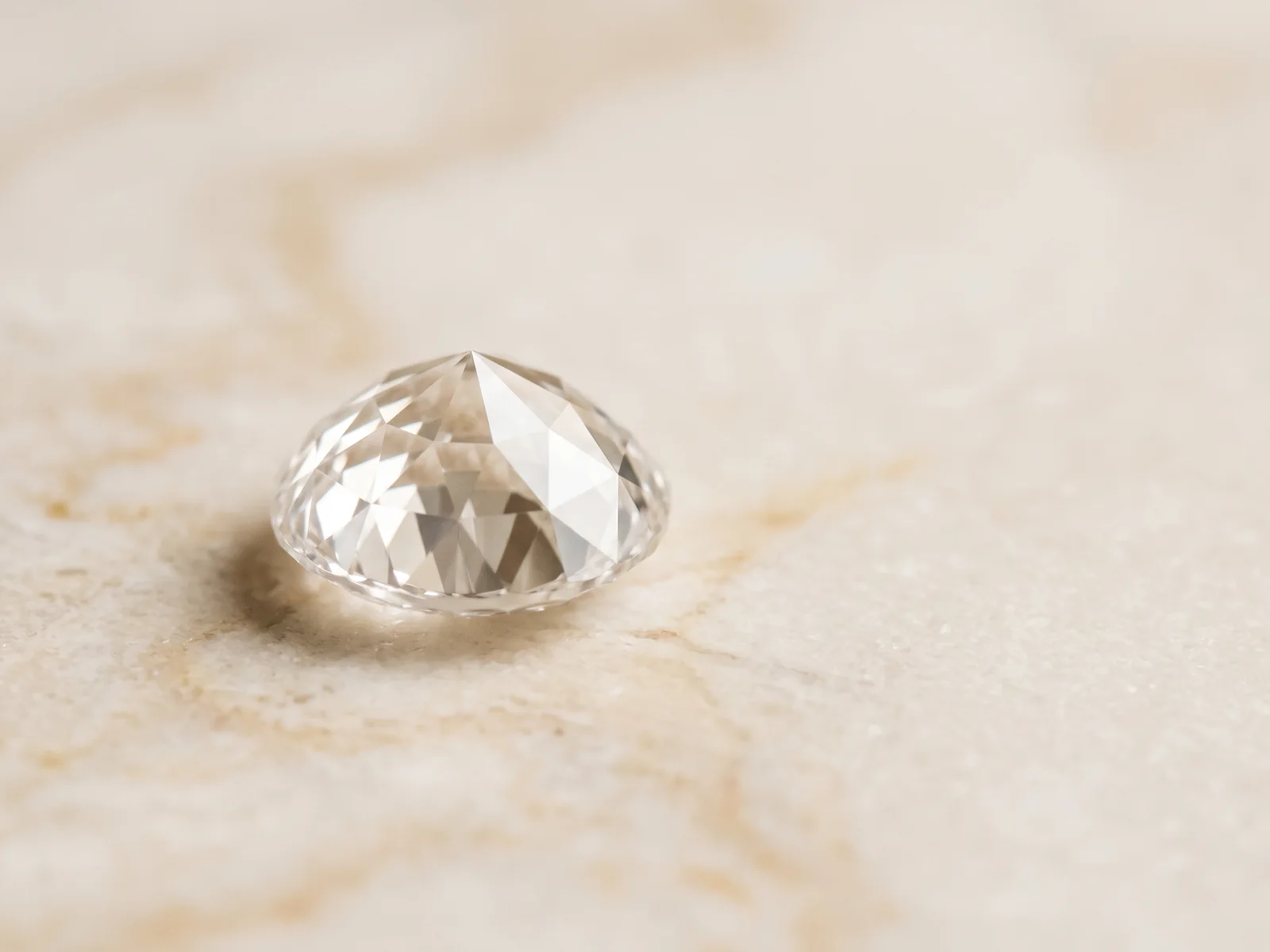
The rose cut diamond is one of the oldest faceted styles still in everyday use, and it behaves nothing like a modern round. Here is how its facets work, what to look for in colour and clarity, and how to set it so it lasts.
 Reviewed by Raj Sood, Graduate Gemologist (GIA), AJP (GIA)Master jeweller and Graduate Gemologist (GIA) · reviewed 4 November 2026
Quick answer
A rose cut diamond has a flat base and a domed top covered in triangular facets that rise to a point, like a rosebud. It has no pavilion, so it gives a soft, glassy glow rather than brilliant sparkle, looks large for its weight and suits bezel or claw settings. Choose eye-clean stones, or salt-and-pepper for character.
What is a rose cut diamond?
A rose cut diamond has two parts, not the usual three. On top is a crown (the upper part of a cut stone) shaped like a low dome, covered in triangular facets that meet at a single high point called the apex. Underneath is a completely flat base. There is no pavilion, the cone-shaped lower half that a round brilliant uses to bounce light back up through the top, and there is no table, the large flat facet on top of most modern diamonds.
The name comes from the way the facets open out from the centre like the petals of a rosebud. It has nothing to do with colour: a rose cut diamond is usually white, grey or champagne, and it is not related to rose quartz, the pale pink gemstone. To see how the rose cut sits among the other outlines and faceting styles, start with our overview of how diamond shapes differ.
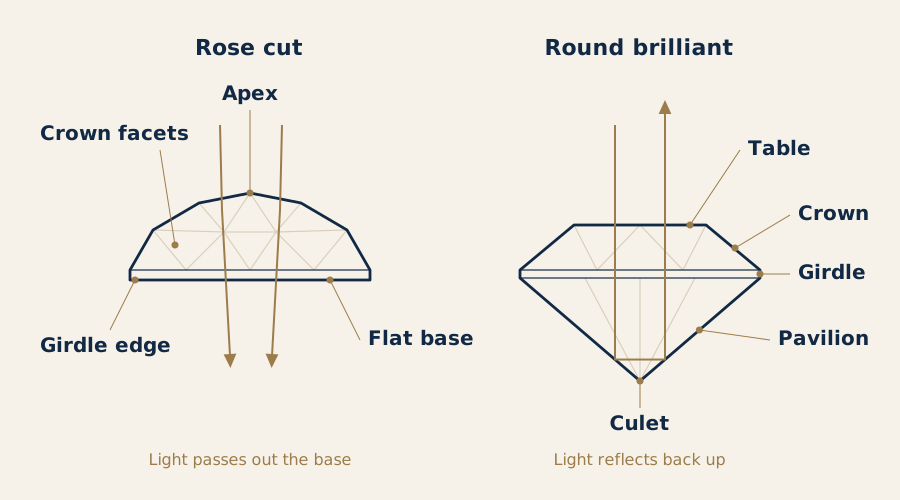
Diamond is 10 on the Mohs hardness scale and has a refractive index (how strongly it bends light) of about 2.42, whatever the cut. What the rose cut changes is how that light behaves. Without a pavilion, much of the light entering the dome passes straight out through the flat back instead of being reflected to your eye. The result is a softer, more transparent look, often described as a glow or a gleam rather than sparkle. Any term you have not met before is explained in our plain-English jewellery glossary.
Where did the rose cut come from?
The rose cut appeared in Europe in the 1500s, with Antwerp and Amsterdam becoming major cutting centres. It was the most important faceted style for about 300 years and is common in Georgian jewellery (roughly 1714–1837) and Victorian jewellery (roughly 1837–1901). Georgian pieces often set rose cuts in closed backs lined with foil to brighten them, which is why an old ring can look much livelier than the same stone would loose.
Cutters favoured it for practical reasons. Much of the rough available was flat: cleavage fragments, thin crystals and macles (flat, twinned triangular crystals). A flat-based cut kept far more of that weight than a deep stone would. As cutting tools improved, deeper cuts with pavilions took over, first the cushion-like old mine cut, then the round old European cut, and finally the modern round brilliant in the twentieth century.
Original rose cuts still turn up in estate rings, brooches and earrings. Our guide to antique diamond cuts from the Georgian and Victorian eras explains how to tell these older styles apart. Today the rose cut is back in demand, cut fresh from both natural and laboratory-grown diamond, often in shapes the Georgians never used.
How many facets does a rose cut diamond have?
There is no single standard. A rose cut can have as few as three facets or more than 24, arranged in one or more rows of triangles around the apex. The classic historical patterns are well defined, while modern cutters vary the count to suit the stone.
| Style | Facets (approx.) | What it looks like |
|---|---|---|
| Dutch rose | 24 | Six triangles around the apex, 18 below; a tall, pointed dome |
| Brabant (Antwerp) rose | 12–24 | A flatter, lower dome; less height at the apex |
| Rose recoupée | 24–36 | An extra ring of facets for more broken-up light |
| Double rose | Rose pattern on both sides | Two domes back to back; no flat base |
| Modern rose cut | 3–24 | Any outline, often fewer, larger facets and a low dome |
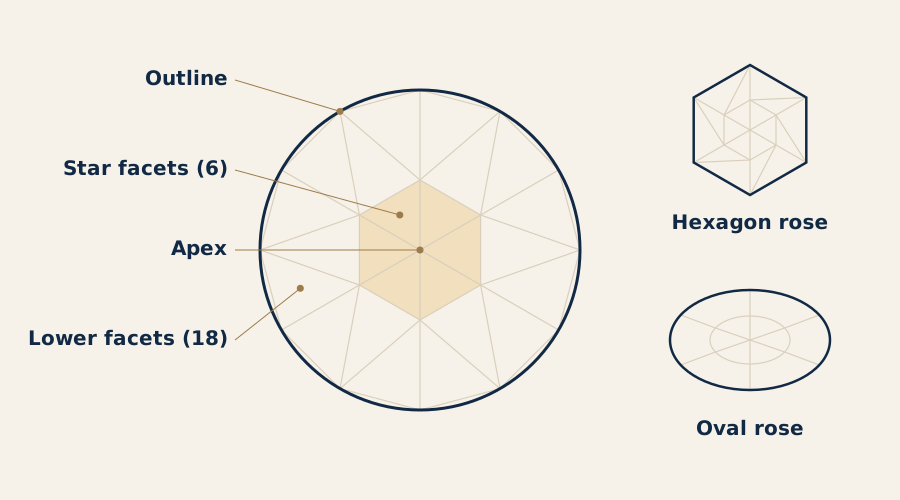
Fewer, larger facets give bigger flashes and a clearer view into the stone, so inclusions are easier to see. More facets break up the light into smaller flickers and hide small inclusions better. A double rose cut has facets on both sides and suits drop earrings and pendants, where the back is visible; it is a close cousin of the briolette, which is faceted all over.
Symmetry still matters. On a good rose cut the apex sits in the centre of the outline, the triangles are even in size, and the dome curves smoothly to the edge. An off-centre apex makes the stone look lopsided, especially on round and hexagon outlines.
What shapes and ratios do rose cuts come in?
Because the faceting is on the dome, not the outline, a rose cut can be almost any shape. Round was the traditional choice; today you will also see oval, pear, hexagon, kite, marquise and free-form slices. The length-to-width ratio (length divided by width, from the measurements) tells you how elongated the outline is.
| Outline | Typical ratio | Look |
|---|---|---|
| Round | 1.00–1.05 | The classic antique look; reads as a soft dome |
| Oval | 1.30–1.60 | Lengthens the finger; a popular modern choice |
| Pear | 1.40–1.80 | A teardrop; the point needs protecting |
| Hexagon | 1.10–1.60 | Geometric and contemporary; a regular hexagon is about 1.15 |
| Kite | 1.20–1.60 | Angular, often set east-west or tilted |
| Marquise | 1.80–2.20 | Long and slim with two fragile points |
Geometric outlines are a big part of the modern rose cut look, including pentagon-shaped stones, octagonal outlines, triangular diamonds and the faceted shield cut. Slim, elongated rose cuts often share an outline with the lozenge, a stretched diamond-shape outline, and square stones with clipped corners resemble the Flanders cut. To compare every option, see our full list of 34 diamond cuts.
Depth matters more than people expect. Most rose cuts sit at roughly 25–50% of their width in total depth, against about 59–63% for a well-cut round brilliant. A very flat stone looks large but can look glassy; a taller dome with a well-centred apex gives stronger flashes of light.
Not sure which one is right?
Send us the stones you are looking at and our gemologist will tell you which to choose and why.
How does a rose cut sparkle compared with a brilliant cut?
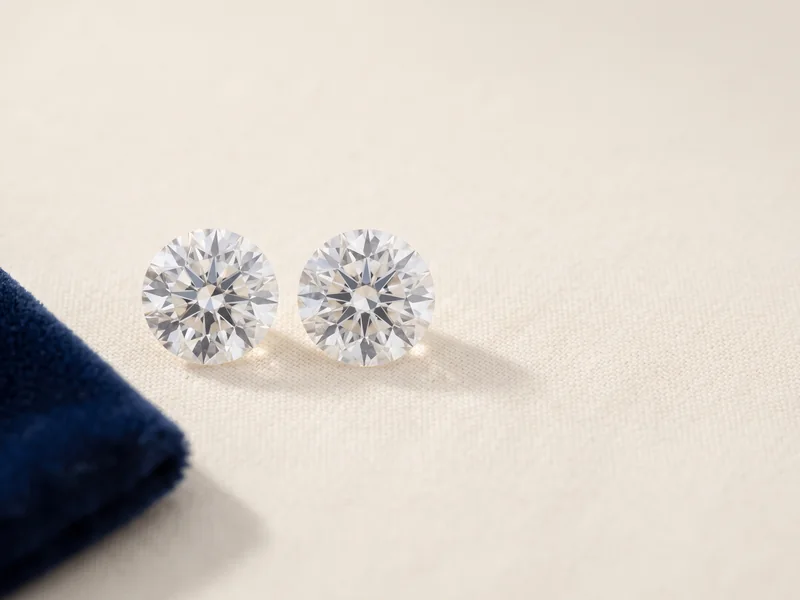
This is the question most people ask before choosing a rose cut engagement ring, and the honest answer is that it does not sparkle in the same way. A brilliant cut is designed to return as much light as possible through the top. A rose cut lets light through. You see broad, slow flashes as the stone moves, a lot of transparency, and a look that changes with the lighting around it.
| Rose cut | Old mine / old European | Modern round brilliant | |
|---|---|---|---|
| Base | Flat | Deep pavilion, often a visible culet | Deep pavilion, pointed |
| Table | None | Small | Large |
| Typical depth | About 25–50% | About 60–70% | About 59–63% |
| Light | Soft glow, large flashes | Chunky, flickering flashes | Bright, fine sparkle |
| Size per carat | Looks largest | Looks smallest | In between |
| Cut grade from GIA | None | None | Yes (Excellent to Poor) |
Because there is no pavilion, there is no cut grade either. GIA's cut scale applies to standard round brilliants, and our explainer on how ideal and excellent cut grades work for rounds shows what those grades measure. With a rose cut you judge by eye: symmetry, dome height and how the stone behaves in light. At the other extreme from the rose cut is the many-faceted Portuguese cut, which adds extra rows of facets for even more sparkle.
For a point-by-point look at the trade-offs, see our detailed rose cut vs brilliant cut comparison.
Related guideRose Cut vs Brilliant Cut DiamondsWhat colour and clarity should you choose for a rose cut?
A rose cut shows more of the diamond itself than a brilliant does. Brilliant faceting hides body colour and small inclusions (internal features) behind sparkle; the rose cut's large, open facets act more like a window. That changes the advice.
- Colour in white gold or platinum: G–H looks white for most people. Below I, a warm tint is easier to see than in a round of the same grade.
- Colour in yellow or rose gold: I–K can look pleasantly warm and suits the antique look.
- Clarity for a clean look: aim for VS1–VS2, or a carefully chosen SI1 that is eye-clean (no inclusions visible without magnification at normal viewing distance).
- Avoid: feathers (small internal cracks) near the thin outer edge, where a knock can turn them into a chip.
Many modern rose cuts are deliberately cut from salt-and-pepper diamonds: natural diamonds with plenty of black and white inclusions that give a speckled, grey or smoky look. For a salt and pepper rose cut diamond, the clarity grade matters less than the pattern, so judge it by photos and video. Check that no large inclusion reaches the surface near the edge. Champagne, grey and black rose cuts are also common, and a coloured stone should state on its report whether the colour is natural or treated.
Lab-grown rose cut diamonds are real diamond, grown in a laboratory rather than mined. Many are grown by a method called CVD, which produces flat plates of crystal that suit flat-based cuts well, so clean, near-colourless lab-grown rose cuts are easy to find. The report and any description must state clearly that the stone is lab-grown.
How big does a rose cut diamond look for its carat weight?
Because a rose cut has no deep pavilion, more of its weight is spread across its width. A rose cut usually measures noticeably wider than a round brilliant of the same carat weight. That is a big part of its appeal: you get a larger face-up size (the size you see from above) for the money.
| Carat weight | Round rose cut (approx. diameter) | Round brilliant (approx. diameter) |
|---|---|---|
| 0.25 ct | about 4.5–5.0 mm | about 4.1 mm |
| 0.50 ct | about 5.7–6.3 mm | about 5.2 mm |
| 1.00 ct | about 7.0–8.0 mm | about 6.4 mm |
| 1.50 ct | about 8.0–9.0 mm | about 7.4 mm |
These figures are broad because rose cut depth varies so much. Always compare the millimetre measurements rather than carat weight. The trade-off is durability: a very flat, wide stone has a thin edge, and thin areas are where diamond chips. Diamond is hard but can split along its cleavage planes if a thin edge takes a sharp knock.
What is the best setting for a rose cut diamond ring?
A rose cut sits low because it has no pavilion, which makes for a comfortable, snag-free ring. The setting's main jobs are to protect the thin edge and to decide how much light reaches the back of the stone.
- Bezel: a thin rim of metal around the whole edge. The most protective option and a natural match for the rose cut's soft look.
- Claws: six claws for round stones, or one at each corner for geometric shapes. Shows more of the outline; claws should sit slightly over the edge, not just against it.
- Open back: lets light pass through the stone and keeps it bright. Closed backs are mainly seen in antique pieces.
- Halo or cluster: small diamonds around a rose cut centre give it more sparkle and guard the edge.
- Side stones: bullet cut side stones or trapezoid shoulders add clean lines either side of a hexagon or kite.
Because a rose cut ring sits so low, many straight wedding bands sit flush beside it without a gap, which is not always true of a tall solitaire. Pear, kite and marquise rose cuts still have points that can catch a straight band, so a contoured or slightly curved band is often the more comfortable choice there.
How much does a rose cut diamond cost in Australia?
A rose cut usually costs less per carat than a round brilliant of the same colour and clarity. Demand is lower, flat rough is easier to use, and many rose cuts are cut from included material. Natural and lab-grown rose cuts look the same to the eye; lab-grown costs much less.
| About 1 ct rose cut | Approximate price range (AUD) |
|---|---|
| Lab-grown, near-colourless, eye-clean | about $600–$2,500 |
| Natural salt-and-pepper | about $800–$3,000 |
| Natural G–J, eye-clean | about $3,000–$10,000 |
| Antique natural rose cut (loose) | varies widely with condition and quality |
These are broad ranges only and move with the market. Within rose cuts, price depends mainly on carat, colour, clarity, symmetry of the facets and whether the stone is natural or lab-grown. Many rose cuts, especially antique stones, are sold without a grading report, so ask what has been checked and by whom.
Shop rose cut diamonds: natural and lab-grown
How do you choose a rose cut diamond? Step by step
- Decide on the look. Clean and near-colourless, or salt-and-pepper with character. That choice sets your colour and clarity targets.
- Confirm the origin. Check whether the stone is natural or lab-grown, and whether any colour has been treated.
- Check the measurements. Compare millimetres and depth, not just carat weight; very flat stones look large but have thin edges.
- Judge symmetry by eye. A centred apex, even triangles and a smoothly curved dome.
- Watch a video in movement. Look for broad flashes across the dome and for inclusions near the edge.
- Plan the setting. Choose a bezel or claws that protect the edge, and an open back if you want maximum brightness.
Free consultation
Talk to a gemologist
Compare stones in person or online with Raj Sood, Graduate Gemologist (GIA), AJP (GIA).
Book a consultationShop this shape
FAQ
Common questions
Do rose cut diamonds sparkle?
They sparkle differently. A rose cut gives broad, soft flashes and a glassy glow rather than the bright, fine sparkle of a round brilliant, because it has no pavilion to reflect light back up.
Are rose cut diamonds cheaper than round diamonds?
Usually, yes. A rose cut generally costs less per carat than a round brilliant of the same colour and clarity, and it also looks larger for its weight.
Are rose cut diamonds good for engagement rings?
Yes, with the right setting. A bezel or well-placed claws protect the thin edge, and the low profile is comfortable for everyday wear.
What is a salt and pepper rose cut diamond?
It is a natural diamond with many visible black and white inclusions, cut as a rose cut to show them off. Each one looks different, so judge it by photos and video rather than the clarity grade.
Can you get lab-grown rose cut diamonds?
Yes. Lab-grown rose cut diamonds are widely available, are real diamond with the same hardness as natural, and cost much less. They must always be described as lab-grown.
How can you tell an antique rose cut diamond?
Older rose cuts often have slightly uneven facets, an irregular outline and a closed or foiled setting. A gemmologist can examine the cutting style and the setting together to estimate its age.

Ask a gemologist
Not sure which diamond to choose?
Raj Sood is a Graduate Gemologist (GIA) and master jeweller. Bring the stones you are considering, or send the reports, and he will tell you honestly which one is better and why.
Keep learning
Related guides
 Diamond ShapesRose Cut vs Brilliant Cut Diamonds
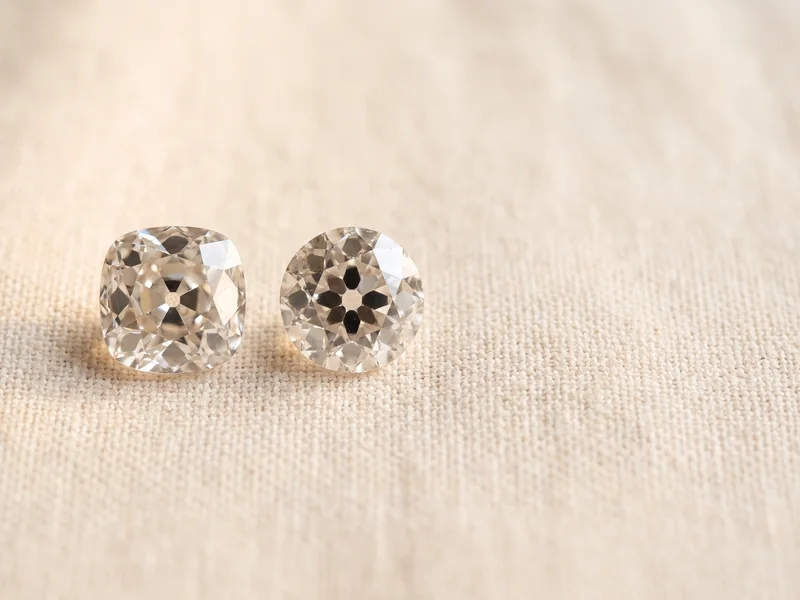 Diamond ShapesAntique Diamond Cuts: Old Mine, Old European and Rose
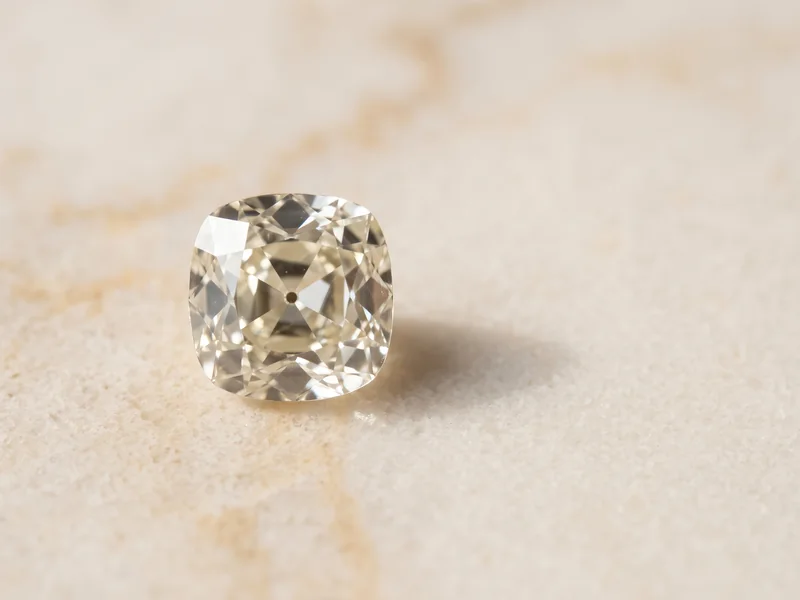 Diamond ShapesOld Mine Cut Diamonds
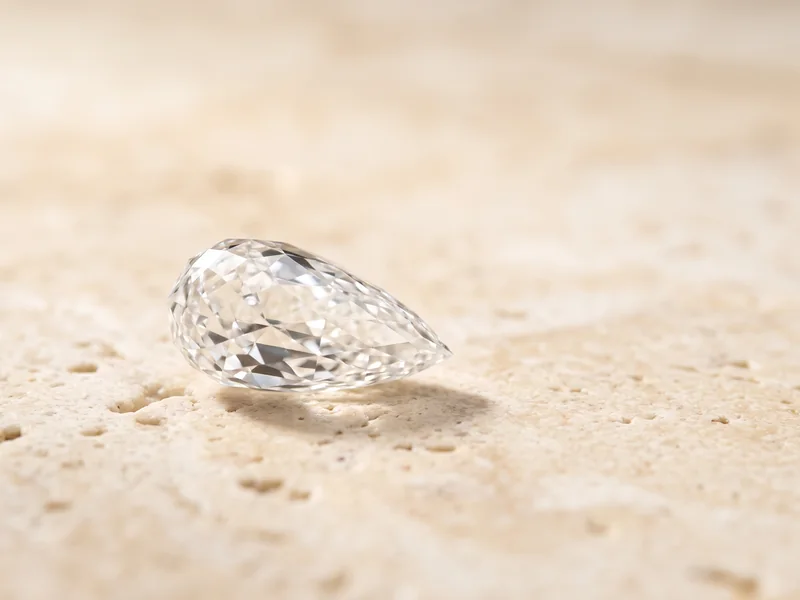 Diamond ShapesBriolette Cut DiamondsDiamond ShapesUnderstanding Diamond Shapes
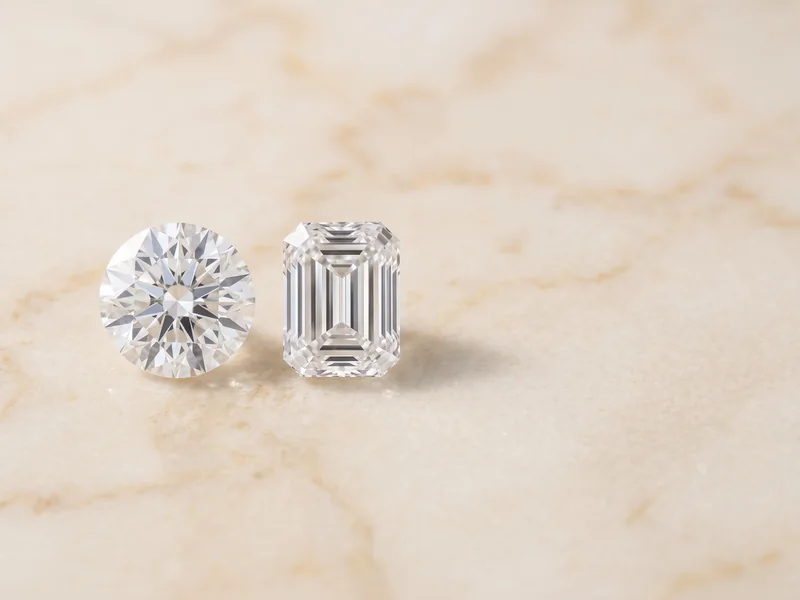 Diamond ShapesAll 34 Diamond Cuts: Every Shape Explained and Compared
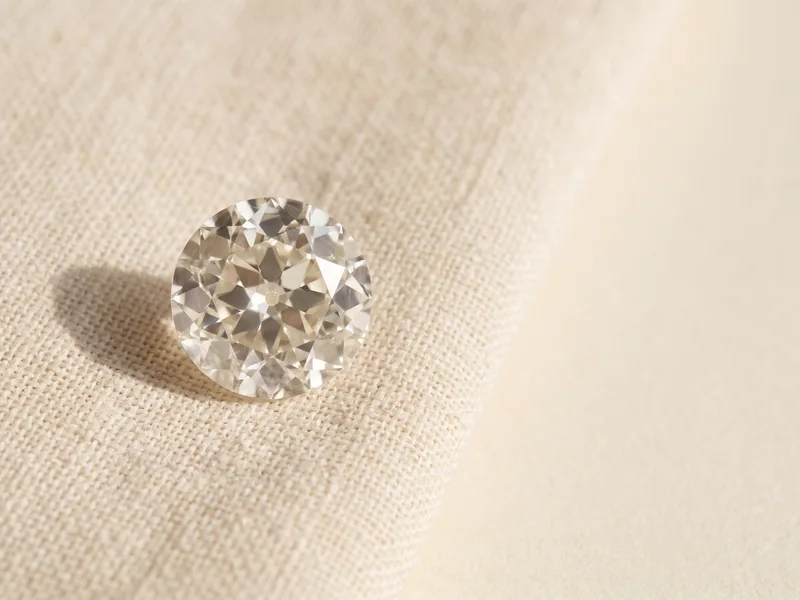 Diamond ShapesOld European Cut Diamonds
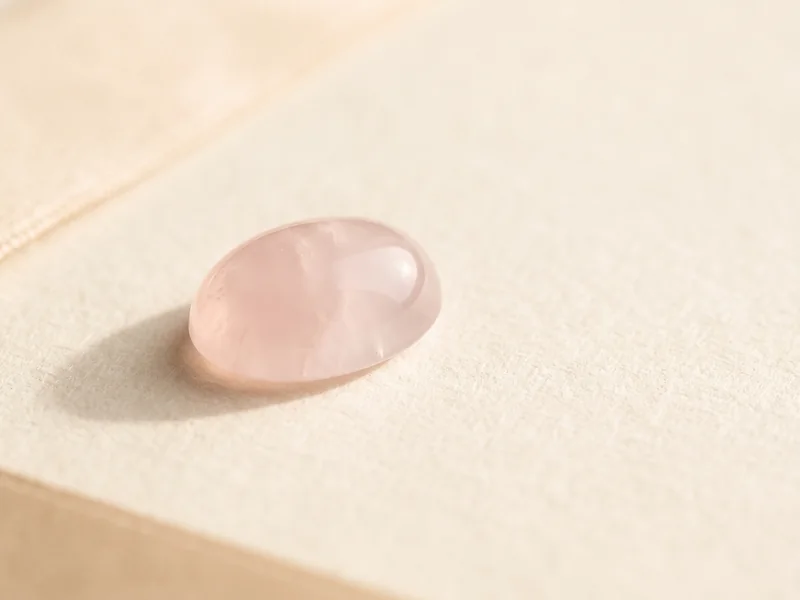 GemstonesRose Quartz
Explore more
More guides on this topic
Education