
- Education
- Diamond Shapes
- Rose Cut vs Brilliant Cut Diamond: How They Differ and Which Suits You
Diamond shapes
Rose Cut vs Brilliant Cut Diamond: How They Differ and Which Suits You
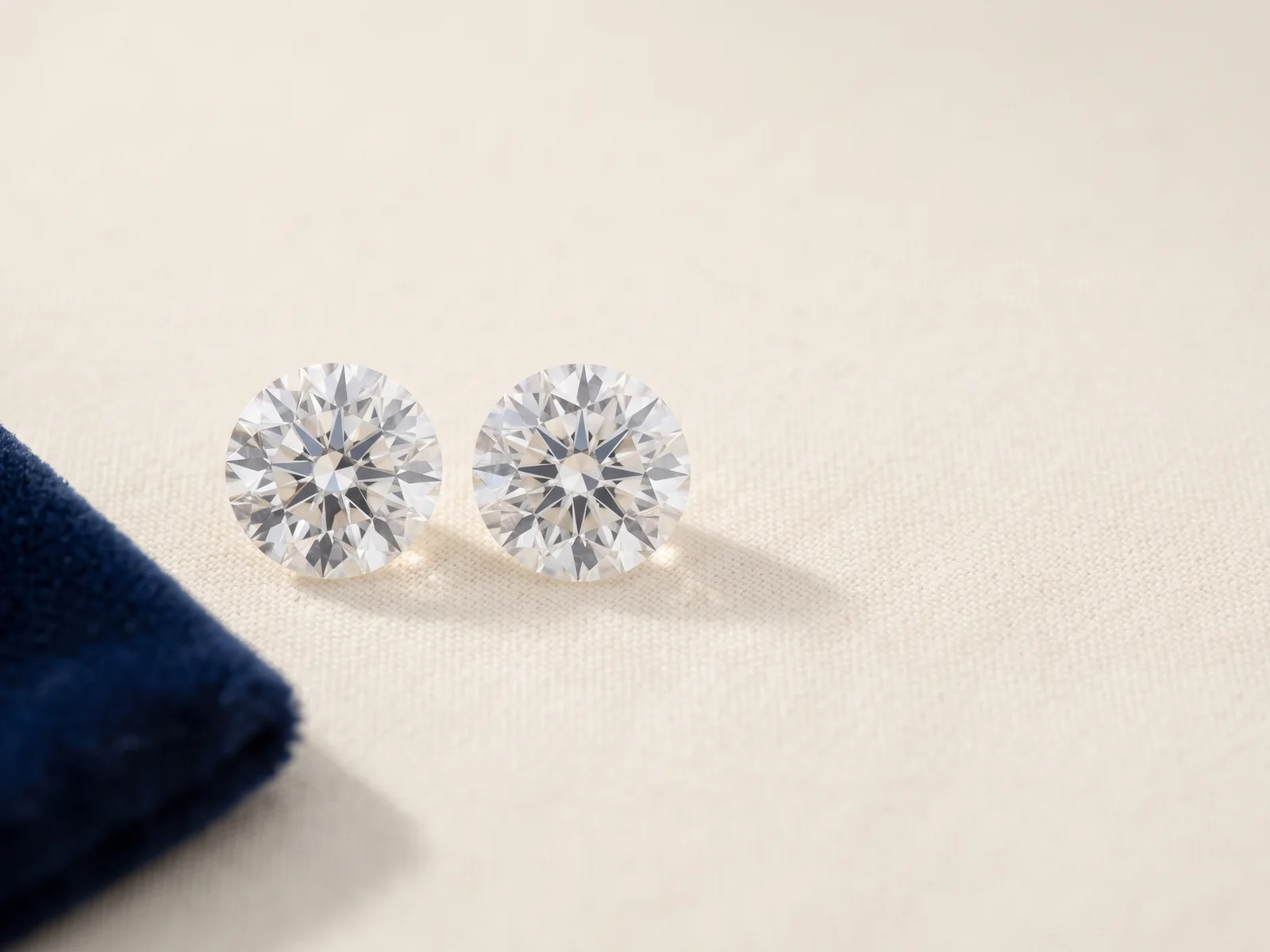
A rose cut and a brilliant cut diamond can weigh the same and still look like two different stones on the hand. Here is how they compare on look, face-up size, sparkle, durability and price.
 Reviewed by Raj Sood, Graduate Gemologist (GIA), AJP (GIA)Master jeweller and Graduate Gemologist (GIA) · reviewed 4 November 2026
Quick answer
A rose cut diamond has a flat base and a domed top of triangular facets, so it looks wide, soft and glassy, with gentle flashes. A brilliant cut diamond has a deep pointed pavilion that returns light as strong sparkle. Per carat, a rose cut faces up larger and usually costs less; a brilliant sparkles far more.
What is a rose cut diamond?
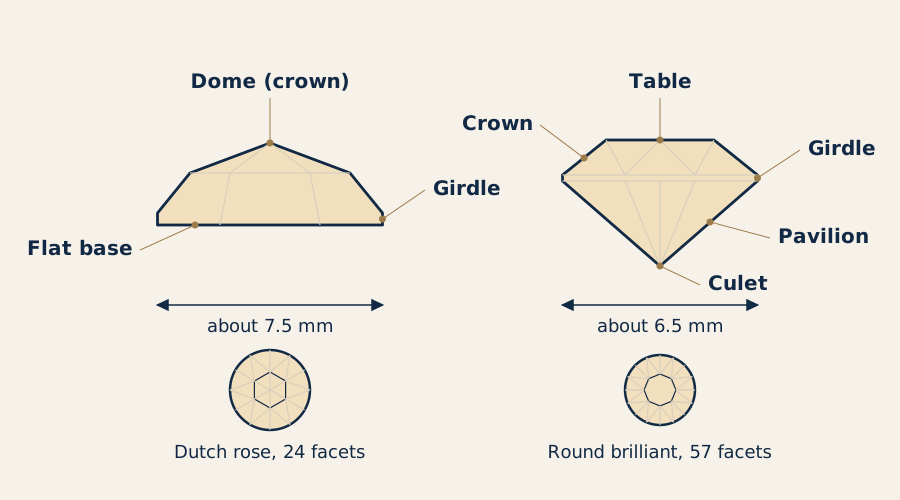
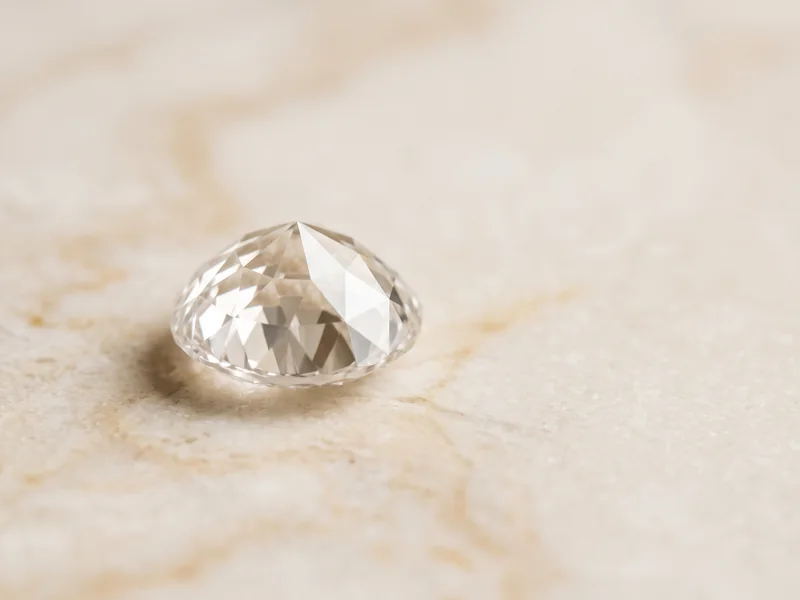
A rose cut is one of the oldest faceting styles still in use, dating back to Europe in the 1500s. The stone has a flat base and a domed crown (the top part) covered in triangular facets that meet at a single point, a little like the petals of a rose bud closing. There is no pavilion (the pointed lower half of most modern diamonds) at all.
Rose cuts vary in how many facets they carry. Simple versions have as few as 3 or 6; the classic Dutch rose has 24 facets arranged in two rows, and the Antwerp rose has 12. Dome height varies too: some are tall and almost pyramid-like, others are very flat and read almost like a slice of glass. Our full rose cut diamond guide goes deeper into the history and the variations.
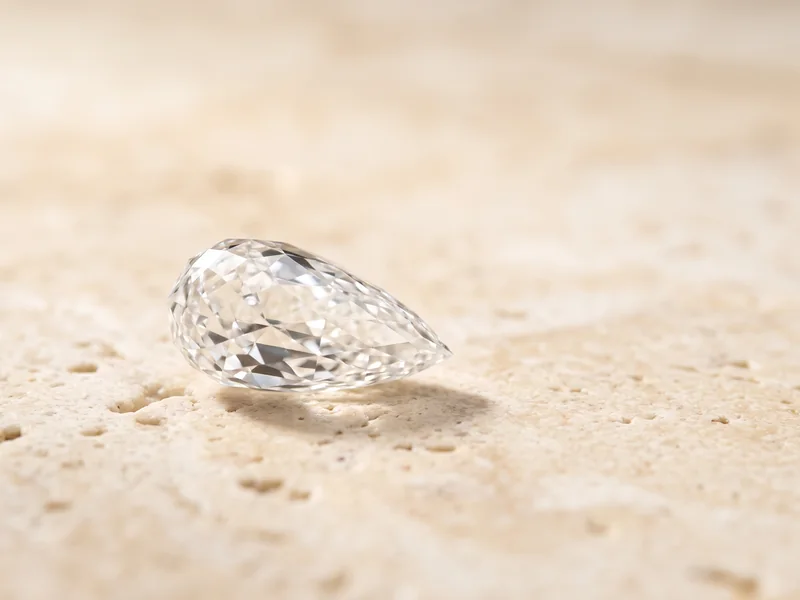
If you take the rose cut idea and facet the back as well as the front, you get a double rose, and if you stretch that into a drop you get the briolette, a stone faceted all the way round. Many antique rose cuts were cut from flat or twinned rough that could not have yielded a deep brilliant, which is one reason the style survived for so long. Any unfamiliar word here is explained in our plain-English jewellery glossary.
Related guideRose Cut DiamondsWhat is a brilliant cut diamond?
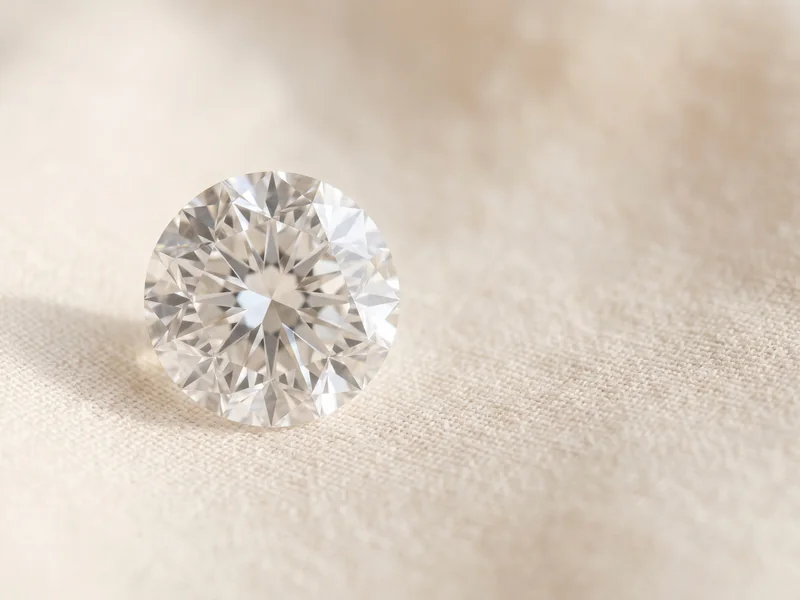
A brilliant cut diamond is cut with a crown on top, a narrow edge called the girdle, and a deep cone-shaped pavilion underneath, all covered in triangular and kite-shaped facets. The modern round brilliant cut diamond has 57 or 58 facets (58 if it has a culet, a tiny flat facet at the very bottom) and was refined into its current proportions in the early twentieth century, building on older styles such as the Old Mine and Old European cuts.
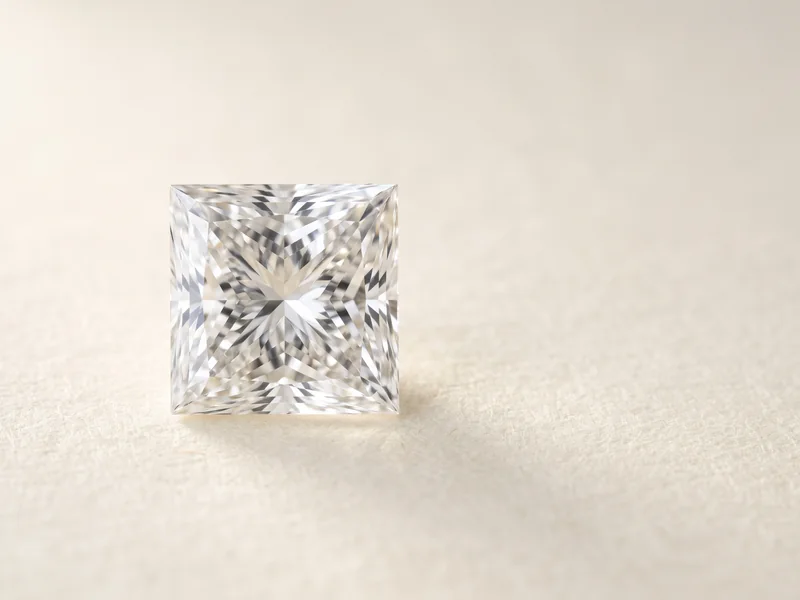
The word brilliant describes a faceting style, not an outline. Round is the classic, but ovals, pears, hearts, cushions, radiants and the princess cut, the square brilliant are all brilliant-style cuts. There are also variations with extra facets, such as the many-faceted Portuguese cut, and squared outlines like the Flanders cut with its clipped corners. If the difference between shape and cut style is new to you, our overview of how diamond shapes and cut styles differ lays it out.
The brilliant's whole design is about angles. In a well-cut round, the pavilion sits at about 40.6–41° and the crown at about 34–35°, with a total depth of roughly 59–62.5% of the diameter. Those angles are chosen so that light entering the top bounces off the pavilion facets and comes back out through the crown towards your eye.
How does a rose cut look next to a brilliant cut diamond on the hand?
Set side by side, the two are easy to tell apart, even from across a room. The brilliant reads as a bright point of light, full of quick white and coloured flashes. The rose cut reads as a soft, glowing dome, more like a drop of water or a polished window, with a few broad flashes that move slowly as your hand turns.
- Brilliant: crisp, busy sparkle; looks bright in almost any light, including office lighting.
- Rose cut: calm, transparent and glassy; you can often see the setting or your skin through it.
- Brilliant: the eye reads the stone as a single bright object; facets blur together into sparkle.
- Rose cut: the eye reads the facet pattern itself, so the geometry of the dome becomes part of the design.
Fancy brilliant shapes add their own patterns, such as the chevron reflections inside a princess cut, but they still behave like brilliants: lots of light returned from below. A rose cut has no pattern of that kind because there is nothing underneath to reflect from. What you see is light passing through the dome, catching each facet edge on the way.
This is why rose cuts suit candlelight, daylight and soft interiors so well. The style was developed long before electric light, and it looks its most natural in the same warm, low light it was designed for.
Which sparkles more, a rose cut or a brilliant cut?
The brilliant, by a long way. Diamond has a high refractive index of about 2.42, which means light bends sharply as it enters, and a critical angle of about 24.4°. Light hitting an inside surface at more than that angle (measured from the perpendicular) is reflected back rather than escaping. A brilliant's pavilion is angled to use this total internal reflection: light enters the crown, bounces off one pavilion facet, then another, and exits back through the top.
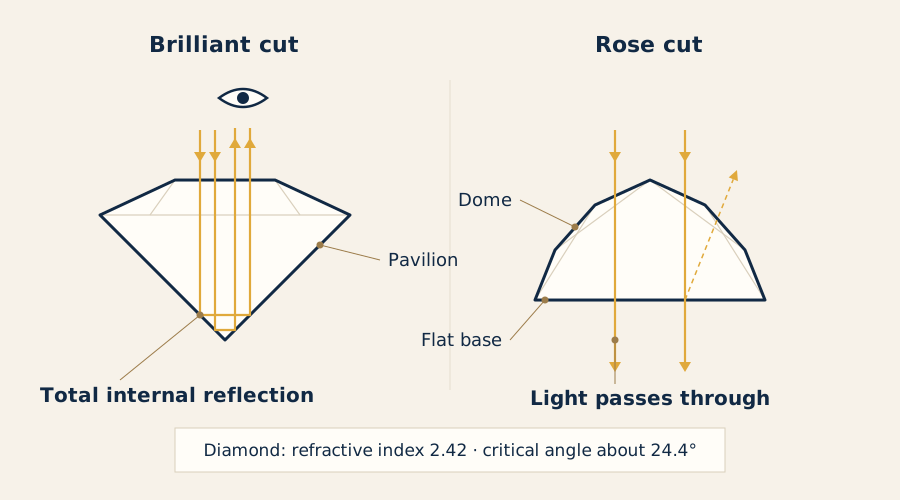
A rose cut has a flat base parallel to the girdle, so much of the light that enters the dome simply passes out through the back. That is the glassy, see-through quality people love or dislike. Gemmologists describe sparkle in three parts, and the two cuts score very differently:
- Brilliance (white light returned to the eye): high in a brilliant, low in a rose cut.
- Fire (flashes of spectral colour): strong in a brilliant, faint in a rose cut, seen mainly as occasional small rainbows off the dome.
- Scintillation (the on-off flashing as the stone moves): quick and fine in a brilliant; slow and broad in a rose cut.
Historically, jewellers placed rose cuts in closed-back settings with polished metal or foil behind them to bounce some light back. Today most rose cuts are set open-backed or on a plain metal base, and the transparency is treated as part of the look rather than a fault.
Not sure which one is right?
Send us the stones you are looking at and our gemologist will tell you which to choose and why.
Does a rose cut look bigger than a brilliant cut diamond per carat?
Yes. Because a rose cut has no pavilion, its weight is spread across the width instead of hidden underneath. The face-up size (the size you see from above) of a rose cut is noticeably larger than a round brilliant of the same carat weight. How much larger depends mainly on how high the dome is.
| Carat weight | Round brilliant diameter | Typical rose cut diameter |
|---|---|---|
| 0.25 ct | about 4.1 mm | about 4.5–5.2 mm |
| 0.50 ct | about 5.1 mm | about 5.5–6.5 mm |
| 0.75 ct | about 5.8 mm | about 6.3–7.3 mm |
| 1.00 ct | about 6.4–6.5 mm | about 7.0–8.0 mm |
| 1.50 ct | about 7.3–7.4 mm | about 8.0–9.2 mm |
| 2.00 ct | about 8.1–8.2 mm | about 8.8–10.0 mm |
At 1 carat, a rose cut of 7.0–8.0 mm shows roughly 15–50% more surface area face-up than a 6.5 mm round brilliant. Flatter rose cuts sit at the top of each range; tall, steep domes sit near the brilliant figure. Always compare the millimetre measurements rather than carat weight when you are weighing up the two.
Rose cuts are also cut in many outlines besides round: ovals, pears, hexagonal rose cuts with crisp straight sides and eight-sided octagonal outlines are all popular. Geometric outlines like these often come from flat rough, which can give a very generous spread for the weight.
The trade-off is depth. A shallow rose cut sits low and flat, which is comfortable and practical, but it also has less body to hold colour and no pavilion to hide inclusions, as the next sections explain.
Are rose cut diamonds durable enough for everyday wear?
Both cuts are diamond, 10 on the Mohs scale, so both resist scratching equally well. Hardness is not the same as toughness, though. Diamond can chip along its cleavage planes (directions where the crystal splits more easily) if a thin edge takes a sharp knock, and the cut decides where the thin edges are.
- Rose cut strengths: no pointed culet to snag or break, a low profile that is less likely to catch, and a smooth dome that sheds knocks reasonably well.
- Rose cut weak spots: the girdle edge is often very thin, especially in flat stones, and the large flat back can be chipped at its rim if exposed.
- Brilliant strengths: a girdle of medium thickness on a well-cut stone, and a shape that most settings are designed around.
- Brilliant weak spots: the pavilion point in an open setting, and any corners or points on fancy shapes.
Fancy brilliants with corners need extra care, as our page on protecting a princess cut's sharp corners explains. For a rose cut, the main protection is a setting that covers the girdle all the way round. A bezel (a thin rim of metal around the edge) is the most common choice for an everyday rose cut diamond engagement ring.
Clarity affects durability too. Many rose cuts, particularly the grey salt and pepper stones (diamonds with lots of visible black and white inclusions), are chosen for their character. Large feathers (internal cracks) that reach the surface near the edge can weaken a thin stone, so ask where the inclusions sit before you commit.
Rose cut vs brilliant cut: how do they compare side by side?
| Rose cut | Round brilliant | |
|---|---|---|
| Profile | Flat base, domed top | Crown, girdle, deep pointed pavilion |
| Facets | Usually 3–24 | 57–58 |
| Typical depth | Shallow; varies widely with dome height | About 59–62.5% of diameter |
| Face-up size per carat | Larger (about 7.0–8.0 mm at 1 ct) | About 6.4–6.5 mm at 1 ct |
| Sparkle | Soft, glassy, broad slow flashes | High brilliance, fire and scintillation |
| Shows inclusions | Easily: acts like a window | Hides small inclusions well |
| Shows body colour | Soft tints read gently; warm stones are common | Hides some colour in face-up sparkle |
| Cut grade on reports | No standard cut grade | GIA and IGI give a cut grade for rounds |
| Height on the finger | Low | Higher, needs room for the pavilion |
| Usual setting | Bezel, closed or open back | Claws, halo, bezel, pavé |
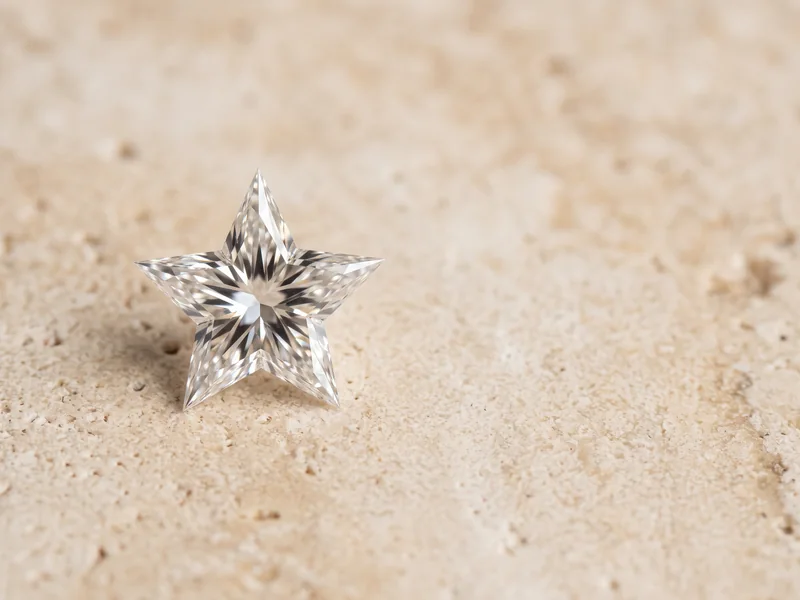
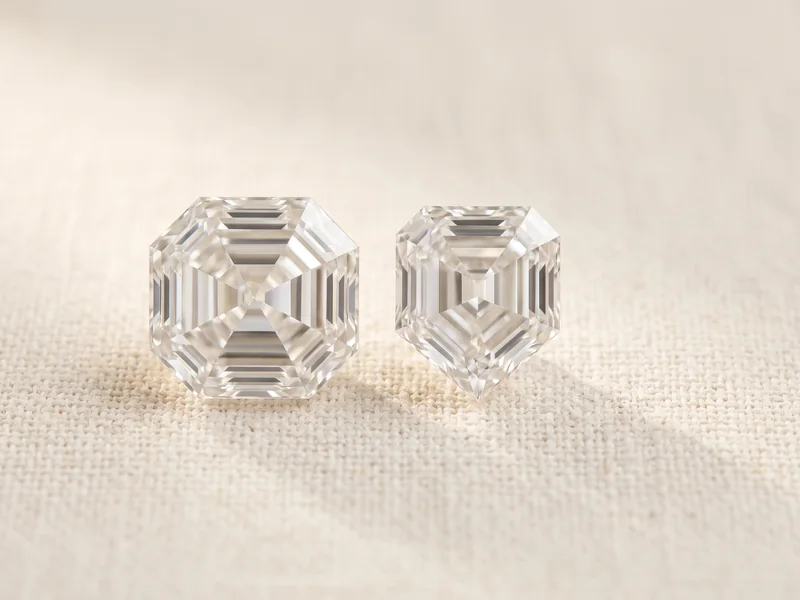
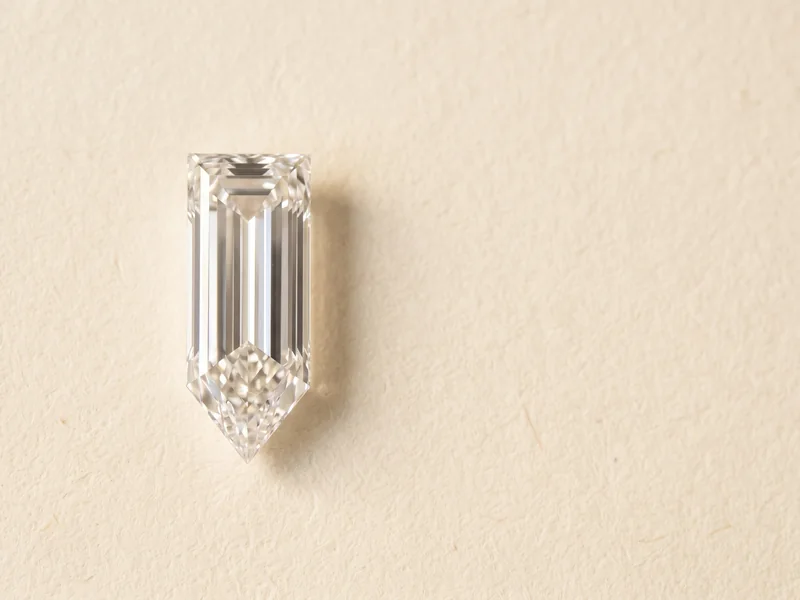
Rose cuts sit alongside other old or unusual styles that people consider for a non-traditional ring, such as the star cut with its radiating facets, the shield cut, often used as a feature or side stone and long diamond-shaped lozenge cuts, which are frequently faceted as rose cuts too.
A practical note on reports: GIA gives a cut grade only to standard round brilliants, so a fancy brilliant or a rose cut will have its polish and symmetry graded but not an overall cut grade. With a rose cut, the facet layout, dome height and outline are judged by eye, which makes seeing the stone, or a good video, more important than it is for a round.
How much does a rose cut diamond cost compared with a brilliant cut diamond?
Rose cuts usually cost less per carat than round brilliants of similar colour and clarity. Part of the reason is that they are often cut from flat or twinned rough that would yield little as a brilliant, and part is lower demand. Many rose cuts are also chosen in lower clarity or warmer colour grades, which brings the price down further.
| About 1 ct, approximate range (AUD) | Natural | Lab-grown |
|---|---|---|
| Round brilliant, G–H, VS | about $9,000–$18,000 | about $800–$2,500 |
| Rose cut, near-colourless, eye-clean | about $3,000–$9,000 | about $500–$2,000 |
| Rose cut, salt and pepper | about $1,500–$5,000 | Rarely made |
These are broad ranges only, and prices move with the market and the exact grades. Both natural and lab-grown rose cuts are available. A lab-grown rose cut diamond is real diamond, grown in a laboratory rather than mined, with the same hardness and refractive index, and it costs much less than a natural stone. Natural rose cuts come in a wider range of colours and characterful inclusions, including the salt and pepper look, which is uncommon in laboratory-grown material.
Whichever you choose, ask for the grading report or a written description stating the weight, measurements, colour, clarity and whether the stone is natural or lab-grown. For rose cuts, the millimetre measurements tell you more about value than the carat weight does.
Browse rose cut diamonds: natural and lab-grown
Which settings suit a rose cut or a brilliant, and who suits each?
A rose cut's flat back and low dome mean it can sit very close to the finger, which suits people who work with their hands or want a ring that does not catch on clothing. Common choices:
- Bezel: the usual choice for a rose cut, protecting the thin girdle and framing the dome.
- Claws: fine for a rose cut with a reasonable girdle; six claws spread the load around a round outline.
- Closed or solid back: bounces a little light back and changes how the stone looks; ask to see both open and closed backs.
- Pavé bands: small brilliants around or beside a rose cut add sparkle as contrast. Our page on micro-pavé, bead and bright-cut settings explains the options.
- Side stones: step-cut accents such as bullet cut side stones or trapezoid shoulders, or geometric accents like triangular side diamonds, suit both cuts.
A brilliant suits you if you want maximum sparkle, a stone that looks bright under any lighting, and a classic engagement ring look. A rose cut suits you if you prefer a softer, vintage or architectural look, want more face-up size for the money, like a low profile, or are drawn to the character of coloured and included diamonds. Unusual outlines such as five-sided pentagonal stones are often cut as rose cuts for exactly that reason.
How do you choose between a rose cut and a brilliant cut? Step by step
- Decide on the look first. Strong sparkle points to a brilliant; a soft, glassy glow points to a rose cut.
- Compare millimetres, not carats. Check the face-up diameter or length and width; a rose cut will usually measure larger for its weight.
- Check the dome height. Ask for the total depth: a very flat rose cut spreads wide but has a thinner, more delicate edge.
- Look at clarity in the right way. In a rose cut, inclusions show clearly, so either choose eye-clean or choose inclusions you genuinely like.
- Confirm natural or lab-grown. The report or written description should state it clearly, with the colour and clarity grades.
- Plan the setting. For a rose cut, favour a bezel or a setting that covers the girdle; for a brilliant, make sure the pavilion point is protected.
- View both on your hand. Look in daylight and indoor light, and in a video if you are comparing stones remotely.
Free consultation
Talk to a gemologist
Compare stones in person or online with Raj Sood, Graduate Gemologist (GIA), AJP (GIA).
Book a consultationShop this shape
FAQ
Common questions
Is a rose cut diamond less sparkly than a brilliant cut?
Yes. A rose cut has no pavilion to reflect light back to your eye, so it gives a soft, glassy glow with a few broad flashes instead of the strong sparkle of a brilliant.
Does a rose cut diamond look bigger than a round brilliant?
Usually. A 1 carat rose cut often measures about 7.0–8.0 mm across, compared with about 6.4–6.5 mm for a round brilliant, because its weight is spread across the width rather than underneath.
Are rose cut diamonds cheaper than brilliant cut diamonds?
Per carat they usually cost less than a round brilliant of similar colour and clarity. Clean, near-colourless rose cuts cost more than salt and pepper stones.
Can you wear a rose cut diamond engagement ring every day?
Yes, with a protective setting. A bezel that covers the thin girdle edge is the usual choice, and the low profile means it is less likely to catch than a tall brilliant setting.
Can you get a lab-grown rose cut diamond?
Yes. Lab-grown rose cuts are available, are real diamond with the same hardness and optics, and cost much less than natural rose cuts of similar size.
What does brilliant cut mean on a diamond?
Brilliant cut describes a faceting style with a crown, girdle and pointed pavilion covered in triangular and kite-shaped facets. Round, oval, pear, princess and cushion cuts are all brilliant-style cuts.

Ask a gemologist
Not sure which diamond to choose?
Raj Sood is a Graduate Gemologist (GIA) and master jeweller. Bring the stones you are considering, or send the reports, and he will tell you honestly which one is better and why.
Keep learning
Related guides
Explore more
More guides on this topic
Education