
Gemstones
Citrine Gemstone Guide: Colour, Treatments, Durability and Value
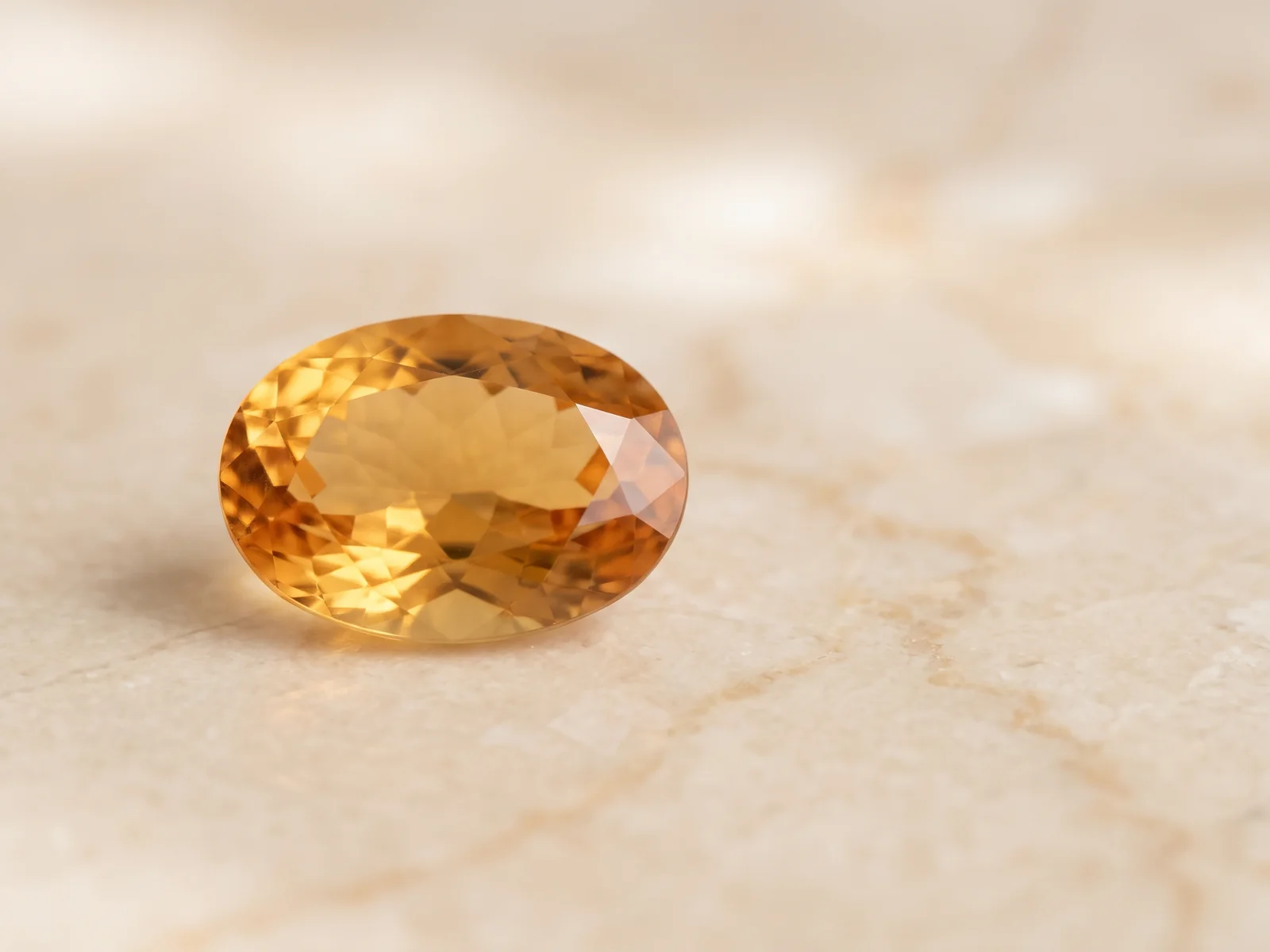
Citrine is one of the most affordable golden gemstones, and most of it began life as amethyst. This is how a gemmologist judges citrine's colour, treatment and durability before it goes into a piece of jewellery.
 Reviewed by Raj Sood, Graduate Gemologist (GIA), AJP (GIA)Master jeweller and Graduate Gemologist (GIA) · reviewed 4 November 2026
Quick answer
Citrine is yellow to orange-brown quartz, rated 7 on the Mohs scale with no cleavage. Most citrine on the market is amethyst heated to roughly 450–560°C; natural citrine is rarer and usually paler. The deepest Madeira orange is most valued, prices are modest, and it suits pendants, earrings and dress rings better than daily-wear engagement rings.
What is citrine?
Citrine is the yellow to orange-brown variety of quartz, the same mineral as amethyst, smoky quartz and clear rock crystal. Chemically it is silicon dioxide, SiO2. The name comes from citron, the French word for lemon. If you are new to coloured stones, our guide to coloured gemstones and birthstones places citrine alongside the other main gem families.
As a jewellery stone, citrine is a sensible all-rounder. It sits at 7 on the Mohs scale (a 1 to 10 scale of scratch resistance), it has no cleavage (no flat plane along which the crystal tends to split) and its toughness, meaning resistance to chipping and breaking, is rated good. Its refractive index (how strongly it bends light) is about 1.544–1.553 and its specific gravity (density compared with water) is about 2.65.
Its sparkle is gentle rather than fiery. Dispersion, the spread of white light into rainbow colours, is only about 0.013 in quartz, compared with about 0.044 in diamond. Citrine wins on colour and size rather than fire: clean, eye-clean stones of 10 carats or more are readily available, which is unusual among coloured gems.
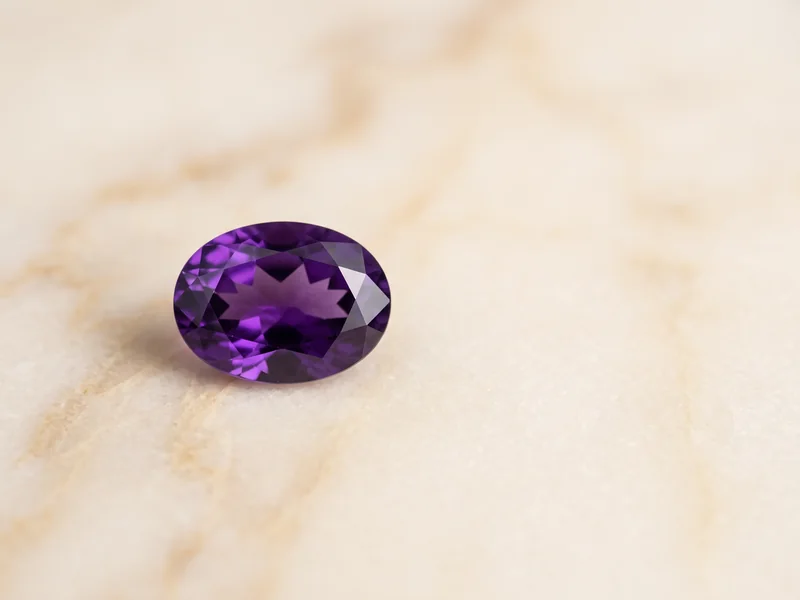
Citrine's colour is linked to traces of iron in the quartz crystal, and heat plays a big part in developing it. That is why it is so closely related to amethyst, citrine's purple sister: both are iron-bearing quartz, and gentle heating turns most amethyst yellow or orange. Any term here you have not met before is explained in our plain-English jewellery glossary.
What colours does citrine come in?
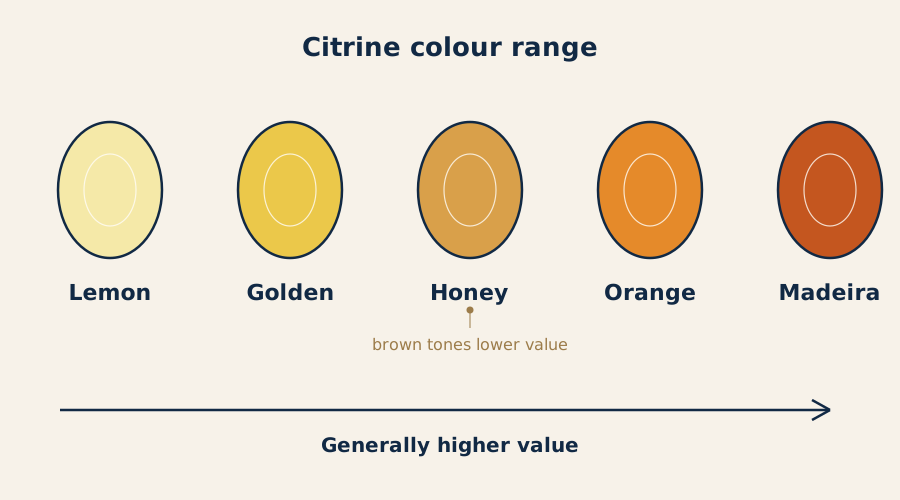
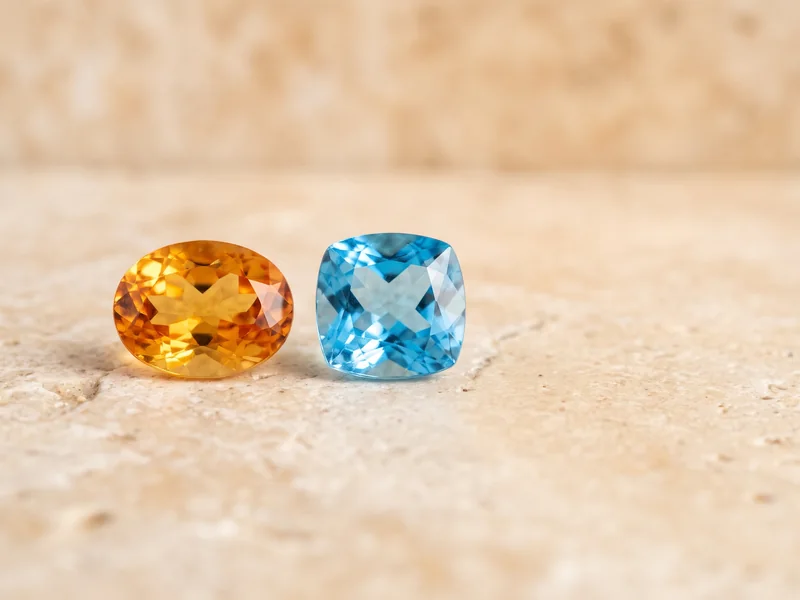
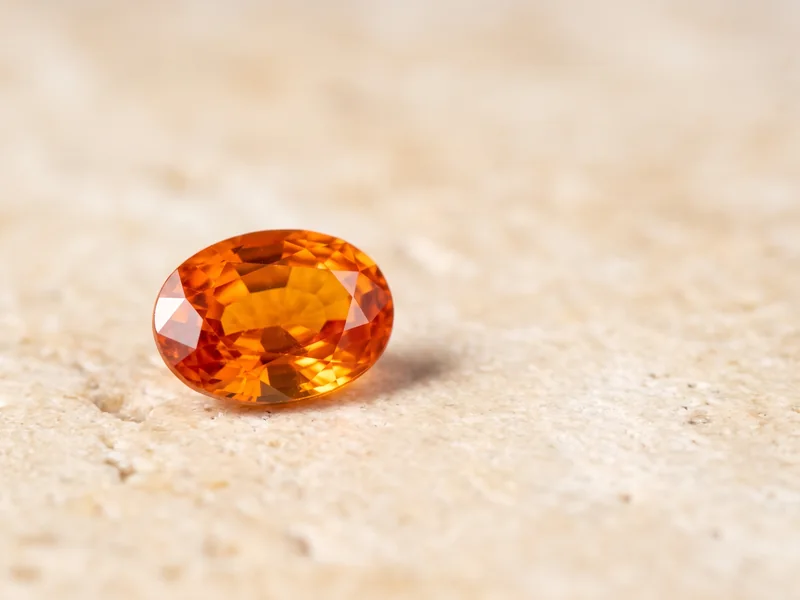
Citrine runs from pale lemon through golden yellow and honey to saturated orange and a deep reddish-orange known in the trade as Madeira, after the colour of Madeira wine. Colour drives almost all of citrine's value, so it is worth knowing the names you will see on labels.
| Colour name | What it looks like | Usual origin of the colour | Relative value |
|---|---|---|---|
| Lemon / pale yellow | Light yellow, sometimes slightly greenish | Natural citrine or lightly heated quartz | Lower |
| Golden yellow | Clean mid-tone yellow, little or no brown | Heated amethyst | Moderate |
| Honey / cognac | Yellow to orange with brownish tones | Heated amethyst or smoky quartz | Lower to moderate |
| Orange (sometimes called palmeira) | Saturated orange | Heated amethyst, mainly Brazil | Moderate to high |
| Madeira | Deep reddish-orange to brownish red | Heated amethyst, mainly Brazil | Highest for citrine |
Two things pull a citrine down: too much brown and too little saturation (strength of colour). A Madeira stone with strong red-orange flashes is valued; one that looks muddy brown indoors is not. Pale stones are also often cut shallow to save weight, which can leave a window, a washed-out patch in the centre where light passes straight through instead of sparkling back.
You may also see lemon quartz, a greenish-yellow quartz whose colour is usually produced by irradiation. It is sometimes sold as lemon citrine, but its colour cause differs and the treatment should be disclosed. If you like citrine's warm brown-orange end, compare it with cinnamon-toned hessonite garnet, which has a richer, syrupy glow and a higher refractive index.
Is citrine natural, or is it heat-treated amethyst?
Most citrine sold today is natural quartz with a heat treatment. Pale or dark amethyst, mostly from Brazil, is heated in a furnace to roughly 450–560°C, and the purple changes to yellow, orange or reddish-orange. Some citrine is also produced by heating smoky quartz. The result is stable: heated citrine does not change colour back in normal wear.
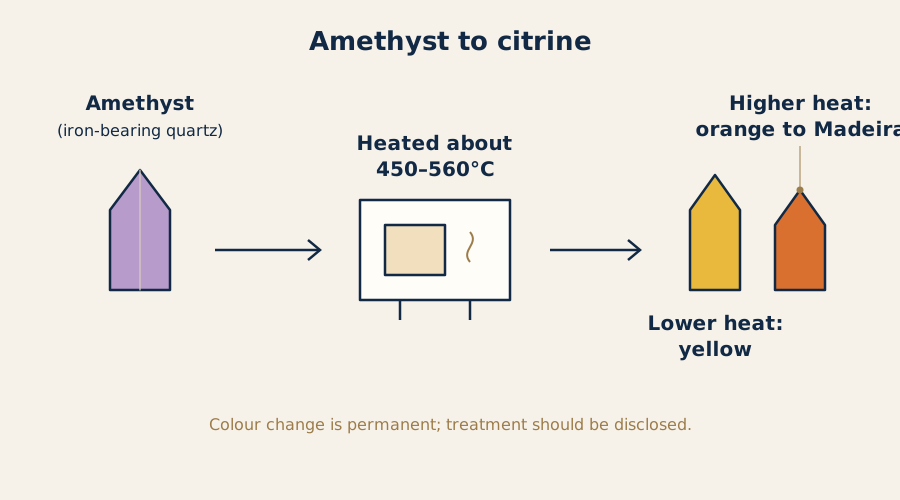
Unheated natural citrine exists but is far rarer. It is usually paler and more even in colour, often lemon to light golden, sometimes with a faint smoky tint. Heated amethyst tends to give stronger orange and reddish tones. A familiar example is the citrine geode cluster with a white base and orange tips: that pattern is typical of heated amethyst, because the colour was concentrated at the crystal tips before heating.
Heat is a routine, accepted treatment across many gems, from sapphire to zircon, whose blue colour is almost always the result of heat. Heating does not make citrine any less of a natural gem, but under Australian Consumer Law the seller should not mislead you, so ask whether a stone is heated and expect a straight answer. Truly unheated citrine can usually only be confirmed with a gem laboratory's opinion, and even labs can find it hard.
There is also a natural bicolour quartz called ametrine, part amethyst and part citrine in the same crystal, mined mainly at the Anahí mine in Bolivia. Separately, lab-created citrine (synthetic citrine) is grown hydrothermally in laboratories. It has the same chemistry and properties as natural citrine, but it must always be sold as lab-created or synthetic.
How do you tell if citrine is real?
Real citrine is easy to mix up with yellow glass, yellow topaz and lab-created citrine. These are the checks a gemmologist runs, from simplest to most technical:
- Refractometer: citrine reads about 1.544 and 1.553, a birefringence (difference between the two readings) of 0.009. Glass gives a single reading, often somewhere between 1.50 and 1.70. Topaz reads higher, about 1.61–1.64.
- Polariscope: quartz is doubly refractive and, viewed down its optic axis, shows a distinctive bull's-eye interference figure. Glass stays dark or shows only strain patterns.
- Density: at about 2.65, citrine is noticeably lighter than topaz at about 3.53, so a topaz of the same size weighs more.
- Magnification: natural citrine may show fingerprint-like healed fractures, two-phase inclusions (tiny pockets of fluid and gas) and colour zoning. Glass often shows round gas bubbles, swirl marks and rounded, moulded facet edges.
- Pleochroism: natural citrine can show a weak change of colour tone when viewed from different directions; heated amethyst usually shows little or none, which is one clue among several.
- Lab-created citrine: may show remnants of the seed plate it grew on, breadcrumb-like inclusions or very even colour. Separating it reliably can need laboratory testing.
Older trade names add to the confusion. Citrine has been sold as Madeira topaz, gold topaz or topaz quartz, all misleading, because topaz is a different mineral with different properties. Our guide to November's two birthstones, topaz and citrine explains how the pair became linked and how to tell them apart.
Related guideNovember Birthstone: Topaz and CitrineNot sure which one is right?
Send us the stones you are looking at and our gemologist will tell you which to choose and why.
Where does citrine come from, and is any Australian?
Brazil dominates citrine supply. Most of it is heated amethyst from the large geode deposits of Rio Grande do Sul, with more from Minas Gerais. Neighbouring Uruguay also produces amethyst that can be heated, and Bolivia supplies ametrine. Natural, unheated citrine has come from places including Madagascar, Zambia, the Democratic Republic of the Congo, Spain and Russia's Ural Mountains, though usually in small quantities.
Brazil's gem fields are remarkable for their variety. The same country gives us much of the world's tourmaline, from the wider tourmaline family in every colour to neon-blue Paraíba tourmaline from Brazil's northeast.
Australia has plenty of quartz, and fossickers do turn up yellow quartz, but as far as we know there is no significant commercial citrine mining here. Nearly all citrine sold in Australia is cut from Brazilian material. If an Australian-sourced golden stone matters to you, look at yellow sapphire, mined in the Central Queensland gemfields around Anakie and in the New England region of New South Wales. At 9 on the Mohs scale it is much harder than citrine, and it costs considerably more.
How much is citrine worth in Australia?
Citrine is one of the most affordable faceted gems, and price per carat rises only gently with size, because large clean rough is plentiful. What moves the price, roughly in order:
- Colour: saturated orange to reddish-orange without heavy brown sits at the top; pale and brownish stones at the bottom.
- Cut: even brightness across the face, no window, and good symmetry. Precision and designer cuts add labour cost.
- Clarity: citrine is normally eye-clean (no inclusions visible without magnification), so visible inclusions reduce value noticeably.
- Treatment and documentation: a well-documented unheated natural citrine can command more than a heated stone of the same look.
- Size: matters less than in most gems; a 15 carat citrine is not rare.
| Citrine quality (loose, natural quartz) | Approximate price range (AUD per carat) |
|---|---|
| Pale lemon or brownish, commercial cut | about $10–$40 |
| Good golden yellow, well cut, eye-clean | about $20–$70 |
| Fine orange to Madeira, precision cut | about $40–$150 |
| Lab-created citrine | usually a few dollars per carat |
These are broad ranges only and move with the market, the cutter and the exact colour. In finished jewellery, the metal, the setting and the labour usually cost more than the citrine itself, so a heavier gold mount can easily outweigh the stone's price.
Browse natural gemstones, including citrine
Is citrine good for an engagement ring or everyday wear?
Citrine can be worn every day, but it will show wear over time. Ordinary household dust contains quartz particles, which are also 7 on the Mohs scale, so years of wiping and knocking slowly round and scuff the facet edges. Pendants and earrings take little contact and last almost indefinitely; rings take the most.
| Gem | Mohs hardness | Toughness | Cleavage | Daily ring verdict |
|---|---|---|---|---|
| Diamond | 10 | Good | Yes (4 directions) | Very good |
| Sapphire | 9 | Excellent | None | Very good |
| Topaz | 8 | Poor | Perfect (1 direction) | Fair, needs a protective setting |
| Citrine (quartz) | 7 | Good | None | Fair to good, expect repolishing |
| Tourmaline | 7–7.5 | Fair | None | Fair to good |
| Garnets (rhodolite, spessartine, tsavorite) | about 6.5–7.5 | Fair to good | None | Fair to good |
| Peridot | 6.5–7 | Fair | Poor | Occasional wear |
| Zircon | 6–7.5 | Poor to fair, brittle | Poor | Occasional wear |
Compared with peridot, a slightly softer yellow-green gem, citrine holds its polish better, and it is on a par with raspberry-red rhodolite garnet for everyday rings. For a citrine engagement ring worn daily, choose a lower profile, a bezel (a metal rim around the stone) or a halo to protect the girdle edge, and plan on a professional repolish every few years.
One practical point: citrine's colour is heat-sensitive, so a jeweller's torch during resizing or repair can change or crack it. Ask for the stone to be removed or properly protected before any soldering work.
Citrine vs yellow topaz and other golden gems: how do they compare?
| Citrine | Yellow / imperial topaz | Spessartine garnet | Hessonite garnet | Yellow zircon | Yellow sapphire | |
|---|---|---|---|---|---|---|
| Mohs hardness | 7 | 8 | 7–7.5 | 7–7.5 | 6–7.5 | 9 |
| Refractive index | 1.544–1.553 | 1.61–1.64 | about 1.79–1.81 | about 1.74 | about 1.92–2.01 | 1.76–1.77 |
| Typical colour | Lemon to Madeira | Golden to pinkish orange | Vivid orange | Cinnamon to honey | Golden yellow | Lemon to golden |
| Brilliance and fire | Gentle | Moderate | Bright | Warm glow | Strong fire | Bright |
| Relative price | Low | Moderate to high (imperial) | Moderate to high | Low to moderate | Moderate | High |
If you want a more vivid orange than citrine can offer, spessartine garnet's mandarin orange is brighter and denser in colour, at a higher price. Garnets come in other colours too, such as green tsavorite garnet and demantoid garnet, known for its fire, which outshines most coloured gems for dispersion.
Citrine also pairs well with other affordable stones in multi-gem pieces. Popular combinations include pink-red rubellite tourmaline, blue indicolite tourmaline and amethyst, while a slice of bi-colour watermelon tourmaline shows how two colours can grow in one crystal, much like ametrine does in quartz.
How do you clean and care for citrine jewellery?
- Everyday cleaning: warm water, a drop of mild dishwashing liquid and a soft toothbrush, then rinse and dry with a lint-free cloth.
- Ultrasonic cleaners: usually safe for eye-clean citrine, but avoid them if the stone has visible fractures or has been repaired.
- Steam cleaners: not recommended; the heat and pressure can stress the stone.
- Heat and sudden temperature changes: avoid saunas, hot cars and dropping a warm ring into cold water, which can fracture quartz or alter colour.
- Light: heated citrine is stable in normal wear, but irradiated yellow quartz can fade with long exposure to strong sunlight, so do not store any citrine on a sunny windowsill.
- Storage: keep it in its own pouch. Diamond and sapphire will scratch it, and it will scratch softer gems such as opal or pearl.
- Checks: have claws and bezels inspected about once a year, and remove rings for gardening, gym work and cleaning with harsh chemicals.
How do you choose a citrine gemstone? Step by step
- Decide on the colour. Lemon, golden, orange or Madeira; look at each under daylight and warm indoor light.
- Ask about treatment. Assume citrine is heated amethyst unless documented otherwise, and ask the seller to confirm whether it is natural, heated or lab-created.
- Check the cut face-up. Tilt the stone and look for a window or dull centre; even brightness across the face matters more than carat weight.
- Confirm it is eye-clean. At normal viewing distance you should see no inclusions.
- Match the stone to the wear. Pendants and earrings suit any citrine; for a daily ring, choose a bezel, halo or low setting.
- Plan the setting and metal. Yellow gold deepens golden tones, while white metals make lemon and Madeira look crisper; ask that the stone be protected during any soldering.
Free consultation
Talk to a gemologist
Compare stones in person or online with Raj Sood, Graduate Gemologist (GIA), AJP (GIA).
Book a consultationShop this shape
FAQ
Common questions
Is citrine a natural gemstone?
Yes, citrine is natural quartz, but most of it gets its colour from heating amethyst or smoky quartz. Unheated natural citrine is rarer and usually paler, and lab-created citrine also exists and must be sold as lab-created or synthetic.
Is citrine expensive?
No. Citrine is one of the more affordable faceted gems, with most loose stones roughly AUD $10–$150 per carat depending on colour and cut. Deep Madeira colours and precision cuts sit at the top of that range.
Can citrine be worn every day in a ring?
It can, because it is 7 on the Mohs scale with no cleavage and good toughness. Over years of daily wear the facet edges will soften, so a protective setting and an occasional repolish help.
What is the difference between citrine and yellow topaz?
They are different minerals. Topaz is harder at 8 but has perfect cleavage, is denser at about 3.53 and has a higher refractive index, and fine imperial topaz costs much more than citrine.
Does citrine fade in sunlight?
Heated citrine is generally stable in normal wear. Some natural and irradiated yellow quartz can fade with long exposure to strong sunlight or heat, so store it out of direct sun.
Is citrine the November birthstone?
Yes, citrine shares November with topaz in the modern birthstone lists. Its warm yellow to orange colours make it the more affordable of the two.

Ask a gemologist
Not sure which diamond to choose?
Raj Sood is a Graduate Gemologist (GIA) and master jeweller. Bring the stones you are considering, or send the reports, and he will tell you honestly which one is better and why.
Keep learning
Related guides
Explore more
More guides on this topic
Education