
- Education
- Engagement Rings & Settings
- History of Wedding Rings: From Ancient Egypt to Modern Bands
Engagement Rings & Settings
History of Wedding Rings: From Ancient Egypt to Modern Bands
The history of wedding rings explains a lot about the band you will wear: why it is round and plain, why it sits on the left hand, and why inscriptions go inside. Here is the real story, era by era, from a workshop that remakes antique rings.
 Reviewed by Raj Sood, Graduate Gemologist (GIA), AJP (GIA)Master jeweller and Graduate Gemologist (GIA) · reviewed 4 November 2026
Quick answer
The history of wedding rings goes back at least to ancient Egypt and Rome, where a circle symbolised an unbroken bond. Romans gave iron and later gold rings, Christian weddings adopted the ring by around the 9th–11th centuries, and the plain gold band became standard in Europe. Double-ring ceremonies, with men wearing bands, spread widely during the 20th century.
What is the history of wedding rings, in brief?
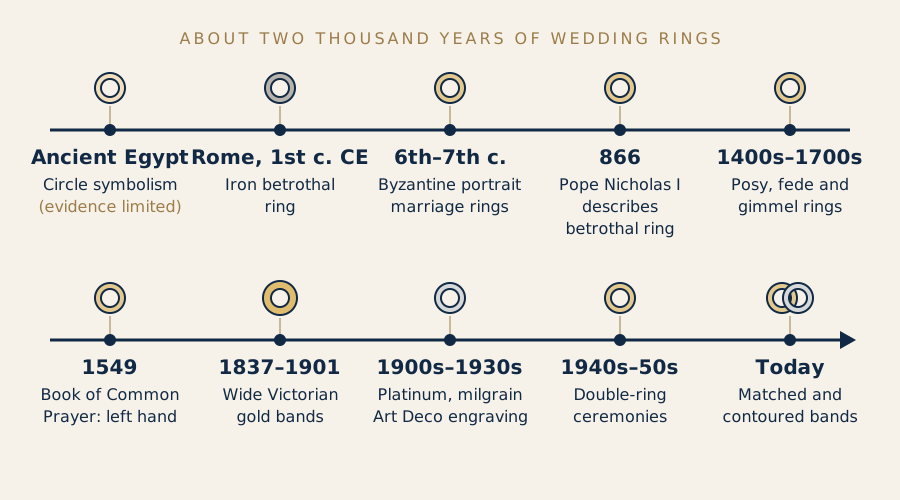
A wedding ring is a ring given and worn to mark a marriage. The idea is very old, but the plain band most Australians wear today is the end point of about two thousand years of change in metal, style and meaning. Roughly, the story runs like this: a circle as a symbol of a lasting bond in the ancient world; iron and gold betrothal rings in Rome; Christian church weddings adopting the ring in the early Middle Ages; inscribed, carved and puzzle-like rings in Renaissance Europe; heavy gold bands in the 1800s; and platinum, white gold and matching pairs in the 20th century.
Wedding rings and engagement rings grew up together and are often confused. Historically, the betrothal ring (given when a couple agreed to marry) and the wedding ring (given at the ceremony) were sometimes the same ring. Our companion guide on how engagement rings developed alongside wedding bands covers the diamond side of the story, and if you are unsure of the terms, see the difference between a wedding ring and a wedding band. Any workshop words used below, such as shank or milgrain, are also in our jewellery glossary.
Did wedding rings really start in ancient Egypt?
You will often read that ancient Egyptians, around 3,000 BCE or earlier, plaited rings from reeds or hemp and gave them as a sign of eternal love, with the circle standing for a life without end. The symbolism is plausible, and Egyptians certainly wore rings, amulets and signet rings in gold, silver and faience (a glazed ceramic). But the specific 'reed wedding ring' story is repeated far more often than it is backed by archaeological evidence. Woven plant rings rarely survive, and we have little direct written proof of rings used in Egyptian marriage.
What we can say with more confidence is that the link between the ring finger and the heart has an ancient source. Roman and later writers credited Egyptian anatomists with the idea that a nerve or vessel ran from the fourth finger straight to the heart. That anatomy is wrong, but the belief travelled through Greek and Roman writing into medieval Europe and still shapes which finger we use today.
What did ancient Roman wedding rings look like?
Rome gives us the first well-documented betrothal rings. The Roman writer Pliny the Elder, in the 1st century CE, described a plain iron ring sent to the bride-to-be as a pledge, with no gemstone. The ring is often called the anulus pronubus, roughly 'the marriage ring'. Over time gold became more common, especially among wealthier families, and some women are thought to have worn gold in public and iron at home.
- Iron bands: simple, practical and a sign of a binding agreement rather than romance. Few survive because iron rusts.
- Gold rings: increasingly common from the later Roman period, sometimes with engraved gems or inscriptions.
- Fede rings: from the Italian 'mani in fede', meaning 'hands in trust', these show two clasped right hands. The motif is Roman and was revived in medieval Europe.
- Key rings: some Roman rings have a tiny key on the bezel. They are often said to symbolise the wife's share of the household, though many were probably working keys for small boxes.
The later Byzantine Empire (6th–7th centuries) produced some of the most detailed early marriage rings: gold bands with the couple's portraits on a flat bezel, sometimes with a cross or a figure of Christ between them and the Greek word 'homonoia', meaning concord or harmony.
How did wedding rings change in medieval and Renaissance Europe?
As marriage became a church matter, the ring moved into Christian ceremony. A letter from Pope Nicholas I in 866 describes the giving of a betrothal ring, and by the 11th century the blessing of the ring was a regular part of many Western wedding services. In England, the 1549 Book of Common Prayer set out the words 'With this ring I thee wed' and placed the ring on the fourth finger of the left hand. Between the 1400s and 1700s, several distinctive styles appeared.
| Style | Era | What it looks like | Meaning |
|---|---|---|---|
| Fede ring | Medieval to 1800s | Two clasped hands on the front | Faith, trust and a binding promise |
| Gimmel ring | 1500s–1600s | Two or three hoops that slide apart and lock together | Two lives joined into one; hoops sometimes split at betrothal and rejoined at the wedding |
| Posy ring | 1400s–1700s | Plain gold band with a short verse engraved | A personal message, later moved inside the band |
| Claddagh ring | From about the late 1600s | Hands holding a crowned heart | Love, friendship and loyalty; from the Claddagh fishing village near Galway, Ireland |
| Jewish wedding ring | Medieval to 1700s | Elaborate gold ring with a tiny house on top | Ceremonial ring, usually worn only during the service |
The gimmel ring (from the Latin 'gemellus', twin) is one of the cleverest pieces of early jewellery making. Each hoop is a separate ring, and when they are aligned the bezels form a single design, often clasped hands over a heart. Martin Luther's wedding ring of 1525 is often described as a gimmel. If you like the idea of two rings that belong together without being identical, it is worth reading about whether couples' wedding bands need to match.
The posy ring takes its name from 'poesy', meaning a short poem. Early examples carried the words on the outside; by the 1600s they were usually engraved inside, against the skin, where only the wearer knew they were there. Phrases such as 'I like my choice' and 'Love and live happily' turn up again and again. That is the direct ancestor of today's inside engraving, and our guide to engraving ideas that still read well decades later carries the tradition forward.
Not sure which one is right?
Send us the stones you are looking at and our gemologist will tell you which to choose and why.
Why is the wedding ring worn on the fourth finger of the left hand?
The usual explanation is the vena amoris, or 'vein of love', the old belief that a vessel ran from the fourth finger of the left hand directly to the heart. Roman writers repeated it, and the Latin name itself became popular in English legal and religious writing centuries later. There is no such vein (all fingers have similar blood supply), but the custom stuck. Practical reasons probably helped: the left hand is the less-used hand for most people, and the fourth finger is protected by its neighbours, so the ring wears less.
| Hand | Where it is common | Notes |
|---|---|---|
| Left hand, fourth finger | Australia, New Zealand, the UK, Ireland, the US, Canada, France, Italy | Follows the Book of Common Prayer and Roman tradition |
| Right hand, fourth finger | Germany, Norway, Denmark, Poland, Russia, Greece, parts of Spain | Often linked with Orthodox Christian custom and the right hand as the hand of oaths |
| Changes hands | Some couples in Germany, the Netherlands and elsewhere | Engagement ring on one hand, then moved to the other at the wedding |
In Australia, tradition says the wedding band goes on first, closest to the heart, with the engagement ring sitting outside it. Many people now wear them the other way round or on different hands for comfort. Whatever the order, the two rings have to sit well together. See our guides on pairing a band with your engagement ring and how setting height affects whether a band sits flush.
How did the history of wedding rings unfold from Georgian to modern times?
The last three centuries are where most antique rings brought into our Melbourne workshop come from, so this is the period we see in the most detail. Each era leaves clues in the metal, width and finish.
| Era | Approx. dates | Typical wedding ring | Metals |
|---|---|---|---|
| Georgian | 1714–1837 | Thin, often slightly flat bands; regard rings whose gems spell a word (Ruby, Emerald, Garnet, Amethyst, Ruby, Diamond = REGARD) | High-carat yellow gold, silver-topped gold for set rings |
| Victorian | 1837–1901 | Wide, heavy, plain bands, often 22ct in Britain; some engraved or chased | 22ct and 18ct yellow gold |
| Edwardian | 1901–1910s | Finer bands with milgrain edges and delicate engraving | Platinum, 18ct gold |
| Art Deco | 1920s–1930s | Engraved and pierced bands, geometric patterns, orange-blossom motifs in the US; early diamond-set bands | Platinum, white gold, 18ct yellow gold |
| Wartime and post-war | 1940s–1950s | Plain, practical bands; in Britain, 9ct 'utility' rings during rationing | 9ct and 14ct gold, limited platinum |
| Late 20th century | 1960s–1990s | Textured, brushed and two-tone finishes; eternity rings grow popular | White and yellow gold, return of platinum |
| Today | 2000s–now | Court-profile plain bands, diamond-set bands, matched or contrasting pairs | Platinum, 18ct white, yellow and rose gold, 9ct gold |
Two big shifts stand out. The first is metal: platinum became fashionable early in the 20th century because its strength allowed very fine, open settings, then was restricted during the Second World War because it was needed for military uses. The second is the move from one ring to two, covered in the next section. For a modern take on which metals hold up, see our page comparing gold, platinum and other band metals. Gold is soft, about 2.5–3 on the Mohs hardness scale in its pure form, which is why alloys such as 18ct (75% gold) and 9ct (37.5% gold) are used for everyday rings.
The band shape has changed too. Older bands were almost always straight; today many sit alongside engagement rings and are contoured or notched around the centre stone. Our guides to curved versus straight wedding bands and diamond sizes for set wedding bands explain how those modern options developed.
When did men start wearing wedding rings?
For most of history, the wedding ring was given to the bride. Men sometimes wore signet rings or betrothal rings, and some medieval and Renaissance grooms exchanged rings, but a ring for both partners was not the norm in English-speaking countries until the 20th century. Jewellers in the United States promoted men's bands in the 1920s with limited success. The real change came with the Second World War, when many servicemen wore a band as a reminder of home. By the late 1940s and 1950s, the double-ring ceremony, where both partners give and receive a ring, had become the common pattern.
Australia followed the same broad trend after the war. Men's bands of that period are usually plain yellow gold, often 5–7 mm wide and fairly heavy. Today men's bands come in every metal and profile, and practical wear matters more than tradition: see our guide to men's bands for hands-on work if you work with tools, machinery or your hands every day.
What are the parts of a wedding band?
A wedding band looks simple, but its shape is the result of centuries of small refinements. Knowing the parts makes it easier to describe an heirloom band or brief a jeweller on a new one.
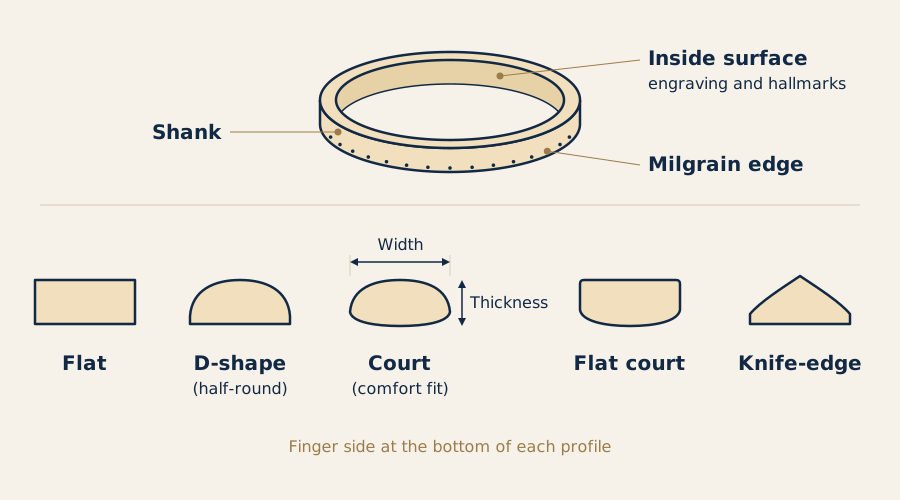
- Shank: the band itself, the hoop that goes around the finger.
- Profile: the shape you see if you cut through the band, such as flat, D-shape or court.
- Width: measured across the top; women's bands are commonly about 2–4 mm, men's about 5–8 mm.
- Thickness (depth): the metal from inside to outside, usually about 1.5–2 mm for a new band. Old bands worn below about 1 mm are at risk of cracking.
- Inside surface: where engraving and, on hallmarked rings, the stamps sit.
- Edges: plain, bevelled or finished with milgrain, a row of tiny metal beads popular from the Edwardian era.
| Profile | Cross-section | Feel and look | Era it suggests |
|---|---|---|---|
| Flat | Flat top, flat inside, square edges | Modern and crisp; edges can feel sharp | Mid-20th century onwards |
| D-shape (half-round) | Domed outside, flat inside | Classic look; can feel tight over the knuckle | Victorian and earlier |
| Court (comfort fit) | Domed outside, rounded inside | Slides on easily and feels lighter | Common from mid-20th century |
| Flat court | Flat top, rounded inside | Modern look with comfort fit | Late 20th century onwards |
| Knife-edge | Peaked ridge along the top | Looks slimmer from above | Edwardian and Art Deco revivals |
Profile also decides how a band sits next to an engagement ring. A low setting leaves little room under the stone, so a flat or slim court band often works better; see bands that sit beside low-profile settings. The way the centre stone is held matters too, and our guide to engagement ring setting styles shows how each style meets the band.
How do you bring a vintage wedding band style into a modern ring?
Many couples now borrow from the history of wedding rings rather than copy it: an Edwardian milgrain edge on a platinum court band, a posy-style inscription inside, or a fede-inspired pair. Others inherit a grandparent's band and want to wear it alongside a new engagement ring. Both are possible, but older bands have quirks. Victorian 22ct bands are soft and scratch and bend easily; Georgian bands can be very thin; and decades of wear often flatten the base of the shank.
Related guideHistory of Engagement RingsIf you are starting from scratch, it often helps to plan both rings at once; we explain the pros and cons in designing the engagement ring and wedding band together. If the band already exists, read our guide to building an engagement ring around an inherited band, because the old band's width and profile set the limits for the new ring.
Create your ring: explore ring settings
How can you tell how old a wedding ring is?
Dating a wedding band is part detective work, part metallurgy. These are the checks we run when an older ring comes in for repair or remodelling.
- Read the inside marks. A full British hallmark includes a maker's mark, a fineness mark, an assay office mark and, traditionally, a date letter that can pin the year. Australia has no compulsory hallmarking, so local stamps such as '18ct', '9ct' or '750' are applied by the maker rather than independently tested.
- Note the fineness style. Carat stamps (9ct, 18ct, 22ct) are typical of older rings; decimal stamps such as 375 and 750 became more common from the 1970s onward.
- Check the profile and width. A heavy, wide D-shape band suggests Victorian; a slim band with milgrain suggests Edwardian; a court profile usually points to the mid-20th century or later.
- Look at the engraving. Hand engraving has slightly uneven, cut strokes; machine and laser engraving is very regular. Inscription wording and dates help too.
- Look for past repairs. A visible seam, a slightly different colour of solder or a thicker section at the base of the shank shows the ring has been resized or re-shanked.
- Have it tested and measured. A jeweller can confirm the metal and measure thickness, so you know whether the band is safe to wear daily and what upkeep it needs.
Once you know what you have, keeping it in good shape is straightforward. Our wedding band maintenance checklist covers cleaning, checking for thin spots and when to bring a band in for a look.
Free consultation
Talk to a gemologist
Compare stones in person or online with Raj Sood, Graduate Gemologist (GIA), AJP (GIA).
Book a consultationShop this shape
FAQ
Common questions
Where did wedding rings originate?
The earliest well-documented betrothal rings come from ancient Rome, where iron and later gold rings were given as a pledge. Ancient Egypt is often named as the origin, and Roman writers credited Egyptians with linking the ring finger to the heart, but direct evidence of Egyptian wedding rings is limited.
Why do we wear wedding rings on the left hand?
The custom comes from the old belief in a 'vein of love' running from the fourth finger of the left hand to the heart, repeated by Roman writers and later built into English church services. The vein does not exist, but the tradition continues in Australia, the UK and the US.
What is a gimmel ring?
A gimmel ring is made of two or three interlocking hoops that fit together to form one ring, popular in the 1500s and 1600s. It symbolised two people joined in marriage, and the hoops were sometimes separated at betrothal and reunited at the wedding.
When did men start wearing wedding rings?
Men wore rings occasionally in earlier centuries, but the double-ring ceremony became common in English-speaking countries during and after the Second World War. By the 1950s it was the usual pattern.
What is a posy ring?
A posy ring is a gold band engraved with a short verse or motto, popular in England and France from about the 1400s to the 1700s. Later posy rings carried the message inside the band, the origin of modern inside engraving.
Can an antique wedding band be worn every day?
Often yes, but have it measured first. High-carat bands such as 22ct are soft, and bands worn thinner than about 1 mm at the base may need re-shanking before daily wear.

Ask a gemologist
Not sure which diamond to choose?
Raj Sood is a Graduate Gemologist (GIA) and master jeweller. Bring the stones you are considering, or send the reports, and he will tell you honestly which one is better and why.
Keep learning
Related guides
 Engagement Rings & SettingsHistory of Engagement Rings
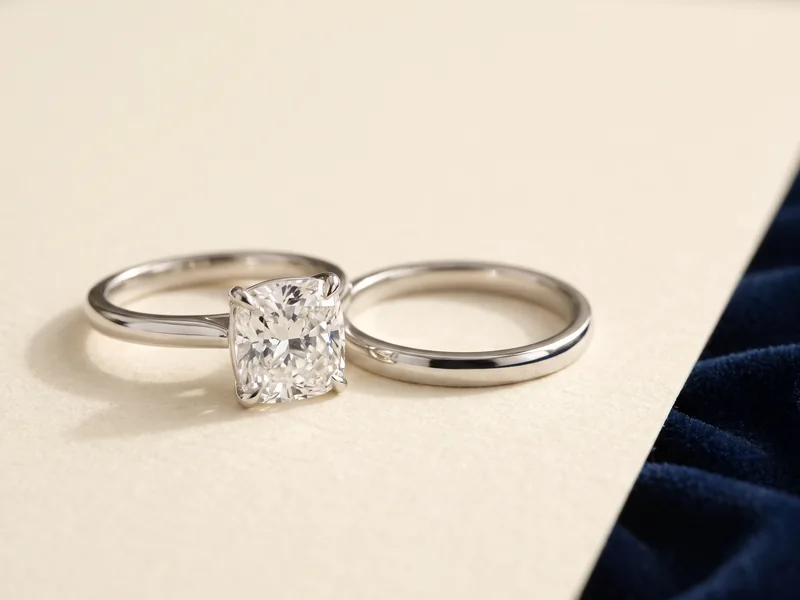 Wedding Bands & EternityWedding Ring vs Wedding Band
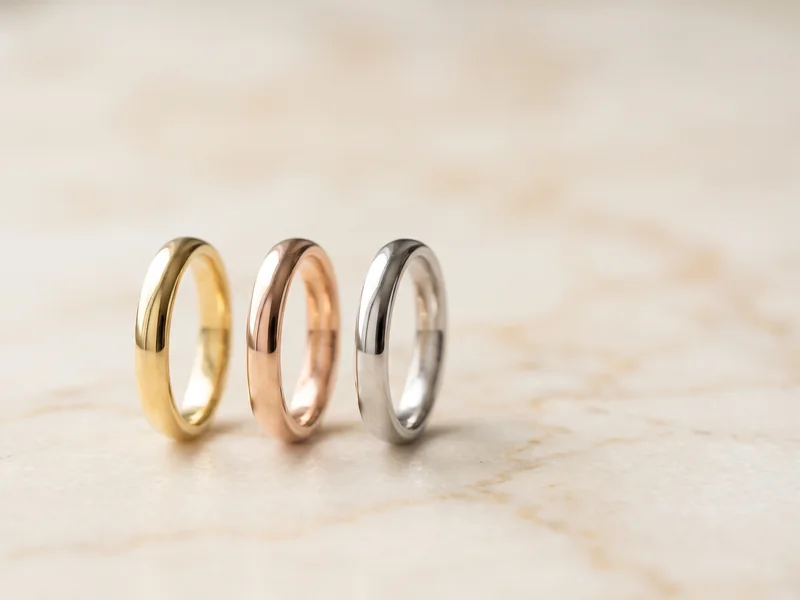 MetalsBest Metal for Wedding Bands
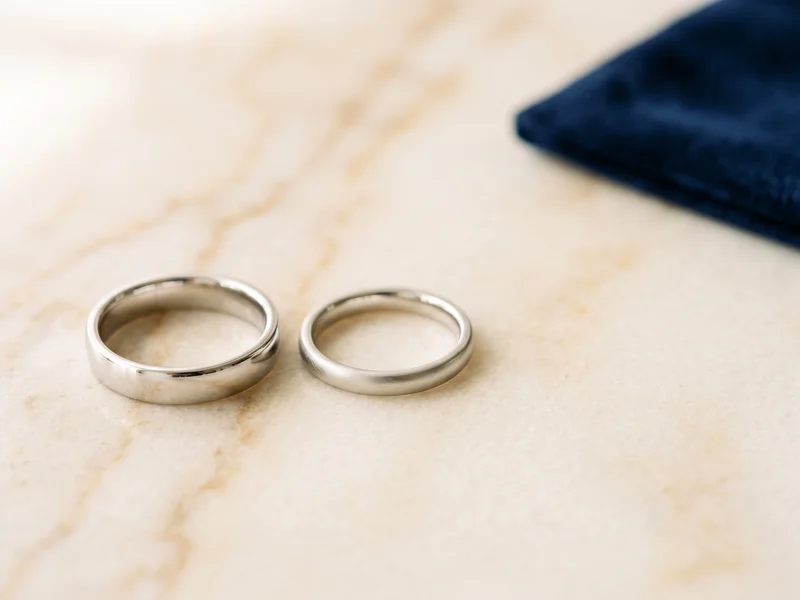 Wedding Bands & EternityWedding Ring Engraving Ideas That Stay TimelessEngagement Rings & SettingsEngagement Ring Setting Styles Guide
 Engagement Rings & SettingsSetting Height and Wedding Band FitWedding Bands & EternityWedding Bands for Low-Profile Engagement Rings
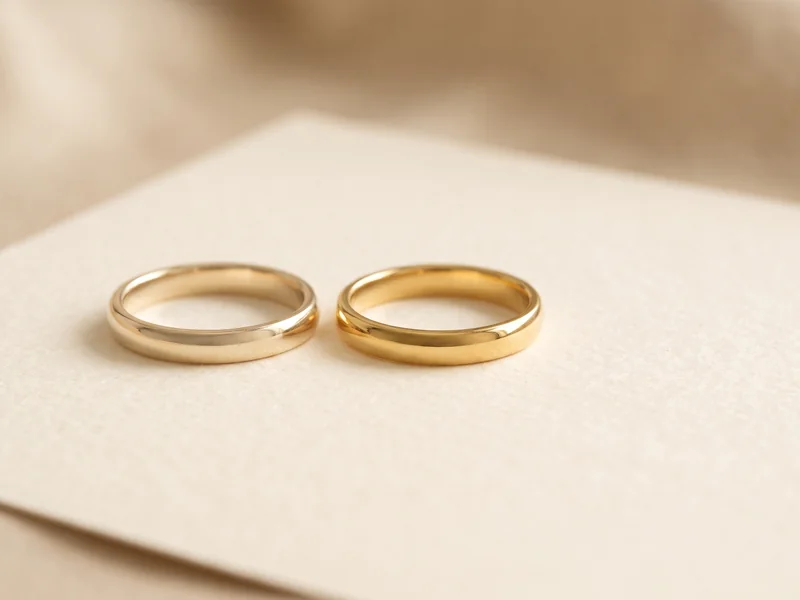 Wedding Bands & EternityWedding Band Maintenance Checklist
Explore more
More guides on this topic
Education