
- Education
- Buying Knowledge & Custom Process
- Proposal Ring vs Engagement Ring: Which to Choose, What It Costs and the Australian Rules
Buying Knowledge & Custom Process
Proposal Ring vs Engagement Ring: Which to Choose, What It Costs and the Australian Rules
Choosing between a proposal ring vs engagement ring decides who picks the diamond, when you spend the money and how the ring is protected. Here is the plain Australian guide, including GST refunds under the Tourist Refund Scheme and insuring the ring before you ask.
 Reviewed by Raj Sood, Graduate Gemologist (GIA), AJP (GIA)Master jeweller and Graduate Gemologist (GIA) · reviewed 4 November 2026
Quick answer
A proposal ring is a simple, lower-cost placeholder you use to ask the question; an engagement ring is the permanent ring your partner wears for years. Some couples propose with a placeholder, then choose the diamond and design together, which takes about 4–8 weeks for a custom ring. Either way, insure the ring from purchase.
Proposal ring vs engagement ring: what is the difference?
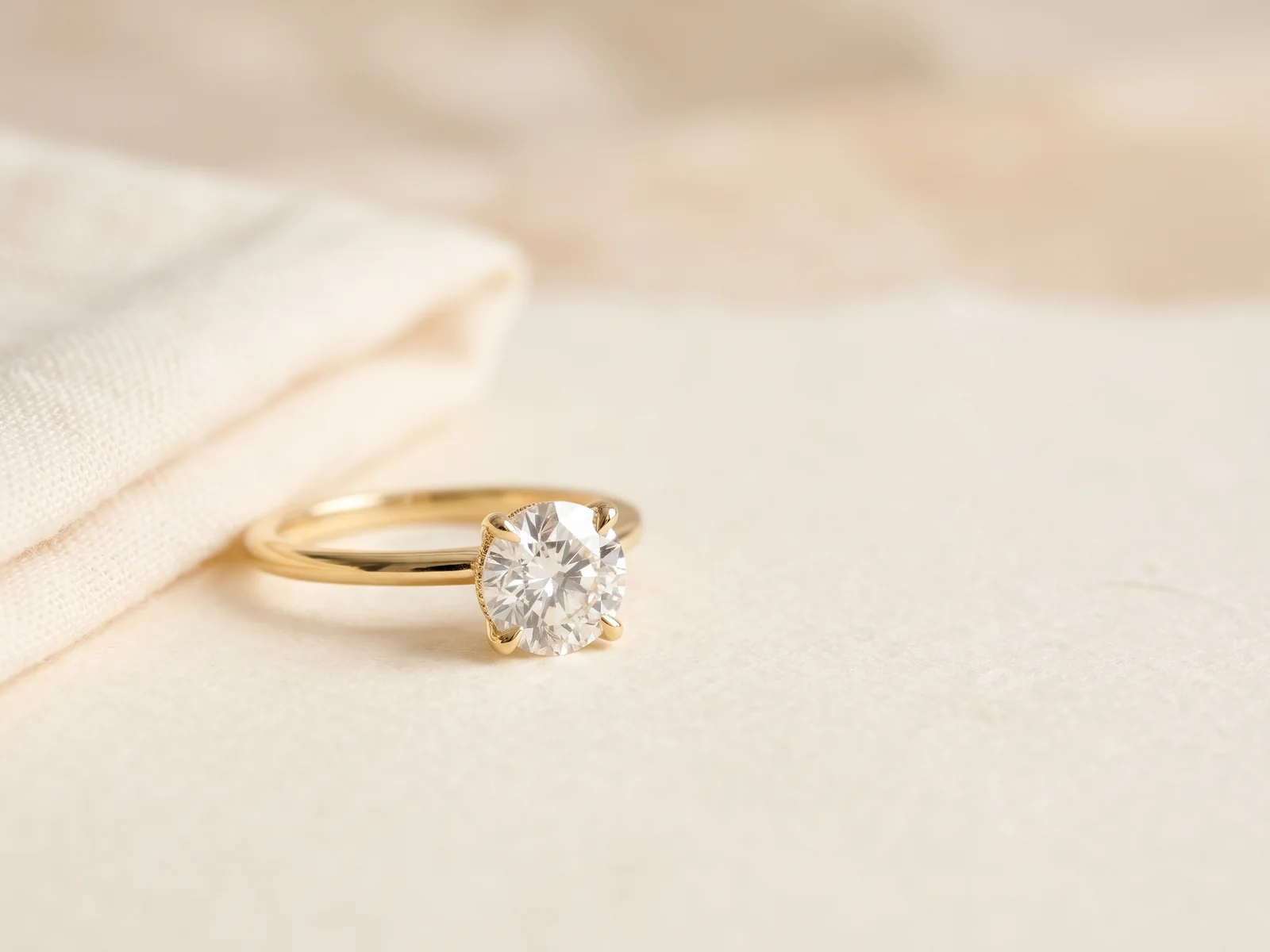
An engagement ring is the ring your partner will wear every day, often for decades, usually set with a diamond or another durable gemstone and later worn beside a wedding band. A proposal ring (also called a placeholder or temporary engagement ring) is a simpler ring used on the day you ask, with the plan that the two of you choose the permanent ring together afterwards.
The difference is not about how serious the proposal is. It is about who makes the decisions. With an engagement ring, you choose the stone, metal, setting and size on your own and in secret. With a proposal ring, you hand most of those choices to the person who will actually wear the ring. If you are new to the parts of a ring, our complete guide to choosing an engagement ring covers each one, and the plain-English jewellery glossary explains any term you have not met before.
| Proposal ring | Engagement ring | |
|---|---|---|
| Purpose | Something to give on the day | The ring worn long term |
| Who chooses | You, alone | You alone, or both of you |
| Typical materials | Sterling silver, 9 carat gold, cubic zirconia, lab-created gems, small lab-grown diamonds | 18 carat gold or platinum, natural or lab-grown diamond, sapphire |
| Approximate cost (AUD) | about $50–$1,500 | about $2,000–$20,000+ |
| Sizing | A good guess is enough | Fitted properly after the proposal |
| Lifespan | Months, then often kept as a keepsake or worn on another finger | Decades, with maintenance |
| Risk if you guess wrong | Low | Higher: style, stone and size are all locked in |
There is no rule that says you must use one or the other. Our page on engagement ring etiquette and traditions looks at how expectations have changed, and many couples now treat choosing the ring as a shared decision rather than a surprise.
Why do people propose with a placeholder engagement ring?
A placeholder engagement ring solves a few practical problems. The most common reasons we hear across the counter are:
- Taste is personal. Shape, metal colour, band width and setting height are hard to guess, and the wearer will see the ring every day.
- Size is a guess. A surprise means you cannot measure the finger properly, and some designs cannot be resized later.
- Timing. A custom ring takes weeks to design and make. A placeholder lets you propose on a date that matters without rushing the real ring.
- Budget. You can propose now and spend on the permanent ring once you have agreed on a budget together.
- Travel. If you are proposing overseas or outdoors, carrying a lower-value ring reduces the stress of losing it.
Choosing together also makes the design stage clearer. When the wearer is in the room, it is much easier to set priorities, which is the whole point of a well-written engagement ring design brief. And it takes the pressure off old spending rules; our article on where the three-month salary rule came from explains why it is a marketing line rather than a guideline.
The main reason not to use a proposal ring is simple: some people want the real ring on the day. If your partner has already shown you the exact style they love, or you have shopped together and they know the moment is coming, going straight to the engagement ring may be the better fit.
What should a proposal ring be made of?
A proposal ring only needs to look right and survive a few months of wear. Hardness matters, because a soft stone scratches and goes dull quickly. Hardness is measured on the Mohs scale, from 1 (talc) to 10 (diamond).
| Option | Mohs hardness | Approximate cost (AUD) | Things to know |
|---|---|---|---|
| Sterling silver with cubic zirconia | CZ about 8–8.5 | about $50–$300 | Silver is soft and tarnishes; CZ scratches and clouds with daily wear |
| 9 carat gold with a lab-created sapphire or moissanite | Sapphire 9, moissanite about 9.25 | about $300–$1,200 | Durable enough to wear for months; must be described as lab-created or synthetic |
| Small lab-grown diamond in a simple setting | 10 | about $500–$1,500 | Real diamond grown in a laboratory; can become a right-hand or stacking ring later |
| Loose diamond in a ring box, no setting | 10 | Price of the diamond | The real centre stone on the day; the setting is designed together afterwards |
| No ring: a box, a note or a design appointment | n/a | n/a | Fine for couples who plan to choose together anyway |
Cubic zirconia is a synthetic material that imitates diamond. It is not a diamond and should never be sold as one. Moissanite (silicon carbide) is a different gem again, with more fiery flashes of colour than diamond. A lab-grown diamond is real diamond, chemically and physically the same as a natural diamond, but grown in a laboratory rather than mined. Our guide to how diamonds are graded and priced explains the difference in more detail.
The loose-diamond option is worth a second look. You choose and pay for the centre stone, present it in a box, and your partner chooses the setting. It keeps the surprise of the diamond while avoiding the risk of a style or size they would not have picked.
Related guideHow to Estimate Ring Size for a Surprise ProposalHow much does a proposal ring cost in Australia?
Most proposal rings sit between about AUD 50 and AUD 1,500, depending on the metal and stone. The permanent engagement ring is a separate budget. As a broad guide for a solitaire in 18 carat gold or platinum:
| Engagement ring centre stone | Approximate total ring price (AUD) |
|---|---|
| 0.50 ct lab-grown diamond | about $1,500–$3,500 |
| 1.00 ct lab-grown diamond | about $2,000–$5,000 |
| 0.50 ct natural diamond | about $3,000–$7,000 |
| 1.00 ct natural diamond | about $7,000–$20,000+ |
| 1.00 ct natural sapphire | about $2,500–$8,000 |
These are wide ranges because the price moves with colour, clarity, cut, metal and setting, and with the market. Lab-grown diamonds cost much less than natural diamonds of the same size and grade. For current figures, see our Australian diamond price guide, and to see what each carat weight actually looks like on the hand, try the diamond size visualiser by shape.
If you are choosing the centre stone together after the proposal, narrow the field before you start scrolling. Our method for building a diamond shortlist without getting lost in filters gets most couples to three or four stones in one sitting.
Browse diamonds for the engagement ring: natural and lab-grown
Not sure which one is right?
Send us the stones you are looking at and our gemologist will tell you which to choose and why.
What size should a proposal ring be?
A proposal ring does not need to fit perfectly, but it does need to go over the knuckle on the day. Australia uses letter sizes (the same alphabetical system as the UK), so a size you find online in US numbers needs converting. Our Australian ring size guide explains the system, and the comparison of Australian, US, UK and EU ring sizes shows how they line up.
For a surprise, the usual tricks are borrowing a ring your partner wears on the same finger, or asking a friend or family member who knows their size. Our page on guessing a ring size without giving the game away goes through each method, and you can check a borrowed ring's measurement with the ring size converter. If you are proposing to a man, the men's ring size guide covers the wider sizes and bands.
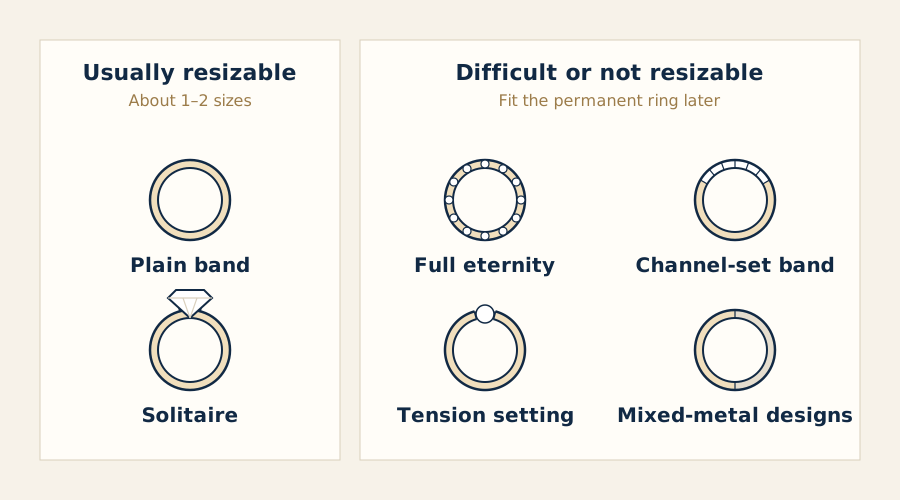
Resizing is where the proposal ring and the engagement ring really differ. A plain or solitaire band in gold or platinum can usually be sized up or down by about one to two sizes. Full eternity bands, channel-set bands, tension settings and some mixed-metal designs are difficult or impossible to resize. That is one reason to fit the permanent ring after the proposal, once your partner can measure their ring size properly at home or be sized in person.
How long does it take to make the real engagement ring?
A custom engagement ring usually takes about 4–8 weeks from the first consultation to collection, longer if you are sourcing a specific coloured gemstone or changing the design several times. The typical stages are choosing the stone, approving a design, making the ring, then fitting it. Our guide to when to order the ring for a planned proposal works backwards from the date.
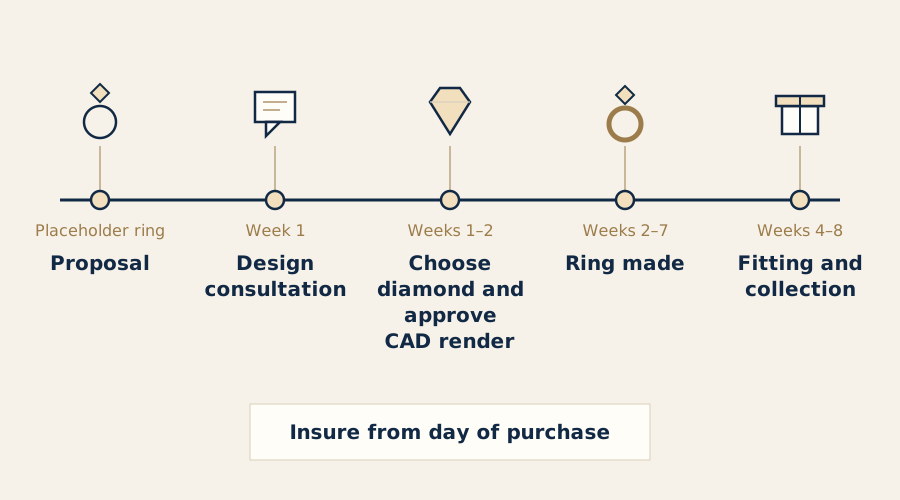
Most custom rings are designed first as a CAD render (a computer-aided design image of the ring) that you approve before any metal is cast. Knowing how to read a CAD render helps you spot a claw that sits too high or a band that is too thin before it is made. If you are choosing a diamond from a distance, learn what to look for in a 360-degree diamond video.
Some couples prefer to see stones in person, others are comfortable choosing from videos and reports. The trade-offs are set out in our comparison of buying an engagement ring online or in-store.
Can you claim GST back on an engagement ring for an overseas proposal?
Possibly, through the Tourist Refund Scheme (TRS), run by the Australian Border Force. It refunds the GST (the 10% goods and services tax included in Australian prices, which is one-eleventh of the price you pay) on goods you take out of Australia. Both visitors and Australian residents can claim, but the rules for residents coming home are the part most people miss.
- Spend: at least AUD 300 (including GST) with a single business that has an ABN. A single tax invoice, or several from the same business, can be combined.
- Timing: bought within 60 days before you leave Australia.
- Carry it: jewellery must go in your hand luggage or be worn, so you can show it to an officer.
- Paperwork: the original tax invoice, your passport and boarding pass.
- Where: the TRS facility in the international departure area, after passport control. Claims usually close 30 minutes before departure; the TRS app lets you enter details beforehand.
The catch for Australian residents: if you bring the ring back into Australia, it counts towards your duty-free allowance on return (about AUD 900 for general goods per adult). Goods over that amount must be declared, and you may have to pay the GST back, and possibly duty. A ring your fiancée is wearing on the flight home is still a returning good. In practice, the TRS mainly helps if the ring is staying overseas, for example if one of you lives there. Declare it honestly: undeclared goods can be seized and penalties apply.
Buying the ring overseas instead raises the same issue in reverse, plus warranty, resizing and consumer law questions once you are home. Our guide to buying a diamond overseas versus in Australia works through the numbers.
How do you insure an engagement ring before the proposal?
The riskiest weeks in a ring's life are often before the proposal: it is hidden in a drawer, carried in a jacket, or packed for a trip. Check your insurance from the day you pay, not the day you ask.
- Home and contents insurance usually covers jewellery at home, but often with a low limit for any single item unless it is listed (specified) on the policy. Many limits sit somewhere around AUD 1,000–3,000 per item.
- Specified or portable cover is an extra on many contents policies that covers a listed item at home and away, sometimes overseas. This is the cover most engagement rings need.
- Travel insurance often has a low sub-limit for valuables and may exclude items left unattended, checked in or left in a hotel room. Read the jewellery clause before an overseas proposal.
- Standalone jewellery insurance is available from specialist insurers and may offer repair or replacement through a jeweller of your choice.
Insurers usually ask for a valuation: a written description of the ring, the stone's grades and measurements, and a replacement value. It should be prepared by a qualified jewellery valuer, such as a member of the National Council of Jewellery Valuers. Keep the tax invoice, grading report and valuation together, and photograph the ring. Review the valuation every few years, as replacement costs change.
A low-value proposal ring may not need its own cover at all, which is one quiet advantage of proposing with a placeholder. The permanent ring should be specified once it is made and fitted.
Proposal ring vs engagement ring: which should you choose?
There is no wrong answer, only a better fit for your situation. As a rule of thumb:
- Choose a proposal ring if you are unsure of their style or size, want a custom design, are proposing soon or overseas, or would rather set the budget together.
- Choose the engagement ring if your partner has shown you exactly what they want, you know their size, or you have already shopped together.
- Choose a loose diamond if you want to give the centre stone on the day but leave the setting, metal and size to them.
Whatever you choose, ask for a written grading report for any diamond, and check that a lab-grown diamond is clearly described as lab-grown on the report and invoice. Natural and lab-grown diamonds are both real diamond; the difference is origin and price, not whether the stone is genuine.
How do you plan a proposal with a placeholder ring? Step by step
- Decide the approach. Placeholder ring, loose diamond, or the full engagement ring.
- Estimate the size. Borrow a ring worn on the same finger or ask someone who knows, then round up a little.
- Choose the proposal ring. Pick a durable stone (Mohs 9 or higher) so it still looks good after months of wear.
- Insure it. Check your contents and travel policies; specify anything valuable from the day of purchase.
- Check the travel rules. If you are going overseas, carry the ring in hand luggage and read the TRS and return-allowance rules first.
- Propose. Then book a design consultation together.
- Design and fit the engagement ring. Choose the stone, approve the CAD render, and have your partner sized properly before the ring is made.
Free consultation
Talk to a gemologist
Compare stones in person or online with Raj Sood, Graduate Gemologist (GIA), AJP (GIA).
Book a consultationShop this shape
FAQ
Common questions
What is a proposal ring?
A proposal ring is a simple, lower-cost ring used on the day you propose, with the plan of choosing the permanent engagement ring together afterwards. It is also called a placeholder or temporary engagement ring.
Do you need a ring to propose?
No. Some people propose with a loose diamond, a ring box with a note, or simply a plan to choose the ring together. A ring is a tradition, not a requirement.
What happens to the proposal ring afterwards?
Many people keep it as a keepsake, wear it on another finger or use it as a travel ring. A small lab-grown diamond proposal ring can also become a stacking or right-hand ring.
Can I get a GST refund on an engagement ring if I propose overseas?
Possibly, under the Tourist Refund Scheme, if you spend AUD 300 or more with one business within 60 days of leaving and carry the ring with you. Australian residents who bring the ring home may have to declare it and repay the GST if it is over their duty-free allowance.
Is an engagement ring covered by home contents insurance?
Often only up to a low per-item limit, and sometimes not away from home. Most engagement rings should be listed as a specified item with a current valuation.
How long does it take to get the real engagement ring after proposing?
A custom ring usually takes about 4–8 weeks from consultation to collection, including stone selection, CAD approval, making and fitting.

Ask a gemologist
Not sure which diamond to choose?
Raj Sood is a Graduate Gemologist (GIA) and master jeweller. Bring the stones you are considering, or send the reports, and he will tell you honestly which one is better and why.
Keep learning
Related guides
 Buying Knowledge & Custom ProcessHow to Estimate Ring Size for a Surprise Proposal
 Buying Knowledge & Custom ProcessPlanning a Proposal: When Should You Order the Engagement Ring?Buying Knowledge & Custom ProcessBuying a Diamond Overseas vs in Australia
 Buying Knowledge & Custom ProcessHow to Measure Your Ring Size at Home
 Buying Knowledge & Custom ProcessAustralian Ring Sizes vs US, UK and EU
 Buying Knowledge & Custom ProcessMen's Ring Size GuideBuying Knowledge & Custom ProcessDiamond Price Guide Australia
Explore more
More guides on this topic
Education