
- Education
- Engagement Rings & Settings
- Split Shank Engagement Ring Guide: How It's Built, Fit and Wear
Engagement Rings & Settings
Split Shank Engagement Ring Guide: How It's Built, Fit and Wear
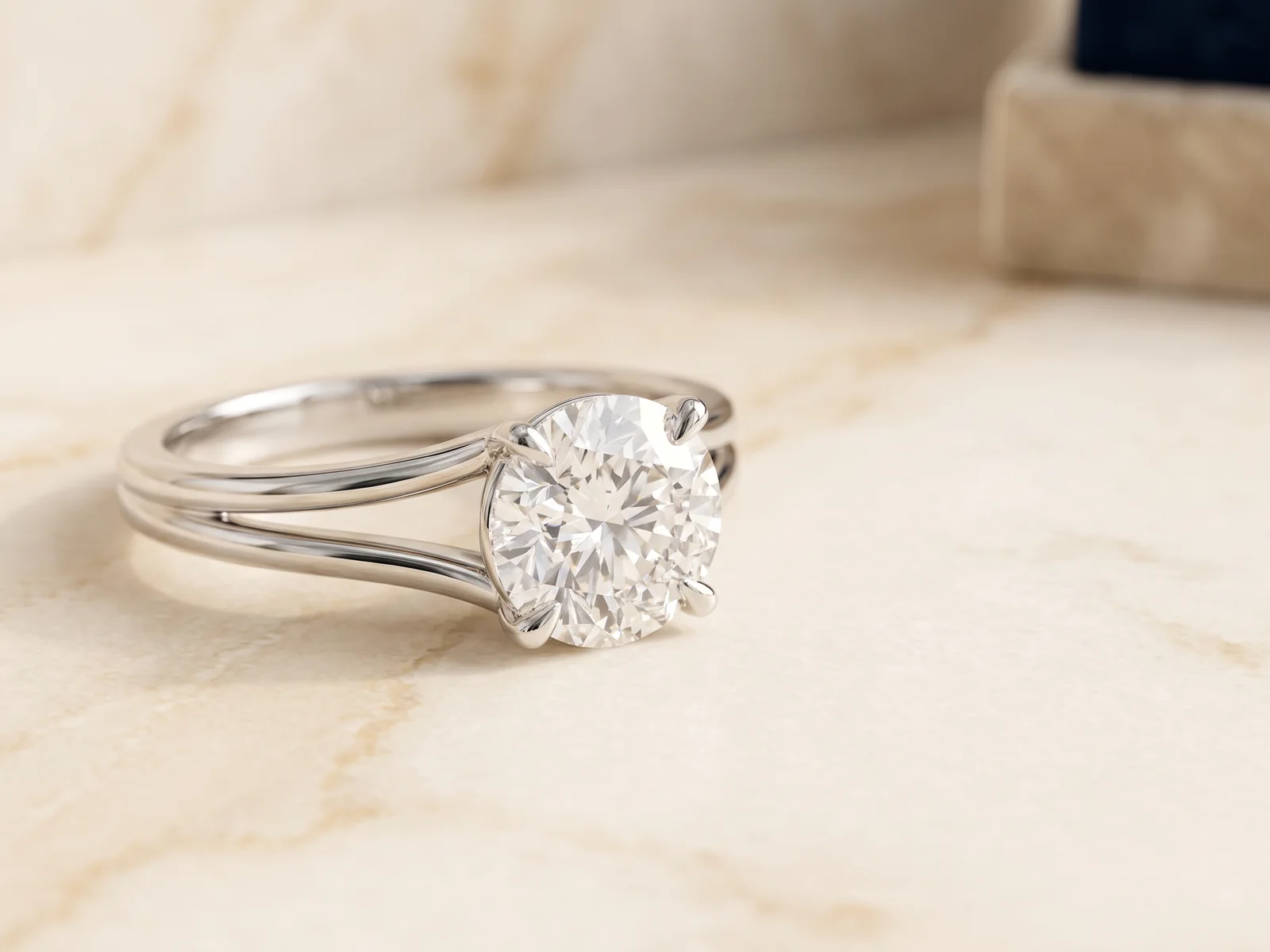
A split shank engagement ring looks simple from across the room, but the fork in the band changes how the ring sits, which wedding band fits and how it holds up over the years. Here is what a jeweller who repairs them checks before you choose one.
 Reviewed by Raj Sood, Graduate Gemologist (GIA), AJP (GIA)Master jeweller and Graduate Gemologist (GIA) · reviewed 4 November 2026
Quick answer
A split shank engagement ring has a band that divides into two (sometimes three) strands as it approaches the centre stone, widening the head area without adding a heavy single band. It suits larger rounds, ovals, cushions and pears, gives the setting extra support, but needs a contoured or curved wedding band and careful resizing.
What is a split shank engagement ring?
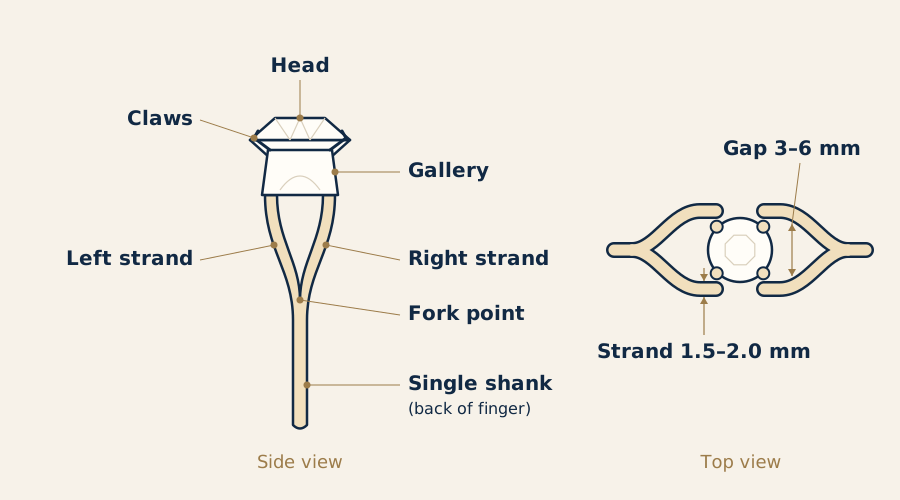
The shank is the band of a ring, the part that wraps around your finger. In a split shank, that band starts as a single piece at the back of the finger and then divides into two separate strands as it rises towards the centre stone. The strands usually stay apart all the way to the head (the part that holds the stone), leaving a gap of open metal or a sliver of finger showing between them. If the names of the different parts are new to you, our guide to the parts of an engagement ring, from shank to head lays them out with a diagram.
The split normally begins somewhere between a third and halfway up each side of the ring. At the top, the two strands may sit 3–6 mm apart where they meet the head, which makes the shoulders of the ring look wider and frames the centre stone without the weight of a single 4–5 mm band. Each strand on its own is usually about 1.5–2.0 mm wide.
Split shanks are not new. Two-strand and forked bands appear in Victorian and Edwardian jewellery, and the style returned strongly in the 2000s alongside halos and pavé. Our page on how engagement ring design has changed over the centuries puts it in context, and the overview of engagement ring setting styles shows where it sits among solitaires, halos, three-stones and more. Any unfamiliar term below is also in our plain-English jewellery glossary.
What types of split shank rings are there?
"Split shank" covers several quite different looks. The main variations:
| Style | What it looks like | Points to know |
|---|---|---|
| Plain open split | Two polished metal strands, evenly parted | Cleanest look; easiest to polish and resize |
| Pavé split shank | One or both strands set with small diamonds (about 1.0–1.5 mm) | More sparkle; more tiny claws to check over the years |
| Mixed split | One plain strand, one pavé strand | Balanced sparkle; wears unevenly if the pavé side rubs a band |
| Twisted or crossover split | Strands twist or cross before reaching the head | Softer, organic look; related to bypass designs |
| Triple split | Three strands meeting the head | Very wide shoulders; suits large centre stones and broad fingers |
| Gradual or tapered split | Strands widen apart slowly from low on the band | Subtle; often combined with a halo |
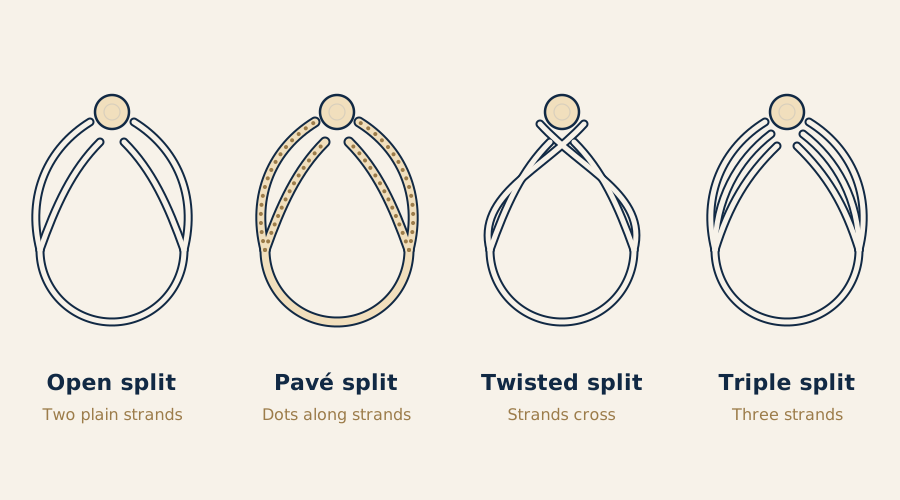
Twisted split shanks share a lot with bypass rings, where the two ends slide past each other, and some designers combine the two. Another close relative is a single band that thickens as it rises; our guide to reverse taper bands that thicken towards the centre explains how that gives a similar bold shoulder without the split.
A pavé split shank ring (pavé means "paved": rows of small stones set close together with tiny beads or claws) is the most common version we see. Each strand might carry 10–20 small diamonds, adding very roughly 0.15–0.40 carat in total depending on stone size and how far down the band the pavé runs.
How is a split shank ring built and set?
A split shank is usually designed in CAD (computer-aided design), printed as a wax or resin model and then cast in metal, because the fork point needs consistent thickness on both strands. The weak spot, if there is one, is exactly where the single band divides: if the metal there is too thin, it can flex and eventually crack after years of knocks.
The head sits between the two strands. It can be a basket (claws joined by a horizontal rail), a trellis (claws that criss-cross under the stone) or a peg head (a separate head soldered on). Our comparison of basket, trellis and peg head settings compared covers which one suits a low or high centre stone. Because the strands open up the side view of the ring, the area under the stone shows more than usual, which is why split shanks are often paired with under-gallery details such as hidden halos and filigree.
The claws themselves are a separate choice. Four or six round claws suit rounds; ovals and cushions often use four or double claws; pears and marquises need a V-claw at the tip. See round, eagle, tab, V and double claws for how each looks and wears.
Metal matters more in a split shank than in a single band, because each strand is thin. Platinum (usually 950 platinum) is dense and tends to move rather than wear away, so claws and strands lose metal slowly. 18ct gold is a little harder-wearing on the surface but thinner strands in 18ct need a sensible minimum thickness, around 1.5 mm, to resist bending. 9ct and 14ct gold are harder again but can be more prone to cracking at thin points over many years.
Which diamond shapes suit a split shank engagement ring?
The split widens the top of the ring, so it works best when the centre stone is wide enough to fill the space between the strands. As a rough rule, a centre stone of about 6 mm across or more (roughly a 0.75–1.00 carat round) balances a typical split. A small stone between two wide-set strands can look lost.
| Shape | How it suits a split shank | Setting notes |
|---|---|---|
| Round | Very well; the classic pairing | 4 or 6 claws; a halo is common |
| Oval | Very well; the split echoes the oval's curve | 4 or double claws; check the strands meet the stone's sides evenly |
| Cushion | Well; a soft square fills the gap | 4 or double claws |
| Pear | Well, point up or down | V-claw on the tip; strands should not leave the point exposed |
| Emerald and radiant | Well with a straight, gently parted split | Corner or double claws to protect corners |
| Marquise | Works with a narrow split | Two V-claws; watch the points |
| Princess | Works, but corners need care | V-claws on all four corners |
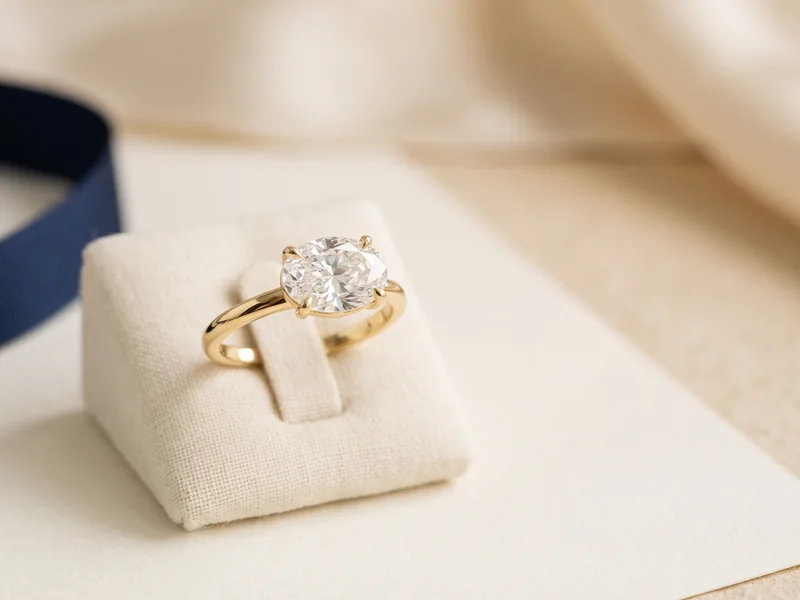
For pointed shapes, the position of the claws and the strands has to be planned together, so nothing leaves a tip unprotected. Our guide to where claws should sit on pears and marquises goes into detail. A split shank oval engagement ring can also be set sideways; east-west settings that turn an oval sideways pair naturally with a split because the wide stone fills the gap.
The style also suits more than one stone. A split shank can carry two-stone toi et moi designs, with each strand leading to one stone, or frame cluster rings built from many small diamonds where the overall head is wide. For hardness, diamond (10 on the Mohs scale) and sapphire (9) stand up to daily wear in any of these; softer gems such as morganite (7.5–8) are better in a protective halo or bezel.
Related guideBypass Engagement RingsNot sure which one is right?
Send us the stones you are looking at and our gemologist will tell you which to choose and why.
Is a split shank more secure, and how does it wear over the years?
A well-made split shank gives the head two points of support on each side instead of one, which helps resist the head twisting if the ring takes a sideways knock. The weakness is the strands themselves: each is thinner than a solid band, so a strand under about 1.5 mm wide or deep can bend if the ring is caught in a car door or squeezed while lifting.
From the repair bench, the problems we see in split shanks after five to fifteen years of daily wear are fairly predictable:
- Worn inner strand: the strand nearest the wedding band wears a flat spot where the two rings rub.
- Loose pavé: tiny claws on the strands wear down and small diamonds drop out, usually on the palm side.
- Out-of-round shank: the ring is squeezed into an oval, which pulls the strands unevenly and stresses the fork.
- Thin back of shank: the single band under the finger thins with years of contact, just as in any ring.
- Dirt in the gap: soap, lotion and skin build up between the strands and under the head, dulling the centre stone.
None of this makes the style fragile. A sensible strand thickness, a check of the claws every 6–12 months and a properly fitted band keep a split shank sound for decades.
Will a wedding band sit flush with a split shank engagement ring?
Often, not a straight one. The head and the lower edge of the strands can stand slightly proud of the finger, leaving a gap when a plain band sits beside it. Some people like that gap; others want the two rings to touch along their full length. Before deciding, it helps to know which finger the engagement ring and band go on and in which order you plan to wear them, because that decides which strand takes the wear.
| Band type | Fit with a split shank | Wear notes |
|---|---|---|
| Straight plain band | Usually leaves a small gap | Simple; rubs the inner strand edge |
| Straight pavé band | Gap, plus diamond against metal | Pavé can wear the strand; check twice a year |
| Contoured or curved band | Follows the strand and head | Closest fit; best made to the ring |
| Notched band | A small dip for the head | Neat fit with less curve |
| Low-set or slim band (1.5–2.0 mm) | Sits under the head on some designs | Depends on gallery height |
A split shank engagement ring with wedding band works best when the two are designed or at least test-fitted together. If the engagement ring has a low head, a straight band may slide right under it. If the head is high, a contoured band is the usual answer.
Split shank vs solitaire, halo and bypass: how do they compare?
| Split shank | Plain solitaire | Halo | Bypass | |
|---|---|---|---|---|
| Look at the shoulders | Wide, open | Narrow, simple | Depends on band | Asymmetric, flowing |
| Support for the head | Two points each side | One | One | Two ends |
| Straight band fit | Often a gap | Usually flush | Often a gap | Usually a gap |
| Resizing | 1–2 sizes, more with care | Easiest | Easy unless pavé | Limited |
| Cleaning | Dirt collects between strands | Easiest | Under the halo | Between ends |
| Suits | Larger centre stones, wider fingers | Any size | Making a stone look larger | Ovals, pears, modern looks |
In the split shank vs solitaire choice, the solitaire is easier to resize, clean and pair with a band, while the split shank looks bolder and supports a larger stone. The style also adapts well to split shank designs for men, where wider, heavier strands suit a larger hand, and to simpler pieces; our guide to promise rings and how they differ covers lighter versions.
How much does a split shank engagement ring cost in Australia?
A split shank uses more metal and more labour than a plain solitaire band, and pavé adds both stones and setting time. The centre stone, though, still drives most of the total. Lab-grown diamonds are real diamond grown in a laboratory; they have the same hardness and sparkle as natural diamonds and cost much less. Natural diamonds are rarer and priced accordingly.
| Item | Approximate range (AUD) |
|---|---|
| Plain split shank setting, 18ct gold | about $1,800–$3,500 |
| Pavé split shank setting, 18ct gold | about $2,500–$5,000 |
| Platinum version of either | add about $500–$1,500 |
| 1 ct lab-grown round centre, G–H VS | about $1,000–$3,000 |
| 1 ct natural round centre, G–H VS | about $7,000–$15,000 |
These are broad ranges only; metal prices move and every design differs in weight. The split shank ring price in Australia also depends on strand thickness, how far the pavé runs and whether a matching contoured band is made at the same time. A lab-grown diamond split shank ring lets many people choose a larger centre that fills the split well within the same budget.
Design a split shank ring, browse settings or book a repair
Can a split shank ring be resized, and how do you look after it?
Yes, but within limits. Resizing is done in the single-band section at the back, so the strands are not cut. Going up or down one or two sizes is usually straightforward. Beyond that, the angle of the strands changes, the fork point is stressed and pavé stones near the fork can loosen. A large change may mean rebuilding the lower shank or remaking the ring. Pavé that runs all the way around the band makes any resize harder.
- Clean weekly: warm water, a drop of mild detergent and a soft toothbrush between the strands and under the head.
- Check claws: every 6–12 months, or sooner if a stone catches on clothing.
- Take it off: for the gym, gardening and heavy lifting, where a strand is most likely to bend.
- Ultrasonic cleaners: fine for diamonds in good settings, but can shake loose pavé with worn claws.
- Re-polish gently: every few years; heavy polishing removes metal from thin strands.
How do you choose a split shank engagement ring? Step by step
- Pick the centre stone first. Aim for about 6 mm across or more so the stone fills the split; decide natural or lab-grown.
- Choose the split style. Plain, pavé, twisted or triple, and how high up the band the fork begins.
- Check strand thickness. Ask for each strand to be at least about 1.5 mm wide and deep in the metal you choose.
- Match the head and claws to the shape. V-claws for points, double or corner claws for square shapes.
- Test the wedding band. Try a straight band beside it; if there is a gap you dislike, plan a contoured or notched band.
- Confirm your size carefully. Allow for the limited resizing range, especially with pavé.
- Plan maintenance. Book a claw check every 6–12 months and keep the grading report with the ring.
Free consultation
Talk to a gemologist
Compare stones in person or online with Raj Sood, Graduate Gemologist (GIA), AJP (GIA).
Book a consultationShop this shape
FAQ
Common questions
Are split shank engagement rings durable?
Yes, when each strand is thick enough, around 1.5 mm or more, and the fork point is solid. The main wear points are the inner strand where a wedding band rubs and any pavé claws, so regular checks matter.
Can a split shank ring be resized?
Usually by one or two sizes, working in the single band at the back. Larger changes can distort the strands or loosen pavé and may need part of the shank rebuilt.
Does a straight wedding band fit a split shank engagement ring?
Sometimes, but there is often a small gap below the head. A contoured or notched band made to the ring gives a closer fit.
Does a split shank make the diamond look bigger?
It can make the centre stone look more prominent because the wide shoulders frame it, but it does not change the stone's face-up size. A halo adds more apparent size than a split alone.
What diamond size suits a split shank?
Most splits look balanced with a centre of about 6 mm across or more, roughly 0.75–1.00 carat in a round. Smaller stones suit a narrow split or a plain band.
Is a split shank harder to clean?
A little. Dirt collects between the strands and under the head, so a weekly soak and a soft toothbrush keep it bright.
Terms in this guide

Ask a gemologist
Not sure which diamond to choose?
Raj Sood is a Graduate Gemologist (GIA) and master jeweller. Bring the stones you are considering, or send the reports, and he will tell you honestly which one is better and why.
Keep learning
Related guides
 Engagement Rings & SettingsBypass Engagement Rings
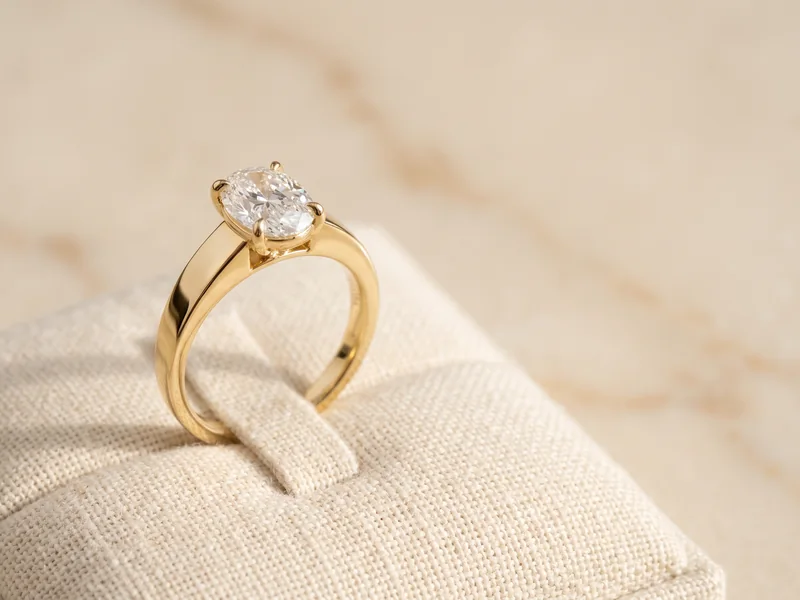 Engagement Rings & SettingsReverse Taper Bands
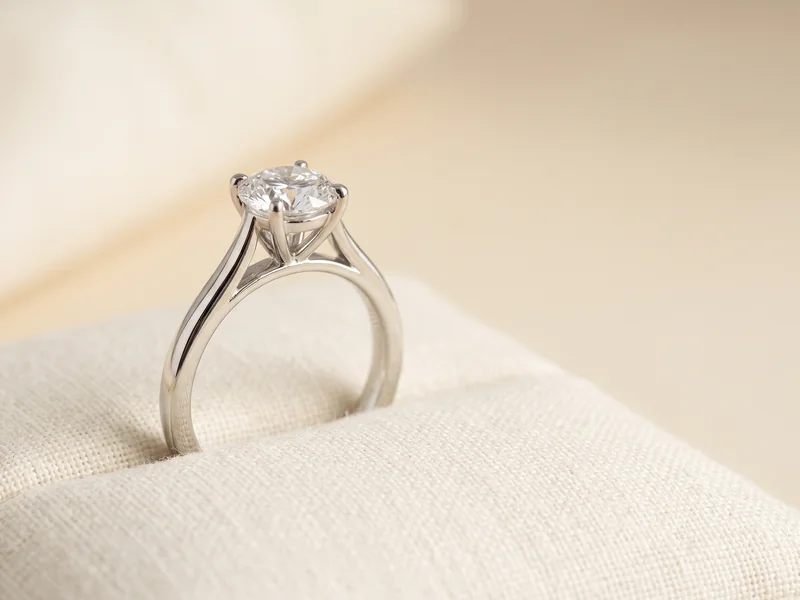 Engagement Rings & SettingsClaw Types: Round, Eagle, Tab, V-Prong, Double
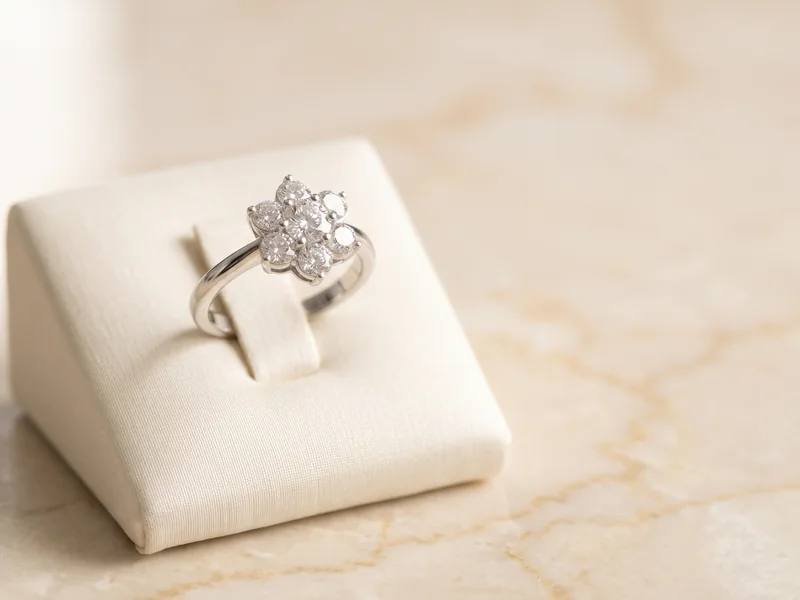 Engagement Rings & SettingsCluster Engagement Rings
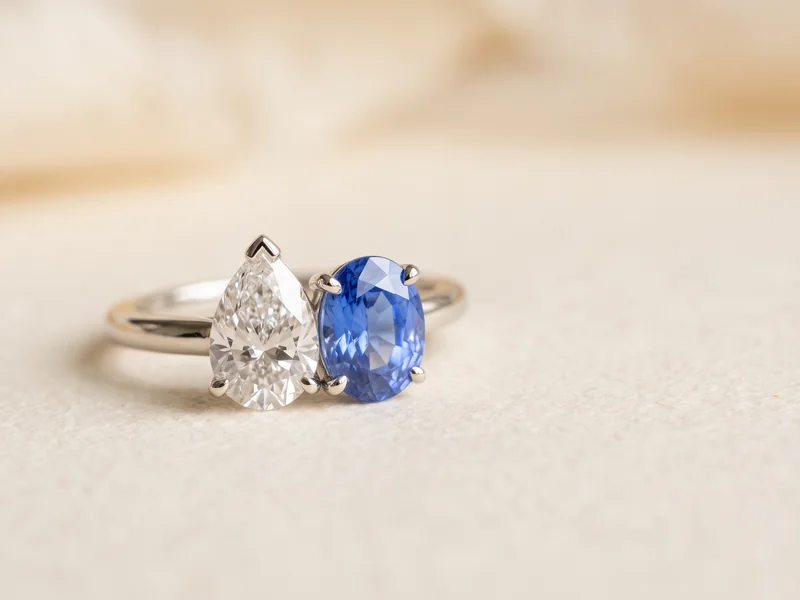 Engagement Rings & SettingsToi et Moi Engagement Rings
 Engagement Rings & SettingsEast-West Engagement RingsEngagement Rings & SettingsBasket vs Trellis vs Peg Head Settings
Explore more
More guides on this topic
Education